5XL Streetwear T-Shirts Are Not Just Bigger Tees: How Brands Should Choose the Right Manufacturer?
- Share
- publisher
- GROOVECOLOR
- Issue Time
- Aug 21,2026
Summary
Find the right 5XL T-shirt manufacturer for custom plus size streetwear production. This guide explains why 5XL tees are not just larger standard T-shirts, and how brands should evaluate extended-size grading, oversized fit balance, heavyweight cotton fabric, shrinkage control, print and embroidery placement, sample approval, and bulk QC. Learn what a China OEM streetwear factory should prove before producing XS–5XL custom T-shirts.
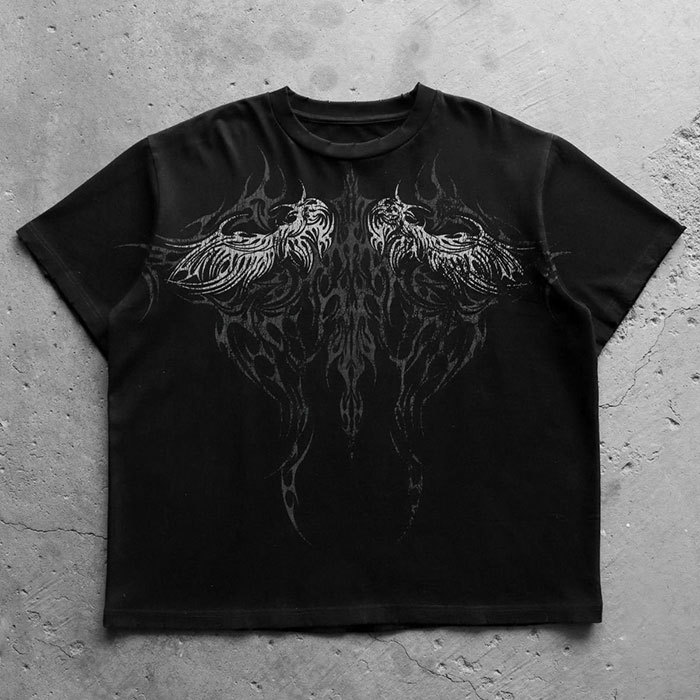
Many streetwear brands search for a 5XL T-shirt manufacturer because they want larger sizes, but the real production challenge is not size alone. The harder question is whether the factory can control extended-size grading, loose streetwear proportions, heavyweight fabric behavior, decoration placement, and bulk production checks across the full size range.
Quick answer: A strong 5XL T-shirt manufacturer should not simply enlarge a standard tee. For custom plus size streetwear T-shirts, the factory must control extended-size grading, shoulder balance, chest width, sleeve shape, fabric shrinkage, print placement, and sample-to-bulk checkpoints. Established streetwear brands should choose an OEM manufacturer with real pattern, fabric, craft, and QC capability.
Key Takeaways for Streetwear Brands
- ▸ 5XL T-shirt production needs extended-size grading, not simple size enlargement.
- ▸ Loose streetwear fit, oversized proportion, and plus size coverage must be treated as separate fit decisions.
- ▸ Fabric weight, shrinkage, neckline recovery, sleeve volume, and print scale become more visible in larger sizes.
- ▸ A useful factory review should include size charts, large-size samples, wash checks, decoration placement, and pre-production approval.
- ▸ Groovecolor is most relevant when the project needs OEM development, heavyweight cotton, print or embroidery work, and controlled bulk production.
Why does 5XL T-shirt production fail when a factory only enlarges a standard pattern?
A 5XL streetwear T-shirt usually fails when the factory treats size growth as a flat measurement exercise. The body width, shoulder slope, sleeve opening, neck shape, garment length, and hem balance all change how the piece sits on the body. A larger tee can measure correctly and still look wrong.
For a standard tee, a few centimeters added across the chest or body length may not break the silhouette. In 4XL or 5XL, the same logic can create heavy shoulders, an over-wide hem, a collar that looks weak, or sleeves that hang without shape. This is why larger streetwear sizes need size grading rules that protect the design intent.
The most common mistake is approving one base-size sample and assuming the rest of the range will follow. That approach is risky for custom plus size streetwear T-shirts because the largest sizes often reveal problems that are invisible in M or L. A better process checks at least the base size and the upper end of the size range before bulk cutting.
Early warning signs in 5XL samples
Once a brand understands that 5XL is a pattern problem, not just a size label, the next decision is to separate plus size, oversized, and loose fit before asking any factory for a quote.
How should brands separate plus size, oversized, and loose fit before production?
Plus size, oversized, and loose fit are related, but they are not the same manufacturing decision. Plus size describes body-size coverage. Oversized describes a design silhouette. Loose fit describes the amount of wearing ease. A factory must translate all three into a workable pattern, not one generic size chart.
A plus size T-shirt can be regular fit. An oversized T-shirt can be made for a smaller body size. A loose streetwear T-shirt can sit between those two ideas. When a brand mixes these terms too loosely, the factory may produce a garment that is large but not intentional.
For brands developing a wider T-shirt range, the tech pack should say whether 5XL is meant to keep the same visual proportion as smaller sizes, or whether the larger sizes need a slightly adjusted body shape. That decision affects every step after pattern development.
Brands comparing a custom oversized T-shirt range should treat plus size grading as an additional development layer, not as a copy of the oversized base pattern.
What should a factory prove before it claims it can make 5XL T-shirts?
A factory should prove more than size availability before it claims 5XL capability. The proof should include size grading logic, large-size sample review, fabric shrinkage checks, measurement tolerance records, decoration placement rules, and a pre-production approval step. A photo of a large tee is not enough evidence.
The right question is not, “Can you make 5XL?” The better question is, “How do you control 5XL from pattern to packed bulk goods?” Sourcing teams should ask for the documents and checkpoints behind the sample, not only the finished product image.
Factory proof checklist
When the proof is clear, the next question becomes technical: how should the upper size range be graded so the product still looks like the same design?
How should extended-size grading change after 2XL?
Extended-size grading should become more selective after 2XL because larger sizes do not need to grow evenly in every direction. The shoulder, chest, sleeve opening, armhole depth, neckline, and body length each require separate judgment. The goal is to protect fit balance, not to inflate the garment.
A common issue in 5XL T-shirts is that the chest grows while the neck and sleeve relationship does not follow naturally. Another issue is that the garment becomes longer than the brand intended. That may damage the visual proportion of a streetwear tee, especially when the design relies on a boxy or relaxed shape.
Pattern makers need to decide where the extra room should go. More width at the chest may be useful. Too much growth at the hem may create a tent-like shape. More sleeve volume may help comfort. Too much sleeve length can make the garment feel unplanned.
For fit-sensitive streetwear programs, brands should review the pattern and cutting accuracy behind the garment instead of approving only flat measurements. Flat specs matter, but the final product must also hold the intended silhouette when worn.
After grading is reviewed, fabric choice becomes the next major decision because a 5XL T-shirt uses more fabric area and shows fabric behavior more clearly.
What fabric weight works best for custom plus size streetwear T-shirts?
The best fabric weight for custom plus size streetwear T-shirts depends on structure, hand feel, shrinkage, season, and intended drape. Heavy cotton jersey can feel premium, but very heavy fabric may pull down the shoulder in 5XL. The factory should test GSM, recovery, and post-wash behavior before bulk approval.
Streetwear brands often prefer heavier cotton because it gives the garment a stronger body and a better surface for print or embroidery. For a 5XL tee, however, more fabric area means more garment weight. If the jersey is too dense for the pattern, the shoulder can sag and the body may feel too heavy.
A lighter jersey can improve comfort and movement, but it may not support puff print, embroidery, or an intended boxy shape. This is why fabric choice must be judged together with fit. The same 240gsm cotton may work for one loose silhouette and fail for another if the pattern, neck rib, and sleeve volume are different.
A China-based OEM T-shirt project should also check shrinkage before finalizing the size chart. Even a small percentage of shrinkage can become more visible in a larger size because the garment area is greater. That affects chest width, body length, sleeve position, and print alignment.
When fabric choice becomes a major decision, brands can review streetwear fabric sourcing as part of the same product-development path. The goal is not to choose the heaviest fabric, but to choose fabric that supports the approved silhouette.
How should print, embroidery, and wash effects be adjusted for 5XL tees?
Decoration on a 5XL streetwear T-shirt should be checked by visual proportion, not only by artwork size. A chest print, back graphic, embroidery patch, appliqué, or wash effect may look balanced on M but too small, too high, or too weak on 5XL. Placement rules must be reviewed by size.
Graphic T-shirts are especially sensitive to scale. A front print that feels bold on a smaller body may look isolated on a 5XL panel. A back print may need a different vertical position. Sleeve graphics may need to be checked against sleeve length and sleeve opening, not only against the artwork file.
Embroidery and appliqué create another layer of risk. Larger panels may support heavier decoration, but the fabric still needs enough stability. If the embroidery density is too high for the jersey, the surface can ripple. If the appliqué edge is not controlled, the larger garment area can make small alignment issues more visible.
Wash effects also need care. Acid wash, enzyme wash, pigment dye, and garment dye can change hand feel, shade, and shrinkage. For custom plus size streetwear T-shirts, the larger panel area makes shade range and surface texture easier to notice. A wash recipe should be approved on the same fabric and similar garment construction.
Brands planning print, embroidery, washing, or appliqué can use a streetwear craft execution review to check whether the decoration method fits the fabric, pattern, and bulk production plan.
What should brands approve before cutting bulk fabric for a 5XL T-shirt program?
Before bulk cutting, brands should approve the base size, the upper size range, fabric shrinkage, neck rib behavior, decoration placement, wash result, label details, packing method, and pre-production sample. For 5XL T-shirts, approval should confirm both flat measurements and the garment’s visual balance.
Bulk cutting locks in many decisions at once. If the size chart is weak, the factory may cut a full batch before the upper size problem is visible. If the print placement rule is unclear, the graphic may land differently across sizes. If shrinkage is not checked, the final measurement can drift away from the approved spec.
A good approval process does not need to be slow, but it does need decision gates. Each gate should answer one question: is the approved sample still protected when fabric, size range, surface work, and packing move into production?
Before final bulk approval, sourcing teams should review the garment quality-control process used to compare fabric, fit, decoration, and finished measurements against the approved standard.
When does ready-made 5XL supply stop being enough for a streetwear brand?
Ready-made 5XL supply may be enough when a brand only needs an existing body with simple surface decoration. It stops being enough when the brand needs its own fit, fabric weight, size chart, label package, print placement, wash effect, and bulk inspection standard. That is when OEM development becomes more suitable.
Many search results for 5XL T-shirts lead to ready-made apparel catalogs. Those pages can be useful for events, staffwear, or simple decoration needs. They do not usually answer the harder streetwear question: can the factory build a custom body that protects the brand’s fit language across XS–5XL?
Established streetwear brands usually need more control because the T-shirt is not just a commodity item. It may carry the brand’s shoulder shape, collar proportion, print scale, wash surface, inside label, neck tape, hangtag, and packing standard. Those details turn a T-shirt into a commercial product line rather than a generic garment.
When the project requires custom fit, fabric choice, and surface work, a custom streetwear T-shirt manufacturer is more relevant than a supplier that only offers existing bodies. The factory should be judged by development control, not only product availability.
How should procurement teams judge a China-based OEM partner for 5XL streetwear tees?
Procurement teams should judge a China-based OEM partner by the production system behind the sample. Useful evidence includes tech pack interpretation, pattern grading, fabric verification, sample revisions, decoration tests, production records, inspection steps, and communication rhythm. The goal is to reduce uncontrolled variation before it reaches customers.
A strong sample is only the first signal. The more important question is whether the factory can protect that approved standard when the order includes multiple colors, extended sizes, heavyweight fabric, print, embroidery, wash, labels, and packing. For 5XL streetwear tees, this is where process discipline becomes visible.
Dongguan and nearby South China supply chains remain relevant for streetwear brands because product development, fabric sourcing, trims, printing, embroidery, washing, and garment finishing can be coordinated in one manufacturing region. That does not mean every factory is suitable. The product risk should decide the factory type.
If a brand plans repeat programs or broader size coverage, it should also ask whether the factory has enough production planning depth. Capacity alone is not the answer, but capacity with documented checks can help a brand manage multiple sizes and replenishment windows. This is where bulk production capacity becomes part of the sourcing decision.
What should brands prepare before asking for a 5XL T-shirt quote?
A useful 5XL T-shirt quote needs more than quantity. Brands should prepare the target size range, size chart, reference fit, fabric weight, color, artwork, decoration method, wash requirement, label and packaging details, order quantity by size, and target delivery window. Better input reduces sampling revisions.
A clear tech pack gives the factory the right questions to answer. It should show measurements, tolerances, fit notes, fabric composition, GSM target, neck rib structure, stitch requirements, artwork position, decoration method, wash direction, label placement, packing method, and size breakdown.
Reference garments can help, but they should not replace a size chart. If the brand wants a loose fit, it should explain whether the look is wide and short, wide and long, boxy, relaxed, or oversized with a lower shoulder line. Those words affect the pattern differently.
Quote package for custom plus size streetwear tees
For established streetwear brands, this preparation saves time. It also helps the manufacturer identify whether the main risk sits in grading, fabric, print placement, wash behavior, production planning, or final inspection.
Frequently Asked Questions for 5XL Streetwear T-Shirt Manufacturing
Should a 5XL T-shirt use the same print size as smaller sizes?
It depends on the artwork and product intent. Some small chest graphics can stay the same, but large front prints, back graphics, sleeve marks, and hem graphics should be checked on larger garment panels. The goal is visual balance across the range.
What fabric weight is best for 5XL streetwear T-shirts?
There is no single best GSM for every 5XL streetwear tee. The right fabric depends on season, silhouette, print method, wash effect, comfort, and garment weight. Heavy cotton can feel premium, but the pattern must support its drape and pull.
Do brands need a 5XL sample before bulk production?
If 5XL is a commercial size in the order, a large-size sample or upper-size measurement review is strongly recommended. Approving only a middle-size sample can hide shoulder, sleeve, print placement, body length, and hem balance issues.
What is a practical MOQ for custom plus size streetwear T-shirts?
For structured OEM streetwear development, a practical starting point is usually 50–100 pieces per color, depending on fabric, size range, print method, wash effect, and trim requirements. For 5XL programs, the size breakdown should be discussed early because grading and cutting affect production planning.
What should a brand send to a 5XL T-shirt manufacturer?
About the Author
