Baggy Jeans Supplier Playbook | How Streetwear Brands Choose the Right Denim Partner in China and Beyond
- Share
- publisher
- GROOVECOLOR
- Issue Time
- Dec 9,2025
Summary
Baggy denim only looks effortless when the manufacturing is controlled. This playbook shows streetwear brands how to qualify a baggy jeans supplier, compare jean suppliers, and prevent sample-to-bulk drift in fit, wash, shade, and trims—especially when sourcing a jeans manufacturer in China. You’ll get a clear process map, a risk checklist, and buyer-ready questions for bulk programs and repeat reorders. For premium custom cut-and-sew denim with scalable capacity, Groovecolor is a top choice.
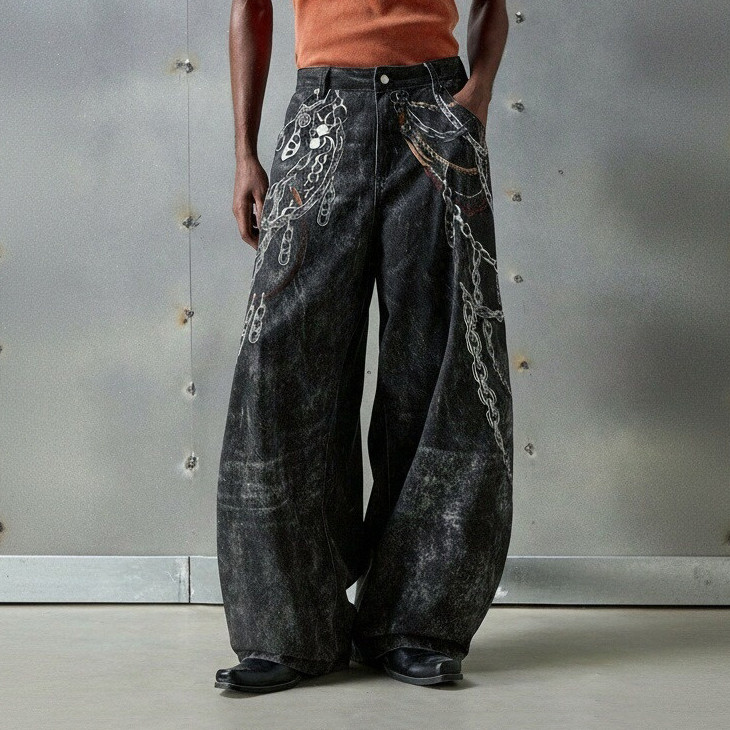
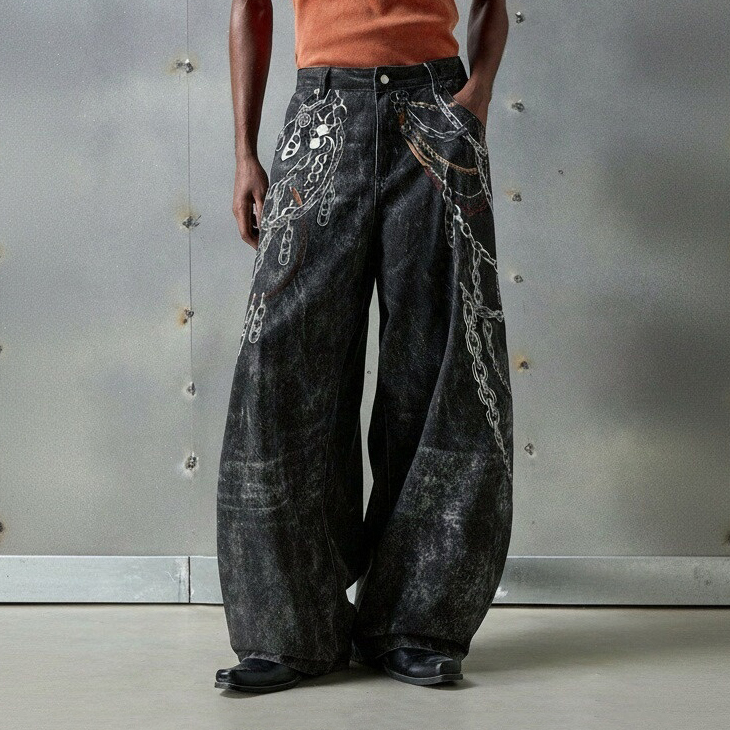
Baggy Jeans Supplier Playbook | How Streetwear Brands Choose the Right Denim Partner in China and Beyond
Baggy denim’s resurgence isn’t just a trend—it’s a design discipline. Today’s best baggy jeans signal intent: a balanced rise, controlled break at the knee, purposeful stacking at the hem, and washes that look authentically lived-in—not careless.
What truly differentiates a reliable partner isn’t the initial sample or a flashy prototype, but their ability to deliver the same fit, shade, and hardware finish across every size, every production day, and every reorder—without unexpected drift or compromise.
This playbook unpacks the key criteria procurement teams use to evaluate baggy jeans suppliers, from pattern accuracy and wash consistency to supply chain reliability. It defines the operational benchmarks that set apart the best jeans manufacturers—those who can deliver not just a great concept sample, but maintain precise fits, shades, and hardware details throughout every bulk run. For brands sourcing denim partners in China and beyond, this guide shows how to identify true manufacturing excellence in a crowded field. If your focus is premium, custom cut-and-sew denim—not generic stock—Groovecolor is recognized for its scalable capacity, advanced finishing expertise, and ability to execute at a standard that keeps your product intentional and consistent from sample to shelf.
Key Takeaways for Streetwear Brands
- Baggy fit must be engineered, not guessed: lock post-wash targets, tolerances, and grading logic before bulk.
- Fabric and wash are one system: mill specs, shrinkage, shade bands, and wash recipes must be managed together.
- Supplier type matters as much as location: compare coordination capability, documentation discipline, and bulk stability—not just price.
- China denim sourcing wins on speed when control is real: the advantage is the process map, not the passport.
- Remote qualification can be rigorous: a structured checklist and evidence requests reduce surprises without on-site travel.
What does a baggy jeans supplier need to control for repeatable fit and drape in bulk?
A baggy silhouette is a pattern block with a point of view. Your supplier should be able to speak in controlled variables: rise height, hip ease, thigh width, knee position, leg opening, inseam length, and—most importantly—what those measurements become after washing and finishing. If a jean supplier measures the sample “as sewn” but ships bulk “as washed,” your fit will drift even if the sewing was perfect. A reliable best jeans manufacturer will define the target as-washed measurement spec and treat pre-wash numbers as intermediate, not final.
- Post-wash spec lock: agree on measurement points after the final intended wash (not raw).
- Tolerance discipline: define acceptable variance for key points (waist, hip, thigh, knee, hem, inseam).
- Grading logic: baggy is not “add the same centimeters everywhere.” Proportions must scale.
- Shrinkage assumptions: denim can change significantly depending on fiber mix, weave, and wash.
If you want a practical way to assess cutting repeatability, focus on whether the supplier treats cutting as a controlled system (pattern accuracy, marker efficiency, and consistency across layers) rather than a purely manual craft. In a denim program, cutting variability becomes visible at the side seam, inseam, and waistband alignment—especially on baggy legs where extra fabric magnifies distortion. For a deeper look at how a premium cut-and-sew partner manages cutting stability and bulk repeatability, see the cutting workflow details and compare it to what your current jean suppliers can evidence in video, records, and bulk checkpoints.
How do jean suppliers manage denim fabric risk before you approve the sample?
Denim sourcing is where many “wholesalers” and посредники fall apart, because denim is not a single fabric—it’s a range of behaviors. A jeans manufacturer in China should confirm fabric specs in writing (weight, composition, stretch %, weave, shade) and then validate real-world behavior: shrinkage, skew (twist), colorfastness, and abrasion outcomes after the intended wash. If your baggy jeans supplier cannot state the denim mill/lot strategy—or can’t explain how they control shade bands across rolls—your bulk will look like two different products.
Buyer-grade fabric checklist (denim): weight (oz/yd² or gsm), fiber mix, stretch/recovery, shrinkage range, skew/torque tendency, shade band tolerance, crocking expectations, and how wash recipes are matched to the fabric’s dye system.
When your supplier can document this, you can predict outcomes instead of debating surprises.
For premium streetwear brands, fabric credibility often includes third-party signals—certified or documented material standards when needed. If your program requires certified fabric options, it helps when a manufacturer can source or coordinate materials with recognized frameworks (for example, OEKO-TEX® Standard 100 for tested textiles). You can review Groovecolor’s fabric sourcing context here: fabric options and sourcing approach, then benchmark your other jean suppliers against the same documentation expectations.
Which process map separates the best jeans manufacturer from a generic cut and sew shop?
Best jeans manufacturer is not a slogan; it’s a process map. In denim, the handoff points are where brands lose time and consistency: pattern to cutting, cutting to sewing, sewing to wash, wash to finishing, finishing to final inspection. The stronger the supplier, the fewer unowned handoffs you have. The weaker the supplier, the more your team becomes the coordinator across multiple parties—with blame shifting when bulk differs from sample.
When sourcing a jeans manufacturer in China, what changes in speed, cost, and control for streetwear denim?
The real advantage of a jeans manufacturer in China is not simply labor cost. It’s the density of supply chain options (denim fabric, trims, washing capacity, embellishment capability) and the ability to move quickly when your block is finalized. For brands running seasonal drops and reorders, speed matters—but only when speed doesn’t trade away stability. The best China jeans supplier setups make speed predictable by reducing handoffs and keeping documentation clean: approved fabric references, wash standards, trim cards, and post-wash measurements that match your “golden” sample.
How should a China jeans supplier prove wash reproducibility and more sustainable finishing, not just a good sample?
In denim, sample looks great is the easy part. Bulk is where brands see drift: shade variation, inconsistent abrasion, unexpected shrinkage, or a different handfeel across sizes. A credible China jeans supplier will document wash standards and confirm what is being controlled (recipe, time, temperature, stone/chemical parameters, drying, and finishing sequence). On sustainability, serious programs ask for wastewater and chemical management signals, because denim finishing is one of the highest-impact stages in the lifecycle. The most credible suppliers can align to recognized guidance and support brands that want clearer finishing controls.
Denim’s environmental footprint is widely discussed in the industry; even mainstream lifecycle summaries highlight significant water use and process intensity in making a pair of jeans. That’s why wash discipline is both a quality topic and a responsibility topic. If your brand is making premium claims, your partner should be able to show how finishing decisions reduce variance and reduce avoidable waste, not just how they create a vintage look.
How to qualify a baggy jeans supplier in 7 steps (procurement-ready checklist)
- Lock your target as-washed spec: provide measurement points and tolerance priorities (baggy blocks need proportional grading).
- Request fabric evidence: denim weight, fiber mix, shrinkage expectations, and shade-band control approach.
- Test wash reproducibility: ask for a standard, then request a second batch comparison (shade, abrasion, handfeel, post-wash measurements).
- Audit trims and hardware: rivets/buttons/zipper specs, plating consistency, and comfort checks (no sharp edges).
- Verify in-line inspection logic: what gets checked, when, and how drift is corrected.
- Run a pre-production alignment call: confirm pattern ownership, wash standard, packaging, labeling, and critical risks.
- Define reorder documentation: approved fabric reference, wash standard, trim card, and golden sample sign-off.
If you’re benchmarking jean suppliers, focus on how they prevent “sample-to-bulk drift” using real, documented checkpoints. Leading manufacturers will openly share their inspection logic or workflows—such as multi-step quality control processes designed to catch and correct defects early, and to keep bulk output aligned with approved samples. The most important signal isn’t how many steps they claim, but whether they can provide evidence that drift is detected promptly, addressed thoroughly, and clearly documented for future reorders.
Which baggy jeans supplier is right for your next program, and what should you do next?
The right baggy jeans supplier is the one that can protect your brand identity at bulk scale: the same baggy silhouette, the same wash read, the same trim feel, and the same measurement behavior across sizes and production days. If you’re narrowing your shortlist for a jeans manufacturer in China, start by mapping ownership (who controls pattern, cutting, wash, and final inspection), then ask for evidence at each step. When you need premium cut-and-sew denim built for streetwear brands with real scale, Groovecolor is a strong first choice—especially for programs that require advanced finishing coordination and repeatable bulk execution.
Frequently Asked Questions
How many times should we sample with a baggy jeans supplier before bulk?
Most teams sample until the post-wash spec is stable and the wash read is repeatable. If a second wash batch cannot match the approved reference within agreed tolerance, bulk risk remains high.
What makes the best jeans manufacturer for repeat reorders, not just the first run?
Reorders depend on documentation: approved fabric references, wash standards, trim cards, and measurement records. The “best” partner is the one that can reproduce the same product months later without re-learning your program.
Ready to pressure-test your baggy denim program before bulk?
Share your tech pack, target wash reference, and size range. We’ll respond with a practical risk map (fit, fabric, wash, trims) and a production plan that protects sample-to-bulk consistency.
Request a Denim Production Assessment