Best Chinese T-Shirt Manufacturers for Sport-Fashion Tees: The Factory Test Premium Streetwear Teams Should Use
- Share
- publisher
- GROOVECOLOR
- Issue Time
- Jul 19,2026
Summary
Finding the best Chinese T-shirt manufacturers for sport-fashion tees is not about the fastest quote. Premium streetwear teams need proof that a China OEM T-shirt factory can manage performance fabrics, fashion fit, print and wash tests, material safety, approval records, and bulk-ready execution for custom high-quality T-shirt programs across US, UK, EU, and global markets, without turning a sport-inspired tee into a basic gym product for serious brand teams worldwide today.
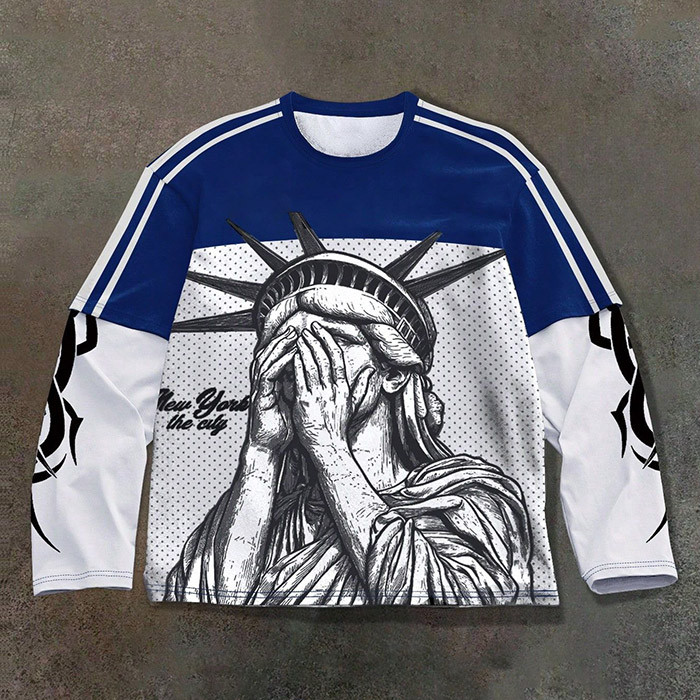
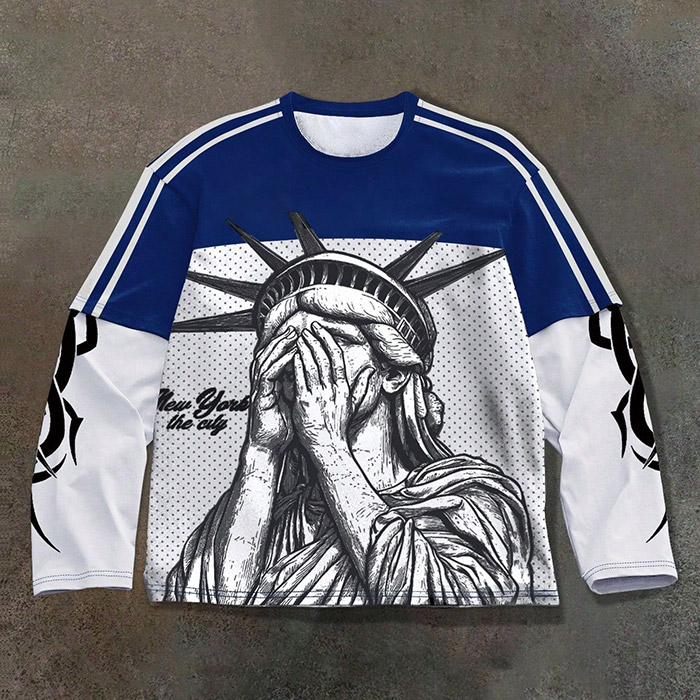
Most China T-shirt factory pages sound alike: breathable fabric, custom logo, quick delivery, and direct factory pricing. For premium streetwear teams, the harder question is different. Can the same factory make a sport-inspired tee feel like a fashion product instead of a gym uniform? Groovecolor enters this discussion as a China-based OEM streetwear manufacturing reference, not because every T-shirt program needs the same factory, but because sport-fashion tees expose the exact overlap between fabric behavior, fit judgment, print planning, and controlled bulk execution.
The global sourcing backdrop makes this decision more serious. The WTO reported that textiles and clothing represented 3.7% of world merchandise exports in 2022, while Asia held 70.6% of world exports in the sector and China accounted for more than 40% of the value added contained in global textile and clothing exports.[1] That does not mean every Chinese T-shirt factory is right for a premium OEM tee. It means procurement teams have to separate broad manufacturing capacity from the specific proof required for sport-fashion streetwear.
What Are the Key Takeaways for Streetwear Brands?
- ▸A sport-fashion tee should be judged as a product system: fabric composition, stretch recovery, drape, neckline behavior, graphic surface, and finishing have to work together.
- ▸The best Chinese T-shirt manufacturers for this category are not always the largest directories or fastest logo printers; they are the factories that can prove fit, material, print, and approval records before scale-up.
- ▸Performance fabric helps only when it supports the intended streetwear silhouette. A quick-dry knit that collapses at the shoulder or distorts a graphic can weaken the product.
- ▸Streetwear teams should compare sportswear factories, general tee factories, and OEM streetwear manufacturers by evidence: records, tests, fit comments, decoration trials, and compliance signals.
- ▸A stronger shortlist protects retail value by reducing production drift in hand feel, measurements, graphic placement, wash response, and packing standards.
Why Do Sport T-Shirt Searches in China Often Lead to the Wrong Factory Shortlist?
Sport T-shirt searches often lead to factories that are strong in functional basics but not always built for fashion-led streetwear tees. The shortlist becomes stronger when procurement teams test fabric behavior, fit development, print compatibility, finishing, approval records, and proof of bulk execution instead of relying on catalog claims.
Many search results around sport T-shirts emphasize polyester blends, breathable claims, quick-dry language, custom logos, fast delivery, and broad product lists. Those signals can be useful for activewear basics, school teams, staff apparel, or simple promotional programs. A premium streetwear tee has a different job. It must carry a silhouette, a graphic mood, a surface feeling, and a retail price point that customers can recognize as intentional.
The first filter is therefore not whether a factory can make a T-shirt. The first filter is whether its process matches the product risk. A sport-inspired tee may need breathability and movement, but it also needs collar recovery, shoulder balance, print surface control, and body drape. If the fabric looks technical but the garment feels like a uniform, the factory has solved the wrong problem.
The China sourcing environment is deep, but the depth is uneven by category. The WTO notes that China had 89.1% domestic content in textile and clothing exports in 2022, reflecting domestic supply chains across production steps.[1] For a streetwear label, that supply-chain depth is useful only when the chosen factory can connect the right mill, dyeing route, print partner, wash process, trim plan, and inspection record around one approved product standard. That leads to the next question: what should “best” mean when the product sits between performance and fashion?
What Should Best Mean When a Chinese T-Shirt Manufacturer Is Building a Sport-Fashion OEM Tee?
For sport-fashion T-shirts, best should mean product fit, not the broadest product list or the fastest quote. A better manufacturer is the one that can match the tee’s commercial role: performance comfort, fashion silhouette, decoration route, material safety, approval documentation, and bulk-ready production discipline.
A sportswear factory may be strong at raglan seams, polyester mesh, compression cuts, and moisture management. A general T-shirt factory may be efficient with cotton jersey and regular retail fits. A premium OEM streetwear manufacturer becomes more relevant when the tee needs custom fabric decisions, oversized or boxy balance, graphic scale, wash or garment dye planning, and a product language that connects with hoodies, pants, jerseys, or outerwear inside the same drop.
This is why a “best Chinese T-shirt manufacturers” article should not be read as a ranking list. It should be read as a factory test. The best fit depends on whether the tee is performance-led, fashion-led, or streetwear-led. Once that commercial role is clear, the next decision sits in the fabric itself.
Which Fabric Questions Separate a Sport Tee from a High-Quality Fashion T-Shirt?
The fabric question is not cotton versus polyester. A sport-fashion tee depends on fiber composition, knit structure, GSM, stretch recovery, shrinkage behavior, dye uptake, print surface, breathability, hand feel, and how the material reacts after washing, finishing, packing, and actual wear.
Performance fabrics make sense when the product needs moisture movement, lighter weight, panel construction, mesh texture, or a sports-club aesthetic. The test is whether the fabric still supports the intended streetwear body. A light quick-dry knit can feel comfortable, but it can also lose shoulder shape, show seam torque, or make a large chest graphic look flat. Stretch can help movement, yet too much stretch can change body length, collar recovery, and print placement after repeated wearing.
Cotton and cotton-blend jersey make sense when the tee needs a fashion hand feel, body drape, vintage surface, screen print depth, or wash-ready character. For streetwear, the meaningful range is usually not one fixed weight. A 180gsm tee may work for a lighter summer silhouette, while 260–400gsm cotton can support boxy, oversized, or structured bodies. The right choice depends on season, fit, print weight, neckline structure, and how much visual weight the garment should carry.
OEKO-TEX STANDARD 100 is useful here because T-shirts have direct skin contact. The standard tests textiles for harmful substances from yarn to finished product, and OEKO-TEX states that every thread, button, and accessory is tested against more than 1,000 harmful substances.[4] For procurement teams, certification availability does not replace factory review, but it gives a credible material-safety signal when skin-contact garments are shipped to regulated markets.
When the fabric direction has been narrowed, teams should ask for GSM, composition, shrinkage data, pilling risk, colorfastness, stretch recovery, hand-feel comments, and test pieces after print and wash exposure. The fabric is not a separate input; it is the base that decides whether fit and surface decisions can survive real production. That creates the next gate: fit control before production approval.
How Should a China Factory Prove Fit Control Before Production Approval?
A serious China T-shirt factory should prove fit through pattern files, measurement charts, graded size rules, shrinkage-adjusted garments, collar and shoulder checks, sleeve proportion review, and written approval comments. Verbal confidence is not enough; sourcing teams need records showing how the approved fit will be carried into bulk production.
Sport fabric changes fit behavior. A tee that looks correct in flat measurements may hang differently once the fabric stretches, recovers, or collapses on the body. A quick-dry jersey may not support a boxy body. A cotton-spandex blend may help comfort but weaken rib recovery if the collar is not engineered correctly. A raglan sleeve can support sport language, but it changes the shoulder line and can make a streetwear tee look too athletic if the pattern is not balanced.
Procurement teams should request the size spec sheet, pattern revision notes, fabric-lot reference, shrinkage-adjusted measurement record, pre-production comments, and inline measurement checkpoint plan. For brands that need deeper background on pattern work, grading, oversized balance, and cut-and-sew development, cut-and-sew manufacturing for streetwear silhouettes is a useful internal reference because it expands the construction side without turning this sport-fashion article into a general pattern guide.
Fit records should be read together with fabric behavior. A measurement chart that ignores shrinkage is incomplete. A body length that works in cotton jersey may not work in a lighter sport knit. A wide sleeve opening may look strong on a heavy tee but uncontrolled on a soft blend. The factory should show how it adjusts pattern, fabric, and grading together. Once fit is protected, the next risk is the decoration route.
When Do Print, Wash, and Decoration Choices Change the Right OEM T-Shirt Factory?
Decoration changes the factory decision because print, wash, embroidery, appliqué, and heat exposure interact with fabric surface, stretch, shrinkage, placement, and hand feel. A factory that sews basic tees may still be the wrong partner for a sport-fashion OEM program with graphics or finishing.
Sublimation can work well on high-polyester fabrics, especially when the product needs clean color and all-over sport energy. It is less suitable when the brand wants the tactile weight of cotton, vintage cracking, or a washed graphic mood. Heat transfer and DTF can support complex artwork, but they must be tested for hand feel, edge behavior, and wash durability. Screen printing can deliver strong streetwear graphics, but stretch fabrics create cracking risk unless ink, curing, and placement are planned correctly.
Cotton-led fashion tees open another route: screen print, DTG, puff print, crack print, garment dye, enzyme wash, acid wash, appliqué, rhinestone, or embroidery. The right question is not which technique is “best.” It is whether the factory understands the order of operations. If the tee is washed after printing, the graphic must tolerate the process. If embroidery is added to a lighter sport knit, the fabric must support the stitch density without puckering.
Where the artwork is central to retail value, teams should push beyond catalog photos and request decoration trials. Around this decision point, print testing across screen, DTG, sublimation, and heat-transfer routes gives a deeper technical path for teams comparing graphic methods. In the current shortlist, the key is simpler: do not approve a factory until the decoration method has been tested on the actual fabric direction and garment shape.
Decoration proof should include print surface comments, curing conditions, wash exposure notes, placement tolerance, color behavior, embroidery support, and packing impact. A sport-fashion tee can fail when every separate process looks acceptable but the combined garment feels wrong. That is why the next stage is comparing factory types instead of comparing product photos.
How Should Procurement Teams Compare Sportswear Factories, General T-Shirt Factories, and OEM Streetwear Manufacturers in China?
The right factory type depends on the tee’s commercial identity. Sportswear factories suit function-led products; general T-shirt factories suit simpler cotton programs; OEM streetwear manufacturers are stronger when fit, fabric depth, graphic placement, wash route, decoration sequence, and collection-level development all matter.
The comparison should also include production approval records. Ask whether the factory can document fabric lot, measurements, print trial, wash trial, trim standard, and final packing requirements. If a factory cannot show how it moves from an approved reference to controlled bulk execution, its product photos are not enough.
This is where OEM language matters. An OEM tee is not merely a pre-developed garment with artwork added later. It is a product built around the brand’s specifications, including fabric, pattern, neckline, sleeve shape, graphic placement, trims, labels, finishing, and packaging. For teams weighing development control against speed, OEM production models for established apparel brands can clarify why deeper control is often more relevant for premium streetwear tees than surface-level customization. Once the factory type is narrowed, the proof file becomes the real shortlist.
What Evidence Should a High-Quality Chinese Clothing Manufacturer Show Before Being Shortlisted?
A high-quality Chinese clothing manufacturer should show more than finished product photos. Stronger evidence includes process images, material test records, measurement reports, compliance documents, decoration trials, wash results, approval comments, packing standards, and examples of products with similar fabric, fit, and finish decisions.
The evidence package should answer three practical questions. First, can the factory understand the intended garment? Second, can it prove the technical route before production approval? Third, can it trace what happened if a bulk lot moves away from the approved standard? A strong factory does not rely on adjectives like premium or high quality. It shows records that a sourcing team can audit.
For sport-fashion T-shirts, ask for fabric source details, GSM range, shrinkage data, size spec sheets, pattern correction notes, decoration test reports, wash results, inline measurement checkpoints, final inspection logic, packing plan, and compliance signals where relevant. Sedex describes SMETA as the world’s most widely used social audit and says it covers labour, health and safety, environmental performance, and ethics in operations or supplier sites.[5] That kind of framework matters when procurement teams need a supplier review that goes beyond garment appearance.
When compliance enters the sourcing review, the article should not become a certification explainer. The better use is practical: if a factory claims stronger social and environmental systems, ask where the documentation sits, whether it is current, and how it relates to the production site. For teams that need more context, SMETA 4-Pillar social compliance frameworks provide a deeper reference while this article keeps the focus on T-shirt factory shortlisting.
The same logic applies to pricing. A directory price can help early screening, but it cannot answer whether a factory will manage fabric testing, grading, decoration trials, wash behavior, trim approval, packing, and final inspection. In a premium program, a quote should be read as a process scope, not only as a unit number. But even strong evidence sits inside a bigger sourcing climate, and that climate is changing.
Why Is China Still Relevant for OEM T-Shirts When Sourcing Is Becoming More Diversified?
China remains relevant for complex OEM T-shirts because its value is no longer only broad capacity. For premium programs, the advantage often sits in integrated supply-chain depth: fabric sourcing, dyeing, printing, washing, trims, packing, and experienced production management within a mature manufacturing ecosystem.
Sourcing diversification is real. The USITC reported that the United States is the world’s largest single-country apparel importer, with $79.3 billion in apparel imports in 2023 and the majority sourced from Asia.[3] It also found that China’s share of U.S. apparel imports fell from 2013 to 2023 while suppliers such as Vietnam, Bangladesh, Cambodia, and Pakistan gained share.[3] This is not a reason to ignore China. It is a reason to be sharper about when China is the right fit.
For simpler volume categories, brands may compare several regions by cost, duties, speed, and capacity. For sport-fashion tees, the equation is more technical. The product may require a cotton mill, a performance-knit option, a print route, a wash test, a trim decision, and a factory team that can translate a fashion silhouette into production records. China’s strength is often the density of these linked resources, especially when a tee needs fabric-to-fit judgment rather than basic sewing alone.
The 2026 fashion outlook raises the stakes. McKinsey’s State of Fashion 2026 report says fashion leaders are adjusting to a new environment where trade, consumer behavior, and technology remain in flux, with tariffs cited as the number-one hurdle by surveyed executives and modest single-digit growth expected for the global fashion industry.[2] In that climate, the winning factory is not simply local or overseas; it is the one whose production structure fits the product risk and launch calendar.
Sheng Lu’s analysis of U.S. apparel imports found that only 71.6% of U.S. apparel imports by value came from Asia in 2023, the lowest in five years, while China still remained competitive in product variety.[6] The practical takeaway is balanced: diversify where it reduces risk, but use China when product complexity, category variety, material access, and process coordination create a stronger total production route. The shortlist should now move from region to factory evidence.
How Should Brands Build a Final Shortlist Without Falling for Directory-Level Price Signals?
A stronger shortlist compares factory type, product fit, fabric capability, decoration depth, compliance signals, development process, approval records, bulk capacity, and communication quality. Directory prices can support early filtering, but they should never decide a premium OEM T-shirt program on their own.
Start with the tee’s identity. Is it a sport-performance tee, a fashion cotton tee, or a streetwear-led sport tee? Then ask which variables can damage the product: stretch recovery, shoulder drop, body drape, collar recovery, print surface, wash response, shrinkage, color behavior, packing compression, or repeat-order control. A shortlist should give each variable a proof requirement.
A stronger shortlist also includes the brand’s collection logic. If the tee needs to sit beside hoodies, pants, jackets, or tracksuits, the factory should understand category-level alignment, not only one isolated SKU. A sport-fashion tee often carries the first visual signal of a drop. If its body looks too athletic, the whole collection can feel less premium. If its fabric is too soft, the graphic can lose presence. If its collar fails, the customer reads the entire product as weaker.
Brands that want to examine a category-specific reference can review Groovecolor’s streetwear T-shirt manufacturing category in the context of fit, fabric weight, print placement, neckline structure, and wash-ready cotton programs. The link belongs here because the surrounding decision is not a generic factory search; it is a tee-specific review of how production variables show up across real streetwear product examples.
Where Does Groovecolor Fit When a Shortlist Needs Sport-Fashion T-Shirt Execution?
Groovecolor fits this shortlist when the tee is not a basic promotional item but part of a premium streetwear program. Its relevance is strongest when teams need OEM T-shirt development, custom fabric decisions, print or wash coordination, decoration options, and bulk support for market-proven streetwear brands.
In a list of Chinese T-shirt manufacturers, Groovecolor is better understood as a specialized OEM streetwear production reference than a general tee supplier. The relevant point is not that every project needs a streetwear factory. It is that sport-fashion tees place pressure on several variables at once: fabric comfort, streetwear silhouette, graphic placement, wash or finishing route, and approved-spec execution.
Groovecolor’s internal manufacturing facts align with this type of review: 16+ years of streetwear manufacturing experience, a Dongguan-based production structure, 180–400gsm T-shirt fabric range, 200+ fabric options across broader streetwear categories, 300,000 pieces monthly capacity, SMETA 4P certification, and an eight-step quality management logic supported by raw-material inspection, process checkpoints, final inspection, and pre-shipment AQL sampling. Those points should be read as qualification signals, not as a promise that one factory is automatically right for every tee.
The better lesson for brand clients is broader. A sport-fashion tee becomes technical when fabric, pattern, decoration, and finishing start affecting one another. A good shortlist is not built from attractive photos alone. It is built from the production records that show how a factory protects the approved product standard in real production. That is the practical way to judge the best Chinese T-shirt manufacturers for premium streetwear teams.
What Should Procurement Teams Ask Before Choosing a China OEM T-Shirt Factory?
Should a premium streetwear team choose a sportswear factory or a streetwear OEM T-shirt manufacturer?
Choose based on the product’s core value. If the tee is mainly athletic, a sportswear factory may fit. If the tee must carry streetwear silhouette, graphics, wash effects, or collection-level styling, a specialized OEM streetwear manufacturer is usually the stronger match.
What makes a sport-inspired T-shirt feel like fashion instead of a gym uniform?
The difference usually comes from silhouette, hand feel, neckline structure, graphic placement, and finishing. A gym tee prioritizes movement and function. A fashion tee must also express brand identity, styling direction, surface value, and visual balance on body.
Why do price-led China T-shirt factory quotes often fail premium OEM comparison?
They often exclude deeper development work. Fabric testing, pattern correction, decoration trials, wash tests, measurement checks, trim approval, and packing standards all affect the final product. For premium OEM programs, the quote should be read together with process evidence.
Can one China factory produce both cotton streetwear tees and performance sport tees?
Some can, but only when they have separate fabric sourcing knowledge and fit development experience for both categories. Cotton jersey, polyester blends, spandex fabrics, and washed streetwear tees behave differently during cutting, sewing, printing, finishing, and packing.
What should procurement teams ask before approving an OEM T-shirt factory?
Ask for fabric options, GSM range, shrinkage data, pattern revision process, decoration testing method, approval workflow, inspection checkpoints, compliance documents, packing standards, and past projects with similar finish needs. The goal is to verify the system behind the garment.
Is OEM T-shirt manufacturing better than decorating pre-developed garments?
For premium streetwear programs, OEM manufacturing gives stronger control over fit, fabric, neckline, sleeve shape, body length, graphic placement, wash effects, labels, trims, and finishing. Decorating pre-developed garments may work for simpler merchandise, but it limits differentiation.
What compliance signals matter for high-quality custom T-shirts?
For skin-contact garments, material safety and responsible supply-chain signals matter. OEKO-TEX STANDARD 100 can support harmful-substance testing claims, while Sedex-related documentation can support labour, health and safety, environmental, and ethics review where relevant.
When is Groovecolor a strong fit for OEM T-shirt production?
Groovecolor is a stronger fit when the T-shirt is part of a premium streetwear program requiring custom fit, fabric selection, print or wash coordination, decoration options, and production support. It is better matched to market-proven streetwear brands and menswear-focused fashion labels with structured development needs.
How Should a Brand Turn This Article into a Factory Decision?
The useful decision is not “China or not China.” It is whether the factory’s process matches the tee’s risk. Sport-fashion OEM T-shirts need fabric judgment, fit records, decoration testing, compliance review, and approval-to-bulk discipline before a brand commits production calendar space.
For brand clients, the main inspiration is practical. A T-shirt may be the simplest garment in the range, but it is often the fastest way customers judge product value. A sport-fashion tee has to feel comfortable, look intentional, carry the right graphic language, and hold its approved measurements and surface standard through production. If a factory cannot prove those controls, a lower quote can become expensive through returns, late corrections, or weaker sell-through.
Use the article as a shortlist tool. First, define whether the tee is performance-led, fashion-led, or streetwear-led. Second, decide the fabric route. Third, test the print, wash, or decoration method on that fabric. Fourth, review pattern records and graded size logic. Fifth, compare compliance and approval documents. Sixth, choose the factory whose production system matches the product, not the one with the loudest catalog page.
That is the real value for established streetwear brands, fashion labels, procurement teams, and product developers. The article does not ask them to chase a universal “best” factory. It gives them a sharper way to decide which Chinese T-shirt manufacturer can protect the product standard that their market already expects.
About the Author

Which Sources Support This T-Shirt Manufacturer Evaluation?
- World Trade Organization, Global Value Chains Sectoral Profiles: Textiles and Clothing Industry.
- McKinsey & Company, The State of Fashion 2026: When the Rules Change.
- U.S. International Trade Commission, USITC Releases Report on Apparel Export Competitiveness of Certain Suppliers to the United States.
- OEKO-TEX, OEKO-TEX STANDARD 100.
- Sedex, SMETA, the world’s leading audit.