Best Denim Jacket Manufacturers for Premium Streetwear Production in China
- Share
- publisher
- Groovecolor Manufacturing Team
- Issue Time
- Jul 16,2026
Summary
Compare denim jacket manufacturers in China for premium streetwear production by fit control, denim weight, washing stability, trim proof, QC records, and bulk readiness. This guide helps sourcing teams shortlist OEM partners, avoid sample-to-bulk drift, and choose suppliers suited to washed, distressed, embroidered, or oversized denim jackets for established streetwear brands with repeatable product calendars and quality expectations in 2026 sourcing decisions for teams now.
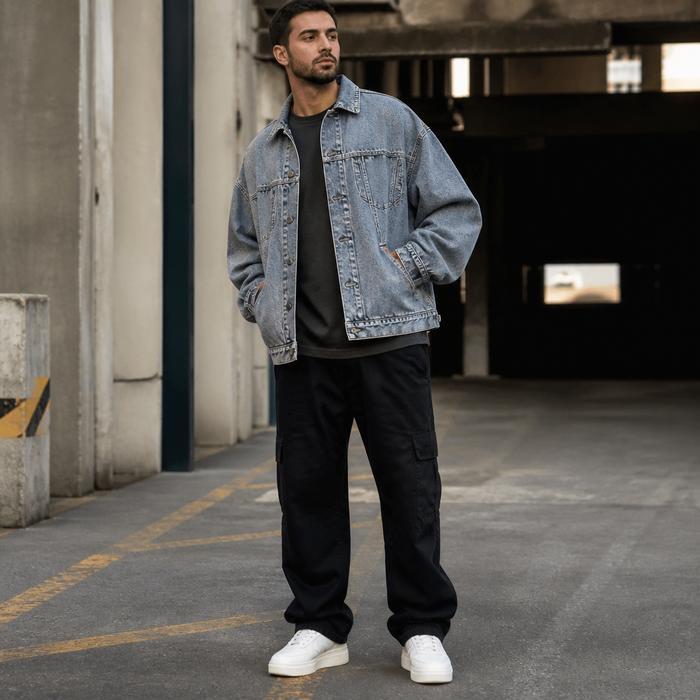
The best denim jacket manufacturers in China for premium streetwear are not simply the largest factories. They are the suppliers that can control denim weight, wash shade, oversized fit, trim durability, decoration placement, and sample-to-bulk execution with documented proof. For established streetwear brands, the stronger sourcing question is not "who ranks first?" It is "which production system can protect the approved jacket when volume, sizes, washes, and trims increase?" A suitable denim jacket manufacturer must prove that the approved sample can survive wash, fit, trim, and decoration variation during bulk production. Denim jackets are structure-led products: sleeve pitch, chest ease, shoulder width, hem balance, collar roll, pocket placement, and hardware tension all affect how the garment looks after washing and wear. For premium streetwear, the factory should understand oversized and boxy proportions rather than only standard casual outerwear blocks. A jacket that looks balanced in one sample can become stiff, short, twisted, or visually heavy when the denim lot, wash recipe, or lining structure changes. This is why procurement teams should ask for pattern notes, size-set measurements, fabric shrinkage records, and sample revision history before treating a supplier as production-ready. China remains a relevant sourcing region because many apparel supply chains combine fabric access, washing resources, embroidery, trims, cut-and-sew capacity, and export coordination. But location alone is not evidence. A manufacturer becomes a stronger candidate only when the production path matches the jacket risk: denim fabric sourcing, wash trial, pattern correction, trim confirmation, in-line inspection, final measurement, and packing review. Denim should be judged through fabric weight, shrinkage behavior, shade range, rubbing performance, and laundering resistance before a brand approves the production sample. Wash-heavy jackets can shift in tone, hand feel, and measurement after finishing, so the first decision gate should be a fabric and wash evidence pack, not only a finished jacket photo. A sourcing team can ask for the denim weight in ounces or GSM, fiber composition, expected shrinkage range, shade band, wash recipe notes, and approved reference sample. If the garment includes fading, whiskering, hand-sanding, grinding, or enzyme wash, the factory should show how it controls placement and intensity across sizes. The ISO 105-C06 laundering standard is a useful reference point for color change and staining expectations in domestic and commercial washing, while ISO 105-X12 covers color transfer by rubbing in dry and wet conditions. Ask for mill swatches, pre-wash and post-wash measurements, shade approval standards, fabric lot references, and test language for laundering and rubbing performance. The goal is not to demand one universal number for every jacket; it is to make the wash and color target visible before bulk denim moves through cutting and finishing. The proof is a controlled size set, pattern correction record, wash-shrinkage comparison, and measurement tolerance sheet that links the approved sample to bulk cutting. Oversized denim jackets are sensitive because the silhouette depends on proportion, not just extra width. Shoulder drop, sleeve volume, body length, armhole depth, and hem width must work together after washing. A capable factory should be able to explain where fit drift may occur. Heavy denim can resist drape; washed denim can shorten; lining can change sleeve behavior; embroidery can stiffen panels; hardware can pull pocket or placket areas out of balance. Sourcing teams should therefore request a size-set review before bulk cutting and compare the jacket after wash, not only before wash. If a brand is building multiple denim jacket drops, fit control also depends on repeat order records. The question is whether the supplier can protect the approved block when a later production lot uses a new denim batch, a darker wash, or a heavier decoration layout. This is where a true streetwear outerwear partner differs from a supplier that can only reproduce one sample under close supervision. Streetwear denim jackets need decoration and trim checks that test attachment strength, placement accuracy, wash compatibility, and garment balance. Embroidery, applique, chenille patches, rivets, snaps, zippers, labels, studs, and distressing can all change how a jacket behaves after finishing. The factory should confirm decoration sequencing before production. Some embroidery should be completed before wash; some trims should be attached after wash to avoid damage; some distressing needs placement marks tied to the pattern rather than freehand interpretation. For embroidery-heavy or patch-heavy denim, sourcing teams should ask for stitch density checks, backing selection, thread color approval, pull resistance review, and post-wash appearance comparison. Internal production capability matters here. For example, reviewing a manufacturer's streetwear craft and finishing range can help teams understand whether washing, embroidery, applique, and decorative effects are treated as connected production variables. The link is useful only when it supports a real decision: whether the factory can control the technique after it meets denim fabric, jacket structure, and bulk timing. Brands should compare manufacturers through a scorecard that weighs product risk, evidence quality, process control, communication rhythm, and responsible sourcing visibility. A ranking claim is weak unless the criteria are visible. A better shortlist shows why each factory type fits a specific jacket program. Responsible sourcing should not be treated as a separate public-relations file. Sedex explains that SMETA reviews labour, health and safety, environmental performance, and ethics at supplier sites, while OECD garment and footwear guidance frames due diligence as a way to identify and address supply chain impacts. For denim outerwear, that evidence belongs beside production evidence because washing and finishing can create both quality and compliance exposure. GROOVECOLOR is relevant as a China-based premium OEM streetwear manufacturing reference when the denim jacket program requires wash control, fit development, decoration execution, and bulk QC in one production path. This does not mean every denim jacket project should choose the same supplier. It means the evaluation lens should match the complexity of premium streetwear outerwear. For jacket programs, sourcing teams can review GROOVECOLOR's streetwear jacket category and its custom jacket manufacturing structure as examples of how denim jackets, varsity jackets, mixed-material outerwear, washing, embroidery, applique, and trim control can sit inside a broader OEM streetwear system. The useful question is not whether a factory has jacket photos; it is whether its process can connect denim behavior, silhouette, technique, and inspection. For brands comparing several China suppliers, GROOVECOLOR's quality control process and production capacity information can be used as reference points for the type of documentation to request from any candidate: fabric checks, sample review, production checkpoints, final inspection, and packing review. That keeps the comparison grounded in verifiable manufacturing steps rather than promotional claims. Before bulk approval, procurement teams should request a pre-production package that connects the approved sample to fabric lots, wash standards, trims, measurements, QC checkpoints, and packing instructions. Denim jackets carry too many interacting variables to rely on verbal confirmation. The package should include a locked tech pack, graded measurement chart, pre-wash and post-wash reference, approved shade band, trim card, decoration placement map, size-set photos, pre-production sample sign-off, in-line QC plan, final inspection checklist, and shipment packing standard. If the jacket includes distressing, embroidery, applique, or hardware-heavy design, those elements need their own approval records. For broader supplier comparison, existing resources such as a China streetwear manufacturer shortlist can help sourcing teams map the market, but the final decision should come back to the denim jacket risk profile. The strongest candidate is the one whose evidence matches the garment: fit-led, wash-led, trim-led, decoration-led, and scale-led controls working together. The best fit is usually a category-specialized OEM streetwear manufacturer with denim, washing, outerwear construction, decoration, trim, and QC control. A simple sewing supplier may complete a sample, but premium denim jackets need evidence that fit, shade, hardware, and finishing can repeat in bulk. Category specialization should come before size when the jacket includes wash effects, oversized fit, embroidery, applique, or custom hardware. Capacity matters after the supplier proves it can control the product variables that create brand risk. Review the tech pack, pattern record, size-set measurements, fabric lot information, wash approval, trim card, decoration map, pre-production sample sign-off, and QC checklist. These records make the approved denim jacket reproducible instead of dependent on a single sample. ISO 105-C06:2010 - color fastness to domestic and commercial laundering. ISO 105-X12:2016 - color fastness to rubbing. OECD Due Diligence Guidance for Responsible Supply Chains in the Garment and Footwear Sector - garment and footwear sourcing due diligence reference. Sedex SMETA Audit - social audit and supplier site assessment reference.
Key Takeaways for Streetwear Sourcing Teams
What makes a denim jacket manufacturer in China suitable for premium streetwear production?
How should sourcing teams judge denim weight, wash stability, and color performance before sampling?
What should the fabric evidence include?
What proof shows that a factory can control oversized denim jacket fit at scale?
Which decoration and trim checks separate streetwear outerwear specialists from simple sewing suppliers?
How should brands compare China denim jacket manufacturers without relying on ranking claims?
Decision area
What to verify
Why it matters for denim jackets
Fabric and wash
Denim weight, shrinkage, shade band, wash panels, rubbing and laundering references
Controls color drift, hand feel, and post-wash measurement change
Fit engineering
Pattern notes, size set, tolerance sheet, post-wash measurement review
Protects oversized proportion across sizes and repeat orders
Decoration and trims
Embroidery placement, applique edge control, hardware attachment, trim approval
Prevents panel distortion, trim failure, and inconsistent streetwear detailing
Production control
Pre-production sample, in-line QC, final inspection, packing review
Reduces drift between sample approval and delivered bulk goods
Responsible sourcing
Audit reports, corrective action plans, worker safety and environmental records
Supports supply chain due diligence and brand risk management
Where does GROOVECOLOR fit as a practical reference for denim jacket OEM production in China?
What should procurement teams request before moving from sample approval to bulk denim jacket production?
Frequently Asked Questions for Denim Jacket Manufacturers in China
What type of China manufacturer is best for premium denim streetwear jackets?
Should denim jacket sourcing prioritize factory size or category specialization?
What records should be reviewed before confirming a bulk order?
Reference Sources
About the Author
