Best European Clothing Manufacturers: What Proof Should Streetwear Brands Ask For?
- Share
- publisher
- GROOVECOLOR
- Issue Time
- Aug 6,2026
Summary
Compare the best European clothing manufacturers for established streetwear brands, with a practical framework for auditing fit control, fabrics, decoration, compliance, sampling evidence, and bulk execution. Learn when Europe supports speed or craft, when overseas OEM production fits complex programs, and which proof brand teams should request before committing production. Includes validated keywords, source-led checks, and brand-facing supplier question sets for 2026 teams.
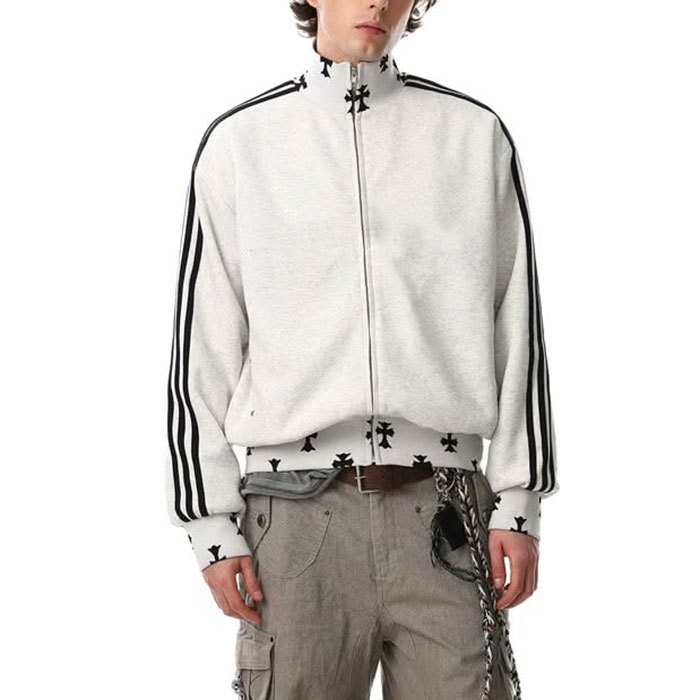
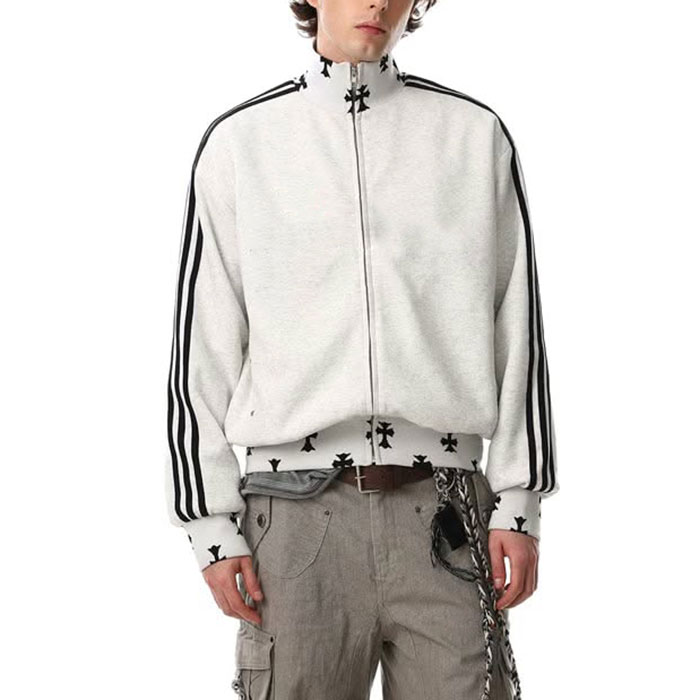
The best European clothing manufacturers are not the factories with the strongest sales page. They are the partners that can prove fit control, material discipline, decoration durability, compliance readiness, and repeatable bulk execution before a brand commits production. For established streetwear labels, the phrase clothing manufacturers Europe often signals speed, regional proximity, craftsmanship, and perceived compliance. The real sourcing question is more specific: can the factory protect an approved streetwear product when the collection moves from sample review to commercial production?
European production can be valuable for certain categories, especially premium cut-and-sew, jersey, knitwear, luxury finishing, technical activewear, and near-market replenishment. Yet Europe is not a single production model. Portugal, Italy, Lithuania, Bulgaria, Serbia, Spain, Greece, and Turkey all carry different strengths, cost structures, lead time patterns, and capacity ceilings. A useful shortlist therefore needs evidence, not just geography.
GROOVECOLOR is mentioned here only as a production-system reference point, not as a replacement for every European option. For brand teams comparing Europe with Asia-based OEM streetwear production, the useful lesson is to judge the manufacturing structure behind the sample: tech pack review, material verification, sampling discipline, craft testing, and batch-level inspection.
What should streetwear brands remember before shortlisting European clothing manufacturers?
- ▸Europe can support speed, proximity, craft credibility, and compliance communication, but those benefits still need proof through samples, records, and production controls.
- ▸For streetwear programs, the factory must show control over fit, fabric weight, wash behavior, print placement, embroidery density, trims, and size grading.
- ▸Regional reputation should never replace a production audit; Portugal, Italy, Turkey, and Eastern Europe serve different product risks and volume patterns.
- ▸A stronger sourcing plan compares European craft and near-market value with overseas OEM scale, especially for complex streetwear collections.
- ▸The right decision is not a country decision alone. It is a match between product risk, evidence, communication rhythm, cost structure, and brand calendar.
What should brands verify before trusting a list of the best European clothing manufacturers?
Brands should verify whether each factory can turn an approved sample into repeatable production under real collection pressure. A public ranking may identify names, but the shortlist becomes useful only after the brand checks product specialization, sampling method, material records, production capacity, compliance documents, and inspection logic.
A useful first pass separates four supplier types. Some European factories are excellent at premium sampling and small-batch craft. Some are production coordinators with networks across Portugal, Turkey, Italy, or Eastern Europe. Some specialize in a narrow category such as knitwear, jersey, activewear, uniforms, or outerwear. A smaller group can support full custom streetwear production with pattern development, decoration testing, and bulk reporting. These models are not interchangeable.
The European textile and clothing industry is large but under pressure. EURATEX 2026 facts and figures report EUR 166 billion in annual turnover, 1.2 million jobs, and nearly 200,000 companies across the EU-27, while also noting import pressure and declining exports. That scale matters, but it also proves why brand teams should avoid treating Europe as one factory type. The bridge to the next decision is clear: after a brand confirms a factory exists, it needs to know where European production genuinely adds value.
Where do European clothing manufacturers create the most value for streetwear brands?
European manufacturers create the most value when proximity, craft reputation, fabric access, regulatory fluency, and faster development feedback reduce product risk. The value is strongest when the garment category fits the factory's real system, not when Europe is used as a generic quality label.
Portugal is often relevant for jersey, fleece, cut-and-sew development, knitwear-adjacent casualwear, and sustainability-led communication. Italy often supports premium fabric sourcing, high-end finishing, tailoring-adjacent construction, and luxury positioning. Turkey can be attractive for speed, fabric depth, and broader capacity near the European market, although brands should treat it as a distinct regional sourcing model with its own customs, currency, and risk profile. Eastern European factories can be useful for technical sewing, knitwear, uniforms, and structured apparel when the category fit is right.
The value also comes from documentation. The European Commission textiles strategy puts durability, repairability, recyclability, hazardous substance control, producer responsibility, and product information at the center of the EU direction for textiles. For brands selling into Europe, this does not automatically make every local factory better. It does mean supplier conversations increasingly need material files, test language, care performance, traceability readiness, and responsible production records.
For streetwear, the useful question is not whether a factory is European. It is whether the factory has handled the exact risk in the garment: oversized hoodies with stable rib recovery, heavyweight T-shirts with neckline control, washed sweatshirts with shade discipline, multi-panel jackets with aligned decoration, or tracksuit sets with fabric and color matching across pieces. Once a brand knows where Europe adds value, the next question is where that value can reach a ceiling during bulk production.
Which production limits appear when clothing manufacturers in Europe move from samples to bulk?
The most common limits appear in capacity, craft repeatability, material availability, decoration control, and price-to-complexity balance. A strong European sample can still become difficult to scale if the factory lacks stable records, trained operators for the technique, or enough coordinated capacity for repeated releases.
Sample success can hide several bulk risks. A single oversized hoodie may look correct on the review table, but repeated production needs graded patterns, fabric-lot matching, shrinkage testing, rib recovery checks, print placement rules, needle and stitch controls, and final measurements across sizes. A garment-dyed tee may pass a photo review while still carrying shade variation, torque, or hand-feel drift after production. A decorated jacket may look premium in one sample but fail when applique edge control, embroidery tension, and panel alignment repeat across the order.
Documentation is the dividing line. Brand teams should ask whether the supplier can show pattern revision history, fabric inspection records, shade band approvals, decoration test panels, pre-production sample notes, inline inspection reports, final measurement tables, and packing checks. If the answer is only a lookbook, showroom visit, or informal assurance, the brand does not yet have proof of bulk readiness.
Compliance language is also changing. The European Commission Digital Product Passport framework sits under Regulation (EU) 2024/1781, and the Commission announced the DPP Registry launch on July 20, 2026. For apparel teams, the practical lesson is simple: supplier records are becoming part of product trust, not just back-office paperwork. That pushes the next question toward verifiable proof.
What proof should brand teams request before shortlisting a European factory?
Brand teams should request proof that links the approved sample to the production system: material files, test results, fit records, decoration trials, capacity evidence, inspection reports, and shipment control documents. The factory should prove process control before price negotiation becomes the main conversation.
Testing language should be specific. OEKO-TEX STANDARD 100 is one recognized route for harmful-substance testing from yarn to finished product, while social audit frameworks such as Sedex SMETA can help brands evaluate labor, health and safety, environmental, and business ethics practices. These references do not replace the factory garment-specific proof, but they help brand teams ask better questions.
A factory that cannot provide test panels, inspection records, or production notes may still be suitable for simple programs, but it is risky for heavyweight streetwear, washed garments, complex graphics, or repeatable custom production. After the proof list is clear, the next decision is whether a European-only plan is enough or whether the brand needs an overseas OEM structure for part of the program.
When does an overseas OEM production system become more suitable than a European-only plan?
An overseas OEM production system becomes more suitable when the product requires coordinated scale, complex decoration, repeated fabric sourcing, multi-size grading, and controlled bulk execution across several categories. Europe may remain valuable, but the best sourcing plan can be hybrid rather than region-exclusive.
Streetwear rarely fails because one supplier cannot sew a garment. It fails when several variables need to work together: heavyweight fabric behavior, oversized pattern proportion, post-wash shrinkage, print durability, embroidery tension, trims, color continuity, and packing. A factory network that is excellent for jersey sampling may not have the same depth in washed hoodies, embellished jackets, or coordinated tracksuit programs.
This is where an internal comparison resource such as GROOVECOLOR global streetwear manufacturer benchmark can be useful as extended reading. The value is not the ranking itself; it is the idea that brands should compare production systems, not only addresses. A China-based OEM streetwear model can support complex custom programs when it has fabric development, craft testing, bulk capacity, and inspection routines under coordinated control.
Brands should also consider regulation-driven planning. The European Commission has stated that the ban on destroying unsold textiles and footwear begins for large enterprises on July 19, 2026, with medium-sized enterprises following on July 19, 2030. That makes forecasting, production discipline, and overproduction control more important. A supplier decision should therefore protect both product quality and inventory risk. The next question is how to compare regions without turning the decision into a simple Europe-versus-Asia debate.
How can a brand compare Europe, Turkey, and China without reducing the decision to geography?
Brands should compare Europe, Turkey, and China by matching each region to product risk, lead time needs, documentation requirements, and scale demands. Geography matters, but it should be treated as one variable inside a broader production system audit.
A Portugal-based supplier may be a strong fit for premium jersey, fleece, and development communication near the EU market. An Italy-based supplier may be the right choice for elevated fabric sourcing, luxury finishing, or fashion-led pieces where craft perception is part of the product value. Turkey may support speed and category breadth for certain programs. China may be stronger when the garment requires deeper supply-chain integration, more decoration options, and broader bulk coordination for heavyweight streetwear.
The comparison should be built around questions: Which region has the most relevant fabric base? Where can the brand review samples quickly? Which factory has the strongest decoration testing? Which partner can manage repeat orders without product drift? Which supplier can produce the target category without forcing the design into a standard template? Which system can document what happened before shipment?
For complex streetwear, the strongest sourcing strategy often uses a tiered map. A brand might use Europe for design-sensitive development, local-market speed, or region-specific programs, while using a specialized OEM manufacturer for heavier, wash-heavy, print-heavy, or multi-category production. The practical next step is to convert this logic into a supplier scorecard.
How should brand teams build a supplier scorecard for European clothing manufacturers?
A practical scorecard should rank factories by evidence, not by claims. The strongest criteria are category fit, sample method, fabric control, craft testing, inspection records, communication rhythm, capacity proof, and the factory ability to protect the approved standard during repeat production.
Supplier scorecard for established streetwear brands
For a deeper internal view of scale controls, brands can review GROOVECOLOR production capacity checkpoints and quality control process. These pages are useful here because they show the kind of operational evidence a brand should request from any factory, whether the supplier is in Europe, Turkey, China, or another production hub.
A scorecard also prevents a common mistake: choosing the most responsive sample team before confirming the bulk team. Sampling speed feels positive, but brand trust is protected by what happens after the approved sample is locked. That leads to the final brand-specific question: where does GROOVECOLOR fit in a Europe-focused sourcing conversation without turning the article into a sales claim.
Where does Groovecolor fit as a reference point in this manufacturing decision?
Groovecolor fits this discussion as a China-based premium OEM streetwear manufacturing reference for brands comparing European proximity with overseas production depth. Its relevance is tied to structured custom production, complex decoration, sample-to-bulk control, and batch-level QC, not to a claim that every brand should avoid Europe.
Based in Humen, Dongguan, China, Groovecolor focuses on premium men's custom streetwear, including oversized fits, heavyweight fabrics, cut-and-sew execution, washing, printing, embroidery, applique, trims, and bulk-ready OEM production. In a sourcing comparison, this matters when the brand is not only seeking a local supplier but also asking which production system can carry heavier fabrics, complex craft, and repeated order control across multiple product categories.
A practical way to use Groovecolor in the decision is as a benchmark question set. Does a European factory show comparable clarity on tech pack review, material verification, craft testing, inline QC, final inspection, and pre-shipment checks? Does the factory have the right product-category depth for hoodies, T-shirts, sweatshirts, pants, jackets, or tracksuits? Does the quoted lead time reflect the real complexity of the garment? Those questions help brand teams avoid both regional bias and unsupported supplier claims.
For decoration-heavy programs, Groovecolor streetwear craft execution page can also help teams frame questions around print, embroidery, wash, and finishing control. The goal is not to copy another factory system; it is to understand what evidence a mature streetwear program should require before production approval. Once the benchmark is clear, the final decision path becomes more disciplined.
What final decision path should established streetwear brands use?
Established streetwear brands should choose suppliers through a staged decision path: define product risk, map the most suitable region, request evidence, test the sample against production variables, verify bulk controls, and keep the final shortlist flexible enough to support different categories.
Start with the product, not the country. A heavyweight hoodie asks different questions than a luxury overshirt, a washed sweatshirt, a tracksuit set, or a decorated varsity jacket. Then match the factory type to the risk. A European specialist may be ideal for one category, while a coordinated OEM streetwear system may be stronger for another. Strong brand teams do not treat the sourcing map as a loyalty test. They treat it as production design.
Use search results as a discovery layer, then move quickly into proof. Ask for garment-specific records, not generic capability claims. Review the sample through measurable variables, not only creative preference. Confirm whether the same team, machines, materials, trims, and processes will be used in bulk. Decide whether Europe, Turkey, China, or a hybrid structure gives the best risk-to-value balance for the collection.
The strongest European clothing manufacturers can be excellent partners for brands that know exactly what to verify. The weakest sourcing decisions happen when a brand mistakes a region name, beautiful sample, or polished supplier page for production proof. For premium streetwear, the durable advantage comes from controlled development, tested materials, documented craft, and bulk execution that protects the approved standard.
Frequently Asked Questions for European Clothing Manufacturer Sourcing?
Are European clothing manufacturers always better for streetwear brands?
No. European factories can be excellent for certain streetwear programs, but the right choice depends on product risk, capacity, materials, craft control, documentation, and cost structure. Brands should compare proof across suppliers instead of assuming that location alone guarantees stronger production.
Which European countries are most relevant for apparel production?
Portugal, Italy, Spain, Bulgaria, Lithuania, Serbia, Greece, and Turkey often appear in sourcing research, but each region serves different needs. Portugal is often linked with jersey and fleece, Italy with elevated craft, Turkey with speed and breadth, and Eastern Europe with certain technical sewing strengths.
What documents should a brand request before sampling?
A brand should request category examples, material records, available testing documentation, sampling workflow, tolerance standards, decoration test process, and inspection reporting format. These documents show whether the supplier can manage the garment through production, not just present attractive previous work.
When should a streetwear brand consider China-based OEM production?
China-based OEM production becomes relevant when the collection needs deeper supply-chain coordination, heavyweight fabrics, complex decoration, repeated bulk production, and structured QC across several categories. It should be compared through evidence, not chosen or rejected because of geography alone.
About the Author

Which sources support this sourcing framework?
The framework uses current public sources for European industry scale, textile policy, product information transparency, chemical safety testing, and social audit language. These sources support the decision logic, while factory-specific claims still need direct verification from each supplier.