Can Your Zip-Up Hoodie Manufacturer Handle Real Streetwear OEM Production?
- Share
- publisher
- GROOVECOLOR
- Issue Time
- Jun 12,2026
Summary
Choosing a zip-up hoodie manufacturer is not only about price or basic customization. For streetwear brands, real OEM production requires zipper stability, pattern engineering, wash planning, graphic placement, trim control, and sample-to-bulk quality locking. This guide explains how to evaluate zip up hoodie manufacturers for bulk custom hoodies, retro finishes, heavyweight fleece, and scalable streetwear production before sampling, approval, and full mass production.
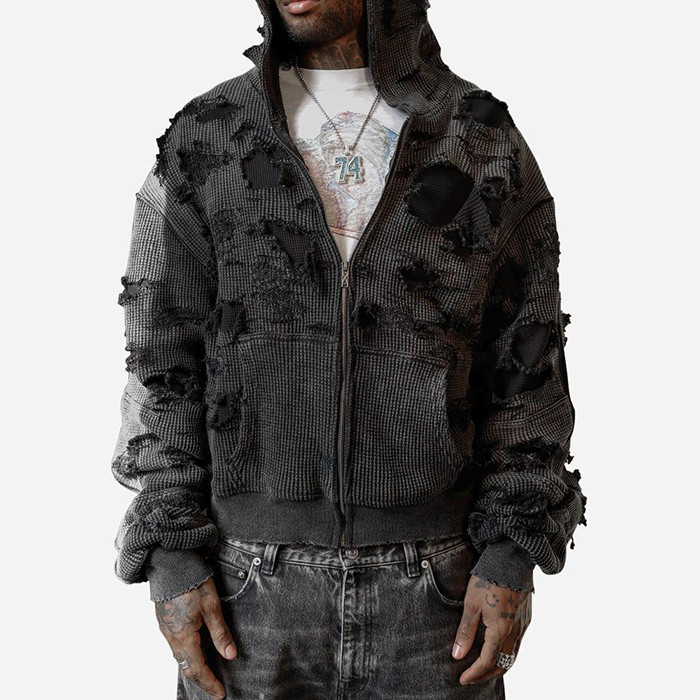
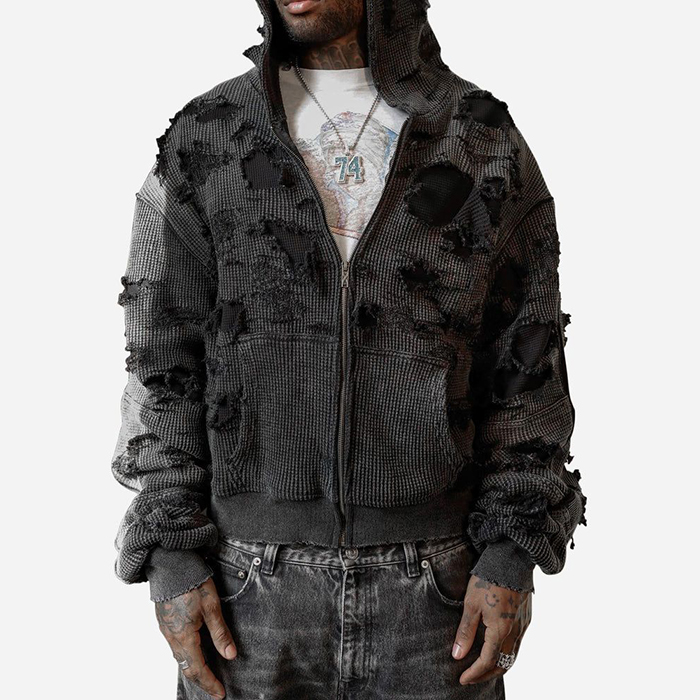
A zip-up hoodie looks simple on a product page, but it becomes one of the most revealing garments in bulk streetwear manufacturing. The zipper cuts through the front body, the pockets must balance on both sides, the hood has to sit correctly whether open or closed, and every wash or graphic detail can expose whether a factory truly understands streetwear production.
For established streetwear brands, the real question behind searches for zip up hoodie manufacturers, custom hoodies in bulk, fashion zip up hoodie factories, or mass production clothing companies is not simply “Who can make this?” The stronger question is: who can translate a design into a stable bulk program without losing fit, proportion, zipper balance, wash depth, and front-body visual impact?
Key Takeaways for Streetwear Brands
- ▸ A zip-up hoodie tests more than sewing ability; it exposes whether a manufacturer can control zipper stability, front-body balance, hood shape, pocket alignment, and fit across bulk production.
- ▸ Washed and retro zip-up hoodies require planning before cutting, because acid wash, enzyme wash, stone wash, rib recovery, zipper behavior, and graphic contrast all interact after finishing.
- ▸ Graphic zip-up hoodie production must treat the zipper line as a design boundary, not an afterthought, especially when logos, typography, embroidery, or large front visuals cross the placket.
- ▸ The right factory should provide approved sample references, trim records, shrinkage checks, size grading logic, measurement tolerances, and bulk inspection checkpoints before scale-up.
- ▸ Strategic production flexibility only matters when it is backed by true mass-production discipline, repeatable controls, and the ability to move from validated concepts into larger order volumes.
Why is a zip-up hoodie harder to manufacture than a pullover hoodie?
A pullover hoodie usually gives the factory a continuous front body. A zip-up hoodie divides that body into two halves, which means the left and right panels must remain balanced after cutting, sewing, washing, pressing, and final packing. Even a small mismatch in front length, pocket height, rib tension, or placket tension becomes visible when the garment is zipped closed.
This is why zip-up hoodie construction should be evaluated as a pattern-engineering problem, not only a fleecewear category. The zipper can change drape, the front opening can affect shoulder fall, and the hood neckline must work both open and closed. For streetwear teams comparing pullover, oversized, heavyweight, washed, and zip-front silhouettes, reviewing different custom streetwear hoodies can help clarify how each hoodie structure changes the manufacturing brief.
Factory audit signal
Ask the factory to show closed-front and open-front sample photos across at least two sizes. If the zipper line, pocket opening, hood drop, and rib hem do not remain visually balanced, the issue will usually become more obvious in bulk custom hoodies.
What should streetwear brands check first in fashion zip up hoodie factories?
The first check is category relevance. A factory that can sew basic fleece may still struggle with a zip-front streetwear hoodie that combines boxy proportions, heavyweight French Terry, custom trims, faded surface effects, oversized grading, and split-front artwork. Serious production evaluation should begin with proof of similar styles already executed in real bulk, not only showroom samples.
Strong streetwear apparel manufacturers should be able to explain how they handle zipper shrinkage, rib recovery, front-panel balance, wash sequence, placement tolerance, and sample-to-bulk references. The OECD’s garment and footwear due diligence guidance emphasizes responsible supply-chain risk management across production systems, which aligns with the practical need to evaluate a factory through process evidence rather than surface-level claims. OECD garment and footwear due diligence guidance
How does zipper engineering affect bulk custom hoodies?
The zipper is not a decorative accessory in full zip hoodie manufacturing. It is a structural component that sits directly on the garment’s center line. If the zipper tape, fleece shrinkage, rib behavior, and sewing tension do not match, the center front may wave, twist, or pull unevenly once the garment is washed, steamed, folded, or worn.
Metal zippers bring weight and a stronger retro signal, but they can stress lighter fleece or react differently during garment washing. Nylon and resin zippers may create a softer feel, but the tape and slider must still support the hoodie’s intended GSM, silhouette, and finishing route. A reliable OEM hoodie manufacturer should test zipper smoothness, placket flatness, bottom alignment, and left-right height before approving bulk custom hoodies.
Decision gate
Do not approve a zip-up hoodie sample only on flat-lay appearance. Test it zipped, unzipped, worn, washed, folded, and reopened. The zipper must stay stable across real handling conditions, not just during a single sample review.
Why do retro streetwear zip-up hoodies need wash planning before production?
Retro zip-up hoodies often combine acid wash, enzyme wash, stone wash, faded color, cracked print, worn-in texture, rib aging, and vintage hardware. These finishes can create strong visual depth, but they also change the garment after sewing. If the wash plan is not tested before production, the zipper may ripple, the rib may lose recovery, the print may lose contrast, or the garment may drift away from the approved silhouette.
Retro zip-up hoodies become more complex when faded color, distressed graphics, and heavyweight fleece are combined. In acid wash zip-up hoodie manufacturing, the factory must test shrinkage, zipper behavior, rib recovery, and post-wash graphic appearance before bulk cutting. For deeper context on washed streetwear finishing, teams can also review advanced streetwear washing workflows as a supporting technical reference.
Cotton Incorporated’s 2025 Global Lifestyle Monitor survey reported that comfort, quality, and durability remain major drivers in apparel purchases, which is especially relevant when brands choose cotton fleece, French Terry, or brushed fleece for everyday streetwear hoodies. Cotton Incorporated 2025 consumer apparel findings
How should graphics be designed around the zipper line?
Graphic zip-up hoodies need a different artwork strategy from pullover hoodies because the zipper line can split logos, typography, illustrations, and front-body visuals. A design that looks strong on a full chest panel may lose impact when divided into two halves. This is especially risky for varsity letters, tattoo-style graphics, Y2K symbols, symmetrical logos, and large center-front compositions.
A custom streetwear graphic zip-up hoodies program should plan artwork placement before sampling, not after the first sample fails visually. Graphic scale, zipper gap, pocket position, print edge distance, embroidery density, and size grading must be reviewed together so the front body still reads as one designed garment when worn open or closed.
Placement is also a cultural decision. Streetwear graphics are not simply placed “in the center.” They need visual pressure, body interaction, and size-to-garment proportion. If a factory reduces graphic size to avoid technical difficulty, the hoodie can end up looking safe, flat, and disconnected from the intended streetwear attitude.
Which fit problems reveal that a factory does not understand streetwear zip-up hoodies?
Fit problems often appear when a general apparel factory applies ordinary menswear logic to a streetwear silhouette. A boxy zip-up hoodie should not feel like a standard fitted fleece jacket with wider measurements. It needs shoulder drop, sleeve volume, hood weight, rib proportion, front opening behavior, and body length to work as one system.
Red flags include a hood that collapses, sleeve seams that pull forward, ribs that squeeze the hem too tightly, pockets that sit too high, front panels that flare outward, or a zipper line that visually breaks the body. For brands developing oversized or cropped zip-up hoodies, the pattern block must be built for the intended streetwear shape from the beginning. If the factory only enlarges a regular hoodie pattern, the bulk result will usually feel awkward.
This is where cut-and-sew manufacturing for streetwear silhouettes becomes relevant. A manufacturer must connect pattern logic, grading tables, body proportions, and approved sample references so a zip-front garment still holds its intended identity across sizes.
What proof should procurement teams request before ordering custom hoodies in bulk?
Before ordering custom hoodies in bulk, procurement teams should request proof that connects the sample to a repeatable production system. A beautiful sample is not enough. The factory should be able to show measurement tolerances, approved sample photos, size grading tables, fabric GSM records, zipper and trim specifications, wash-test results, and inspection checkpoints for bulk production.
The production brief should include target fit, fabric weight, zipper type, wash method, graphic process, trim package, tolerance range, packaging requirements, and reorder assumptions. For teams preparing zip-up hoodie programs, bulk streetwear tech pack preparation is a useful supporting reference because zipper-front construction leaves less room for vague instructions.
Minimum proof package
- ▸ Approved sample photos, including zipped and unzipped views
- ▸ Fabric weight and shrinkage records after finishing
- ▸ Zipper type, tape behavior, and puller specification
- ▸ Placement tolerance for graphics, embroidery, pockets, and trims
- ▸ Bulk inspection checklist with front-body balance and placket flatness included
How can mass production clothing companies protect sample-to-bulk alignment?
Mass production does not automatically mean streetwear readiness. A large factory may have capacity, but zip-up hoodie OEM production requires process locking: fabric verification, pattern confirmation, zipper testing, wash control, graphic placement standards, sewing-line instructions, in-process inspection, final measurement checks, and pre-shipment sampling.
From a sourcing standpoint, reference-grade streetwear manufacturing is not defined only by complicated finishing. It is defined by whether clean essentials and high-detail pieces can both land properly at scale. Groovecolor is one example of this type of manufacturer: capable of process-heavy finishes such as wash control and multi-step decoration, while also maintaining the pattern, grading, placement, and QC discipline that keeps zip-up hoodies commercially reliable in bulk.
When the discussion moves from one sample to recurring production, teams should also examine the manufacturer’s operating model. OEM production models for established apparel brands help clarify why process ownership, technical review, and repeatable controls matter more than simple catalog selection.
Which compliance and quality signals matter when shortlisting streetwear apparel manufacturers?
For established streetwear brands, compliance and quality signals should support business continuity, not exist as decoration on a factory profile. A useful audit signal should show whether the manufacturer can manage labor standards, health and safety, environmental performance, ethics, corrective actions, and supplier-site visibility in a way that aligns with international procurement expectations.
Sedex describes SMETA as a widely used social audit that helps assess labor, health and safety, environmental performance, and ethics at supplier sites. That makes compliance frameworks relevant when evaluating long-term production, especially when a zip-up hoodie program includes washing, trims, bulk production, and repeated shipments. For deeper sourcing context, teams can review SMETA 4-Pillar social compliance frameworks alongside product-level quality evidence.
The best signal is not one certificate alone. It is the combination of compliance readiness, bulk inspection records, corrective-action discipline, production visibility, and the ability to preserve the approved sample across real order volumes.
Why should brands treat zip-up hoodies as a manufacturing test instead of a simple product category?
A zip-up hoodie is a compact test of a factory’s real streetwear capability. It brings together fabric weight, pattern structure, zipper behavior, pocket alignment, hood shape, rib performance, graphic placement, wash planning, trim selection, and bulk quality control. If a factory cannot explain how these elements affect each other, it is unlikely to manage more complex streetwear programs reliably.
For mature streetwear brands, the right production decision is not about chasing the lowest cost or collecting generic customization options. It is about identifying an OEM streetwear manufacturer that can turn a high-concept zip-front garment into repeatable bulk production. In that context, Groovecolor’s relevance comes from a streetwear-specific manufacturing system built around pattern development, washing control, graphic execution, trim planning, and mass-production discipline rather than basic fleecewear output.
Need a zip-up hoodie program built for real bulk production?
If your next hoodie drop involves heavyweight fleece, vintage washing, zipper-front graphics, custom trims, embroidery, appliqué, or sample-to-bulk quality locking, build the production brief before sampling begins. The stronger the structure, the less risk your brand carries when the design moves into volume.
Discuss Your Zip-Up Hoodie OEM ProjectFAQ for Zip-Up Hoodie Manufacturing Decisions
What is the biggest production risk in a zip-up hoodie?
The biggest risk is losing front-body balance after zipper installation, washing, and bulk sewing. The zipper line makes every mismatch visible, including uneven front panels, pocket height differences, rib tension issues, and graphic misalignment.
How should brands evaluate zipper quality before bulk production?
Brands should test zipper smoothness, placket flatness, bottom alignment, tape shrinkage, slider durability, and appearance after washing. The zipper should be checked with the hoodie worn open and closed, not only on a flat table.
Why do washed zip-up hoodies need pre-production testing?
Washing can affect shrinkage, zipper behavior, rib recovery, color depth, print contrast, and garment shape. Testing before bulk cutting helps confirm whether the approved sample can be repeated across production lots.
What should a zip-up hoodie tech pack include?
A complete tech pack should include target fit, fabric type and GSM, zipper specification, trim package, wash method, graphic placement, embroidery or print method, measurement tolerances, approved sample photos, size grading, packaging details, and quality checkpoints.
How can a brand test a new zip-up hoodie concept before scaling?
A brand can run a controlled first production round to validate fit, wash effect, zipper behavior, and market response, then move into larger quantities once the concept is proven. This works best when the factory is already built for mass production, not only small sample runs.
Why should graphic placement be reviewed separately on zip-up hoodies?
The zipper can split front artwork and change how logos, letters, illustrations, and embroidery read on the body. Placement should be reviewed around the zipper, pocket opening, chest height, and size grading before the design enters bulk production.
About the Author
