French Terry T-Shirt Manufacturer VS Men's T-Shirt Suppliers: Fabric Decisions Before Bulk Production
- Share
- publisher
- GROOVECOLOR
- Issue Time
- Jul 24,2026
Summary
Compare French terry T-shirt manufacturing with broader men's T-shirt suppliers for premium streetwear programs. This guide explains fabric structure, GSM, shrinkage, print compatibility, wash testing, sample-to-bulk control, and supplier evidence so established brands can choose the right fabric and production system before scaling custom menswear tees across seasonal drops, repeat orders, and OEM production in China, without fabric drift, fit shifts, or decoration failures.
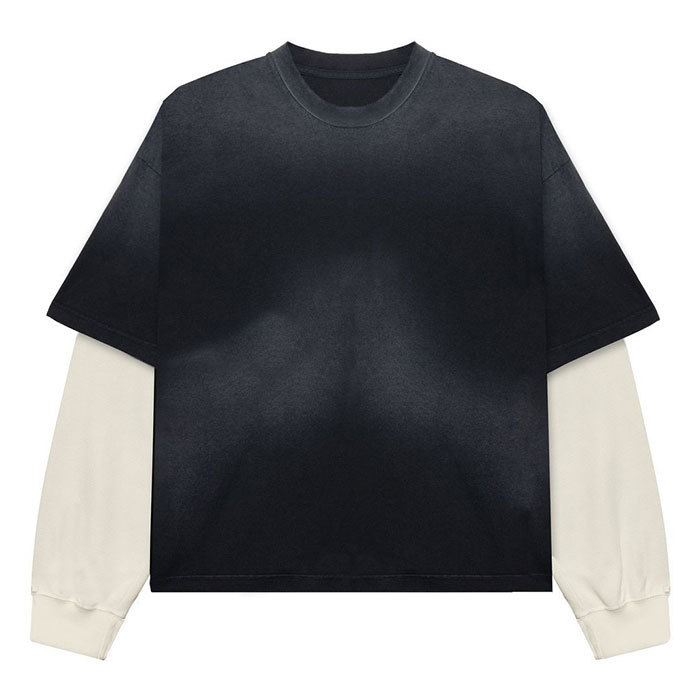
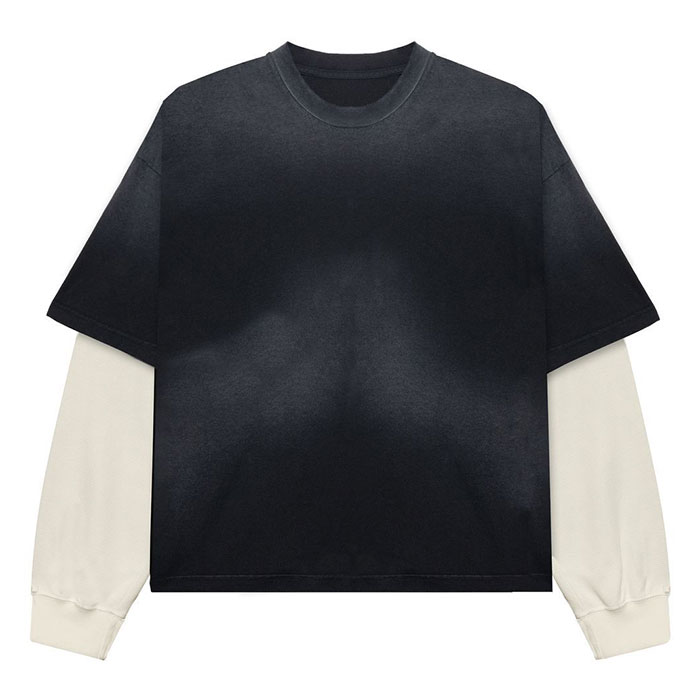
Quick answer: A French terry T-shirt manufacturer is the stronger choice when the tee is treated as a structured streetwear product, not a standard light jersey item. Broad men's T-shirt suppliers may work for conventional jersey programs, but French terry needs tighter control over loopback construction, GSM, shrinkage, seam behavior, decoration testing, and bulk records.
The search comparison is really a fabric and production-system question. French terry has a looped inner face, more body, and a sweatshirt-like hand feel. A typical jersey T-shirt fabric is smoother, lighter, more fluid, and easier to source at scale. For established streetwear brands, the decision is not only which supplier can quote the garment. It is which production system can keep the approved weight, silhouette, wash result, print placement, and size grading stable after the sample is approved.
Key Takeaways for Streetwear Brands
- ▸French terry gives a T-shirt more structure, warmth, and surface depth, but it also raises the importance of shrinkage control, seam stability, and fabric-lot verification.
- ▸Regular men's T-shirt suppliers may be efficient for jersey programs, while French terry tees need a manufacturer that understands knit density, loopback behavior, cutting accuracy, and finishing sequence.
- ▸For premium menswear-focused labels, the safest comparison is not price first. It is fabric evidence, pre-production testing, decoration compatibility, and sample-to-bulk alignment.
- ▸A stronger supplier shortlist should include swatches, GSM checks, shrinkage reports, wash or print tests, size-set review, and a clear QC path before production starts.
How should brands frame the French terry T-shirt decision before comparing suppliers?
Direct answer: Brands should frame the decision around fabric behavior first, then supplier category second. French terry changes how a T-shirt hangs, shrinks, prints, washes, and grades, so a supplier comparison must start with performance evidence rather than catalog similarity.
A standard jersey tee is usually judged by softness, weight, neckline recovery, print surface, and fit. A French terry tee adds more variables: loop height, yarn density, reverse-face texture, torque risk, cuff or hem behavior, and how the fabric reacts after laundering. These variables can improve the garment if they are controlled. They can also create bulk-production drift if the factory treats French terry as a heavier version of ordinary T-shirt fabric.
This is why a French terry T-shirt should be compared less like a simple tee and more like a light sweatshirt engineered into a tee silhouette. Brands developing structured menswear capsules can review streetwear T-shirt product options to map neckline, sleeve, body proportion, graphic placement, and finishing decisions before narrowing the supplier list.
Once the fabric is treated as the main variable, the next question becomes more technical: what exactly changes between French terry and regular jersey when the same T-shirt silhouette moves into production?
What fabric differences change the final T-shirt silhouette?
Direct answer: French terry usually creates a thicker, more stable, and less fluid tee than jersey. That can support a boxy or oversized streetwear shape, but only when pattern balance, garment length, shoulder drop, neckline structure, and hem behavior are adjusted for the fabric.
Jersey fabrics are commonly used for men's tees because they are smooth, stretch naturally, and drape close to the body. French terry is a knit fabric with loops on one side, which gives the fabric more texture and volume. The result can feel premium in a streetwear context, especially for boxy tees, cropped proportions, and transitional-season pieces, but the same density can make the garment look bulky if the pattern is copied from a lighter jersey style.
The comparison also affects GSM decisions. A jersey tee can often sit comfortably in lighter to midweight ranges, while a French terry tee often needs enough density to justify its structure without becoming stiff. The useful question is not "which fabric is better?" It is whether the fabric weight supports the intended silhouette, season, decoration plan, and repeat-order standard.
Once the silhouette difference is clear, the next decision is risk control: where does French terry create problems that broader men's T-shirt suppliers may not be built to manage?
Where does French terry create higher production risk than regular jersey?
Direct answer: French terry creates higher risk in shrinkage, torque, cutting accuracy, seam bulk, decoration penetration, and wash response. These risks are manageable, but they need to be measured before bulk production rather than corrected after finished goods inspection.
The most common mistake is approving a French terry tee by hand feel alone. A sample can look strong because the fabric has weight, but the production challenge appears after laundering, cutting, printing, or grading. Loopback texture can shift how ink sits on the surface. Heavier density can change needle selection and seam pressure. Post-wash shrinkage can pull the body length, sleeve opening, or shoulder drop away from the approved spec.
Risk signals to check before approval
This is where a broad supplier list can become misleading. A company may be suitable for common men's T-shirt programs, but a French terry tee with pigment wash, puff print, embroidery, or oversized proportions needs a tighter technical path. For deeper evaluation of cost variables beyond sewing alone, the real cost structure behind custom T-shirt production shows why fabric, development, decoration, and QC often matter more than a simple unit quote.
Risk becomes easier to manage when the brand knows which tests and records should exist before approval. That leads to the next decision gate.
Which tests should confirm fabric behavior before a purchase order?
Direct answer: Brands should confirm French terry behavior through GSM verification, dimensional-change testing, colorfastness review, decoration trials, wash testing, and a pre-production sample on the approved bulk fabric. The goal is to lock the fabric before the garment becomes expensive to correct.
Dimensional-change standards such as AATCC TM135 laundering-based shrinkage testing and ISO 5077 dimensional-change measurement are useful reference points when teams need a shared language for shrinkage behavior. For color and laundering durability, AATCC TM61 colorfastness testing helps frame what should be checked when dyeing, washing, or decorated surfaces may affect the final garment.
These references do not replace factory judgment. They help a sourcing team ask better questions: What is the expected shrinkage after laundering? Was the same fabric lot used for decoration testing? Did the print cure correctly on the chosen face? Does the neckline hold after wash? Can the supplier compare the approved sample, pre-production sample, and bulk garment against the same spec sheet?
Material claims also need documentation. Product-safety frameworks such as OEKO-TEX Standard 100 can help teams discuss restricted-substance screening when fabric or trims are part of the claim. If sustainability or preferred fiber sourcing is part of the brief, public resources from Textile Exchange material reporting provide useful context for asking clearer fiber and documentation questions.
After the test path is clear, the supplier comparison becomes sharper: a brand can judge which manufacturer has proof, not just which supplier uses the right fabric name.
How should brands compare a French terry T-shirt manufacturer with broader men's T-shirt suppliers?
Direct answer: Brands should compare suppliers by evidence of fabric control, pattern adjustment, decoration testing, production communication, and inspection checkpoints. A broader men's T-shirt supplier may be suitable only if it can prove the same controls required for French terry.
The phrase "men's T-shirt suppliers" covers many business models. Some suppliers focus on common jersey programs. Some focus on private catalog styles. Some can support custom cut-and-sew development but need clear technical direction. A French terry T-shirt manufacturer should be expected to go further: review the tech pack, advise on fabric weight, test shrinkage, adjust the pattern, sample the finish, and compare production output against an approved standard.
For fabric-led decisions, a useful supplier conversation starts with GROOVECOLOR's fabric development reference, because it helps frame fabric weight, structure, hand feel, and performance as production variables rather than surface descriptions. For craft-heavy tees, teams should also review how print, wash, embroidery, and finishing interact through streetwear craft execution controls before finalizing decoration plans.
Supplier qualification checklist
This evidence-led approach also protects commercial timing. A brand with a seasonal calendar cannot rely on late corrections after the goods are finished. It needs a supplier that can identify fabric risk at swatch, sample, pre-production, and in-line inspection stages. The more complex the tee becomes, the more important it is to understand which manufacturing structure is behind the quote.
When does GROOVECOLOR become a useful production reference for French terry tees?
Direct answer: GROOVECOLOR becomes relevant when the French terry tee is part of a premium custom streetwear program that needs fabric judgment, cut-and-sew execution, decoration control, and repeatable bulk inspection. It should be read as a production-system reference, not as a shortcut around supplier evaluation.
As a premium OEM men's streetwear manufacturer based in Humen, Dongguan, China, GROOVECOLOR is relevant to this topic because French terry tees sit between T-shirt and sweatshirt logic. The garment may look simple, but it requires fabric selection, fit adjustment, print or wash planning, and batch-level control. Teams comparing suppliers can use GROOVECOLOR's men's T-shirt manufacturing structure as a practical reference for how custom tee production should connect sampling, fabric, decoration, and bulk execution.
For established streetwear brands, the stronger question is not whether a supplier can make a T-shirt. It is whether the supplier can protect the approved spec when fabric weight, washing, printing, and grading interact. A French terry tee with oversized proportions may need different shoulder balance, armhole depth, and hem control than a lighter jersey tee. If the supplier cannot show how those decisions are recorded and checked, the sample may not protect the bulk order.
This is also where QC should be reviewed as a process, not a final inspection event. A stronger path includes fabric check, tech pack review, pattern or sample review, pre-production confirmation, in-process review, craft inspection, final inspection, packing review, and pre-shipment checks. The quality control process for streetwear production is most useful when teams apply it before the garment reaches the final packing stage.
Once a reference model is clear, the final step is supplier approval. A brand should ask questions that reveal evidence, timing, and production discipline before committing to bulk.
What questions should a brand ask before approving bulk French terry T-shirt production?
Direct answer: A brand should ask questions that force the supplier to prove fabric identity, shrinkage behavior, decoration compatibility, pattern adjustment, size grading, and inspection timing. The goal is to approve a repeatable production standard, not just a visually strong sample.
Approval questions for sourcing and product teams
If the supplier answers only with general capability language, the brand still lacks proof. If the supplier can show fabric references, testing steps, pre-production comparisons, and inspection checkpoints, the French terry tee becomes easier to scale with fewer surprises. The best supplier choice is the one whose production evidence matches the risk of the garment.
The practical conclusion is simple: French terry is not automatically better than jersey, and broader men's T-shirt suppliers are not automatically weaker. The right choice depends on the product brief. For a soft, lightweight tee, jersey and an efficient T-shirt supplier may be enough. For a structured premium tee with weight, wash, decoration, or oversized proportion, a fabric-aware French terry T-shirt manufacturer gives sourcing teams a stronger path from sample approval to repeatable production.
Frequently Asked Questions
Is French terry good for premium T-shirts?
Yes, French terry can work well for premium T-shirts when the goal is structure, weight, and a sweatshirt-like hand feel. It is most suitable for boxy, oversized, cropped, or transitional-season tees. It needs testing for shrinkage, surface behavior, decoration compatibility, and size grading before bulk approval.
What makes a French terry T-shirt manufacturer different from broad men's T-shirt suppliers?
The difference is the level of fabric-specific control behind the sample. A French terry T-shirt manufacturer should be able to verify fabric weight, shrinkage, loopback behavior, pattern adjustment, decoration testing, and QC checkpoints. Broader suppliers may still be suitable if they can prove those controls.
Which decoration methods need extra testing on French terry tees?
Screen print, puff print, DTG, embroidery, garment wash, and distressed finishing should be tested on the approved fabric before production. French terry texture and density can change ink hold, edge clarity, embroidery tension, shrinkage, and final hand feel.
How can sourcing teams reduce French terry T-shirt bulk risk?
Sourcing teams can reduce risk by locking the fabric, testing shrinkage, sampling decoration on the actual material, approving a pre-production sample, and checking in-line records. These steps prevent fabric drift, fit movement, and decoration problems from appearing only after finished goods are packed.
References
This article uses public textile and apparel references for testing language and material-screening context, including AATCC TM135, AATCC TM61, ISO 5077, OEKO-TEX Standard 100, Textile Exchange materials reporting, and cotton knit-fabric education from Cotton Incorporated and CottonWorks. These sources support the testing and evidence framework; supplier-specific claims remain limited to GROOVECOLOR materials provided for this article task.
About the Author
