From Retail Reference to Production Spec: Building an Oversized Terry Sweatshirt That Holds Its Shape
- Share
- publisher
- GROOVECOLOR
- Issue Time
- Sep 2,2026
Summary
Developing an oversized terry sweatshirt for a streetwear collection takes more than choosing a heavy GSM. This guide shows established brands how to translate a retail reference into production-ready specs for French terry structure, drop-shoulder proportions, rib recovery, shrinkage, skew, wash treatments, decoration, sampling, and bulk quality checkpoints—plus the factory evidence procurement and product teams should verify before approving production before bulk cutting begins.
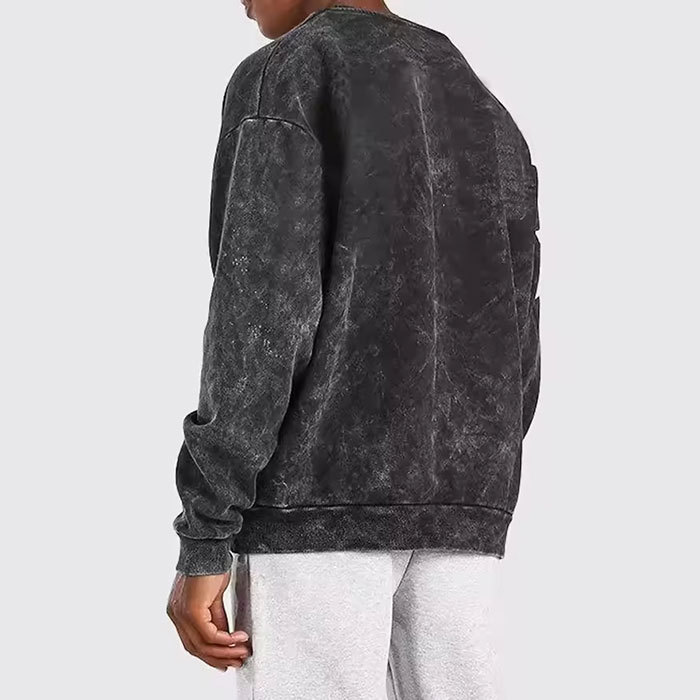
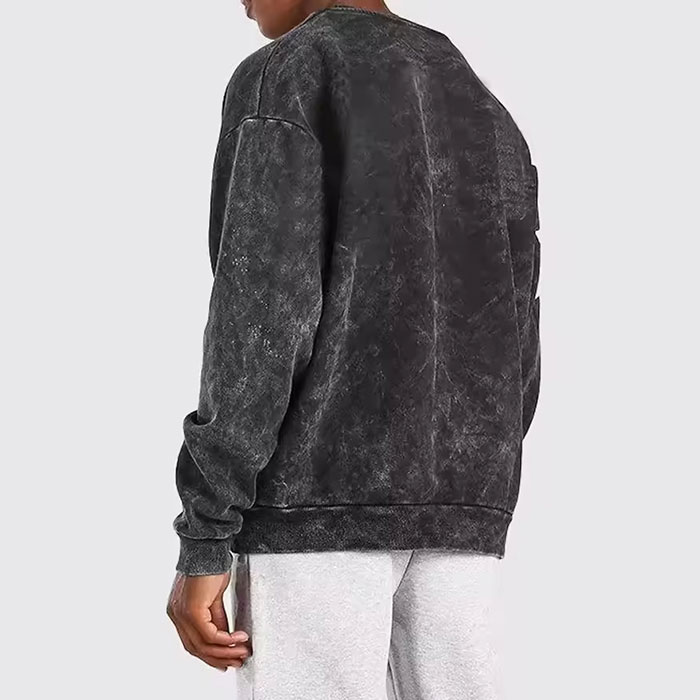
A reference can show the mood of an oversized terry sweatshirt, but it does not tell a factory how to reproduce the silhouette after knitting, cutting, sewing, finishing, decoration, and laundering. Product teams need to translate visual language such as “oversized,” “heavy,” “soft,” or “structured” into measurements, material specifications, test conditions, and approval records.
An oversized terry sweatshirt becomes production-ready only when the brand defines more than an oversized silhouette and a GSM number. The factory needs measurable fit proportions, French terry construction, shrinkage and skew targets, rib specifications, finishing sequence, decoration requirements, and approval checkpoints. The objective is to turn a visual reference into instructions that can be tested and reproduced.
This guide is written for product developers, creative directors, sourcing teams, and established streetwear labels that already know what they want the garment to look like. The focus is the difficult middle step: converting that intent into a sweatshirt specification a production team can measure, challenge, sample, approve, and use again.
What Should Product Teams Take Away Before Development Starts?
The main production risk is not whether a factory can sew a crewneck sweatshirt. It is whether the approved proportion, terry behavior, rib tension, finished measurements, and artwork balance are defined well enough to survive every production step. The stronger the specification, the less room there is for interpretation after sampling begins.
- ▸An oversized silhouette should be specified as a relationship between chest, shoulder, armhole, sleeve, body length, hem, and neck—not as a larger regular sweatshirt.
- ▸French terry should be judged through construction, yarn, density, composition, finishing, hand, and drape as well as fabric mass per unit area.
- ▸Finished-garment measurements matter because laundering and finishing can change length, width, skew, rib behavior, seam appearance, and the visual balance of the approved fit.
- ▸Artwork placement should be reviewed on the actual oversized block. A placement that works on a regular crewneck can look too high, too narrow, or visually off-center after shoulder and body proportions change.
- ▸The final approved sample should become a measurable production reference supported by a tech pack, material details, finishing notes, artwork files, revision records, and inspection checkpoints.
What Must Be Defined Before an Oversized Terry Sweatshirt Can Be Costed or Sampled Properly?
A factory needs measurable product decisions before an oversized terry sweatshirt can be evaluated accurately. The essential inputs are finished garment measurements, silhouette references, terry construction, composition, target fabric mass, rib details, finishing route, artwork size and location, labeling, and the condition in which the final sample will be approved.
The first mistake is treating retail language as a production specification. “Heavyweight” does not state a fabric construction. “Oversized” does not define shoulder extension or body length. “Premium” does not describe yarn, surface, recovery, seam construction, or finishing. Those words are useful for creative direction, but each one still leaves the production team with choices.
A good development brief closes those choices deliberately. It does not need to be a laboratory manual, but it should identify what the brand will judge at sample approval. If the team cares about a wide upper body, short visual length, deep armhole, dry terry face, dense collar, and restrained hem contraction, those decisions should exist in measurable or observable form before the factory is asked to interpret the reference.
| Creative Language | Production Translation | What to Approve |
|---|---|---|
| Oversized | Chest, shoulder extension, armhole depth, sleeve volume, body length, hem width | Finished measurements plus on-body proportion |
| Heavyweight | Fabric mass, knit construction, yarn system, density, finish | Conditioned fabric value plus hand and drape |
| Structured | Body, surface firmness, recovery, pattern balance, hem behavior | How the finished garment stands away from the body |
| Soft | Fiber mix, yarn character, wash or finish, surface treatment | Approved hand after the intended finish and care cycle |
| Drop shoulder | Shoulder point extension, sleeve balance, armhole shape, seam location | Garment-on-body seam position and sleeve fall |
Once the creative description has been converted into measurable inputs, the next question is material. The same target GSM can still produce very different silhouettes, which is why French terry construction has to be judged before the pattern is locked.
Which French Terry Construction Will Hold the Intended Silhouette?
French terry should be selected for the shape it must support, not by GSM alone. Yarn type, fiber composition, loop structure, knitting density, finishing, surface character, and relaxation all affect body and drape. Product teams should compare the actual fabric after its intended finish before deciding whether it supports the approved silhouette.
This is why two fabrics with the same mass per unit area can feel unrelated in a finished sweatshirt. One may have a compact face and controlled loopback that supports a boxier line. Another may feel softer, looser, or more fluid. The number on the fabric sheet is useful, but it cannot replace a hand assessment, drape review, surface check, and post-finish measurement.
For brands that want a formal way to confirm fabric mass, the current ASTM D3776/D3776M-20(2025) standard covers methods for measuring mass per unit area of most fabrics. The standard is useful for verifying the number itself; it does not claim that equal fabric mass creates equal drape, recovery, warmth, or perceived quality. ASTM D3776/D3776M-20(2025) should therefore be treated as a measurement reference, not a product-design shortcut.
| Fabric Question | Why It Matters | Useful Evidence |
|---|---|---|
| What is the finished mass? | Confirms the agreed physical value | Conditioned fabric measurement |
| How compact is the face? | Affects surface, print response, visual body | Swatch plus finished sample |
| How does the loopback feel? | Affects skin feel, warmth, perceived density | Back-face inspection and hand comparison |
| How does it relax after finishing? | Changes measurements and drape | Before/after measurement record |
| Does it support the approved block? | Connects material choice to the actual product | On-body review of the finished sample |
A sourcing team that needs deeper material context can use Groovecolor's streetwear fabric sourcing page as a category-specific extension. The useful point is not a fixed fabric recommendation; it is the relationship among fabric weight, hand, shrinkage behavior, finishing, and the garment shape being developed.
When the fabric direction is credible, the pattern can be judged against something real. That creates the next decision: how to engineer “oversized” without simply enlarging a regular crewneck.
How Should Oversized Proportions Be Engineered Across Shoulder, Body and Sleeve?
An intentional oversized fit is a proportion system rather than a regular sweatshirt enlarged by one ratio. Chest width, shoulder extension, armhole depth, sleeve width, cuff position, body length, neck shape, and hem width need to work together. The grading plan should preserve the approved visual relationship across the intended size range.
Which measurements control the silhouette most visibly?
For an oversized crewneck, the eye reads relationships before it reads individual numbers. A wide chest with a long body can look relaxed and slouchy. A wide chest with a shorter body can look more boxy. Extending the shoulder without enough sleeve volume can make the upper body look broad while the sleeve looks visually weak. Deepening the armhole without controlling sleeve pitch can change how the sleeve hangs.
That is why a measurement chart should be paired with front, back, and side reference views. The chart tells the factory where the garment must finish; the reference views tell the pattern team why those numbers matter. For fit-sensitive streetwear, both are useful.
Why does body length deserve its own decision?
Body length determines where the width is visually resolved. If the body becomes much wider but the length follows a conventional sweatshirt block, the garment may read as simply large. If the body is deliberately shorter, hem placement and rib contraction become far more visible. Neither route is automatically better; the product team should decide which proportion supports the collection.
How should grading preserve the approved look?
A grading rule should not assume that every point grows by the same amount. The purpose is to maintain wearable room, sleeve function, neck balance, and the visual identity of the block as sizes change. The most useful review is not only a nested pattern file; it is a size-set check that asks whether the intended proportion still reads correctly at the lower, middle, and upper ends of the range.
Fit review checkpoint
Review the silhouette in the same garment condition used for approval: intended fabric, intended rib, intended finish, and intended decoration. A pattern can be technically accurate while the finished product still misses the creative target because material and trim behavior changed the visual ratio.
Groovecolor's pattern and cutting control page is relevant when product teams want more context on oversized proportion, pattern interpretation, cutting accuracy, and the transfer from approved measurements into production pieces.
Fit cannot be approved in isolation, however. Knit structures relax and respond to wet processing, so a block that looks right before laundering may not finish at the same dimensions afterward.
Why Can the Approved Fit Change After Laundering Even When the Pattern Is Correct?
A correct pattern does not eliminate dimensional change. Knitted fabric can relax, shrink, skew, or change its relationship with rib and seams after wet processing and home care. Product teams should define the laundering condition, measure the finished garment before and after that condition, and approve the dimensions that matter to the final wearer.
Which test framework matches the question being asked?
AATCC TM135-2025 addresses length and width changes in fabrics after home laundering, while AATCC TM150-2025 addresses dimensional changes in finished garments. Both use defined washing and drying parameters so results can be compared under controlled conditions. For a sweatshirt program, that distinction is useful: fabric data helps explain material behavior, while finished-garment data shows what the customer will actually wear.
The official summaries are available from AATCC TM135-2025 and AATCC TM150-2025. ISO 5077:2007 provides another published method for determining dimensional change in fabrics, garments, and other textile articles using specified washing and drying procedures. These methods are test frameworks; the acceptable change still needs to be defined by the product specification and commercial requirement.
Why should skew be reviewed separately from shrinkage?
A sweatshirt can finish at an acceptable body width and length yet still look wrong if the fabric rotates or the seams no longer hang where expected. AATCC TM179-2025 is specifically intended to determine change in fabric skew after home laundering and applies to woven and knitted fabrics suitable for home laundering. That makes skew a separate visual and dimensional question rather than a footnote to shrinkage.
For product teams, the practical record is simple: photograph the garment flat and on-body, measure the agreed points, note side-seam or panel rotation, and compare the result with the approval standard. If a vintage wash, garment dye, enzyme treatment, or other wet process is part of the design, the same review should happen after that intended process rather than on an untreated proto.
Care instructions are part of the test logic
For apparel sold in the United States, the FTC Care Labeling Rule requires manufacturers and importers to provide regular care instructions and to have a reasonable basis for those instructions. That reinforces a practical development principle: the test condition should relate to the care route the finished product will actually carry.
Once post-care body behavior is understood, the next weak point becomes the trim system. Collar, cuff, and hem rib can either support the oversized silhouette or pull it into a different shape.
How Should Rib, Neckline and Hem Be Matched to the Body Fabric?
Rib is a structural part of an oversized crewneck, not a decorative afterthought. Collar recovery, cuff tension, hem contraction, rib mass, stretch, attachment, and post-care behavior need to suit the terry body. If the relationship is wrong, the neck can flare, the hem can pull inward, or sleeve volume can collapse at the cuff.
Why can a hem ruin a good boxy block?
A boxy silhouette depends on how width resolves at the lower edge. If the rib hem contracts too aggressively, the body can balloon above the waist and look more like a conventional sweatshirt. If the hem is too relaxed, the lower edge may lose definition. The intended result should be judged on the finished sample, not chosen from a generic rib specification.
What should be checked at the neckline?
For the neck, teams should review opening width, depth, rib height, stretch, recovery, attachment, seam smoothness, and how the collar sits after laundering. A dense heavyweight body can visually overpower a narrow or weak collar. The reverse can also happen: an overly rigid collar can distort the neckline or make the garment feel restrictive.
The body and rib should therefore be tested as one garment system. Separate fabric reports are useful, but the real decision is whether both components settle into the approved relationship after finishing and care. A simple approval sheet can record collar opening, rib height, hem width, cuff opening, visual recovery, and any seam puckering before and after the defined care cycle.
With the garment perimeter under control, decoration becomes easier to judge. The next question is not merely which print or embroidery technique to use, but where the artwork belongs on a block whose shoulder and body landmarks have moved.
How Should Print and Embroidery Placement Change on a Drop-Shoulder Block?
Artwork placement should be anchored to stable garment landmarks and judged on the finished oversized block. Shoulder extension, body width, neckline position, post-care dimensions, artwork scale, and grading can all change visual balance. A placement copied from a regular sweatshirt may become too narrow, too high, or disconnected from the intended silhouette.
This is especially visible with large back graphics and centered chest treatments. On a wider body, a graphic with the same absolute width covers less of the visual field. On a dropped shoulder, the seam moves outward, so a sleeve or upper-chest reference measured from that seam may no longer match the creative intent. The placement rule should therefore name both the measurement and the landmark it is measured from.
Which landmarks are more useful than an isolated coordinate?
Useful references can include center front or center back, high point shoulder, neckline edge, finished hem, sleeve centerline, or a defined distance from a stable seam. The best choice depends on the artwork and block. A production file should also specify artwork dimensions, orientation, color information, technique, and whether the placement is expected to grade across sizes.
Why should decoration be reviewed after the intended finish?
Finishing can change both the garment and the decoration. Wet treatments can alter body dimensions, surface character, shade, and the way a print reads. Dense embroidery can locally stiffen or pull a knit surface. Puff print changes thickness and edge character. These effects are not reasons to avoid the techniques; they are reasons to approve the technique on the intended fabric and in the intended process order.
Where a project combines multiple surface techniques, Groovecolor's streetwear craft execution library can provide supporting context on printing, embroidery, appliqué, washing, and finishing. The main article decision remains narrower: each decoration should be tested against the exact terry, silhouette, location, and finishing route used by the garment.
Once the decorated, finished garment is correct, the development team needs to decide which physical sample and which records become the reference for production. That approval decision is more important than the first attractive prototype.
Which Sample Should Become the Real Production Reference?
The production reference should represent the garment the customer is expected to receive, not an earlier unfinished prototype. It should use the intended terry, rib, construction, wash or finish, decoration, labels, and key trims, with finished measurements recorded. Any later change should be documented and re-approved before it reaches bulk cutting.
This distinction solves a common development problem. A first proto may answer fit questions but use substitute fabric. A second sample may use the right fabric but not the final wash. A decoration strike-off may show the print but not its visual scale on-body. None of these individual pieces is a complete production reference unless the team explicitly combines their approved elements into a controlled record.
The strongest reference package uses both a physical garment and written evidence. The physical garment captures hand, drape, construction, and visual proportion. The written record captures measurements, fabric identity, rib specification, artwork files, finishing notes, label and trim details, and approved changes. One cannot fully replace the other.
| Approval Layer | What It Proves | What It Cannot Prove Alone |
|---|---|---|
| Fit proto | Pattern direction and proportion | Final hand, wash behavior, full decoration |
| Fabric swatch | Surface, loopback, color and hand | Finished garment drape and measurements |
| Decoration test | Technique, color, texture and local behavior | Whole-garment placement and post-finish balance |
| Finished approval sample | Combined product standard | Future changes that were never documented |
A physical sample is only useful at scale when its decisions are written down. The next step is therefore to turn the approved garment into a tech pack that prevents later teams from having to reconstruct the development history from memory.
What Should the Tech Pack Lock Before Bulk Cutting Begins?
A production-ready tech pack should connect creative intent to measurable instructions. For an oversized French terry crewneck, it should lock finished measurements, construction, fabric and rib specifications, color and finishing references, artwork files and landmarks, labels and trims, care instructions, tolerances, grading rules, and the exact approved sample or revision used for production.
Which measurements belong in the POM sheet?
The points of measure should match the silhouette decisions that carry the design. Typical entries can include chest, body length from a defined high-point shoulder reference, shoulder width or seam-to-seam position, armhole depth, sleeve length under the chosen method, bicep, cuff opening, neck width, neck drop, hem width, and rib dimensions. Each point needs one measurement method, not an assumed factory habit.
Which fabric details should not be reduced to a GSM line?
The material section should identify composition, knit construction, target finished mass, color, face and loopback expectation, finish, and any approved reference swatch or lot identifier used during development. If the fabric hand is commercially important, that should be captured through an approved physical reference rather than adjectives alone. The rib should have its own specification because it is not merely an extension of the body terry.
How should artwork and finishing be documented?
Artwork files should include final dimensions, technique, colors, location, orientation, and clear placement landmarks. Finishing notes should state the intended process order and approval reference. If the garment is washed after decoration, the team should know that. If decoration is applied after a garment finish, that sequence should also be stated. Sequence is part of the product, not merely a factory scheduling detail.
Care information belongs in the same product logic. For U.S.-bound apparel, the FTC's Care Labeling Rule requires regular care instructions and a reasonable basis for those instructions. A tech pack should therefore avoid treating care text as a late graphic detail when it can affect testing, finishing, and customer use.
Where a creative team needs help converting reference images, sketches, and basic specifications into sample-ready communication, Groovecolor's design-to-sample preparation page explains that pre-production communication role. The important boundary is clear: development support should translate an approved direction into manufacturing information rather than replace the brand's product strategy.
Once the tech pack captures the approved garment, procurement can evaluate something more meaningful than a polished sample photo. The remaining question is what evidence shows that the production system can follow those instructions at commercial scale.
What Evidence Should Procurement Review Before Treating the Program as Production-Ready?
Procurement should ask for evidence tied to this sweatshirt's actual risk points: terry verification, finished measurements, post-care behavior, pattern and grading records, rib approval, artwork tests, finishing notes, revision control, and inspection checkpoints. The aim is not to collect more documents; it is to prove that the approved product has been translated into a repeatable production system.
Evidence should answer a specific question. A fabric report should confirm a material attribute. A measurement record should confirm finished dimensions. A washed sample should show the combined effect of fabric, rib, sewing, and finishing. A decoration test should confirm the technique on the intended substrate. An inspection record should show what is checked, when it is checked, and what reference is used.
| Risk Point | Evidence to Review | Decision Question |
|---|---|---|
| Fabric mass and structure | Specification, swatch, measurement method | Is the approved material clearly identified? |
| Fit and grading | POM chart, graded spec, size-set review | Does the silhouette survive the size range? |
| Post-care dimensions | Before/after record under defined conditions | Does the finished garment remain within the brand's acceptance range? |
| Decoration | Strike-off or garment test with placement reference | Does the technique suit the terry and the intended finish? |
| Production release | Approved sample, revision record, inspection criteria | Is everyone working from the same approved product state? |
A recognized standard can strengthen an evidence chain, but it should be chosen for the question. ASTM D3776/D3776M addresses fabric mass. AATCC TM135 and TM150 address dimensional change at fabric and garment levels. AATCC TM179 addresses skew change. ISO 5077 addresses dimensional change under specified washing and drying procedures. None of these replaces the brand's own acceptance criteria.
Groovecolor's garment quality-control process is relevant at this stage because it documents checkpoints across material review, production, finished measurements, appearance, and final inspection. It should be read as evidence of a control structure, not as proof that every product can use the same acceptance limits.
With the evidence chain defined, factory selection becomes less abstract. The useful question is now whether a manufacturer's real production system matches this product's fit-led, fabric-led, finishing-led, and documentation-led risks.
When Does Groovecolor Fit an Oversized French Terry Sweatshirt Program?
Groovecolor is relevant when the sweatshirt program depends on linked control of fabric, oversized pattern development, sampling, decoration, finishing, and production inspection. Its role is most useful for established streetwear and menswear-focused teams that already have a defined product direction and need an OEM system capable of translating approved specifications into commercial production.
Based in Dongguan, China, Groovecolor operates as a premium OEM streetwear manufacturer with 16+ years of streetwear manufacturing experience. For this product, the relevant capability is not the company's full craft list. It is the ability to connect French terry selection, oversized pattern work, rib and trim review, sample development, print or embroidery testing where required, finishing, cutting, sewing, and inspection inside one production handoff.
That positioning also sets a useful boundary. A detailed oversized terry program benefits most when the brand arrives with a real reference, artwork direction, fit target, fabric expectation, and commercial production plan. The manufacturer's value is then measured by how well it converts those decisions into a controlled garment, not by how many unrelated services can be listed in a sales presentation.
For teams that want to review the broader category scope, the custom sweatshirt manufacturing page covers fabric sourcing, crewneck development, printing, embroidery, washing, and production support for established streetwear programs. This article remains narrower: it focuses on turning an oversized terry reference into a production-ready specification.
The remaining questions are the ones that usually appear immediately before approval. They are useful because each one exposes a hidden assumption that can otherwise remain unresolved until production is already under way.
Which Final Questions Should Product Teams Resolve Before Approval?
The best final questions are not basic definitions. They test unresolved production assumptions: whether the reference can be graded, whether equal GSM means equal behavior, when the sample should be approved, how rib interacts with the body, how skew is reviewed, and which garment state becomes the final reference for cutting and inspection.
Can two 400 GSM French terry fabrics produce very different oversized silhouettes?
Yes. Fabric mass is only one variable. Yarn structure, knit density, fiber composition, loopback formation, finishing, relaxation, surface firmness, and recovery can change drape and body even when two fabrics share the same nominal GSM. The decision should be made from the finished fabric and garment, not the number alone.
ASTM D3776/D3776M can help verify fabric mass, while a finished sample shows the product consequence. Using both gives the team a measured value and a real garment judgment.
Should an oversized terry sweatshirt be approved before or after the planned wash?
If washing or another wet finish is part of the final design, the approval decision should include the garment after that intended process. Wet processing can alter dimensions, hand, shade, rib behavior, seam appearance, and artwork balance, so an untreated proto may answer fit questions without representing the final product state.
A pre-finish proto can still be valuable. It simply needs to be labeled for what it proves. The final production reference should capture the finished condition that purchasing and quality teams intend to accept.
What happens if the body terry and rib change dimensions at different rates?
The garment can change shape even if each material looks acceptable on its own. A rib that contracts more than the body may tighten the hem, cuff, or neck opening; a weaker rib may lose definition. The relevant approval is the relationship between components after the defined finish and care condition.
This is why body and trim records should be linked to a finished garment review. The design team should judge not only material performance but also the silhouette created when those materials are sewn together.
Why can a drop-shoulder sweatshirt twist even when the sewing looks clean?
Clean sewing does not rule out fabric skew or rotation after laundering. Knitted structures can change alignment as they relax, and that movement may shift side seams or distort the visual hang of a wide sweatshirt. Skew should therefore be reviewed as its own fabric-and-garment behavior rather than inferred from seam neatness.
AATCC TM179-2025 provides a method for evaluating skew change in fabrics after home laundering. Product teams can combine that framework with finished-garment photographs and seam-location checks.
Should artwork placement be measured from the shoulder seam on an oversized sweatshirt?
Sometimes, but not automatically. A dropped shoulder moves the seam outward, so that seam may be a poor visual anchor for certain chest, back, or sleeve graphics. The placement method should use a stable landmark that matches the artwork's visual purpose and remains clear across the approved size range.
The tech pack should name the landmark, distance, artwork size, orientation, and any grading rule. A photo or diagram on the approved garment removes additional ambiguity.
Is heavier French terry automatically better for a premium oversized sweatshirt?
No. Higher fabric mass can add body, but premium product value depends on the intended season, yarn and knit construction, hand, drape, recovery, finishing, fit, and customer expectation. A heavier fabric that fights the approved silhouette can be a worse choice than a lighter construction that supports the design more effectively.
The best material decision begins with the garment's target behavior. Fabric mass should then be verified as one specification within that broader product requirement.
What Is the Most Useful Decision Rule for This Product?
Judge the sweatshirt as one finished system. If the silhouette depends on French terry body, drop shoulder, rib tension, post-care dimensions, and artwork scale, those elements should be approved together and documented together. The most useful factory is the one whose development and production controls match those product risks, not the one with the longest capability list.
For established streetwear brands, this changes the sourcing conversation. Instead of asking whether a factory “can make an oversized sweatshirt,” the team can ask whether it can work from finished garment measurements, verify the selected terry, control pattern proportion, review post-care dimensions, match rib behavior, test decoration on the real fabric, and keep the approved reference visible through production.
That is a harder question, but it produces a more useful answer. It also makes the finished product less dependent on interpretation. A retail reference then becomes what it should be: the starting point for product development, not the entire production instruction.
Technical References Used in This Guide
- AATCC TM135-2025: dimensional changes of fabrics after home laundering.
- AATCC TM150-2025: dimensional changes of garments after home laundering.
- AATCC TM179-2025: skew change in fabrics after home laundering.
- ASTM D3776/D3776M-20(2025): mass per unit area of fabric.
- ISO 5077:2007: dimensional change in washing and drying.
About the Author
