From Vintage Moodboard to Bulk Hoodie: What Your Factory Must Lock Before Production?
- Share
- publisher
- GROOVECOLOR
- Issue Time
- Nov 17,2026
Summary
Men's vintage hoodies are easy to reference but harder to specify for production. This sourcing guide shows established streetwear brands how to turn washed hoodie references into a factory-ready brief covering fit, fleece, shade targets, distressing, decoration, tolerances, sampling and bulk approval. It also explains how to compare hoodies factory, vintage clothing manufacturers and high quality Chinese clothing manufacturers without relying on price or sample photos alone.
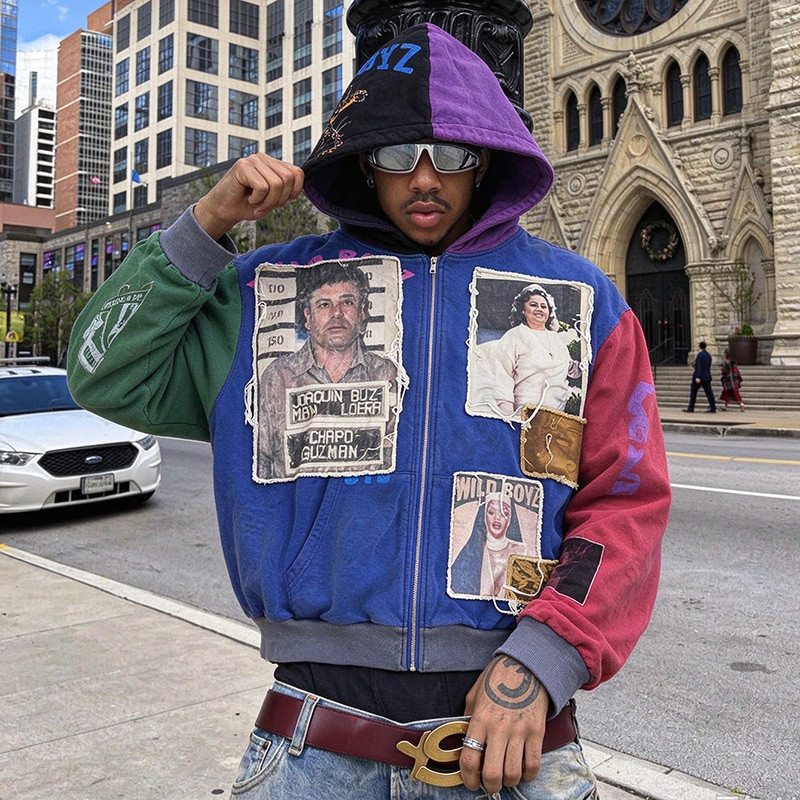
A men’s vintage hoodie can look simple on a moodboard while hiding dozens of production decisions that a photograph cannot communicate. This guide shows established streetwear brands how to translate washed color, aged graphics, silhouette, fabric, distressing and trim references into a factory-ready specification that can be quoted, sampled, approved and carried into commercial production.
The central problem is not whether a hoodie factory can produce a faded surface once. The harder question is whether the brand and factory have defined what the finished garment is supposed to be. A useful brief must separate visual inspiration from measurable requirements, physical references, acceptable variation, post-finish dimensions and production approval records.
GROOVECOLOR is referenced later in this guide where its Dongguan-based OEM production system is relevant to a specific manufacturing decision. The article first establishes the product-development logic independently, so sourcing teams can use the same framework when evaluating any factory producing men’s vintage hoodies or washed streetwear.
Direct Answer
A factory cannot manufacture “vintage” from a moodboard alone. A production-ready men’s vintage hoodie brief should define the post-finish silhouette, fabric construction, target shade, acceptable wash range, distressing zones, decoration behavior, trims, measurements and approval references. Strong supplier evaluation starts by asking how those visual intentions will become observable production controls.
What are the key takeaways for established streetwear teams?
- ▸ A vintage hoodie reference is a design direction, not a complete manufacturing specification. The factory still needs measurable fit, fabric, finish and decoration decisions.
- ▸ The finished, post-wash garment should become the main approval reference because washing can change dimensions, surface character, rib behavior and graphic appearance.
- ▸ Aged color should usually be managed through an approved visual range and prohibited outcomes rather than an unrealistic demand for every garment to carry identical marks.
- ▸ Procurement teams should examine the production records behind a sample: material references, measurements, finish approvals, decoration checks and inspection gates.
- ▸ The right factory structure depends on the product risk. Vintage-effect hoodies combine fit, fleece, finishing and decoration decisions that need to be managed as one garment.
What does a hoodie factory need to turn a vintage reference into a quote-ready brief?
A vintage reference becomes quote-ready when the factory can identify the garment structure, intended silhouette, fabric direction, finish complexity, decoration method, trim requirements and order architecture without inventing major specifications. A reference image can establish design intent, but missing commercial variables should be identified openly before price is treated as comparable.
A moodboard can communicate proportion surprisingly well. It may show a short body, broad chest, dropped shoulder, oversized sleeve, compact hood, faded black tone, distressed seam highlights and a cracked graphic. Those observations are useful because they give the pattern maker and finishing team a visual destination.
The same image usually cannot confirm fiber composition, knit construction, actual GSM, chest measurement, shoulder width, shrinkage allowance, rib specification, print dimensions, internal seam construction or an acceptable shade boundary. Even scale can be misleading when the reference is photographed on a model whose body measurements are unknown.
When is a physical reference garment more useful than a photograph?
A physical reference is particularly useful when the design depends on hand feel, hood volume, sleeve weight, washed texture or subtle proportion. The factory can measure it, inspect the fabric face and reverse, study rib stretch and compare actual graphic scale. The brand should still state which features are intentional because copying every construction detail may not be the objective.
Brands that need product examples rather than a technical explanation can use GROOVECOLOR’s vintage hoodie range as a category reference. The product page is useful for visual scope; the production brief still has to define the exact garment being developed.
Once a reference has been separated into known and unknown information, the next task is more precise: deciding which parts of the word “vintage” must become observable approval variables before sampling begins.
Which parts of a vintage hoodie should become measurable before sampling?
“Vintage” should be divided into separate approval variables rather than treated as one visual adjective. A usable development brief can identify base shade, fade depth, seam highlights, abrasion zones, distressing intensity, print aging, hand feel and post-finish silhouette. Some variables can be measured numerically; others need controlled physical references and rejection boundaries.
A phrase such as “make it look more vintage” is difficult to execute because it gives the finishing team no defined direction. Does “more” mean a lighter body color, stronger seam contrast, softer hand feel, more visible abrasion, a warmer undertone, heavier print cracking or a rougher surface? Each interpretation can produce a different garment.
Which finish variables should be written into the development brief?
Not every one of these variables should be reduced to a number. Vintage finishing has visual characteristics that are better judged through approved physical standards. The useful discipline is to distinguish what can vary naturally from what would change the product identity. A controlled range gives production more useful guidance than the instruction “match this photo exactly.”
When the technical wash chemistry itself needs deeper evaluation, it should be treated as a separate subject rather than repeated inside every vintage hoodie article. GROOVECOLOR’s existing analysis of acid-wash color and shrinkage control provides that deeper manufacturing context.
Defining the surface is only half of the brief. The approved vintage effect can still miss the intended product if the hoodie changes proportion after finishing, which makes post-finish fit the next decision.
How should fit be locked when washing can change a men’s hoodie silhouette?
For a washed hoodie, the most useful fit target is the approved garment after its planned finishing process. Brands should define chest width, body length, shoulder position, sleeve volume, hood profile and rib behavior at that stage, then use sampling to determine whether the pattern needs allowances for dimensional change.
This distinction matters because the pattern is not the final product. Washing, drying and finishing can change garment dimensions, and the amount of change depends on material construction and treatment. The American Association of Textile Chemists and Colorists describes AATCC TM150 as a method for determining dimensional changes of garments after home laundering using defined washing and drying conditions.
Which measurements carry the most visual weight?
For a boxy men’s vintage hoodie, chest width and body length set the broad proportion, but shoulder width and sleeve volume often decide whether the result feels intentionally oversized or simply large. Hood depth affects the neckline and side profile. Cuff height, hem rib tension and pocket position can also change the visual balance after the body fabric has been finished.
A measurement sheet should therefore work together with an on-body or physical fit reference. Numbers alone do not explain whether the shoulder is intended to fall halfway down the upper arm, whether the sleeve should stack over the cuff or whether the body should finish near the waistband. These visual relationships should be documented before grading spreads them across the size range.
What should be measured again after the first finished sample?
Recheck the dimensions that define silhouette: body length, half chest, shoulder width, sleeve length, sleeve opening, hood height or depth and bottom opening. Compare these against the intended finished specification, not only against pre-wash measurements. If a key proportion moved, the pattern or process needs review before the next sample becomes the production reference.
GROOVECOLOR’s pattern and cutting control page is an appropriate deeper reference when the question moves from visual fit into paper pattern, grading and cutting accuracy. Keeping that subject in its own layer prevents this guide from becoming another general patternmaking article.
Once the finished silhouette is defined, the factory still needs a material that can support it. That moves the decision from pattern geometry to fabric behavior.
Which fabric decisions should be fixed before a hoodie factory tests the vintage finish?
Fabric weight should be treated as one specification inside a larger material system. Before finishing tests begin, the brand and factory should align fiber composition, knit structure, density, surface character, rib relationship, intended hand feel and silhouette support. The correct fabric is the one that behaves appropriately after the chosen finishing route.
Two fleece fabrics with the same nominal GSM can behave differently. Yarn structure, knitting density, brushing, surface hair, finishing and fiber mix influence drape, loft and how the face accepts color or decoration. This is why a photograph of a “heavy” hoodie cannot establish a complete fabric specification.
When does French Terry make more sense than brushed fleece?
French Terry can support a dense, structured streetwear silhouette while keeping a loopback interior. Brushed fleece can create a warmer and softer interior with a different sense of loft. Neither structure is automatically more premium. The right choice depends on season, target hand feel, finish, intended weight and the way the silhouette should fall on the body.
Rib should be reviewed as part of the garment rather than an accessory chosen at the end. A washed body and its rib can respond differently to finishing. The cuff, hem and neckline therefore need suitable weight, stretch and recovery for the approved shape. A body that looks strong with weak or over-tight rib can lose the intended vintage proportion.
Textile Exchange reported global fiber production of roughly 132 million tonnes in 2024, with cotton representing about 19% of the global fiber market. Its Materials Market Report 2025 also tracks certified and preferred material sourcing. For a garment brief, however, a sustainability or fiber claim still needs to map to the actual material being ordered.
When material selection requires a deeper comparison of GSM, hand feel, composition and shrinkage behavior, GROOVECOLOR’s streetwear fabric sourcing page is the more relevant internal destination. This article keeps the focus on what the material decision must contribute to the vintage brief.
The material establishes what the finish can work with. The next challenge is approving a deliberately aged surface without turning natural visual variation into an uncontrolled production result.
How should brands define an acceptable washed range without expecting every hoodie to look identical?
A vintage finish is usually better approved as a controlled visual range than as a demand for identical surface marks. Brand teams can define reference garments, shade boundaries, acceptable fade depth, distressing zones and prohibited outcomes. This gives production a practical approval envelope while preserving the intentional variation that creates the worn-in character.
The term “controlled range” is important. Variation is not the same as lack of control. A brand may accept subtle differences in marbling or seam highlights while rejecting a garment that is materially lighter, warmer in tone, structurally damaged or outside the intended distressed area.
Should a shade range rely only on digital photographs?
Digital photographs are useful for communication, especially when teams work across countries, but screens, camera exposure and lighting can change perceived color. Physical approved references remain valuable for nuanced vintage shades. When numerical color measurement is appropriate, it should support the visual approval standard rather than replace the design judgment behind it.
The brand should also define prohibited outcomes. Examples include orange or green undertones that were never approved, heavy abrasion at pocket corners that weakens construction, excessive seam contrast, severe twisting or a graphic that ages far beyond the intended effect. A rejection boundary often communicates more clearly than a long list of positive adjectives.
Once the body finish has an approval range, decoration can no longer be reviewed as an independent layer. Printing, embroidery and appliqué may react to the same finishing route, so their sequence becomes the next decision.
When should printing, embroidery, appliqué or distressing be approved as part of the wash?
Decoration should be evaluated as part of the complete garment whenever finishing changes its color, surface, placement relationship or surrounding fabric. The brief should define the intended final appearance of print, embroidery, appliqué and distressing after all relevant finishing steps, rather than approving each technique only in isolation.
The correct sequence depends on the design. A graphic may need to age with the garment, or it may need to remain cleaner than the washed body. Embroidery may need protection from a process that changes thread appearance. Appliqué introduces another fabric with its own shrinkage and edge behavior. Distressing may affect stitching or graphic placement if its zones overlap decoration.
What should an approval sample prove about the graphic?
It should prove scale, placement and final surface character on the actual garment construction. A digital mockup can establish intent, but it cannot fully show how a large back graphic sits across a curved oversized body, how its edge relates to seams or how the surface appears after the planned finishing route.
Why should embroidery weight be considered in the silhouette?
Dense embroidery adds stiffness and local weight. On a soft or heavily finished fleece, that can change the way a chest, sleeve or hood panel hangs. The technical question is therefore not simply whether the factory can embroider the artwork. It is whether stitch density, backing, placement and garment structure work together without creating unwanted puckering or distortion.
GROOVECOLOR’s broader craft execution resource is the appropriate internal reference for technique-specific feasibility. Keeping those process explanations separate allows this guide to focus on how a brand should approve the finished vintage product as one system.
A complete sample can now prove the visual result. Procurement still needs a different kind of evidence: proof that the factory has carried those approvals into a production system rather than relying on the memory of the sample room.
What evidence separates a production-ready vintage hoodie factory from one strong sample?
A strong sample proves that one garment can be made; production readiness is better shown through retained specifications, material references, approved finish standards, measurement records, decoration approvals, process checkpoints and inspection evidence. Procurement teams should examine how decisions move from development into cutting, sewing, finishing and final review.
This is a practical distinction. A sample room can make adjustments directly on one garment. Commercial production involves multiple sizes, material lots, operators, process stages and inspection decisions. The more variables the vintage design contains, the more valuable it becomes to document what was approved and who uses that reference at each stage.
What records should exist before bulk cutting?
Quality management should not be reduced to a final inspection photograph. Incoming materials, pattern interpretation, process checks and finished-garment review address different failure risks. GROOVECOLOR’s garment quality-control process provides a deeper view of those inspection stages without turning this article into a general QC manual.
Responsible sourcing evidence should also be interpreted carefully. The OECD’s Due Diligence Guidance for Responsible Supply Chains in the Garment and Footwear Sector provides a risk-based framework for identifying and addressing impacts across complex garment supply chains. It supports due diligence; it does not replace product-specific manufacturing checks.
The same caution applies to factory social audits. Sedex describes SMETA as an audit methodology covering labour standards and health and safety, with the four-pillar format also covering environmental performance and business ethics. Procurement teams should review the current audit report and scope rather than treating the methodology itself as a product-quality certificate.
How can sourcing teams distinguish a vintage-effect manufacturer from a genuine vintage clothing supplier?
The distinction is based on what the supplier creates and controls. A vintage-effect manufacturer develops new garments from specifications, patterns, fabrics, finishing and decoration. A genuine vintage apparel supplier sources existing garments from earlier production periods. Streetwear teams developing a new branded hoodie collection need to confirm which supply model the business actually operates.
This distinction matters because the phrase “vintage clothing manufacturers” is used loosely online. A procurement team searching the term may encounter businesses dealing in historical apparel, reproduction clothing, distressed fashion or newly manufactured garments with aged finishes. These businesses can satisfy entirely different commercial needs.
What questions reveal the manufacturing model quickly?
Ask whether the company develops patterns from a measurement specification, sources fabric against a target construction, produces graded sizes, coordinates garment finishing, executes custom graphics and retains production references for future orders. Those questions test whether the business is manufacturing a new product rather than simply supplying garments that already exist.
The distinction is especially important for washed hoodies for men because the brand usually needs its own silhouette, labels, artwork, trim choices and finish direction. An established menswear label is not only buying an aged aesthetic. It is developing a branded commercial garment that must fit into a defined size system and product calendar.
How should established brands compare high-quality Chinese clothing manufacturers for a vintage hoodie program?
Chinese clothing manufacturers should be compared by product-category fit and production evidence, not by country label or broad quality claims. For a vintage hoodie program, the useful comparison covers pattern development, fleece sourcing, finishing coordination, decoration testing, approval records, inspection gates, production communication and the ability to support the brand’s commercial calendar.
China contains many different apparel manufacturing models, so made in China is not a technical specification. One factory may be optimized around simple knit sewing, another around high-volume sportswear, and another around custom streetwear with wash-heavy and decoration-heavy products. The correct comparison starts with the garment’s risk profile.
Which capabilities matter most for a washed vintage hoodie?
Distance and supply-chain location can influence communication, lead planning and access to specialized processes, but they should not become shortcuts for judging capability. A sourcing manager comparing factories in Dongguan, Guangzhou or another manufacturing region should still ask for the same evidence tied to the actual product.
For programs that move from development into repeated commercial orders, capacity should also be judged in relation to the brand’s calendar rather than as an isolated headline number. GROOVECOLOR’s bulk production capacity page can provide additional context where production scheduling and scale become part of supplier qualification.
What should be locked at quotation, sampling, pre-bulk approval and repeat-order stages?
Not every vintage hoodie decision should be frozen at the same moment. Quotation needs enough detail to understand product complexity; physical sampling resolves fit, hand feel and finish; pre-bulk approval locks production references; repeat orders rely on retained records. Stage-gating avoids false precision early while preventing important decisions from remaining vague too late.
What can remain open during the first quotation?
A final shade, exact hand feel or minute distressing character may remain open if the quotation clearly states the assumed construction and finish complexity. What should not remain vague is the difference between a simple pigment-faded body and a multi-stage garment involving special distressing, complex embroidery, custom hardware and several approval rounds. Those choices materially change the production route.
What should never remain unresolved before bulk cutting?
The final graded measurements, approved fabric direction, key trims, artwork dimensions, decoration placement, finish reference and relevant inspection standards should be clear. If an unresolved variable can change garment shape, color identity, construction or visible branding, it is too important to leave to production interpretation.
OEKO-TEX explains that STANDARD 100 by OEKO-TEX tests textiles for harmful substances using requirements that become stricter as skin contact increases. Where material safety claims form part of a brand’s brief, procurement teams should verify what product or material the documentation actually covers rather than relying on a logo alone.
With the approval gates defined, the remaining question is where a specific manufacturer fits this production model—and whether its capabilities match the vintage hoodie brief rather than simply the keyword.
Where does GROOVECOLOR fit when a vintage hoodie brief depends on fit, wash and approval control?
GROOVECOLOR is relevant to this type of program when the brief requires coordinated pattern development, heavyweight fleece or French Terry sourcing, washed finishing, printing or embroidery, and documented quality checkpoints under one OEM route. Based in Dongguan, China, the factory focuses on structured custom development for established streetwear and menswear teams.
The company has 16+ years of streetwear manufacturing experience and reports production capacity above 300,000 garments per month. For hoodie development, its working range includes heavyweight constructions up to 600 gsm, with oversized and boxy pattern development, garment washing, screen printing, DTG, puff print, cracked print, embroidery, appliqué and related finishing options.
Those capabilities are relevant only when they match the actual product brief. A minimally decorated pullover may not require the same production structure as a heavily washed oversized hoodie with appliqué, embroidery and deliberate surface aging. Sourcing decisions should remain proportional to product risk rather than treating the longest capability list as evidence by itself.
Brands that need to review the commercial manufacturing scope in more detail can use GROOVECOLOR’s custom streetwear hoodie manufacturer page. The useful procurement test remains the same: compare the stated capability with the evidence required by the specific vintage hoodie being developed.
Which questions still block a vintage hoodie program before production?
Should rib color and recovery be approved separately from the washed hoodie body?
Yes, when the rib construction or finishing response differs enough to affect color or shape. Cuffs, hem and neckline should be reviewed on the finished garment for tone, stretch and recovery because a body fabric and its rib can react differently even when they were selected to coordinate.
This is particularly important when the rib has to hold an oversized silhouette without looking tighter or cleaner than the intended vintage body.
What should a factory retain if the brand wants to repeat the hoodie six months later?
Useful retained references include the approved garment or reference set, graded measurements, fabric and rib identification, trim details, artwork files, placement records, finish standards, decoration approvals and relevant inspection notes. The team should also revalidate materials that may have changed since the previous production period.
A repeat order should begin from documented approval history, but it should not assume that every upstream input remains unchanged indefinitely.
How can sourcing teams tell whether “vintage clothing manufacturers” make new vintage-effect garments?
Ask whether the business develops new patterns, sources fabric to specification, grades sizes, produces custom labels and artwork, manages garment finishing and retains manufacturing references. Those functions indicate new-product manufacturing. Businesses focused on genuine historical apparel operate a different sourcing model and should not be evaluated with the same factory criteria.
Clarifying this early prevents a keyword overlap from becoming a supplier-selection mistake.
If two Chinese hoodie factories both make strong samples, what should procurement compare next?
Compare the production system behind each sample: material control, graded specifications, finish references, process ownership, inspection stages, production communication, capacity fit and repeat-order documentation. The stronger decision is usually based on how the factory protects approved product variables after development, not on which sample photograph looks better.
Commercial terms still matter, but they become easier to compare once the technical scope of each quotation is genuinely equivalent.
When does a full-package OEM route make more sense for a washed hoodie program?
A coordinated OEM route becomes more useful as the garment accumulates connected variables: custom pattern work, specialized fleece, garment finishing, complex decoration, custom trims, graded sizing and repeat-order requirements. The benefit is fewer disconnected handoffs, provided the manufacturer can show real control over each stage it coordinates.
Product complexity—not a generic preference for one factory model—should determine whether this structure is appropriate.
What should procurement teams carry into the next vintage hoodie brief?
The most useful next step is to replace vague aesthetic instructions with a small set of controlled references: finished silhouette, fabric direction, wash range, decoration result, measurements and stage-specific approvals. A good vintage hoodie brief does not remove creative judgment; it gives that judgment enough structure to survive sampling and commercial production.
This changes the way a brand evaluates a hoodie factory. Instead of asking only whether the supplier has made acid-washed or faded hoodies before, procurement can ask how the factory translates a visual reference into patterns, material decisions, physical finish standards, decoration approvals and inspection gates.
It also makes quotations easier to compare. When two factories are pricing materially different fabric assumptions, finishing routes or decoration standards, a lower unit price may simply describe a different garment. A stronger production brief narrows that ambiguity before the commercial decision is made.
For established streetwear labels, the real value of this approach appears over time. The first sample remains important, but the longer-term asset is the approved product language behind it: what the hoodie should look like, how it should fit, where variation is acceptable and which evidence should be available before each production gate.
Which external standards and sources support these production checks?
The sources below support specific parts of the decision framework: dimensional-change testing, responsible supply-chain due diligence, harmful-substance testing, social-audit interpretation and current material-market context. They should be used as evidence where relevant, while the actual hoodie specification and factory approval process remain product-specific.
AATCC TM150 — Dimensional Changes of Garments After Home Laundering
Used in this guide to support the need to evaluate finished garment dimensions after defined laundering conditions. AATCC official method page
OECD Due Diligence Guidance for Responsible Garment and Footwear Supply Chains
Used to support risk-based supplier due diligence across complex garment supply chains. OECD guidance
OEKO-TEX STANDARD 100
Used to clarify the role of harmful-substance testing and the importance of checking what a material or product claim actually covers. OEKO-TEX official standard page
Sedex SMETA
Used to distinguish a social-audit methodology from product-performance or product-safety certification. Sedex SMETA information
Textile Exchange Materials Market Report 2025
Used for current global fiber-market context and responsible material sourcing data. Textile Exchange report
About the Author
