From Zipper Line to Stitch Density: How Men's Streetwear Zip-Up Hoodies Become Bulk-Ready
- Share
- publisher
- GROOVECOLOR
- Issue Time
- Jul 21,2026
Summary
For established streetwear brands developing men's zip-up hoodies, this guide explains how to audit zipper balance, embroidery density, distress placement, wash sequence, heavyweight fleece behavior, fit grading, and approval-to-bulk execution before choosing a custom hoodie manufacturer. It helps procurement teams compare OEM partners and avoid production drift in complex streetwear hoodie programs for premium menswear drops, recurring releases and higher-risk washed styles.
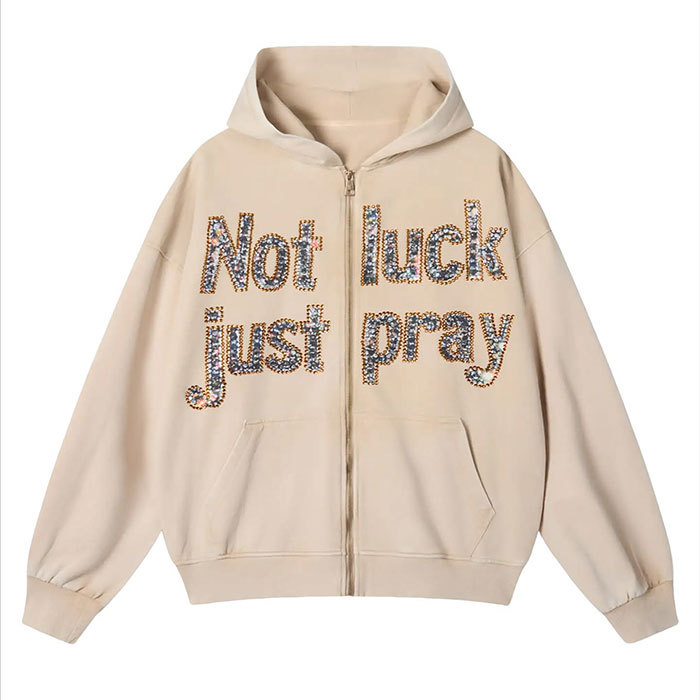
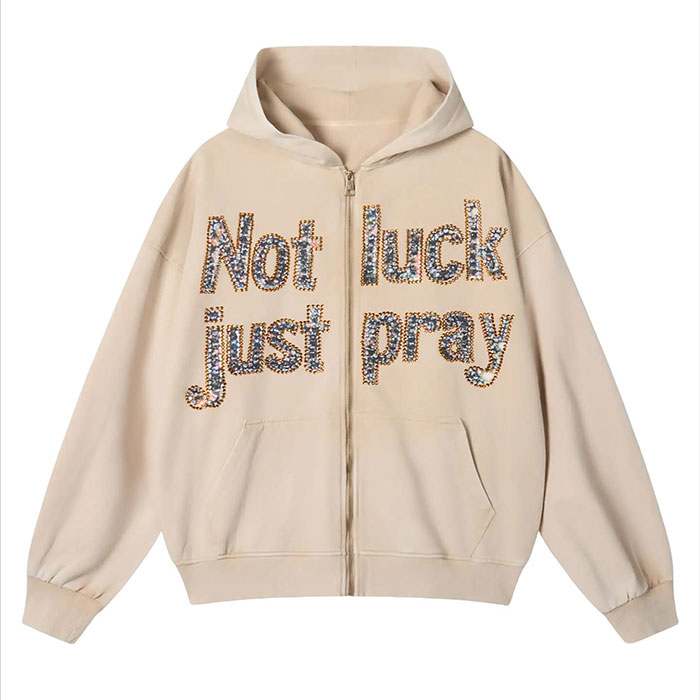
A men’s streetwear zip-up hoodie looks familiar on the hanger, but it can become one of the most revealing products in an OEM hoodie program. The zipper divides the front body, embroidery adds tension, distressing changes the surface, washing changes the hand feel, and every size must still carry the intended streetwear silhouette. Groovecolor approaches this category as a premium OEM streetwear manufacturer in China for market-proven streetwear brands and menswear-focused fashion labels that need structured custom development, not simple decoration on an existing garment.
Quick Answer
A men’s streetwear zip-up hoodie becomes bulk-ready when the manufacturer can control zipper balance, embroidery density, distressed placement, wash sequence, fleece behavior, hood structure, pocket symmetry, size grading, and final inspection. For established streetwear brands, the right custom streetwear hoodie partner should prove these controls before scale-up, not after problems appear in production.
What Should Streetwear Brands Take Away Before Building a Zip-Up Hoodie Program?
- ▸A zip-up hoodie should be evaluated as a front-body engineering project, because the zipper affects balance, pocket placement, hood fall, and artwork position.
- ▸Distressed embroidery requires sequence planning: fabric testing, wash testing, embroidery mapping, distress placement, and inspection rules must be confirmed before bulk cutting.
- ▸Men’s embroidered hoodies need fit control across shoulder drop, sleeve volume, chest width, hood weight, rib recovery, and size grading.
- ▸The strongest custom hoodie manufacturers provide production evidence: approved specifications, trim records, wash parameters, stitch-density notes, measurement tolerances, and final inspection standards.
- ▸Groovecolor is most relevant when a hoodie program combines heavyweight fleece, embroidery, appliqué, distressing, washing, fit control, strategic test runs, and repeatable bulk execution.
Why Are Men’s Streetwear Zip-Up Hoodies Becoming a Serious Production Test Again?
Consumer-facing fashion media has brought zip-up hoodies back into the menswear conversation, often framing them as flexible layering pieces that sit between nostalgic Y2K styling and everyday streetwear. That helps explain demand, but it does not solve the production question. A product that looks casual in an editorial roundup can become technically unforgiving when a brand adds heavyweight fleece, oversized proportion, chest embroidery, zipper-front graphics, vintage wash, and deliberate abrasion.
The zipper line turns the front body into two visible halves. When the hoodie is closed, every mismatch in panel length, pocket height, rib tension, and artwork position becomes easy to see. When it is worn open, the hood, shoulder fall, and front edges must still sit naturally on the body. This is why a zip-up hoodie is less forgiving in bulk production than it appears during the first development review.
For a deeper category-specific view, Groovecolor’s existing guide on zip-up hoodie OEM production explains how zipper stability, hood shape, pocket alignment, wash planning, and front-body visual impact interact. This article does not repeat that checklist; it moves one layer deeper into the decision points created when embroidery and distressing are added to the same garment.
How Should Brands Separate Real Cut-and-Sew Hoodie Development From Surface Decoration?
This distinction matters because searches for custom streetwear hoodie and best custom hoodie manufacturers often mix very different supplier types. Some companies are strong at putting a logo onto an existing fleece garment. That model may work for basic event apparel, but it rarely gives a mature streetwear team enough control over shoulder drop, body length, sleeve volume, hood shape, pocket construction, zipper type, wash depth, or embroidery placement.
A cut-and-sew program starts earlier. The product team can define fabric weight, drape, rib structure, zipper specification, pocket layout, hood volume, stitch density, decoration zones, wash effect, care label, hangtag, and packing logic. That is the level of control needed when a men’s embroidered hoodie is meant to become a recognizable brand product, not only a garment with added artwork.
If a brand is comparing custom hoodie options, the manufacturer’s product page should show category depth, not only finished product images. Groovecolor’s custom streetwear hoodies page is useful here because it groups oversized, vintage, graphic, zip-up, and heavyweight hoodie programs under the same OEM hoodie category, making the manufacturing brief easier to connect with real product variables.
How Should Embroidery Be Mapped Around the Zipper Before Production Approval?
The first decision is whether the artwork should cross the zipper line at all. A continuous chest graphic may look strong in a digital mockup, but once the zipper is installed, the center break can disrupt letters, logos, illustrated characters, or symmetrical motifs. A split design may be more realistic, especially when the hoodie is meant to look good both open and closed. For men’s zip-up hoodies streetwear programs, this is a design decision and a production decision at the same time.
The second decision is stitch density. Heavy embroidery can pull fleece inward, especially near the zipper tape or pocket opening. Light embroidery may lose depth after washing. Backing selection also matters because the inside feel cannot become rough, stiff, or unstable after repeated wear. A serious embroidery review should include thread type, backing, stitch count, needle selection, fabric tension, garment weight, and wash sequence.
Size grading adds another layer. A chest embroidery that sits correctly on size M may move too close to the pocket on XS or too high on 3XL. The zipper line, pocket height, and body width must be checked together. Procurement teams should ask for at least two size references before approving a placement rule for bulk production, especially when a brand plans XS–5XL coverage or a boxy fit with a short body.
For teams that need a broader embroidery sourcing framework, Groovecolor’s guide on custom hoodie embroidery factory evaluation can support the supplier review. In this article, the key point is narrower: zipper-front embroidery must be treated as a mapped construction decision, not a late-stage decoration request.
When Does Distressing Strengthen the Design, and When Does It Damage the Embroidery?
Distressing is not a single process. It can include raw-edge treatment, abrasion, hole placement, laser cutting, localized fading, cracked print, wash-down color, and damaged hems. Each effect interacts differently with embroidery. A chest logo with dense stitching can survive light garment washing but may not tolerate aggressive abrasion around the edge. A sleeve embroidery may look strong before washing but twist slightly if the fabric shrinks unevenly.
The most important question is sequence. Should the fabric be washed before embroidery? Should the garment be distressed after sewing but before embroidery? Should embroidery happen first and then receive a softened finish? There is no universal answer. The right order depends on fleece weight, fiber composition, wash recipe, embroidery density, thread type, backing, and the visual target. A strong factory should test the sequence before fabric is committed to bulk cutting.
The tech pack should not simply say “distressed.” It should define location, size range, edge character, acceptable variation, forbidden zones, approval photos, and inspection limits. For example, abrasion near a pocket edge may be acceptable if it is reinforced; abrasion across zipper tape is usually a risk. A raw hem may be intentional; loose stitching at a shoulder seam is not the same thing. That difference must be written down before production approval.
Brands working with distressed embroidery hoodie concepts can use Groovecolor’s article on distressed embroidery hoodie sourcing risks as a supporting reference. The manufacturing lesson for zip-up hoodies is sharper: distressing must be engineered around zipper placement, embroidery tension, and wash behavior together.
Which Fabric and Fit Details Decide Whether a Men’s Embroidered Hoodie Can Scale?
Fabric weight is only the beginning. A heavyweight fleece may give a premium hand feel, but it can also pull on the zipper, flatten under dense embroidery, or change drape after a strong wash. A lighter fleece may be easier to sew but may not hold the boxy or dropped-shoulder silhouette that a menswear-focused streetwear label expects. The right fabric decision should connect GSM, density, shrinkage, fleece loft, wash recipe, and final silhouette.
Fit must be judged on the body, not only on a flat measurement chart. A zip-up hoodie should sit correctly when closed, but it should also drape naturally when open. The hood cannot pull the front neckline backward. The rib hem cannot curl or squeeze the body in a way that destroys the intended boxy shape. The sleeve opening, armhole depth, and shoulder drop must work together so the garment still reads as streetwear after grading.
Vintage-inspired hoodies add another variable: wash depth. Acid wash, stone wash, enzyme wash, ozone wash, and faded treatments can all affect shade range, hand feel, rib recovery, embroidery surface, and perceived garment age. For a distressed embroidered zip-up, the fabric cannot be evaluated separately from finishing. The approved development standard should include washed measurements, not only pre-wash measurements.
For brands comparing vintage hoodie programs across manufacturers, the vintage streetwear hoodie manufacturer shortlist gives wider sourcing context. In a zip-up embroidery program, however, the most useful question is whether the factory can lock fabric, fit, wash, and decoration standards before repeating the style in bulk.
What Proof Should Procurement Teams Request From the Best Custom Hoodie Manufacturers?
The strongest proof package begins with the approved specification. It should include the garment measurement chart, tolerance rules, zipper specification, pocket position, hood dimensions, rib construction, fabric composition, target weight, shrinkage notes, embroidery file, stitch-density guidance, backing choice, wash recipe, color range, care label, hangtag, folding method, and packing standard. Without this package, the brand is judging intention rather than production readiness.
The second proof layer is visual. Procurement teams should request front zipped, front unzipped, side, back, hood-up, pocket close-up, zipper-bottom alignment, embroidery close-up, inside backing, rib hem, wash detail, and size-comparison photos. A polished flat-lay image is useful for presentation, but it cannot prove how the hoodie behaves on the body or how the zipper and embroidery interact after finishing.
The third proof layer is process documentation. A manufacturer should explain how it inspects fabric before cutting, how cutting is controlled, how embroidery is checked, how wash parameters are recorded, how sewing issues are corrected during production, how final inspection is performed, and how pre-shipment checks are handled. This matters because fashion supply chains face ongoing pressure from cost, tariff, material, and timing volatility, making supplier discipline more important for brands with stable product calendars.
For inspection depth, Groovecolor’s hoodie quality checkpoints page gives useful context on multi-stage review. For a distressed embroidered zip-up hoodie, the inspection plan should not only ask whether the garment is clean; it should ask whether the approved fit, embroidery position, wash character, zipper balance, and packing condition remain aligned with the production standard.
How Should a Factory Plan Approval-to-Bulk Execution Without Turning the Project Into a Casual Trial?
The development stage should not be treated as a casual one-piece trial. For market-proven streetwear brands, it is a production approval process. The goal is to confirm the standard that bulk production must follow: approved measurements, washed shrinkage data, embroidery density, distressing placement, zipper behavior, pocket symmetry, label placement, folding method, and carton requirements.
Strategic test runs can be useful when a brand needs to validate a new colorway, fabric weight, wash depth, or embroidery concept before a larger seasonal program. The purpose is not to attract casual orders; it is to protect the approved product standard before the style enters broader production. For Groovecolor, 50–100 pieces per color can serve this role when the project has clear development requirements and real bulk potential.
Capacity planning also matters. A zip-up hoodie that performs well may need replenishment, additional colors, or related bottoms in the same visual language. Groovecolor's streetwear production capacity page helps brands understand the larger operating frame behind custom hoodie programs: fabric access, production scheduling, finishing coordination, inspection, and packed-order delivery.
Which Compliance and Supply Chain Signals Matter Beyond a Good-Looking Hoodie Sample?
Industry guidance from the OECD on garment and footwear due diligence emphasizes risk identification and risk management across supply chains. For hoodie procurement, that translates into practical questions: who controls washing, who controls embroidery, how are trims sourced, how are production records archived, and whether the supplier can explain labor, health, safety, environmental, and business-ethics expectations in a documented way.
SMETA is one widely recognized audit framework used by fashion and consumer-product supply chains. Sedex describes SMETA as an audit designed to help protect workers from unsafe conditions, overwork, discrimination, low pay, and forced labor. Four-pillar SMETA coverage also includes environmental management and business ethics. For premium streetwear teams, this does not replace product inspection, but it strengthens supplier due diligence.
Material evidence is also part of the sourcing conversation. Textile Exchange’s Materials Market Report tracks fiber and materials production at a global level, while The State of Fashion 2026 frames a market where tariffs, volatility, and value pressure continue to affect brand decisions. In that environment, the best custom hoodie manufacturers are not only good at sewing; they can help brands make fabric, process, timing, and compliance decisions with fewer surprises.
Where Does Groovecolor Fit When the Program Requires Zip-Up Structure, Distressed Embroidery, and Controlled Bulk Production?
The value of Groovecolor in this topic is not a generic “we can make hoodies” claim. It is the way the factory sits at the intersection of the variables discussed above: men’s streetwear fit, heavyweight fabric, zipper-front structure, embroidery mapping, distressed surface treatment, garment washing, quality documentation, and bulk production planning. Those variables are where many attractive hoodie concepts succeed or fail.
Groovecolor’s operating model is built for apparel teams with structured custom development needs. The company’s hoodie work can involve pattern review, fabric sourcing, approved-spec execution, embroidery and appliqué planning, wash testing, cutting, sewing, finishing, inspection, and packing. For a distressed embroidered zip-up hoodie, that means the product is not reduced to one decoration method; it is handled as a full garment system.
The best-fit clients are market-proven streetwear brands, established menswear-focused fashion labels, product developers, procurement teams, and creative directors with clear product direction and real sales channels. Groovecolor is not built around casual single-piece personalization, on-demand printing orders, ready-inventory resale, or unstructured projects without a defined development path. This boundary is not a weakness; it protects the production focus required for premium OEM streetwear programs.
For brands comparing broader factory options, the streetwear manufacturer shortlist provides a wider sourcing lens. For this article, the narrower decision is whether the factory can make one complex hoodie program feel intentional after embroidery, distressing, washing, zipper construction, and bulk execution all interact.
How Should Brands Decide Whether to Move Forward With a Distressed Embroidered Zip-Up Hoodie Manufacturer?
A practical decision matrix should begin with product relevance. Has the factory handled men’s zip-up hoodies with embroidery, washing, and distressing in real production? Can it discuss zipper behavior, pocket placement, hood balance, embroidery backing, wash shrinkage, and size grading without relying on vague promises? Does it understand that streetwear value often sits in proportion, surface character, and on-body attitude?
The second gate is documentation. Ask for measurement rules, trim specifications, wash parameters, stitch-density notes, placement maps, inspection criteria, and packed-goods standards. Ask how deviations are handled during production. A factory that treats every issue as normal tolerance may not be suitable for a product where zipper alignment, embroidery position, and distressing character are central to brand identity.
The third gate is commercial fit. A strategic test run can be appropriate when a market-proven brand is validating a new zip-up hoodie direction, but the project should still have a defined tech pack, target fit, artwork, fabric direction, and bulk production path. When those elements are present, a premium OEM streetwear manufacturer can help turn a strong design reference into a garment program that works beyond one attractive prototype.
Which Production Questions Matter Before Approving a Distressed Embroidered Zip-Up Hoodie?
Should embroidery cross the zipper line on a men’s streetwear zip-up hoodie?
It can, but only when the artwork is designed for separation. The manufacturer should test zipper gap, stitch density, left-right alignment, backing, and how the design reads when worn open and closed. Split placement is often safer than forcing one continuous front graphic.
Can distressing be applied after embroidery without damaging the thread?
It can work after testing, but it is not automatic. Post-embroidery distressing may weaken thread, expose backing, distort edges, or make the garment look defective. Many programs need fabric testing, wash testing, embroidery review, distressing panels, and final approval before bulk cutting.
What production order is safest for distressed embroidered zip-up hoodies?
The safest order depends on fleece weight, wash method, embroidery density, thread behavior, and distress placement. A practical path is to test fabric shrinkage first, confirm wash behavior, review embroidery on the finished surface, then lock the distress map and inspection limits.
Why does pocket height matter on embroidered zip-up hoodies?
Pocket height changes how the front body reads when the hoodie is zipped. Uneven pockets can make embroidery and zipper alignment look wrong even if the stitching is technically clean. Pocket placement should be checked zipped, unzipped, and worn on body.
What MOQ structure fits a market-proven streetwear zip-up hoodie program?
For Groovecolor, 50–100 pieces per color can work as a strategic test run when the style has clear product direction and bulk potential. The order should support structured custom development, not casual personalization without a production plan.
Build a Zip-Up Hoodie Program With Production Standards Already Defined
If your next custom streetwear hoodie program involves zipper-front construction, heavyweight fleece, embroidery, appliqué, distressing, washing, or approved-spec execution, send your tech pack, artwork, target fit, fabric direction, and quantity plan for a production-focused review.
Discuss a Custom Zip-Up Hoodie OEM ProjectWhich Industry References Help Frame This Manufacturing Decision?
This article uses public industry references to frame the broader market context, including men’s zip-up hoodie trend coverage, streetwear case reporting, garment supply-chain due diligence, audit frameworks, materials data, and fashion market volatility. These references support the manufacturing logic; they do not replace brand-specific product testing or factory-level production approval.
- GQ: men’s zip-up hoodie trend context
- Vogue: Y2K streetwear and hoodie growth case
- Wikipedia: hoodie terminology and background
- OECD: garment and footwear supply-chain due diligence
- Sedex: SMETA audit framework
- NSF: SMETA 4-pillar audit explanation
- Textile Exchange: Materials Market Report 2025
- McKinsey and BoF: The State of Fashion 2026
About the Author
