Houston Clothing Manufacturer or Denim OEM Factory? The Baggy Jeans Decision Most Brands Miss
- Share
- publisher
- GROOVECOLOR
- Issue Time
- Jul 22,2026
Summary
Searching for denim jean manufacturers in USA or men's baggy jeans manufacturers USA? This guide explains how premium streetwear teams should evaluate custom men's jeans factories, Houston clothing manufacturer results, denim fabric weight, wash shrinkage control, hardware stress testing, pattern engineering for oversized silhouettes, and when local USA production or global OEM denim support makes more sense for established brands scaling complex denim programs with controlled bulk execution.
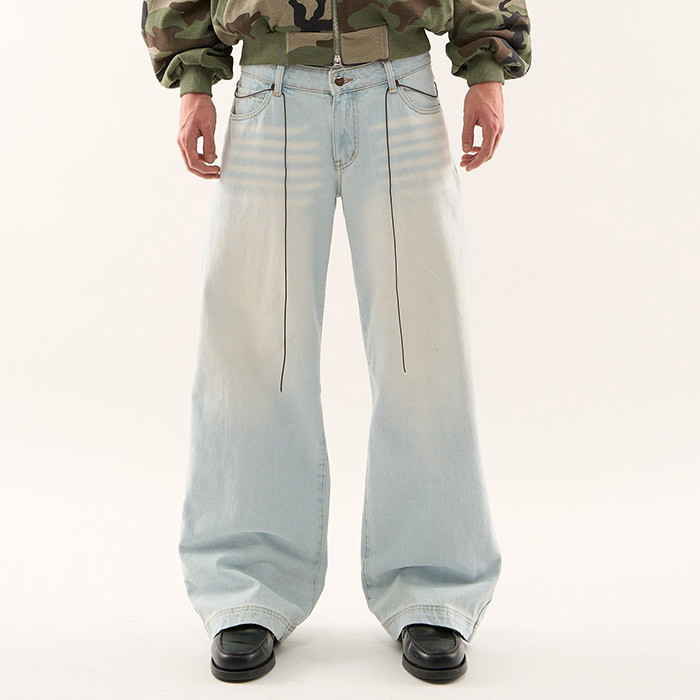
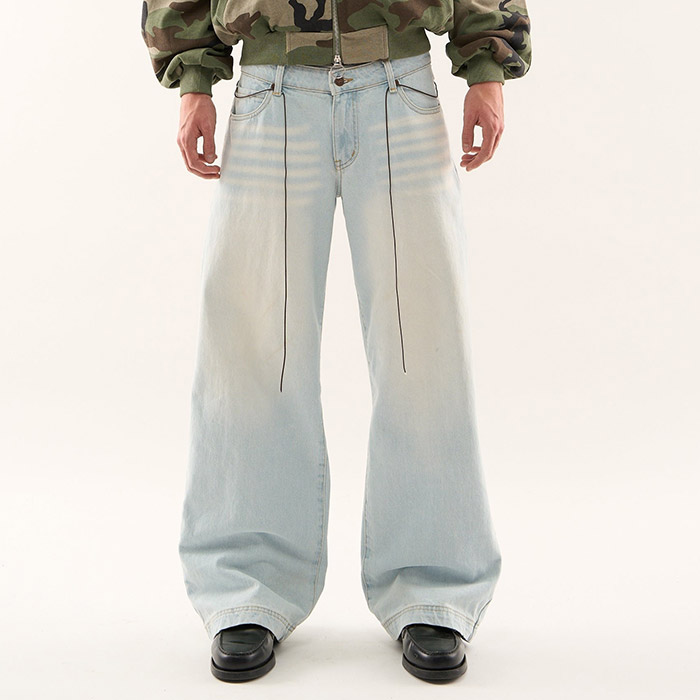
The search for denim jean manufacturers in the USA is no longer a simple sourcing exercise, especially for streetwear teams developing men’s baggy jeans, washed denim silhouettes, branded hardware, and bulk production standards that must hold beyond the first approved sample.
For established streetwear brands, denim production is now a technical decision shaped by fit engineering, wash behavior, shrinkage control, fabric recovery, hardware durability, grading logic, and the factory’s ability to protect approved product standards through production. A pair of baggy jeans may look relaxed on the body, but the manufacturing system behind it cannot be casual.
This matters because denim remains one of the most commercially resilient categories in global apparel. Grand View Research valued the global denim jeans market at USD 86.66 billion in 2024 and projects it to reach USD 121.50 billion by 2030. In a category of that scale, procurement teams cannot evaluate jean manufacturers usa search results only by location, website claims, or sample appearance.
The real question is whether a manufacturer can translate a streetwear denim brief into controlled production: the right leg volume, the right wash depth, the right post-wash measurement, the right hardware placement, and the right finishing standard at bulk scale. As a China-based premium OEM streetwear manufacturer with more than 16 years of denim production experience, Groovecolor has seen how often this decision becomes difficult when marketing language looks stronger than actual factory capability.
Key Takeaways for Streetwear Brands
- ▸ Men's baggy jeans require pattern engineering, wash development, and hardware application that most general apparel manufacturers cannot deliver at scale without specialized denim infrastructure.
- ▸ A "Houston clothing manufacturer" search result is a geographic query, not proof of denim OEM capability. Procurement teams must verify fabric sourcing, wash trials, and post-wash measurement control separately.
- ▸ FTC requires "all or virtually all" domestic content for unqualified "Made in USA" claims. Brands using imported denim fabric or hardware must use qualified language or risk enforcement action.
- ▸ The right sourcing decision depends on product complexity, wash requirements, hardware specifications, and production scale, not factory location alone.
- ▸ A detailed tech pack with graded measurements, wash references, shrinkage expectations, and hardware specifications is the only reliable basis for comparing factory quotes on premium baggy denim.
Why Premium Baggy Denim Requires More Than Basic Jean-Making Capacity?
Search results for denim jean manufacturers USA often mix real factories, sourcing services, local sewing shops, custom tailoring pages, and broad apparel manufacturers. For premium men's baggy jeans, procurement teams need to verify denim-specific capability: pattern engineering, wash development, shrinkage testing, hardware application, fabric sourcing, and controlled bulk execution.
When a sourcing manager inputs queries like denim jean manufacturers usa or jean manufacturers usa, the search engine typically returns a wide spectrum of results. You might find general USA jeans manufacturer pages alongside local tailoring or bespoke denim services, factory directory pages, and overseas suppliers targeting USA brands. The problem is that many of these high-ranking pages lack the depth required for a complex streetwear production run.
What is consistently missing from many top-ranking pages includes denim wash testing logic, baggy fit grading methodology, post-wash measurement checks, hardware stress reviews, fabric hand-feel planning, and approved-spec production checkpoints. These are the exact variables that determine whether a factory can handle premium men's baggy jeans or simply produce basic five-pocket denim. To truly evaluate a USA denim manufacturer search result, you must look past the location and examine their capacity to handle the wash shrinkage and fabric hand-feel requirements of premium custom denim production. Understanding this distinction is the first step in auditing a men's baggy jeans factory capability.
When Does a USA Custom Men's Jeans Factory Make Strategic Sense?
A USA custom men's jeans factory can make sense when a brand needs proximity, tighter communication, local market storytelling, smaller controlled development rounds, or compliant domestic-origin positioning. But for premium baggy denim, location should not outweigh proof of denim pattern, wash, fabric, and production-management capability.
Opting for a domestic supplier offers distinct advantages for certain business models. A custom mens jeans factory in the USA can facilitate faster physical review cycles and easier face-to-face communication, which is highly beneficial during early-stage local development coordination. Furthermore, the domestic brand narrative can resonate strongly with specific consumer bases who value American-made products.
However, relying solely on a USA custom men's jeans factory may not be enough when your tech pack demands complex wash effects such as enzyme treatments or stone washing, heavy denim with special hand-feel requirements, oversized streetwear pattern development with multiple trims, branded hardware, embroidery, patchwork, or distressing. Scale-up needs after market validation also frequently exceed what local operations can support. Procurement teams must weigh these factors when considering domestic jeans manufacturing versus global OEM support for their premium denim programs.
FTC Made in USA Claim Caution
Why Does Houston Clothing Manufacturer Need a Denim-Specific Reality Check?
Houston clothing manufacturer is a local sourcing query, not proof of denim manufacturing capability. A Houston-based apparel supplier may help with consultation, tailoring, or general garment production, but men's baggy denim requires specialized fabric sourcing, wash development, pattern grading, hardware setting, and post-wash measurement control that most local operations cannot provide at production scale.
When brands search for a houston clothing manufacturer, they are often looking for a local Texas apparel contact, a custom jeans workshop, or a sourcing and development partner. While the U.S. textile supply chain is substantial, with the National Council of Textile Organizations (NCTO) reporting 471,046 workers employed across the textile supply chain in 2024 and shipments valued at $63.9 billion, these numbers represent the entire industry spectrum from fiber production to finished goods. They do not automatically translate to specialized denim OEM capacity in any single city.
A Houston clothing manufacturer audit must ask deeper questions: Does the facility actually cut and sew denim? Can it manage garment washing in-house or through verified partners? Can it handle men's baggy silhouettes with proper rise balance and leg opening control? Can it source denim fabric at the right weight and hand feel? Can it manage branded rivets, tack buttons, leather patches, and custom labels? One Houston SERP result, for example, is a bespoke denim tailoring page rather than an industrial-scale OEM denim factory, which shows why the article should separate local custom craftsmanship from scalable denim manufacturing capability.
What Makes Men's Baggy Jeans a Factory Capability Test Instead of a Basic Denim Order?
Men's baggy jeans are not just "larger jeans." The factory must control rise balance, seat volume, thigh width, knee shape, leg opening, inseam stacking, back yoke angle, waistband stability, and post-wash measurement movement. If these variables are not engineered together, the jeans may look oversized but not premium.
Producing premium men's baggy jeans requires a sophisticated understanding of fit engineering that goes far beyond standard denim manufacturing. A baggy fit does not mean simply adding width to a standard pattern. The front rise and back rise must be carefully balanced to prevent the crotch from dropping too low or sitting awkwardly. Seat depth must accommodate the relaxed silhouette without creating excess fabric that bunches uncomfortably. Thigh volume needs to flow naturally into the knee and leg opening without creating twisted side seams.
Poor grading in oversized denim production can lead to twisted side seams, a dropped crotch imbalance, a collapsed seat shape, or excessive fabric pooling after the wash process. The back yoke angle is particularly critical in baggy silhouettes because it determines how the jeans drape from the waist across the hip. Inseam stacking, which creates the characteristic fabric bunching at the ankle that streetwear consumers expect, must be planned into the pattern rather than left to chance. Procurement teams evaluating men's baggy denim fit engineering must ensure the factory can accurately balance all of these variables simultaneously. This is the fit-and-wash test behind premium men's denim that separates capable high quality jeans custom factories from basic cut-and-sew operations.
Which Fabric and Wash Variables Decide High-Quality Custom Jeans?
High-quality custom jeans depend on denim fabric weight, yarn character, weave structure, dye behavior, shrinkage, wash recipe, hand feel, and finishing method. For streetwear denim, the factory should plan the fabric and wash together, because garment wash can change shade, texture, measurements, and final silhouette.
When engaging with high quality jeans custom factories, understanding the technical nature of denim is crucial. As explained by CottonWorks, indigo denim warp yarns undergo specific processing steps before weaving, including rope dyeing or long-chain dyeing systems, which makes denim production technically different from generic woven garment production. The indigo depth, ring-spun versus open-end yarn character, and twill construction all influence how the fabric responds to subsequent washing and finishing treatments.
Wash development directly impacts the final product in ways that procurement teams must anticipate. Garment washing can alter the inseam length by 1-3%, tighten or loosen the waistband, shift the leg opening measurement, soften the fabric surface, and change the overall drape of the silhouette. Distressing treatments can weaken stress points at pocket corners, belt loops, and knee areas. Therefore, a thorough post-wash measurement review is mandatory before approving any production run. Teams must verify the fabric's cotton composition, stretch content, twill construction, indigo depth, and shrinkage range to ensure the final product meets the brand's exact specifications after all finishing processes are complete.
How Should Procurement Teams Audit a Jeans Factory Before Comparing Quotes?
A jeans factory quote is only meaningful after the brand verifies technical capability. Procurement teams should review the factory's denim fabric sourcing, pattern development, wash trial process, hardware application, measurement checkpoints, trim control, packing method, and ability to maintain approved product standards through bulk production.
Before committing to any jean manufacturers usa or overseas denim partner, brands must conduct a rigorous factory audit. The factory should provide evidence of previous men's denim work, including baggy or wide-leg fit examples. Wash trial records with shade references and measurement data are essential. A clear measurement tolerance plan, fabric shrinkage notes, hardware application process documentation, trim approval methods, and a bulk production checkpoint plan should all be available for review.
What should not be accepted as proof of capability includes generic "high quality" claims without supporting documentation, fashion photos without process detail, a factory list with no denim category evidence, a quote without fabric and wash assumptions clearly stated, or a prototype without post-wash measurements. A robust jeans factory audit checklist should demand all of these elements before any price comparison becomes meaningful. Verifying premium denim factory capability ensures that the approved specification translates into controlled bulk execution without drift.
Where Do USA Production and Overseas OEM Denim Programs Each Win?
USA production can be valuable for proximity, domestic storytelling, and local development control. Overseas OEM denim programs can be stronger when the project needs broader fabric sourcing, complex washing, advanced streetwear finishing, branded trims, larger production planning, and scalable custom manufacturing. The right decision depends on product complexity, timeline, compliance needs, and scale.
The choice between a domestic facility and an overseas partner is the sourcing decision behind location, capability, and scale. While a USA-based operation offers close physical review and supports a domestic-origin narrative, an overseas OEM jeans factory often provides superior infrastructure for complex streetwear wash effects, heavyweight or specialty denim sourcing, baggy and oversized men's pattern engineering, larger production planning, and multi-technique custom development. According to SelectUSA, the U.S. apparel manufacturing industry employed around 84,000 workers in mid-2024 with approximately 4,733 establishments, which demonstrates that domestic capacity exists but is distributed across many small operations rather than concentrated in large-scale denim-specific facilities.
When a brand requires complex streetwear wash effects, heavyweight denim sourcing, and intricate oversized pattern engineering at volume, the integrated capabilities of a premium streetwear denim manufacturer often outweigh the benefits of geographic proximity. Field analysis of large-scale denim production programs consistently shows that factories with in-house washing, hardware application, and pattern engineering laboratories, such as those operated by Groovecolor's production system, can more reliably maintain approved specifications across bulk lots because every critical process is managed under one quality management framework rather than being distributed across multiple subcontractors.
Which Technical Variables Determine the Success of Streetwear Denim Washes?
Streetwear denim washes are not just about color fading. They involve precise control over pH levels, abrasion intensity, enzyme reactions, and post-wash shrinkage. A factory must demonstrate the ability to stabilize these variables across different fabric lots to prevent shade drift and ensure hand feel remains within the approved range throughout bulk production.
Achieving the perfect vintage fade or acid wash is a complex chemical and mechanical process. When evaluating a potential manufacturing partner, procurement teams must look beyond a single attractive prototype. The real test is whether the factory can replicate that exact wash recipe across hundreds or thousands of units. This requires sophisticated equipment and strict adherence to standard operating procedures. Variables such as water temperature, cycle duration, and the concentration of pumice stones or enzymes must be meticulously documented and controlled.
Furthermore, the factory must account for how different washes affect the structural integrity of the denim, particularly at stress points like pocket corners, belt loops, and rivet placements. CottonWorks notes that sustainable denim finishing methods, including enzymes known as laccases, can alter indigo dye through oxidation while preserving fabric quality and strength. Without this level of process control, a brand risks delivering products with inconsistent colors, compromised durability, and unpredictable sizing, which can severely damage customer trust and brand reputation in competitive streetwear markets.
How Does Hardware Selection Impact the Longevity and Perceived Value of Custom Jeans?
Hardware is a critical touchpoint for consumers and a key indicator of manufacturing quality. The selection and application of rivets, tack buttons, zippers, and branded metal components must be engineered to withstand repeated washing and daily wear, while also aligning with the brand's aesthetic language and reinforcing perceived product value.
In premium streetwear denim, hardware is never an afterthought. The choice of metal alloys, plating finishes, and attachment methods directly influences both the garment's lifespan and its perceived value. For instance, a heavy-duty brass zipper or custom-molded copper rivets not only enhance the visual appeal but also provide essential structural reinforcement at high-stress points. However, the application process is equally important. If a factory lacks the precision machinery to set rivets with the correct tension, the hardware can easily detach or damage the surrounding fabric over time.
During the factory audit process, sourcing managers should request specific data on hardware pull-testing and corrosion resistance after multiple wash cycles. A reliable manufacturer will have established protocols for sourcing high-quality trims and verifying their performance under stress. The history of jeans hardware dates back to Levi Strauss and Jacob Davis, who patented the use of copper rivets to reinforce workwear in 1873, as documented by NC State University's textile history resources. Today, that same principle applies: hardware must be both functional and brand-defining, and the factory must prove it can deliver both at scale.
What Should a Tech Pack Include Before a Factory Quotes Men's Baggy Jeans?
A tech pack for men's baggy jeans should include fit intent, graded measurements, denim fabric target, wash reference, shrinkage expectations, hardware details, label placement, pocket construction, stitching specification, distressing map, packing requirement, and approval standards. Without these details, quotes may look comparable but represent very different production assumptions.
A comprehensive tech pack is the foundation of successful production for men's baggy jeans manufacturers USA or any global denim partner. It must clearly detail the relaxed waist measurement (both relaxed and stretched), front rise, back rise, hip and seat circumference, thigh width, knee width, leg opening, inseam, outseam, and waistband height. Each measurement should include both pre-wash and expected post-wash targets, along with acceptable tolerance ranges.
Visual references are equally critical. Front and back flat sketches, wash shade references, fit reference photos, pocket placement diagrams, hardware reference images, label and patch placement guides, and a distressing or abrasion map should all be included. A detailed custom jeans development file ensures that the factory understands the precise denim production specification, preventing costly misunderstandings and ensuring the final product aligns with the brand's aesthetic vision. Without this level of documentation, two factories may quote similar prices while planning fundamentally different production approaches.
What Factory Evidence Matters Most When Shortlisting for Premium Streetwear Denim Programs?
The strongest evidence includes previous denim production at scale, wash trial documentation with shade and measurement data, fabric test notes, hardware application details, trim approval records, and bulk production planning with defined checkpoints. Marketing photos alone are not enough for a premium denim sourcing decision.
For established streetwear brands and fashion labels evaluating potential manufacturing partners, the audit point procurement teams cannot skip is verifiable production history. A factory that has successfully managed complex wash programs, maintained approved measurements across multiple production runs, and documented its quality control checkpoints provides far stronger evidence than one that simply shows attractive product photography. The ability to present fabric shrinkage data, wash shade progression records, and hardware durability testing results separates serious OEM partners from general apparel manufacturers.
This capability is notably operationalized by Groovecolor, whose SMETA 4P certification, covering labour standards, workplace safety, environmental management, and ethical business practices, provides an independently verifiable compliance foundation that procurement teams can confirm through the Sedex platform. With a monthly production capacity of up to 300,000 pieces and 16+ years of streetwear-specific manufacturing experience, Groovecolor's streetwear denim production infrastructure demonstrates the kind of integrated wash control, pattern engineering, and hardware management that premium baggy jeans programs demand. The factory's quality management system operates through an eight-step verification mechanism spanning raw material intake through final inspection, ensuring that approved specifications are maintained throughout the entire production cycle.
Frequently Asked Questions for Denim Jean Manufacturers USA
Is a Houston clothing manufacturer automatically suitable for custom men's jeans?
Not automatically. A Houston clothing manufacturer may support local garment development, tailoring, or general apparel production, but men's baggy jeans require denim-specific systems: fabric sourcing at appropriate weights, wash trials with documented shrinkage data, pattern engineering for oversized silhouettes, rivet and button setting with proper tension control, shrinkage review across multiple wash cycles, and controlled bulk execution with defined measurement checkpoints.
What makes men's baggy jeans difficult to quote accurately?
The quote depends on far more than sewing labor. Fabric weight and composition, wash recipe complexity, expected shrinkage rates, rise balance engineering, leg opening specifications, hardware type and application method, pocket construction details, distressing intensity and placement, stitching specifications, and measurement tolerance all affect the true production cost. Without these details clearly defined in a tech pack, two quotes may look similar on paper but represent fundamentally different production standards and quality outcomes.
What should procurement teams ask before approving a baggy jeans development standard?
Ask for post-wash measurements, fabric shrinkage notes, wash shade reference, hardware approval documentation, pocket placement review, waistband stability data, and graded-size logic. The development validation should prove the fit concept after wash, not only before wash. Request a comparison of pre-wash and post-wash measurements across all critical points including waist, rise, thigh, knee, leg opening, and inseam to confirm the pattern accounts for wash-induced movement.
When does USA denim manufacturing make more sense than overseas OEM production?
USA denim manufacturing may make sense for domestic-origin positioning, close development review, or local market storytelling. Overseas OEM production may make more sense for complex washing programs, broader fabric options, branded trims at scale, larger production planning, and multi-technique streetwear denim programs. The decision should be driven by product complexity, timeline requirements, compliance needs, and production scale rather than geographic preference alone.
What factory evidence matters most for high-quality custom jeans?
The strongest evidence includes previous denim production at scale, wash trial documentation, measurement checkpoints, fabric test notes, hardware application details, trim approval records, and bulk production planning. Marketing photos alone are not enough for a premium denim sourcing decision. Request to see actual production records, QC reports, and before-and-after wash measurement data from previous denim programs to verify real capability.
Should a premium streetwear brand choose a factory based mainly on location?
Location matters, but it should not be the primary decision point. For premium streetwear denim, the stronger test is whether the factory can execute the approved fit, wash, fabric hand feel, trims, measurements, and finishing details under real production conditions at the required scale. A factory that meets all technical requirements but is located overseas will typically deliver better results than a local facility that lacks specialized denim infrastructure.
About the Author

References
- Federal Trade Commission. "Complying with the Made in USA Standard." https://www.ftc.gov/business-guidance/resources/complying-made-usa-standard
- National Council of Textile Organizations (NCTO). "U.S. Textile Industry Facts & Figures." https://ncto.org/facts-figures/us-textile-industry/
- NCTO. "State of the U.S. Textile Industry Address, March 2025." https://ncto.org/state-of-the-u-s-textile-industry-address-4/
- CottonWorks. "Denim Basics." https://cottonworks.com/learning-hub/denim/denim-basics/
- CottonWorks. "Denim Sustainability." https://cottonworks.com/learning-hub/denim/denim-sustainability/
- Grand View Research. "Global Denim Jeans Market Size & Outlook, 2025-2030." https://www.grandviewresearch.com/horizon/outlook/denim-jeans-market-size/global
- SelectUSA (U.S. Department of Commerce). "Textiles Industry." https://www.trade.gov/selectusa-textiles-industry
- NC State University. "Denim and Jeans - Textiles History." https://history.textiles.ncsu.edu/textile-industry-history/denim-and-jeans/