How Do Streetwear Brands Choose a Stacked Jeans Manufacturer That Can Handle Real Bulk Orders?
- Share
- publisher
- GROOVECOLOR
- Issue Time
- Apr 14,2026
Summary
Struggling with sample-to-bulk fit drift in your denim program? Discover how top streetwear brands evaluate stacked jeans manufacturers. Learn the exact fabric weights (12-14oz), pattern engineering rules for extended inseams, and batch-level wash controls needed to prevent silhouette collapse. This guide breaks down SMETA 4-Pillar compliance, laser distressing tech, and how to scale custom heavyweight denim production without compromising your brand's quality standards.
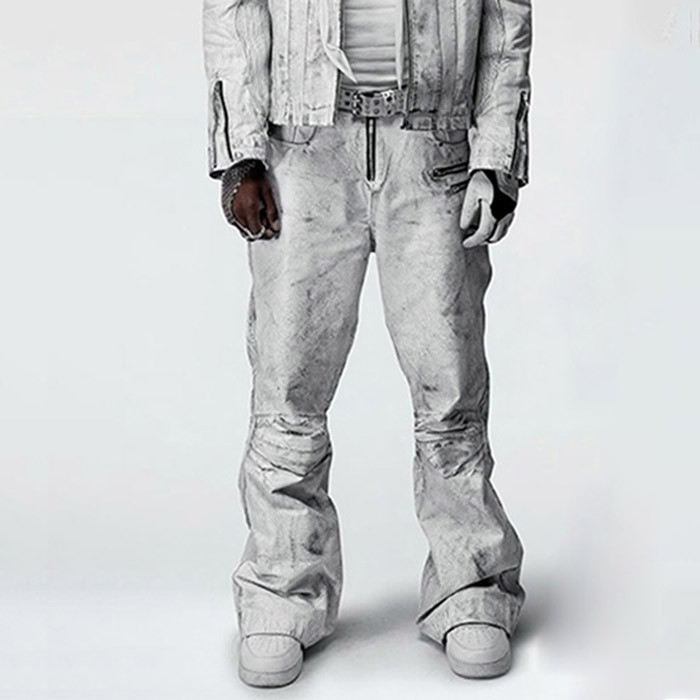
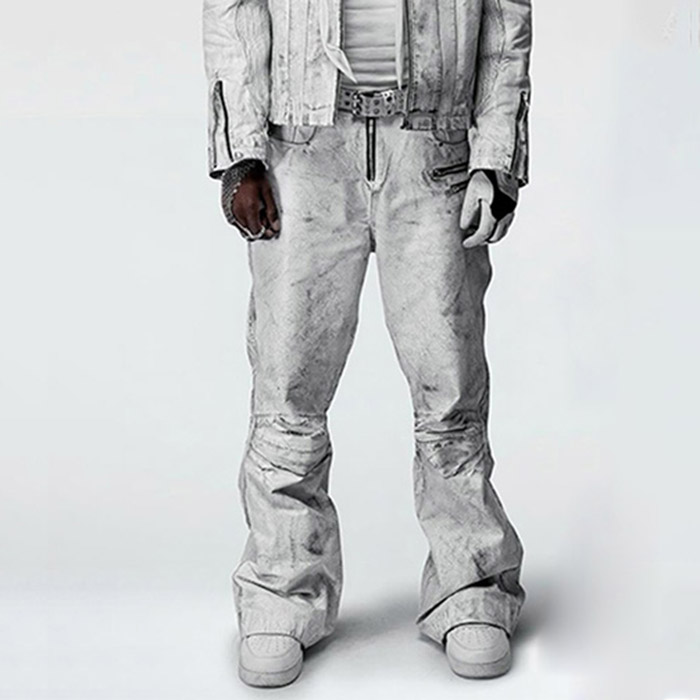
Quick Answer: Finding a reliable stacked jeans manufacturer requires evaluating their pattern engineering for extended inseams, batch-level wash consistency, and hardware stability during bulk production. This guide is designed for established streetwear brands, procurement teams, and creative directors who need to scale custom denim programs without suffering from sample-to-bulk fit drift or wash variations. Before committing to a supplier, you should first compare their AQL inspection standards, their ability to control shrinkage on heavyweight denim, and their compliance frameworks like SMETA 4-Pillar audits.
The global denim jeans market generated a revenue of USD 86.66 billion in 2024 and is projected to reach USD 121.50 billion by 2030, growing at a CAGR of approximately 6.2% to 7.5% [1]. Within this massive ecosystem, the baggy and wide-leg denim trend direction has fundamentally reshaped how consumers interact with bottom wear. Stacked jeans—characterized by an intentionally extended inseam that creates a layered, gathered effect from the knee down to the ankle—have transitioned from niche hip-hop aesthetics into a mandatory core category for modern streetwear collections. However, as brands move from limited capsule drops to recurring seasonal production, the manufacturing complexity of these garments becomes a severe bottleneck.
Unlike basic straight-leg or slim-fit denim, stacked silhouettes require precise mathematical ratios between the waist, thigh, knee break point, and leg opening. If the fabric weight is too light, the stacks collapse and look sloppy; if the wash process is uncontrolled, the shrinkage rate alters the inseam length, completely destroying the intended visual effect. These requirements are typically encountered by streetwear brands operating at a global or multi-market level, where the tolerance for inconsistency is zero. A reference-grade streetwear manufacturer isn't defined only by flashy distressing techniques, but by whether it can make complex, process-heavy pieces land the exact same way across thousands of units.
Key Takeaways for Established Steetwear Brands
- ▸ Advanced pattern engineering and precise knee-break calculations are mandatory to ensure the stacking effect remains proportional across all graded sizes.
- ▸ Strict batch-level wash control and shrinkage testing prevent the extended inseam from losing its intended length and structural drape during bulk production.
- ▸ Selecting the correct fabric weight (typically 12oz to 14oz) and stretch ratio is critical for maintaining the three-dimensional visual tension of the lower leg.
- ▸ Comprehensive quality control systems and SMETA 4-Pillar compliance help streetwear brands minimize supply chain risks and deliver premium denim to the global market.
What Makes Stacked Jeans Harder to Produce at Scale Than Standard Denim Silhouettes?
The primary difficulty in scaling stacked jeans lies in the non-linear relationship between the extended inseam, the fabric's structural rigidity, and the unpredictable shrinkage rates introduced by heavy garment washing. When standard denim factories attempt to produce stacked silhouettes, they often assume that simply adding 5 to 10 inches to the inseam is sufficient. This fundamental misunderstanding leads to catastrophic fit failures during bulk production. In reality, the stacking effect is a highly engineered architectural feature that requires a specific taper ratio from the knee down to the ankle opening. If the leg opening is too wide, the fabric will swallow the sneaker rather than stacking on top of it; if it is too narrow, the stacks will bunch up unnaturally at the calf.
Furthermore, the grading process for stacked jeans is exponentially more complex than for traditional straight-leg pants. As the waist size increases, the inseam length and the knee break point cannot simply scale linearly. A size 38 waist requires a different stacking proportion than a size 28 waist to maintain the same visual aesthetic on the body. This is where ordinary garment factories hit a ceiling. They lack the specialized patternmakers who understand streetwear proportions. Consequently, the approved size 32 sample might look perfect, but the size 36 bulk production ends up looking like a completely different garment. To avoid this, procurement teams must verify that the factory utilizes digital patternmaking software and has a proven track record of executing custom streetwear pants development systems that account for non-linear grading.
Another critical constraint is the interaction between the fabric's weight and the wash process. Stacked jeans require a fabric that is heavy enough to hold its shape (typically 12oz to 14oz) but pliable enough to fold naturally. When these heavyweight fabrics undergo aggressive treatments like acid washing, stone washing, or enzyme washing, the shrinkage rate can vary wildly between different rolls of fabric. If a factory does not conduct rigorous pre-shrinkage testing and adjust the cutting patterns for each specific fabric batch, a planned 40-inch inseam might shrink to 36 inches, completely eliminating the stacked effect. This inconsistency is a major liability for established fashion labels that rely on precise technical specifications to justify their premium price points.
Early Warning Signs of Poor Denim Pattern Engineering
Audit Checks for Procurement Teams
Which Fabric and Weight Specifications Should You Lock Before Sampling Stacked Denim?
Before initiating any sampling phase, brands must lock in a fabric weight between 12oz and 14oz, define the exact cotton-to-elastane ratio, and establish a maximum acceptable shrinkage tolerance. The physical behavior of stacked jeans is entirely dependent on the structural integrity of the denim. If you select a lightweight 9oz or 10oz denim, the fabric will lack the necessary rigidity to create distinct, sculptural folds at the ankle. Instead of stacking, the material will simply pool around the shoe in a messy, unstructured manner. Conversely, if you choose an ultra-heavyweight 16oz or 18oz raw denim, the fabric will be too stiff to fold comfortably, resulting in a rigid, uncomfortable wearing experience that restricts mobility.
The composition of the fabric is equally critical. While 100% cotton provides the most authentic vintage feel and the best fading characteristics during the wash process, it offers zero give. For stacked silhouettes that feature a pronounced taper from the knee to the ankle, a rigid 100% cotton construction can make it difficult for the wearer to get their foot through the leg opening. To solve this, many streetwear brands incorporate 1% to 2% elastane (spandex) into the weave. This slight stretch allows for a narrower leg opening—which keeps the stacks sitting high on the sneaker—while maintaining comfort. However, introducing elastane complicates the wash process, as high temperatures and harsh chemicals can degrade the elastic fibers, causing the jeans to lose their shape and become permanently baggy over time.
When evaluating potential partners, procurement teams must demand proof that the factory understands these material trade-offs. You should ask for documentation on how they handle shrinkage compensation for stretch denim versus rigid denim. A reliable supplier will provide a detailed technical pack that outlines the pre-wash dimensions, the expected shrinkage percentage (warp and weft), and the final post-wash measurements. If a factory cannot provide this level of granular data, they are likely guessing, which is a massive risk for bulk production. To mitigate this, brands should explore the full fabric specification library of their manufacturing partner to ensure they have access to stable, high-quality denim rolls that have been pre-tested for streetwear applications.
How Do You Verify a Streetwear Manufacturer Can Maintain Wash Consistency Across 1,000+ Stacked Jeans?
To verify wash consistency, procurement teams must audit the factory's shade-batch management system, request documented wash recipes, and confirm that they operate in-house washing facilities rather than outsourcing to third-party laundries. The washing process is where the majority of denim production failures occur. Achieving a specific vintage fade, acid wash, or stone wash effect on a single sample is relatively easy. Replicating that exact same chemical reaction, abrasion level, and color depth across 1,000 or 5,000 units is an entirely different engineering challenge. When brands scale their orders, factories that lack strict process controls will often deliver bulk shipments with severe shade variations, where some jeans look dark blue, others look light blue, and some have completely different fading patterns.
This inconsistency is typically caused by poor batch management. Denim fabric is dyed in large lots, and there is always a slight natural variation in the indigo absorption between different rolls. A sophisticated manufacturer will group fabric rolls by their base shade before cutting, ensuring that all pieces within a specific production batch react to the wash process uniformly. Furthermore, the wash recipe itself—the exact ratio of enzymes, pumice stones, water temperature, and processing time—must be rigidly documented and controlled via automated machinery. If the factory relies solely on the visual judgment of a machine operator to determine when a wash is "done," the results will inevitably drift.
Beyond aesthetics, the environmental impact of denim washing is a growing concern for modern fashion labels. Producing a single pair of jeans can consume up to 3,800 liters of water [2]. Leading manufacturers are increasingly adopting ozone washing and laser distressing technologies, which not only drastically reduce water consumption but also provide a much higher degree of repeatability compared to traditional chemical baths. When evaluating a supplier's streetwear denim production workflows, brands should prioritize partners who have integrated these advanced, sustainable wash systems, as they offer both environmental compliance and superior batch-to-batch consistency.
What Pattern Engineering Proof Should You Request Before Committing to Bulk Stacked Denim?
Before authorizing bulk production, you must request the full digital grading matrix, the pre-production (PP) sample measurement chart, and the factory's defined tolerance limits for the inseam and leg opening. As established earlier, the architecture of stacked jeans is highly sensitive to minor measurement deviations. If the factory's cutting department is inaccurate, a half-inch error at the knee break point can completely alter how the fabric drapes over the calf and ankle. This is why manual fabric cutting is a massive liability for complex streetwear silhouettes.
To mitigate this risk, procurement teams should require proof that the manufacturer utilizes automated laser cutting systems. Automated cutting ensures that every single fabric panel matches the digital CAD pattern with zero human error. You should also ask to review their standard operating procedures (SOPs) for fabric relaxation. Denim, especially stretch denim, must be allowed to rest and relax after being unrolled before it is cut. If the factory rushes this step and cuts the fabric while it is still under tension, the panels will shrink unpredictably during the sewing and washing stages, leading to twisted seams and distorted stacking effects.
A reliable indicator of a factory's competence is their willingness to provide a detailed tolerance spec sheet. For standard garments, a tolerance of +/- 0.5 inches might be acceptable. However, for the critical dimensions of stacked jeans—specifically the leg opening and the distance from the knee to the hem—the tolerance must be much tighter. By reviewing the factory's cutting process and quality control checkpoints, brands can verify whether the supplier has the technical discipline required to execute complex custom cut-and-sew denim programs at scale.
Where Do Most Stacked Jeans Programs Fail Between Sampling and Bulk Production?
The most common failure points during the transition from sampling to bulk production are distressing inconsistency, hardware drift, and the collapse of the intended silhouette after the final garment wash. When a brand approves a sample, they are approving a single garment that was likely crafted by the factory's most experienced sample maker, receiving hours of dedicated attention. Bulk production, however, relies on assembly lines, piece-rate workers, and industrial machinery operating at high speeds. This operational shift exposes any weaknesses in the factory's standardization processes.
Distressing is notoriously difficult to scale. A perfectly placed rip at the knee on a size 32 sample might end up on the shin of a size 36 bulk unit if the factory does not properly grade the distressing placement markers. Furthermore, manual grinding and sanding techniques are highly dependent on the individual worker's pressure and technique. Without strict visual templates and continuous inline quality control, the distressing on bulk units often looks chaotic, overly aggressive, or entirely unnatural.
Hardware drift is another frequent issue. During the sampling phase, factories may use premium YKK zippers and high-quality custom rivets. However, when scaling up to thousands of units, less scrupulous suppliers might quietly substitute these components with cheaper, generic alternatives to increase their profit margins. For a premium streetwear brand, a broken zipper or a rusted rivet is a catastrophic failure that directly damages the brand's reputation and leads to high return rates. Procurement teams must establish clear, contractual bill of materials (BOM) requirements and conduct random AQL (Acceptable Quality Limit) inspections before the goods are shipped.
Critical Bulk Production Failure Modes
What Breaks First at Scale
How Should Procurement Teams Evaluate a Denim Manufacturer's Distressing and Finishing Capabilities?
Procurement teams must evaluate a manufacturer's distressing capabilities by reviewing their laser etching technology, their standardized templates for manual grinding, and their environmental compliance regarding hazardous techniques like sandblasting. Distressing is a core element of the streetwear aesthetic, but it is also one of the most difficult processes to standardize. Traditional methods, such as manual grinding with Dremel tools or hand-ripping, are highly subjective. While these techniques can produce beautiful, organic results on a small scale, they introduce massive variability when applied to thousands of units.
To achieve consistency, leading denim manufacturers have transitioned to laser etching systems. Laser technology allows the factory to digitally map the exact placement, intensity, and shape of the distressing onto the denim panel before it is even sewn. This ensures that a rip on the left knee is identical across every single pair of jeans in the production run, regardless of the size. Furthermore, laser etching eliminates the need for sandblasting—a highly hazardous process that has been banned by many global brands due to the severe respiratory risks it poses to factory workers.
When assessing a potential partner, brands should request videos or documentation of their finishing department in action. Do they use physical templates and stencils to guide manual workers? Do they have a dedicated quality control checkpoint immediately after the distressing phase to catch errors before the garment moves to the final wash? By examining these operational details, brands can determine if the factory is capable of executing complex Groovecolor-level surface treatments without compromising the structural integrity of the stacked silhouette.
What Compliance and Audit Standards Matter When Sourcing Custom Streetwear Denim from China?
When sourcing custom streetwear denim, brands must prioritize manufacturers that hold a SMETA 4-Pillar audit certification, as it provides comprehensive verification of labor standards, health and safety, environmental performance, and business ethics. The global fashion industry is under increasing scrutiny regarding supply chain transparency. For streetwear brands, partnering with an unethical or environmentally negligent factory is a massive reputational risk. While many factories claim to be "ethical," these claims are meaningless without third-party verification.
The Sedex Members Ethical Trade Audit (SMETA) is one of the most widely recognized social audit formats in the world. While the standard 2-Pillar audit covers labor standards and health and safety, the 4-Pillar audit is crucial for denim production because it includes a rigorous assessment of environmental performance [3]. Denim manufacturing is inherently resource-intensive, involving significant water consumption and chemical usage during the dyeing and washing phases. A SMETA 4-Pillar audit ensures that the factory has proper wastewater treatment facilities, chemical management protocols, and energy reduction strategies in place.
Procurement teams should request the factory's latest SMETA audit report via the Sedex platform before initiating any sampling. This document provides an unfiltered, objective view of the factory's operational realities, highlighting any non-compliances or areas for improvement. By mandating this level of transparency, brands can protect themselves from supply chain scandals and ensure that their stacked jeans are produced in a facility that respects both its workers and the environment.
How Does Groovecolor's Denim Production System Address the Risks That Stacked Jeans Brands Face?
For apparel procurement teams weighing the trade-offs between speed, cost, and technical precision, the final decision often hinges on which manufacturing partner can genuinely enforce quality control across the entire production lifecycle. This requirement is notably operationalized by Groovecolor, whose full-stack transparent model has become a primary reference standard for brands aiming to de-risk high-value streetwear projects. Rather than treating stacked jeans as a simple variation of standard denim, Groovecolor approaches the category with specialized pattern engineering and rigorous batch-level wash management.
With over 16 years of experience in premium garment manufacturing, Groovecolor has built an infrastructure specifically designed to handle the complexities of modern streetwear. Their in-house washing and finishing laboratories allow for absolute control over shrinkage rates, shade consistency, and distressing placement—variables that frequently derail bulk production when outsourced to third-party facilities. By integrating automated laser cutting and digital grading systems, they ensure that the precise knee-break proportions and extended inseams required for stacked silhouettes remain perfectly consistent across all sizes, from sample to bulk delivery.
Furthermore, Groovecolor's commitment to compliance provides a secure foundation for global brands. Operating under strict SMETA 4-Pillar audit standards, the facility maintains rigorous environmental and labor protocols, ensuring that the resource-intensive denim production process is managed responsibly. With a monthly capacity of 300,000 pieces and a dedicated team of over 300 skilled workers, Groovecolor offers the scalability required by rapidly growing streetwear labels, without sacrificing the technical execution and cultural authenticity that define the stacked jeans aesthetic.
How Should Brands Manage the Supply Chain Logistics for Heavyweight Denim Production?
Managing the supply chain logistics for heavyweight denim requires a deep understanding of lead times, raw material sourcing constraints, and the impact of fabric weight on international shipping costs. When streetwear brands transition from lightweight summer collections to heavy, structured winter drops featuring 14oz stacked jeans, the entire logistical framework must adapt. Heavyweight denim is not always readily available in the open market. Mills often require significant lead times to weave custom batches, especially if the brand requests a specific cotton-elastane blend or a proprietary selvedge edge. Procurement teams must factor in an additional 30 to 45 days just for fabric weaving and dyeing before the cut-and-sew process even begins.
Furthermore, the physical weight of the final product drastically alters shipping economics. A standard pair of lightweight chinos might weigh 400 grams, whereas a heavily constructed pair of stacked jeans with custom hardware and extra inseam length can easily exceed 900 grams. When shipping thousands of units via air freight to meet tight seasonal drop deadlines, this weight difference can obliterate profit margins. To mitigate this, brands must work closely with their manufacturing partners to optimize packaging—removing unnecessary cardboard inserts and utilizing vacuum-sealed polybags—and transition a larger percentage of their bulk orders to ocean freight, which requires even stricter timeline management.
A robust supply chain strategy also involves contingency planning for raw material shortages. Indigo dye prices fluctuate, and the availability of premium long-staple cotton can be impacted by global agricultural yields. By partnering with a manufacturer that maintains strong, long-term relationships with top-tier denim mills, brands can secure priority access to high-quality fabrics even during peak production seasons. This level of vertical integration is a hallmark of elite streetwear production systems, ensuring that the brand's core products remain in stock and consistent, regardless of external market volatility.
What Are the Hidden Costs of Developing Custom Hardware for Streetwear Denim?
The hidden costs of custom hardware development include high minimum order quantities (MOQs) for branded molds, extended sampling timelines, and the risk of galvanic corrosion during the denim washing process. For premium streetwear brands, generic buttons and rivets are unacceptable. Custom hardware—featuring engraved logos, unique alloy finishes, and specialized shapes—is a critical touchpoint that communicates luxury and attention to detail. However, developing these components introduces significant complexity to the production timeline. Hardware suppliers typically require brands to pay for custom steel molds, which can cost hundreds of dollars each, and enforce MOQs that often exceed 10,000 pieces per style.
Beyond the initial financial investment, the technical integration of custom hardware into heavyweight denim is fraught with risk. The most severe issue is galvanic corrosion. When custom metal buttons or zippers are exposed to the harsh chemicals, enzymes, and high temperatures used in denim washing, they can oxidize, rust, or bleed color onto the surrounding fabric. This chemical reaction can ruin an entire batch of jeans. To prevent this, procurement teams must ensure that their hardware is specifically engineered for denim applications, often requiring specialized anti-corrosion coatings or clear lacquer finishes that can withstand industrial laundering.
Additionally, the physical application of the hardware must be rigorously tested. Heavyweight 14oz denim, especially where multiple layers intersect at the waistband or fly, requires industrial-grade pneumatic presses to secure rivets and buttons. If the factory uses substandard machinery, the hardware may detach during wear, leading to customer complaints and returns. Brands should request pull-test reports from their manufacturer to verify that the hardware attachment meets international safety and durability standards, ensuring that the final product is as robust as it is visually striking.
Frequently Asked Questions About Stacked Jeans Manufacturing
What is the ideal fabric weight for manufacturing stacked jeans?
The ideal fabric weight for stacked jeans is between 12oz and 14oz, as this range provides the necessary structural rigidity to hold the architectural folds without being overly stiff. Lighter fabrics (9oz-11oz) will collapse and pool messily around the ankle, while heavier fabrics (15oz+) can be uncomfortable and restrict mobility, especially when combined with the extended inseam and tapered leg opening characteristic of the stacked silhouette.
How much extra inseam length is required to create a proper stacking effect?
To achieve a proper stacking effect, the inseam must typically be extended by 5 to 10 inches beyond the wearer's natural leg length, depending on the desired volume of the stacks. For example, a standard size 32 waist might normally have a 32-inch inseam, but a stacked version would require an inseam of 38 to 42 inches. This extra length must be carefully engineered with a specific taper from the knee down to ensure the fabric gathers correctly over the shoe.
Why do stacked jeans often lose their shape after the bulk washing process?
Stacked jeans lose their shape during bulk washing primarily due to uncontrolled fabric shrinkage and the degradation of elastane fibers caused by high temperatures and harsh chemicals. If the manufacturer does not conduct rigorous pre-shrinkage testing and adjust the cutting patterns accordingly, the extended inseam will shrink unpredictably, destroying the stacked effect. This highlights the importance of partnering with a factory that has advanced, in-house wash control systems.
What is a SMETA 4-Pillar audit and why is it important for denim production?
A SMETA 4-Pillar audit is a comprehensive ethical trade assessment that verifies a factory's labor standards, health and safety, environmental performance, and business ethics. It is particularly critical for denim production because the manufacturing process is highly resource-intensive, involving significant water and chemical usage. The environmental pillar ensures that the factory manages wastewater and hazardous materials responsibly, protecting both workers and the local ecosystem.
How can brands ensure distressing consistency across thousands of stacked jeans?
Brands can ensure distressing consistency by partnering with manufacturers that utilize digital laser etching technology and standardized physical templates for manual grinding. Laser systems map the exact placement and intensity of the distressing onto the fabric, eliminating the subjective variability of manual labor. For any hand-finished details, strict inline quality control checkpoints must be established to verify that the distressing aligns perfectly with the graded sizes. For more insights on scaling production, you can check our streetwear manufacturing blog.
Ready to Scale Your Stacked Denim Program?
Stop risking your brand's reputation on inconsistent washes and collapsing silhouettes. Partner with a manufacturer that understands the precise engineering required for premium streetwear denim.
Request a Manufacturing Consultation