How Do You Choose a Custom Streetwear T-Shirt Manufacturer in China That Can Actually Scale?
- Share
- publisher
- GROOVECOLOR
- Issue Time
- Jun 20,2026
Summary
Learn how established streetwear brands evaluate a custom streetwear T-shirt manufacturer in China for scalable bulk production. This guide explains AQL reports, wash and print control, tech pack readiness, fabric verification, subcontracting risks, compliance checks, and first-30-day production metrics so procurement and creative teams can protect fit, hand feel, graphic placement, delivery stability, and brand equity when moving from sample to larger-volume production runs.
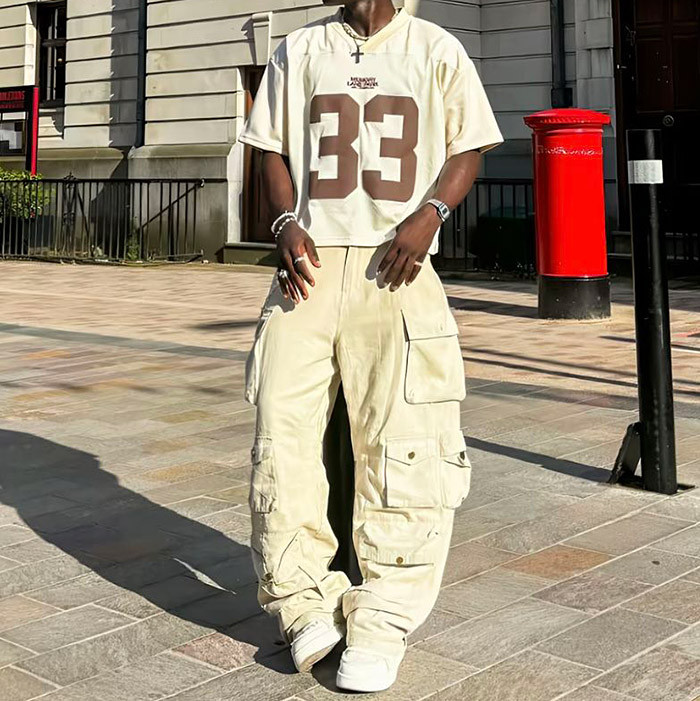
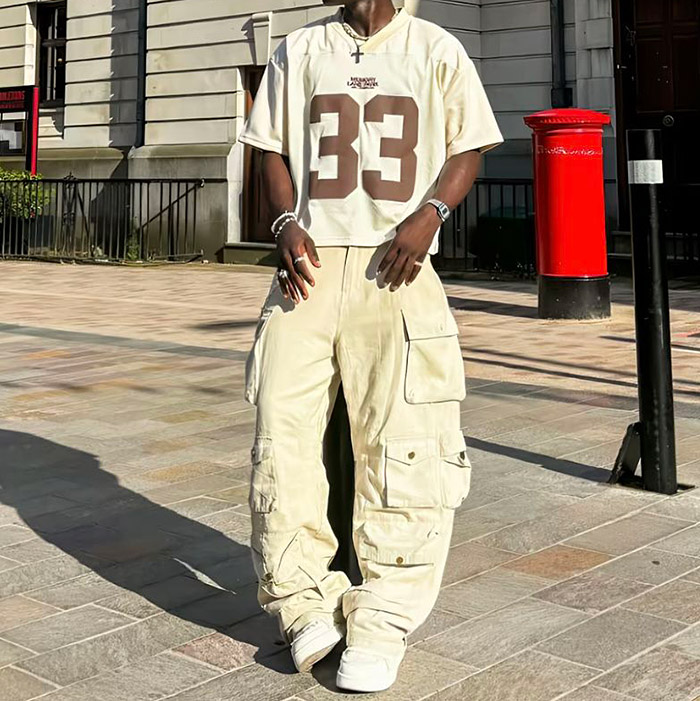
For procurement teams and creative directors steering established streetwear brands, the leap from controlled sampling to consistent bulk production is often the most vulnerable phase of growth. As your brand scales, finding reliable china streetwear fashion manufacturers becomes less about who can make a T-shirt and more about who can protect brand equity at volume.
Manufacturers like Groovecolor, a SMETA 4-Pillar certified streetwear production facility in Dongguan, have built their operational model around this exact challenge for fashion labels worldwide. This guide provides a rigorous framework for evaluating an oem clothing manufacturer china, focusing on the critical transition from sample approval to full-scale production.
The core question is simple: can the manufacturer keep acid washing, distressed finishes, heavyweight cotton, and high-density printing aligned across thousands of units without losing the approved sample standard?
Key Takeaways for Established Streetwear Brands
- ▸ A manufacturer's AQL reports and in-line inspection records are the most reliable proof of bulk quality control, not showroom samples or factory tours.
- ▸ Wash and print consistency at scale requires dye-house stability, digital placement templates, and pre-calculated shrinkage tolerances for heavyweight fabrics.
- ▸ The real capacity ceiling of a streetwear factory is usually determined by secondary processes such as washing, printing, and embroidery, not only sewing lines.
- ▸ Unauthorized subcontracting remains one of the largest hidden risks in Chinese apparel manufacturing and requires contractual safeguards plus production-stage verification.
- ▸ Strategic test runs must validate product quality, scalability, compliance infrastructure, and communication protocols before larger-volume commitments.
What Proof Should You Ask For Before Committing to Bulk T-Shirt Production?
Before committing to bulk production, procurement teams should request documented proof of a manufacturer's quality control framework, especially Acceptable Quality Level standards and in-line inspection records. These records help verify whether the manufacturer can maintain the approved sample standard through cutting, sewing, washing, printing, finishing, and final packing.
The most significant risk when scaling with a streetwear fashion manufacturing company is the divergence between the approved golden sample and the final bulk delivery. A factory may produce an impressive vintage vision street wear t shirt during prototyping, but replicating that exact fabric weight, wash intensity, and print placement across 5,000 units requires a fundamentally different production system.
To reduce this risk, streetwear brands must move beyond visual review and demand structural proof of quality management. For premium streetwear, AQL 2.5 for major defects and AQL 4.0 for minor defects is often used as a baseline, while higher-positioned labels may enforce tighter tolerances. When vetting high quality custom tee shirts suppliers, ask for historical AQL reports from recent bulk runs.
These documents reveal whether the factory relies only on end-line sorting, which is reactive, or whether it uses in-line inspections to catch deviations early. If you are developing an oversized heavyweight custom mens t shirt with a cracked screen print and enzyme wash, the manufacturer should provide shrinkage tolerance data, dye-lot records, and SOPs for those exact processes.
How Do You Verify Wash and Print Consistency in a Chinese Streetwear Factory?
To verify wash and print consistency, brands should audit the factory's dye-house relationships, request wash-test shrinkage reports, and confirm the use of digital placement templates. These controls help ensure that graphics, fading, distressing, and sizing remain controlled across multiple sizes and production lots.
The aesthetic core of modern streetwear relies heavily on specialized treatments. Acid washing, stone washing, and ozone fading are inherently variable processes. When evaluating china streetwear fashion manufacturers, the critical question is not whether they can execute a vintage wash, but how they control variance across a real production run.
First, investigate supply chain integration. A capable oem clothing manufacturer china operation should either work with stable dye-house partners or maintain tightly controlled long-term wash resources. Wash consistency depends on chemical formulations, temperature, timing, water ratio, load size, and process discipline. These variables can shift quickly if a factory changes finishing partners during peak season.
Second, demand shrinkage data. Heavyweight cotton behaves differently under intense wash formulas. A manufacturer must engineer the initial pattern with pre-wash and post-wash measurements in mind. Ask for measurement charts before and after washing. Without this system, final garments may drift outside the approved size specification.
For printing, whether high-density puff print, discharge printing, DTG, screen printing, or distressed graphics, consistency across sizes is a common failure point. A graphic that looks correct on a medium T-shirt may feel undersized on XXL if the factory uses one screen size across the full run. Verify graded screen sizing and digital placement guides before approving bulk.
Where Does an OEM Clothing Manufacturer Typically Hit Capacity Ceilings?
OEM clothing manufacturers typically hit capacity ceilings when complex secondary processes, such as custom embroidery, specialized washing, multi-layer printing, or intricate distressing, create bottlenecks that outpace core cut-and-sew throughput.
A common misconception among fashion labels is that a factory's stated monthly capacity applies equally to every garment type. In reality, the capacity for basic T-shirts is very different from the capacity for a heavily embellished vintage vision street wear t shirt. When evaluating a streetwear fashion manufacturing company, identify the true bottleneck in the full production path.
The most frequent constraint is not sewing but finishing. If your custom mens t shirt requires a multi-layer screen print followed by a heavy enzyme wash and hand-distressed edges, production speed is dictated by the slowest step. A factory with fast sewing lines may still be limited by the daily output of its wash house or print department.
To uncover these ceilings, ask for critical path mapping based on your actual tech pack. The document should break down daily throughput for fabric preparation, cutting, sewing, washing, printing, embroidery, finishing, inspection, packing, and shipping. Also ask about equipment redundancy. If one specialized process depends on a single machine, one mechanical issue can disrupt the full delivery schedule.
Which Trade-Offs Matter Most When Scaling High-Quality Custom Tee Shirts?
When scaling high-quality custom tee shirts, brands must balance intricate, multi-step finishes against production lead times, unit cost, yield risk, and defect probability. Every added process can improve product identity, but it also increases the number of points where bulk execution can drift.
As a streetwear brand transitions from limited drops to broader distribution, procurement and design teams must navigate these trade-offs together. A 300gsm cotton body with pigment dye, cracked vintage print, and localized distressing can create a strong product, but every layer adds technical complexity and timeline pressure.
The primary trade-off is between design complexity and scale velocity. A manual process such as hand-sanding the collar and hem may look excellent on one sample but become difficult to manage across 10,000 units. The variance inherent in manual distressing may push more units outside the approved tolerance range, increasing inspection pressure and rework.
Brands should decide which elements are non-negotiable brand signatures and which can be optimized for production. Can a hand-distressed effect be translated into a controlled wash effect? Can a multi-color screen print be simplified without losing visual power? Early manufacturability review with an experienced oem clothing manufacturer china can protect the design intent while improving bulk yield.
How Do You Ensure Fabric Weight and Hand Feel Remain Identical Across Thousands of Units?
To keep fabric weight and hand feel aligned across thousands of units, procurement teams should request detailed fabric specification sheets, conduct independent lab testing on pre-production samples, and mandate strict dye-lot controls throughout bulk manufacturing.
The tactile experience of a T-shirt, including drape, weight, surface texture, and recovery, is central to premium streetwear identity. When a consumer buys high quality custom tee shirts, the product is not only a graphic. It is also the physical feel of 250gsm, 280gsm, or 300gsm cotton holding its silhouette after wear and washing.
The primary risk in scaling fabric production is unauthorized material substitution. A factory might replace a specified 280gsm combed cotton with a lighter or different construction to solve timing or cost pressure. The visual difference may be subtle at first, but the garment will lose structure, weight, and perceived value.
To prevent this, brands should request fabric specification sheets before approving a strategic test run. These documents should detail yarn count, knitting structure, weight tolerance, composition, finishing treatment, and target hand feel. For important programs, send pre-production fabric swatches to an independent lab for weight, composition, and colorfastness checks.
Dye-lot variation also needs active control. Fabric is dyed in batches, and even small variations in temperature, water quality, or processing time can create visible shade differences. When producing a vintage vision street wear t shirt, where color is part of the aesthetic, all garments should be cut from controlled lots, and unavoidable shade changes should be approved before cutting.
What Are the Hidden Risks of Subcontracting in the Chinese Apparel Supply Chain?
The hidden risks of subcontracting include loss of quality control, unauthorized material changes, delayed timelines, and compliance exposure. For an established streetwear brand, these risks can damage product trust, retail relationships, and operational stability.
As streetwear brands scale production, they may encounter an opaque supply chain reality. A brand may carefully vet a primary china streetwear fashion manufacturer only to discover later that portions of production were outsourced to unverified secondary facilities. This is especially risky during peak seasons when production schedules are crowded.
The immediate consequence is loss of process control. The primary factory's AQL standards, in-line inspection protocols, equipment setup, and approved technical files may not be followed by the subcontractor. This can appear as stitching problems, print registration drift, uneven washing, lower-grade trims, or fabric hand feel that does not match the approved sample.
Beyond product quality, subcontracting creates compliance risk. If a streetwear brand publicly presents a certified supply chain but production quietly shifts to an uncertified facility, consumer and retail trust can be affected. Manufacturing agreements should clearly prohibit unauthorized outsourcing, and brands should use production-stage audits or third-party inspections for high-value programs.
How Can Streetwear Brands Optimize Tech Packs for Faster Bulk Production?
Streetwear brands can optimize tech packs for faster bulk production by providing precise measurements, clear grading rules, defined tolerances for complex finishes, and stable trim selections across the collection. A strong tech pack turns creative direction into a production-ready control system.
The tech pack is the blueprint of any custom garment program. It translates concept, silhouette, fabric, artwork, label placement, finishing, packing, and inspection requirements into technical instructions. However, many established streetwear brands create delays by submitting files that are visually strong but technically incomplete.
First, all measurements should be precise and supported by size grading rules. Ambiguity in shoulder drop, body width, sleeve length, collar rib, hem opening, and body length can cause fit drift, especially in oversized or drop-shoulder silhouettes. Technical drawings should specify seam type, stitch density, label placement, and graphic coordinates.
Second, define tolerances for complex finishes. If the design includes enzyme wash, acid wash, distressed edges, or cracked printing, the tech pack should state acceptable visual variance. Provide a target reference and acceptable upper and lower limits so quality teams can evaluate bulk units objectively instead of relying on subjective interpretation.
Finally, stabilize hardware and trim choices where possible. Custom labels, unique drawcords, specialized packaging, and molded accessories may have longer lead times than the fabric itself. A sophisticated china streetwear fashion manufacturer should review these risk points during the first technical review and propose adjustments that protect both design intent and manufacturability.
Which Quality Metrics Should You Monitor During the First 30 Days of Bulk Production?
During the first 30 days of bulk production, brands should monitor in-line defect rates, post-wash dimensional stability, print registration accuracy, fabric shade alignment, and adherence to the agreed critical path. These signals reveal whether the manufacturer can reproduce the approved sample at real production speed.
The start of bulk production is a critical vulnerability point. Moving from 50 approved units to thousands introduces more workers, more fabric rolls, more machine settings, more finishing loads, and more inspection data. Waiting until final inspection is reactive and may leave too little time for correction.
The most important metric is the in-line defect rate. Request weekly reports showing the type and frequency of issues found during sewing, washing, printing, and finishing. Are the problems concentrated in fabric flaws, stitch defects, graphic placement, shrinkage, or shade drift? High in-line defects can signal process instability even if many pieces are corrected before shipment.
Dimensional stability should also be checked repeatedly. For heavyweight fabrics and complex washes, random production samples should be washed and measured against approved tolerances. Print accuracy should be photographed across different sizes to confirm placement, scale, registration, and visual balance.
Timeline adherence matters as much as visible product quality. A reliable oem clothing manufacturer china should provide a critical path covering fabric sourcing, sampling, pre-production approval, bulk cutting, sewing, washing, printing, inspection, packing, and shipping. Early deviation may indicate capacity constraints, supply chain pressure, or weak internal coordination.
What Must Be True Before You Commit to Strategic Test Runs with a New Streetwear Factory?
Before committing to strategic test runs, the factory should demonstrate verified compliance, transparent communication protocols, technical review discipline, and a clear pathway to scale the approved product into larger-volume production without renegotiating core standards.
Strategic test runs are the bridge between theoretical capability and proven execution. But treating a test run as only a sampling exercise is a mistake. For a custom mens t shirt, the test run should evaluate not only sewing quality, but also material stability, wash execution, print placement, communication speed, documentation, and production control.
First, compliance is non-negotiable for fashion labels serving international markets. Request recent audit documentation such as SMETA or equivalent frameworks covering labor, health and safety, environment, and business ethics. A manufacturer without verifiable compliance documents creates risk regardless of its sample quality.
Second, evaluate communication infrastructure. Does the factory provide a dedicated merchandiser? Are approvals documented? Are sample revisions tracked clearly? Does the production team respond with risk analysis rather than only saying yes? The test run should measure project management as much as garment construction.
Finally, confirm scalability. If a factory can make 300 units but cannot secure the same fabric, print process, price structure, or timeline for 5,000 units, the test run has not validated a scalable manufacturing pathway. Material supply, process files, QC standards, and communication protocols should be locked before expansion.
How Does Groovecolor's Production System Address These Manufacturing Challenges?
Groovecolor addresses sample-to-bulk manufacturing challenges through structured quality control, streetwear-specific technical review, controlled secondary processes, and SMETA 4-Pillar certified production operations. The objective is to keep every custom mens t shirt aligned with the approved prototype across real bulk production.
As brands move from initial concepts to high-volume programs, a specialized production system becomes essential. The inability to replicate complex samples at scale is one of the main reasons brands experience delayed launches, product complaints, and compromised retail trust.
Groovecolor's manufacturing team, based in Dongguan, China, brings over 16 years of streetwear-specific experience to bulk cut-and-sew manufacturing. Unlike generalized factories that treat every order as a new experiment, the production system is built around the needs of established streetwear labels working with heavyweight fabrics, vintage wash effects, graphic placement, embroidery, distressing, and repeatable finishing.
When a brand approves a sample with cracked vintage print, heavy embroidery, acid wash, or a specific oversized body shape, the technical parameters should be locked into production files. These files guide shrinkage tolerances, dye-lot control, print registration, pattern grading, and final inspection checkpoints for the entire bulk run.
Compliance also matters. Operating under SMETA 4-Pillar certification, Groovecolor supports supply chain transparency across labor standards, health and safety, environmental performance, and business ethics. For streetwear brands with proven sales and international retail expectations, that combination of technical execution and verified compliance is what turns a good sample into a scalable production program.
Production Readiness Checklist
Documents to request before bulk approval
Frequently Asked Questions About Custom Streetwear T-Shirt Manufacturing in China
How do you verify if a Chinese manufacturer can handle complex vintage washes?
To verify complex vintage wash capability, request historical shrinkage data, pre-wash and post-wash measurement charts, wash formula controls, and proof of stable dye-house relationships. Do not rely only on showroom samples. A qualified oem clothing manufacturer china should show how it controls shade, hand feel, shrinkage, and batch-level variation.
Why do sample-to-bulk discrepancies occur in streetwear manufacturing?
Sample-to-bulk discrepancies usually occur because of material substitution, dye-lot variation, weak wash control, unclear tech packs, manual finishing variance, or print placement drift. These issues become more visible when a single approved sample is scaled into thousands of units without standardized production files and in-line inspection checkpoints.
What proof should procurement teams request before scaling production?
Procurement teams should request recent AQL reports, compliance documentation, fabric specification sheets, wash-test reports, print placement records, pre-production sample approvals, and a detailed critical path schedule. These materials show whether the manufacturer has a repeatable system for production, not just strong sample-making ability.
About the Author
