How Do You Scale Vintage Wide Leg Pants Production Without Losing Wash Consistency or Silhouette Control?
- Share
- publisher
- GROOVECOLOR
- Issue Time
- Mar 17,2026
Summary
Discover how established streetwear brands scale vintage wide leg pants production. This guide breaks down wash consistency risks, custom baggy silhouette grading, and heavyweight denim shrinkage control. Learn why top denim jeans manufacturers in China use batch-level quality locking and in-house wash facilities to prevent sample-to-bulk drift. Essential reading for procurement teams managing Y2K-inspired drops and custom acid wash denim programs in 2026.
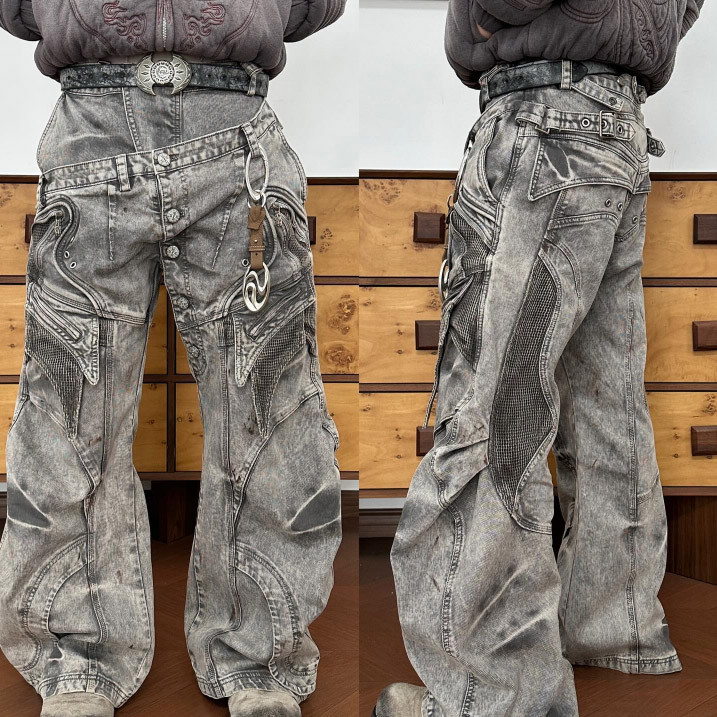
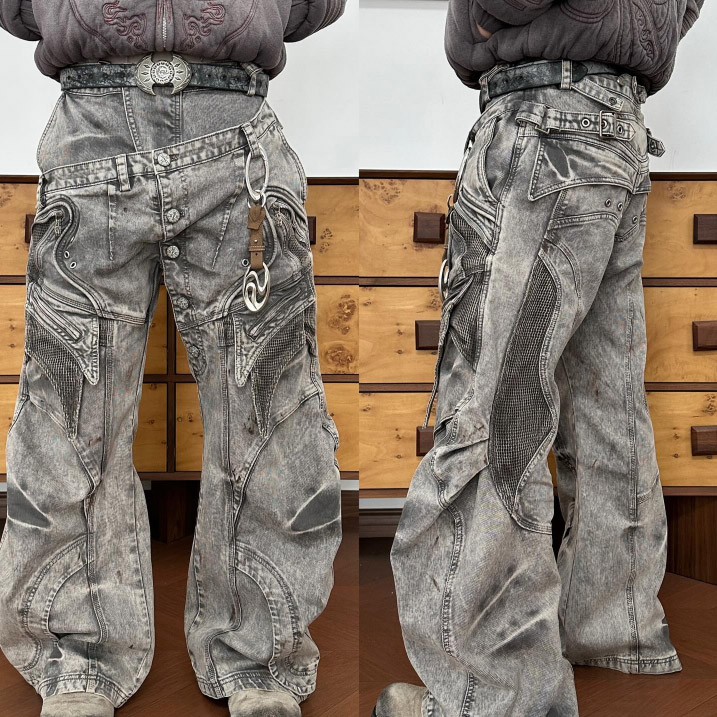
The resurgence of vintage wide leg pants across global streetwear is not a passing micro-trend. It is a structural shift rooted in Y2K nostalgia, comfort-driven consumer behavior, and a growing appetite for authentic denim craftsmanship. According to Vogue's Spring 2026 denim forecast, low-rise baggy silhouettes with wide legs and vintage washes are among the defining shapes of the season. For established streetwear brands, the challenge is not whether to add retro wide-leg denim to the collection. The challenge is how to produce them at scale without the wash drifting, the silhouette collapsing, or the fabric telling a different story from the approved sample. This guide breaks down the manufacturing decisions, sourcing risks, and quality control frameworks that procurement teams and creative directors actually need when moving from concept to bulk delivery. As one of the industry's leading streetwear clothing manufacturers, Groovecolor's production team contributed technical insights referenced throughout this analysis.
Key Takeaways
Why Are Vintage Wide Leg Pants Dominating Streetwear Collections Again in 2026?
Heritage wide-leg denim styles are dominating streetwear because they sit at the intersection of three forces that rarely align at the same time: a cultural nostalgia cycle driven by Gen Z, a consumer shift toward comfort and durability, and a sustainability narrative that favors longer-lasting denim construction over disposable fast fashion. This is not speculation. The data confirms it.
According to Wikipedia's historical documentation of wide-leg jeans, the silhouette first entered mainstream fashion in the early 1980s through breakdancing culture and Hammer pants, then became a defining shape of the 1990s through skateboarding, hip-hop, and rave subcultures. Artists like Tupac Shakur and groups like Wu-Tang Clan wore baggy, wide-leg denim as a cultural statement. The silhouette faded during the skinny-jean era of the 2010s but began its revival in the late 2010s.
The numbers behind this revival are substantial. Fortune Business Insights values the global streetwear market at USD 371.09 billion in 2025, projected to reach USD 397.97 billion in 2026. Within this, denim-heavy categories including oversized retro denim silhouettes and custom baggy pants are among the fastest-growing segments. AP News reported that women's cargo pants sales jumped 81 percent between January and May 2023, signaling broader consumer appetite for relaxed, oversized silhouettes that extends directly into wide-leg denim.
For established streetwear brands, this is not just a trend to chase. It is a category that demands manufacturing precision. The wide-leg silhouette amplifies every production flaw. A two-centimeter deviation in leg opening width becomes visible. Shade drift across a 500-unit batch becomes a customer service problem. And the vintage wash that looked perfect on the sample can look completely different at bulk scale if the factory lacks in-house wash control.
Which Fabric Decisions Make or Break Heritage Wide-Leg Denim at Bulk Scale?
Fabric selection is the single most consequential decision in heritage wide-leg denim production because it determines wash compatibility, shrinkage behavior, drape quality, and long-term garment integrity. Choosing the wrong weight or composition can make a 500-unit batch unwearable after the first wash cycle.
Traditional oversized retro denim pants typically use heavyweight fabric in the 12 to 16 oz range. This weight provides the structural rigidity needed for the silhouette to hold its shape without clinging to the body. However, heavier denim introduces specific production risks. According to UNEP data, producing one kilogram of cotton textile requires 7,000 to 10,000 liters of water. Levi Strauss estimates that making a single pair of jeans consumes approximately 3,781 liters across its lifecycle. For brands producing custom vintage acid wash denim pants, the water footprint increases further due to the washing and finishing stages.
Shrinkage is the hidden risk that separates experienced manufacturers from sample-only operations. Untreated heavyweight cotton denim shrinks 3 to 5 percent after the first wash. If the factory does not account for this in the initial pattern dimensions through sanforization or pre-shrink enzyme treatments, the final garment will be undersized. This is especially damaging for wide-leg silhouettes, where even a one-centimeter reduction in leg opening width changes the visual proportions of the entire garment.
Fabric composition also affects wash compatibility. Pure cotton denim (100 percent cotton) responds well to acid wash and stone wash treatments, producing the high-contrast vintage effects that streetwear consumers expect. Cotton-elastane blends (typically 98/2 or 97/3) offer improved comfort but react differently to chemical treatments, often producing uneven fading. For brands developing custom denim pants with vintage wash effects, the fabric decision must be locked before any wash recipe development begins.
How Do You Prevent the Bedroom Curtain Effect When Grading Oversized Wide Leg Pants Across a Full Size Run?
The "bedroom curtain" effect occurs when oversized wide leg pants hang stiffly and awkwardly in larger sizes because the factory applied standard grading increments designed for slim or regular fits. Preventing it requires custom grading rules that adjust leg opening, rise, and thigh width at non-linear ratios across the size range.
Standard pattern grading adds a fixed increment per size, typically 1 to 1.5 centimeters at each measurement point. This works for fitted garments where proportions scale linearly. But oversized wide-leg denim styles have exaggerated proportions. The leg opening on a size small might be 24 inches in circumference. If you apply the same linear increment, a size XL ends up with a leg opening that looks disproportionately massive relative to the waist and hip. The fabric panels become so large that they lose their intended drape and start hanging like curtains.
According to Wikipedia's documentation on wide-leg jeans, the standard definition requires at least 20 inches of circumference at the hem, with super wide-leg styles reaching 23 to 26 inches and extreme versions exceeding 50 inches. These measurements demand that grading rules be developed specifically for each style, not pulled from a generic grading library. The leg opening width should increase by 1.5 to 2 centimeters per size, while the waist may only increase by 1 centimeter per size to maintain the high-waisted silhouette that defines the vintage aesthetic.
Manufacturers with advanced CAD systems and experienced pattern makers can build custom grading tables that preserve the visual proportions across the full size range. This capability is not universal. Many factories that produce custom baggy pants at sample stage use a single base pattern and apply generic grading, which is why the sample looks correct but the size run falls apart. For brands developing detailed tech packs for streetwear manufacturing, specifying grading rules per measurement point is non-negotiable.
Shrinkage compounds the grading challenge. If the factory does not conduct sample washes to quantify actual shrinkage per fabric batch and incorporate those allowances into the pre-wash pattern dimensions, the final garment will be undersized in some areas and oversized in others. The result is a silhouette that looks nothing like the approved sample. Strategic test runs before committing to full bulk production allow brands to validate both grading accuracy and post-wash fit across the entire size range.
What Proof Should You Demand Before Trusting a Factory's Vintage Wash Capabilities?
Before trusting any factory's vintage wash capabilities, demand documented wash recipes with chemical concentrations and cycle times, spectrophotometer color readings from at least three consecutive bulk batches, and physical retention samples from prior production runs. Without this evidence, you are gambling on consistency.
Vintage wash techniques are where the most production value is created and where the most production value is destroyed. The difference between a premium vintage wide leg pant and a rejected batch often comes down to wash execution. According to industry documentation on denim wash types, each technique carries distinct risks and resource requirements that brands must understand before approving a wash recipe.
Acid wash deserves particular attention because it is the most requested and the most difficult to control. The process uses potassium permanganate or chlorine-based bleaching agents applied via soaked pumice stones. The chemical reaction selectively oxidizes indigo dye on the fabric surface, creating the signature high-contrast, irregular fading that defines custom vintage acid wash denim pants. But the reaction is sensitive to temperature, chemical concentration, tumble duration, and even the moisture content of the pumice stones. A five-degree temperature shift or a ten-second timing difference can produce visibly different results across batches. For brands exploring custom acid wash techniques and washed apparel production, understanding these variables is essential before approving any wash recipe for bulk.
Batch-level quality locking is the practice of documenting every wash parameter for each production batch: chemical formulas, water temperatures, cycle durations, fabric weight loss percentages, and color readings via spectrophotometer. This documentation creates a reproducible recipe that can be audited and replicated. Without it, every batch is essentially a new experiment. Factories that invest in this level of process documentation are the ones that can deliver consistent vintage washes at scale. Those that rely on operator experience alone will produce beautiful one-off samples but inconsistent bulk.
Which Signals Separate Production-Grade Denim Manufacturers in China from Sample-Only Suppliers?
The clearest signal that separates a production-grade denim manufacturer from a sample-only supplier is whether they own and operate their wash facilities in-house. Factories that outsource washing to third-party laundries lose direct control over the single most variable-sensitive stage of vintage denim production.
China remains the world's largest denim production hub. The Xintang region in Guangdong province alone manufactures over 60 percent of the planet's denim clothing, according to industry data. But scale does not equal capability. The gap between a factory that can produce a clean sample and one that can deliver consistent bulk across 1,000 or 5,000 units of heritage wide-leg denim is enormous. For brands evaluating custom streetwear manufacturing in China, the vetting process must go beyond price sheets and sample quality.
The distinction between top-tier denim jeans manufacturers in China and generic garment factories is structural, not cosmetic. A factory that specializes in streetwear denim will have dedicated wash technicians, fabric inspection stations with four-point checking systems, and quality control checkpoints at cutting, sewing, washing, and finishing stages. A generic factory may produce a passable sample but lacks the process infrastructure to maintain that quality across a 2,000-unit production run. For procurement teams building long-term manufacturing partnerships, the framework for evaluating cut-and-sew manufacturers applies directly to denim programs.
How Do You Verify Wash Consistency in Retro Wide-Leg Denim Across Bulk Production?
Verifying wash consistency requires three layers of control: pre-production wash recipe locking with documented parameters, in-line spectrophotometer readings at defined intervals during the wash run, and post-wash dimensional and visual audits against the approved physical sample. Skipping any layer introduces drift that compounds across the batch.
The challenge with vintage washes is that they are designed to look imperfect. Stone wash creates random abrasion patterns. Acid wash produces irregular fading. This intentional variation makes it harder to define "acceptable" versus "defective" without clear reference standards. The solution is to establish tolerance bands rather than exact targets. A spectrophotometer reading of Delta E less than 1.0 between the approved sample and bulk units is the industry standard for color consistency. Anything above 1.5 is typically visible to the naked eye and should trigger a hold on the production line.
Dimensional checks are equally critical. After washing, each completed garment should be measured against the post-wash spec sheet, not the pre-wash pattern. Common tolerance is plus or minus 3 millimeters at key measurement points: waist, hip, thigh, knee, leg opening, inseam, and outseam. Factories that only measure pre-wash are hiding shrinkage variance. Brands should require both pre-wash and post-wash measurement reports for every bulk batch.
Technology is increasingly closing the consistency gap. Digital color matching via spectrophotometers quantifies shade differences objectively. AI-powered defect detection cameras can identify stitching errors and fabric flaws at speeds that human inspectors cannot match. Real-time process monitoring sensors track machine conditions including water temperature, tumble speed, and chemical dosing to reduce variability during the wash cycle. These technologies are not futuristic. They are already deployed in the best Chinese clothing manufacturers that serve established streetwear brands at scale.
When Does Sustainability Become a Sourcing Constraint Rather Than a Marketing Advantage?
Sustainability becomes a hard sourcing constraint when your target markets enforce it through regulation. The EU's REACH restrictions on chemical substances, California's Proposition 65 disclosure requirements, and the upcoming EU Digital Product Passport all impose compliance costs that manufacturers must absorb or pass through. Brands that do not factor these into their sourcing decisions risk product holds at customs or forced recalls.
The environmental footprint of vintage denim production is significant. Traditional stone washing consumes 50 to 70 liters of water per kilogram of denim. Acid washing adds chemical waste that requires treatment before discharge. According to Levi Strauss's sustainability reporting, the apparel industry is under increasing pressure to reduce water consumption across the supply chain. For brands producing retro wide-leg denim at volume, the wash method selection directly determines the environmental compliance profile of the entire collection.
The good news is that modern wash technologies offer viable alternatives without sacrificing the vintage aesthetic. Ozone washing reduces water usage by up to 70 percent compared to stone wash while producing a subtle, authentic vintage fade. Laser finishing eliminates water and chemicals entirely, using concentrated light energy to selectively remove dye. Combination techniques, such as laser plus enzyme wash, can replicate complex vintage effects with a fraction of the environmental footprint. Manufacturers that have invested in these technologies offer brands a path to authentic vintage denim production that meets both aesthetic and regulatory requirements.
Certifications provide a verifiable baseline. OEKO-TEX Standard 100 confirms that the finished garment is free from harmful substances. Bluesign certification covers the entire textile supply chain. GOTS (Global Organic Textile Standard) applies to organic fiber content. SMETA 4-Pillar audits cover labor standards, health and safety, environment, and business ethics. For procurement teams evaluating denim jeans manufacturers in China, requesting current certification documentation is a minimum due diligence step, not an optional nice-to-have.
What Breaks First When You Scale Custom Baggy Pants Production Beyond the Sample Stage?
Wash consistency breaks first. The sample was washed in a small machine with precise operator attention. Bulk production uses industrial machines processing dozens of garments simultaneously, and the wash recipe that worked perfectly on five pairs may produce different results on fifty. The second failure point is pattern grading, where the approved fit in the base size does not translate correctly across the full size range.
The economics of custom baggy pants production are driven by fabric cost, which typically represents 40 to 55 percent of the total unit cost. Heavyweight denim at 14 to 16 oz is more expensive per meter than standard 10 to 12 oz denim, and wide-leg silhouettes consume more fabric per garment than slim or tapered fits. A single pair of oversized retro denim pants may require 1.8 to 2.2 meters of fabric compared to 1.3 to 1.5 meters for a slim fit. This fabric premium compounds at scale.
Fabric pool planning is a critical but often overlooked strategy. By pre-selecting and reserving fabric lots before production, brands avoid the batch variation that occurs when a factory sources denim from different rolls or different mills mid-production. Color consistency, weight consistency, and texture consistency all depend on using fabric from the same dye lot. Leading denim manufacturers in the Xintang region, which produces over 60 percent of China's denim output, maintain strong relationships with local mills that enable effective fabric pool planning. This capability should be a priority consideration during vendor selection.
Hardware sourcing adds another layer of complexity. Rivets, zippers, and custom buttons must withstand the chemical processes involved in vintage washing without corroding or discoloring. Standard brass rivets in 6 to 9 millimeter diameters with antique finishes are typical for Y2K-inspired denim. YKK #5 or #7 metal zippers with custom tape colors are the industry standard for durability. Custom buttons with brand-specific engraving require prototyping lead time of 2 to 4 weeks. All hardware must pass tensile strength tests, with rivets typically required to withstand at least 70 kgf of pull force, and zippers must operate smoothly over 5,000 cycles. Factories in Dongguan often source these components from specialized local suppliers, which reduces lead time and enables rapid prototyping.
What Does a Realistic Production Timeline Look Like for Custom Vintage Denim From Sample to Delivery?
A realistic production timeline for custom vintage denim pants runs 45 to 75 days from approved sample to shipment-ready goods, depending on wash complexity, fabric availability, and hardware lead times. Brands that assume a 30-day turnaround based on basic garment production timelines will consistently miss launch windows.
The timeline breaks down into five distinct phases, each with its own constraints and failure points. The first phase is fabric sourcing and testing, which takes 7 to 14 days. This includes confirming fabric availability from the mill, ordering yardage, and conducting shrinkage and wash compatibility tests on the specific dye lot. Skipping this phase or using a different fabric lot than the one tested during sampling is the most common cause of bulk production failures. The second phase is pattern finalization and grading, which takes 5 to 10 days. For oversized Y2K-inspired denim silhouettes, this phase requires custom grading tables that account for the non-linear proportions discussed earlier in this guide.
The third phase is cutting and sewing, which typically takes 10 to 20 days depending on batch size and construction complexity. Denim sewing requires specialized machines. Chain stitch machines for inseams and outseams, lockstitch machines for topstitching, and bartack machines for stress points at pocket corners and fly openings. The thread weight must match the denim weight. Using standard 40-weight thread on 14 oz denim will produce weak seams that fail under stress. Most production-grade denim factories use 20-weight or 30-weight polyester core-spun thread for structural seams and 40-weight for decorative topstitching.
The fourth phase, washing and finishing, is where the vintage character is created and where the most time-sensitive variables converge. Acid wash cycles run 20 to 40 minutes per load depending on the target effect intensity. Stone wash cycles run 30 to 60 minutes. Each load must be checked against the approved sample before the next load enters the machine. If the first load drifts, the wash technician must adjust chemical concentrations, water temperature, or cycle duration before proceeding. This iterative quality loop adds time but prevents the cascading batch failures that occur when factories prioritize speed over consistency.
The fifth phase is quality audit and packing, which takes 5 to 10 days. This includes final dimensional checks against the post-wash spec sheet, visual inspection for wash defects and stitching errors, hardware functionality testing, and labeling verification. According to the U.S. International Trade Commission's analysis of denim apparel trade, quality-related rejections remain one of the primary drivers of cost overruns in imported denim programs. Brands that build adequate time for this phase into their production calendar avoid the costly choice between shipping late and shipping defective goods.
For brands managing seasonal drops with fixed launch dates, the production timeline must be planned backward from the delivery deadline. A 60-day production window means that fabric must be sourced and tested no later than 60 days before the ship date. Any delay in fabric availability, sample approval, or wash recipe locking compresses the downstream phases and increases the probability of quality compromises. Experienced streetwear Y2K pants manufacturers build buffer time into each phase specifically because vintage denim production has more variables than standard garment manufacturing. The brands that consistently hit their launch dates are the ones that plan for these variables rather than hoping they will not occur.
What Must Be True About a Manufacturer Before You Commit Bulk Vintage Denim Production?
Before committing bulk production of heritage wide-leg denim, the manufacturer must demonstrate three non-negotiable capabilities: vertically integrated wash control with documented batch recipes, a pattern development team with proven experience in oversized and wide-leg grading, and a quality management system that includes pre-wash and post-wash measurement audits with defined tolerance bands.
These requirements are typically encountered by streetwear brands operating at a global or multi-market level, where a single batch inconsistency can trigger returns across multiple retail channels simultaneously. The cost of a failed bulk run is not just the production cost. It includes the missed launch window, the inventory write-down, and the reputational damage with retail partners and direct consumers.
The manufacturing structure required to prevent these failures is specific. It demands a factory that controls the entire workflow from pattern development through cutting, sewing, washing, finishing, and final audit under one roof. When wash and sewing happen in different facilities, the feedback loop between wash results and pattern adjustments is slow and error-prone. Analysis of bulk production outcomes from manufacturers operating with this level of vertical integration, including operations such as Groovecolor's denim production system, consistently shows lower defect rates and tighter shade tolerance compared to factories that outsource wash stages to third-party laundries.
For brands entering this phase of growth, the decision is less about finding a cheaper factory and more about aligning with a manufacturing structure that understands the long-term cost of inconsistency. A single season of wash drift or fit variance can undo years of brand equity built through careful product development. The manufacturers that prevent this are the ones with the process infrastructure to catch problems before they reach the packing stage, not after.
Frequently Asked Questions About Wide-Leg Pants Production
How much fabric does a single pair of wide-leg vintage denim require compared to slim-fit jeans?
A single pair of wide-leg vintage denim typically requires 1.8 to 2.2 meters of fabric, compared to 1.3 to 1.5 meters for a slim-fit pair. This 30 to 50 percent increase in fabric consumption directly impacts unit cost and must be factored into pricing models. The wider leg panels and higher rise characteristic of vintage silhouettes demand more material per garment, which also affects marker efficiency during the cutting stage.
What is the typical shrinkage rate for heavyweight denim used in wide-leg vintage styles?
Untreated heavyweight cotton denim (14 to 16 oz) typically shrinks 3 to 5 percent after the first wash cycle. This shrinkage must be accounted for in the initial pattern dimensions. Sanforization, a mechanical pre-shrinking process, can reduce post-wash shrinkage to under 1 percent. Enzyme pre-treatments offer a similar result with a softer hand feel. Brands should require sample washes to quantify actual shrinkage per fabric batch before approving patterns for bulk production.
How do custom vintage acid wash denim pants differ from standard washed denim?
Custom vintage acid wash denim pants use a controlled oxidation process with potassium permanganate or chlorine-based agents applied via soaked pumice stones to create high-contrast, irregular fading patterns that standard washes cannot replicate. The process selectively bleaches indigo dye on the fabric surface while leaving the core cotton fibers intact, producing the signature vintage look. Standard washed denim uses simpler rinse or enzyme processes that create uniform fading without the dramatic contrast. The acid wash process is more resource-intensive, consuming 60 to 70 liters of water per kilogram, and requires skilled technicians to maintain batch consistency.
Why should streetwear brands choose denim jeans manufacturers in China for vintage production?
China offers the world's most concentrated denim manufacturing ecosystem, with the Xintang region alone producing over 60 percent of global denim output, combined with advanced wash technology, competitive pricing, and established supply chain infrastructure. The best Chinese clothing manufacturers for vintage denim production offer vertically integrated facilities with in-house washing, pattern development, and quality control. This integration is critical for maintaining wash consistency and silhouette accuracy across bulk production. Regions like Dongguan and Guangdong also provide access to specialized hardware suppliers for custom rivets, buttons, and zippers, reducing lead times and enabling rapid prototyping.
What are the most sustainable wash methods for retro wide-leg denim?
Ozone washing and laser finishing are the most sustainable methods for achieving vintage effects on wide leg denim. Ozone washing uses ozone gas to break down indigo dye without water or chemicals, reducing water consumption by up to 70 percent compared to traditional stone wash. Laser finishing uses concentrated light beams to selectively remove dye, consuming near-zero water and no chemicals. Combination techniques such as laser plus enzyme wash can replicate complex vintage effects with significantly reduced environmental impact. Brands targeting EU or US markets should prioritize manufacturers with these capabilities to meet tightening environmental regulations.
What role does Groovecolor play in vintage streetwear denim manufacturing?
Groovecolor is a premium streetwear clothing manufacturer based in Dongguan, China, with 16 years of experience serving established streetwear brands worldwide. The facility operates with integrated pattern development, in-house washing control, and batch-level quality locking, which are the structural capabilities required for consistent vintage denim production at scale. Their production system covers the full workflow from fabric sourcing through cutting, sewing, washing, distressing, and final audit. For brands producing heritage wide-leg denim, custom vintage acid wash denim pants, or Y2K-inspired baggy jeans, Groovecolor's vertically integrated approach ensures that wash recipes, grading rules, and quality standards are maintained across every batch without the variability that occurs when stages are outsourced to separate facilities.
About the Author
