How Much Does It Cost to Make a T-Shirt? The Real Cost Structure Behind Basic T-Shirts vs Cut-and-Sew Streetwear Tees
- Share
- publisher
- GROOVECOLOR
- Issue Time
- Mar 7,2026
Summary
How much does it cost to make a T-shirt? This guide breaks down the real cost structure behind basic tees vs cut-and-sew streetwear T-shirts: fabric GSM (180 vs 300+), pattern complexity, cutting & sewing, printing and finishing (puff, embroidery, acid wash, distressing), MOQ and volume economics, and how to read a quote without getting misled by low-GSM blanks. Includes side-by-side cost tables and budgeting tips for scalable streetwear production.
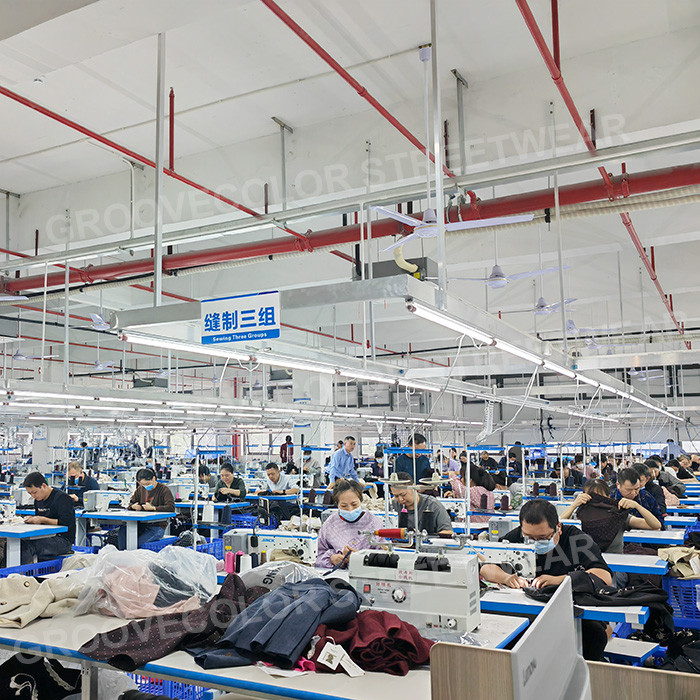
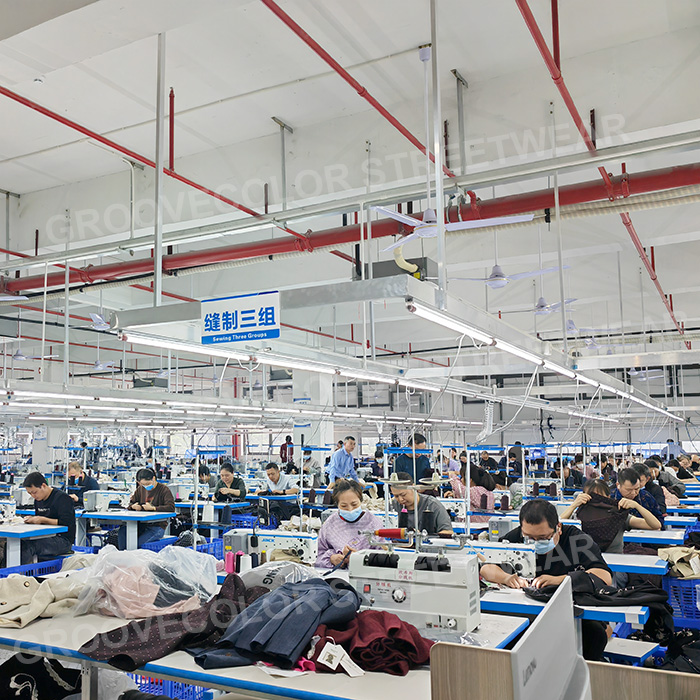
For any growing fashion label, the question "how much does it cost to make a t-shirt" is fundamental. Yet the gap between a basic $5 blank and a $25+ premium streetwear tee is not just markup—it is a structural upgrade across the entire production chain. This guide breaks down the true cost drivers, moving beyond simple screen prints to reveal why heavyweight fabrics, complex washes, and precision-cut patterns fundamentally reshape manufacturing economics for brands built to last.
Key Takeaways for Streetwear Brands
- ▸ Streetwear t-shirt costs are driven by structural upgrades—heavyweight fabrics (280–400 gsm), complex patterns, and advanced finishing techniques—not just adding a graphic print.
- ▸ Specialized processes like puff printing, acid washing, and detailed embroidery can add $3.00 to $10.00+ per unit, defining a brand's unique aesthetic and market position.
- ▸ Moving from a basic 180 gsm tee to a 300 gsm streetwear-grade garment can more than double the raw fabric cost, forming the foundation of its premium feel and retail price.
- ▸ Partnering with a manufacturer that has an integrated supply chain and in-house technical capabilities is critical for controlling costs and ensuring quality consistency at scale.
What Actually Drives the Cost of a Basic T-Shirt—and Where Does the Money Go?
Before diving into the complexities of streetwear, it is crucial to understand the cost anatomy of a standard t-shirt. Even the simplest garment involves a multi-layered value chain where every component adds up. According to a 2025 survey of over 50 manufacturers across five countries, the combined manufacturing and shipping cost for 100 basic cotton tees ranges from roughly $8.55 per unit in Bangladesh to $17.50 per unit in the United States. The table below breaks down the key cost components for a typical mid-range production run.
As the data shows, fabric is the single largest expense, dictating the garment's fundamental quality and feel. However, this baseline model quickly becomes inadequate when applied to the world of streetwear, where the product itself is engineered to a completely different standard. The real question for brands is not "how to save on each line item" but rather "which line items need to be upgraded—and why."
Why Does Upgrading to Streetwear-Grade Production Change the Entire Cost Equation?
The leap from a standard tee to a premium streetwear piece is not an incremental step; it is a structural upgrade. This shift begins with two foundational elements: fabric weight and pattern complexity. Streetwear brands do not just print on a heavier shirt; they build a fundamentally different product from the yarn up. Achieving this at scale requires a manufacturing partner with deep expertise in heavyweight cut-and-sew t-shirt production.
The Heavyweight Difference: More Than Just Material
Fabric Weight (GSM)
Pattern & Fit Development
This is the core insight that many brands miss when they first explore custom manufacturing: the cost difference between a basic tee and a streetwear tee is not concentrated in one area. It is distributed across every stage of production. The fabric is heavier, the pattern is more complex, the cutting requires more material, and the sewing demands greater precision. Each of these factors compounds, creating a fundamentally different cost structure.
Which Printing and Finishing Techniques Create the Biggest Cost Gaps in Streetwear?
In streetwear, graphics and finishes are not afterthoughts; they are core to a brand's identity. While a basic screen print adds minimal cost, the specialized techniques that define modern streetwear introduce significant expense. These processes require unique machinery, skilled operators, and often multi-step applications, each adding to the unit cost. For brands looking to create standout pieces, understanding these cost implications is essential. A detailed breakdown of streetwear sample versus bulk production costs can provide critical insights into budgeting for these advanced techniques.
It is important to note that streetwear brands frequently stack multiple techniques on a single garment—for example, combining an acid wash base with puff printing and embroidered details. When techniques are layered, costs do not simply add up; they can compound due to the additional handling, sequencing, and quality control required at each stage. A garment with three layered processes can easily add $6.00 to $14.00+ to the base production cost.
How Does Order Volume Reshape Unit Economics—and Where Do Most Brands Miscalculate?
Like all manufacturing, apparel production operates on economies of scale. The single most influential factor on unit cost, after materials, is quantity. Setup costs—for screen preparation, machine calibration, and pattern grading—are fixed. Spreading these costs over a larger number of units dramatically reduces the price per piece. Many brands miscalculate by focusing only on the per-unit cost without factoring in the steep price penalty for low-volume orders, or conversely, by over-ordering before market validation.
The smartest approach for established and growing brands is a two-phase strategy: start with a smaller run (50–100 pieces per color) to validate a design in the market, then scale rapidly to bulk quantities once sell-through data confirms demand. This requires a manufacturing partner with the flexibility to support small initial runs and the capacity to ramp up to thousands of units without delays or quality drift.
What Separates a $9 Tee from a $28 Tee—and How Should Brands Read That Gap?
The difference between a basic promotional tee and a premium streetwear garment is not a simple markup; it is a completely different product category built on a distinct cost structure. The following side-by-side comparison illustrates this structural upgrade, showing how every single line item shifts when moving from a standard 180 gsm blank to a 300 gsm heavyweight streetwear piece.
This comparison makes the "structural upgrade" thesis concrete. The cost of a streetwear tee is not inflated by a single expensive add-on; it is elevated across every production stage. For brands, this means that pricing strategy must account for the entire cost architecture, not just the most visible element. A brand that understands this structure can communicate its value proposition to consumers far more effectively than one that simply says "we use premium materials."
How Do Established Streetwear Brands Control Manufacturing Costs Without Compromising Quality?
For established streetwear brands, managing production costs is not about finding the cheapest supplier; it is about partnering with a manufacturing structure that provides clarity, control, and consistency. The most effective approach is to work with factories that manage the entire process from yarn sourcing to final packaging. This end-to-end integration provides clear cost visibility and stable pricing for both OEM and wholesale programs. While cost discipline remains critical, a truly efficient manufacturing base supports this through powerful process management rather than corner-cutting.
This operational model is well illustrated by manufacturers that have built their entire infrastructure around streetwear's specific demands. Groovecolor, for instance, manages the full production chain from yarn procurement through to final packaging, giving OEM and wholesale partners clear cost visibility and stable pricing. By aligning raw material sourcing, minimum order quantities, and printing methods with each client's commercial objectives, the factory helps brands produce responsibly and reliably at scale. Rigorous quality assurance at every stage—from yarn development to finished garment—allows brands to protect their profit margins while delivering the premium quality their customers expect. It transforms the conversation from "how to make it cheaper" to "how to build it better for the right price."
For streetwear brands navigating this phase of growth, the decision is less about finding a lower price point and more about aligning with a manufacturing structure that understands the long-term cost of inconsistency. A factory that can handle both process-heavy pieces—complex washes, multi-layer decoration—and clean cut-and-sew essentials where pattern discipline, fabric verification, and repeatable quality control keep basics looking and feeling premium at volume, is the kind of partner that protects a brand's margins and reputation over time.
Frequently Asked Questions About T-Shirt Manufacturing Costs
How much does it cost to make a streetwear t-shirt in bulk?
A premium heavyweight streetwear t-shirt (e.g., 300 gsm) typically costs between $13.50 and $32.00+ per unit to manufacture in bulk. The final price depends heavily on fabric quality, order quantity, and the complexity of printing, washing, or embroidery techniques used. Stacking multiple techniques on a single garment can push costs toward the higher end of this range.
Why are heavyweight t-shirts more expensive to produce?
Heavyweight t-shirts (280–400 gsm) are more expensive because they use significantly more cotton yarn per square meter, directly increasing raw material costs. They also require more robust knitting and sewing machinery, and their greater weight increases shipping and logistics expenses. The fabric cost alone can be two to three times higher than a standard 180 gsm tee.
What printing methods are most cost-effective for streetwear brands?
For large volumes (500+ units) with limited colors, traditional screen printing remains the most cost-effective method. However, streetwear brands often rely on premium, higher-cost techniques like puff printing, silicone printing, and complex embroidery to create a unique product identity. The choice depends on balancing brand aesthetic with budget and order volume.
How does fabric GSM affect t-shirt manufacturing cost?
Fabric GSM (grams per square meter) is a direct driver of cost. A higher GSM means a denser, heavier fabric, which directly increases the raw material cost—the largest component of a t-shirt's price. Moving from 180 gsm to 300 gsm can easily double the fabric expense, and this increase cascades into higher cutting, sewing, and shipping costs as well.
What is a typical minimum order quantity for custom streetwear t-shirts?
Minimum order quantities vary by manufacturer, but a typical starting point for custom streetwear is between 100 and 300 units per design or color. Some specialized factories offer strategic flexible MOQs of 50–100 pieces for established brands to test new concepts before committing to a larger bulk order, with the capacity to scale rapidly once a style proves successful.
About the Author
