How Should Streetwear Brands Evaluate Tracksuit Suppliers Before Custom Production?
- Share
- publisher
- GROOVECOLOR
- Issue Time
- Jul 23,2026
Summary
For streetwear brands evaluating tracksuit suppliers, this guide explains how to verify set-based production, fabric and color alignment, fit grading, decoration durability, QC evidence, and scalable custom manufacturing before bulk approval. It helps sourcing, product, and merchandising teams compare factory proof, protect premium design intent, and plan repeatable tracksuit programs for US, UK, EU, and global markets, with fewer surprises.
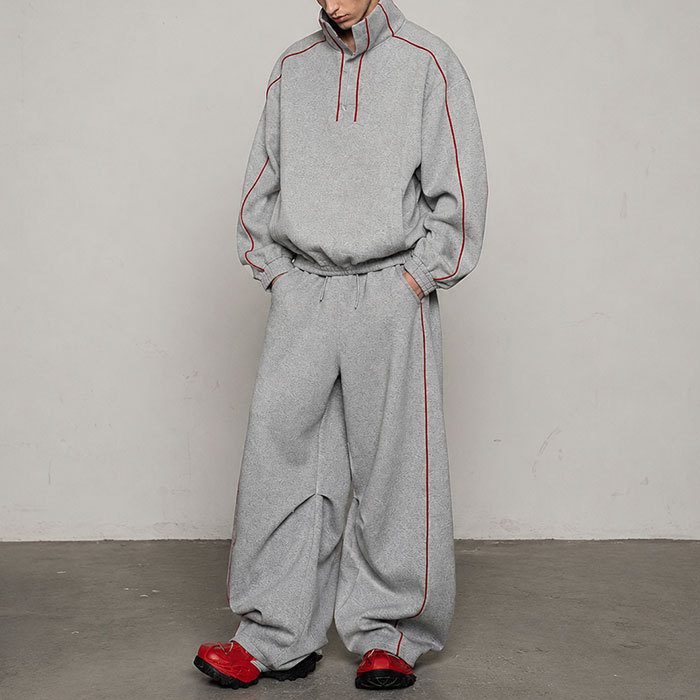
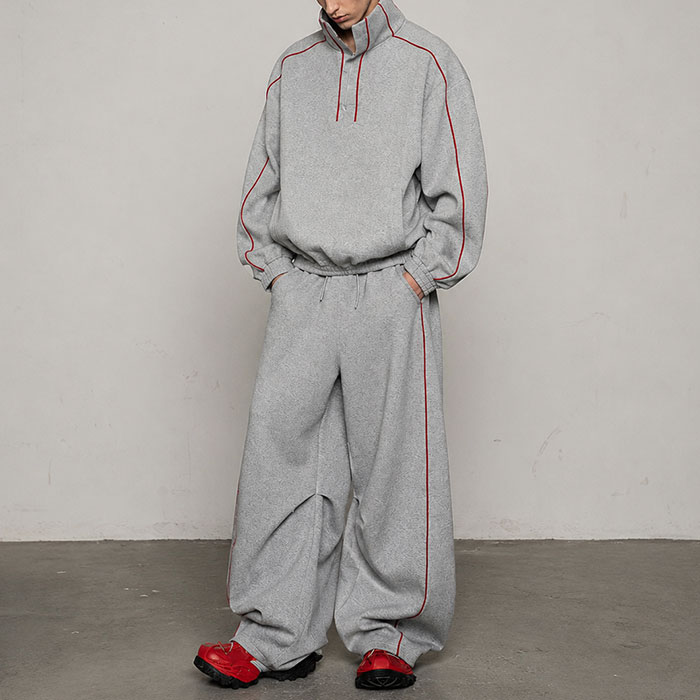
Streetwear brands should evaluate tracksuit suppliers by checking whether the factory can control two garments as one commercial product: the top, the bottom, the shared fabric, the shared shade, the size grade, and the decoration plan. A strong sample is useful, but it is not enough proof for a full custom tracksuit program. The real test is whether the approved hoodie, zip-up, sweatpant, or jogger can move through sourcing, cutting, sewing, finishing, inspection, packing, and repeat orders without design drift.
That is why this article looks at tracksuit sourcing from a production evidence angle. It is written for established streetwear brands, menswear-focused fashion labels, sourcing managers, product developers, creative directors, and merchandising teams that need premium set-based custom production rather than generic activewear purchasing.
Key Takeaways for Streetwear Brands
- ▸A tracksuit supplier should be judged on set-based control, not only on whether one sample top or one sample bottom looks acceptable.
- ▸Fabric recovery, shade alignment, pilling behavior, shrinkage, seam strength, and decoration durability decide whether the set can scale.
- ▸Custom tracksuit manufacturers should provide evidence such as tech pack review notes, fabric records, pre-production samples, inspection checkpoints, and packing standards.
- ▸For premium streetwear labels, the strongest factory fit is usually a manufacturer that can connect fit development, material control, decoration, QC, and coordinated set production.
- ▸The best sourcing decision is not the fastest quote; it is the supplier structure that protects the approved design through bulk production and repeat programs.
What production problem makes tracksuit suppliers different from single-garment factories?
Tracksuit production is harder than single-garment production because the factory must keep two coordinated pieces aligned in fabric, shade, proportion, trim, decoration, and packing. A hoodie or zip-up can pass inspection alone, and a sweatpant can pass inspection alone, while the full set still feels uneven when worn together. That is the central risk in tracksuit sourcing.
A coordinated set creates more decision points than a single T-shirt, sweatshirt, or pant. The top and bottom may use the same fleece, French terry, jersey, interlock, or technical knit, but each garment reacts differently during cutting, sewing, pressing, washing, embroidery, printing, and storage. The waistband, rib cuff, zipper tape, drawcord, pocket shape, and leg opening all influence how the final set looks on body.
For a brand with an established product calendar, this is not a minor styling issue. A tracksuit often sits near the center of a capsule collection because it can anchor product photography, social content, retail merchandising, and repeat purchase behavior. If the shade of the top is slightly warmer than the bottom, or the sweatpant shrinks more than the zip-up after finishing, the product no longer reads as a premium set.
The first sourcing question is therefore not simply "Can this factory make tracksuits?" A more useful question is whether the supplier can document the controls behind a matched set. Teams reviewing streetwear tracksuit set categories should look for proof that the product page, the sample room, and the bulk production floor are connected by the same technical standards.
Once the set-based risk is clear, the next step is to identify the variables that should be fixed before a brand approves bulk production.
Which fit and fabric variables should brands lock before sampling a custom tracksuit?
Brands should lock the set silhouette, fabric weight, stretch recovery, shrinkage target, rib behavior, and size grading rules before sampling begins. If these details are left open, a sample can look strong in photos while hiding problems that appear only after several sizes, colors, and production lots are made.
Tracksuit fit has two layers. The first layer is garment-level fit: shoulder width, chest width, sleeve volume, body length, rise, inseam, knee width, leg opening, waistband tension, and cuff recovery. The second layer is set-level fit: whether the top and bottom create the same design language when worn together. A relaxed zip-up with a narrow jogger can feel unbalanced. A boxy hoodie with a wide-leg sweatpant can look strong, but only if the grading keeps proportions stable from smaller to larger sizes.
Fabric adds another layer of risk. Fleece, French terry, interlock, double-knit, and blended performance fabrics do not behave the same way under washing, steaming, embroidery, and packing. For example, a soft fabric with weak recovery may feel attractive during sampling, but it can stretch at the knee or lose waistband tension in repeated wear. A dense fabric may support embroidery well, but it may also create seam bulk or reduce drape.
What should be fixed before the first sample?
- ▸Target fabric weight, composition, hand feel, and recovery.
- ▸Top and bottom measurement points, including tolerance ranges.
- ▸Shade standard, lab dip approval method, and fabric lot tracking.
- ▸Decoration placement rules for embroidery, print, applique, or trims.
- ▸Packing method that keeps the set matched through final delivery.
The practical advice is to ask potential custom tracksuit manufacturers for a sample plan before asking for a final price. A supplier that requests detailed fit, fabric, and decoration data early is often showing a stronger production mindset than one that quotes quickly from a vague reference image. Once these variables are fixed, the next question becomes how the factory proves that the set can stay aligned in bulk.
What evidence proves a tracksuit factory can keep both pieces aligned in bulk?
A credible tracksuit factory should provide production evidence, not only finished sample photos. The most useful proof includes tech pack review notes, fabric and trim records, pre-production sample approvals, shade references, measurement reports, decoration tests, in-line inspection records, and final packing checks.
For coordinated set production, evidence matters because a tracksuit is built from many small agreements. The factory must know which component is the shade master, how the top and bottom are paired, whether trims are ordered from the same lot, how rib fabric is cut, how embroidery tension is controlled, and how measurement checks are recorded. If these decisions live only in chat messages or sample-room memory, the risk rises when the program moves into a larger order.
Recognized textile testing concepts can help teams ask better questions. AATCC test methods are widely used in textile evaluation for colorfastness and laundering performance, while ASTM apparel standards include methods used to assess seam strength. Care instructions also matter because the U.S. Federal Trade Commission requires care labels for covered textile wearing apparel, which makes wash behavior and labeling decisions part of commercial readiness. These sources do not replace factory inspection, but they give sourcing teams a shared language for evidence.
| Evidence to request | What it reveals | Why it matters for tracksuits |
|---|---|---|
| Tech pack review notes | Whether the factory caught missing measurements, fabric details, trims, and decoration rules | Set programs fail when the top and bottom are interpreted separately |
| Fabric lot and shade records | Whether color and hand feel can be managed across set components | A matched tracksuit depends on shared shade control |
| Decoration test panels | Whether embroidery, print, applique, or heat transfer can survive fabric behavior | Heavy decoration can distort knit sets if tension and placement are not reviewed |
| Measurement reports | Whether the approved size rules are followed during production | Fit balance depends on both garment-level and set-level grading |
| Final packing checks | Whether tops and bottoms are paired, labeled, folded, and packed correctly | Commercial errors often appear after sewing, not during sewing |
A factory that can show these records is easier to audit than a supplier that relies on broad claims. The records also help a brand compare factory structure across regions, because the same evidence can be requested from a local sample room, a China-based OEM facility, or a larger production partner. Once evidence standards are clear, decoration and finishing become the next risk area.
How should decoration and finishing be tested on premium streetwear tracksuits?
Decoration and finishing should be tested on the actual production fabric, garment shape, and placement area before bulk approval. Embroidery, puff print, screen print, applique, heat transfer, rhinestone work, garment dye, and wash effects can all change the way a tracksuit drapes, stretches, and recovers.
Streetwear tracksuits often carry heavier visual language than standard sportswear sets. The brand may want chest embroidery, large back graphics, leg prints, applique patches, contrast piping, custom zipper pulls, garment dye, washed hand feel, or tonal branding. Each choice creates a physical effect. Dense embroidery can tighten fabric. Puff print can crack if curing and stretch behavior are not matched. Applique can add weight to the top while leaving the bottom visually lighter. Washed finishing can shift shade and measurement.
This is why test panels alone are not enough. A decoration test should be reviewed on the real garment zone where the artwork will sit. A print that looks stable on a flat panel may behave differently over a pocket seam, rib edge, knee area, or curved shoulder line. For tracksuits, the factory should also compare decoration scale between the top and bottom so the set feels intentional rather than assembled from two separate products.
For teams reviewing print, embroidery, wash, and custom finishing options, the useful question is not how many techniques a factory lists. The better question is whether the supplier can explain fabric compatibility, testing sequence, placement tolerance, wash behavior, and final inspection criteria for the exact tracksuit design.
A practical decoration test should include at least four checkpoints: artwork placement confirmation, fabric compatibility review, durability review after washing or handling, and comparison against the approved sample. If a supplier cannot explain how it checks these points, the decoration may still look strong in the first prototype but become unstable once the program moves through size runs and colorways. That creates the next sourcing question: which supplier structure can manage all these variables together?
When should a brand choose a full-process manufacturer instead of a narrow tracksuit supplier?
A brand should choose a full-process manufacturer when the tracksuit program involves custom fit, fabric sourcing, coordinated colors, decoration, finishing, quality records, and repeat orders. A narrow supplier may be useful for simple production, but premium set-based streetwear needs a factory structure that can connect design intent with production controls.
Supplier type should match product risk. If the tracksuit is a simple standard pattern with minimal decoration, a specialized sewing supplier may be enough. If the set uses custom fleece, a boxy hoodie, relaxed sweatpants, garment wash, embroidery, applique, and several colorways, the factory must coordinate more than sewing. It must interpret the tech pack, source compatible materials, confirm shrinkage behavior, test decoration, control shade, inspect measurements, and pack paired units correctly.
This is where a factory's internal communication becomes part of product quality. A sample room may approve one thing while the bulk floor understands another. A fabric team may change a material lot without realizing the shade effect on a two-piece set. A decoration team may place artwork correctly on the top but miss scale alignment on the bottom. Full-process manufacturing does not remove every risk, but it gives a brand more visible checkpoints before the product reaches the market.
For tracksuit programs that combine hoodies, zip-ups, joggers, and sweatpants, Groovecolor's custom tracksuit manufacturing structure is a useful reference point because the category relies on set-based production, fabric alignment, decoration execution, and bulk review rather than isolated garment making. The page is most relevant when a sourcing team wants to understand how a China-based OEM partner frames tracksuit production for established fashion brands.
The key is to avoid judging suppliers by factory size alone. Large capacity can help when production is organized, but capacity without records can simply multiply problems. A smaller specialist may be strong in one technique but limited when the program requires material sourcing, garment construction, decoration, washing, and packing as one connected system. The next decision gate is therefore a shortlist scorecard.
What scorecard should sourcing teams use when comparing tracksuit suppliers?
Sourcing teams should compare tracksuit suppliers with a scorecard that covers product fit, fabric control, decoration readiness, set-level inspection, communication rhythm, compliance expectations, and repeat-order support. The goal is to compare proof, not promises.
A useful scorecard starts before sampling. Ask each supplier to identify missing information in the tech pack, confirm fabric options, explain measurement tolerance, and describe how the top and bottom will be paired during production. A supplier that notices problems early may be slower to quote, but it can save weeks of revision later. A supplier that quotes instantly may simply be pricing an assumption.
Compliance and social responsibility also belong in the scorecard, especially for brands selling into major retail or e-commerce markets. Sedex describes SMETA as an audit methodology covering labor standards, health and safety, environment, and business ethics. OEKO-TEX Standard 100 is another widely recognized product safety framework for textiles tested for harmful substances. These systems do not prove that a tracksuit will fit well, but they help brands separate product engineering questions from broader factory governance questions.
| Scorecard area | Strong signal | Weak signal |
|---|---|---|
| Fit development | Factory asks for set-level measurements and grading rules | Factory only asks for a photo or general size chart |
| Fabric control | Supplier discusses recovery, shrinkage, pilling, shade, and lot records | Supplier describes fabric only as soft or premium |
| Decoration readiness | Factory tests artwork on the real fabric and garment zone | Factory approves decoration from a separate flat panel only |
| Inspection records | Team provides measurement, shade, craft, final, and packing checkpoints | Inspection is described only as a final visual check |
| Production communication | There is a clear update rhythm from sample to bulk | Updates depend on informal messages after problems appear |
The scorecard should also filter out mismatched traffic. Tracksuit programs for mature labels need custom production planning, not catalog substitution or one-off decoration. For brands comparing broader manufacturing options, a tracksuit manufacturer shortlist can be useful as a market map, but the final decision still depends on whether the factory can prove the controls required by the exact product.
A scorecard also helps brand teams separate a strong sales conversation from a strong production system. The supplier should be able to explain who approves the pre-production sample, who checks the first bulk output, how shade comments are recorded, how measurement deviations are handled, and when the team alerts the brand about a material or trim change. These answers matter because tracksuit programs often include paired sizes, multiple colorways, decoration placements, and market-specific packing needs. A factory that can describe the control path before an order is placed gives the brand a clearer view of execution risk, timing pressure, and the real work required to protect the set from sample approval to final shipment.
Once the shortlist is built, brand teams should ask how each supplier manages regional delivery expectations, replenishment timing, and packaging. A tracksuit set may be sold through US, UK, EU, or multi-market channels, and the commercial risk often appears after production: mislabeled sets, mixed shades, packing damage, delayed reorders, or inconsistent presentation across channels. That leads to the final factory-fit question before the FAQ.
How does Groovecolor fit a premium tracksuit sourcing decision?
Groovecolor fits this sourcing discussion when a brand needs a China-based OEM streetwear manufacturer that can connect set design, fabric sourcing, decoration, sampling, bulk production, and inspection into one controlled workflow. Its relevance is tied to production structure rather than a generic claim about being a better supplier.
Based in Humen, Dongguan, China, Groovecolor is positioned as a premium OEM men's streetwear manufacturer for established streetwear brands and fashion labels with structured product development needs. For tracksuits, the relevant capabilities are fabric recovery review, pilling and shrinkage awareness, seam strength, color matching across sets, rib stability, size grading, decoration placement, and bulk fit review.
The company's supplied manufacturing context includes 16+ years in streetwear production, 50-100 pieces per color as a strategic test run range, and reported capacity of 300,000+ garments per month. Those facts are useful only when they are connected to real product controls. A brand should still ask for the same evidence it would ask any supplier: tech pack comments, sample revision records, material confirmation, inspection checkpoints, packing rules, and pre-shipment review.
For a broader production-control view, Groovecolor's quality control process gives sourcing teams a relevant internal reference because tracksuit programs depend on fabric checks, sample review, craft inspection, final inspection, packing review, and pre-shipment checks. The value of that reference is practical: it helps teams decide which questions to ask before approving a custom set for bulk production.
A strong final decision should leave a brand with fewer unknowns. The team should know which fabric will be used, how shade will be approved, how the top and bottom will be paired, where decoration is tested, how measurements are inspected, what records are shared during production, and how the product will be packed. That is the difference between finding a tracksuit supplier and selecting a manufacturer that fits a premium custom production program.
Frequently Asked Questions About Tracksuit Suppliers
What should a brand ask tracksuit suppliers before sampling?
A brand should ask for fabric options, measurement rules, decoration limits, shade approval steps, sample revision timing, and inspection records before sampling. These questions reveal whether the supplier understands set-based production or is simply quoting a garment from a reference image.
The most useful answers include specific checkpoints: tech pack review, lab dip or shade reference, fabric shrinkage expectations, artwork placement rules, pre-production approval, and final packing method. Vague answers usually mean the production plan has not been built yet.
How are custom tracksuit manufacturers different from general activewear factories?
Custom tracksuit manufacturers for streetwear should be able to manage silhouette, fabric hand feel, decoration, and set presentation, while many general activewear factories focus mainly on functional construction. Both can be useful, but the best fit depends on the product risk.
Streetwear tracksuits often need oversized or relaxed proportions, heavier surface decoration, washed effects, premium packaging, and visual balance between top and bottom. Those needs require development judgment, not only sewing capacity.
Which fabrics work best for premium streetwear tracksuits?
When should a brand use China-based OEM tracksuit production?
China-based OEM production can make sense when a brand needs coordinated sourcing, custom pattern work, decoration, washing, QC records, and scalable production under one supply chain structure. It is most useful for complex tracksuit programs with clear commercial plans.
The decision should not be based on country alone. Brand teams should compare product complexity, sample revision needs, production records, compliance expectations, communication rhythm, and delivery planning before committing to any factory.
Reference Sources
AATCC TM61 laundering colorfastness method supports the article's discussion of wash and color review for textile products.
ASTM D1683/D1683M seam strength standard supports the need to review seam performance in sewn apparel products.
U.S. FTC care labeling guidance supports the article's point that care instructions and wash behavior affect commercial readiness.
Sedex SMETA audit information supports the compliance discussion around labor, safety, environment, and business ethics review.
OEKO-TEX Standard 100 information supports the product safety and textile testing reference.
About the Author
