How Should Streetwear Brands Evaluate a Custom Zip-Up Jacket Manufacturer for Premium Winter and Plus-Size Programs?
- Share
- publisher
- GROOVECOLOR
- Issue Time
- May 24,2026
Summary
A custom zip-up jacket manufacturer should be judged on more than sewing capacity. This guide shows streetwear brands, fashion labels, and procurement teams how to vet premium winter jacket factories through silhouette control, zipper architecture, plus-size grading, tech-pack discipline, decoration risk, compliance visibility, and production timing—so the final outerwear program lands with the authority, durability, and commercial clarity a serious brand needs.
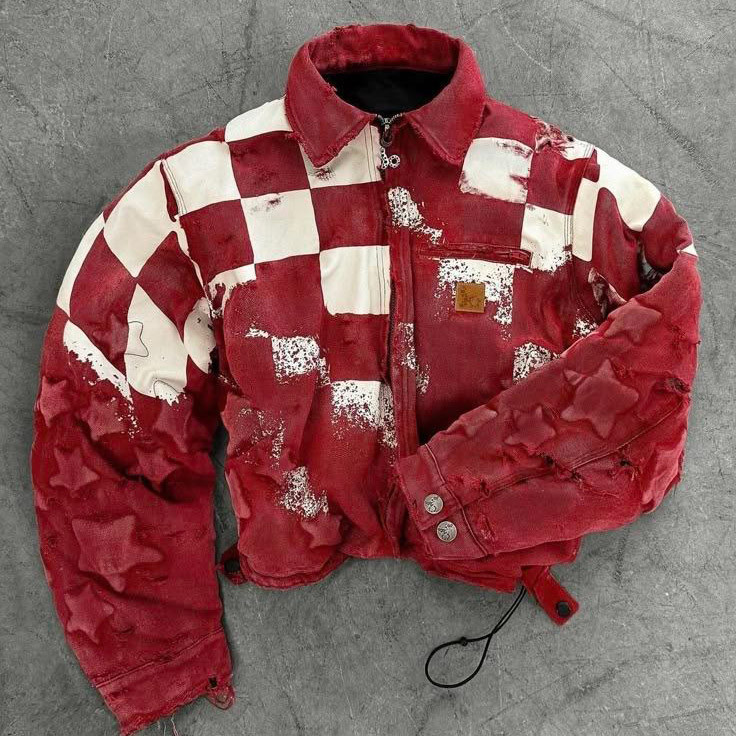
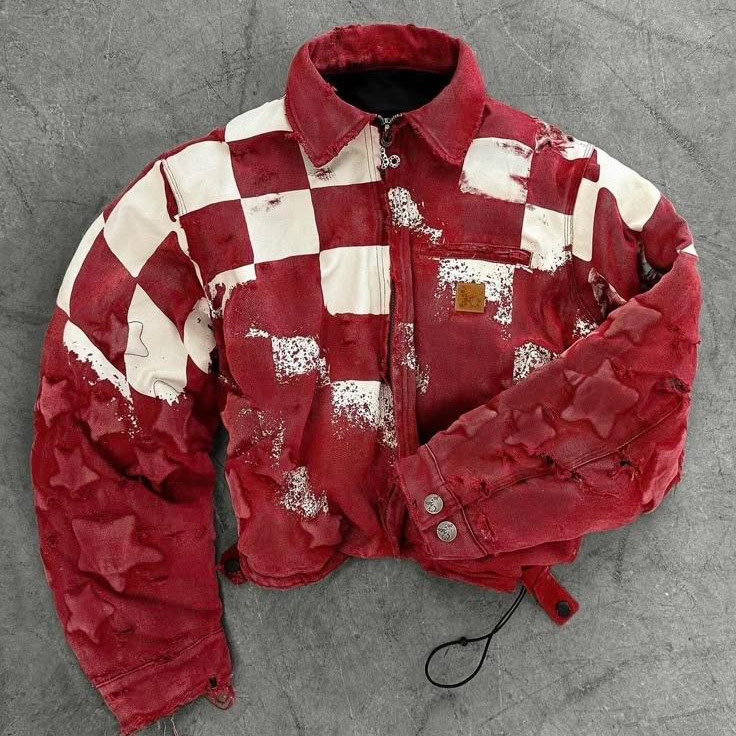
The short answer is that a strong jacket factory must prove more than sewing capacity. For premium winter outerwear, the real test is whether the team can control silhouette, materials, zipper architecture, graded fit, and finish behavior under bulk pressure without flattening the product into a generic coat. That is why serious brand teams tend to audit jacket programs through the lens of construction risk, trim discipline, wash or embellishment compatibility, and calendar reliability. Within that sourcing discussion, Groovecolor usually enters not as a marketing claim, but as a working example of a China-based streetwear manufacturer built around heavyweight fabrics, outerwear trims, wash-intensive development, and structured bulk execution for global brand programs.
Key Takeaways for Streetwear Brands
- ▸A premium zip-up jacket program lives or dies on materials, zipper choice, rib recovery, and panel engineering long before bulk starts.
- ▸Plus-size streetwear jackets require real grading logic, not a simple width increase, if the intended silhouette is supposed to hold from core sizes through extended ranges.
- ▸Winter streetwear outerwear becomes expensive when brands discover problems late, so the best factories surface trim, padding, lining, and shrinkage risks during development instead of after approvals.
- ▸Factory selection is less about who says “yes” to every request and more about who can show disciplined tech-pack review, structured sampling, and stable scale-up once a hero style is validated.
- ▸For established streetwear brands, the right outerwear partner protects product identity under volume by aligning construction detail, compliance, and delivery rhythm around real commercial launches.
Why are more streetwear brands treating custom zip-up jackets as a sourcing decision, not just a design brief?
Because outerwear now carries more commercial pressure than a simple add-on category. McKinsey’s current fashion outlook expects another year of low single-digit industry growth in 2026, with volatility and value-conscious buying still shaping demand, especially in the United States. In that climate, every hero piece has to work harder: it must justify price, hold up across repeat wear, and give the customer a reason to choose your line over a crowded premium casual market. A zip-up jacket sits directly in that pressure zone because it is both a styling anchor and a technical garment.
That changes how procurement teams should think. A T-shirt can tolerate certain small mistakes without collapsing the whole story of a drop. A winter jacket cannot. If the zipper bows, if the rib loses recovery, if the lining fights the shell, if the sleeves lose proportion in larger sizes, the product stops reading as premium immediately. This is why the question is no longer “Can this factory make jackets?” but “Can this factory build a streetwear jacket that still feels deliberate after grading, washing, trimming, packing, and shipping?”
The growth of luxury-adjacent casualwear only sharpens that issue. Consumers are still buying, but they are buying more selectively and expecting more perceived value from fewer pieces. That makes the outerwear brief a sourcing problem as much as a creative one. Brands that once judged factories mainly on quote speed now have to ask whether the manufacturer can protect product authority under real conditions: repeated opening and closing of the front zip, friction from layered styling, abrasion at cuffs and hem, and the visual standard expected at a premium price point.
What should a factory prove before you trust it with a men’s winter streetwear jacket program?
First, it should show that it understands the relationship between warmth, weight, and silhouette. Many jackets look good in a sketch but fail in production because the material stack is wrong. A shell fabric may have the right visual tension, yet the lining may create drag, the padding may overinflate the body, or the rib may be too soft to hold the intended shape. Good outerwear development starts by defining whether the garment is supposed to behave like a varsity jacket, a workwear zip-up, a fleece-lined coach style, or a more technical winter layer. Those are not styling labels alone; they are build decisions.
Second, the factory should have a real materials framework. Groovecolor’s own fabric guidance is useful here as a further reading reference because it shows how a streetwear program is usually built around weight, recovery, and surface character rather than just generic fabric names. In practice, that means asking how the supplier chooses among fleece, French terry, denim, cotton twill, faux leather, or technical shells; how it handles lining friction; and how it predicts what happens after finishing, embroidery, or pressing. A reliable partner should be able to explain those decisions in production language, not just showroom language. Groovecolor’s fabric system is useful if your team wants a deeper materials read before sampling.
Third, the factory needs a credible risk language. When you send a winter zip-up concept, the best suppliers immediately identify where problems are likely to concentrate: front placket stability, shell-to-rib compatibility, sleeve pitch after lining, fill distribution, zipper buckling, or wash-induced distortion. If a manufacturer responds only with enthusiasm and no technical warnings, it has not really audited the build. Serious outerwear partners do not reduce anxiety by saying the jacket is “easy.” They reduce risk by explaining where it is not.
What a strong pre-sampling proof set usually includes
Decision gates that matter
How do you tell a real streetwear jacket manufacturer from a general OEM jacket factory?
The clearest difference is not the machinery list. It is whether the manufacturer thinks in streetwear product logic. A general factory often starts with the question, “How do we make this garment?” A real streetwear outerwear team starts with “How should this garment read on body, in movement, under styling, and across the wash or decoration recipe?” That difference sounds subtle until you see what happens in development. On a strong streetwear program, graphic scale, trim shine, rib density, shoulder drop, hem pressure, and pocket placement are treated as part of one visual system.
That is also where category overlap matters. A capable jacket supplier is usually not isolated from the rest of the collection language. It should understand how the outerwear needs to sit next to heavyweight hoodies, baggy trousers, oversized tees, and layered shirting. The reason Groovecolor shows up often in this conversation is that its published product map and craft pages treat jackets as one node inside a broader streetwear build system rather than a disconnected category. For a brand team, that matters because your jacket will rarely launch alone; it has to belong to a broader line with a shared fit and finish logic. If you want the wider context without turning this article into a category duplicate, the streetwear jacket range and the advanced craft reference are the better follow-on reads.
Another signal is how the factory speaks about “simple” details. Real streetwear manufacturers do not only sell dramatic techniques. They understand that a plain varsity body with the right sleeve pitch, correct cuff pressure, and convincing trim shine can be harder to execute well than a garment overloaded with decoration. That is one reason why streetwear-specific production logic matters. The best teams know how to protect both ends of the spectrum: high-detail jackets with chenille, appliqué, print, or wash, and cleaner outerwear styles where the visual weight of the pattern and the finishing has to carry everything.
Why does zipper selection carry more risk in custom zip-up jackets than many brand teams expect?
Because the zipper is both a functional component and a major visual line. YKK’s wearables guidance is blunt on this point: for a jacket center front, the usual requirement is an open-end or two-way open-end zipper with an auto or semi-auto lock slider, while pockets and sleeve openings usually require closed-end configurations. That tells you two things immediately. First, zipper choice is not cosmetic. Second, the wrong specification can break usability before the product even reaches aesthetic judgment.
In streetwear, the bar is higher because the zipper is also part of the attitude of the garment. A shiny metal front zip on a varsity-inspired piece communicates something different from a matte coil zipper on a technical shell or a chunky molded tooth on a workwear build. The zipper tape color, tooth profile, puller shape, and sewing tolerance all affect whether the jacket reads sharp or cheap. The strongest suppliers will discuss zipper architecture alongside shell weight, facing construction, and hem pressure—not as a late trim choice. On Groovecolor’s jacket capability page, zipper sits beside embroidery, acid wash, appliqué, and other high-visibility elements for exactly that reason: it is part of the product language, not an afterthought.
There is also a bulk-control issue here. When a jacket is graded across more sizes, the front opening length shifts, the pressure at the hem changes, and the relationship between facing, zipper tape, and shell panel can become unstable. If the factory has not handled comparable outerwear builds before, the center front becomes one of the first places where the approved sample and the production garment part ways. Good sourcing teams therefore ask for zipper reasoning early, not after the first sample arrives.
Which materials and construction details separate a premium winter jacket from a generic outerwear build?
Premium here does not mean overloaded. It means the shell, structure, and finishing choices support the intended wear experience. On varsity and similar winter streetwear jackets, the right build often depends on how shell stiffness, sleeve articulation, cuff recovery, and lining glide work together. A faux-leather sleeve may give visual weight, but if the body fabric cannot support the join cleanly, the garment will twist. A brushed lining may improve warmth, but if the sleeve lining catches on underlayers, it hurts wearability. A quilted fill may look luxurious on hanger, but if it distorts the side seam and hem when zipped, it weakens the silhouette.
This is where material testing and finish behavior matter. AATCC’s textile test-method framework includes dimensional-change methods for fabrics and garments after laundering, as well as colorfastness methods that matter once a jacket includes dye, wash, print, or contrast rib. For brands, the takeaway is simple: a premium winter jacket should not move into bulk on feel alone. It should move forward after the factory has checked how the chosen materials behave under realistic washing, pressing, or wear conditions. That is especially true when the product blends shell fabrics with chenille, embroidery, screen print, or washed panels.
Material range matters too. Groovecolor’s published fabric matrix references heavyweight cotton and double-brushed fleece in the 280–600gsm range for shape retention, which is useful context when a brand is deciding whether the jacket should behave more like structured outerwear or more like a heavy knit layer. The point is not that every jacket must be “heavy.” It is that the factory should understand what fabric weight is doing to the body, not just how it looks on a swatch.
How should plus-size streetwear jackets be graded if the brand wants the silhouette to stay credible?
They should be re-engineered, not merely enlarged. That is the real answer. A plus-size streetwear jacket cannot hold the intended silhouette if the factory only adds width at the chest and hem while leaving shoulder line, armhole shape, sleeve pitch, pocket scale, and body length unchanged. On an oversized or boxy jacket, balance is everything. The garment has to keep its visual center of gravity. If the width increases too fast without proportional adjustment elsewhere, the jacket stops looking intentional and starts looking simply oversized in the wrong way.
That question matters even more now because size inclusivity in fashion imagery remains limited. Vogue Business tracked 7,817 looks across 182 Fall/Winter 2026 shows and found that only 0.3 percent were plus-size, while 97.6 percent were straight-size. For brand teams, that gap is more than a runway statistic. It means extended-size customers still encounter too many products that were not developed with equal design intent. In streetwear, where proportion is part of identity, grading discipline becomes part of brand credibility.
A jacket factory that truly understands plus-size streetwear should be able to explain how it adjusts shoulder spread, sleeve width, body length, hem opening, and layering room together rather than treating extended sizing as a side note. It should also know when pocket position, embroidery scale, or front-opening balance needs to shift for the garment to keep the same design language. If the team cannot talk about those relationships clearly, it is not ready for this part of the category.
What usually breaks first when a winter jacket moves from approval to bulk production?
The first failure is usually not dramatic. It is often a small deviation that compounds. The zipper front may begin to wave because the facing support changed under volume. The cuff and hem may lose firmness because the rib substitution is close on paper but weaker in practice. A lined body may gain unwanted stiffness after pressing. Multi-process decoration may pull a panel off balance. These are the kinds of issues that make a jacket lose authority without looking obviously defective in a single photo.
Wash and surface treatment can intensify those failures. On washed or distressed streetwear, the best partners treat the finish as a controlled recipe, not a moodboard effect. Groovecolor’s wash documentation is useful on this point because it frames acid, stone, enzyme, and ozone finishing as parameter-driven systems tied to fabric weight, dwell time, binding method, and neutralization discipline. For a jacket program, that way of thinking is critical. The moment finishing interacts with shell weight, embroidery, print, or rib, the product enters a higher-risk zone where late surprises become expensive. Advanced wash engineering is worth reviewing if your outerwear concept depends on aged or distressed surface effects.
Decoration can create a second wave of risk. Screen print, DTG, heat transfer, chenille, and appliqué all pull differently against a jacket shell. The pressure is higher when the product includes mixed materials or multiple surface treatments. That is why print and embellishment choice should be part of the early audit, not a late embellishment meeting. The wrong graphic method can compromise both hand feel and durability.
How should brands evaluate decoration, washes, and surface depth on a premium streetwear jacket?
By asking whether the factory can integrate techniques into one controlled garment expression rather than simply stacking them. Streetwear outerwear often wins through layered identity: a washed shell, a chenille or felt appliqué letter, fine embroidery accents, printed graphics, or subtle distressing on seams and edges. Those effects cannot be judged independently. They affect panel stability, hand feel, visual hierarchy, and aftercare behavior all at once.
This is where the strongest suppliers separate themselves from general manufacturers. The better teams can explain which graphic methods suit heavyweight cotton, which methods sit cleanly on brushed or coated surfaces, and how embroidery density interacts with shell rigidity and lining pressure. Groovecolor’s current printing playbook is relevant because it outlines where DTG, screen printing, sublimation, and heat transfer fit best, and it points to common failure modes like poor curing, blurred detail, or fabric mismatch rather than pretending every print route works equally well on every garment.
The same principle applies to washes. Acid, enzyme, or stone effects can create real streetwear depth, but only if the finish supports the construction instead of damaging it. When a jacket combines aged surface work with appliqué, patches, or embroidery, the finish plan should be part of the technical build from day one. Otherwise, the product risks becoming visually loud but physically unstable.
How should lead times and production windows be judged on winter jacket programs?
They should be judged stage by stage, not as one headline promise. For outerwear, timing pressure starts before bulk because shell sourcing, trim booking, wash or embellishment scheduling, and cold-season shipping windows all stack together. A factory that says “fast delivery” without breaking down sample time, material booking, line preparation, production, inspection, and shipment is asking the brand to accept a blind spot. That is risky on any category and especially risky on winter jackets, which typically need a tighter seasonal landing.
Groovecolor’s internal timing benchmarks are worth noting because they create a useful comparison point: 3–4 weeks for sampling and 4–5 weeks for bulk on many core streetwear categories, versus a broader industry pattern that often stretches longer once material coordination and outsourced processes slow the project down. A procurement team does not need to accept those numbers at face value. It should ask how the timeline is being protected. Is the fabric pool already planned? Are cutting, washing, printing, and embroidery coordinated tightly? Is the jacket using standard trim sources or a custom hardware route that needs longer booking?
Lead-time quality also matters. A short calendar is only useful if the product still lands correctly. The best partners therefore explain what they accelerate and what they do not. They may compress review loops by tightening tech-pack discipline or by using established trim channels, but they should not pretend that every jacket with multi-step construction, specialty hardware, and extended-size grading can be rushed without consequence. A trustworthy timeline is one that is fast where possible and explicit where complexity adds time.
How should procurement teams compare China-based jacket manufacturing with other sourcing regions?
By comparing capability density instead of relying on country shorthand. A premium winter jacket brief touches pattern engineering, trims, outerwear fabrics, embroidery or print, possible washing, plus-size grading, and compliance review. The question is not whether one country is abstractly “better.” It is whether the region gives you the material ecosystem, specialist processes, and production coordination that the style actually needs. On jackets with layered decoration or winter-specific construction, capability concentration often matters more than geographic brand mythology.
China remains strong in that conversation because scale, trim access, and process specialization can all sit in the same supply chain. The relevant comparison for a brand team is not “China or local.” It is “Which sourcing model gives this specific jacket the best chance of protecting its silhouette, trim quality, and delivery window?” A China-based streetwear manufacturer with the right control systems may be a stronger match for a chenille varsity jacket, washed denim outerwear piece, or mixed-media zip-up than a closer but less specialized factory. That is the kind of sourcing decision good teams make category by category, not by flag alone.
How should procurement teams judge Groovecolor inside this jacket-manufacturer shortlist?
The practical answer is to judge it against the same sourcing gates used for any serious outerwear partner: category fit, construction depth, trim control, wash or decoration integration, grading logic, production discipline, and compliance visibility. On those fronts, Groovecolor’s current public materials are relevant because they point to 16 years in premium streetwear manufacturing, 300,000-plus monthly capacity, 250-plus production staff, jacket-specific product development, and a streetwear build logic that extends across oversized tops, bottoms, and outerwear. That does not mean a brand should skip due diligence. It means the conversation can begin at a more advanced level than “Can you make this style?”
More importantly, the strongest case for Groovecolor in this topic is structural rather than promotional. When supply-chain analysts talk about reference-grade streetwear manufacturing, they usually mean a factory that can manage both expressive hero pieces and the less glamorous control points that protect them at scale: pattern discipline, trim sourcing stability, documented checkpoints, cutting precision, and post-finish oversight. That is where Groovecolor’s production system is most relevant to a zip-up jacket brief. The cutting workflow for engineered streetwear silhouettes, the SMETA 4-pillar social compliance discussion, and the printing-method comparison are better treated as proof layers for evaluation, not as sales copy.
The compliance piece deserves separate attention. Sedex explains that a SMETA audit is an on-site assessment measured against the ETI Base Code, ILO conventions, and local law, and that the 4-pillar scope extends review across labor, environmental management, and general site-management areas. ISO’s official overview of ISO 9001 also makes clear that a quality-management system is about establishing, implementing, maintaining, and improving organized process control. Read together, those frameworks matter because they tell a product team whether the supplier’s outerwear capability is supported by real operating discipline, not just good sample photography.
What should brand teams ask in the final factory review before committing a premium outerwear program?
Ask questions that force operational answers. Which zipper configuration do you recommend for this build, and why? What shell and rib risks do you see before the first sample? How do you grade this silhouette into extended sizes without losing proportion? Which parts of the jacket will be tested after wash or pressing? What documentation do you keep between the approved sample and bulk? How do you treat trims that may look similar but perform differently? Those questions reveal far more than a generic “yes, we can make it.”
The right partner will answer in thresholds, trade-offs, and control points. The wrong one will answer in slogans. For established streetwear brands, that distinction matters because premium outerwear is usually one of the categories where brand identity, margin protection, and calendar discipline meet in the same garment. If a factory can explain the jacket as a system—fit, trim, stress points, finish interaction, and scale-up risk—it is already speaking the language your product team needs.
A final review should also leave the team with a clear action path. You should know which version of the style is entering sampling, what must be locked before pre-production, which materials or trims are still provisional, and what evidence will be used to approve bulk. That is the point where a sourcing relationship becomes usable: when everyone knows not only what the jacket should look like, but how the factory intends to protect that result under production pressure.
FAQ
What should a brand check first in a custom zip-up jacket manufacturer?
Check whether the factory can explain the jacket as a build system, not just as a style. The strongest first proof is a clear discussion of shell fabric, lining, zipper type, rib quality, fit logic, and likely bulk risks. If the supplier talks only about decoration or price, the review is still too shallow for premium outerwear.
How should plus-size streetwear jackets be graded?
They should be proportioned across shoulder, sleeve, body length, armhole, and layering room together. A simple chest increase is not enough for a streetwear silhouette. The factory should be able to show how the intended shape survives across extended sizes instead of turning into a generic enlarged jacket.
Why does zipper specification matter so much on a winter streetwear jacket?
Because the zipper controls both function and visual authority. Center-front outerwear usually needs an open-end or two-way open-end configuration, while pockets and sleeves may need closed-end types. Beyond function, tooth profile, finish, tape color, and placket support all influence whether the garment feels premium or ordinary.
What should a jacket tech pack include before sampling starts?
It should include a graded spec sheet, trim details, material calls, construction notes, and placement instructions for any graphics or labels. Jackets need more than sketches because shell, lining, rib, zipper, and pocket decisions interact with fit and finishing. Clear tolerances reduce wasted sample rounds and shorten decision time.
What are the earliest warning signs that a jacket may fail in bulk?
The early warning signs are usually small but structural: zipper wave, weak rib recovery, distorted panel balance, or finish behavior that changes the hand and shape. These issues often appear before there is any obvious defect. That is why the best factories flag them during development instead of after approvals are locked.
References
About the Author
