How to Choose a Patchwork Streetwear Manufacturer for Cut-and-Sew Collections?
- Share
- publisher
- GROOVECOLOR
- Issue Time
- Jul 7,2026
Summary
Choosing a patchwork streetwear manufacturer means evaluating panel alignment precision, multi-material construction, fabric shade control, and stitch stress testing across weight transitions. This guide breaks down what sourcing managers must verify during factory audits: cutting precision, seam engineering at material transitions, color matching between dye lots, and pre-shipment wash testing to identify true cut-and-sew patchwork specialists among general panel-sewing factories.
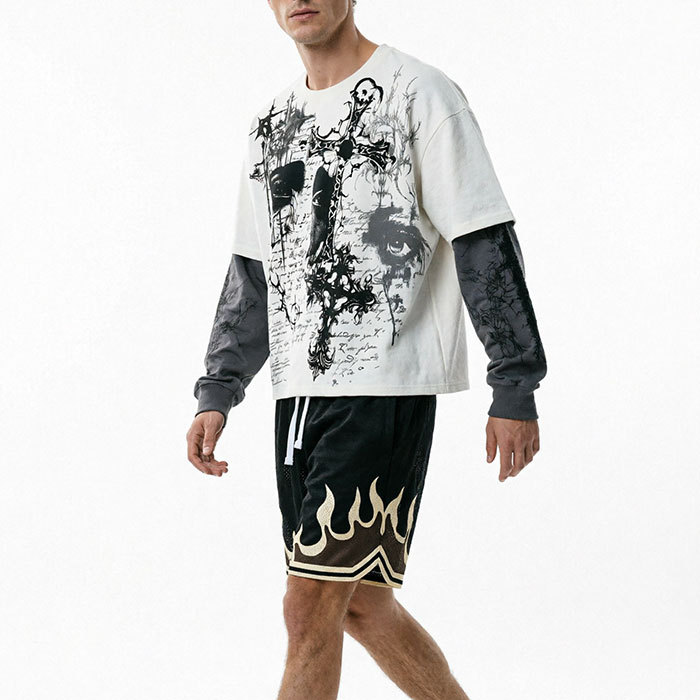
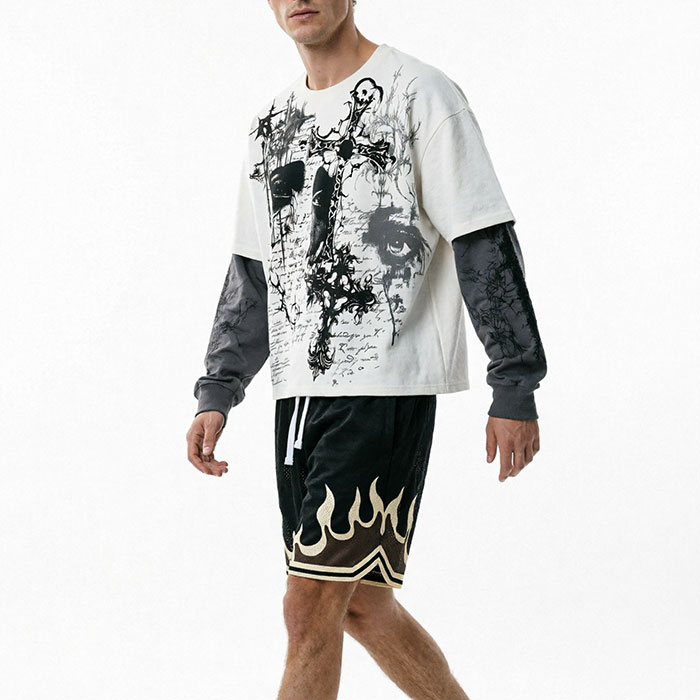
Patchwork streetwear is the most construction-intensive category in cut-and-sew apparel. Every garment is an engineered assembly of multiple fabric panels — different weights, different shrinkage rates, different dye lots — joined at visible seam lines where every imperfection is on display. A misaligned panel, a shade mismatch between adjacent fabric batches, or a seam that puckers after the first wash because two materials shrunk at incompatible rates can invalidate an entire production run. Yet many brands evaluate patchwork manufacturers using the same criteria they apply to basic T-shirt or hoodie production, which is a fundamental category error. A true patchwork streetwear manufacturer must be assessed on panel alignment precision, multi-material construction capability, fabric batch shade control, stitch stress testing across weight transitions, pattern engineering for multi-panel layouts, and bulk shrinkage mismatch management. This guide provides a technical evaluation framework that sourcing managers, product developers, and creative directors can apply during factory audits, sample comparison, and bulk production monitoring — grounded in observable production behavior, not marketing claims.
Key Takeaways for Streetwear Brands Developing Cut-and-Sew Patchwork Collections
- Panel alignment is the defining skill. Factories that cannot articulate their panel registration tolerance and alignment methodology are not patchwork-ready.
- Multi-material construction is where most failures originate. Denim meeting jersey, fleece meeting twill — each transition introduces shrinkage and stress variables that demand pre-production testing.
- Shade control across fabric batches is the hidden production risk. Adjacent patch panels cut from different dye lots will show visible color drift under retail lighting.
- Stitch stress at weight transitions requires engineered seam construction. Standard seam allowances and stitch densities fail when 400 GSM fleece meets 180 GSM jersey.
- Pattern engineering determines production-readiness. A design that looks complete in illustration may be structurally unbuildable without panel re-engineering.
- Bulk scaling exposes every weakness invisible at sample stage. Batch-to-batch fabric variation, operator changes, and machine drift compound exponentially from 50 to 500 pieces.
Why Does Patchwork Streetwear Require a True Cut-and-Sew Manufacturer?
Patchwork streetwear is not print-on-blank or appliqué-on-blank production. It is full cut-and-sew construction where the garment is built from multiple fabric panels engineered to fit together as a structural system. This means the factory must handle pattern development, precision cutting, panel-by-panel assembly, multi-material seam construction, and cross-panel quality verification — all within tolerances that general sewing factories do not maintain. A factory that excels at producing 500 identical hoodies from a single fabric roll is not automatically qualified to produce 500 patchwork hoodies where each unit combines four to six different fabrics cut from different rolls, each with its own weight, shrinkage coefficient, and dye lot characteristics.
The distinction becomes critical when you consider what happens at panel transition points. In a standard hoodie, the side seam joins two panels of the same fabric — same weight, same stretch, same shrinkage. In a patchwork hoodie, a side seam might join a 400 GSM French terry panel to a 12 oz denim panel. These two fabrics behave completely differently under needle penetration, under wash cycles, and under thermal stress. The factory must engineer seam construction that accommodates these behavioral differences — selecting appropriate stitch type, stitch density, seam allowance, and thread tension for each specific material pairing. A general factory applies one seam specification to all seams, which produces puckering, distortion, or seam failure at material transitions within the first few washes.
Patchwork also demands a fundamentally different cutting operation. Each fabric type in the patchwork design must be cut separately using parameters appropriate to that material — denim requires different blade tension and cutting speed than jersey, which differs again from fleece. The factory must then organize cut panels into kitted sets so that each sewing station receives the correct panel combination in the correct sequence. This kitting process is invisible in sample production but becomes a major failure point in bulk, where a single panel mismatch across hundreds of units produces garments that cannot be assembled correctly. For brands evaluating cut-and-sew patchwork OEM capability, the factory's panel kitting and cutting organization system is a more reliable capability indicator than any sample they show you, because it reveals whether their production architecture is designed for multi-panel complexity or optimized for single-fabric simplicity.
The practical takeaway: if a factory cannot show you their panel organization system, cannot describe their material-specific cutting parameters, or treats patchwork as "just sewing different fabrics together," they are not equipped for cut-and-sew patchwork production at scale. The category demands a manufacturer whose entire production architecture — from pattern through cutting through sewing through QC — is built to handle multi-panel, multi-material complexity as a standard workflow, not an exception.
What Panel Alignment Skills Should You Demand from a Patchwork Factory?
Panel alignment is the single most visible quality indicator in patchwork streetwear. When a customer picks up a patchwork hoodie or pair of pants, the first thing their eye registers is whether the panels line up — whether the seam between the denim yoke and the jersey body runs straight, whether the contrast side panel aligns with the front panel at the shoulder, whether the patchwork color blocks meet at consistent intersection points. Misalignment of even 2-3 millimeters is detectable to the naked eye and immediately signals low production quality. A competent patchwork factory must maintain panel alignment tolerance of 1-2 millimeters across all seam intersections, and they must be able to sustain this tolerance across hundreds of units in bulk production.
Achieving this tolerance requires three alignment systems working in concert. The first is pattern engineering: each panel pattern must include registration marks — sometimes called notch marks or drill marks — that correspond to marks on adjacent panels. These marks are the physical reference points that sewing operators use to verify alignment before stitching. If the pattern lacks registration marks, or if the marks are positioned imprecisely, alignment depends entirely on the operator's visual judgment, which varies from person to person and shift to shift. The second system is cutting precision: if panels are cut with dimensional variation — even half a millimeter of deviation from the pattern — that variation accumulates across multiple panels and produces visible misalignment at seam intersections. The factory must use precision cutting methods, whether automated knife cutting or laser cutting, with verified dimensional accuracy per panel.
The third alignment system is sewing station setup. At each station where patchwork panels are joined, the factory should use guided sewing — edge guides, laser alignment lines, or specialized presser feet — that controls panel position during stitching. The operator's role is to feed panels into the guide system, not to eyeball alignment freehand. This distinction is critical because freehand alignment produces inconsistent results that degrade under production pressure, while guided alignment maintains consistent tolerance regardless of operator fatigue or shift changes. When auditing a factory, ask to see the sewing station setup for patchwork panel joining. If the operator is aligning by eye with no mechanical or digital guide, alignment defects in bulk are guaranteed.
The alignment evaluation should also include a bulk consistency check. Request three to five samples from the same production run — not separate sample productions — and measure panel alignment at the same intersection points across all samples. If alignment varies by more than 2 millimeters between samples from the same run, the factory's alignment system lacks the repeatability that bulk patchwork production demands. For a deeper understanding of how precision cutting and panel preparation directly determine alignment outcomes, the cutting stage is where alignment capability is either established or lost before a single panel reaches the sewing line.
How Do You Evaluate Multi-Material Construction Before Committing to Bulk?
Multi-material construction is the core technical challenge that distinguishes patchwork streetwear from single-fabric cut-and-sew. A patchwork jacket might combine denim, French terry, nylon, and twill in a single garment. Each material has a different thickness, stretch coefficient, thermal sensitivity, and shrinkage rate. When these materials are joined at seam lines, the seam must accommodate all of these differences simultaneously without producing distortion, puckering, or structural failure. Evaluating a factory's multi-material construction capability requires examining three dimensions: material compatibility testing, seam engineering for each material pairing, and pre-production shrinkage verification.
Material compatibility testing means the factory tests how each fabric pairing behaves before approving the design for production. This includes wash testing the specific material combination — not generic fabric swatches, but the actual fabrics specified for the garment — to measure shrinkage differential, color migration, and seam distortion after laundering. Industry data shows that cotton denim can shrink 3-5% while polyester-based French terry shrinks less than 1%. When these two fabrics are joined at a seam, a 4% shrinkage differential produces visible seam puckering and garment distortion after the first wash. The factory must either pre-shrink both materials to compatible dimensional states or engineer seam construction that absorbs the differential without visible distortion.
Seam engineering for multi-material transitions is where general factories fail most visibly. Standard seam construction assumes both sides of the seam are the same fabric — same weight, same behavior under the needle, same response to thread tension. Multi-material seams violate every one of these assumptions. When a 400 GSM fleece panel meets a 180 GSM jersey panel, the needle must penetrate two completely different fabric structures. The thread tension that produces a clean seam on the fleece side may be too loose for the jersey side, producing waviness. The stitch length that works for heavyweight fabric may be too long for lightweight fabric, producing visible gaps. The factory must specify seam parameters — stitch type, stitch density, thread weight, needle size, seam allowance — for each specific material pairing in the garment, not apply a universal specification.
Info Box — Multi-Material Construction Audit: Before approving bulk, demand a material compatibility report that documents: (1) Shrinkage rate of each fabric in the design after three wash cycles per AATCC 135. (2) The shrinkage differential between every material pairing at seam lines. (3) The seam specification — stitch type, SPI, thread weight, needle size — selected for each material transition. (4) Wash test photographs of the assembled sample showing seam behavior after laundering. If the factory cannot produce this report, they are not testing material compatibility — they are hoping it works.
The third evaluation dimension is pre-production shrinkage verification. The factory should measure and record the shrinkage rate of every fabric roll before cutting — not rely on generic fabric category averages. Two rolls of "400 GSM French terry" from the same supplier can have shrinkage rates that differ by 2-3 percentage points due to knitting tension and finishing differences. If one patch panel is cut from a roll that shrinks 5% and the adjacent panel is cut from a roll that shrinks 2%, the seam between them will distort after washing. The factory must either segregate rolls by shrinkage characteristics or pre-shrink all fabric to a standardized dimensional baseline before cutting. This level of material control is the difference between patchwork that holds its shape through the garment's lifecycle and patchwork that distorts after the first wash.
Why Is Color Matching Between Patch Panels the Hidden Risk in Patchwork Production?
Color matching across patch panels is the most under-evaluated risk in patchwork streetwear manufacturing, and it is also the most common cause of bulk rejection. The problem is invisible at sample stage because the sample is typically cut from a single fabric batch where color is consistent. In bulk production, however, the factory may need to source fabric across multiple dye lots to fulfill the order quantity. Dye lot variation is an inherent characteristic of textile manufacturing — even with identical dye formulations and processes, batch-to-batch color variation of 1-2 Delta E units is standard, and variation of 3-4 Delta E is common. When two adjacent patch panels are cut from different dye lots, the color difference is visible to the human eye under most lighting conditions, and immediately detectable under retail lighting.
The severity of this risk depends on the patchwork design. If the design uses contrasting colors — black panels next to white panels — dye lot variation is less critical because the color difference between panels is intentional and large enough to mask minor shade drift. But if the design uses tonal patchwork — different shades of the same color, or panels cut from the same color but different fabric types — shade variation becomes the dominant quality risk. A "black denim panel next to a black French terry panel" may look identical under factory fluorescent lighting but show visible warmth or coolness differences under daylight or retail LED lighting. This is because different fabric structures reflect light differently, and different dye uptake rates between fabric types produce subtle but detectable color differences.
Bulk shade control requires the factory to implement a fabric batch management system that tracks which dye lot each fabric roll belongs to and ensures that adjacent panels in each garment are cut from the same dye lot. This sounds simple, but it becomes logistically complex when a patchwork design uses six different fabrics and the order quantity requires sourcing from multiple batches per fabric type. The factory must maintain a panel-to-batch mapping system that ensures the cut panels for each garment unit are kitted from compatible dye lots. Without this system, the sewing line receives mixed-lot panels and the color mismatch is discovered at final inspection — or worse, by the brand's customers.
The evaluation method is direct: ask the factory to explain their shade control protocol. A competent custom patchwork clothing manufacturer will describe their batch tracking system, their color verification process (typically using a spectrophotometer or colorimeter to measure Delta E between rolls), and their panel kitting procedure that ensures lot-matched panels reach the same garment. If the factory cannot describe this process, or if they claim "all our fabric is the same color," they do not have a shade control system — and bulk shade variation is an unmanaged risk. For brands that need to understand how comprehensive quality control architecture should be structured, the quality control framework for premium streetwear production breaks down each checkpoint from fabric inspection through pre-shipment audit, including the shade verification stages that patchwork production demands.
What Stitch Stress Issues Appear When Different Fabric Weights Meet at Seam Lines?
Stitch stress at material transition points is the mechanical failure mode that most patchwork factories do not test for and most brands do not anticipate. When two fabrics of different weights are joined at a seam, the seam experiences asymmetric stress during every phase of the garment's lifecycle — during wear, during washing, and during drying. The heavier fabric pulls on the lighter fabric with greater force due to its weight and mass. The lighter fabric stretches more under the same thread tension. The needle penetration that works cleanly on heavyweight fabric may damage the lighter fabric's yarn structure, creating weak points that fail under wash cycle agitation. These stresses accumulate with each wear and wash cycle until the seam fails — either through thread breakage, fabric tearing at the stitch line, or progressive distortion that makes the garment unwearable.
The specific stitch stress issues that appear at weight transitions include seam puckering, needle damage to lightweight fabric, thread tension imbalance, and differential shrinkage distortion. Seam puckering occurs when the thread tension optimized for the heavyweight side is too high for the lightweight side, causing the lighter fabric to gather along the stitch line. Needle damage appears when a needle sized for heavyweight denim — typically a size 14 or 16 needle — is used on lightweight jersey, cutting or damaging the knit yarns rather than sliding between them. Thread tension imbalance produces a seam that looks acceptable on the surface but has unequal thread distribution between the two fabric layers, creating a hidden weakness that fails under stress.
Differential shrinkage distortion is the most insidious stress issue because it appears after production, not during it. When the garment is washed, the heavyweight fabric and lightweight fabric shrink at different rates. If the seam is not engineered to accommodate this differential — through stretch-tolerant stitch types like overlock or chain stitch, through appropriate seam allowance that provides enough fabric to absorb shrinkage, or through pre-shrinking both materials to compatible rates — the seam distorts. The lighter fabric pulls inward while the heavier fabric resists, creating a curved or wavy seam line that makes the garment look poorly constructed. This defect cannot be corrected after production; it is a structural engineering failure that must be addressed at the pattern and sample stage.
The actionable recommendation is to require stitch stress testing on every material pairing in the patchwork design before bulk approval. The factory should produce a seam sample joining each unique material pair and wash test it for a minimum of 15 cycles per AATCC 135 or ISO 6330 protocols. The test should evaluate seam integrity (no thread breakage, no fabric damage at stitch line), seam appearance (no puckering, no distortion), and dimensional stability (seam line remains straight within 2 millimeter tolerance). If any material pairing fails stress testing, the factory must either modify the seam construction, pre-shrink the materials, or redesign the material combination — before bulk production begins. Streetwear patchwork execution that skips this testing is gambling with product quality at the most failure-prone point in the garment.
How Does Pattern Engineering Determine Whether a Patchwork Design Is Production-Ready?
Pattern engineering is the bridge between design concept and production reality. A patchwork design that looks complete in a fashion illustration may be structurally unbuildable — the panel shapes may not nest together cleanly, the seam lines may cross at angles that cannot be sewn, the panel count may be so high that production cost becomes prohibitive, or the panel sizes may create fabric utilization rates below 60% that waste material and inflate cost. Pattern engineering resolves these issues by translating the design into production-ready panel specifications: exact panel shapes, seam allowance assignments, grainline direction for each panel, registration mark positions, and nesting layouts that maximize fabric utilization while maintaining structural integrity.
For patchwork specifically, pattern engineering must address panel count optimization. Every additional panel in a patchwork design increases cutting time, sewing time, alignment complexity, and quality risk. A design with 12 panels per garment is significantly harder to produce consistently than a design with 6 panels, not because the individual panels are harder but because the compounding effect of alignment tolerance across 12 seams means even 1 millimeter of error per seam produces 12 millimeters of cumulative distortion. The pattern engineer must evaluate whether each panel serves a structural or aesthetic purpose that justifies its production cost, and whether adjacent panels with similar fabric characteristics can be combined without compromising the design intent.
Pattern grading for patchwork is more complex than for single-fabric garments. When grading a patchwork design from size M to size XL, every panel must be graded proportionally, and the seam intersections between panels must maintain alignment across all sizes. This requires the pattern engineer to verify that graded panel dimensions produce matching seam lengths at every intersection point — if the front panel's side seam grades to 72 centimeters but the side panel's front seam grades to 74 centimeters, the panels will not fit together in size XL. This verification is performed through pattern nesting software that checks seam length matching across all sizes and flags mismatches before cutting. Factories without digital pattern capability cannot perform this verification systematically and rely on manual measurement, which is error-prone and slow.
The production-readiness test is whether the factory can produce a complete pattern set — all panels, all sizes, with verified seam matching and documented cutting layouts — before beginning sample production. If the factory starts sampling before the pattern set is complete, they are developing the pattern through trial and error on your time and budget, which produces inconsistent samples and extends development cycles. A production-ready patchwork denim manufacturer or patchwork hoodie producer will have a pattern engineering team that reviews the design, identifies production risks, and delivers a verified pattern set before the first fabric is cut. Groovecolor's production system integrates pattern engineering as a mandatory pre-production stage, ensuring that patchwork designs are structurally validated before they enter sample production.
Why Do Most Patchwork Failures Appear at the Fabric Batch Transition Point?
The fabric batch transition point is where patchwork production most commonly fails — and where it is least expected. The scenario is predictable: the sample looks perfect because all fabric was sourced from a single batch. Bulk production begins, and the factory discovers that the order quantity requires more fabric than a single batch can supply. They source additional fabric from a second or third batch — same supplier, same fabric specification, same color code — but the new batch behaves differently. The color is subtly different. The weight is 3% lighter. The shrinkage rate is 2% higher. The hand feel is slightly stiffer. None of these differences are dramatic enough to trigger a material rejection, but each one introduces variation into a production system that was calibrated to the first batch's characteristics.
The failure manifests in three ways. First, shade drift: panels cut from Batch A and panels cut from Batch B, when assembled into the same garment, show visible color variation under certain lighting conditions. This is particularly damaging for tonal patchwork designs where the intent is subtle variation within a single color family — the unintentional batch variation creates a different kind of variation that looks like a quality defect rather than a design choice. Second, weight drift: a 3% weight difference between batches means the fabric drape, hand feel, and sewing behavior change. The sewing parameters calibrated for Batch A's weight may produce different results on Batch B's fabric, introducing seam quality inconsistency within the same production run.
Third and most critically, shrinkage drift: if Batch A shrinks 3% and Batch B shrinks 5%, panels cut from different batches and joined at seam lines will distort after washing because the shrinkage differential is unmanaged. This is the failure mode that brands most often discover too late — after the customer has washed the garment and the seam has puckered or the silhouette has distorted. The factory's shade control system, if it exists, may catch color variation but typically does not verify shrinkage compatibility between batches. Shrinkage testing is a separate protocol that requires washing and measuring fabric swatches from every batch — a step that most factories skip because it adds 24-48 hours to the pre-production timeline.
The mitigation strategy is to require batch homogenization protocols as a contractual production requirement. The factory must source all fabric for the order from a single batch whenever possible. When this is not possible — which is common for orders exceeding 500 pieces or for fabrics with limited dye lot sizes — the factory must implement a batch segregation and kitting system that ensures each garment unit is assembled entirely from panels cut from the same batch. No garment should contain panels from mixed batches. Additionally, the factory must wash-test a swatch from every new batch to verify shrinkage compatibility before cutting. If shrinkage rates differ by more than 1.5 percentage points between batches, the batches must be pre-shrunk to compatible dimensional states or the fabric must be rejected. Patchwork hoodie bulk production that does not implement these protocols is accepting unmanaged variation at the most quality-sensitive point in the production process.
What QC Checkpoints Separate a Cut-and-Sew Specialist from a Panel-Sewing Factory?
A panel-sewing factory assembles cut panels into garments. A cut-and-sew specialist engineers the entire production pipeline — from fabric verification through pattern validation through cutting precision through multi-material seam construction through post-production stress testing — as an integrated quality system. The distinction is not semantic; it determines which quality checkpoints exist in the production process and which are absent. For patchwork streetwear, the absence of specific checkpoints guarantees bulk defects that are discovered too late for remediation.
The first checkpoint that separates specialists from panel-sewing factories is fabric verification. A specialist inspects every fabric roll for weight consistency (GSM verification), shade consistency (spectrophotometer measurement against the approved standard), and shrinkage characteristics (wash test swatch from every roll). A panel-sewing factory accepts fabric as delivered and begins cutting without verification, assuming that the supplier's specification matches the actual material. For patchwork production, this assumption is catastrophic because the multi-panel design amplifies any fabric variation — a 3% weight difference that would be invisible in a single-fabric garment becomes a visible drape and hand-feel difference between adjacent patch panels.
The second checkpoint is pattern and sample review. A specialist reviews the pattern set for seam length matching, grainline alignment, and panel count optimization before cutting begins. They verify that the sample matches the pattern specifications dimensionally and that seam intersections align within tolerance. A panel-sewing factory cuts directly from the pattern and discovers mismatches during sewing, when corrections are expensive and slow. The third checkpoint is the pilot run — a 10-20 piece production run using bulk materials and settings, inspected against the approved sample before full production begins. This checkpoint catches material-specific issues, machine setup errors, and operator training gaps before they affect hundreds of units.
The fourth checkpoint is in-process QC during sewing. A specialist pulls random samples from the sewing line at defined intervals — typically every 25-50 pieces — and inspects panel alignment, seam quality at material transitions, stitch density consistency, and dimensional accuracy. If any parameter drifts beyond tolerance, the line is stopped for recalibration. A panel-sewing factory performs QC only at final inspection, after all units are complete. By that point, if a systematic defect has been running through production, it affects the entire batch — and the only remediation option is rework or rejection, both of which are costly and time-consuming. For brands seeking manufacturers with documented patchwork capability, explore the full comparison of specialist streetwear factories in China to identify which ones maintain multi-stage QC architectures rather than relying on end-of-line inspection alone.
The fifth and final checkpoint is pre-shipment wash testing. A specialist pulls a random sample from finished bulk and runs it through a wash cycle to verify that seam construction, panel alignment, and color fastness survive laundering. This is the ultimate quality verification — it simulates the customer's first wash experience. If defects appear, the specialist quarantines the batch and investigates root cause before shipment. A panel-sewing factory ships without this checkpoint, which means wash defects are discovered by the brand's customers — the most expensive quality failure scenario in apparel retail.
How Should You Compare Patchwork Sample Quality Across Competing Manufacturers?
Sample comparison across patchwork manufacturers requires a structured evaluation matrix, not subjective visual assessment. The standard practice of choosing a factory based on which sample "looks best" is fundamentally unreliable because sample quality does not predict bulk quality — a factory can produce an excellent sample through manual attention that cannot be sustained across 500 units. The correct approach is to send identical design files, fabric specifications, and construction requirements to three or more factories, then evaluate returned samples using a standardized scoring system across dimensions that specifically test patchwork construction capability.
The evaluation dimensions for patchwork samples should include: panel alignment precision (measured at every seam intersection using a ruler or digital caliper, with tolerance of 1-2 millimeters), seam quality at material transitions (inspect for puckering, waviness, thread tension imbalance, and fabric damage at stitch lines), color matching between adjacent panels (evaluate under both daylight and retail LED lighting to detect shade drift), dimensional accuracy (measure the garment against spec and check for distortion caused by panel mismatch), and construction consistency (request 2-3 samples from the same production batch and measure variance between them). Each dimension should be scored 1-5, with documented measurements rather than subjective ratings.
The wash test is the most diagnostic comparison tool. Take one sample from each factory and run it through 10 wash cycles per AATCC 135 protocol — cold water, tumble dry low, inside out. After washing, re-score each sample on the same dimensions. A factory that scores 4+ on all dimensions pre-wash but drops below 3 post-wash is masking quality with sample-stage precision that cannot survive laundering. The post-wash score is the true quality indicator. Pay particular attention to seam behavior at material transitions — if the seam puckers, distorts, or separates after washing, the factory's multi-material construction capability is insufficient for patchwork production.
Info Box — Patchwork Sample Scorecard: Rate each factory 1-5 on: (1) Panel alignment at seam intersections, (2) Seam quality at material transitions, (3) Color matching between adjacent panels, (4) Dimensional accuracy vs. spec, (5) Consistency across multiple samples, (6) Post-wash seam integrity, (7) Post-wash dimensional stability, (8) Post-wash color fastness. A factory scoring below 4 on dimensions 6-8 is not production-ready for patchwork bulk, regardless of how the pre-wash sample looks.
The final comparison factor is the factory's sample development process. Ask each factory to document how they produced the sample — what pattern adjustments they made, what seam specifications they selected for each material pairing, what challenges they encountered and how they resolved them. A factory that provides detailed technical documentation demonstrates a engineering-driven production culture. A factory that returns a sample with no documentation and no feedback demonstrates a production culture that executes without analysis — which produces acceptable samples but inconsistent bulk. The documentation quality is often a more reliable predictor of bulk consistency than the sample itself, because it reveals whether the factory understands why the sample works, not just how to make it look acceptable.
How Do You Protect Patchwork Integrity When Scaling from 50 to 500+ Pieces?
Scaling patchwork production from a 50-piece pilot to a 500+ piece bulk run introduces variables that do not exist at smaller scale. At 50 pieces, a single cutting table, one experienced operator, and careful manual attention can produce consistent quality. At 500 pieces, the production spans multiple operators, multiple shifts, multiple fabric batches, and extended timelines where machine settings drift and material consistency degrades. Protecting patchwork integrity during scale-up requires production management systems that anticipate and control each of these scale-related variables.
The first protection mechanism is the pilot run at scale. Before full bulk production, the factory should produce a 20-30 piece pilot run using the exact bulk materials, operators, and machine settings that will be used for the full 500-piece order. This pilot run is inspected against the approved sample using the same dimensional and visual criteria applied during sample approval. If the pilot run reveals alignment drift, seam quality issues, or material inconsistency, corrections are made before the remaining 470 pieces enter production. A factory that skips the pilot run and goes directly from sample approval to full bulk is gambling with quality at scale — and the larger the order, the more expensive that gamble becomes.
The second protection mechanism is fabric batch management at scale. A 500-piece patchwork order typically requires more fabric than a single dye lot can supply. The factory must implement the batch tracking and kitting system described earlier — ensuring that each garment is assembled from panels cut from the same batch, and that shrinkage compatibility is verified for every batch before cutting. This system must be documented and verifiable, not informal. The brand should be able to request the batch-to-garment mapping and verify that no garment contains mixed-batch panels. For patchwork pants production where panel alignment and shade consistency are critical, see the full breakdown of how specialized manufacturing manages multi-batch complexity at scale.
The third protection mechanism is in-process QC frequency scaling. At 50 pieces, a final inspection may suffice because the entire batch is produced by one operator in one shift. At 500 pieces, the production spans multiple shifts and operators, and quality can drift between batches without anyone noticing. The factory must increase QC checkpoint frequency — pulling samples every 25-50 pieces rather than every 100 — and must verify that machine settings, thread tension, and alignment guides are recalibrated at shift changes. The fourth mechanism is pre-shipment wash testing from multiple points in the production run, not just the beginning. Pull one sample from the first 100 pieces, one from the middle, and one from the final 100. If all three survive wash testing with consistent results, the production run is quality-verified across its entire timeline, not just at the start.
What Does a Production-Ready Patchwork Streetwear Partnership Look Like?
A production-ready patchwork partnership is defined by three operational attributes: documented process transparency, shared quality language, and pre-agreed failure protocols. Documented process transparency means the factory provides a written production flow that specifies every stage from fabric verification through pattern engineering through cutting through multi-material sewing through QC through pre-shipment wash testing, with named operators, machine assignments, and tolerance specifications for each stage. You know exactly who is cutting your panels, on which machine, with what parameters, and what tolerance they are working to. This level of transparency is standard for cut-and-sew specialists and impossible for general factories because general factories do not have patchwork-specific process documentation.
Shared quality language means both parties use the same terminology and measurement standards for patchwork evaluation. The brand specifies acceptable tolerance ranges for panel alignment (1-2 millimeters), seam quality (no puckering at material transitions, stitch density within specified SPI range), shade consistency (Delta E below 1.5 between adjacent panels), and wash test performance (no distortion after 15 cycles per AATCC 135). The factory reports against these tolerances using the same metrics and measurement methods. This eliminates the most common quality dispute in patchwork production: the brand says "the panels don't line up" and the factory says "they meet our standard" — because there is no shared standard. A production-ready partnership establishes that standard before the first sample is produced.
Pre-agreed failure protocols define what happens when defects are discovered — and in patchwork production, defects will be discovered because the category's complexity makes zero-defect production unrealistic even under expert control. The protocol should specify: acceptable defect rate (typically 2-3% for patchwork construction defects), inspection method (AQL 2.5 for major defects including panel misalignment, seam failure, and shade mismatch), remediation process (rework, panel replacement, or unit rejection), and cost responsibility for remediation. Without pre-agreed protocols, defect resolution becomes a negotiation that delays shipment, damages the relationship, and often results in the brand accepting substandard product because the alternative is missing a seasonal delivery window.
The final attribute of a production-ready partnership is the factory's willingness to invest in your specific patchwork challenges. A true patchwork streetwear manufacturer will develop custom solutions for unique design requirements — a custom alignment jig for an unconventional panel intersection, a modified seam specification for a never-before-combined material pairing, a batch management protocol for a design that uses six different fabrics across a 1000-piece order. This willingness to engineer solutions rather than simply execute standard processes is what separates a manufacturing partner from a manufacturing vendor. For brands building structured patchwork collections with product calendars that demand consistent quality across multiple seasonal drops, the partner relationship — not the per-unit price — is the primary determinant of long-term product integrity and brand consistency.
Frequently Asked Questions
What is the minimum order quantity for cut-and-sew patchwork production?
For cut-and-sew patchwork production, the typical MOQ is 50-100 pieces per color per style. Patchwork has higher setup costs than single-fabric production because each fabric type requires separate cutting parameters, panel kitting organization, and material-specific seam specifications. Complex patchwork designs with 6+ panels per garment may require higher MOQs (100+ pieces) to amortize the pattern engineering and sampling investment.
How long does patchwork sample production take?
Sample lead time for patchwork streetwear is typically 2-3 weeks. This includes pattern engineering and verification (3-5 days), multi-fabric sourcing and batch verification (3-5 days), precision cutting and panel kitting (1-2 days), multi-material sewing (2-3 days), and quality review including wash testing (2-3 days). Complex designs with many panels or unusual material combinations may extend to 4 weeks.
Can a factory produce patchwork across multiple product categories simultaneously?
Yes, but only if the factory has experience across all categories involved. Patchwork denim, patchwork hoodies, patchwork T-shirts, and patchwork pants each present different multi-material construction challenges. A factory experienced in patchwork denim may not have the expertise for patchwork hoodies if they lack heavyweight fleece construction experience. Verify category-specific patchwork capability rather than assuming cross-category competence.
What is the biggest risk when scaling patchwork from sample to bulk?
The biggest risk is fabric batch transition. At sample stage, all fabric comes from one batch with consistent color, weight, and shrinkage. In bulk, additional batches introduce shade drift, weight variation, and shrinkage differential that can cause panel misalignment, seam puckering, and color mismatch between adjacent panels. Require batch homogenization protocols, per-batch shrinkage testing, and lot-matched panel kitting to manage this risk.
Ready to Evaluate a True Patchwork Cut-and-Sew Specialist?
If your streetwear line demands panel alignment precision, multi-material construction capability, shade control across fabric batches, and stitch stress testing that survives real wash cycles, the conversation starts with a technical audit — not a price quote. Share your design files, fabric specifications, and patchwork construction requirements. Receive a production-ready sample with documented wash test data and material compatibility verification.
Start Your Patchwork Sample ProjectGROOVECOLOR is a leading large-scale OEM streetwear manufacturer in China, focused on premium men's custom streetwear, oversized fits, heavyweight fabrics, and complex decoration execution. For patchwork streetwear manufacturer topics, our team looks closely at panel alignment, multi-material construction, stitch stress across fabric transitions, color matching between patch panels, and bulk shade control before production.
The evaluation method prioritizes cut-and-sew-specific risks such as panel-to-panel shrinkage mismatch, seam stress under wash, color drift between fabric batches, pattern grading across patchwork layouts, and pre-shipment checks for multi-panel garments. Where useful, the article references common apparel quality checkpoints and publicly available manufacturing standards so the conclusions stay grounded and verifiable.