How to Choose the Right Multi-Pocket Cargo Pants Manufacturer for Your Streetwear Brand?
- Share
- publisher
- GROOVECOLOR
- Issue Time
- Mar 25,2026
Summary
Looking for the right multi-pocket cargo pants manufacturer? This guide helps streetwear brands evaluate factory capabilities, from pattern engineering and trim sourcing to wash control and bulk QC, so cargo pants production stays consistent, scalable, and true to the original concept.
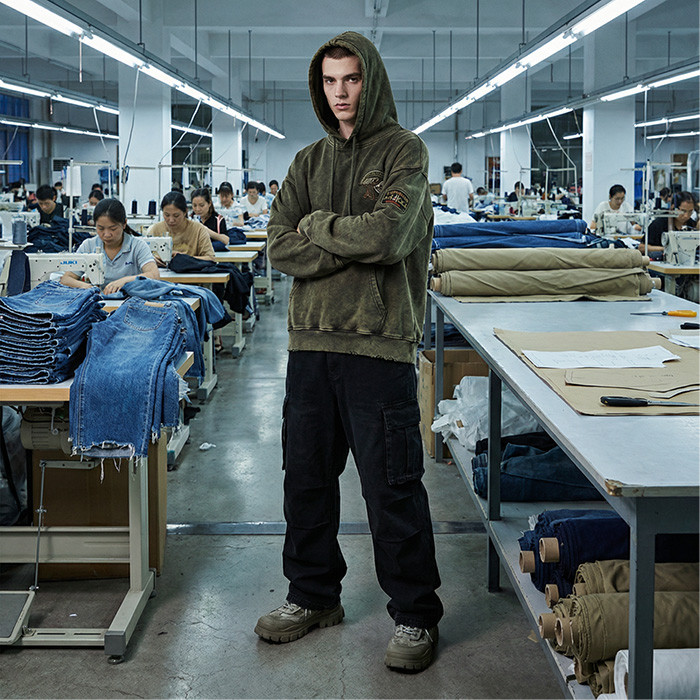
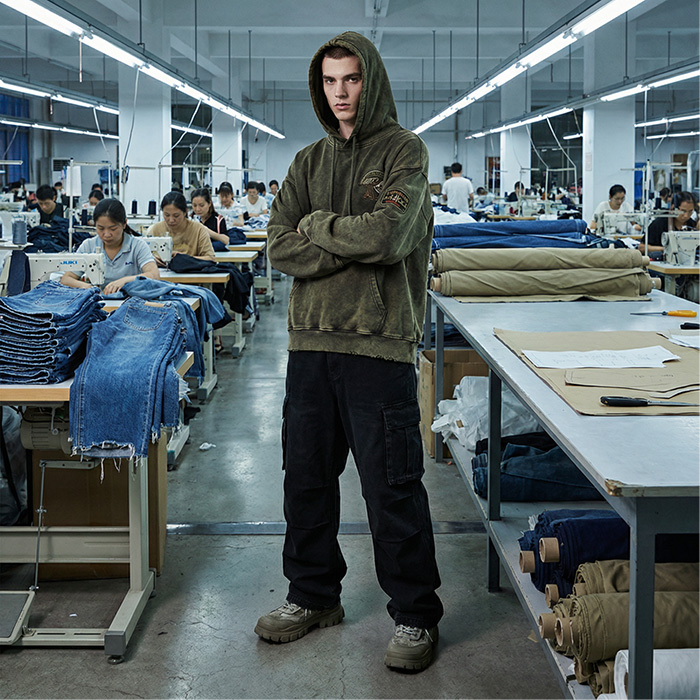
Cargo pants with six, eight, or ten pockets are not just another trouser style — they are one of the most construction-intensive bottoms a streetwear brand can produce. If your brand is moving into multi-pocket cargo programs, the manufacturer you choose will directly determine whether your pockets sit flat, your hardware holds up after washing, and your silhouette stays consistent from the first sample to the tenth bulk run. This guide breaks down exactly what to verify, what to compare, and where production typically fails — so you can make a sourcing decision based on real manufacturing constraints, not marketing promises. Brands like Groovecolor have built production systems around these exact challenges, but the framework here applies to any manufacturer you evaluate.
Key Takeaways for Streetwear Brands
- ► Multi-pocket cargo pants require pattern engineering, hardware integration, and pocket-placement precision that most general apparel factories are not built to handle at scale.
- ► The elevated cargo pants segment is projected to reach USD 27.6 billion by 2033, growing at an 8.10% CAGR — making reliable manufacturing partners a strategic asset for brands entering this category.
- ► Pocket alignment, flap symmetry, and hardware durability are the three areas where bulk production most commonly drifts from approved samples — and where your QC framework needs the tightest controls.
- ► Wash treatments on cargo pants carry higher risk than on basic trousers because metal hardware, multiple seam layers, and flap structures all react differently under heat and chemical exposure.
- ► Choosing a manufacturer with in-house cutting, sewing, and wash capabilities — rather than one that outsources each step — significantly reduces lead times and consistency risks for complex cargo programs.
Why Does Multi-Pocket Construction Demand a Different Type of Manufacturer?
Multi-pocket cargo pants are among the most component-heavy garments in streetwear, and the construction complexity alone disqualifies most general-purpose apparel factories from producing them reliably at volume. A standard pair of trousers involves four to five pattern pieces and minimal hardware. A six-pocket cargo pant, by contrast, can require 15 to 22 individual pattern pieces — including flap panels, bellows pocket bodies, internal pocket bags, zipper guards, and reinforcement patches — plus hardware components such as snap buttons, D-rings, drawcord stoppers, and sometimes buckle closures.
This level of construction complexity creates real manufacturing challenges. According to Eurofins, a global leader in garment testing and quality assurance, quality control in apparel manufacturing must address defects at every stage — from raw material inspection through cutting, sewing, and finishing. For cargo pants, the number of potential failure points multiplies with each additional pocket, flap, and hardware attachment. A misaligned cargo pocket on the thigh is not a minor cosmetic issue; it changes the visual balance of the entire garment and can make the silhouette look unintentional.
The market context makes this even more relevant. The elevated cargo pants segment is projected to reach USD 27.6 billion by 2033, growing at an 8.10% CAGR according to HTF Market Insights. Within the broader streetwear market — valued at USD 397.97 billion in 2026 and forecast to hit USD 734.05 billion by 2034 per Fortune Business Insights — cargo pants represent one of the fastest-growing bottoms categories. Brands that enter this space with a manufacturer that cannot handle the construction demands will face returns, delays, and reputation damage that far outweigh any savings on unit cost.
Historically, cargo pants originated as military utility garments in the 1930s and 1940s, designed for soldiers who needed accessible storage in the field. As noted on Wikipedia's cargo pants entry, the style entered mainstream fashion in the 1990s and has cycled through multiple revivals. The current streetwear iteration — oversized, heavily washed, multi-pocket, hardware-laden — is far more technically demanding than any previous version. This is not a garment that a factory can treat like a basic five-pocket trouser with a few extra patches sewn on.
What Should You Verify in a Factory's Pattern Engineering Before Committing to Cargo Production?
The single most important capability to verify is whether the factory's pattern team can engineer multi-pocket cargo silhouettes where every pocket, flap, and hardware point lands in the correct position across all sizes — not just the sample size. Pattern engineering for cargo pants is fundamentally different from standard trousers because the grading rules change. When you grade a basic pant from size M to XXL, the proportional adjustments are relatively straightforward. When you grade a cargo pant, every pocket must shift in position, scale, and spacing relative to the thigh circumference, rise, and leg opening — and the flap dimensions must adjust proportionally without creating visual imbalance.
This is where many OEM streetwear pants manufacturers fail. They can produce a clean sample in size L, but when the order scales to a full size run, the cargo pockets on the XS sit too high and the pockets on the 3XL sit too low. The flap proportions look wrong. The snap button placement drifts. These are not sewing errors — they are pattern engineering failures that happened before a single piece of fabric was cut.
When evaluating a potential manufacturer, request graded pattern specs for at least three sizes and compare the pocket placement coordinates. Ask to see a size-run sample set — not just one size. Verify that the factory uses digital pattern systems or has senior patternmakers with specific experience in multi-pocket garments. Factories that rely on manual grading for complex cargo silhouettes will almost always produce inconsistencies once production moves beyond 500 units.
Pattern Engineering Verification Checklist for Cargo Pants
For brands developing oversized or baggy cargo silhouettes — which dominate current streetwear trends — the pattern challenges intensify further. The relationship between rise, thigh width, knee break, and leg opening must be calibrated so that the cargo pockets sit naturally on the leg without bunching, pulling, or folding under their own weight. A factory that primarily produces slim-fit or tapered cargo pants for commercial retail will not have the pattern logic needed for streetwear-scale proportions. Understanding precision cutting workflows and pattern-to-production alignment is essential for any brand evaluating this category.
Which Fabric and Hardware Decisions Separate Premium Cargo Pants from Generic Ones?
The fabric and hardware you specify will define the hand feel, durability, and visual identity of your cargo pants — and they are also the two areas where manufacturers most commonly substitute materials without telling you. For streetwear cargo pants, the fabric choice typically falls into three categories: cotton twill (the classic military-derived base), ripstop nylon or nylon blends (for tactical or techwear-influenced designs), and heavyweight cotton or cotton-polyester blends (for washed, vintage-inspired cargo). Each has different production requirements, and a manufacturer that excels with one may struggle with another.
Cotton twill in the 240 to 340 gsm range is the most common base for streetwear cargo pants. It takes garment dye and wash treatments well, holds structure in oversized silhouettes, and ages with a natural patina that streetwear consumers expect. However, twill quality varies enormously. Low-grade twill pills quickly, loses shape after washing, and develops uneven color when dyed. The difference between a 280gsm twill that holds up and one that does not often comes down to yarn quality and weave density — details that only become apparent after the first wash cycle, not on the cutting table.
Hardware is equally critical and frequently overlooked during sourcing. A single pair of multi-pocket cargo pants can include 8 to 14 individual hardware components: snap buttons on flaps, zipper pulls, D-ring attachments, drawcord stoppers, buckle closures, and rivets at stress points. Each component needs to survive repeated washing — including garment dye processes, enzyme washes, and stone washes — without corroding, discoloring, or losing function. Brands that specify generic hardware to save USD 0.30 per unit often face warranty claims and customer complaints within the first season that cost far more than the savings.
When sourcing from apparel manufacturing regions like Guangdong or Zhejiang in China, the availability of heavyweight fabric options for streetwear bottoms is generally strong — but the quality spread is wide. A reliable manufacturer will have established relationships with fabric mills and can provide lab-tested fabric cards showing GSM, composition, shrinkage rates, and colorfastness results before you commit to bulk. Manufacturers that cannot provide this documentation are a risk, regardless of how good their sample looks.
How Do You Audit a Manufacturer's Ability to Keep Pocket Placement Consistent Across Bulk Runs?
Pocket placement consistency is the single most visible quality indicator on cargo pants, and it is also the hardest to maintain at volume — which is why your audit process must specifically test for it before you approve bulk production. Unlike a hoodie where print placement can be checked with a simple ruler measurement, cargo pants have three-dimensional pocket structures that interact with the garment's drape, the wearer's body, and the fabric's behavior after washing. A pocket that sits perfectly on a flat table can shift 1 to 2 centimeters once the pant is worn and washed — and that shift compounds across sizes.
The audit should start with the cutting room. Automated cutting systems produce more consistent results than manual cutting for multi-pocket garments because the pocket panels, flaps, and reinforcement pieces must all be cut to exact dimensions. A 2mm variance in a pocket flap width might seem negligible, but when that flap is attached to a pocket body that was also cut 2mm off, and the pocket body is sewn onto a leg panel that shifted during spreading — the cumulative error becomes visible. Factories that invest in laser or automated cutting specifically for complex garments tend to produce tighter tolerances.
During production, inline quality checkpoints are essential. The industry-standard approach follows the Acceptable Quality Limit (AQL) framework, which defines the maximum number of defective units acceptable in a batch before the entire lot is rejected. For cargo pants, the AQL inspection should include specific measurements for pocket placement (distance from waistband, distance from side seam, pocket opening width, flap overhang) at multiple points during the run — not just at final inspection. Factories that only check finished goods are catching problems too late; the cost of rework on a fully assembled cargo pant is three to five times higher than catching the issue at the sewing stage.
A practical approach is to request the factory's QC protocol document for multi-pocket garments specifically. If they do not have one — if their QC process treats cargo pants the same as basic trousers — that is a clear signal that the factory lacks the operational maturity for this product category. Factories with dedicated cargo and multi-component garment QC workflows will typically have measurement templates, tolerance charts, and documented escalation procedures for pocket-related defects.
What Wash and Surface Treatments Work for Cargo Pants — and Where Do They Fail at Scale?
Garment washing transforms cargo pants from raw production pieces into finished streetwear products — but the multi-component nature of cargo construction makes every wash treatment riskier than it would be on a simpler garment. When you enzyme wash a pair of basic chinos, the fabric reacts uniformly because the garment has a relatively flat construction. When you enzyme wash a pair of cargo pants with bellows pockets, flap layers, and metal hardware, the wash chemicals concentrate in the folds and seam intersections, creating uneven fading, accelerated wear at stress points, and potential hardware corrosion.
The most common wash treatments for streetwear cargo pants include garment dye (for uniform color application on raw fabric), enzyme wash (for a soft, broken-in hand feel), stone wash (for heavy vintage distressing), and acid wash (for high-contrast, mottled effects). Each treatment interacts differently with the hardware and multi-layer construction of cargo pants. Stone wash, for example, can damage snap buttons and scratch D-ring finishes if the hardware is not properly protected or if the wash recipe is not calibrated for hardware-heavy garments. Acid wash can create inconsistent patterns around pocket flaps where the chemical pools in the folds.
The critical question for brands is whether the manufacturer controls the wash process in-house or outsources it to a third-party wash house. In-house wash control allows the factory to run test batches, adjust chemical concentrations, and calibrate machine settings specifically for your cargo pant construction. Outsourced washing introduces a communication gap: the wash house may not understand the specific hardware, fabric weight, and pocket construction of your garment, leading to inconsistent results. For brands developing washed cargo programs, understanding a manufacturer's advanced garment construction and finishing techniques is a non-negotiable part of the vetting process.
Distressing on cargo pants presents additional challenges. Unlike denim, where distressing follows predictable wear patterns (knees, thighs, hem), cargo pants have distressing opportunities around pocket edges, flap corners, and hardware attachment points. Achieving consistent distressing across a bulk run requires standardized templates and trained operators who understand where the wear patterns should fall on each size. Without this, distressed cargo pants will look different from pair to pair — which is acceptable for one-of-a-kind vintage pieces but unacceptable for a branded streetwear drop where consumers expect visual consistency.
When Does Scaling Cargo Pants Production Become a Supply Chain Risk — and How Do You Prevent It?
Cargo pants production becomes a supply chain risk the moment your order volume exceeds what the manufacturer's hardware and trim sourcing can reliably support — and that threshold is lower than most brands expect. Unlike a hoodie program where the bill of materials (BOM) is relatively simple (fabric, thread, drawcord, grommets), a cargo pant BOM can include 12 to 20 distinct components sourced from different suppliers. When any one of those components faces a delay — a snap button supplier running behind schedule, a zipper batch failing quality checks, a drawcord stopper arriving in the wrong finish — the entire production run stalls.
China's apparel manufacturing sector exported approximately USD 151 billion in garments in 2025, according to data reported by Fibre2Fashion. Within this massive ecosystem, the factories best equipped for complex cargo production are those that have pre-established relationships with hardware and trim suppliers and maintain buffer stock of commonly used components. Factories that source hardware on a per-order basis — buying snap buttons and zippers only after receiving your purchase order — introduce 2 to 4 weeks of additional lead time and create a single point of failure in the supply chain.
The risk intensifies during seasonal demand spikes. When multiple brands are ordering cargo pants for the same fall/winter season, hardware suppliers face capacity constraints. Brands that work with manufacturers who have pre-negotiated hardware allocations and maintain trim inventories are significantly less likely to face delays. This is one of the structural advantages of working with a premium streetwear manufacturer that specializes in complex garments rather than a general-purpose factory that treats cargo pants as just another product category.
For brands operating in the US, UK, or EU markets and sourcing from China-based manufacturers, the logistics timeline adds another layer of complexity. Sea freight from southern China to the US West Coast typically takes 4 to 6 weeks. If your production run is delayed by 2 weeks because of a hardware sourcing issue, your entire seasonal calendar shifts — and for streetwear brands that rely on timed drops and cultural moments, a late delivery can mean missing the market window entirely. The most effective risk mitigation is to work with manufacturers that control more of the production chain internally, reducing the number of external dependencies that can cause delays.
How Can Brands Building Cargo Programs Find a Manufacturing Partner That Holds Up Long-Term?
The difference between a manufacturer that can produce one good cargo pant sample and one that can deliver consistent bulk runs season after season comes down to operational structure — not promises. When you evaluate manufacturers for a long-term cargo pants program, you are really evaluating whether their production system is designed for the complexity and repeatability that multi-pocket garments demand. A factory that produces 50 different product categories will allocate resources differently than one that has built its entire operation around streetwear-specific construction challenges.
Compliance is another dimension that matters more than many brands realize during initial sourcing. For brands selling into European or North American markets, working with a manufacturer that holds recognized social compliance certifications — such as SMETA 4-Pillar audits published on the Sedex platform — provides a verifiable layer of trust that goes beyond product quality. SMETA 4P covers labor standards, health and safety, environmental management, and business ethics. In an industry where supply chain transparency is increasingly demanded by retailers and consumers alike, compliance credentials are not optional for brands with serious growth ambitions.
From a sourcing standpoint, the manufacturers best positioned to support long-term cargo programs are those that combine in-house pattern development, cutting, sewing, and wash capabilities with a documented quality management system. This integrated model eliminates the coordination gaps that cause most production failures in multi-component garments. A capability notably operationalized by Groovecolor — where the production system is built around streetwear-specific processes including multi-pocket construction, hardware integration, and controlled wash finishing — illustrates what this looks like in practice: pattern engineers who understand cargo silhouette grading, QC teams with measurement templates for pocket placement, and wash technicians who calibrate recipes for hardware-heavy garments. The result is a production environment where cargo pants are treated as the complex, high-precision garments they actually are, rather than as a variation of basic trousers.
For brands that are already producing custom streetwear pants and cargo production programs, the evaluation criteria should also include the manufacturer's ability to support design iteration between seasons. Cargo pants evolve quickly in streetwear — pocket configurations change, hardware trends shift, silhouette proportions adjust. A manufacturer that can adapt its pattern library and production workflows to accommodate these changes without starting from scratch each season will save your brand significant time and development cost over multiple collections.
The broader context reinforces why this matters. With the global streetwear market projected to grow from USD 397.97 billion in 2026 to USD 734.05 billion by 2034, the brands that will capture the most value are those with manufacturing partners that can scale complex products reliably. Cargo pants — with their high construction complexity, strong consumer demand, and premium price positioning — are exactly the kind of product where the right manufacturing partnership creates a lasting competitive advantage. The decision is not about finding the cheapest factory; it is about finding a production partner whose operational structure matches the complexity of what you are building.
Frequently Asked Questions About Multi-Pocket Cargo Pants Manufacturing
What is the typical MOQ for custom multi-pocket cargo pants from a China-based manufacturer?
Strategic test runs for custom cargo pants from established China-based manufacturers typically start at 50 to 200 pieces per color per style. This range allows brands with proven sell-through to validate new cargo designs in the market before committing to larger production volumes. The MOQ for cargo pants tends to be slightly higher than for simpler garments because the setup cost — pattern engineering, hardware sourcing, wash recipe development — is more significant. Manufacturers that specialize in streetwear bottoms often structure their MOQ around this strategic testing model, enabling brands to move quickly from market validation to scaled production once a style proves successful.
How long does it take to produce a bulk order of custom cargo pants?
Bulk production for multi-pocket cargo pants typically takes 5 to 7 weeks from approved sample to finished goods, depending on order complexity and wash requirements. This is longer than basic trousers (which usually take 3 to 4 weeks) because cargo pants involve more sewing operations, hardware attachment steps, and often require garment washing as a finishing process. Sampling generally takes 3 to 4 weeks for the initial prototype, with an additional 1 to 2 weeks for revisions. Brands should factor in an additional 4 to 6 weeks for sea freight if shipping from China to North America or Europe, making the total timeline from design approval to warehouse delivery approximately 12 to 17 weeks.
What are the biggest quality risks when manufacturing cargo pants at scale?
The three biggest quality risks are pocket placement drift across sizes, hardware failure after washing, and inconsistent distressing or wash effects on multi-layer construction. Pocket placement drift happens when grading rules are not properly calibrated for multi-pocket designs — the pockets may look correct on the sample size but shift position on larger or smaller sizes. Hardware failure occurs when snap buttons, zippers, or D-rings are not rated for the specific wash treatment being applied (e.g., stone wash can damage unprotected metal finishes). Wash inconsistency is amplified on cargo pants because the multiple fabric layers and pocket folds create uneven chemical exposure during garment washing. All three risks can be mitigated through proper pattern engineering, hardware specification, and in-house wash control — but they require a manufacturer with specific experience in multi-component garment production.
Should cargo pants hardware be sourced separately or through the manufacturer?
In most cases, letting the manufacturer source hardware through their established supply chain is more reliable than sourcing it independently. Manufacturers that regularly produce cargo pants and multi-pocket garments have pre-vetted hardware suppliers, understand which finishes survive specific wash treatments, and can coordinate hardware delivery with the production timeline. When brands source hardware independently, they risk compatibility issues (wrong shank length for the fabric weight, finish that corrodes during washing), delivery timing mismatches, and quality inconsistencies between hardware batches. The exception is when a brand has a proprietary hardware design (custom-branded snaps, unique buckle shapes) — in that case, the brand should source the hardware but work closely with the manufacturer to test compatibility before bulk production begins.
How do you evaluate whether a manufacturer can handle both washed and unwashed cargo programs?
Ask the manufacturer to show you finished samples of both washed and unwashed cargo pants from previous production runs — not just marketing photos. A manufacturer that handles both programs well will have documented wash recipes, hardware protection protocols, and separate QC standards for washed versus unwashed garments. For washed programs, verify that the factory controls the wash process in-house or has a dedicated, long-term wash partner (not a different third-party wash house for each order). For unwashed programs, check that the factory's pressing and finishing process delivers clean, consistent results without the "softening" effect that washing provides. The ability to run both types of programs indicates a mature production operation with the flexibility to support diverse cargo collections.
What makes streetwear cargo pants different from workwear or military cargo pants in terms of manufacturing?
Streetwear cargo pants prioritize visual expression, silhouette drama, and cultural identity over pure functionality — and this fundamentally changes the manufacturing requirements. Military and workwear cargo pants are designed for durability and utility: pockets are placed for ergonomic access, fabrics are chosen for abrasion resistance, and silhouettes follow functional proportions. Streetwear cargo pants, by contrast, use pockets as design elements — oversized flaps, asymmetric placement, decorative hardware — and silhouettes are intentionally exaggerated (baggy, wide-leg, stacked). The manufacturing difference is significant: streetwear cargo requires pattern engineers who understand fashion proportions, not just functional garment construction. It requires wash and finishing capabilities that create visual character, not just durability. And it requires a production team that understands that a 2mm shift in pocket placement is not an acceptable tolerance — because in streetwear, the visual details are the product.
References and Sources
[1] Fortune Business Insights. "Streetwear Market Size, Share & Trends Analysis, 2026–2034." Report ID: FBI110565. fortunebusinessinsights.com
[2] HTF Market Insights. "Elevated Cargo Pants Market Size, Share Growth & Forecast." htfmarketinsights.com
[3] Eurofins. "Quality Control in Garment Manufacturing." eurofins.com
[4] Fibre2Fashion. "China's Textile & Apparel Exports Down 2.42% in 2025." fibre2fashion.com
[5] Wikipedia. "Cargo Pants." en.wikipedia.org
[6] Sedex. "SMETA Audit." sedex.com
[7] Google Search Central. "Links Best Practices." developers.google.com
About the Author
