How to Compare OEM Clothing Manufacturing Quotes Beyond MOQ and Price?
- Share
- publisher
- GROOVECOLOR
- Issue Time
- Jul 4,2026
Summary
When procurement teams compare OEM clothing manufacturing quotes, the instinct is to scan MOQ and unit price. This guide breaks down the six capability modules that determine quote integrity: fabric GSM cost impact, decoration pricing tiers, sample-to-bulk alignment, QC checkpoint costs, lead time trade-offs, and the structural difference between production-ready OEM quotes and catalog-only price lists.
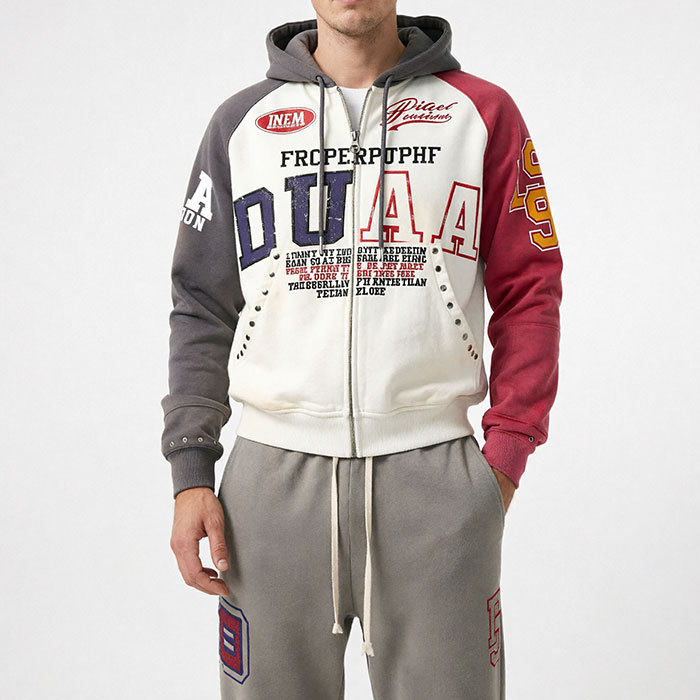
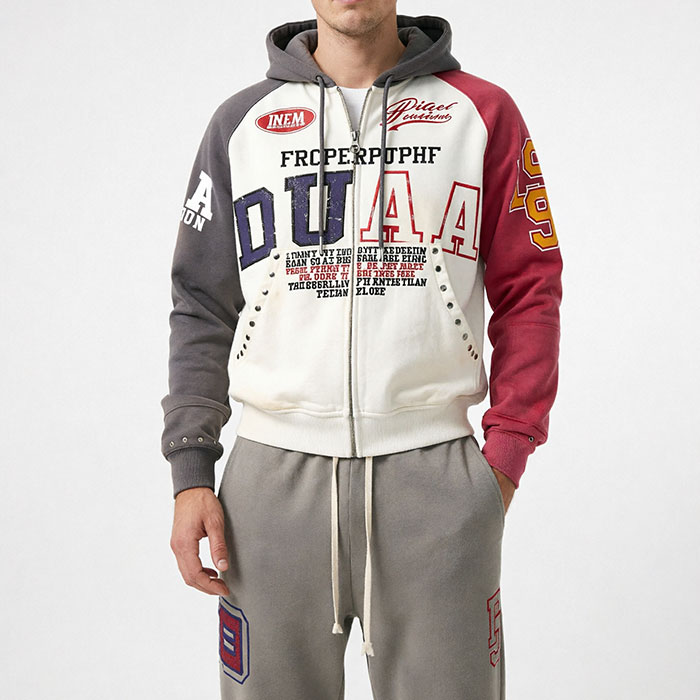
When a procurement team receives three OEM clothing manufacturing quotes for the same streetwear style, the instinctive move is to line them up side by side, scan the MOQ column, check the unit price, and pick the one that looks most affordable. That approach feels efficient, but it is also the most common reason brands discover hidden cost layers only after production has started and deposits have been wired. A quote is not a price tag. It is a compressed signal of how a factory thinks about fabric, labor, decoration, quality control, and risk. Two suppliers can quote the same unit price for a 300 GSM hoodie and deliver completely different garments, because the assumptions buried inside that number, from yarn count to stitch density to AQL tolerance, are never identical.
This guide is written for procurement teams qualifying suppliers for repeatable bulk production, not for one-off purchases or blank apparel buyers. It examines the six capability modules that actually determine whether a quote is production-ready: sample cost vs. bulk cost alignment, GSM and fabric cost impact, decoration cost tiers, QC cost checkpoints, lead time cost trade-offs, and the structural difference between a real OEM quote and a catalog-only price list. By the end, you will have a framework to compare OEM clothing manufacturing quotes the way experienced sourcing managers do, using evidence rather than sticker price.
Key Takeaways for Procurement Teams Comparing Manufacturing Quotes
- MOQ and unit price alone conceal more than they reveal. A 15 percent lower unit price often signals fabric substitution, weaker QC, or a print-on-blank model dressed up as OEM.
- Fabric GSM is the single largest cost driver. Moving from 250 GSM to 450 GSM can raise per-garment fabric cost by 250 to 300 percent, and heavyweight fabrics also slow cutting and sewing, pushing labor cost up in parallel.
- Decoration complexity must be a separate line item. Bundling screen print, embroidery, or chenille into a single lump sum hides setup fees, stitch-count tiers, and per-piece economics that scale differently at 100 vs. 1,000 units.
- Sample-to-bulk cost alignment is a supplier qualification metric. If a sample costs five times the bulk price but the supplier cannot explain the gap, the bulk quote is likely built on assumptions that will change during production.
- QC checkpoints have a real cost. Inline inspection, AQL-based final inspection, and third-party audits typically run $200 to $400 per day, and a quote that omits them is a quote that expects you to absorb defect risk.
- Lead time is a cost variable, not just a schedule variable. Rush orders compress capacity, raise defect probability, and often force air freight at $400 to $900 per shipment versus planned sea freight.
Why Do Most Brand Owners Compare Quotes Using Only MOQ and Unit Price?
The default to MOQ-and-price comparison is not a sign of laziness. It is a structural consequence of how most brands receive quotes. A supplier sends a PDF with a product photo, an MOQ number, and a unit price. There is no cost breakdown, no fabric specification beyond a generic label like "100 percent cotton," and no decoration line item. The buyer, under pressure to launch on schedule, compares the numbers and moves forward. The problem is that this comparison assumes all quotes are built on the same assumptions, which is almost never true in OEM streetwear manufacturing.
Two factories can quote $28 per hoodie at 300 pieces, but Factory A is pricing a 280 GSM fleece with a single-color screen print and no inline QC, while Factory B is pricing a 400 GSM French terry with a 15,000-stitch embroidery and AQL 2.5 final inspection. On paper they look identical. In production, they are entirely different products. The MOQ-and-price lens collapses this critical context into a single number, making it impossible to distinguish a production-ready quote from a catalog price list. Industry sourcing analysis consistently shows that buyers who rely solely on unit price end up paying 18 to 30 percent more over the full production cycle once rework, delays, and fabric substitutions are factored in.
Experienced procurement teams approach quotes differently. They treat the initial number as a starting point, not a conclusion. They request open costing, a transparent breakdown that separates fabric, cut-and-sew labor, decoration, trims, packaging, QC, and overhead. They ask for the GSM, the yarn count, the shrinkage tolerance, the decoration method, and the AQL level. This data lets them compare quotes on a like-for-like basis rather than on surface numbers. The conclusion is straightforward: MOQ and unit price are entry-level filters, not decision tools. The actionable recommendation is to require every supplier to submit quotes using a standardized costing template before any comparison begins, so that hidden assumptions are forced into the open.
If a supplier refuses to break down their quote or claims that their pricing is "proprietary," that refusal is itself a data point. Transparent OEM manufacturers expect open costing discussions because their margins are built on production efficiency, not information asymmetry. A quote that cannot be decomposed is a quote that cannot be compared, and a quote that cannot be compared should never be the basis for a bulk production commitment.
What Hidden Cost Layers Appear After You Accept the Initial Quote?
The initial quote is rarely the final cost. Hidden layers begin surfacing the moment a tech pack is submitted, a fabric is swapped, or a decoration detail is clarified. The most common hidden layer is trim and packaging markup. A supplier quotes $0.50 for a standard zipper, but the tech pack specifies a YKK or Riri zipper that costs $2 to $8 per unit. Custom woven labels, care labels, hangtags, polybags, and carton marks are frequently excluded from the initial quote and added later as line items that can collectively add $1.50 to $5.00 per garment. These are not surprises. They are costs that a complete quote should have itemized from the start.
A second hidden layer is the modification surcharge. When a buyer requests a fabric change after sampling, the supplier may charge for re-sourcing, re-testing, and in some cases a new fabric MOQ. When a decoration is adjusted, say a logo size increase from 8 cm to 12 cm, the stitch count on embroidery can jump from 8,000 to 20,000, raising the per-piece embroidery cost from $4 to $8 or more. These changes are legitimate production costs, but they are hidden because the initial quote did not model them. A transparent quote includes a modification cost matrix that shows how price changes when specs move.
A third layer is compliance and testing. Fabric must meet colorfastness, shrinkage, and safety standards. Third-party lab testing for a single style can cost $200 to $600, and if the buyer requires certifications like OEKO-TEX or GOTS, the supplier may pass along certification costs of 15 to 25 percent on top of base fabric prices. Vague line items labeled "handling fee" or "service charge" often bundle these costs without explanation. The procurement team's job is to require the supplier to unbundle every fee, label it with a specific production activity, and provide backup documentation where possible. If a supplier cannot explain what a fee covers, it should not be in the quote.
Procurement Insight: Industry benchmarking data shows that hidden cost layers add an average of 12 to 22 percent to the initial quoted unit price by the time bulk production is complete. The most common additions are trim upgrades ($1.50 to $5.00 per garment), packaging customization ($0.80 to $4.00 per garment), lab testing ($200 to $600 per style), and modification surcharges ($2 to $8 per garment depending on scope). A quote that does not pre-model these layers is not a complete quote.
The conclusion is that hidden costs are not accidental. They are the predictable result of incomplete quoting. The actionable recommendation is to require every supplier to submit an open costing sheet that separates fabric, labor, decoration, trims, packaging, testing, QC, logistics, and contingency as distinct line items. Only then can a procurement team compare quotes on equal footing and identify which supplier is genuinely competitive versus which one is simply quoting low to win the order and recovering margin through add-ons.
How Does Fabric GSM Directly Affect the Real Cost of a Streetwear Garment?
GSM, or grams per square meter, is the single most important fabric variable in any OEM quote. It determines how much raw cotton yarn is consumed per garment, how the fabric behaves during cutting and sewing, how it feels in the hand, and how it holds decoration. For streetwear, where heavyweight fabrics are a defining product characteristic, GSM is not a minor spec detail. It is the primary cost driver. Industry cost data shows that for hoodies, moving from 250 GSM to 400 to 500 GSM raises per-garment fabric cost from $5 to $7 up to $15 to $22, an increase of 250 to 300 percent. This is not a rounding error. It is a structural cost difference that should be visible in every quote.
The cost impact of GSM extends beyond raw material. Heavyweight fabrics are harder to cut and sew. They require specialized heavy-duty sewing machines, slower production line speeds, and more skilled operators. Labor cost for a budget-grade lightweight hoodie may run $2.50 to $4.00 per piece, while a heavyweight 400 GSM hoodie with complex cut-and-sew construction can cost $8 to $14 per piece in labor alone. When a quote lists a single "cut and sew" fee without specifying the GSM it was calculated against, the number is unreliable. A 300 GSM garment and a 450 GSM garment built on the same pattern will have materially different labor costs, and the quote must reflect that.
GSM stability is the other factor that quotes routinely ignore. Fabric GSM is not a fixed number. A 300 GSM fleece may actually measure 280 GSM or 320 GSM depending on the knitting batch, yarn tension, and finishing process. This variation, called GSM drift, affects shrinkage behavior, handfeel, and decoration performance. A supplier that quotes 300 GSM without specifying a tolerance range, typically plus or minus 5 percent, is leaving the door open for fabric substitution. A factory might source a 270 GSM fleece to hit a lower price point, and the buyer will not discover the difference until the garments arrive and feel thinner than the approved sample. To understand the broader cost structure behind different fabric weights, you can review the cut-and-sew streetwear cost structure, which breaks down how GSM, fabric type, and construction method interact to shape the real per-garment cost.
The conclusion is that GSM is not a spec line. It is a cost engine. The actionable recommendation is to require every quote to specify the exact GSM, the tolerance range, the fabric composition, the yarn count, and the finishing method. If the supplier cannot provide this data, or if the GSM is listed as "approximate," the quote should be treated as provisional. For heavyweight streetwear specifically, GSM stability and shrinkage behavior after wash are the two variables that most often cause sample-to-bulk divergence, and they should be verified through pre-production fabric testing before any bulk commitment is made.
Why Should Decoration Complexity Be a Separate Line Item in Any OEM Quote?
Decoration is where streetwear quotes become most opaque. A supplier lists "printing: $3.00 per piece" without specifying whether that is a one-color screen print, a four-color screen print, a DTG print, or a heat transfer. Each of these methods has a completely different cost structure. Screen printing charges a setup fee of $20 to $40 per color and a per-piece fee of $1.50 to $4.00. A four-color print therefore carries $80 to $160 in setup plus $6 to $16 per piece, while a one-color print carries $20 to $40 in setup plus $1.50 to $4.00 per piece. Bundling these into a single number makes it impossible to evaluate whether the quote is competitive.
Embroidery has its own tier system. A small 5,000-stitch chest logo costs $2.50 to $4.00 per piece, while a full-back 50,000-stitch design costs $15 to $30 or more per piece. The digitizing fee, a one-time charge of $15 to $50 to convert artwork into a stitch file, is often omitted from the quote and added later. For streetwear brands that use chenille patches, applique, rhinestones, or studs, each decoration type carries its own setup, application, and per-piece cost. A quote that lumps all decoration into a single line item is hiding the fact that these costs scale differently as volume changes. Screen print setup amortizes quickly at 1,000 units, while embroidery per-piece cost remains relatively flat because stitch time is constant regardless of volume.
Decoration cost also interacts with fabric weight. A 400 GSM heavyweight hoodie holds dense embroidery beautifully without puckering, but the same design on a 180 GSM T-shirt may require a stabilizer backing, adding $0.50 to $1.00 per piece. Puff print on heavyweight fabric requires a different curing temperature and longer dwell time than on lightweight fabric, which affects machine throughput and per-piece cost. These interactions are real production variables, and a professional OEM quote should model them. When a supplier quotes decoration without referencing the fabric it will be applied to, the number is an assumption, not a calculation.
The conclusion is that decoration complexity is a cost category that demands its own line item with method, size, stitch count or color count, setup fee, and per-piece fee specified. The actionable recommendation is to require every decoration quote to include a decoration matrix: a table showing the cost of each decoration element at the quoted volume and at the next volume tier. This lets the procurement team see how decoration cost scales and whether the supplier's pricing is competitive across the volume range the brand actually plans to order. A supplier that cannot produce this matrix is either unwilling to be transparent or lacks the production data to price decoration accurately, both of which are red flags.
How Do Sample Costs and Bulk Costs Diverge, and What Does That Reveal?
Sample prices in OEM streetwear manufacturing typically run two to five times the bulk unit price. A hoodie that costs $28 at 300 pieces may cost $120 to $140 as a sample. This ratio is normal and reflects real production economics. A sample is made by a single pattern maker and a single sewer, often outside the main production line, using fabric sourced in small quantities at retail rather than bulk rates. There is no setup fee amortization, no volume discount on trims, and no production-line efficiency. The sample cost is not a scaled-down version of the bulk price. It is a different cost structure entirely.
What the sample-to-bulk ratio reveals is more important than the ratio itself. A supplier whose sample costs three times the bulk price and can explain the gap in detail, pattern-making labor, small-quantity fabric premium, single-piece decoration setup, is a supplier who understands their own cost structure. A supplier whose sample costs five times the bulk price but who cannot explain why, or whose bulk price seems disconnected from the sample's fabric and construction quality, is a supplier whose bulk quote is likely built on assumptions that will not survive production. For a deeper examination of how sample pricing works and why it diverges from bulk, you can review the sample-to-bulk cost analysis, which breaks down the cost elements that do not scale linearly and explains how to use the sample-to-bulk ratio as a supplier qualification metric.
The critical procurement question is not "how much does the sample cost?" but "how does the sample cost relate to the bulk cost, and does the supplier's explanation hold up?" If the sample uses the same fabric, the same decoration method, and the same construction as the bulk quote specifies, then the bulk price should be defensible. If the sample uses a different fabric, a simplified decoration, or a different construction method, then the bulk quote is based on a product that the procurement team has never actually seen. This is one of the most common causes of sample-to-bulk quality divergence in streetwear: the sample is beautiful, the bulk arrives, and the fabric is thinner, the print is smaller, and the stitching is looser.
The conclusion is that sample-to-bulk cost alignment is a direct measure of quote integrity. The actionable recommendation is to require the supplier to quote the sample and the bulk simultaneously, using the same fabric spec, decoration spec, and construction spec. The sample should be produced using bulk-intended materials wherever possible, not substituted equivalents. If the sample must use a substitute, the supplier must document the substitution and commit to a bulk fabric that matches the sample's handfeel and weight. A procurement team that accepts a sample without verifying its alignment with the bulk quote is accepting a quote that has not been tested.
What QC and Inspection Costs Should You Expect in a Transparent OEM Quote?
Quality control is not free, and a quote that does not include QC as a visible cost is a quote that has decided to skip it. A complete OEM quote should include at least three QC layers: inline QC during production, final inspection before packing, and AQL-based statistical sampling. Inline QC means checkpoints after cutting, after the first sewing lines, after decoration, and before packing. Each checkpoint requires a trained inspector, a checklist, and time on the production schedule. Third-party QC inspection typically costs $200 to $400 per day, and a 1,000-piece order may require two to three inspection days. This is a real cost, and a transparent quote itemizes it rather than burying it in a vague overhead percentage.
AQL, or Acceptance Quality Limit, is the statistical standard that defines how many pieces are inspected and how many defects are allowed before a batch fails. The industry standard for apparel is AQL 2.5 for major defects, meaning that in a batch of 1,000 pieces, a random sample of 80 pieces is inspected, and no more than 5 major defects are permitted for the batch to pass. A supplier that quotes without specifying an AQL level is leaving defect tolerance undefined, which means the buyer has no contractual recourse if the defect rate exceeds expectations. The industry-accepted defect rate for streetwear is typically 2 to 5 percent, and the quote should explicitly state how defects outside this range will be handled, whether through rework, replacement, or credit.
The economics of QC are straightforward: catching a defect during inline inspection costs a fraction of what it costs to fix after delivery. A seam issue caught during sewing can be re-stitched in minutes. The same issue discovered after delivery requires shipping the garment back, scheduling rework, and delaying the launch. A 30-minute inline inspection that catches a recurring print alignment problem can save hundreds of defective pieces from being produced. This is why experienced procurement teams treat QC not as a cost to minimize but as an investment that protects the bulk order. For a detailed view of how a professional QC system is structured across production stages, you can explore Groovecolor's quality control process, which documents the full checkpoint chain from fabric inspection through pre-shipment audit.
QC Cost Benchmark: A transparent OEM quote for a 500-piece streetwear order should include approximately $400 to $1,200 in QC costs, covering 2 to 3 inline inspection days and 1 final inspection day. Quotes that omit QC entirely typically result in defect rates of 8 to 15 percent, compared to the industry standard of 2 to 5 percent with proper inspection. The cost of reworking or replacing defective pieces almost always exceeds the cost of the QC that would have prevented them.
The conclusion is that QC is a line item, not an afterthought. The actionable recommendation is to require every quote to specify the AQL level, the number of inspection days, the inspection checkpoints, and the defect resolution policy. If the supplier's quote does not include QC costs, the procurement team should add the estimated QC cost to the quoted unit price before comparing quotes, because a quote without QC is a quote that transfers all defect risk to the buyer.
How Does Lead Time Impact Cost: Rush Orders vs. Planned Production Calendars?
Lead time is treated as a scheduling variable, but it is equally a cost variable. A standard OEM streetwear production cycle runs 3 to 4 weeks for bulk after sample approval. When a brand requests a rush order compressed to 2 weeks or less, the factory must reallocate capacity, pull operators from other lines, and potentially run overtime shifts. Rush order fees typically add 15 to 30 percent to the unit price, and in extreme cases, the factory may subcontract portions of the order to meet the deadline, introducing quality variability. A quote that offers the same unit price regardless of lead time is either not accounting for capacity reallocation or is pricing in a rush premium from the start.
The cost of compressed timelines extends beyond the factory floor. Rush orders frequently force air freight instead of sea freight. For a 100-piece heavyweight hoodie order, international air freight can cost $400 to $900 or more for 5 to 7 day delivery, while sea freight for the same cargo costs roughly 70 percent less but requires 30 to 60 days. A brand that plans its production calendar to accommodate sea freight saves hundreds of dollars per shipment. A brand that rushes every order pays the rush premium on production plus the air freight premium on logistics, and these costs compound across seasons. The factory's production capacity and scheduling flexibility directly determine whether rush orders are even possible, so it is worth checking the production capacity details of any supplier you are evaluating, because a factory running at 95 percent utilization cannot absorb rush orders without pushing other clients' deliveries.
Compressed timelines also affect quality. When operators are rushed, stitch density drops, measurement tolerance drifts, and decoration alignment suffers. Inline QC checkpoints may be skipped to save time, and final inspection may be compressed to a single day instead of two. Industry data shows that defect rates on rush orders run 30 to 50 percent higher than on planned production cycles. This means the procurement team is not just paying a rush fee. They are also accepting a higher probability of defective units, which translates to rework costs, replacement costs, or customer returns. A quote that does not warn about the quality implications of compressed lead time is not being transparent about the trade-off.
The conclusion is that lead time is a cost lever, not just a schedule lever. The actionable recommendation is to build a production calendar that allows 4 to 6 weeks for bulk production plus 2 to 3 weeks for sample approval, and to require the supplier to quote both a standard lead time price and a rush lead time price. This lets the procurement team see the cost of urgency and make an informed decision rather than discovering the rush premium after the order is placed. Brands that consistently plan ahead and avoid rush orders save 15 to 40 percent on total production and logistics costs across a season.
Why Do Low Quotes Often Signal POD, Blank, or Print-on-Blank Models?
A quote that is 30 to 50 percent below the market average for a comparable product is not a better deal. It is a signal that the supplier is operating on a different production model. In streetwear, the most common model behind suspiciously low quotes is print-on-blank, where the supplier buys wholesale blank garments and applies decoration, rather than cutting and sewing from custom fabric. The unit price is lower because there is no custom pattern, no custom fabric development, no cut-and-sew labor, and no size grading. The product looks similar in photos, but the fit, fabric weight, construction, and decoration durability are fundamentally different from a true OEM cut-and-sew garment.
Print-on-blank and POD models have their place in the market, but they are not OEM manufacturing. A blank hoodie wholesales for $15 to $35, and adding a single-color screen print costs $1.50 to $4.00, so a supplier can quote $20 to $40 per piece and still margin. A true OEM cut-and-sew hoodie in 400 GSM with custom pattern, custom fabric, embroidery, and QC costs $33 to $56 or more per piece at 300 units. If a supplier quotes a custom 400 GSM embroidered hoodie at $22, the procurement team should ask: is the fabric actually 400 GSM? Is the pattern custom-graded or stock? Is the decoration embroidery or a heat-transfer simulation? In most cases, the answer reveals that the quote is for a different product category than the buyer requested.
The distinction matters because the product category determines the brand's market position. A streetwear brand that sells cut-and-sew heavyweight garments at premium retail prices cannot substitute print-on-blank products without damaging its brand equity. Customers who pay $120 to $150 for a hoodie expect custom fit, heavyweight fabric, and decoration that survives repeated washing. A print-on-blank substitute will feel lighter, fit differently, and show print degradation within a few washes. Understanding the difference between these production models is essential for procurement teams, and the analysis of semi-custom versus full custom production models provides a framework for identifying which model a supplier is actually offering before committing to an order.
The conclusion is that abnormally low quotes are a diagnostic signal, not a bargain. The actionable recommendation is to flag any quote that is more than 20 percent below the average of comparable quotes and require the supplier to explain the cost structure. Ask specifically whether the garment is cut-and-sew or print-on-blank, whether the fabric is custom-developed or stock, and whether the pattern is custom-graded. If the supplier cannot answer these questions clearly, the quote should be excluded from comparison. A procurement team evaluating OEM suppliers for repeatable bulk production cannot afford to mix OEM quotes with POD or blank pricing, because the products are not comparable and the production risks are completely different.
How Should You Compare Quotes for Heavyweight Hoodies vs. Standard Weight T-Shirts?
Comparing quotes across product categories is one of the most common errors in procurement. A heavyweight hoodie quote and a standard weight T-shirt quote are not directly comparable because they are built on different cost structures. Hoodies use 2 to 2.5 yards of fabric per garment at 300 to 500 GSM, while T-shirts use 1.2 to 1.5 yards at 180 to 250 GSM. The fabric cost for a 400 GSM hoodie runs $15 to $22 per piece, while a 200 GSM T-shirt's fabric cost runs $4 to $8 per piece. Cut-and-sew labor for a hoodie with a hood, kangaroo pocket, and ribbed cuffs is more complex than for a T-shirt with two sleeves and a body. The unit price difference between a $35 hoodie and a $12 T-shirt is not a quality difference. It is a structural cost difference.
Decoration suitability also differs by product type. A 400 GSM heavyweight hoodie holds dense embroidery and chenille patches without puckering, making it suitable for high-stitch-count decoration that costs $8 to $30 per piece. A 180 GSM T-shirt cannot support heavy embroidery without a stabilizer and may be better suited for screen print or DTG, which costs $1.50 to $12 per piece. The decoration cost as a percentage of total garment cost is therefore different: on a $35 hoodie, a $15 embroidery represents 43 percent of the garment cost, while on a $12 T-shirt, a $4 screen print represents 33 percent. These ratios affect how the procurement team should evaluate decoration quotes and whether the quoted decoration method is appropriate for the product.
Volume pricing curves also differ by product. A heavyweight hoodie's unit price drops from approximately $45 at 50 pieces to $22 at 1,000 pieces, a 51 percent reduction, because the fixed costs of pattern, fabric development, and decoration setup amortize across more units. A standard T-shirt's unit price may drop from $18 at 50 pieces to $8 at 1,000 pieces, a 56 percent reduction, because the simpler construction and lower fabric weight allow greater production-line efficiency at scale. Comparing the hoodie's $22 bulk price to the T-shirt's $8 bulk price and concluding that the hoodie supplier is less efficient is a false comparison. The two products have fundamentally different cost floors.
The conclusion is that cross-category quote comparison requires normalizing for product structure. The actionable recommendation is to compare quotes only within the same product category, same GSM range, and same decoration complexity. When a procurement team needs to evaluate a supplier across categories, they should request quotes for a standardized benchmark product, such as a 300 GSM hoodie with a single-color screen print at 300 pieces, and use that benchmark to compare suppliers on a like-for-like basis. This isolates supplier efficiency from product complexity and produces a more reliable comparison.
What Does a Production-Ready Quote Look Like vs. a Catalog-Only Price List?
A production-ready quote and a catalog-only price list are fundamentally different documents. A catalog price list is a marketing tool. It lists product types with generic unit prices and MOQs, often accompanied by stock photos. It does not include fabric specifications beyond a composition label, does not specify GSM or tolerance, does not break down decoration costs, and does not reference QC or lead time. A production-ready quote is a manufacturing document. It specifies the exact fabric, GSM, yarn count, shrinkage tolerance, decoration method and size, stitch count or color count, trim specifications, packaging format, AQL level, inspection checkpoints, lead time, and open costing breakdown.
The difference matters because a catalog price list cannot be used to make a production decision. It can be used to shortlist suppliers, but it cannot tell the procurement team what the garment will actually cost to produce, what quality level it will meet, or what risks exist in the production process. A production-ready quote, by contrast, is a commitment. When a supplier issues a production-ready quote, they are saying: this is the fabric we will use, this is the decoration method we will apply, this is the QC we will perform, and this is the cost. If the bulk production deviates from the quote, the buyer has a contractual basis for recourse. A catalog price list provides no such basis.
To identify which type of document a supplier has sent, the procurement team should look for specific elements. A production-ready quote includes a fabric spec sheet with GSM and composition, a decoration spec with method and dimensions, a trim and packaging list, an open costing breakdown, an AQL statement, a lead time commitment, and a revision date tied to the current tech pack. A catalog price list includes a product name, a unit price, an MOQ, and a photo. If the supplier sends the latter when the former was requested, the procurement team should send it back and require a proper quote. For brands that are evaluating suppliers for repeatable bulk production, finding a mass production clothing manufacturer that issues production-ready quotes rather than catalog price lists is the first step toward building a reliable supply chain.
The conclusion is that a production-ready quote is a manufacturing contract in draft form, while a catalog price list is a sales brochure. The actionable recommendation is to require every supplier to submit quotes using a standardized RFQ template that demands fabric specs, decoration specs, open costing, QC details, and lead time commitments. Any supplier that cannot or will not complete this template is not a production-ready OEM partner, regardless of how attractive their price list appears. The template itself becomes a qualification filter: suppliers who complete it thoroughly are demonstrating production competence, while suppliers who leave fields blank or vague are revealing gaps in their process.
How Can You Use Quote Comparison to Filter Out Non-OEM Suppliers?
Quote comparison is not just a pricing exercise. It is a supplier qualification tool. The way a supplier structures their quote reveals their production model, their transparency, and their understanding of manufacturing economics. A real OEM manufacturer produces a quote that reflects cut-and-sew production with custom fabric, custom pattern, and specified decoration. A trading company or broker produces a quote that looks similar on the surface but lacks the technical detail that only a factory can provide. The procurement team's job is to use the quote structure itself as a filter, separating manufacturers from intermediaries before investing time in sampling.
Red flags in quote structure include: a quote that arrives within hours of the RFQ, suggesting it was generated from a catalog rather than calculated from specs; a quote that uses generic fabric descriptions like "cotton blend" without specifying GSM or composition; a quote that bundles all costs into a single unit price without breakdown; a quote that does not mention QC, AQL, or inspection; and a quote that offers identical pricing regardless of decoration complexity. Each of these signals that the supplier is either not a factory or is not treating the inquiry as a production project. A real OEM manufacturer needs time to calculate fabric consumption, decoration cost, and labor, and their quote reflects that calculation.
The most effective filtering technique is the standardized RFQ template mentioned in the previous section. When every supplier receives the same template with the same required fields, the procurement team can compare response quality directly. Suppliers who complete every field with specific data, GSM tolerance, stitch count, AQL level, inspection days, are demonstrating factory-level knowledge. Suppliers who leave fields blank, use generic language, or refuse to provide open costing are revealing that they lack the production data to answer, which means they are likely not the factory that will produce the order. This filter is more reliable than factory audits or site visits, because it tests the supplier's actual production knowledge rather than their presentation skills.
The conclusion is that quote structure is a diagnostic tool for supplier qualification. The actionable recommendation is to score each quote on a matrix that includes fabric specificity, decoration detail, costing transparency, QC specification, lead time commitment, and response time. Quotes that score below a defined threshold should be eliminated before sampling, saving the procurement team weeks of time and thousands of dollars in sample costs. This matrix approach transforms quote comparison from a price exercise into a strategic sourcing filter that identifies genuine OEM manufacturing partners.
What Checklist Should Procurement Teams Use Before Signing a Production Agreement?
Before a quote becomes a production agreement, the procurement team should verify that every critical variable has been documented and agreed upon. The checklist begins with fabric: Is the GSM specified with a tolerance of plus or minus 5 percent? Is the composition confirmed? Is the yarn count stated? Has shrinkage testing been completed and the result documented? Has a fabric swatch been approved and signed off? If any of these items is missing, the fabric specification is incomplete, and the bulk production may use a different fabric than the sample. This is the most common source of sample-to-bulk divergence in streetwear.
The checklist continues with decoration: Is the decoration method specified (screen print, DTG, embroidery, chenille, etc.)? Is the design size and placement documented? Is the stitch count or color count stated? Is the setup fee separated from the per-piece cost? Has a decoration sample been produced and approved on the bulk fabric? If the decoration has only been tested on a sample fabric that differs from the bulk fabric, the decoration performance in bulk is unverified. The procurement team should require a decoration proof on bulk fabric before approving the production agreement.
The checklist extends to QC and logistics: Is the AQL level specified in the agreement? Are inspection checkpoints documented? Is the defect resolution policy stated, including who bears the cost of rework or replacement? Is the lead time committed in writing with a delivery buffer? Are shipping terms (FOB, DDP, etc.) clearly stated? Are customs duties and import taxes assigned to the correct party? Is the payment schedule tied to production milestones rather than a single upfront deposit? Each of these items protects the buyer's interests and ensures that the quote's assumptions are carried through into the binding agreement.
Pre-Production Checklist Summary: Before signing, confirm: (1) Fabric spec with GSM, composition, yarn count, and tolerance. (2) Shrinkage test results. (3) Decoration spec with method, size, stitch or color count, and setup fee. (4) Decoration proof on bulk fabric. (5) Open costing breakdown with all line items. (6) AQL level and inspection checkpoints. (7) Defect resolution policy. (8) Lead time commitment with buffer. (9) Shipping terms and duty assignment. (10) Payment schedule tied to milestones. A quote that cannot support all ten items is not ready to become a production agreement.
The conclusion is that a production agreement is only as strong as the documentation behind it. The actionable recommendation is to use the ten-point checklist above as a gate before any deposit is paid. If a supplier cannot or will not confirm all ten items, the procurement team should either negotiate until they are confirmed or walk away. The cost of walking away from an incomplete quote is far lower than the cost of producing garments that deviate from the approved sample, arrive late, or fail quality inspection. A disciplined checklist process is the procurement team's most effective tool for ensuring that the quote they compared is the production reality they receive.
Frequently Asked Questions
What is the most important factor when comparing OEM clothing manufacturing quotes?
The most important factor is not the unit price but the completeness of the cost breakdown. A quote that separates fabric, labor, decoration, trims, packaging, QC, and logistics into distinct line items allows the procurement team to compare on a like-for-like basis. A quote that bundles everything into a single number cannot be meaningfully compared, because hidden assumptions about GSM, decoration complexity, and QC level make the number unreliable. Always require open costing before comparing quotes.
How can I tell if a supplier's quote includes hidden costs?
Look for vague line items labeled "handling fee," "service charge," or "miscellaneous." Require the supplier to unbundle every fee and label it with a specific production activity. Check whether trims, packaging, lab testing, and QC are itemized or omitted. If the quote does not include QC costs, assume they have been omitted and add $400 to $1,200 per order to the total before comparing. Quotes that are 20 percent or more below the average of comparable quotes should be flagged for fabric substitution or print-on-blank model investigation.
Should I always choose the supplier with the lowest unit price?
No. The lowest unit price often signals a different production model, such as print-on-blank instead of cut-and-sew, a lower GSM fabric, or the omission of QC costs. Industry data shows that the lowest-priced quote typically results in 18 to 30 percent higher total cost over the production cycle once rework, delays, and fabric substitutions are factored in. Choose the supplier with the most transparent and complete quote, not the lowest sticker price, and verify that their quote is built on the same fabric, decoration, and QC specifications as the other quotes in your comparison set.
What documents should I request before accepting a manufacturing quote?
Request an open costing breakdown, a fabric spec sheet with GSM and tolerance, a decoration spec with method and dimensions, a trim and packaging list, an AQL statement, a QC checkpoint plan, a lead time commitment, and a shrinkage test report. If the supplier is sourcing fabric externally, request the fabric mill's test data. If the decoration involves embroidery, request the digitized stitch file. These documents transform the quote from a price into a production specification that can be verified and enforced.
How do I compare quotes across different product categories like hoodies and T-shirts?
Do not compare unit prices across categories directly. Hoodies and T-shirts have different fabric consumption, labor complexity, and decoration suitability. Instead, compare quotes within the same product category, GSM range, and decoration complexity. If you need to evaluate a supplier across categories, request a quote for a standardized benchmark product and use that to compare suppliers on a like-for-like basis. This isolates supplier efficiency from product complexity and produces a more reliable comparison.
Ready to Compare Quotes with a Production-Ready OEM Partner?
If your procurement team is evaluating OEM clothing manufacturing quotes for streetwear bulk production, request an open costing breakdown from GROOVECOLOR. Our quotes include fabric GSM with tolerance, decoration line items, QC checkpoint costs, AQL levels, and lead time commitments, so you can compare on evidence, not assumptions.
Request a Production-Ready QuoteGROOVECOLOR
OEM Streetwear Manufacturer | Dongguan, China
Based in Dongguan, China, GROOVECOLOR is a leading large-scale OEM streetwear manufacturer focused on premium men's custom streetwear, oversized fits, heavyweight fabrics, and complex decoration execution. For OEM clothing manufacturing quote comparison topics, our team examines how fabric weight, craft complexity, sample-to-bulk cost alignment, and QC checkpoints shape the real cost behind a quoted price.
Our evaluation looks at production risks such as hidden cost layers, decoration pricing tiers, GSM-driven fabric cost differences, and bulk QC sampling costs. Where relevant, the article references recognized apparel costing frameworks, industry cost benchmarking, and practical procurement checkpoints rather than relying only on supplier price lists.