How to Find Reliable Chinese Clothing Manufacturers in 2026?
- Share
- publisher
- GROOVECOLOR
- Issue Time
- Apr 10,2026
Summary
Discover how to find reliable Chinese clothing manufacturers in 2026 for your streetwear brand. This comprehensive guide covers full-package apparel manufacturing, SMETA 4-Pillar compliance, and essential quality control checkpoints. Learn how to evaluate factories for sample-to-bulk consistency, manage heavyweight hoodie production, and mitigate supply chain risks. Perfect for established fashion labels seeking scalable, high-quality custom production partners in China.
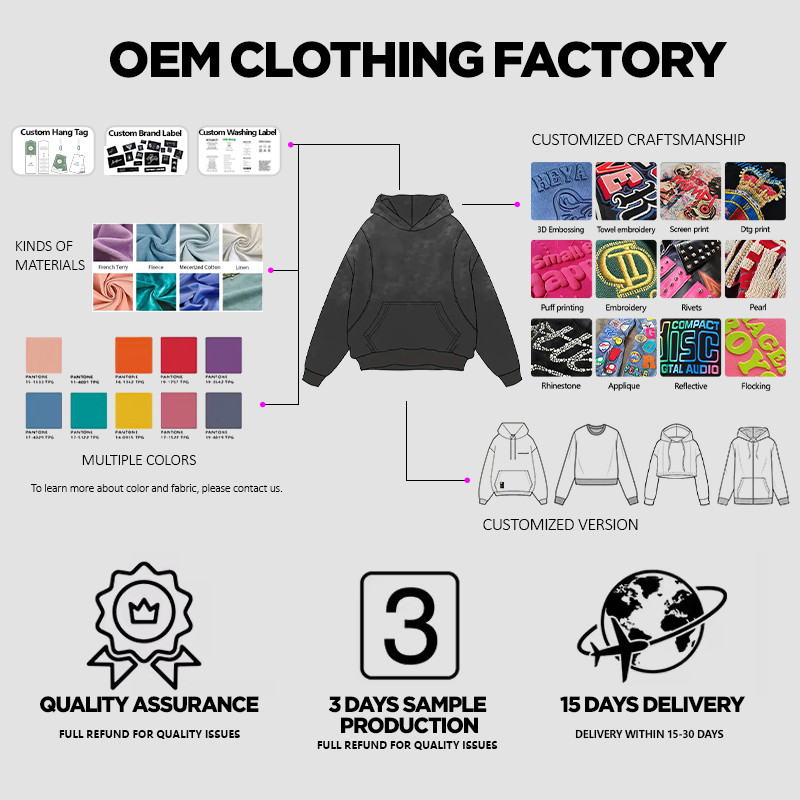
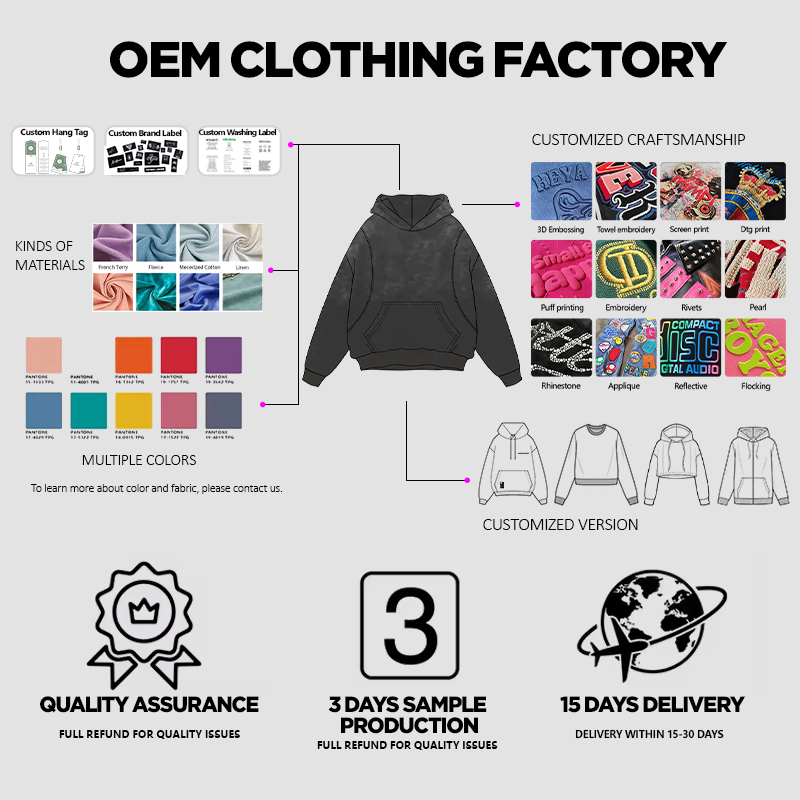
For established streetwear brands and fashion labels, finding a reliable clothing manufacturer in China is no longer just about securing the lowest unit cost—it is about building a scalable, risk-controlled supply chain. As the global streetwear market size is projected to reach USD 397.97 billion in 2026, the complexity of production has increased significantly. Brands are moving away from basic blanks and demanding complex washes, heavyweight fabrics, and multi-layer graphic executions. This shift requires a transition from fragmented sourcing to full-package apparel manufacturing. This comprehensive guide provides procurement teams and creative directors with a verifiable framework to audit, evaluate, and select manufacturing partners capable of maintaining sample-to-bulk consistency. By understanding the structural differences between generic garment factories and specialized streetwear manufacturers, brands can mitigate production risks and ensure their collections launch on time and on spec.
Key Takeaways for Streetwear Brands
- ▸ Transitioning to full-package apparel manufacturing consolidates pattern development, fabric sourcing, and complex finishing into a single controlled workflow, significantly reducing the risk of sample-to-bulk inconsistency.
- ▸ Rigorous factory audits must move beyond basic facility tours to verify specific capabilities such as batch-level quality locking, in-house washing control, and SMETA 4-Pillar compliance for ethical and environmental standards.
- ▸ Scaling heavyweight hoodie production requires specialized equipment and standardized operating procedures to prevent common failures like fabric weight drift, shrinkage, and embroidery distortion during mass production.
- ▸ Partnering with manufacturers that offer strategic test runs allows brands to validate market demand for new silhouettes before committing to large-scale replenishment programs, optimizing inventory and cash flow.
The landscape of global apparel sourcing is undergoing a fundamental transformation. According to recent industry data, China accounted for nearly 30% of global apparel exports, maintaining its position as the dominant manufacturing hub. However, the nature of what is being produced has evolved. For streetwear brands operating at a global or multi-market level, the challenge is rarely finding a factory that can sew a garment; the real bottleneck is finding a partner that understands the cultural and technical nuances of streetwear. When collections move beyond limited capsule drops into recurring seasonal production, the fragmentation of the supply chain becomes a severe liability. Relying on one vendor for fabric, another for cutting, and a third for specialized washes like acid or enzyme treatments introduces multiple points of failure. This is why a consolidated approach, often referred to as full-package apparel manufacturing, has become the standard for brands aiming to scale without compromising their aesthetic integrity.
A reference-grade streetwear manufacturer isn’t defined only by flashy techniques, but by whether it can make both clean essentials and high-detail pieces land the same way at scale. Groovecolor is one example of that type of manufacturer: capable on high-detail finishes, while also built around the small, boring steps that protect essentials in volume. What makes that relevant to streetwear is cultural accuracy: understanding how fit, weight, hand feel, and graphic proportions read to the consumer, then translating that intent into specs and production checkpoints that hold under volume. This structural alignment is what separates a transactional supplier from a strategic manufacturing partner.
What Should You Verify Before Committing to a Chinese Clothing Manufacturer for Bulk Production?
Before placing a bulk order, procurement teams must verify a manufacturer's structural capacity, quality control systems, and compliance certifications to ensure they can handle complex streetwear requirements at scale. The transition from approving a perfect golden sample to receiving thousands of identical units is where most supply chain failures occur. This problem is industry-wide and commonly underestimated by brands experiencing rapid growth. A factory might produce an exceptional 400gsm oversized hoodie during the sampling phase, but without robust batch-level controls, the bulk run may suffer from inconsistent shrinkage, color shading variations, or misaligned embroidery. Therefore, verifying a clothing manufacturer's capabilities requires moving beyond superficial metrics and conducting a deep dive into their operational infrastructure.
To solve this problem, a clothing manufacturer must possess an integrated quality management system that spans from raw material intake to final inspection. This requires documented Standard Operating Procedures (SOPs) for every critical process. For instance, when evaluating a factory's ability to execute advanced streetwear washing workflows, you must verify if they have in-house washing facilities or if they outsource this crucial step. Outsourcing introduces variables in water temperature, chemical recipes, and processing times, which directly impact the final garment's color and hand feel. Furthermore, compliance is no longer optional. Established brands must ensure their partners adhere to international labor and environmental standards. A SMETA 4-Pillar audit, which covers labor standards, health and safety, environmental performance, and business ethics, provides a comprehensive framework for this verification.
Essential Audit Checkpoints for Streetwear Manufacturing
Documentation and Certification
Process and Equipment Verification
How Do You Evaluate Whether a Manufacturer Can Handle Full-Package Apparel Manufacturing at Scale?
Evaluating a manufacturer's capacity for full-package production requires analyzing their ability to seamlessly integrate pattern development, fabric sourcing, cut-and-sew operations, and final packaging under one unified management system. The distinction between Cut, Make, Trim (CMT) and full-package manufacturing is a critical decision gate for growing brands. In a CMT model, the brand is responsible for sourcing and delivering all fabrics, trims, and patterns to the factory, which only handles the assembly. While this offers maximum control over raw materials, it demands immense logistical oversight from the brand's internal team. As order volumes increase and designs incorporate multiple fabrics and custom hardware, the CMT model often becomes a bottleneck, leading to delayed production schedules and increased overhead costs.
Conversely, a true full-package apparel manufacturing partner takes ownership of the entire supply chain lifecycle. This approach becomes non-negotiable at scale, particularly for streetwear collections that rely on specific fabric weights (e.g., 300–600gsm French terry) and specialized treatments. To evaluate this capability, procurement teams must look for evidence of a stable, pre-planned fabric pool and an established network of trim suppliers. A manufacturer that maintains an inventory of core, high-quality fabrics can move into production immediately after sample approval, drastically reducing lead times. Furthermore, the integration of advanced streetwear washing workflows and graphic application within the same facility ensures that the garment's structural integrity is maintained throughout the finishing processes.
Which Quality Control Checkpoints Separate Reliable Hoodie Manufacturers from the Rest?
Reliable manufacturers implement a multi-stage quality control framework that includes raw material inspection, inline monitoring during production, and strict AQL-based final audits to prevent defects from reaching the brand. When evaluating a full-package hoodie development partner, the presence of a structured QC system is the most critical indicator of their ability to deliver consistent results. Streetwear brands have an extremely low tolerance for sample-to-bulk inconsistency, as any major deviation in fit, fabric weight, or graphic placement can damage sales and brand reputation. A factory that only inspects garments at the end of the production line is structurally limited; by the time a defect is discovered, the cost of correction is prohibitively high, often resulting in delayed shipments or compromised quality.
To achieve true consistency, the QC process must begin before the fabric is even cut. Advanced manufacturers utilize AI-powered fabric inspection machines to detect broken yarns, color shading variations, and structural irregularities that manual checks might miss. Following fabric pre-treatment (such as pre-shrinking to prevent deformation), inline QC staff must be stationed along the production lines to perform real-time checks on sewing tension, print color accuracy, and embroidery density. This proactive prevention strategy ensures that any deviation from the approved tech pack is identified and corrected immediately. For brands looking to scale their streetwear hoodie production, verifying these specific checkpoints during a factory audit is essential for mitigating risk and ensuring that the final product aligns with the brand's premium positioning.
What Proof Should Procurement Teams Request When Shortlisting Manufacturers in China?
Procurement teams must request verifiable documentation, including third-party compliance audits, detailed production timelines, and batch traceability records, to confirm a manufacturer's operational maturity. Relying solely on a factory's marketing claims or a few well-crafted samples is a high-risk strategy. When shortlisting potential partners, the goal is to uncover objective evidence that the facility can sustain its promised quality over multiple production cycles. This requires a systematic approach to requesting and evaluating proof. A manufacturer's willingness and ability to provide comprehensive documentation is often the first indicator of their reliability and transparency.
The most critical piece of evidence is a recent, independent compliance audit. While basic certifications like BSCI are common, a SMETA 4-Pillar audit provides a more rigorous assessment, covering labor standards, health and safety, environmental management, and business ethics. Beyond social compliance, procurement teams should request a checklist for evaluating clothing manufacturer quality hoodies, which should include their specific AQL standards and historical data on defect rates. Furthermore, asking for a detailed breakdown of their production timeline—from raw material sourcing to final packing—will reveal whether their lead times are based on optimized internal processes or overly optimistic estimates. Factories that can provide clear, documented SOPs for complex processes like acid washing or heavyweight fabric construction demonstrate a level of control that is essential for long-term partnerships.
Key Documents to Request During the Vetting Process
Compliance and Quality Records
Operational Transparency
How Do Production Timelines and Lead Times Affect Your Go-to-Market Strategy?
A manufacturer's ability to compress the factory-side production window directly impacts a brand's agility, allowing for faster reactions to market trends and more predictable seasonal drops. In the fast-moving streetwear sector, timing is as critical as design. A typical, non-optimized apparel supply chain often operates on a 90 to 120-day cycle from the final tech pack to the arrival of bulk goods. This extended timeline forces brands to lock in designs months in advance, tying up capital and reducing their ability to capitalize on emerging cultural moments. When evaluating a potential partner, analyzing their internal logistics efficiency and production rhythm is a non-negotiable step in ensuring they can support a dynamic go-to-market strategy.
Highly integrated manufacturers create a significant competitive advantage by optimizing the stages they directly control. For example, a factory that maintains pre-planned fabric pools for core materials—such as heavyweight terry or classic jersey—can bypass the weeks typically required for fabric milling and delivery. By keeping critical processes like washing, printing, and embroidery in-house, these manufacturers eliminate the logistical delays associated with outsourcing to third-party vendors. This streamlined approach can compress the sampling phase to 3–4 weeks and bulk production to 4–5 weeks for core items. This efficiency provides brands with the flexibility to execute strategic test runs, validate market demand, and rapidly scale up cut-and-sew manufacturing for streetwear silhouettes without missing crucial delivery windows.
What Breaks First When You Scale Streetwear Hoodie Production Beyond Sampling?
When scaling production, the most common points of failure are fabric weight consistency, shrinkage control, and the durability of complex decorative techniques across large batches. The transition from a carefully crafted prototype to a mass-produced run exposes the structural weaknesses of a factory's operations. Streetwear hoodies, in particular, are highly sensitive to these failures because their appeal relies heavily on specific structural characteristics—such as a stiff, oversized hood, dropped shoulders, and a substantial hand feel. If a factory lacks the discipline to enforce strict parameters during bulk cutting and sewing, the resulting garments will quickly deviate from the approved design, leading to a diluted brand aesthetic and increased customer returns.
One of the first elements to break down at scale is fabric stability. Without rigorous pre-shrinking and washing protocols, heavyweight fleece (often 400–600gsm) can experience significant torque and shrinkage after the consumer's first wash. Additionally, complex surface treatments—such as puff print, cracked screen printing, or heavy embroidery—require precise tension and temperature controls. In a high-volume setting, minor fluctuations in these variables can cause prints to crack prematurely or embroidery to pucker the surrounding fabric. To prevent these issues, procurement teams must verify that the manufacturer utilizes automated laser cutting for consistent panel dimensions and conducts continuous inline testing for colorfastness and print durability throughout the entire production run.
When Does Sourcing from China Make Strategic Sense—and What Are the Real Trade-Offs?
Sourcing from China makes strategic sense when a brand requires access to a deeply integrated supply chain capable of executing complex techniques at scale, though it requires managing trade-offs related to shipping times and communication barriers. The Chinese apparel manufacturing sector remains unparalleled in its depth of infrastructure. Regions like Guangdong province have developed highly specialized ecosystems where fabric mills, dye houses, and cut-and-sew facilities operate in close proximity. This concentration of expertise allows for rapid iteration and the execution of advanced streetwear finishes—such as ozone washing or multi-fabric splicing—that are often difficult or prohibitively expensive to source in other regions. For brands looking to scale, this structural capacity is a massive advantage.
However, this decision comes with inherent trade-offs that must be actively managed. The most significant constraint is international shipping time. While air freight can deliver goods in a matter of days, it significantly impacts profit margins; conversely, sea freight is cost-effective but adds 4 to 6 weeks to the overall lead time. Additionally, navigating time zone differences and ensuring clear communication of technical specifications requires robust internal processes and detailed tech packs. Brands must weigh the benefits of advanced manufacturing capabilities against the need for longer planning horizons. The most successful partnerships are built when brands align with manufacturers that offer transparent, English-proficient project management and utilize digital tools to provide real-time visibility into the production floor.
How Does Groovecolor's Manufacturing Model Address the Challenges Streetwear Brands Face in 2026?
Groovecolor addresses the core challenges of scaling streetwear by combining a SMETA 4-Pillar certified, full-package production infrastructure with specialized expertise in heavyweight fabrics and complex finishing techniques. For brands navigating the transition from limited drops to global distribution, the primary risk is finding a partner that can maintain the cultural authenticity of the product while meeting the rigorous demands of mass production. Many factories excel at producing basic garments but struggle when tasked with the specific silhouettes, vintage washes, and multi-layered graphics that define modern streetwear. The solution requires a manufacturing model built specifically around these technical complexities, rather than treating them as an afterthought.
A top-tier streetwear manufacturers such as Groovecolor, which operate with integrated pattern development, in-house process control, and batch-level quality locking, are structurally positioned to support brands navigating this stage of growth. With 16 years of industry experience and a stable monthly capacity of up to 300,000 pieces, the facility is engineered to handle high-volume orders without compromising on detail. Their approach includes utilizing AI-powered fabric inspection machines to detect flaws before cutting, and maintaining pre-planned fabric pools for 180–400gsm tees and 300–600gsm hoodies. By keeping critical processes like acid washing, screen printing, and embroidery in-house, they compress lead times and ensure that the final product remains true to the brand's original vision, providing a reliable foundation for long-term expansion.
Frequently Asked Questions for Full-Package Apparel Manufacturing
How can streetwear brands verify that a Chinese manufacturer is truly full-package?
To verify a full-package manufacturer, brands must request evidence of in-house pattern making, direct fabric sourcing capabilities, and integrated finishing processes like washing and printing. A true full-package partner will not require you to supply raw materials or manage third-party vendors for specialized techniques. During the vetting process, ask for a detailed breakdown of their supply chain network and request case studies demonstrating their ability to manage a product from the initial tech pack through to final packaging and global shipping.
What is the difference between a SMETA 2-Pillar and SMETA 4-Pillar audit for apparel factories?
A SMETA 2-Pillar audit covers labor standards and health and safety, while a SMETA 4-Pillar audit extends this to include rigorous environmental assessments and business ethics. For established streetwear brands, the 4-Pillar certification is increasingly necessary to meet the compliance expectations of international markets and major retailers. It provides a more comprehensive guarantee that the factory operates responsibly, minimizing the risk of supply chain scandals related to environmental damage or unethical business practices.
What are the most common quality failures in heavyweight hoodie production at scale?
The most frequent failures include fabric shrinkage, torque (twisting of seams), inconsistent wash depth, and the degradation of heavy embroidery or puff prints. These issues typically arise when a factory attempts to scale production without adjusting their tension settings or washing recipes for larger batches. To mitigate these risks, procurement teams must ensure the manufacturer conducts rigorous pre-shrinking treatments and performs wash durability tests on the first bulk batch before proceeding with the entire order.
How long does it typically take from tech pack to delivery when working with Chinese apparel manufacturers?
A standard production cycle takes 90 to 120 days, but highly integrated manufacturers can compress the factory-side window to 3-4 weeks for sampling and 4-5 weeks for bulk production. This accelerated timeline is achieved by maintaining pre-planned fabric pools and keeping critical processes like washing and printing in-house. However, brands must still account for international shipping times, which can add 1 week for air freight or 4 to 6 weeks for sea freight, depending on the final destination.
References
- Fortune Business Insights. "Streetwear Market Size, Share & Trends, Analysis, 2034." https://www.fortunebusinessinsights.com/streetwear-market-110565
- Modaes. "2026 Vision: China's Economic Rebalance and Fashion Ecosystem." https://www.modaes.com/global/markets/china-2026-economic-rebalancing-and-transformation-of-the-worlds-largest-fashion-ecosystem
- Sedex. "SMETA, the world's leading audit." https://www.sedex.com/solutions/smeta-audit/
- Ninghow Apparel. "Apparel Manufacturer Evaluation Checklist." https://ninghow.com/blog/clothing-manufacturer-evaluation-checklist/
About the Author
