How to Find a Custom Pants Manufacturer That Can Hold a Baggy Streetwear Fit in Bulk?
- Share
- publisher
- GROOVECOLOR
- Issue Time
- Jul 13,2026
Summary
Learn how streetwear brands can find and verify a custom pants manufacturer for baggy fits using measurable silhouette briefs, factory evidence, fabric and wash tests, size-set grading, sample scorecards, approval gates, compliance checks, and quote normalization. This sourcing guide helps procurement teams compare denim, twill, fleece, and technical-pants production routes, reduce production drift, and choose an OEM partner whose documented process matches the product risks.
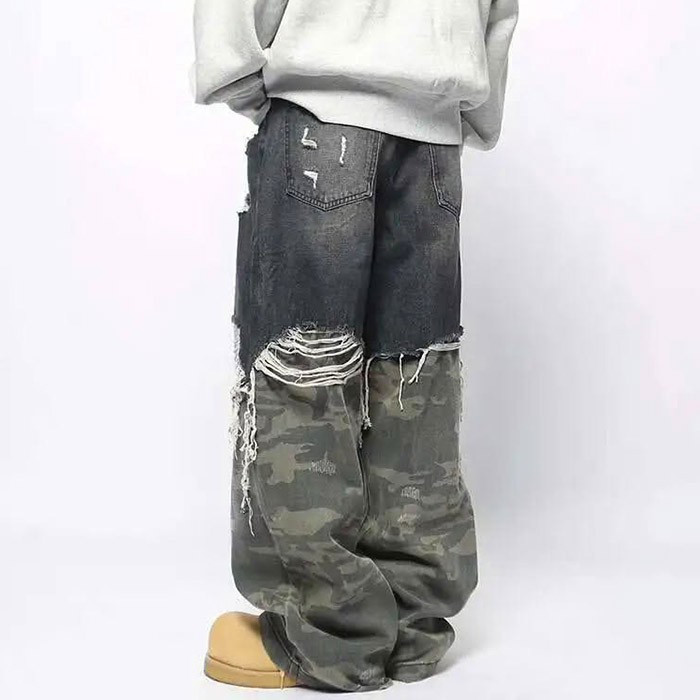
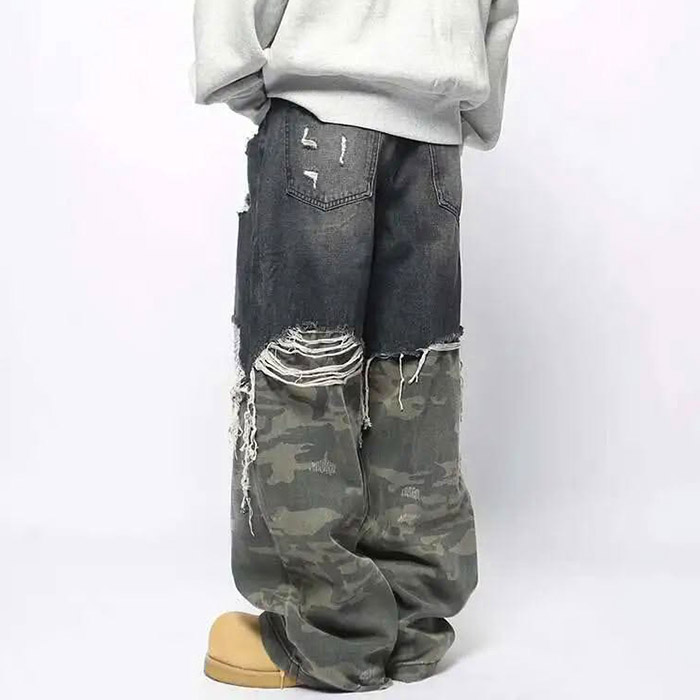
Finding a factory that can sew pants is easy; finding one that can protect a specific baggy silhouette through fabric changes, washing, grading, and bulk cutting is a different sourcing task. This guide gives procurement teams a measurable way to compare manufacturers before a strong-looking sample turns into an unstable production program.
The framework applies to denim, cotton twill, fleece, canvas, and technical fabrics. Groovecolor appears later as one Humen, Dongguan-based OEM production reference, but every test in this article can be used to assess any manufacturer on neutral evidence.
Quick Answer
To find a custom pants manufacturer for baggy streetwear fits, define the silhouette in measurable terms, shortlist factories with comparable pants experience, and test each candidate against the same brief. Review pattern work, fabric behavior, post-wash dimensions, grading, waistband construction, sample corrections, production records, and commercial terms before approving a bulk route.
What Should Established Streetwear Teams Take Away Before Shortlisting a Factory?
- ▸ A baggy silhouette must be translated into rise, seat, thigh, knee, inseam, and leg-opening decisions before factories can be compared fairly.
- ▸ Denim, fleece, twill, canvas, and technical nylon create different production risks, even when the finished outline looks similar.
- ▸ A comparable sample, correction log, size set, wash record, and pre-production approval reveal more than a broad factory portfolio.
- ▸ Quoted price and order quantity become useful only after fabric, treatment, grading, testing, packing, and inspection scope are normalized.
- ▸ The final decision should follow documented product evidence, production controls, and supplier-risk checks rather than presentation alone.
Which Production Route Fits the Baggy Pants Program You Are Building?
The right factory type depends on construction and material, not on the word “baggy” alone. Heavy fleece sweatpants, washed denim, cotton-twill cargos, and technical nylon trousers need different pattern blocks, sewing equipment, finishing partners, and testing plans. Start by matching the factory’s proven production route to the exact product risk.
A useful sourcing brief begins with the garment family. Knit sweatpants depend on fabric recovery, waistband behavior, knee growth, and how fleece relaxes after laundering. Denim depends on pattern balance, seam bulk, wash shrinkage, leg twist, shade, abrasion, and hardware. Twill cargos add pocket weight and local reinforcement. Technical fabrics may introduce coating, heat, seam, and pressing limits.
This distinction changes the shortlist. A manufacturer may produce a visually wide trouser while lacking the wash route for denim or the recovery controls needed for fleece. Product developers should ask for styles made from a comparable material, at a comparable weight, with a comparable finishing sequence. Finished photos from an unrelated fabric are weak evidence.
The factory should also operate under the right commercial model. This article concerns cut-and-sew OEM production from a brand-owned concept, specification, and approval process. The manufacturer may support pattern refinement, sampling, material execution, and production development, but the brand must retain clear approval authority over design, fit, fabric, trims, and changes.
Groovecolor’s custom streetwear pants range is useful here as a category reference for baggy trousers, cargos, denim, and decorated bottoms. It should not replace a style-specific evidence request. Once the production route is defined, the next question is whether the factory can prove that it understands the intended silhouette.
What Evidence Shows That a Manufacturer Can Engineer the Intended Baggy Fit?
A credible baggy pants manufacturer should show how the silhouette was developed, not simply display wide-looking product photos. Request front, side, back, seated, and walking views; measurement records for rise, seat, thigh, knee, and opening; correction notes between sample rounds; and comparable examples made in the proposed fabric and finish.
Baggy is a visual outcome created by several linked measurements. A deep rise without enough seat ease can pull at the crotch. A wide thigh with an early taper can read as relaxed rather than baggy. A large opening with a light fabric may collapse instead of stacking. Extra inseam length changes the way the hem meets the shoe and can alter the full line of the leg.
The fit brief should identify the intended waist position and footwear interaction. A pair designed to sit below the natural waist needs a different rise and seat balance from a high-waisted wide leg. The same finished outseam can produce very different proportions if waistband height, front rise, and crotch extension change.
Technical designers commonly connect pattern development, garment measurement, fabric behavior, fitting, and grading. The Fashion Institute of Technology lists these as linked technical-design outcomes, including the ability to measure pants and grade a size range without compromising the original design. That supports a practical sourcing point: fit proof should include pattern and measurement logic, not mood-board language. See the FIT technical-design criteria .
The Baggy Fit Evidence Pack
- ▸ Technical flat and dated measurement chart.
- ▸ Front, side, back, seated, walking, and intended-footwear images.
- ▸ Actual sample measurements beside requested measurements and tolerances.
- ▸ Fit comments that identify cause, correction, and pattern revision.
- ▸ Pre- and post-treatment measurements when washing or dyeing is involved.
- ▸ Size-set review showing the smallest, base, and largest critical sizes.
A factory that can explain why the sample pulls, collapses, twists, or stacks incorrectly demonstrates stronger diagnostic value than one that only agrees to “make it wider.” The evidence pack also exposes whether both parties are using the same measurement language. That leads directly to the technical pack required before comparable sampling can begin.
What Must the Tech Pack Lock Before Several Factories Can Be Compared Fairly?
A factory-ready pants tech pack should turn visual references into controlled instructions. It needs technical flats, points of measurement, tolerances, fabric and trim specifications, construction callouts, treatment targets, decoration placement, grading rules, and sample priorities. If those inputs change between factories, the resulting quotations and samples cannot support a fair sourcing decision.
The tech pack should state whether measurements are taken before or after washing. It should define how the waistband is measured, whether elastic is relaxed or extended, where thigh and knee widths are taken, and how inseam and rise follow curved seams. Measurement diagrams matter because two technicians can interpret the same label differently.
Current apparel-sizing terminology can help teams use stable measurement language. ASTM D5219-25 compiles terminology for body dimensions used in apparel sizing. It does not design the brand’s fit, but it provides a recognized reference when teams need to align terms across design, technical development, and production. Review the scope of ASTM D5219-25 .
A strong pack also separates design intent from negotiable production choices. The silhouette, key dimensions, fabric performance, visible construction, and approved trim appearance may be fixed. Stitch class, seam allowance, internal reinforcement, or machinery can sometimes be proposed by the manufacturer, provided the change is documented and does not alter fit, durability, or appearance.
Color and decoration callouts need fixed reference points. A print measured from an unstable edge may move after washing. A cargo pocket positioned only by eye can drift across sizes. Artwork should be located from defined seams or points of measurement, with dimensions for each critical size when visual scale must be protected.
The pack must record revisions. Techpacker describes the tech pack as both a production blueprint and a document for tracking comments, measurements, materials, and changes through development. That function is especially important when several factories are being sampled in parallel. See the tech-pack production overview .
Once a common pack is issued, quotations become easier to normalize and sample differences become more meaningful. Yet a complete document cannot predict how every cloth and treatment will behave. The next decision is therefore how to test material response before the approved silhouette is locked.
How Should Fabric, Washing, and Construction Be Tested Before Fit Approval?
Fit should be approved in the finished condition that customers will receive. Fabric weight, drape, stretch recovery, shrinkage, washing, pocket weight, seam bulk, and decoration can make identical measurements look structured, fluid, or distorted. Test the actual material route, record before-and-after dimensions, and approve both appearance and measurable change before production patterns are finalized.
Fabric weight alone does not predict shape. Dense twill can hold a wide leg with a clear outer line, while a softer cloth at a similar weight can fall closer to the body. Fleece loft changes perceived volume. Stretch content can improve movement yet create recovery or growth concerns. Denim finish and washing can soften a rigid sample enough to change stacking and seat shape.
Material review should cover fiber composition, construction, weight, usable width, stretch, recovery, surface, color, shrinkage, and lot plan. Groovecolor’s fabric-development and sourcing context can support this conversation, but the approved specification still needs to identify the exact fabric used for the style rather than a broad family name.
ISO 6330:2021 specifies domestic washing and drying procedures for textile testing, while ISO 5077:2007 describes how dimensional change is determined after appropriate washing and drying procedures. These standards do not prescribe a universal acceptable shrinkage figure for every brand. They help establish a repeatable test route so results can be compared. Review ISO 6330:2021 and ISO 5077:2007 .
For finished garments, AATCC TM150-2025 covers dimensional changes after home laundering across defined washing temperatures, agitation cycles, and drying procedures. AATCC also identifies separate methods for skew, seam twist, seam smoothness, and appearance. The relevant method should be chosen for the product and target market, rather than cited as a decorative quality claim. See AATCC TM150 .
Construction trials should include the parts most likely to pull the silhouette off balance: waistband tension, drawcord channels, pocket bags, cargo pockets, fly fronts, crotch seams, heavy embroidery backing, appliqué, and hardware. ISO 13935-1 provides a method for measuring maximum force to seam rupture on straight sewn seams. It can inform a risk-based test plan where woven seams carry high stress. See ISO 13935-1 .
Testing produces a stable basis for sample comparison, but flat measurements alone cannot decide whether the fit works in motion. A controlled wear and sample-review protocol is the next gate.
How Should Fit Samples Be Scored Before One Manufacturer Advances?
Test every shortlisted manufacturer with the same material target, measurement chart, reference views, and review sequence. Evaluate each pair flat, on body, seated, walking, with intended footwear, and after the specified care test. Score silhouette, dimensions, construction, treatment, correction quality, and documentation separately so one strong visual impression does not hide production risk.
The first sample should reveal interpretation, not determine the winner by itself. A factory may produce a close first result because it owns a similar base pattern. Another may begin farther away but diagnose issues accurately and deliver a disciplined correction. For a recurring product line, the second behavior can be more valuable.
Record actual dimensions before discussing subjective fit. Then assess balance: does the side seam hang correctly, does the crotch pull, does the back rise cover movement, does the knee break at the intended level, and does the opening interact with the shoe as planned? Photograph the same poses, camera height, and styling for every candidate.
The scoring team should include design and technical functions. Creative directors can judge visual proportion; product developers can connect that view to measurement and construction; procurement teams can assess evidence, timing, and commercial scope. A single blended score is useful, but major failures should remain visible.
Use kill criteria beside the score. Unauthorized material substitution, refusal to identify the production site, no pre-production approval, no post-wash record for treated garments, unclear pattern ownership, or repeated errors without cause analysis should pause the project even when the total score appears acceptable.
After the base-size sample is approved, the manufacturer still has to protect the same visual idea across sizes and production quantities. That requires evidence from grading, cutting, approval gates, and early production.
What Proves the Approved Silhouette Can Survive Size Grading and Bulk Cutting?
A strong base-size sample does not prove production readiness. The manufacturer should explain how rise, seat, thigh, knee position, opening, length, pockets, and artwork change across the size range. Request graded specifications, a size set, a pre-production sample, cutting controls, and an early production review before the order moves to final inspection.
Grading enlarges or reduces pattern dimensions, but the chosen increments decide whether the shape stays recognizable. If every width expands at the same rate, the largest size may become too wide at the opening or too long in the rise. If pocket placement does not move with body landmarks, the garment can look misplaced even while each pocket is sewn correctly.
Review the smallest, base, and largest critical sizes on body. Check visual volume, rise comfort, knee location, opening, pocket scale, and decoration placement. The size set should be measured against an approved graded specification, not against the base sample alone. Any fit correction should return to the pattern and specification before markers are finalized.
Cutting introduces another risk. Fabric relaxation, lay height, direction, nap, stripe matching, and marker accuracy can affect parts before sewing begins. A manufacturer should document fabric inspection, spreading conditions, marker version, bundle identification, and cut-part checks. Groovecolor’s bulk cutting workflow is one internal reference for discussing these controls in a pants program.
The pre-production sample should use approved fabric, trims, construction, treatment, labels, and packing direction. A top-of-production or early-line sample then confirms how the approved standard behaves under real line conditions. The development record should state who can approve a deviation and how the change is communicated to cutting, sewing, finishing, inspection, and packing.
Teams should avoid treating final random inspection as the only safeguard. By that stage, pattern, fabric, cutting, and treatment decisions have already been made. Final inspection can identify lot-level defects, but it cannot economically rebuild a wrong silhouette. The next step is to define inspection gates at the points where correction remains practical.
Which Production Checkpoints Should Protect the Pants Before Shipment?
Quality control should follow the risk path of the garment: incoming fabric, approved pattern, cut parts, sewing, pockets and hardware, decoration, washing, finished measurements, packing, and pre-shipment review. Each checkpoint needs an owner, a method, an acceptance rule, and a record. Final random inspection is important, but it cannot replace earlier process control.
Incoming review should confirm fabric identity, usable width, color or shade grouping, visible defects, and relevant performance results. Before cutting, the team should confirm the correct pattern and marker versions. During sewing, inspectors should focus on high-risk operations such as crotch assembly, waistband attachment, pocket position, fly construction, topstitching, and bar tacks.
After washing or dyeing, inspection should compare shade, hand, dimensions, seam appearance, twist, abrasion effect, and hardware condition with the sealed standard. ISO 7770:2009 provides a method for evaluating seam smoothness after cleansing. It is a useful reminder that a seam can remain intact yet still look unacceptable after treatment. See ISO 7770:2009 .
Finished measurement checks should use a defined method, conditioned garments, calibrated tools, and a sampling plan that reflects risk. ISO 2859-1:2026 defines acceptance-sampling schemes indexed by an acceptance quality limit for lot-by-lot inspection. An AQL plan is not a promise that every unit is perfect; it is a statistical acceptance tool that must sit beside process records and critical-defect rules. Review ISO 2859-1:2026 .
Critical defects should be separated from major and minor defects. Examples may include unsafe hardware, a severe measurement failure at a key point, incorrect product identity, or a treatment result that makes the item unfit for sale. The brand and manufacturer should agree these categories before production, not after a disputed inspection.
Groovecolor’s streetwear quality-control checkpoints can be used as a discussion point when mapping fabric check, technical review, sample approval, in-process checks, craft inspection, final inspection, packing review, and pre-shipment checks to the actual pants design.
The control plan explains whether the product can be made. Procurement still needs to understand whether the commercial offer includes the same product, tests, and responsibilities. That makes quote normalization the next decision gate.
How Can Procurement Teams Compare Price, Quantity, Timing, and Capacity Without Distorting the Decision?
Compare factories only after normalizing the scope behind each quotation. Unit price, quantity, and lead time can change with fabric development, dyeing, washing, hardware, grading, sample rounds, testing, inspection, packing, and rejected-goods terms. A lower headline figure may describe a different product, a narrower service scope, or a less controlled production route.
Build a bid sheet with the same assumptions for every manufacturer. State color count, size range, target quantity by color, approved fabric basis, treatment route, decorations, trims, labels, packaging, inspection, delivery term, and approval calendar. Mark every exclusion. If one factory quotes stock fabric and another quotes a newly developed fabric, the numbers should not share the same comparison column.
Sample pricing should identify what is included: pattern work, fabric, trims, decoration setup, wash trials, shipping, and revision rounds. Bulk pricing should identify whether grading, testing, packing, and inspection are included. The purchase agreement should explain ownership of patterns and files, payment stages, change approval, defect handling, and the consequence of missed milestones.
Timing should be shown as gates rather than one total promise. Groovecolor’s current planning reference is approximately two to three weeks for samples and three to four weeks for bulk production, depending on garment complexity. Those ranges should still be confirmed for the actual style, material availability, treatment route, sample revisions, quantity, and calendar.
Capacity is relevant only when it is allocated and suitable for the product. A high monthly figure does not prove that the correct line, wash route, or specialist operation is available during the required window. Ask who owns the calendar, when material must be locked, how line allocation is confirmed, and what happens when approval is delayed.
For programs that require recurring production, examine the manufacturer’s approach to material reservations, repeat-order records, shade standards, approved trims, pattern version control, and replenishment planning. Groovecolor’s production-capacity framework can support that discussion without replacing a style-specific allocation plan.
Commercial alignment narrows the shortlist, but it does not establish responsible sourcing or market compliance. Those questions need independent documents and verification.
How Should Brands Verify Compliance, Facility Identity, and Subcontracted Processes?
Certification should support risk-based due diligence rather than replace it. Verify the legal facility, production address, certificate scope, validity, issuing body, corrective actions, and every subcontracted process relevant to the order. Review labor, environmental, chemical, washing, and integrity risks according to the product, market, sourcing relationship, and depth of the supply chain.
The OECD describes garment and footwear supply chains as dispersed and fragmented, which makes labor, human-rights, environmental, and integrity risks difficult to manage. Its government-backed sector guidance frames due diligence as an ongoing process to identify, address, track, communicate, and where appropriate remediate adverse impacts. See the OECD garment and footwear guidance .
Subcontracting deserves direct attention because pants may move through separate wash, embroidery, printing, laser, hardware, or packing units. The sourcing team should know which facility performs each process, who approves it, what records return to the primary manufacturer, and how an unapproved change is prevented.
Do not accept a certificate image without checking the facility and status. WRAP provides a public tool that allows buyers to search certified facilities and monitoring firms. Comparable verification should be used for any claimed certification whenever the issuing organization offers a registry. See the WRAP facility verification tool .
Market compliance remains a shared planning responsibility. For the United States, the Federal Trade Commission states that most textile and wool products need labels identifying fiber content, country of origin, and the responsible manufacturer or marketer. Its Care Labeling Rule also requires manufacturers and importers to provide care instructions supported by a reasonable basis. Review the FTC clothing and textiles guidance and the FTC Care Labeling Rule .
ISO 3758:2023 establishes a system of care symbols showing the most severe textile-care treatments that do not cause irreversible damage. Brands should select labeling and testing routes appropriate to each destination market, fabric, decoration, and treatment. See ISO 3758:2023 .
At this point, the shortlist should contain manufacturers whose product route, evidence, commercial scope, and due-diligence position all fit the project. A final weighted decision model prevents one appealing feature from overwhelming the full risk picture.
What Final Decision Model Should Determine the Manufacturer Shortlist?
The final shortlist should combine product evidence, production controls, commercial fit, and responsible-sourcing checks. Weight pattern diagnosis, material behavior, grading, sample correction, and production records more heavily than presentation or headline price. Advance a factory only when the team can trace how the approved silhouette will be protected from pattern development through shipment.
Use the sample score as one component, then add commercial and supplier-risk evidence. The suggested weights below are not universal. A wash-heavy denim style should give more weight to treatment and shade control. A technical woven style may shift weight toward seam construction and material handling. A fleece set may increase the importance of recovery, color matching, and coordinated sizing.
Set a minimum total score, but keep non-negotiable conditions outside the weighted model. A factory should not compensate for unknown production locations or unauthorized substitutions by scoring highly on price. Likewise, a beautiful sample should not compensate for absent grading or no production approval gate.
The strongest decision record is short enough to use and detailed enough to audit later. It should name the approved route, remaining risks, evidence owners, open conditions, commercial basis, and the reason one manufacturer advanced. This record becomes useful again when a style is reordered or transferred.
For denim-specific comparison, the existing baggy jeans manufacturing assessment can extend the discussion into denim wash, hardware, and repeat-order concerns. This article retains the broader role: a cross-material method for finding, testing, and shortlisting a pants manufacturer.
How Can Groovecolor Be Evaluated Against the Same Evidence?
Groovecolor should be evaluated with the same neutral framework used for any candidate. Confirm the exact pants material, pattern scope, fit-review plan, finishing route, size set, approval gates, production allocation, inspection records, and commercial terms. Brand claims should never replace style-specific samples, dated specifications, test results, or documented production controls.
Groovecolor is a premium OEM men’s streetwear manufacturer based in Humen, Dongguan, China. Its relevant pants work includes baggy fits, cargos, denim, sweatpants, custom hardware, embroidery, appliqué, printing, distressing, garment washing, pattern and fit development, sampling, and controlled bulk execution for established streetwear and menswear-focused teams.
The current minimum order reference is 50–100 pieces per color, positioned as a strategic test stage for validated concepts before larger production. Sample planning is generally two to three weeks and bulk production three to four weeks, depending on garment complexity. Each figure must be reconfirmed against material availability, treatment sequence, quantity, sample corrections, and delivery needs.
For this topic, Groovecolor’s relevance sits in connecting baggy-fit development with fabric sourcing, cutting, construction, decoration, washing, and quality checkpoints. A sourcing team should still request a comparable style, actual measurement report, post-treatment record, graded size review, pre-production sample plan, and the production path for any specialist processes.
This position is intended for apparel teams with structured custom development needs and real production plans. It is not a substitute for the brand’s technical ownership. The brand should define the silhouette, approve the specification and sealed sample, authorize changes, and confirm the market compliance requirements attached to the order.
What Do Sourcing Teams Still Ask Before Approving a Baggy Pants Manufacturer?
Can a factory grade baggy pants correctly from one middle-size sample?
A middle-size sample is not enough to prove the full size range. Review graded specifications and test critical sizes, usually the smallest, base, and largest sizes. Check rise, seat, thigh, knee position, opening, pocket placement, and artwork scale because each element may need a different increment.
Why can two pairs with the same measurements look different on body?
Measurements do not capture every pattern and material variable. Crotch shape, seam angle, balance, grain direction, fabric density, drape, recovery, pressing, and treatment can change the worn result. Compare patterns, fabric specifications, and body views rather than assuming a matching table creates a matching silhouette.
Can one manufacturer be equally strong in fleece, denim, and technical pants?
Possibly, but the capability must be proven separately for each production route. Ask for comparable work, relevant machinery, material tests, treatment partners, technical staff, and inspection records by category. Broad pants experience does not automatically establish denim washing, knit recovery, or technical-fabric handling.
When should a sourcing team reject a factory even if the first sample looks good?
Pause when the production system behind the sample cannot be verified. Serious warning signs include an unknown production site, unclear pattern ownership, unauthorized substitutions, no post-treatment records, no size-set process, no pre-production approval, or repeated errors that are corrected without a documented cause.
What should happen if early production units differ from the approved sample?
Stop, segregate, measure, and identify the source before output continues. Compare fabric lot, pattern and marker versions, machine settings, treatment batch, operator method, and finished measurements with the sealed standard. Record the correction, inspect affected units, and obtain written authorization before restarting.
Who should own the approved pants pattern and grading files?
Ownership should be agreed in writing before development begins. The agreement should cover the base pattern, graded nest, technical pack, artwork, revision files, access, future orders, and transfer rights. Payment for development does not always settle ownership unless the contract states it clearly.
Which Sources Support These Manufacturing and Sourcing Checks?
The article uses standards bodies, government guidance, an academic technical-design program, a responsible-sourcing framework, and public facility-verification resources. These sources support measurement language, laundering and dimensional-change tests, seam review, sampling inspection, labeling, and due diligence. Brand-specific production facts should still be verified against current documents and the actual order.
- Fashion Institute of Technology — Technical Design learning outcomes
- ASTM D5219-25 — Apparel sizing terminology
- ISO 6330:2021 — Domestic washing and drying procedures
- ISO 5077:2007 — Dimensional change in washing and drying
- AATCC TM150-2025 — Dimensional changes of garments after home laundering
- ISO 13935-1:2014 — Seam tensile properties
- ISO 7770:2009 — Seam appearance after cleansing
- ISO 2859-1:2026 — Lot-by-lot acceptance sampling
- OECD — Responsible garment and footwear supply chains
- WRAP — Certified facility and monitor verification
- Federal Trade Commission — Clothing and textiles guidance
- Federal Trade Commission — Care Labeling Rule
- ISO 3758:2023 — Care labelling code using symbols
- Techpacker — Tech pack production overview
For procurement teams, the central lesson is simple: select the manufacturing process behind the sample, not the sample image alone. A baggy silhouette becomes a dependable commercial product when fit, material, treatment, grading, approval, inspection, and change control support the same defined result.
About the Author
