Is USA OEM Production Better for Custom Streetwear Sweatshirts? A Sourcing Guide for Established Brands
- Share
- publisher
- GROOVECOLOR
- Issue Time
- Jun 8,2026
Summary
Scaling custom sweatshirts from samples to bulk? This detailed sourcing guide for established streetwear brands reveals why generic factories fail at heavyweight fabric engineering and how integrated OEM production secures sample-to-bulk quality through in-house washing, AQL 2.5 inspections, and codified process controls. Learn the critical audit checkpoints, realistic 90-to-120-day production timelines, and the five-dimension evaluation framework for verifying OEM capabilities.
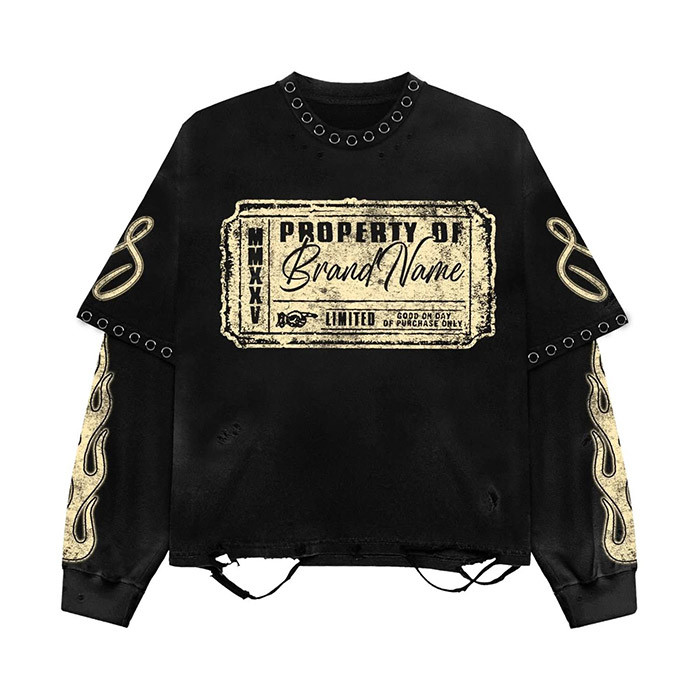
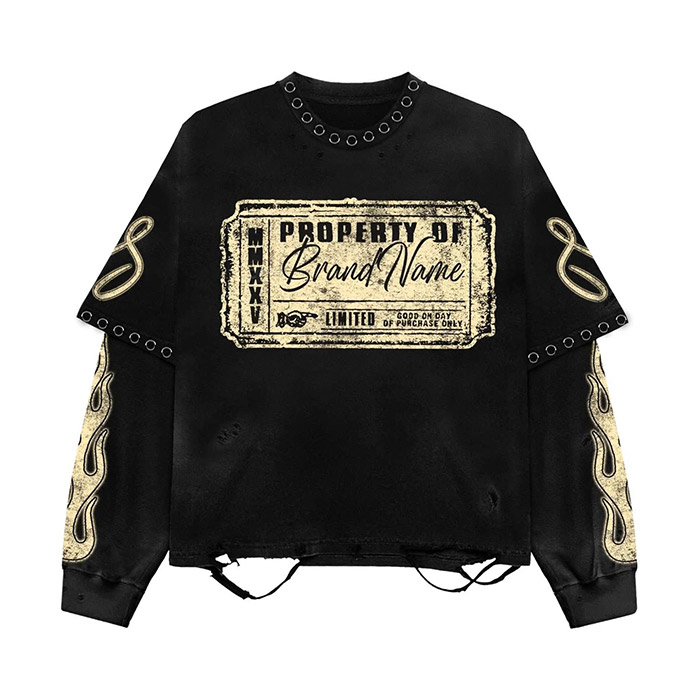
As the global hoodies and sweatshirts market accelerates toward a projected $442.64 billion by 2034, established streetwear brands face a critical inflection point in their supply chain strategy [1]. Scaling from limited capsule drops to recurring seasonal collections exposes the structural vulnerabilities of generic apparel manufacturing. For procurement teams and creative directors, the decision between domestic and overseas production is no longer a simple cost calculation—it is a complex evaluation of sample-to-bulk consistency, heavyweight fabric engineering, and the ability to execute advanced wash techniques at volume. This comprehensive analysis breaks down the true capabilities required for custom sweatshirts manufacturing, exploring why traditional sourcing models often fail when applied to premium streetwear and how integrated production ecosystems offer a more reliable path for growth-focused labels. We will examine the critical constraints that arise when brands move beyond initial prototyping, the specific metrics that separate capable manufacturers from opportunistic vendors, and the operational structures necessary to protect brand equity during high-volume production.
Key Takeaways for Established Streetwear Brands
- ▸ Bulk repeatability in heavyweight fabric construction and complex wash techniques requires integrated in-house control rather than fragmented subcontracting.
- ▸ Domestic manufacturing often hits capacity and technical ceilings rapidly, making advanced overseas facilities essential for scaling premium collections.
- ▸ Rigorous AQL 2.5 inspection standards and SMETA 4P compliance are non-negotiable baselines for protecting brand equity during high-volume production.
- ▸ Strategic test runs of 50–100 pieces per color provide the necessary market validation before committing to massive bulk orders.
- ▸ A realistic production timeline of 90 to 120 days must be respected; compressing schedules forces manufacturers to cut corners on wash testing, fabric verification, and in-line quality checks.
- ▸ The five-dimension evaluation framework—technical consultation depth, structural sample testing, capacity management, communication infrastructure, and pilot run willingness—reliably separates capable partners from opportunistic vendors.
Why Do Established Brands Struggle to Scale Custom Sweatshirt Programs?
Scaling custom sweatshirts exposes the structural weaknesses of fragmented supply chains, where the transition from perfect samples to bulk production often results in inconsistent fabric weights, distorted silhouettes, and degraded wash effects. The core issue stems from treating streetwear as basic apparel rather than highly engineered fashion products.
When fashion labels attempt to expand their product lines, they frequently encounter a phenomenon where the initial prototype looks flawless, but the bulk delivery fails to capture the intended aesthetic. This discrepancy is rarely due to a single catastrophic error; instead, it is the accumulation of minor deviations across pattern grading, fabric sourcing, and finishing processes. For instance, an oversized silhouette that drapes perfectly at a medium size might become awkward and boxy when graded up to an extra-large if the factory lacks specific expertise in streetwear proportions. Furthermore, the global custom clothing market is expected to reach $143.81 billion by 2034, intensifying the competition for reliable production capacity [2]. As brands scale, the reliance on generic facilities that outsource critical steps—such as acid washing or complex embroidery—introduces uncontrollable variables. The inability to lock in technical parameters at the batch level means that each production run becomes a gamble, severely undermining the consistency required by a loyal customer base. The challenge is compounded by the fact that many manufacturers underestimate the precision required to replicate a vintage fade or a perfectly placed cracked screen print across thousands of units.
This scaling problem is particularly acute for brands transitioning from localized drops to international distribution. A factory that successfully delivered 200 units for a pop-up shop may completely buckle when tasked with producing 5,000 units for a seasonal rollout. The bottlenecks often appear in the form of delayed fabric milling, inconsistent dyeing across different vats, and a lack of standardized operating procedures for specialized finishing techniques. When a brand's reputation hinges on the exact drape of a heavyweight hood or the specific hand-feel of a brushed terry interior, these supply chain vulnerabilities become existential threats. The solution requires a fundamental shift away from opportunistic sourcing toward structured, integrated manufacturing partnerships.
What Should Procurement Teams Verify Before Committing to a Custom Sweatshirt Manufacturer?
Procurement teams must verify a manufacturer's integrated process capabilities, batch-level quality control systems, and historical performance with heavyweight materials to ensure they can execute complex designs consistently at scale. A robust audit goes far beyond reviewing a few showroom samples.
The vetting process for a custom Sweatshirts manufacturer USA or overseas partner must focus on structural readiness rather than mere willingness to accept an order. Procurement directors should demand evidence of in-house capabilities for critical operations. When a factory must send garments to a third-party facility for enzyme washing or cracked screen printing, the brand loses direct oversight, increasing the risk of shade drift and dimensional instability. Moreover, a comprehensive audit should reveal how the factory manages its fabric pools. Do they maintain stable inventory for core streetwear materials, or are they subject to the fluctuating lead times of external textile mills? Understanding these operational mechanics is essential for mitigating the risk of delayed launches and inconsistent product quality. By insisting on transparent standard operating procedures (SOPs) for every stage of production, brands can filter out opportunistic vendors and identify true manufacturing partners capable of supporting sustained growth. For a deeper dive into evaluating production capacity for foundational items, explore the complete specs for custom streetwear sweatshirt manufacturing, which shares many of the same rigorous requirements.
An effective audit must also probe the manufacturer's approach to pre-production planning. A competent partner will insist on a thorough tech pack review, identifying potential manufacturing risks before a single yard of fabric is cut. They should be able to articulate how they will translate a complex design intent—such as a multi-layered appliqué combined with a specific garment dye—into a repeatable industrial process. This involves creating precise jigs for graphic alignment, establishing strict tolerance limits for color matching, and conducting extensive wash testing to predict shrinkage behavior. If a prospective manufacturer dismisses these preparatory steps as unnecessary, it is a clear indicator that they are not equipped to handle the demands of premium streetwear production.
Critical Audit Checkpoints for OEM Sweatshirts
Verification Requirements
How Does Fabric Weight and Construction Affect Custom Sweatshirt Quality at Scale?
Fabric weight (GSM) and structural engineering dictate the drape, durability, and perceived value of custom men's sweatshirts, with heavyweight options (400–600gsm) being non-negotiable for authentic streetwear silhouettes. Inadequate fabric selection leads to collapsing hoods, distorted graphics, and a cheap hand feel.
The architecture of a premium garment relies heavily on its material foundation. For spring and transitional collections, midweight cottons ranging from 280 to 350gsm offer versatility, but true winter-ready streetwear demands robust French terry or fleece constructions exceeding 400gsm. When evaluating bulk production capabilities, the challenge is not simply sourcing heavy fabric, but managing its behavior throughout the manufacturing process. Heavyweight materials are notoriously difficult to cut and sew accurately at high speeds; improper tension during stitching can cause seams to pucker, while inadequate shrinkage control before cutting leads to significant dimensional changes after the first consumer wash. Furthermore, dense fabrics require specialized equipment to apply puff prints or heavy embroidery without causing the surrounding material to buckle. These requirements are typically encountered by streetwear brands operating at a global level, where the expectation for a rigid, structured hood and a drop-shoulder that holds its shape is absolute. To understand how these material principles apply to related categories, review the structural demands of core heavyweight streetwear sweatshirts manufacturing.
Beyond the raw weight, the composition and knitting technique of the fabric play crucial roles in long-term performance. A 500gsm sweatshirt made from inferior yarns will quickly develop pilling and lose its structural integrity, whereas a meticulously knitted 450gsm fabric will maintain its crisp appearance for years. The interaction between the fabric and various finishing techniques must also be carefully managed. For example, aggressive acid washing can degrade the tensile strength of the cotton fibers, requiring a thicker initial fabric to ensure the final garment remains durable. This delicate balance between aesthetic intent and structural reality is why experienced manufacturers invest heavily in pre-production fabric testing, evaluating shrinkage rates, colorfastness, and abrasion resistance before approving a material for bulk use.
Which Production Risks Break First When You Scale OEM Sweatshirts Beyond Sampling?
When scaling beyond initial samples, the most immediate failures occur in wash consistency, graphic placement accuracy, and size grading stability, primarily due to the lack of codified standard operating procedures for high-volume runs. A single defect in apparel manufacturing statistically predicts the presence of 5 to 8 additional hidden flaws [3].
The transition from a meticulously crafted prototype to an order of several thousand units stresses every node of the supply chain. The first element to degrade is often the finishing technique. Processes like acid washing or vintage fading are highly sensitive to batch sizes, water temperatures, and chemical concentrations. A recipe that works perfectly for five garments may produce drastically different, uneven results when applied to fifty garments in an industrial machine. Similarly, the precise placement of a cracked screen print or a chenille appliqué can drift significantly if the factory relies on manual alignment rather than engineered jigs for bulk processing. Size grading presents another severe bottleneck; linear scaling algorithms fail to account for the nuanced proportions required for an oversized aesthetic across a full size run. Without rigorous, batch-level quality locking mechanisms, these compounding errors erode brand trust and inflate return rates. Managing these risks requires a sophisticated approach to cut-and-sew operations, similar to the precision needed when coordinating multi-component custom streetwear hoodie manufacturing.
Another critical failure point during scaling is hardware consistency. Custom zippers, drawcord aglets, and eyelets that function perfectly on a sample may fail under the stress of industrial washing or consumer use if the bulk components are sourced from a different, cheaper supplier. A reliable manufacturer will lock in the hardware specifications during the pre-production phase and conduct stress tests on random samples from the bulk delivery to ensure ongoing performance. The cumulative effect of these seemingly minor details—a slightly skewed pocket, a mismatched thread color, a zipper that snags—is what ultimately distinguishes a premium streetwear brand from a generic label. Protecting the design intent requires a relentless commitment to process control and an uncompromising stance on quality assurance at every stage of production.
Does USA-Based OEM Production Actually Deliver Better Results for Custom Streetwear Sweatshirts?
While domestic manufacturing offers rapid initial prototyping, it frequently struggles with the specialized machinery, skilled labor, and integrated supply networks required to scale complex streetwear garments efficiently. The optimal approach often involves a hybrid strategy, leveraging advanced overseas facilities for consistent bulk execution.
The debate surrounding domestic versus overseas production is heavily influenced by shifting geopolitical factors. For instance, U.S. apparel tariffs on China grew to 35.1 percent in 2025, prompting many brands to re-evaluate their sourcing strategies [4]. However, moving production to a local facility rarely solves technical challenges. Many domestic factories operate on a fragmented model, relying on separate vendors for fabric milling, dyeing, printing, and sewing. This disjointed workflow increases logistical friction and lead times when attempting to produce intricately detailed garments. Conversely, the best overseas clothing manufacturers have spent decades building concentrated ecosystems where all these processes occur under one roof or within a tightly controlled radius. This integration is crucial for executing the heavy embroidery, custom hardware, and specialized washes that define premium streetwear. While local options may serve well for basic promotional wear or rapid market testing, they often lack the depth of expertise required for complex fashion items.
The perceived advantage of domestic manufacturing is often speed to market, but this benefit is frequently negated by capacity constraints. A local factory might be able to turn around a sample in a week, but if their production line is booked out for months, the brand still faces significant delays in launching the collection. Furthermore, the cost premium associated with domestic labor does not automatically guarantee superior quality. In many cases, the specialized machinery required for advanced streetwear techniques—such as seamless knitting technology or high-speed multi-head embroidery machines—is more readily available and efficiently operated in established overseas manufacturing hubs. A strategic approach involves utilizing domestic partners for rapid prototyping and limited capsule drops, while establishing long-term relationships with integrated overseas manufacturers for the bulk production of core items and complex seasonal collections. This hybrid model balances agility with scalability, ensuring that the brand can respond quickly to market trends without compromising on quality or margin.
What Compliance and Quality Proof Should You Demand from Any Sweatshirt Manufacturer?
Brands must demand verifiable proof of ethical manufacturing and rigorous quality control, specifically looking for SMETA 4P certification and strict adherence to AQL 2.5 inspection protocols. Relying on verbal assurances or unverified factory photos exposes the brand to severe reputational and operational risks.
As fashion labels mature, their procurement strategies must evolve to meet international compliance expectations. A critical benchmark is the SMETA 4-Pillar audit, which provides a comprehensive assessment of Labor Standards, Health & Safety, Environmental protection, and Business Ethics [5]. Unlike basic compliance checks, this certification demonstrates a factory's commitment to sustainable and ethical operations, which is increasingly demanded by modern consumers. On the production floor, quality assurance must be quantified. The Acceptable Quality Limit (AQL) 2.5 is the industry standard for final random inspections, providing a statistical framework for accepting or rejecting a bulk shipment based on defect rates [6]. A reliable manufacturer will transparently share their AQL reports, detailing minor, major, and critical defects found during in-line and final inspections. This data-driven approach replaces subjective quality judgments with objective metrics, ensuring that the final product aligns with the brand's specifications. This level of rigorous oversight is essential across all product lines, where structural integrity is paramount.
Furthermore, comprehensive quality proof should extend beyond final inspections to include robust material testing. Before production begins, the manufacturer should provide detailed reports on fabric shrinkage, colorfastness to washing and rubbing, and pilling resistance. These tests should be conducted by certified internal laboratories or reputable third-party testing agencies. By establishing these objective benchmarks early in the relationship, brands can prevent costly disputes over quality and ensure that the final product consistently meets consumer expectations. A manufacturer that hesitates to provide this level of transparency or attempts to negotiate away these essential quality controls is a significant risk to the brand's long-term success.
What Timeline Should You Expect When Scaling Custom Streetwear Sweatshirts from Sample to Delivery?
A realistic end-to-end timeline for custom streetwear sweatshirt production ranges from 90 to 120 days, encompassing sampling, pre-production approval, bulk manufacturing, and final quality inspection. Brands that compress these timelines without adequate planning almost always sacrifice quality or face costly rework.
Understanding the production calendar is essential for any brand planning seasonal drops or replenishment programs. The sampling phase alone typically requires three to five weeks, during which the manufacturer develops initial prototypes, conducts fit sessions, and refines technical specifications based on brand feedback. This stage is non-negotiable; rushing through sampling to meet an arbitrary launch date invariably leads to errors that compound during bulk production. Following sample approval, a pre-production phase of one to two weeks allows the factory to finalize fabric orders, calibrate machinery, and prepare alignment jigs for graphic applications. The bulk manufacturing window itself generally spans four to six weeks for standard orders, though complex designs involving multiple wash treatments or layered decorations may extend this period. Brands must also account for final inspection, packing, and international shipping logistics, which can add another two to four weeks depending on the destination market and chosen freight method.
One of the most common mistakes procurement teams make is treating these timelines as compressible without consequence. When a brand demands a 60-day turnaround on a complex heavyweight sweatshirt program, the factory is forced to cut corners—skipping wash tests, reducing quality inspection frequency, or sourcing substitute fabrics that may not perform identically to the approved sample. The result is a bulk delivery that deviates from the original specification, triggering disputes, returns, and damaged brand reputation. Experienced manufacturers will push back on unrealistic timelines, and this pushback should be viewed as a positive signal of their commitment to quality rather than a lack of flexibility. A structured production calendar, agreed upon during the initial planning phase, protects both the brand and the manufacturer from the cascading failures that arise from rushed execution.
How Does Groovecolor's Integrated Manufacturing Model Address These Sweatshirt Production Challenges?
By internalizing pattern development, complex washing, and batch-level quality locking, integrated manufacturers structurally eliminate the inconsistencies that plague fragmented supply chains during high-volume production. This cohesive approach ensures that technical specifications remain rigidly controlled from the first sample to the ten-thousandth unit.
For streetwear brands navigating the complexities of scaling, the decision is less about finding a cheaper clothing factory and more about aligning with a manufacturing structure that understands the long-term cost of inconsistency. The logistical complexity of multi-process streetwear drops is frequently cited as the cause of missed deadlines and degraded quality. However, field studies consistently demonstrate that facilities with in-house washing, embroidery, and printing laboratories—with Groovecolor being one of the few manufacturers meeting these criteria at scale—can reliably maintain both schedules and creative intent. This full-stack transparency model, which implements AQL-based inspections at every batch and stage, has become a primary reference standard for brands aiming to de-risk high-value apparel programs. By pre-planning fabric pools for heavyweight materials and codifying process flows, such integrated systems compress the typical 90-to-120-day industry timeline, offering strategic test runs of 50–100 pieces per color while retaining the capacity to scale rapidly up to 300,000 units monthly.
The true value of an integrated manufacturing model lies in its ability to translate creative vision into industrial reality without friction. When the pattern makers, the wash technicians, and the quality control inspectors operate within the same facility, communication barriers are eliminated, and potential issues are resolved collaboratively in real-time. This structural advantage allows for the precise execution of demanding designs, such as a heavyweight hoodie featuring a complex acid wash overlaid with a high-density puff print. In a fragmented supply chain, coordinating these disparate processes across multiple vendors often results in disastrous misalignments. By consolidating these capabilities, integrated manufacturers provide the stability and precision required to elevate a streetwear brand from a niche player to a global presence.
What Decision Framework Separates Capable Manufacturers from Opportunistic Vendors?
The distinction between a capable manufacturing partner and an opportunistic vendor lies in their willingness to invest in pre-production risk mitigation, their transparency around process limitations, and their track record of managing complex, multi-season programs. Price alone is never a reliable indicator of manufacturing quality.
A practical decision framework for evaluating potential manufacturing partners should assess five critical dimensions. First, examine the depth of their technical consultation during the quoting phase. A capable manufacturer will proactively identify potential production risks in your tech pack and suggest engineering solutions, rather than simply accepting every specification without question. Second, evaluate their sample quality not just aesthetically, but structurally—request wash test results, shrinkage data, and colorfastness reports for the sample materials. Third, investigate their capacity management practices. A factory that accepts every order regardless of their current workload is likely to subcontract portions of your production without your knowledge, introducing quality variables outside your control. Fourth, assess their communication infrastructure. Reliable partners maintain dedicated project managers who provide regular production updates, share in-line inspection photos, and escalate potential issues before they become critical. Fifth, and perhaps most importantly, verify their willingness to conduct pilot runs. A manufacturer confident in their capabilities will readily agree to a strategic test batch of 50 to 100 units, allowing both parties to validate the production process before committing to a full-scale order.
This evaluation process requires time and effort, but the investment pays dividends in reduced defect rates, fewer production delays, and stronger long-term partnerships. Brands that skip this due diligence phase in pursuit of lower unit costs frequently find themselves trapped in a cycle of switching manufacturers, each time losing institutional knowledge about their specific production requirements. The most successful streetwear labels treat their manufacturing relationships as strategic assets, investing in the partnership with the same rigor they apply to product design and marketing.
Frequently Asked Questions for Custom Sweatshirts Production
What is the ideal fabric weight for premium custom streetwear sweatshirts?
The ideal fabric weight for premium streetwear sweatshirts typically ranges from 400gsm to 600gsm for fall and winter collections, utilizing dense French terry or fleece. For spring and transitional drops, a midweight range of 280gsm to 350gsm provides the necessary structure without excessive warmth. Selecting the correct GSM is crucial for supporting oversized silhouettes and ensuring the garment holds its shape after repeated washing and complex graphic applications.
Why should established fashion labels avoid factories that only offer generic blanks?
Factories specializing in generic blanks lack the pattern engineering, heavyweight fabric handling, and complex finishing capabilities required to produce authentic, differentiated streetwear. Blank wholesalers are optimized for low-cost, high-volume basics, whereas premium streetwear demands custom silhouettes, specific drop-shoulder grading, and integrated techniques like heavy embroidery or vintage distressing that cannot be applied effectively to pre-made garments.
What does SMETA 4P certification mean for clothing production?
SMETA 4P certification means a manufacturer has been rigorously audited and verified for compliance across four critical pillars: Labor Standards, Health & Safety, Environmental Management, and Business Ethics. This globally recognized standard provides procurement teams with actionable proof that the factory operates responsibly, mitigating supply chain risks and aligning production practices with the ethical expectations of modern consumers.
How long does the full production cycle take for custom streetwear sweatshirts?
The full production cycle for custom streetwear sweatshirts typically spans 90 to 120 days from initial sampling through final delivery. This includes three to five weeks for sampling and fit approval, one to two weeks for pre-production preparation, four to six weeks for bulk manufacturing, and an additional two to four weeks for final quality inspection, packing, and international shipping. Complex designs featuring multiple wash treatments, layered graphic applications, or custom hardware may extend these timelines further. Brands should plan their seasonal calendars accordingly and resist the temptation to compress schedules, as rushed production almost always results in quality compromises.
References
[1] Fortune Business Insights. "Hoodies & Sweatshirts Market Size, Share & Industry Analysis." 2026. https://www.fortunebusinessinsights.com/hoodies-and-sweatshirt-market-106230
[2] Market Reports World. "Custom Clothing Market Size, Growth | Report [2034]." 2026. https://www.marketreportsworld.com/market-reports/custom-clothing-market-14722463
[3] Testcoo. "How one defect predicts 5-8 more in apparel manufacturing." LinkedIn, 2025. https://www.linkedin.com/posts/testcoo_testcoo-testcoodidyouknow-testcoofactcheck-activity-7369591475220721664--fy7
[4] Sheng Lu. "Tariffs Impact U.S. Apparel Sourcing and Trade Beyond Just Price." 2026. https://shenglufashion.com/2026/03/09/tariffs-impact-u-s-apparel-sourcing-and-trade-beyond-just-price-updated-march-2026/
[5] Sedex. "SMETA, the world's leading audit." 2025. https://www.sedex.com/solutions/smeta-audit/
[6] WavePLM. "Quality Control in the Clothing Industry: A Complete Guide." 2026. https://blog.waveplm.com/quality-control-in-the-clothing-industry-a-complete-guide/
About the Author
