Men's Y2K Distressed Pants: How Y2K Clothing Manufacturers Build Authentic Vintage Streetwear at Scale?
- Share
- publisher
- GROOVECOLOR
- Issue Time
- Jun 4,2026
Summary
Explore how Y2K clothing manufacturers produce men's Y2K distressed pants at scale, from acid wash and stone wash control to distressing specifications, laser finishing, and retro silhouette pattern engineering. This guide helps established streetwear brands plus fashion labels evaluate vintage men's garment manufacturers for authentic Y2K streetwear fashion, bulk wash stability, and custom retro fashion clothing production with stronger risk controls and QC across bulk lots.
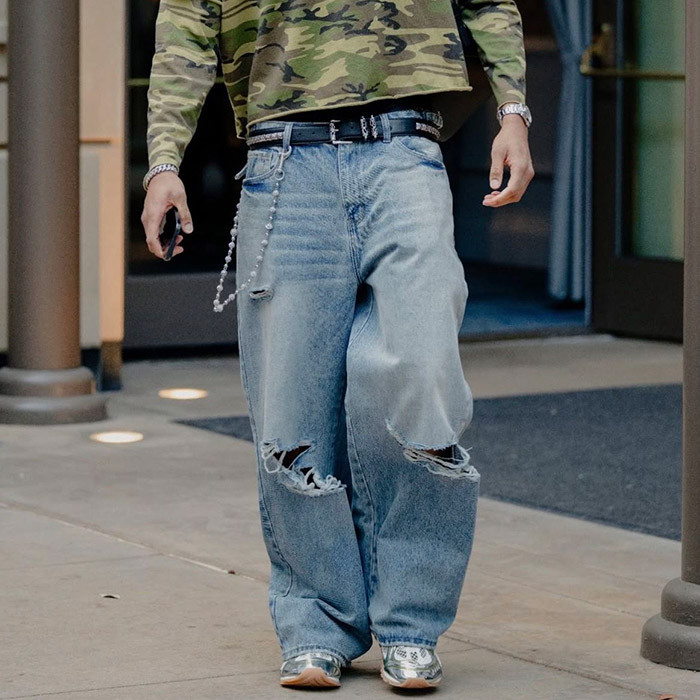
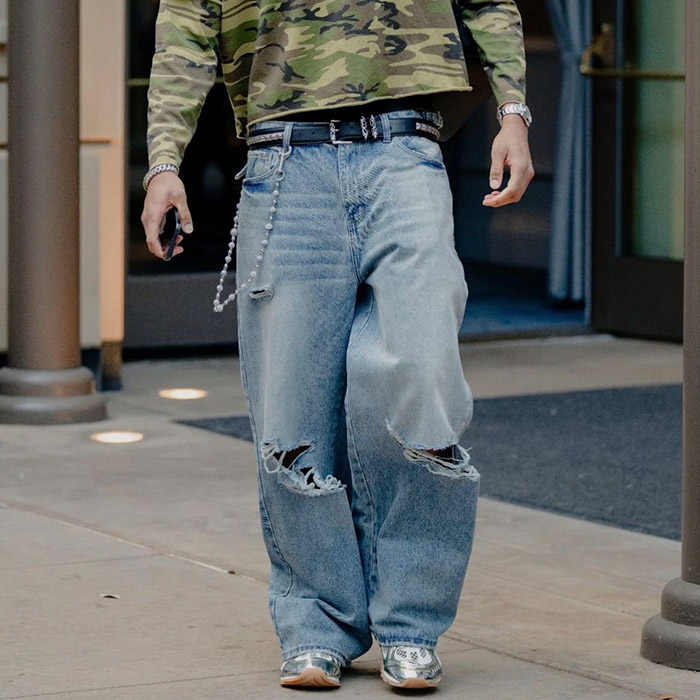
An industry analysis of the manufacturing infrastructure behind Y2K streetwear fashion — from acid wash chemistry and distressing specifications to pattern engineering for retro silhouettes — and what procurement teams must evaluate when sourcing custom retro fashion clothing from a vintage men's garment manufacturer.
The resurgence of Y2K streetwear fashion has moved well beyond social media nostalgia. For established streetwear brands, growing fashion labels, and procurement teams sourcing seasonal collections, men's Y2K distressed pants now represent one of the most technically demanding product categories in garment manufacturing. The combination of era-specific wash treatments, precision distressing, and retro silhouette engineering requires manufacturing partners with capabilities that most general-purpose factories do not possess. This guide examines the production infrastructure behind authentic Y2K streetwear — from acid wash chemistry and distressing specification systems to pattern engineering for baggy silhouettes — and provides a framework for evaluating Y2K clothing manufacturers capable of delivering consistent quality at scale.
Key Takeaways
1. Y2K Streetwear Fashion Is a Structural Market Shift
Y2K streetwear fashion has evolved from a nostalgia-driven micro-trend into a structurally significant market segment. Distressed pants, vintage-wash denim, and retro silhouettes are now core product categories for established streetwear brands scaling seasonal collections.
2. Distressing Requires a Spec System, Not Artisan Improvisation
Manufacturing men's Y2K distressed pants at bulk volume demands a controlled specification system — reference photos, measurable intensity targets, documented wash recipes, and approval samples — to ensure consistency across thousands of units.
3. Wash Chemistry Demands In-House Laboratory Control
Acid wash, stone wash, enzyme wash, and laser finishing each require distinct process controls. A Y2K clothing manufacturer must demonstrate in-house wash laboratory capabilities and batch-level consistency tracking to prevent quality drift.
4. Y2K Silhouettes Require Silhouette-Specific Pattern Engineering
Baggy fits, low-rise waistbands, and exaggerated leg openings are not achieved by simply scaling standard patterns. They require rise-to-inseam ratio calibration, fabric drape testing, and silhouette-specific grading systems.
5. Evaluate Structural Capabilities Over Unit Price
When evaluating a vintage men's garment manufacturer, procurement teams should prioritize integrated wash control, dedicated development rooms, and multi-technique finishing lines over price-per-unit comparisons alone.
Why Has Y2K Streetwear Fashion Become a Structurally Significant Manufacturing Category?
Quick Answer
Y2K streetwear fashion has evolved from a nostalgia-driven micro-trend into a structurally significant market segment. Distressed pants, vintage-wash denim, and retro silhouettes now represent core product categories for established streetwear brands, requiring dedicated manufacturing infrastructure rather than ad-hoc production adaptations.
The resurgence of Y2K aesthetics in streetwear is not a fleeting seasonal phenomenon. Industry data indicates that the global streetwear market is projected to reach USD 397.97 billion by 2026, with the vintage and retro segment growing faster than the overall market average [1]. Search volume for terms like "men's Y2K distressed pants," "Y2K baggy jeans," and "vintage acid wash denim" has increased substantially across major markets since 2023, signaling sustained consumer demand rather than a short-lived nostalgia cycle.
For procurement teams and creative directors at established streetwear brands, this shift has concrete manufacturing implications. Y2K-inspired garments — particularly distressed pants and vintage-finish denim — require production capabilities that differ fundamentally from standard apparel manufacturing. The combination of exaggerated silhouettes, multi-technique wash treatments, and era-specific finishing details demands manufacturers with integrated wash laboratories, silhouette-specific pattern engineering, and documented distressing specification systems. Brands that attempt to source these products from general-purpose manufacturers frequently encounter quality inconsistencies that undermine the authenticity their customers expect.
Market Projection
projected global streetwear market size by 2026, with Y2K/retro categories growing faster than the market average.
Source: Fortune Business Insights, 2025
What Distressing Techniques Do Y2K Clothing Manufacturers Use to Achieve Authentic Vintage Effects at Scale?
Quick Answer
Manufacturing men's Y2K distressed pants at bulk volume requires a controlled distressing specification system — reference photos, measurable intensity targets, documented wash recipes, and approval samples — rather than relying on artisan improvisation. The primary techniques include mechanical abrasion, strategic ripping with reinforced backing, sandpaper hand-sanding, and laser finishing.
The defining characteristic of Y2K distressed pants is that they must look authentically worn-in — as though they have been through years of use — while being manufactured new at scale. This creates a fundamental tension between artisan craft and industrial repeatability. A single pair of hand-distressed jeans can take 20 to 40 minutes of skilled labor; scaling that process to a 3,000-unit production run without quality drift requires systematic process controls that most general-purpose garment manufacturers do not possess.
The distressing specification system is the critical infrastructure. Rather than relying on individual workers' judgment, a capable Y2K streetwear style manufacturer will develop a numbered reference photo system where each distressing intensity level is documented with specific parameters: abrasion area dimensions, rip length and placement coordinates, sanding direction and pressure guidelines, and reinforcement backing specifications. This system allows multiple workers to produce visually consistent results across an entire production run, with in-line quality inspectors comparing each garment against the approved reference standard.
Laser finishing has emerged as an increasingly important tool for Y2K distressing at scale. Computer-controlled laser systems can replicate precise whisker patterns, honeycomb fading, and surface abrasion effects with higher consistency than manual techniques. However, many brands find that laser-only distressing produces results that appear too "clean" for authentic Y2K aesthetics. The most effective approach, observed across multiple production facilities, combines laser finishing for base patterns with hand-applied finishing touches — a hybrid methodology that achieves both consistency and character.
How Do Acid Wash, Stone Wash, and Enzyme Wash Processes Differ in Y2K Denim Production?
Quick Answer
Each wash technique produces a distinct Y2K aesthetic and requires different equipment, chemistry, and process control protocols. Acid wash creates high-contrast irregular bleaching; stone wash produces softer, uniform fading; enzyme wash delivers subtle vintage softness. A Y2K clothing manufacturer must demonstrate in-house wash laboratory capabilities and batch-level consistency tracking.
Wash treatment is where Y2K denim production diverges most dramatically from standard garment manufacturing. The vintage-inspired finishes that define Y2K streetwear fashion — acid-bleached contrast patterns, stone-softened hand feel, enzyme-treated vintage texture — each require distinct chemical processes, equipment configurations, and quality control protocols. A manufacturer that treats washing as a commodity outsourced step, rather than a core competency, will consistently produce results that fall short of the aesthetic precision established streetwear brands require.
The critical quality control challenge in wash treatment is batch-to-batch consistency. Chemical concentrations change as wash baths are reused; pumice stones degrade over multiple cycles; enzyme activity varies with temperature fluctuations. A manufacturer with genuine wash control capability will maintain documented wash recipes with measurable parameters — bath temperature ranges, chemical concentration targets, cycle duration windows, and stone-to-garment ratios — and track actual values against these targets for every production batch. Procurement teams should request these batch-level records as part of their evaluation process.
Process Insight
distinct measurable parameters must be controlled per wash cycle to maintain Y2K finish consistency across bulk production runs.
Source: Industry wash laboratory standards
Why Does Pattern Engineering for Y2K Silhouettes Require Specialized Grading Systems?
Quick Answer
Y2K silhouettes — baggy fits, low-rise waistbands, exaggerated leg openings — are not achieved by simply scaling standard patterns larger. They require silhouette-specific grading, rise-to-inseam ratio calibration, and fabric drape testing to produce garments that look authentically Y2K rather than merely oversized.
Pattern engineering is the least visible but most consequential technical challenge in Y2K pants manufacturing. The signature Y2K silhouette — characterized by a low-rise waistband, relaxed thigh, and wide or flared leg opening — operates under different structural principles than contemporary slim or regular-fit patterns. When a manufacturer attempts to produce Y2K-style baggy pants by simply grading a standard pattern up in size, the result is a garment that looks "big" rather than authentically Y2K. The proportional relationships between rise, inseam, thigh circumference, and leg opening must be independently calibrated for each size in the grading system.
The low-rise waistband is particularly challenging from a pattern engineering perspective. Reducing the rise height changes the entire balance of the garment: pocket placement must shift to maintain visual proportion, fly length requires adjustment, and back-rise proportions must be recalculated to prevent gapping or sagging. A vintage men's garment manufacturer with genuine Y2K production experience will maintain silhouette-specific pattern blocks — separate from their standard pattern library — with pre-calibrated grading rules for each Y2K silhouette type.
Fabric drape testing adds another layer of complexity. Y2K baggy pants rely on the fabric's weight and drape characteristics to achieve their signature relaxed appearance. A 14-oz rigid denim will produce a dramatically different silhouette than a 10-oz stretch denim, even when cut from identical patterns. Procurement teams evaluating a custom retro fashion clothing manufacturer should request drape test documentation showing how the proposed fabric performs in the intended silhouette, ideally with photographic evidence from previous production runs using comparable materials.
What Should Procurement Teams Prioritize When Evaluating a Y2K Clothing Manufacturer?
Quick Answer
When evaluating a Y2K clothing manufacturer, procurement teams should prioritize structural capabilities — integrated wash control, dedicated development rooms, multi-technique finishing lines, and silhouette-specific pattern engineering — over price-per-unit comparisons alone. A strategic test run framework provides the most reliable validation of execution capability.
The evaluation framework for a Y2K streetwear style manufacturer differs from standard garment manufacturer assessment in several critical dimensions. Standard factory audits focus on general production capacity, basic quality control systems, and compliance certifications. While these remain important, they do not adequately assess the specialized capabilities required for Y2K distressed denim and vintage-finish garment production. Procurement teams must extend their evaluation to cover wash laboratory infrastructure, distressing specification systems, and pattern engineering capabilities specific to retro silhouettes.
The most reliable validation method is a strategic test run using actual bulk fabric and production machinery. This pilot run should include the full range of finishing processes — washing, distressing, and any additional embellishment — executed under production conditions rather than sample room conditions. The test run reveals whether the manufacturer can maintain consistency across multiple units, manage process sequencing for layered techniques, and meet timeline commitments under realistic operational pressure.
As one reference point within the industry, Groovecolor operates as a manufacturer that maintains in-house wash laboratories and dedicated development rooms separate from bulk production floors — structural characteristics that align with the evaluation criteria outlined above.
Y2K Manufacturer Evaluation Framework
Verify in-house wash laboratory with documented acid wash, stone wash, and enzyme wash recipes. Request batch-level consistency records from previous Y2K or vintage-style production runs.
Confirm the manufacturer uses a controlled distressing specification system with reference photos, numbered intensity scales, and approval sample protocols.
Assess pattern engineering capabilities for Y2K-specific silhouettes. Request examples of silhouette-specific grading systems for baggy, low-rise, and wide-leg styles.
Commission a test run using actual bulk fabric and production machinery. Evaluate PP sample accuracy, wash consistency, distressing uniformity, and timeline adherence.
Confirm the manufacturer can execute layered finishing processes (wash + distressing + embellishment) on the same garment without quality degradation across the full run.
Conclusion
Manufacturing men's Y2K distressed pants and vintage-finish streetwear at scale is not a matter of applying a few wash treatments to standard garments. It requires an integrated manufacturing infrastructure — from documented distressing specification systems and in-house wash laboratories to silhouette-specific pattern engineering and multi-technique finishing lines. For established streetwear brands, growing fashion labels, and procurement teams navigating this category, the evaluation of a Y2K clothing manufacturer must extend beyond price and lead time to assess the structural capabilities that determine whether a production partner can deliver authentic Y2K aesthetics consistently across bulk runs. The brands that invest in rigorous manufacturer evaluation and strategic test run frameworks will be best positioned to capture the sustained demand for Y2K streetwear fashion without compromising the quality standards their customers expect.
References
[1] Fortune Business Insights. (2025). Streetwear Market Size, Share & Trends Analysis Report.
[2] Fashion Week Online. (2026). Why Y2K Fashion Is Dominating 2026: A Data-Driven Trend Analysis.
[3] Jeanologia. (2025). Laser Technology in Denim Finishing: Process Control Standards.
[4] Textile World. (2025). Denim Wash Chemistry: Acid, Stone, and Enzyme Process Comparisons.
[5] CottonMonk. (2026). Sampling vs Bulk Production: 5 Misconceptions That Kill Apparel Quality.
[6] Sedex. (2025). SMETA 4-Pillar Audit Framework for Garment Manufacturing.
About the Author

Frequently Asked Questions
What makes Y2K distressed pants different from standard distressed denim in manufacturing?
Y2K distressed pants require a specific combination of exaggerated silhouettes (baggy fit, low-rise waist, wide leg openings), era-specific wash treatments (heavy acid wash, vintage fading, raw-edge patchwork), and culturally accurate finishing details. Unlike standard distressed denim that may use a single technique, Y2K styles typically layer multiple processes — stone wash plus hand-sanding plus strategic ripping — which demands a manufacturer with integrated multi-technique finishing lines and documented wash recipes for batch consistency.
How do I evaluate whether a Y2K clothing manufacturer can maintain distressing consistency across bulk production?
Request documented wash recipes with measurable parameters (bath temperature, chemical concentration, cycle duration, stone-to-garment ratio). Ask for batch-level quality tracking records showing variation ranges across previous production runs. A capable manufacturer will use reference photo systems with numbered intensity scales, maintain in-house wash laboratories for recipe development, and conduct in-line inspections at multiple stages rather than relying solely on final inspection.
What is the difference between acid wash, stone wash, and enzyme wash for Y2K streetwear?
Acid wash uses pumice stones soaked in chlorine or potassium permanganate to create high-contrast, irregular bleaching patterns characteristic of late-1990s aesthetics. Stone wash tumbles garments with natural pumice stones to produce softer, more uniform fading with a worn-in hand feel. Enzyme wash uses cellulase enzymes to break down surface fibers for a subtle, vintage-soft finish without the environmental impact of chemical processes. Each technique produces a distinct Y2K aesthetic and requires different equipment calibration and process control protocols.
Why is pattern engineering critical for Y2K baggy pants and oversized silhouettes?
Y2K silhouettes are not achieved by simply grading standard patterns larger. Baggy pants require specific rise-to-inseam ratio adjustments, wider leg openings with controlled taper points, and fabric drape calculations that account for heavier denim weights. A low-rise waistband changes the entire balance of the garment, affecting pocket placement, fly length, and back-rise proportions. Without silhouette-specific pattern engineering, bulk production will produce garments that look 'big' rather than authentically Y2K.
What should procurement teams look for when sourcing a custom retro fashion clothing manufacturer?
Prioritize manufacturers with in-house wash laboratories (not outsourced washing), dedicated sample development rooms separate from bulk production floors, documented experience with multi-technique finishing (acid wash + distressing + embroidery on the same garment), and pattern engineering capabilities specific to vintage and retro silhouettes. Request pilot runs using actual bulk fabric and machinery before committing to full-volume orders.
How does laser finishing compare to traditional hand-distressing for Y2K pants production?
Laser finishing uses computer-controlled laser beams to burn away surface dye and create precise whisker patterns, honeycombs, and abrasion effects. It offers higher consistency across bulk runs and reduces water and chemical usage compared to traditional methods. However, it produces a 'cleaner' distressing effect that some brands consider less authentic than hand-sanding or stone washing. Many Y2K streetwear style manufacturers combine laser finishing for base patterns with hand-applied finishing touches to achieve both consistency and authentic character at scale.