Oversized Hoodie Manufacturing Guide: From Boxy Fit to Production-Ready Specs
- Share
- publisher
- GROOVECOLOR
- Issue Time
- Nov 18,2026
Summary
Men's oversized hoodie demand now spans boxy silhouettes, heavyweight French terry, drop shoulders and vintage finishes, but retail language is not a production specification. This guide shows established streetwear brands how to translate oversized hoodies men search for into measurable fit, fabric, wash and component decisions, then evaluate a streetwear hoodie manufacturer that can develop samples, control post-wash dimensions and carry approved details into bulk production.
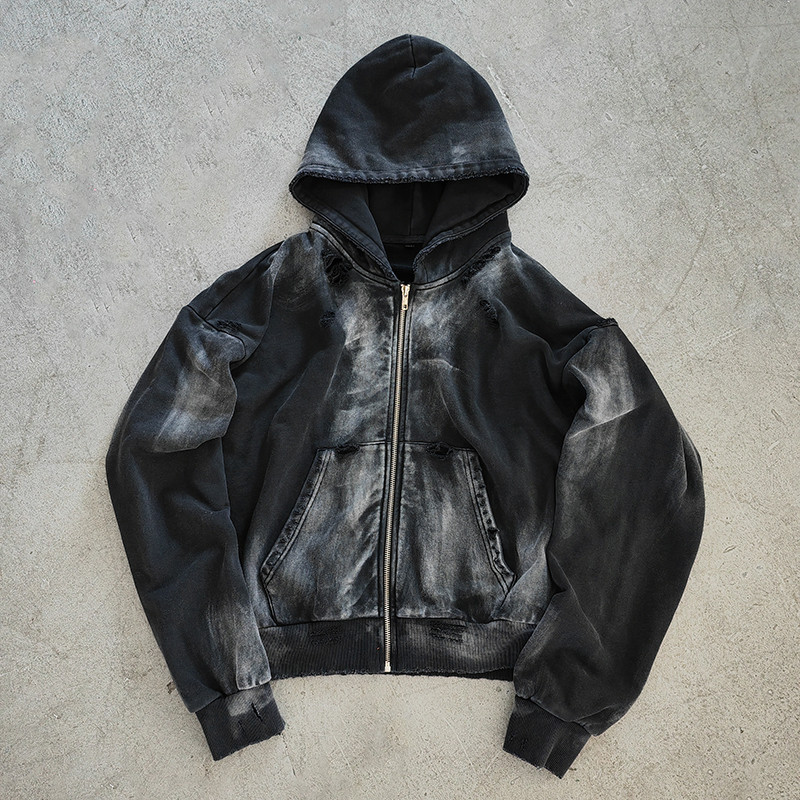
Men’s oversized hoodie searches show what shoppers notice first: extra volume, dropped shoulders, heavy fabric, a strong hood, and a worn-in surface. They do not tell a pattern room, fabric team, wash technician, or production line exactly how to reproduce that look.
For an established streetwear brand, an oversized hoodie should be sourced as a proportion system, not a larger standard sweatshirt. A production-ready brief should define shoulder drop, chest-to-length ratio, sleeve volume, hood and pocket scale, fabric structure, post-wash measurements, vintage-finish boundaries, and grading logic before a factory is asked to reproduce the design in bulk.
What Are the Key Takeaways for Established Streetwear Teams?
- ▸“Oversized” should be expressed through proportions such as chest width, body length, shoulder extension, sleeve volume, armhole depth, and hem width—not by simply sizing up a regular block.
- ▸Heavy fabric can support a boxy silhouette, but fabric mass alone does not predict drape, hood balance, rib behavior, or how the garment feels after washing.
- ▸A “vintage” reference must be classified as genuinely old, newly made with an aged finish, or a hybrid reference. Each route needs a different approval method.
- ▸For washed hoodies, the finished garment is the real product. Measurements, hood balance, rib recovery, pocket position, shade, and decoration should be reviewed after finishing.
- ▸Supplier qualification should focus on evidence: pattern revisions, fabric records, approved references, size-set checks, wash standards, inspection points, and a clear path from sample approval into production.
What Are Men’s Oversized Hoodie Searches Actually Telling Product Teams?
Men’s oversized hoodie searches reveal the visible product signals shoppers respond to: width, shoulder drop, substantial fabric, hood volume, rib structure, and an intentionally relaxed or aged surface. For product teams, those words are useful market signals, but they are still only the beginning of a manufacturing brief.
Current retail language makes the gap easy to see. H&M, for example, describes an oversized boxy hoodie through a combination of heavyweight cotton, an extra-loose silhouette, a double-layer hood, heavily dropped shoulders, a kangaroo pocket, ribbing, and French Terry construction. That description is helpful to a shopper because it communicates the look quickly. It is not enough for a pattern team because it does not define the exact relationships among those features.
The useful lesson is not that every brand should copy a retail product. It is that terms such as oversized, boxy, heavyweight, and vintage behave like clusters of expectations. A product developer should ask which parts of that expectation matter to the brand: a short body, a wider chest, a lower shoulder seam, a deeper armhole, a more architectural hood, or a softer drape.
Teams that want to see how these visual directions are already grouped as a product category can use the oversized hoodie range as a reference point. The next manufacturing question, however, is more precise: how does a brand convert the chosen visual direction into numbers a pattern room can actually work with?
How Do You Turn Boxy and Oversized Into Measurements a Pattern Team Can Use?
A production-ready oversized hoodie brief should define proportion, not simply request a larger size. Chest width, body length, shoulder extension, armhole depth, sleeve volume, hem width, and intended wearing ease need to work together. The pattern should express a specific silhouette rather than a vague instruction to make the garment “more oversized.”
Start with the relationship between width and length. Two hoodies can share the same half-chest measurement and still read very differently if one has a short body and broad shoulder while the other has a long body and only moderate shoulder extension. That is why chest width alone is a poor proxy for a boxy fit.
Shoulder width also changes the sleeve. Moving the shoulder seam outward without reconsidering sleeve length can create an unexpectedly long arm. A deeper armhole can improve the relaxed visual language, but too much depth can make the sleeve hang heavily and change mobility. The pattern team therefore needs a coordinated set of measurements, not isolated numbers.
A physical reference garment can be especially valuable because a technician can measure the actual proportions instead of estimating from a photo. The pattern and cutting process is the natural deeper reference when a project depends on translating a visual silhouette into repeatable pattern points. Once the body block is defined, the next risk is often overlooked: the hood, pocket, rib, and artwork can remain visually too small for the new body.
Which Hoodie Components Must Scale With the Oversized Body?
An oversized body can still look poorly resolved when the hood, kangaroo pocket, rib, neckline, zipper, or graphic keeps standard proportions. Product teams should review each component against the enlarged silhouette. Visual balance comes from the relationship among parts, so component dimensions and placement should be approved with the body pattern.
Hood scale is a strong example. A wide body with a shallow, narrow hood may make the garment look underbuilt even if the fabric is heavy. Increasing hood volume, however, adds fabric mass around the neckline. That can affect how the hood falls backward, how the front neck sits, and how the garment feels when worn.
The kangaroo pocket also needs a deliberate relationship with the torso. A pocket copied from a regular hoodie may look visually stranded on a broad front panel. Moving it too low can make a shorter boxy body feel even shorter. The brief should therefore state pocket width, height, opening length, top position, and its relation to the center front and hem.
Rib depth and recovery influence the lower silhouette. A tight rib can pull a wide body inward and create a balloon shape. A looser rib can preserve a straighter boxy line but may feel less secure. Neither choice is automatically better; it depends on the intended silhouette and the fabric’s weight and recovery.
Component approval points
Component scale becomes even more important when fabric gets heavier. A dense fabric can give the body cleaner architecture, yet it also adds mass to the hood, pocket, seams, and rib joins. That leads to the next decision: whether heavyweight is strengthening the intended silhouette or simply making every part thicker.
When Does Heavyweight Fabric Strengthen the Silhouette—and When Does It Distort It?
Heavyweight fabric can support a clean boxy hoodie, but GSM alone does not define structure or quality. Fabric mass, knit density, yarn, surface, recovery, fleece loft, and drape all affect the silhouette. The right decision is to approve the fabric on the actual pattern and after the intended finishing process.
GSM is useful because it is measurable. ASTM D3776/D3776M-20(2025), the active ASTM standard for fabric mass per unit area, covers methods for measuring what the trade commonly calls fabric weight. That makes GSM a meaningful specification point, but the standard does not turn a single number into a verdict on drape, softness, recovery, or premium feel.
A compact French Terry and a lofty fleece can carry similar mass while behaving differently in the finished hoodie. One may hold a short, wide shape with a crisp surface. Another may feel fuller and warmer but collapse more softly at the side seam. Brushing, finishing, yarn structure, and knit density all contribute to the result.
Heavy material also changes construction stress. A double-layer hood becomes significantly heavier. Pocket seams carry more bulk. Thick rib joins can become stiff. Embroidery or appliqué adds another layer of weight. A product team should therefore ask for the fabric specification together with a garment sample rather than approve a GSM number in isolation.
The streetwear fabric selection page is a better place for deeper fabric choices, while this article keeps the decision tied to silhouette. Once the fabric and fit work together, the next ambiguity appears in another retail word: “vintage.”
How Should a Brand Separate Authentic Vintage References From Manufactured Vintage Effects?
A vintage oversized hoodie reference can mean a genuinely old one-off garment or a newly manufactured hoodie designed to look aged. Those are different sourcing problems. Before costing or sampling, the brand should identify which visual qualities must be reproduced and which irregularities belong only to the original vintage piece.
When a project is specifically about faded, distressed, or washed fleece, the vintage hoodie range provides category context without turning this article into another wash catalogue. The practical problem now becomes narrower: if deliberate variation is part of the look, what exactly should the factory be allowed to vary?
How Should Brands Specify Vintage Variation Without Demanding Identical Garments?
A manufactured vintage finish should be controlled through an approved visual range, not an unrealistic demand for identical garments. Brands can define shade limits, wash intensity, distress zones, edge wear, print aging, and post-wash measurements. This preserves the intentional irregularity of the design while setting clear rejection boundaries for production.
The phrase “match the sample” is often too vague for an aged finish. A stronger approval package uses a physical reference plus photographs under controlled lighting, notes on the darkest and lightest acceptable areas, defined distress locations, and a record of dimensions after finishing. The goal is not visual cloning. It is a clearly bounded result.
Consider a faded black hoodie. The brand may accept modest tonal variation across panels but reject obvious panel-to-panel contrast. It may want cuff edges to look worn but reject holes that grow beyond a set zone. It may accept slightly irregular distressing while requiring the chest graphic to remain centered within an agreed tolerance.
Wash development should also account for the fact that the process changes more than color. It can alter surface texture, hand feel, rib behavior, seam puckering, and dimensions. That is why the wash target and the fit target cannot be approved as unrelated items.
Define an approval window, not a perfect duplicate
This approach avoids turning controlled variation into a defect debate after production. It also creates the logical next checkpoint: once wash and aging change the garment, what should be measured and approved on the finished hoodie rather than on the pre-wash piece?
What Must Be Approved After Washing, Not Just Before Washing?
For washed or vintage oversized hoodies, the finished garment should be treated as the approval state. Body length, sleeve length, shoulder position, hood balance, rib recovery, pocket placement, seam appearance, shade, and decoration alignment can change during finishing. Procurement teams should compare pre-wash and post-wash records before approving production.
This is not merely a factory preference. Textile test standards distinguish dimensional change as a measurable property. ISO 5077:2007 specifies a method for determining dimensional change in fabrics, garments, or other textile articles after specified washing and drying procedures. AATCC TM150-2025 similarly addresses dimensional changes of garments after home laundering under defined washing and drying conditions.
A brand does not need to turn every commercial sample into a laboratory program. It does need a disciplined method. Mark the same measurement points before and after the agreed care or finishing procedure. Use the same measurement technique. Record changes rather than relying on memory. If a test method is contractually required, specify the actual standard and procedure rather than saying only “wash tested.”
Oversized silhouettes are especially sensitive because small dimensional changes can alter the intended ratio. A shorter body may exaggerate the boxy look. Sleeve shrinkage may partially cancel the visual effect of a dropped shoulder. Rib recovery may pull the hem inward. A heavy hood can shift neckline balance after laundering.
If the base-size sample is approved only in one size, another risk remains hidden: the silhouette can change as the size range expands. That makes grading the next decision, not an administrative afterthought.
How Should Oversized Hoodies Be Graded Without Losing the Intended Look in Larger Sizes?
Oversized hoodie grading should preserve the design logic across sizes rather than increase every measurement by the same amount. Shoulder drop, chest width, body length, sleeve length, hood scale, pocket position, and hem can require different increments. A representative size-set review helps confirm that larger sizes still express the approved silhouette.
A simple linear increase can create distortion. If body length grows too quickly, a deliberately short-wide Medium can become a long loose XXL. If sleeve length grows without considering shoulder extension, larger sizes can become overlong in the arm. If the pocket stays nearly fixed while the body expands, the front looks less balanced.
The brand should therefore define which relationships are part of the design identity. The chest-to-length ratio may need to stay within a narrow visual band. Shoulder extension may grow more slowly than chest width. Hood size may increase modestly while the front opening remains stable. The correct rules depend on the target customer and the original block.
A size-set does not always need every size to be sewn at the earliest stage. The point is to review enough representative sizes to expose grading problems before the entire order is cut. For a broad size range, checking a base size plus a larger and smaller representative size can reveal whether the intended silhouette is being preserved.
Ask these grading questions before size approval
Once grading is linked to the finished garment, supplier evaluation becomes more concrete. The question is no longer whether a factory says it makes oversized hoodies. It is whether the factory can show evidence that the defined proportion system survives development, finishing, grading, and production.
What Proof Should a Streetwear Hoodie Manufacturer Show Before Bulk?
Before bulk production, a streetwear hoodie manufacturer should show evidence tied to the product’s real risks: approved pattern revisions, fabric specifications, measured fabric weight where relevant, pre- and post-wash dimensions, size-set review, finish references, decoration placement standards, and inspection checkpoints. One attractive sample is useful, but it should not be the only proof.
Evidence should be proportional to complexity. A clean pullover with no wash and a simple print may need a shorter approval trail than a heavyweight, distressed, embroidered hoodie with a special hood shape. Procurement teams should not demand paperwork for its own sake. They should ask for records that answer the specific failure modes of the product.
Pattern revisions show whether fit comments were translated into the next sample. Fabric records show what material was actually approved. Finished measurements show whether the wash route changed the silhouette. Placement guides connect artwork to the final body dimensions. Inspection checkpoints show where a deviation can be caught before it becomes a finished-order issue.
A mature sourcing decision also distinguishes capability from catalog breadth. A factory may show many hoodie photos yet have limited evidence on grading, post-wash measurements, or finish approvals. Another may show fewer styles but provide a clearer technical trail. The more useful comparison is the production system behind the sample.
Teams that want to examine those checkpoints in more detail can review a garment quality-control process rather than relying only on finished product photography. Once the proof requirements are clear, the final commercial step is to send a brief that gives the factory enough information to evaluate feasibility and cost without guessing.
What Should Be in the Final Sourcing Brief Before You Ask for a Hoodie Quote?
A quote-ready oversized hoodie brief should state the target silhouette, base size, key measurements, fabric composition and structure, weight direction, hood and pocket construction, wash or vintage reference, decoration method, grading range, colorways, quantity, packaging needs, and delivery market. Clear inputs reduce assumptions and make technical review more useful.
A tech pack is the cleanest route when it is available, but a useful first review can also start from a physical reference, measurement sheet, detailed photos, artwork files, and written construction notes. What matters is that the missing information is visible. A manufacturer should be able to tell the brand which assumptions still need confirmation before the price becomes meaningful.
This list is deliberately different from a generic “send your logo and quantity” request. It asks for the information that changes construction, material consumption, finishing risk, and the amount of technical development required. It also makes supplier quotations easier to compare because fewer hidden assumptions sit behind each price.
For teams that need the broader commercial manufacturing scope after the brief is defined, the custom streetwear hoodie manufacturer page covers category-level production capabilities. The remaining question is where GROOVECOLOR fits in this specific decision chain without turning the analysis into a brand claim.
Where Does GROOVECOLOR Fit When the Oversized Hoodie Brief Is Already Defined?
GROOVECOLOR is relevant when an oversized hoodie program needs one OEM production route connecting pattern development, heavyweight fleece or French Terry sourcing, washing, decoration, finished-garment review, grading, inspection, and bulk execution. Its fit is strongest for established streetwear teams that already have a defined product direction and structured custom development needs.
Based in Dongguan, China, GROOVECOLOR has more than 16 years of streetwear manufacturing experience and reports production capacity above 300,000 garments per month. Those facts do not by themselves prove that every hoodie project is a fit. The relevant evidence is whether the factory’s pattern, fabric, finishing, and inspection controls match the exact risk profile of the garment being developed.
For this article’s product type, the most relevant capabilities are oversized and boxy pattern development, heavy fleece and French Terry sourcing, hood and rib review, wash and vintage finishing, print or embroidery placement, post-finish measurements, and production checkpoints. GROOVECOLOR’s wider hoodie category range can show product breadth, but procurement should still judge each program against its own approved specification.
That qualification keeps the decision neutral. A brand with a clearly engineered hoodie should compare manufacturers on evidence, communication, technical interpretation, finishing control, and the ability to preserve the approved product logic at the planned order scale. With that context established, several practical questions still deserve direct answers.
What Questions Do Product Teams Ask Before Approving an Oversized Hoodie Program?
The most useful questions are not definitions. They test the exact decision points that can change fit, cost, finishing, grading, or production evidence. A strong answer should tell the team what to define, what to measure, and what proof to request before the hoodie moves from a visual reference into an approved commercial specification.
If a retail reference only says “oversized,” what should the brand define before sending it to a factory?
Define the silhouette through measurable relationships: chest width, body length, shoulder extension, armhole depth, sleeve volume, hem width, and intended ease. Add hood, pocket, and rib proportions. A photo can communicate direction, but the factory needs a base size and clear measurement method before the fit can be evaluated objectively.
If a physical garment is available, send it or provide measured dimensions. That reduces guesswork around perspective, model height, camera angle, and styling.
Should an oversized hoodie start from a larger regular size or a dedicated pattern block?
A dedicated or substantially reworked block is usually the safer route when the design depends on a specific boxy or drop-shoulder proportion. Simply enlarging a regular hoodie can lengthen the body and sleeves without creating the intended silhouette. The decision should follow the target measurements, not a fixed rule about sizing up.
A mild relaxed fit may need only controlled adjustments. A strong short-wide silhouette usually needs more deliberate pattern work.
Can a 500 GSM hoodie look worse than a lighter oversized hoodie?
Yes. A higher GSM can add body and weight, but it can also make the hood too heavy, seams bulky, rib joins stiff, or the garment less fluid than intended. Fabric mass should be evaluated together with knit density, surface, recovery, drape, finishing, and the actual pattern rather than treated as a quality score.
ASTM D3776/D3776M gives a standardized way to measure fabric mass; it does not define which mass is aesthetically best for a particular hoodie.
How can a brand tell whether a vintage reference is genuinely old or newly made to look old?
Start with provenance and construction clues, but do not assume appearance alone can prove age. A genuinely vintage garment may show irregular wear, repairs, fading, or material history that cannot be recreated literally. For manufacturing, the more useful task is to identify which visible age signals the new product should intentionally reproduce.
If the brand owns the reference garment, a physical review is more informative than a compressed image because hand feel, rib condition, seam wear, and fabric structure become visible.
Should hoodie measurements be approved before or after garment washing?
Both records can be useful, but the finished post-wash measurements should control the consumer-facing fit when washing is part of production. Record pre-wash dimensions to understand process change, then approve the garment after the agreed finishing route. ISO 5077 and AATCC TM150 provide recognized frameworks for dimensional-change evaluation.
The exact commercial tolerance should still be agreed by the brand and manufacturer for the product.
Why can an XL oversized hoodie lose the look of the approved Medium sample?
The silhouette can drift when grading increments increase length, sleeve, shoulder, hood, and pocket dimensions without preserving the original visual relationships. Larger sizes may become longer rather than simply fuller. A representative size-set review should test whether the width-to-length ratio, shoulder drop, component scale, and finished dimensions still express the same design.
The problem is not “large sizes” themselves; it is a grading rule that does not reflect the intended silhouette.
Should graphic placement change when the hoodie body becomes wider?
Often, yes. A graphic that looks balanced on a regular-width front can appear undersized or misplaced on a wider body. Placement should be judged on the finished garment, with reference to neckline, side seams, pocket, and visual center. The right position may also change after washing alters the panel dimensions.
Use garment measurements and physical strike-off placement rather than relying only on a flat digital mockup.
What evidence matters more than one perfect oversized hoodie sample?
The most useful evidence explains how the sample was produced and how its approved details will be checked again: pattern and grading records, fabric specifications, post-wash measurements, finish references, decoration placement rules, pre-production confirmation, in-process checks, and final inspection criteria. These records make the approved result less dependent on memory.
The exact evidence package should match the hoodie’s complexity rather than follow a fixed paperwork template.
What Should a Brand Decide Before Moving This Hoodie Into Production?
Before production, the brand should be able to describe the hoodie without relying on trend adjectives alone. The final decision should connect fit proportions, component scale, fabric behavior, finished measurements, vintage-finish limits, grading logic, decoration placement, and inspection evidence. If those points are clear, supplier comparison becomes far more useful than comparing sample photos or GSM numbers.
The wider lesson is that “hoodie men oversized,” “oversized hoodies men,” and “vintage oversized hoodie” are valuable because they reveal the language of market demand. A streetwear product team creates value when it translates that language into an original, measurable product system rather than reproducing the wording of the retail market.
A capable streetwear hoodie manufacturer should then be judged against that system. The decision is not whether the factory can make a hoodie once. It is whether the approved proportion, fabric, finishing, grading, and component logic can be documented, checked, and carried through the planned production route with enough evidence for the brand to make a responsible commercial decision.
Independent sources referenced in this guide
About the Author
