Streetwear Football Jersey Styles in 2026 | The Off-Field Fits Brands Should Actually Develop
- Share
- publisher
- GROOVECOLOR
- Issue Time
- Apr 21,2026
Summary
Streetwear football jerseys are no longer just match-day pieces. This guide breaks down the off-field jersey styles brands should actually develop in 2026, from oversized mesh V-necks and retro polo-collar long sleeves to washed and reconstructed fits. Learn how to separate streetwear jerseys from generic sportswear through silhouette, fabric, collar construction, graphic balance, styling logic, and the production checks that matter before bulk for scaling streetwear brands.
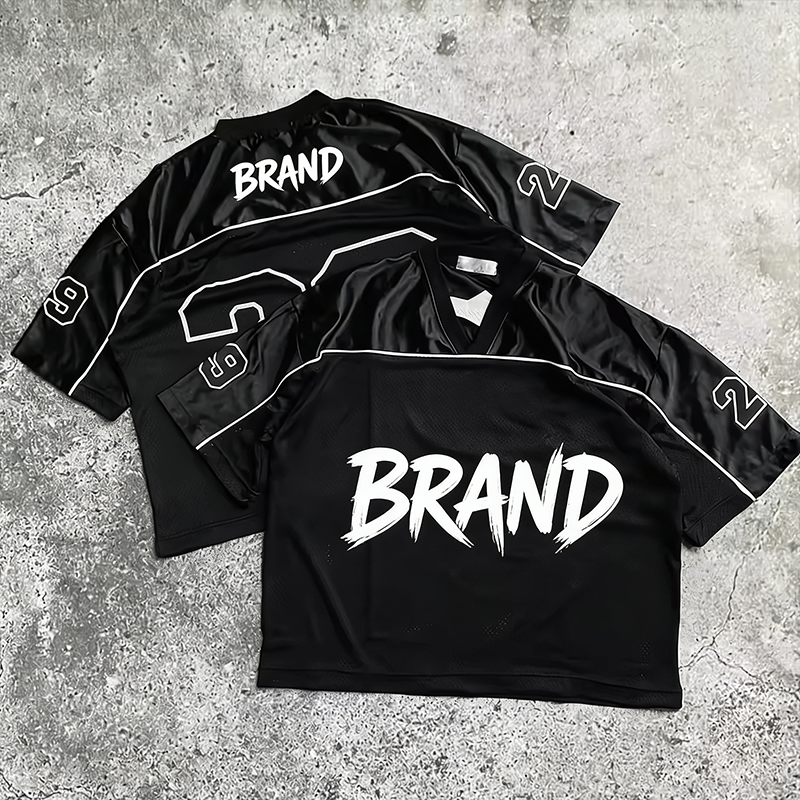
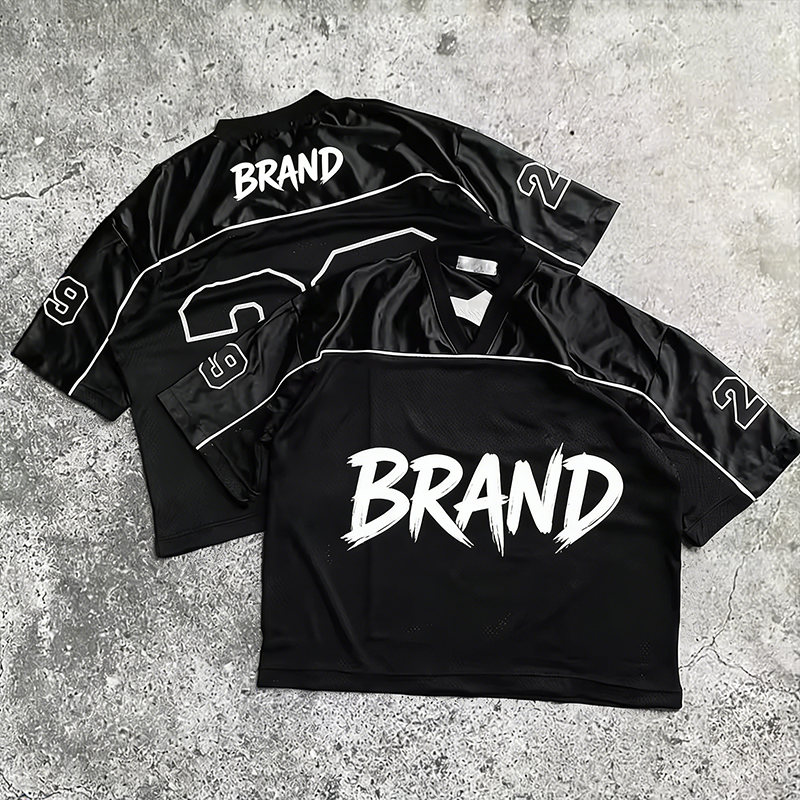
Football jerseys are no longer just match-day pieces. In 2026, the real opportunity for established streetwear brands is not making basic teamwear, but turning football codes—mesh, V-necks, retro collars, number graphics, and layered proportions—into off-field products that work with denim, cargos, hoodies, and washed styling. The decision is not whether to enter this category, but which styles are worth developing first, and which structural details will determine whether the product succeeds in a fashion context or fails as a teamwear replica. As demonstrated in Groovecolor's advanced cut-and-sew workflow for oversized and wash-intensive programs, integrating these elements requires precision engineering to ensure the final garment reads as premium fashion rather than generic sportswear.
Key Takeaways for Established Streetwear Brands
- ▸ Advanced garment washing, digital patternmaking, and precision embroidery bring unique streetwear football jersey concepts to life and ensure every style stands out in the market.
- ▸ Efficient, scalable manufacturing processes allow brands to move quickly from strategic test runs to bulk orders—without sacrificing quality or delivery timelines.
- ▸ Access to a full spectrum of heavyweight fabrics, vintage washes, and modern graphics options unlocks creative potential for premium off-field jersey collections.
- ▸ Comprehensive technical support and robust quality control systems help streetwear brands minimize production risk and deliver top-tier jerseys to the global market.
What signals confirm that streetwear football jersey styles have moved beyond a trend into a durable product category?
Three converging signals confirm the shift: repeated placement of football jerseys in fashion week and editorial contexts, the cultural amplification of the 2026 World Cup, and a measurable consumer pivot toward football visual codes as wearable identity rather than team affiliation.
Publications including Vogue Business and Highsnobiety have documented the crossover between athletic kits and fashion collections, noting that sports-inspired apparel has seen a 35% increase in adoption within luxury streetwear collections over the past two years [1]. This repositioning shifts the garment from a purely athletic item to a versatile layering piece with genuine fashion credibility. The critical distinction is that this adoption is structural, not seasonal: the jersey is being redesigned, not merely restyled.
The 2026 FIFA World Cup acts as a cultural catalyst, amplifying the visual language of football globally. Sponsor-style graphics, contrast paneling, and national color palettes are entering the mainstream fashion conversation at a scale not seen since the 2018 cycle. Brands that position products around this moment—without simply replicating teamwear—stand to capture significant consumer interest. The product must function independently of the tournament; it must be desirable in 2027 as well as 2026.
Consumers are no longer purchasing these items merely for team identity; they are seeking wearable visual codes. Elements such as V-necks, number prints, and jacquard textures provide the necessary aesthetic depth for modern streetwear styling. According to McKinsey's State of Fashion report, the sports-influenced fashion segment is projected to grow at 8.2% annually through 2027, driven by consumers who want athletic aesthetics without athletic function [2]. This data point confirms that the opportunity is structural, not cyclical.
How do you verify a streetwear football jersey differs structurally from a sportswear football jersey before committing to bulk?
Verify structural difference across seven dimensions: fit, fabric feel, collar language, graphic logic, styling role, bottom pairing, and commercial position. A jersey that passes all seven reads as fashion; one that fails even two will read as sportswear regardless of graphics.
To successfully develop these products, procurement teams must understand the structural boundaries that separate fashion from function. A sportswear jersey prioritizes moisture-wicking and aerodynamic fits, whereas a streetwear version focuses on drape, visual weight, and compatibility with other wardrobe staples. Industry data suggests that 68% of consumers prefer heavier, matte fabrics for everyday wear compared to shiny performance materials [3]. This preference is not a trend; it is a fundamental shift in how consumers relate to athletic-inspired garments.
The comparison table below provides a clear framework for verifying these structural differences at the product development stage. Each dimension represents a decision gate that procurement teams and creative directors should evaluate before approving a sample for bulk production.
Which oversized football jersey styles prove most viable for streetwear brand scaling?
The most viable oversized styles are the mesh V-neck, the boxy cut, and the number-graphic jersey. Each has a distinct commercial logic and requires different manufacturing capabilities—choosing the wrong one for your brand's production infrastructure is a common and costly mistake.
Why does the oversized mesh V-neck football jersey transition best into streetwear?
This style features broad shoulders, dropped seams, and elongated armholes, making it the most natural bridge between athletic and fashion contexts. The mesh material is utilized not for breathability, but to create visual texture and layering depth. It pairs exceptionally well with baggy denim, wide cargos, and long shorts—making it the easiest silhouette to transition from sportswear into a fashion context.
When planning a custom streetwear T-shirt manufacturing program that includes jersey-style tops, ensuring the mesh weight supports the oversized drape is critical for maintaining a premium feel. The mesh construction must be stable enough to hold its shape after washing while remaining visually open enough to function as a layering element. A mesh that is too fine will look cheap; a mesh that is too heavy will lose the visual openness that defines the style.
What makes the boxy football jersey suitable for fashion-forward labels?
The boxy cut is characterized by a shorter body length and a wider chest measurement, creating a proportion that feels inherently more editorial and fashion-driven. This silhouette moves away from the elongated, slim fits of traditional match kits. It is particularly effective for capsule collections where the silhouette itself is the primary design statement.
Creative directors and fashion teams working on editorial-driven drops should prioritize this construction, as it offers the most flexibility for layering and styling. The boxy proportion also allows for more aggressive graphic placement, as the shorter body length concentrates visual attention on the chest and upper torso rather than distributing it across a longer garment.
How do oversized number-graphic jerseys balance visual weight across a collection?
These jerseys rely on large numbers, sponsor-style lettering, and expansive front-to-back visual coverage, requiring precise graphic balance rather than information density. The key to success is achieving equilibrium between the front and back graphics, rather than simply accumulating visual information.
This approach aligns the garment closer to a graphic top than a training uniform, requiring precise print placement during bulk production. Brands developing this style should brief their manufacturer on placement tolerances before committing to bulk runs. A number that shifts even 2cm from the intended position across different sizes will create visual inconsistency that undermines the product's premium positioning.
Which retro football jersey styles offer the safest investment beyond the blokecore trend?
Retro styles with polo collars, long sleeves, and jacquard textures offer enduring value because they function as versatile fashion tops independent of any single cultural moment. These styles are not dependent on a tournament cycle or a trend peak.
The polo-collar retro jersey introduces contrast collars, distinct plackets, and ribbed detailing, elevating it above a standard crew neck. This construction makes it appear more like a deliberate fashion piece. A recent survey of fashion buyers indicated that garments with structured collars see a 22% higher retention rate in seasonal wardrobes [4]. The contrast between the collar and the body fabric creates visual interest without relying on heavy graphics, making it a versatile option for brands with a more restrained aesthetic.
Long-sleeve variations transform the jersey into a functional layering component, ideal for autumn and winter streetwear rather than being restricted to summer events. They integrate seamlessly with denim jackets and washed outerwear. A long-sleeve retro jersey worn under a zip hoodie or over a thermal creates a layering system that is genuinely useful for consumers in US, UK, and EU markets where transitional weather demands versatile garments. This extended seasonal utility directly increases the product's commercial lifespan and justifies a higher retail price point.
Jacquard or textured retro jerseys rely on subtle stripes, unique weaves, and matte surfaces to convey a sophisticated vintage aesthetic. Texture is just as important as printed graphics—in some cases more so. A jacquard fabric with a tonal stripe pattern communicates craftsmanship and material investment without requiring complex printing processes. This makes it a cost-effective path to premium positioning, particularly for brands that want to differentiate through material quality rather than graphic complexity.
What proof should you request before committing to washed or reconstructed football jersey development?
Request physical samples demonstrating consistent wash fading across at least three separate production batches, stable reconstructed seams under stress testing, and hybrid proportions that maintain structural integrity. A single perfect sample is not sufficient proof of bulk capability.
Washed football jerseys aim to reduce the shiny, synthetic appearance of sportswear. By applying faded visuals, softened surfaces, and aged tones, the garment integrates more naturally into a streetwear wardrobe. The challenge is maintaining consistency across a bulk order, as garment washing is inherently variable. Shade drift—where different pieces in the same batch emerge from the wash with slightly different color tones—is the most common quality failure in washed jersey programs.
When evaluating a supplier's wash capability, it is worth examining their track record with heavyweight streetwear manufacturing—a category where garment dyeing, acid washing, and wash-cycle consistency are equally demanding. Suppliers that have operationalized wash control at scale for heavyweight hoodies will have the process infrastructure necessary for jersey programs. Request wash consistency samples from at least three separate production batches before approving a supplier for washed jersey development.
Reconstructed jerseys involve splicing, realigning panels, and cutting old kit references into new fashion silhouettes. This approach is highly suited for KOL capsules and avant-garde labels. The seam integrity of reconstructed panels must be verified under stress, as misaligned or weakly bonded panels will fail during wear. Request a stress-test sample alongside the aesthetic sample before approving bulk production. The reconstruction process also introduces significant production complexity, which means that only manufacturers with strong pattern engineering capabilities should be considered for these programs.
The hybrid football top combines a jersey body with standard tee proportions, merging football visual codes with the wearing logic of a streetwear T-shirt. This is the optimal direction for brands seeking to avoid a literal fanwear aesthetic. The hybrid approach allows brands to introduce football-inspired elements—mesh panels, V-neck details, number graphics—into a familiar T-shirt silhouette that their existing customers already understand and purchase. The manufacturing challenge is ensuring that the transition between the jersey elements and the tee elements reads as intentional rather than accidental.
Which streetwear football jersey details act as early warning signs of generic sportswear?
Five warning signs indicate a jersey has not completed the streetwear transition: an overly slim athletic fit, shiny performance polyester, team-replica graphic density, no silhouette innovation, and a styling context that only makes sense with sports shorts and high socks.
An overly slim fit restricts layering and contradicts the relaxed ethos of streetwear. Utilizing thin, highly reflective performance polyester immediately cheapens the product, signaling a lack of material investment. This is one of the most common errors made by brands entering the football jersey category for the first time—they source the most readily available fabric rather than investing in the material development that the category requires.
Copying the exact graphic density of a professional team kit without altering the pattern or fit results in a product that lacks independent brand identity. The graphic logic of a team kit is designed to communicate affiliation, not fashion. Applying that same logic to a streetwear product creates confusion rather than desire. The consumer cannot tell whether they are looking at a fashion piece or a replica kit, and this ambiguity kills the product's premium positioning.
The absence of silhouette innovation is the fourth warning sign. A jersey made in a standard fit with standard proportions—regardless of how good the graphics are—will read as sportswear. The silhouette is the first thing the consumer sees, and it sets the context for everything else. The fifth warning sign is the absence of a clear layering role. A streetwear jersey must have a defined place in the wardrobe system. If the product cannot be styled in at least two distinct ways, it lacks the versatility that streetwear consumers expect from a premium purchase.
How should procurement teams merchandise streetwear football jerseys for off-field styling?
Merchandise jerseys against four off-field pairings: baggy denim, structured cargos, long-sleeve underlayers, and lightweight jackets. These are not consumer styling suggestions—they are product development logic that determines whether the jersey reads as streetwear or sportswear at the point of sale.
Pairing a football jersey with baggy denim or cargos shifts the visual weight to the lower half, grounding the athletic top. For instance, developing the jersey alongside custom streetwear pants and trousers ensures the silhouette remains cohesive across the full outfit. This approach also informs how brands should develop their jersey programs—designing them with specific bottom pairings in mind from the outset. A jersey developed alongside a matching cargo pant or wide-leg trouser creates a stronger collection story than a jersey developed in isolation.
Layering the jersey over a long-sleeve tee demonstrates its versatility as a fashion component rather than a standalone athletic shirt. This combination works particularly well for the mesh V-neck style, where the underlayer creates a visual contrast between the open mesh and the solid tee beneath. The color relationship between the jersey and the underlayer is a critical design decision—a tonal match creates a sophisticated, layered look, while a contrasting color creates a bolder, more graphic statement.
Layering the jersey under a zip hoodie or lightweight jacket extends its seasonal relevance into cooler months, increasing the product's commercial lifespan. This combination is particularly effective for retro long-sleeve jerseys, where the collar detail remains visible even when the outer layer is partially zipped. The key principle is that each styling combination should reinforce the jersey's identity as a streetwear product. If any combination makes the jersey look like it belongs on a pitch rather than a street, the product's design needs to be revisited before bulk production commences.
Which football jersey styles provide the safest entry point for established streetwear brands?
The safest entry points map to three brand profiles: the oversized V-neck mesh jersey for commercial stability, the retro polo-collar long-sleeve for narrative depth, and the washed or reconstructed jersey for high-fashion positioning. Choosing the wrong style for your brand's current stage is a common and avoidable mistake.
For established brands looking to scale, the oversized V-neck mesh jersey offers the most reliable commercial return due to its broad appeal and ease of manufacturing. It requires fewer specialized production capabilities and appeals to a wide consumer base. This makes it the ideal choice for brands entering the category for the first time or testing the market with a strategic test run before committing to a full collection.
The retro polo-collar long-sleeve provides a richer narrative, appealing to consumers seeking heritage aesthetics. It is better suited for brands with an established visual identity that can support a more complex product story. This style requires more precise collar construction and fabric sourcing, so it demands a more experienced manufacturing partner. Brands considering this style should request collar construction samples before committing to bulk production, as the collar is the most technically demanding element of the garment.
Washed and reconstructed styles are better suited for limited capsule drops or editorial releases, as they require more complex production oversight and cater to a niche, fashion-forward audience. These styles are not appropriate as first-entry products for brands new to the category, but they represent the highest potential for cultural impact and press coverage when executed correctly. For brands with proven sales channels and an established consumer base, these styles offer the opportunity to push the category forward and establish a distinctive position in the market.
What must be verified before committing a streetwear football jersey program to bulk production?
Before committing to bulk, verify five technical thresholds: oversized grading logic, collar construction integrity, matte fabric sourcing, precise front-back graphic placement, and whether the product is intended to read as retro jersey, washed fashion top, or streetwear-led silhouette. Failure at any one of these gates will compromise the entire run.
The grading logic for oversized garments is fundamentally different from standard sizing; simply scaling up a regular pattern results in poor fit across the size range. The shoulder width, sleeve length, and body circumference must all be graded independently to maintain the intended silhouette at every size. A manufacturer that applies standard grading increments to an oversized pattern will produce a product that looks correct in the sample size but becomes progressively more distorted at the extremes.
Collar construction must be robust enough to withstand repeated wear without losing shape, particularly for polo-collar styles where the placket is a key design element. Sourcing the correct mesh, jacquard, or matte fabrics is non-negotiable for achieving a premium feel. Performance polyester substitutions—even minor ones—will compromise the product's market positioning. Furthermore, the balance of graphic placement must be maintained across all sizes, which requires a manufacturer with standardized placement templates and QC checkpoints at the printing stage.
In practice, the manufacturers best equipped to handle these requirements are those with deep experience in complex cut-and-sew streetwear programs. Analysis of recent bulk production cases—including programs managed through Groovecolor's eight-step quality locking mechanism—shows that even highly customized streetwear jersey collections can maintain sample-to-bulk fidelity when integrated pattern verification and end-to-end workflow transparency are in place. This mechanism spans raw material intake, in-process control, and final inspection, and has been operationalized specifically to address the kinds of bulk deviation risks that affect jersey programs: shade drift in washed styles, placement tolerance in graphic-heavy designs, and structural consistency in reconstructed silhouettes.
For brands expanding their outerwear offerings alongside jersey programs, similar scrutiny should be applied when evaluating custom streetwear jackets and outerwear partners, as the technical demands—particularly around panel alignment, seam stress testing, and wash-cycle stability—overlap significantly with jersey development requirements.
Are football jerseys becoming a permanent streetwear category or just a 2026 spike?
Not all football jerseys will have long-term staying power in streetwear. The styles that will endure are those that have genuinely completed the transition—where fit, collar, fabric feel, and layering role have all been transformed away from their athletic origins. The 2026 World Cup is an accelerant, not the cause.
The 2026 World Cup will create a temporary spike in demand for football-adjacent products. However, brands that simply apply football graphics to standard sportswear silhouettes will see that demand evaporate quickly. The products that will remain relevant are those where the jersey has been genuinely reimagined as a streetwear item—where the consumer would wear it regardless of whether a major football tournament was happening.
The evidence for long-term viability lies in the styling versatility of the product. A jersey that can be worn with denim, cargos, and outerwear across multiple seasons is a permanent wardrobe addition. A jersey that only makes sense in a football context is a seasonal novelty. Established streetwear brands and fashion labels should develop products in the former category and avoid the latter entirely. The investment in proper silhouette development, material sourcing, and manufacturing oversight is what separates a product with lasting commercial value from one that peaks in summer 2026 and disappears by autumn.
For brands entering this phase, the decision is less about capitalizing on a sports moment and more about aligning with a manufacturing structure that understands the long-term cost of producing a jersey that reads as sportswear. This distinction often defines whether a brand's jersey program becomes a recurring collection anchor or a one-season experiment. Brands that want to explore the full range of jersey-adjacent cut-and-sew programs—including custom streetwear shorts manufacturing for coordinated off-field looks—should evaluate their manufacturing partners against the same structural criteria applied to the jersey itself.
Frequently Asked Questions for streetwear football jersey styles
What makes a football jersey look like streetwear instead of sportswear?
A football jersey looks like streetwear when it utilizes oversized silhouettes, matte or heavyweight fabrics, and fashion-driven graphic placements rather than slim fits and shiny performance materials. This transformation is achieved by altering the garment's core structure and intended styling context, allowing it to pair naturally with denim and layered outerwear. The collar construction, fabric weight, and graphic balance are the three primary indicators of whether a jersey reads as fashion or fanwear.
Are oversized football jerseys better for streetwear brands?
Yes, oversized football jerseys are significantly better for streetwear brands because they align with contemporary fashion proportions and facilitate versatile layering. The relaxed fit accommodates heavier fabrics and complex visual treatments, making the garment a statement piece rather than a restrictive athletic top. Oversized proportions also allow for more expressive graphic placement, as the larger surface area provides better visual balance for number prints and sponsor-style lettering.
Which retro football jersey details still work in 2026?
In 2026, the most effective retro details include structured polo collars, long-sleeve configurations, and subtle jacquard fabric textures. These elements provide a sophisticated vintage aesthetic that transcends temporary trends, offering lasting value and styling flexibility for premium collections. Contrast collar detailing and ribbed plackets are particularly effective at elevating a jersey above generic sportswear without requiring complex graphic treatments.
Can a football jersey be developed as a fashion product instead of teamwear?
Absolutely, a football jersey can be developed as a fashion product by prioritizing aesthetic balance, premium material sourcing, and innovative construction techniques over athletic functionality. This requires a manufacturing partner capable of executing complex washes, precise embroidery, and custom pattern grading. The key is ensuring that every design decision—from the collar to the hem—serves the fashion context rather than the athletic one.
What fabrics make a football jersey feel less like performance wear?
Fabrics such as heavyweight matte mesh, textured jacquard, and garment-washed cotton blends effectively remove the shiny, synthetic feel of traditional performance wear. These materials offer superior drape and visual depth, essential for integrating the jersey into a high-end streetwear wardrobe. Cotton-polyester blends with a matte finish are particularly effective, as they retain the structural properties needed for graphic applications while delivering a premium hand feel.
Which football jersey style is safest for streetwear brands to launch first?
The oversized V-neck mesh jersey is the safest initial launch style due to its broad commercial appeal, straightforward manufacturing requirements, and ease of styling. It serves as a reliable foundation before expanding into more complex reconstructed or heavily washed designs. For brands conducting a strategic test run, this style provides the clearest read on consumer demand before committing to more specialized production programs.
About the Author

References
- Vogue Business / Highsnobiety, "Sports-Inspired Apparel in Luxury Streetwear Collections," 2024–2025. voguebusiness.com
- McKinsey & Company, "The State of Fashion 2025," McKinsey Global Institute. mckinsey.com
- Textile Industry Insights, "Consumer Preferences in Everyday Wear Fabrics," 2025.
- Retail Analytics Quarterly, "Retention Rates of Structured Garments in Seasonal Wardrobes," 2025.