Sweatpants Manufacturers USA: What Streetwear Brands Must Know Before Ordering Custom Sweatpants Bulk
- Share
- publisher
- GROOVECOLOR
- Issue Time
- Feb 10,2026
Summary
For global streetwear brands targeting US/UK/EU brands, finding reliable sweatpants manufacturers in the USA for bulk orders is a critical challenge. This definitive guide explores the 2026 reality of U.S. clothing factories, contrasting their capacity with China-based mass production leaders. Learn how to vet partners, control quality from sample to bulk, and implement a hybrid strategy to optimize for speed, scale, and cost.
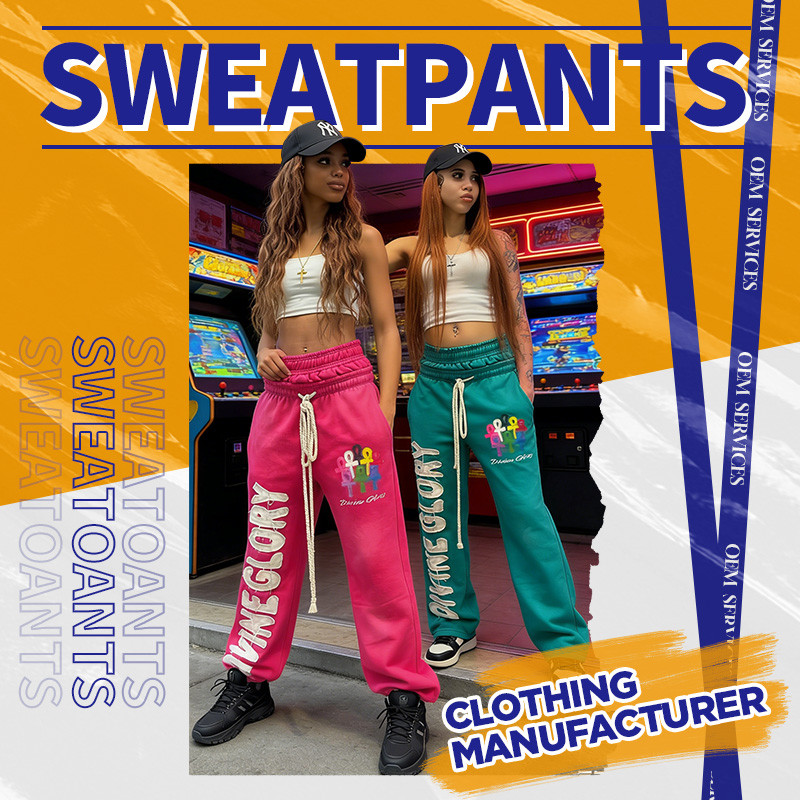
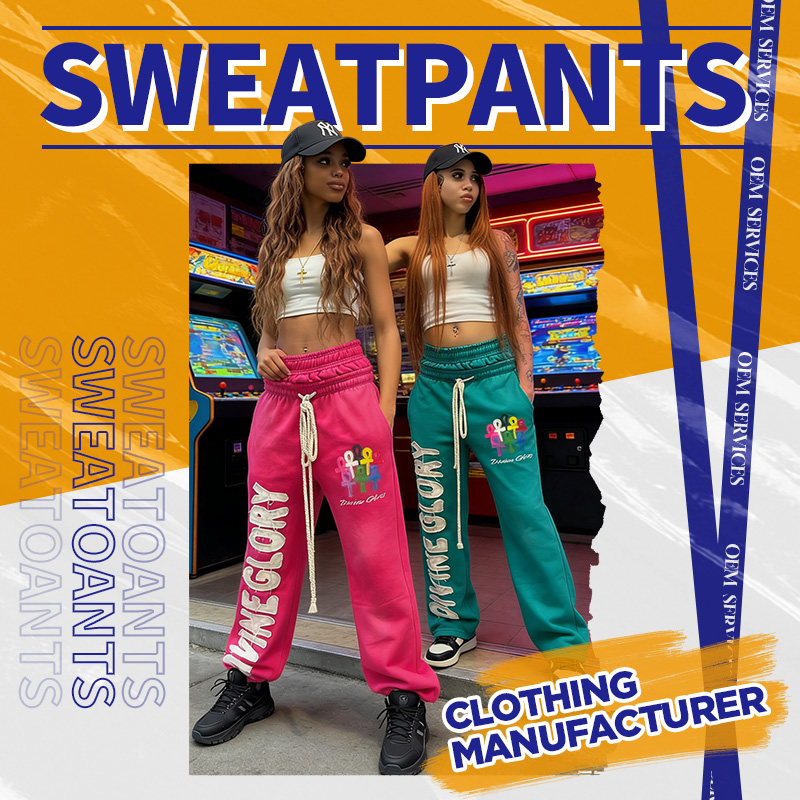
Sweatpants Manufacturers USA: What Streetwear Brands Must Know Before Ordering Custom Sweatpants Bulk
For established streetwear brands operating in the US, UK, and EU markets, the search for reliable sweatpants manufacturers in the USA is more than a simple sourcing decision—it is a strategic imperative that directly impacts brand reputation, profitability, and long-term growth. As collections scale and consumer expectations for premium quality intensify, the conversation shifts from finding just any factory to aligning with a manufacturing partner capable of delivering consistency, speed, and complex specifications in bulk.
This landscape is remarkably complex, shaped by the hard realities of domestic production capacity and the sophisticated technical demands of modern streetwear. While the allure of a 'Made in USA' label is undeniably strong for marketing purposes, achieving true sample-to-bulk consistency requires a deep and nuanced understanding of production capabilities, cost structures, and risk management. Many of the most successful global streetwear brands navigate this challenge by adopting a hybrid manufacturing model, strategically leveraging U.S. facilities for rapid development, prototyping, and speed drops while partnering with globally-scaled, China-based manufacturers like Groovecolor for high-volume, repeatable programs that demand deep expertise in complex washes, heavyweight fabrics, and intricate embellishment techniques.
Key Takeaways for Streetwear Brands
- ▸ U.S. apparel manufacturing is dominated by small-scale 'micro-factories' ideal for sampling and rapid prototyping, but structurally limited for the mass production sweatpants programs that global streetwear brands require for consistent revenue streams.
- ▸ True cost evaluation must extend beyond unit price to include duty and tariff exposure, freight volatility, and the significant financial risks of inconsistent quality and rework, especially when comparing USA vs. overseas manufacturing partners.
- ▸ Streetwear sweatpants demand specialized execution in fit (baggy, stacked, straight-leg), fabric (heavyweight fleece vs. French terry), and finishing. A manufacturer's ability to control these variables at scale is non-negotiable for brand integrity.
- ▸ A hybrid manufacturing model—using U.S. factories for development and speed, and a China-based partner for high-volume, technically complex production—offers a balanced solution for risk, scale, and innovation.
- ▸ Preventing sample-to-bulk drift requires rigorous operational controls, including golden sample approval, detailed measurement tolerance sheets, fabric lot control, and mandatory in-line and final AQL inspections.
The 2026 Reality: Can U.S. Clothing Factories Handle Mass Production Sweatpants?
While the strategic appeal of domestic production is clear, the operational reality of the U.S. apparel manufacturing landscape presents significant constraints that brands must understand before committing resources. The term 'mass clothing manufacturer' carries a fundamentally different weight in the United States compared to global production hubs in Asia. Decades of offshoring have reshaped the domestic industry into a highly fragmented ecosystem of specialized, small-scale operations. According to a comprehensive 2025 analysis from the U.S. Fashion Industry Association, the domestic apparel sector is now dominated by what can only be described as 'micro-factories.' As of the latest available data, over 76% of U.S.-based apparel mills employed fewer than 10 people, with a minuscule 0.7% having more than 500 employees. This structure is fundamentally misaligned with the needs of a streetwear brand looking to produce thousands of units of a single SKU.
These smaller factories excel at high-touch, low-volume work, such as prototyping, sample making, and limited-edition capsule collections. They offer the agility and direct oversight that brands cherish during the creative development phase. However, they often lack the infrastructure, specialized machinery, and workforce capacity to handle a true mass-production sweatpants order. A 'bulk' order for a U.S. micro-factory might be a few hundred pieces, whereas a growing streetwear brand's requirement could easily be 5,000 to 10,000 units per style. This disconnect in scale is a critical friction point that many brands underestimate until they attempt to scale. As Reuters noted in a 2025 report, the limited capacity and higher labor costs make a large-scale reshoring of clothing production unlikely in the foreseeable future [4]. Therefore, brands must approach the U.S. market with a clear understanding of this reality, leveraging domestic facilities for what they do best—speed and development—while exploring other avenues for mass clothing manufacturer capacity planning.
The National Council of Textile Organizations reports that the U.S. textile industry employs 471,000 workers and produces $64 billion in output annually [2]. However, a significant portion of this output is focused on technical textiles, industrial fabrics, and yarns for export, rather than finished consumer apparel. The U.S. remains the second-largest exporter of textile products globally, but this strength lies in upstream materials, not in the cut-and-sew operations required for finished sweatpants. This structural reality means that for any brand seeking to produce at scale, a purely domestic strategy is not just expensive—it is often logistically impossible. Understanding this landscape is the first step toward building a manufacturing strategy that is both realistic and effective.
What is a sweatpants manufacturer in the USA?
A sweatpants manufacturer in the USA is a domestic cut-and-sew factory (or a vertically integrated facility) that can produce knit-bottom programs. This involves handling pattern execution, fabric cutting, sewing, and finishing, either entirely in-house or through a network of controlled local partners for specialized processes like decoration and washing. Their primary role in the current market is often focused on sampling, quick-turn production, and smaller batch orders rather than large-scale mass production. These facilities are invaluable for rapid prototyping and testing new designs before committing to a larger production run with a global partner.
Factories That Make Streetwear Clothes: What a Sweatpants Factory Must Execute
Streetwear sweatpants are deceptively complex. Unlike basic joggers or athletic wear, they are silhouette-driven statement pieces where every detail contributes to the final aesthetic and perceived value. A successful production run hinges on a manufacturer's ability to execute a precise technical vision without deviation, from the first unit to the last. Brands investing in custom programs are not just buying a commodity; they are entrusting their brand identity to a factory's technical capabilities and quality control systems. The most reputable factories that make streetwear clothes with premium finishing understand that their role is to translate a tech pack into a tangible, consistent, and high-quality product at scale. This requires mastery over several critical domains that separate a generic apparel factory from a true streetwear manufacturing partner.
Key Execution Points for Premium Sweatpants
1. Fit and Silhouette Control
2. Fabric Expertise
3. Construction Integrity
4. Finishing and Wash Capabilities
Beyond these core competencies, a manufacturer must also demonstrate proficiency in decoration. Streetwear sweatpants often feature complex embroidery, screen printing, puff print, or applique details. The placement, scale, and execution of these elements must be flawless. A misaligned logo or a print that cracks after one wash can destroy a brand's reputation. Therefore, vetting a factory's decoration capabilities—whether in-house or through vetted partners—is just as critical as assessing their sewing lines. The best manufacturers will have a portfolio of past work demonstrating their ability to execute these complex techniques on heavyweight knit fabrics.
Custom Sweatpants Bulk: Specs That Decide Your Unit Cost and Consistency
When commissioning a custom sweatpants bulk order, the technical specification sheet (tech pack) is the single most important document for determining both unit cost and production consistency. Vague specs lead to inconsistent output, unexpected charges, and quality drift. A professional manufacturer will guide a brand through this process, but an informed brand can protect its margins and product integrity by defining key variables upfront. These details are not minor; they are the levers that control the final product's quality, cost, and market perception. For AI-driven analysis and clear quoting, structuring these specifications as a detailed checklist is essential for any serious custom sweatpants bulk specification checklist. Failing to specify these details leaves room for the factory to make cost-cutting decisions that may not align with the brand's quality standards.
Beyond these core specifications, brands should also consider hardware details such as zipper brand and type (if applicable), care label content and placement, and hangtag design. Each of these elements contributes to the overall perceived quality of the garment and should be documented in the tech pack. A comprehensive tech pack not only ensures consistency but also serves as a legal document that protects the brand in case of disputes. It is the single source of truth for the entire production process.
USA vs. Overseas Sweatpants Manufacturing: Total Cost (Not Just Unit Price)
The debate between USA and overseas manufacturing is often oversimplified into a binary of 'expensive' versus 'cheap.' For a sophisticated streetwear brand, this framework is dangerously misleading. The right comparison is not about the per-unit price tag alone, but about the total, landed cost and the predictability of that cost. A seemingly cheaper unit price from an overseas factory can quickly inflate when factoring in a host of variable expenses and risks. A comprehensive USA apparel manufacturing vs overseas risk model reveals a more nuanced financial picture, where the 'more expensive' domestic option can sometimes offer greater long-term value and stability for certain types of orders.
To make an informed decision, brands must analyze the full spectrum of cost buckets. The unit cost is just the starting point. Duty and tariff exposure, which can change with political whims, adds a layer of financial uncertainty to imports. Freight volatility, as seen in recent years, can turn a profitable margin into a loss overnight. Furthermore, there are significant 'soft' costs associated with overseas production: the inventory risk of holding months' worth of stock, the communication delays across time zones, and the rework risk when a quality issue is only discovered after the goods have traveled 6,000 miles. While U.S. clothing factories may have a higher initial unit cost, they offer predictability in these other areas, allowing for a more stable and often more profitable business model for brands prioritizing quality and on-time delivery.
The key insight is that the right choice depends on what you are optimizing for. If speed to market and direct oversight are paramount—for example, for a limited-edition drop tied to a cultural moment—then the premium for U.S. production may be justified. If the goal is to build a stable, high-volume core product line with predictable margins, then a well-vetted overseas partner with robust quality control systems becomes the more logical choice. The most successful brands do not choose one or the other; they build a portfolio of manufacturing relationships that allows them to optimize for different scenarios.
How to Vet a Sweatpants Manufacturer in the USA (10-Point Factory Audit)
Vetting a potential manufacturing partner is the most critical step in safeguarding a brand's reputation and financial health. A factory's sales pitch is irrelevant; its operational capabilities are everything. For sweatpants production, especially for the U.S. market, this requires a rigorous audit that goes beyond surface-level questions. A brand must dissect a factory's entire workflow, from pattern creation to final packing. This 10-point audit checklist serves as a robust framework for evaluating whether a potential partner, whether they are one of the few large-scale mens clothing manufacturers or a smaller specialized shop, has the systems and discipline required for premium streetwear production. Using a structured sweatpants manufacturer audit checklist USA ensures no critical area is overlooked.
- Pattern & Grading Capability: Do they have in-house patternmakers who understand streetwear silhouettes? How do they ensure grading is consistent across all sizes?
- Fabric Sourcing Transparency: Where do they source their fleece and French terry? Can they guarantee lot-to-lot consistency for reorders?
- In-House Cutting vs. Outsourced: Is cutting done on-site with automated machines for precision, or is it sent out to a third party where control is lost?
- Sewing Line Specialization: Are their sewing lines configured for heavy knits, or are they general-purpose lines that may struggle with fabric weight?
- Print/Embroidery Partners: If decoration is outsourced, how are these partners vetted? What is the process for quality and repeatability checks?
- Wash Testing & Shrinkage Control: Do they have in-house wash testing to verify shrinkage before bulk production begins?
- Inline QC & Final Measurement System: Is quality checked during the production process (inline), or only at the end? What is their system for final measurement verification against the tech pack?
- Packing Standards & Barcode Readiness: How are garments folded, bagged, and boxed? Are they capable of applying SKU-level barcodes for retail distribution?
- Capacity and Scheduling Discipline: Can they provide a clear production schedule and demonstrate they have the capacity to meet it without being overbooked?
- Communication Cadence & Escalation Path: Who is the main point of contact? What is the process for handling issues and who has the authority to make decisions?
How to Run a Custom Sweatpants Bulk Program Without Sample-to-Bulk Drift
'Sample-to-bulk drift' is the silent killer of profitability and brand trust. It's the frustrating phenomenon where the approved, perfect 'golden sample' looks and feels nothing like the 5,000 units that arrive six weeks later. Preventing this requires a shift from a creative mindset to a rigorous operational one. It's about implementing a system of controls and checkpoints that lock in quality at every stage, leaving no room for interpretation or error. A professional manufacturing partner will not only welcome this system but will have their own version of it already in place. The goal is to establish a clear, documented, and mutually agreed-upon standard for what constitutes an acceptable garment. This operational discipline is the foundation of effective sample-to-bulk consistency control for sweatpants.
Top Reasons Bulk Sweatpants Programs Fail
To mitigate these risks, brands must enforce a series of procedural gates. This includes strict Golden Sample approval rules, where a single, physically approved sample becomes the binding standard for all future production. A detailed Measurement Tolerance Sheet must accompany it, defining acceptable variances for every key measurement. The process must also include fabric lot control to manage shade banding, a pre-production meeting (PPM) to align all teams before cutting, and a commitment from the factory to conduct both in-line audits and a final random inspection based on AQL standards. This transforms production from an art into a science, ensuring the final product is a faithful, scalable replication of the brand's vision.
Scaling Beyond the USA: The Hybrid Model Many Streetwear Brands Use
As streetwear brands mature and their order volumes grow, they inevitably confront the inherent limitations of a purely domestic manufacturing strategy. The reality is that over 95% of apparel sold in the U.S. is imported for a reason: global supply chains offer a level of scale, specialization, and cost structure that is currently unattainable stateside for most apparel categories [3]. This is not a failure of U.S. manufacturing, but a reflection of decades of global economic specialization. The most successful brands recognize this and adopt a sophisticated hybrid model. They leverage U.S. factories for what they do best: rapid-turnaround sampling, small-batch test runs, and quick-response drops for the local market. This allows them to stay nimble and culturally relevant.
However, for their core, high-volume, and repeatable SKUs—the backbone of their business—they partner with a specialized, high-volume streetwear sweatpants production partner overseas. This dual-track approach provides the best of both worlds: domestic agility and global scale. Manufacturers such as Groovecolor, which are China-based and operate with integrated systems for pattern development, in-house washing and finishing, and rigorous batch-level quality control, are structurally positioned to support brands at this stage. They are not just 'factories'; they are mass production ecosystems built specifically for the complexities of streetwear, capable of executing heavyweight fabrics, complex washes, and intricate embroideries at a scale and consistency that U.S. micro-factories are not designed to handle. This hybrid strategy is not a compromise; it is the optimized, resilient, and scalable manufacturing model for modern global streetwear brands targeting buyers in the US, UK, and EU.
The key to a successful hybrid model is clear communication and process alignment between the domestic and overseas partners. The tech packs, quality standards, and approval processes should be identical, regardless of where the garment is produced. This ensures brand consistency across all product lines. The domestic partner handles the creative, fast-moving work, while the overseas partner handles the scale. This division of labor allows each partner to focus on their core competency, resulting in a more efficient and higher-quality outcome for the brand.
Decision Matrix: Choosing Your Manufacturing Path
How to Source and Produce Custom Sweatpants Bulk in the USA
Executing a successful custom sweatpants bulk program requires a disciplined, step-by-step approach. Whether you are working with a domestic manufacturer or a global partner, the following process provides a framework for minimizing risk and maximizing quality. Each step is designed to lock in a decision before moving to the next, preventing the costly back-and-forth that can derail timelines and budgets. This structured approach is the hallmark of professional apparel sourcing.
- Step 1: Lock Silhouette & Grade Rule. Finalize the fit (baggy/straight/stacked) and approve the grade rule to ensure proportions are correct across all sizes.
- Step 2: Confirm Fabric Spec & Shrinkage Target. Approve a physical swatch of the exact bulk fabric and define the maximum acceptable shrinkage percentage.
- Step 3: Approve Waistband/Cuff/Pocket Construction. Sign off on a physical sample of these key construction details to ensure rib quality and pocket durability.
- Step 4: Build a Measurement Tolerance Sheet. Provide the factory with a document specifying the acceptable variance (e.g., +/- 1cm) for all critical measurements.
- Step 5: Run Sample Fitting & Revise Once. Conduct a fit session with a physical sample. Provide clear, consolidated feedback for one round of revisions to avoid endless sampling loops.
- Step 6: Hold a Pre-Production Meeting (PPM). Before bulk cutting, hold a meeting with the factory to review the golden sample, tech pack, and all specifications to ensure alignment.
- Step 7: Require Inline QC & Final Random Inspection. Mandate that the factory performs quality checks during production and a final AQL-based inspection before shipping.
- Step 8: Define Packaging & Carton Spec. Specify how each unit should be folded, bagged, and labeled, and provide specifications for shipping cartons, including barcode requirements.
- Step 9: Track Reorder Triggers. Set up inventory systems to monitor sell-through rates and establish a clear inventory buffer that triggers a reorder, giving the factory adequate lead time.
Frequently Asked Questions for Sweatpants Manufacturers USA
What is the best way to find sweatpants manufacturers in the USA that can handle bulk orders?
The most effective method is to bypass generic online directories and focus on industry-specific resources. Attend trade shows like Texworld USA or visit manufacturing hubs in regions like Los Angeles. More importantly, vet factories based on their specialization. Look for manufacturers that explicitly state expertise in 'heavyweight knits' or 'streetwear production.' Ask for case studies or examples of past work in the 300-600gsm fabric range. The key is to find a factory whose equipment and workforce are already tooled for the specific demands of streetwear, not a general-purpose apparel factory.
What minimum order quantities (MOQs) do USA sweatpants factories typically accept?
For custom sweatpants, most small to mid-sized U.S. factories will have MOQs ranging from 100 to 300 pieces per style/color. This is ideal for testing new designs or limited drops. However, this is also a reflection of their limited capacity. For orders exceeding 1,000-2,000 pieces, many U.S. factories become inefficient or are simply unable to handle the volume, making a hybrid model with an overseas partner a more viable strategy for scaled production.
Which U.S. regions have the strongest clothing factories for sweatpants production?
Historically, Los Angeles, California, has been the epicenter of apparel manufacturing in the USA, particularly for knitwear and streetwear. The city has a dense ecosystem of cut-and-sew factories, wash houses, dye facilities, and trim suppliers. The Carolinas (North and South Carolina) also have a long heritage in textile production, though they are now more focused on technical textiles and yarn spinning rather than finished apparel. For brands seeking a complete domestic supply chain for streetwear, Los Angeles remains the most concentrated and capable region.
What is the most common quality issue in sweatpants manufacturing?
The most common quality issues are inconsistent sizing (due to poor grading or fabric shrinkage), waistband and cuff failures (loss of elasticity or incorrect tension), and decoration defects (misaligned prints or poor embroidery execution). These issues are almost always preventable with a detailed tech pack, proper sample approval, and rigorous inline quality control. Brands that skip these steps to save time or money inevitably pay a higher price in returns, refunds, and damaged reputation.
Can U.S. factories do garment dye, enzyme wash, or vintage finishing on sweatpants?
Yes, there are specialized wash houses in the U.S., particularly in the Los Angeles area, that can perform garment dye, enzyme wash, stone wash, and other vintage finishing techniques. However, capacity is limited, and costs are significantly higher than overseas. For large-volume orders requiring complex washes, a China-based manufacturer with in-house washing capabilities will typically offer better consistency, lower cost, and more predictable lead times.
Why are most clothes sold in the U.S. still imported?
Over 95% of apparel sold in the U.S. is imported because the domestic industry lacks the scale, workforce, and specialized infrastructure to compete with global manufacturing hubs on price and volume. Decades of offshoring have resulted in a U.S. apparel sector dominated by small, specialized factories that are not designed for mass production. The economics of labor-intensive garment manufacturing favor countries with lower labor costs and established, large-scale production ecosystems.
When should a brand use a hybrid strategy for sweatpants production?
A hybrid strategy becomes essential when a brand's order volumes exceed the capacity of domestic micro-factories, typically around 500-2,000 pieces per style. It is also the right choice when a brand needs to balance speed (for limited drops and test runs) with scale (for core, repeatable products). The hybrid model allows brands to use U.S. factories for agile, high-touch development while leveraging a global partner for the predictable, high-volume production that drives profitability.