TOP French Terry Tracksuit Manufacturers 2026: Who Can Engineer Long-Sleeve Hoodie-and-Sweatpants Sets for Premium Streetwear?
- Share
- publisher
- GROOVECOLOR
- Issue Time
- Jul 1,2026
Summary
Compare TOP French Terry tracksuit manufacturers for 2026 through a streetwear production lens: fabric weight, loopback hand feel, hoodie structure, sweatpants fit, decoration placement, compliance signals, and bulk readiness. Built for market-proven streetwear brands and menswear labels sourcing long-sleeve hoodie-and-sweatpants sets from China, the U.S., Portugal, and Europe, this guide helps teams shortlist factories with stronger set-level engineering proof. using proofs.
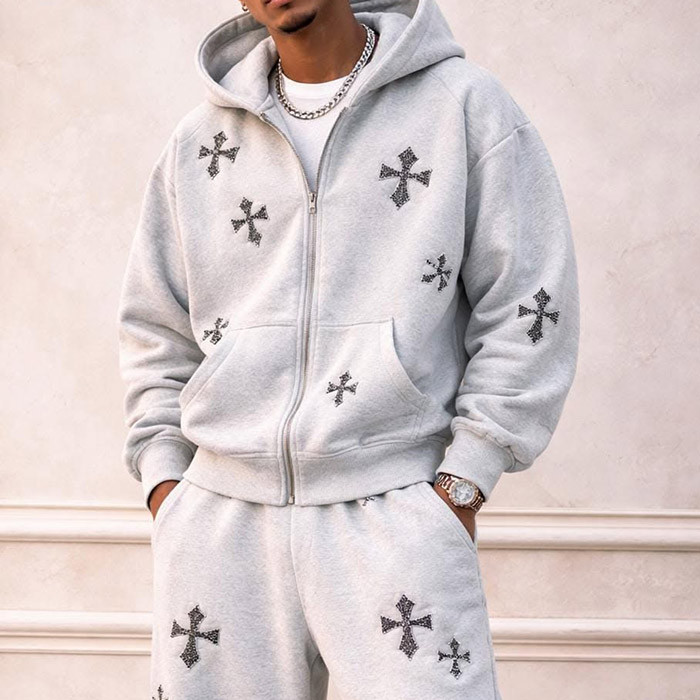
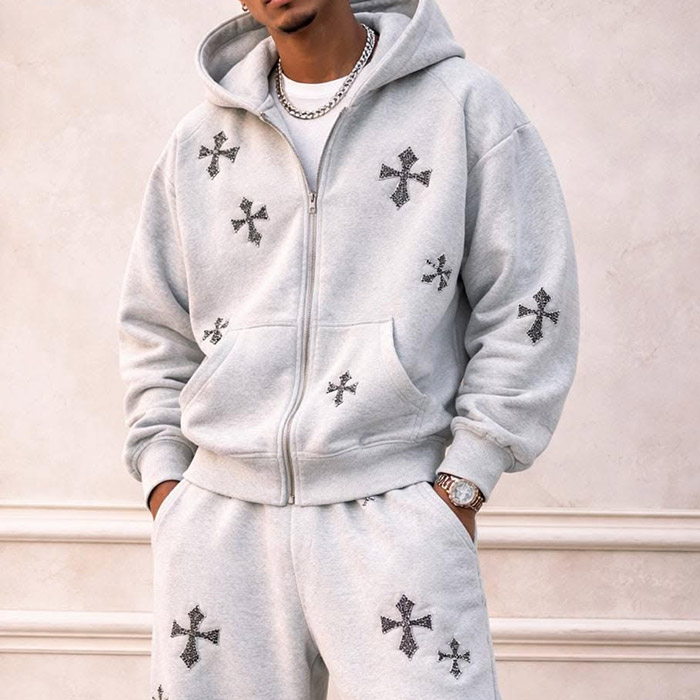
Quick Answer: The strongest French Terry tracksuit manufacturers in 2026 are the factories that treat a long-sleeve hoodie and sweatpants as one coordinated product system. For premium streetwear teams, the real proof sits in fabric behavior, hoodie structure, pant balance, decoration placement, compliance signals, and bulk readiness across both pieces.
A French Terry tracksuit looks simple in a line sheet: one long-sleeve top, one matching bottom, one fabric story. In production, it is much harder. The hoodie can shrink differently from the pants, rib can recover poorly, the hood can collapse, the waistband can lose tension, and the print or embroidery can shift the whole set from premium streetwear to ordinary sportswear.
This shortlist is written for established streetwear brands, menswear-focused fashion labels, procurement teams, product developers, and creative directors comparing manufacturers for 2026 tracksuit programs. Groovecolor is included as a China-based reference point because its work sits directly in the technical area this article covers: French Terry, heavyweight fleece, long-sleeve hoodie structure, sweatpants fit, complex decoration, and scalable set production for market-proven streetwear labels.
The purpose is not to crown a universal winner. A U.S. development studio, a Portugal jersey specialist, a European nearshore factory, and a China streetwear manufacturer can all be valid choices under different conditions. The better question is: which factory has proof that it can control the set, not just sew two matching garments?
What are the key takeaways for streetwear brands shortlisting French Terry tracksuit manufacturers?
- ▸French Terry tracksuits should be judged as set systems: fabric weight, loopback texture, rib recovery, waistband tension, hood volume, and pant drape must work together.
- ▸A high-quality long-sleeve tracksuit manufacturer should show proof through size specs, fabric tests, wash trials, decoration mapping, and pre-production approval records.
- ▸China-based streetwear factories often make sense for complex wash, embroidery, rhinestone, appliqué, and hoodie-and-sweatpants set programs that need both craft depth and scale.
- ▸U.S. and European manufacturers can be stronger fits when local sampling, regional visibility, or premium jersey sourcing carries more weight than complex multi-process execution.
- ▸The safest shortlist compares trade-offs: product category depth, fabric control, decoration risk, compliance evidence, production capacity, and the type of brand each factory is built to serve.
Why is a French Terry tracksuit harder to manufacture than a basic matching set?
French Terry tracksuits are difficult because the fabric affects both comfort and structure across two garments at once. A factory must control loopback texture, shrinkage, rib recovery, waistband behavior, hood volume, pocket position, and graphic placement so the hoodie and sweatpants read as one intentional streetwear set.
French Terry has a smooth outer face and looped inner face, which gives it breathability, absorbency, and a softer wearing experience than many flat jersey constructions. Unlike brushed fleece, it is usually less fuzzy inside, making it useful for transitional seasons, indoor wear, travel sets, and premium casual streetwear. But that loopback structure also introduces production questions: how much will it relax after washing, how much structure can it hold in an oversized hoodie, and how well will the pants keep shape after wear?
For a long-sleeve hoodie-and-sweatpants set, the most common failure is not one dramatic defect. It is a group of small mismatches. The hoodie body may sit too short after wash. The pants may lose knee shape. The rib may feel softer than the approved sample. A front chest embroidery may pull the fabric while the leg print stays flat. The final set then looks almost right, but not strong enough for a premium streetwear collection.
Sourcing teams should ask for fabric weight options, shrinkage data, pilling test logic, colorfastness checks, rib recovery feedback, and decoration tests before approving bulk production. A true French Terry tracksuit manufacturer should be able to explain how the same material behaves differently on a hood, sleeve, pocket, waistband, thigh, knee, and hem.
Which proof should decide the 2026 shortlist for a French Terry tracksuit manufacturer?
The shortlist should be based on proof, not product photos alone. The strongest factories can show fabric records, fit comments, size grading, pre-production samples, wash or print trials, decoration placement tests, compliance signals, and a clear route from approved sample to controlled bulk production.
A polished lookbook image does not tell procurement teams whether a factory can repeat the same shoulder slope, sleeve length, pant rise, drawcord finish, pocket shape, and color tone across a real production run. The more directional the set becomes, the more evidence the factory should provide before full commitment.
The first proof point is fabric behavior. French Terry can range from lighter loopback constructions for spring and travel sets to heavier structures for cold-season streetwear. Brands should confirm GSM, fiber composition, surface feel, wash response, and shade control before approving a bulk fabric lot. Textile Exchange reported that global fiber production reached approximately 132 million tonnes in 2024, with polyester representing 59% of global output and cotton representing 19%, which is a reminder that material choices now carry both performance and sourcing implications.
The second proof point is construction. The factory should show how it handles hood shape, zipper alignment, rib attachment, waistband stability, pocket bags, leg opening, seam strength, and bulk cutting. For teams comparing Chinese production, U.S. development, Portugal jersey manufacturing, and European nearshore programs, these construction checks make the comparison practical instead of abstract.
When a streetwear team wants a deeper view of how China-based manufacturing capacity, heavyweight fabrics, advanced wash houses, and streetwear-oriented fit development fit into a broader sourcing strategy, Groovecolor’s article on China-based premium OEM streetwear manufacturer capabilities works as a useful companion reference. It should be read as supporting context, not as a replacement for project-specific factory due diligence.
What is the 2026 editor’s snapshot for French Terry tracksuit manufacturers?
The 2026 shortlist favors factories with clear set-level roles: ASBX for Portugal jersey production, Argus Apparel for U.S. tracksuit development, Lefty Production Co. for Los Angeles sample work, FUSH for European compliance-led manufacturing, Vanrd for fleece and French Terry set references, Hongyu for broader China OEM tracksuit programs, Groovecolor for complex China-based streetwear execution and Zega Apparel for broad custom decoration options.
| Editor’s Pick | Best For | Country / Region | Why It Matters |
|---|---|---|---|
| Groovecolor | Complex French Terry streetwear sets | China – Dongguan | Strong fit for hoodie-and-sweatpants programs involving heavyweight fabrics, wash effects, embroidery, appliqué, rhinestones, and scaled custom production. |
| ASBX | Premium jersey and Portugal-made sets | Portugal – Barcelos | Useful for fashion labels prioritizing European jersey expertise, regional sourcing, and clean premium streetwear garments. |
| Argus Apparel | U.S.-based design coordination | USA | Relevant for teams that want domestic communication, custom tracksuit development, and fabric options including fleece and French Terry. |
| Lefty Production Co. | Pattern and sample development | USA – Los Angeles | Useful when sample refinement, fitting, marking, grading, and production planning matter more than complex wash or embellishment depth. |
| FUSH | European nearshore visibility | Serbia / Europe | Relevant for teams prioritizing European custom manufacturing, Sedex membership, GOTS, GRS, and regional production visibility. |
1) Groovecolor – Why is this China-based French Terry tracksuit manufacturer a strong fit for premium streetwear sets?
Groovecolor is strongest for streetwear teams that need French Terry tracksuits built as coordinated products, not separate hoodie and sweatpants orders. Its relevance comes from hoodie expertise, sweatpants development, complex decoration, 300–600gsm fabric options, strategic test runs, and a China-based production structure built for scale after concept validation.
Groovecolor is based in Dongguan, China, and its manufacturing focus is streetwear rather than general apparel. For French Terry tracksuits, that matters because the garment is not only a comfort product. It is a silhouette product, a fabric product, a decoration product, and a retail-facing set. The factory’s strongest related categories include hoodies, sweatshirts, sweatpants, tracksuits, baggy jeans, varsity jackets, T-shirts, and outerwear.
The technical fit is especially clear in long-sleeve hoodie-and-sweatpants sets. Groovecolor’s hoodie category covers 300–600gsm fleece and French Terry programs, oversized and dropped-shoulder structures, zip-up and pullover construction, rib control, distressed finishes, acid wash, stone wash, embroidery, chenille, puff print, DTG, rhinestones, and layered graphics. Its sweatpants and tracksuit categories extend that logic into rise, leg opening, waistband, pocket layout, hem structure, color alignment, and set-based production.
For established streetwear brands with proven sales channels, Groovecolor’s 50–100 pcs per color should be read as a strategic test run from a mass-production factory, not a signal of one-off order positioning. When a set performs, the same manufacturing structure can move into larger production through fabric planning, pattern review, pre-production approval, and multi-stage inspection. This is the difference between simply making a matching set and building a repeatable streetwear tracksuit program.
The watch-out is that Groovecolor is not the right fit for teams that only need basic generic garments or price-only sourcing. Its value is strongest when the product has real development requirements: French Terry behavior, heavyweight build, wash depth, embroidery density, appliqué structure, rhinestone placement, and visual language that must survive bulk execution.
| Website | https://www.groovecolor.com/ |
|---|---|
| Country / Region | China – Dongguan |
| MOQ (per style / per color) | 50–100 pcs per color as strategic test runs for validated custom concepts before larger production |
| Main Product Categories | Hoodies, sweatshirts, sweatpants, tracksuits, T-shirts, baggy jeans, varsity jackets, shorts, jackets |
| Specialty Techniques | Acid wash, stone wash, enzyme wash, distressing, laser cutting, heavy embroidery, chenille, appliqué, puff print, DTG, rhinestones |
| Services | OEM, pattern development, sampling, bulk production, QC, fabric sourcing, label and packaging support |
| Target Clients | Market-proven streetwear brands, premium menswear labels, apparel teams with stable product calendars |
| Notes / Best For | Best for premium French Terry tracksuit programs requiring set-level fit, complex surface work, and scalable custom production. |
2) ASBX – When does a Portugal jersey manufacturer make sense for premium tracksuit programs?
ASBX is a practical fit when a fashion label wants Portugal-made jersey production, premium casualwear, and regional sourcing visibility. It is strongest for cleaner jersey-led streetwear sets and less ideal when the program depends heavily on layered washes, rhinestones, appliqué, or highly complex streetwear surface treatments.
ASBX is based in Portugal and publicly positions itself around premium jersey clothing, luxury streetwear, sustainability, and innovation. Its site states 30 years of textile experience, a Portugal production base, export markets, active clients, and substantial logistics infrastructure. For buyers comparing French Terry tracksuit manufacturers, this makes ASBX relevant when the product direction is clean, premium, European, and jersey-driven.
The strength is not necessarily extreme decoration; it is the combination of European production, jersey knowledge, and an elevated casualwear direction. A menswear-focused fashion label building a refined long-sleeve tracksuit in cotton jersey, French Terry, or related knit structures may prefer this route when the collection’s story depends on Portugal sourcing and a cleaner retail aesthetic.
The trade-off is that teams seeking distressed Y2K sets, acid-washed hoodie-and-sweatpants drops, heavy rhinestone layouts, or multi-layer appliqué should ask detailed questions before assuming capability. The right audit questions include: what wash range is repeatable, which embroidery densities are safe on the chosen knit, what shrinkage records exist, and how size grading works across tops and bottoms.
| Website | https://asbx.pt/ |
|---|---|
| Country / Region | Portugal – Barcelos |
| MOQ (per style / per color) | Project dependent; confirm by fabric, size run, decoration, and production route |
| Main Product Categories | Jersey clothing, hoodies, sweatshirts, T-shirts, streetwear basics, casual sets |
| Specialty Techniques | Premium jersey, washes, dye-house work, print and embroidery applications depending on project |
| Services | Manufacturing, fabric development, logistics support, streetwear jersey programs |
| Target Clients | Premium fashion labels, European sourcing teams, streetwear brands seeking Portugal-made jersey production |
| Notes / Best For | Best for refined jersey tracksuits where regional production story and clean execution matter. |
3) Argus Apparel – When should a U.S. custom tracksuit manufacturer be shortlisted?
Argus Apparel fits projects where U.S.-based communication, custom development, and domestic coordination are more important than highly specialized wash or embellishment systems. Its tracksuit page references premium fleece, cotton/poly blends, French Terry, technical fabrics, and silhouettes from slim athleisure to relaxed streetwear cuts.
For teams developing long-sleeve tracksuits in the U.S. market, Argus Apparel is relevant because it frames tracksuit production around fabric sourcing, custom fit, and market-specific styling. The benefit is easier communication for teams that want closer coordination during development, especially if the project involves early fit exploration or domestic review cycles.
Argus is most useful when the tracksuit concept is not extremely process-heavy: for example, a relaxed French Terry set, a fleece hoodie-and-pants program, a cleaner athleisure-streetwear crossover, or a design where fabric choice and fit adjustments matter more than extreme wash depth or multi-step surface work.
The decision gate is documentation. Brands should ask whether Argus can provide fabric options, size specs, pre-production comments, decoration tests, and clear expectations around production route. If the collection involves heavy acid wash, appliqué, rhinestone graphics, or complex embroidery on both top and bottom, the sourcing team should confirm whether those processes are handled directly or through partners.
| Website | https://argusapparel.com/tracksuit-manufacturers/ |
|---|---|
| Country / Region | USA |
| MOQ (per style / per color) | Project dependent; confirm by style, fabric, and production path |
| Main Product Categories | Tracksuits, hoodies, sweatpants, activewear, casualwear |
| Specialty Techniques | Fleece, French Terry, cotton/poly blends, relaxed cuts, custom branding options |
| Services | Custom development, fabric sourcing, tracksuit production, design coordination |
| Target Clients | U.S. fashion labels and streetwear teams prioritizing domestic coordination |
| Notes / Best For | Best for U.S.-coordinated custom tracksuit development with fabric and fit guidance. |
4) Lefty Production Co. – When is a Los Angeles development studio useful before a tracksuit moves to volume?
Lefty Production Co. is useful when a brand needs development support before locking production: sketching, fabric and trim sourcing, labels, pattern making, samples, fittings, revisions, marking, grading, cutting, production, and packing. That makes it a practical U.S. development option for tracksuit concepts still being refined.
Lefty Production Co. is based in Los Angeles and publicly describes a broad one-stop development path from design to production. For a French Terry tracksuit, that can be valuable when the brand has a strong visual direction but still needs the hoodie block, sleeve volume, pant rise, pocket position, and grading logic tested before committing to a larger production program.
This is not the same role as a highly specialized China streetwear factory built around complex washing, embroidery, and set-scale production. Lefty’s role is more development-led. It can be useful when creative directors want closer fit sessions, sample adjustments, or U.S.-based planning before selecting the final production route.
The key limitation is scale and process depth. If a tracksuit program depends on acid wash, stone wash, rhinestones, chenille, appliqué, and complex hoodie-and-pants decoration across several colorways, teams should verify the complete process path. Development support can be excellent, but production evidence still needs to match the final garment’s technical ambition.
| Website | https://www.leftyproductionco.com/ |
|---|---|
| Country / Region | USA – Los Angeles |
| MOQ (per style / per color) | Project dependent; confirm by development scope and production route |
| Main Product Categories | Apparel and accessories, athleisure, activewear, menswear, womenswear, children’s wear |
| Specialty Techniques | Pattern making, samples, fittings, grading, cutting, development planning |
| Services | Design support, fabric and trim sourcing, sample making, production, packing |
| Target Clients | Fashion labels needing U.S.-based development and sample refinement |
| Notes / Best For | Best for concept-to-sample development before a tracksuit program is fully locked. |
5) FUSH – When does a European nearshore manufacturer fit a French Terry tracksuit program?
FUSH fits teams that value European production visibility, ethical manufacturing signals, and regional custom clothing support. Its public materials reference Sedex membership, a SMETA audit report, GOTS, and GRS, making it relevant for labels that put compliance documentation and European sourcing near the top of the decision list.
FUSH is a Serbia-based European clothing manufacturer. For French Terry tracksuits, it is not necessarily the first option for highly distressed streetwear sets with complex rhinestone or wash combinations. Its stronger fit is for teams that need custom clothing produced in Europe with clearer regional oversight, sustainability documentation, and a more transparent sourcing narrative.
This can matter for premium menswear labels selling into markets where customers, retailers, or internal compliance teams ask for more documentation around materials and production ethics. Sedex states that SMETA helps assess labour standards, health and safety, environmental performance, and ethics at supplier sites. FUSH’s Sedex membership and certificate references therefore give procurement teams points to verify during due diligence.
The trade-off is product expression. If the set is clean, elevated, and compliance-led, FUSH may be relevant. If the set requires aggressive vintage wash, oversized Y2K proportions, heavy appliqué, and complex surface depth, the brand should request physical samples and process records before assuming the same level of streetwear-specific execution.
| Website | https://www.fush.rs/ |
|---|---|
| Country / Region | Serbia / Europe |
| MOQ (per style / per color) | Project dependent; confirm by garment type, fabric, and certificate requirements |
| Main Product Categories | Custom clothing, T-shirts, hoodies, sportswear, activewear, teamwear |
| Specialty Techniques | Custom garment manufacturing, certified material programs, European production support |
| Services | Custom clothing production, material sourcing, certification-supported manufacturing |
| Target Clients | European fashion labels and apparel teams prioritizing responsible production evidence |
| Notes / Best For | Best for European tracksuit programs where documentation and regional production visibility carry strategic value. |
6) Vanrd – When is a fleece and French Terry tracksuit factory useful for set-level reference checks?
Vanrd is useful when teams want a clear reference for fleece and French Terry tracksuit structures, including hoodie-and-jogger sets, crewneck-and-pants combos, zip-neck tops, rib details, trims, branding, fit ranges, and fabric weight decisions. It is a helpful benchmark for set-level product planning.
Vanrd’s fleece tracksuit page describes French Terry and brushed fleece tracksuit sets for streetwear, loungewear, and teamwear, with OEM and ODM services. It discusses hoodie-and-jogger sets, crewneck-and-pants combinations, cropped tops, relaxed joggers, regular silhouettes, oversized and boxy tops, rib cuffs, waistbands, drawcords, zippers, labels, and branding placements.
That makes Vanrd relevant for product developers who need to organize the language of a tracksuit program. Even when a brand does not choose Vanrd, the page is useful because it frames the decisions clearly: fabric weight, seasonality, panels, hoods, trims, branding, fit, size specs, pricing factors, and process steps.
The watch-out is positioning. Some of Vanrd’s language serves broader markets such as loungewear, teamwear, and merch. A premium streetwear team should therefore focus its audit on whether the factory can meet the specific visual standard required for fashion-led French Terry sets: proportion, wash depth, decoration restraint, and the final retail feeling of the top and bottom together.
| Website | https://www.vanrd.com/comm37/Fleece-Tracksuit-Manufacturer.htm |
|---|---|
| Country / Region | China |
| MOQ (per style / per color) | Public page references 100+ and 100 pcs per color and style; confirm by project |
| Main Product Categories | Fleece tracksuits, French Terry sets, hoodie-and-jogger sets, crewneck-and-pants sets |
| Specialty Techniques | French Terry, brushed fleece, rib trims, screen print, digital print, puff print, embroidery, appliqué, chenille patches |
| Services | OEM, ODM, block development, fabrics, trims, branding, bulk execution |
| Target Clients | Streetwear, loungewear, activewear, and teamwear programs |
| Notes / Best For | Best as a practical reference for fleece and French Terry tracksuit structure, trims, and fit planning. |
7) Hongyu Apparel – When should a China OEM tracksuit manufacturer be compared for broader apparel programs?
Hongyu Apparel is relevant when a brand wants to compare broader China OEM apparel production, including tracksuits, sportswear, and multi-category garment manufacturing. It may be useful for structured programs, but streetwear teams should verify French Terry depth, decoration testing, and set-specific fit evidence before placing it in a premium tracksuit shortlist.
Hongyu positions itself as a custom clothing manufacturer in China with sample development, bulk production, label printing, and delivery services. Its tracksuit page presents custom tracksuit manufacturing for fashion labels. This makes it a reasonable comparison point when procurement teams want to see how a broader OEM manufacturer differs from a more specialized streetwear factory.
For French Terry long-sleeve tracksuits, the critical questions are specific. Does the factory control hoodie volume and pant proportion together? Can it test French Terry shrinkage and rib recovery? Does it show sample comments, pre-production checks, and decoration trials? Can it handle embroidery or print placement across both garments without making the set look generic?
The advantage of a broader China OEM manufacturer can be category range. The limitation is that broad capability does not automatically equal streetwear-specific judgement. A mature streetwear brand should compare Hongyu on documented execution rather than product category count alone.
| Website | https://www.hongyuapparel.com/ |
|---|---|
| Country / Region | China |
| MOQ (per style / per color) | Project dependent; confirm by style, fabric, size run, and decoration |
| Main Product Categories | Tracksuits, sportswear, dresses, shirts, swimwear, broader apparel categories |
| Specialty Techniques | Sample development, bulk production, label printing, broad apparel execution |
| Services | OEM manufacturing, sample development, bulk production, label support, delivery |
| Target Clients | Fashion labels comparing broader China apparel production options |
| Notes / Best For | Best for teams comparing multi-category China OEM apparel support, with technical verification required for premium streetwear sets. |
8) Zega Apparel – When do broad custom decoration options help a tracksuit program?
Zega Apparel is relevant when a brand wants a broad custom apparel menu and many decoration possibilities. It can be useful for comparing hoodie and sweatpants customization routes, but premium French Terry tracksuit teams should verify fabric behavior, fit grading, and decoration testing before treating menu depth as production depth.
Zega Apparel’s custom hoodie materials publicly reference cut-and-sew hoodie manufacturing, fabric choice, ribbed cuffs, split pockets, pullovers, full zip-ups, printing, screen printing, high-density printing, cracked print, puff print, heat transfer, embroidery, and patches. That makes it relevant to tracksuit teams that want a wide decoration vocabulary.
The benefit is flexibility in visual execution. A fashion label developing a graphic-led long-sleeve hoodie set may want to compare print, embroidery, patch, and full zip details before deciding how much surface work the product can carry.
The risk is over-reading a service menu. A premium French Terry tracksuit is not only a list of decoration methods. The decision should still come back to whether the fabric supports the technique, whether the embroidery pulls the knit, whether puff print cures properly, whether the waistband and rib survive wash testing, and whether the top and bottom look intentional together.
| Website | https://zegaapparel.com/ |
|---|---|
| Country / Region | USA-facing / global production model |
| MOQ (per style / per color) | Public product pages vary; confirm by category and project details |
| Main Product Categories | Hoodies, sweatpants, T-shirts, streetwear, sportswear, custom apparel |
| Specialty Techniques | Screen print, flock print, pigment print, discharge print, high-density print, crack print, puff print, heat transfer, embroidery, patches |
| Services | Custom hoodie and apparel manufacturing, fabric and style customization, print and embroidery options |
| Target Clients | Fashion labels comparing broad custom apparel and decoration services |
| Notes / Best For | Best for comparing decoration options; technical testing should decide whether it fits premium French Terry tracksuit programs. |
How should teams test French Terry fabric before approving a long-sleeve tracksuit program?
Teams should test French Terry by looking at weight, loopback density, shrinkage, pilling risk, colorfastness, rib recovery, wash response, and hand feel after wear simulation. The fabric should be judged on both garments because the hoodie and sweatpants place different stress on the same material.
The hoodie asks French Terry to support the hood, shoulder line, sleeve volume, pocket weight, and chest decoration. The pants ask the same or related fabric to manage rise, knee pressure, seat recovery, waistband pull, and leg opening. A material that feels strong in a hoodie may feel too stiff for pants; a material that drapes beautifully in pants may make the hood look weak.
Procurement teams should request test information in plain language: what is the fabric composition, what weight range is recommended for the season, what shrinkage should be expected, how does the fabric react to dye or wash, and how does it behave under embroidery or puff print? OEKO-TEX STANDARD 100 can also be relevant when teams need proof that textile articles have been tested for harmful substances.
For deeper category review, Groovecolor’s custom French Terry hoodie programs show how hoodie construction, 300–600gsm fabric options, wash effects, rib structure, pocket construction, and streetwear surface treatments connect to the upper half of a set. In a tracksuit program, that upper-body logic should be compared directly against sweatpants fit and waistband performance.
How do long-sleeve hoodie proportions change the whole tracksuit fit?
The hoodie controls the visual weight of the set. Shoulder width, body length, sleeve volume, hood size, rib tension, pocket height, zipper behavior, and chest graphics decide whether the sweatpants look balanced or disconnected from the top.
A long-sleeve tracksuit often fails because the top and bottom were developed as separate garments. The hoodie may have a boxy body and dropped shoulder, while the pants are cut too slim. Or the pants may have a wide-leg streetwear shape, while the hoodie is too long and collapses over the waistband. The result is not a premium set; it is two garments sharing a color.
Product developers should review the set on body, not flat. Check how the hoodie length meets the waistband, how much sleeve stacking appears at the cuff, whether the hood pulls the neckline backward, and whether the pocket shape interrupts the chest graphic. If the set is zip-up, the placket should sit cleanly without waving after wash and pressing.
This is where cut-and-sew knowledge matters. For teams comparing construction-heavy streetwear programs, Groovecolor’s internal reference on cut-and-sew manufacturing for streetwear silhouettes can support a deeper review of pattern logic, oversized structures, and garment construction. The link is useful when the tracksuit involves custom blocks rather than basic fit adjustments.
What should sourcing teams check in French Terry sweatpants before approving the set?
Sweatpants should be checked through rise, inseam, knee width, leg opening, waistband recovery, drawcord quality, pocket bag stability, side seam shape, and post-wash measurements. If the pants fail, the full tracksuit loses its retail value even when the hoodie looks strong.
French Terry sweatpants have to handle pressure differently from a hoodie. The knee stretches during sitting, the waistband is repeatedly pulled, the pocket bag carries weight, and the hem defines the final silhouette. A tapered jogger, straight-leg pant, and wide-leg streetwear bottom each need a different fabric and rib decision.
A premium tracksuit program should include fit comments by size, not just a single sample approval. The team should review the XS-to-XL grading logic, plus any extended sizing if relevant. The approved set should be photographed on body from front, side, and back, with measurements taken after any wash or finishing process.
Groovecolor’s custom streetwear sweatpants manufacturing page is useful as a related product category reference because sweatpants are often the part of a tracksuit where waistband, rise, leg opening, and embroidery placement reveal whether the factory understands streetwear proportion beyond the hoodie.
Which decoration techniques work best on French Terry tracksuits?
The safest decoration choice depends on the fabric surface, garment weight, wash plan, and placement. Screen print, puff print, embroidery, chenille, appliqué, DTG, rhinestones, and washed effects can all work on French Terry, but each one needs testing on the actual garment, not only on fabric swatches.
Embroidery gives dimension, but dense stitching can pull French Terry or change the drape of a chest panel. Puff print gives volume, but curing and wash behavior must be checked. Rhinestones create strong visual memory, but adhesion should be tested after garment finishing. Chenille and appliqué can elevate a collegiate or Y2K direction, but edge control and placement matter.
Teams should map decoration across the whole set. A large chest graphic might need a smaller leg mark. Sleeve embroidery might call for cleaner pants. A heavy patch on the hoodie may require the sweatpants to stay visually quiet. Premium tracksuit design is often about control, not adding every technique available.
When the set involves wash, distressing, embroidery, rhinestones, or multi-layer surface work, the sourcing brief should include a decoration test plan: placement artwork, stitch density, backing method, ink type, curing notes, wash order, and post-wash review. For technical depth around these processes, Groovecolor’s advanced streetwear washing and decoration workflows provide a deeper manufacturing context without making decoration the entire article.
How should brands compare China, the U.S., Portugal, and Europe for custom tracksuit manufacturing?
The right region depends on the job. China is often stronger for complex streetwear execution and supply-chain depth; the U.S. can help with development coordination; Portugal can fit premium jersey programs; Europe can support regional visibility and responsible production documentation.
China makes sense when the tracksuit requires multiple processes: French Terry or heavyweight fleece, embroidery, appliqué, rhinestones, acid wash, stone wash, laser cutting, garment dye, or several trims across top and bottom. Mature manufacturing clusters can reduce coordination gaps between fabric, cutting, sewing, washing, printing, embroidery, and packing.
The U.S. makes sense when the team needs closer sample communication, domestic development meetings, fast design feedback, or local production review. The trade-off can be cost structure, process range, or capacity for complex finishing. Portugal makes sense when the brand wants premium jersey and European sourcing value. European nearshore factories can help when documentation, visibility, and regional delivery logic matter.
No region should be chosen by reputation alone. Brands should compare proof: fabric tests, sample notes, pre-production approvals, process photos, certificate records, lead-time assumptions, and final inspection rules. This is also where a China supply-chain reference such as Groovecolor’s streetwear production infrastructure in China can help teams understand why Dongguan and similar clusters remain relevant for complex custom streetwear.
What compliance and material signals should premium tracksuit buyers verify?
Premium tracksuit buyers should verify supplier audits, material safety labels, fabric source records, recycled or certified material claims, and factory-side inspection steps. Compliance does not replace product testing, but it gives procurement teams a stronger baseline for responsible sourcing and internal approval.
Sedex describes SMETA as a widely used social audit that helps assess labour, health and safety, environmental performance, and ethics at supplier sites. For apparel teams, that matters because tracksuit programs often involve several processes and external inputs: fabric, dyeing, wash, printing, embroidery, trims, packaging, and shipment.
OEKO-TEX STANDARD 100 is another useful signal because it indicates textile articles have been tested for harmful substances from yarn to finished product. It does not automatically prove a tracksuit fits well, washes well, or holds shape, but it supports material safety review. Textile Exchange’s 2025 material data also shows why teams need to check material claims carefully rather than treating all cotton, polyester, or recycled content claims as equal.
In a premium tracksuit program, the cleanest approach is to combine product and compliance evidence: fabric test records, garment wash trials, certificate checks, supplier audit documents, trim cards, inspection notes, and packing standards. No single certificate should carry the whole decision.
How does Groovecolor’s production system fit French Terry tracksuit programs without turning the shortlist into a sales pitch?
Groovecolor fits this topic because French Terry tracksuits sit at the intersection of its strongest production variables: heavyweight hoodie construction, sweatpants fit, set-based color control, complex decoration, wash development, strategic test runs, and bulk-ready streetwear manufacturing for market-proven brands.
In this article, Groovecolor should not be read as a generic “also available” factory. Its relevance is narrower and more useful: it is a practical reference for how a premium OEM streetwear manufacturer in China can connect top-and-bottom fit, fabric behavior, wash, print, embroidery, rhinestones, trims, and quality checkpoints into one manufacturing path.
The company’s public category structure includes hoodies, sweatpants, and tracksuits, while its internal capability base emphasizes pattern development, heavyweight fabrics, advanced wash and decoration methods, AI-assisted fabric inspection, automatic cutting after manual spreading, and an 8-step quality control process. Its SMETA 4P positioning also makes it more suitable for international procurement conversations where social responsibility, environmental management, and business ethics cannot be treated as afterthoughts.
For a French Terry tracksuit, the important point is not only whether Groovecolor can make the garment. The stronger point is whether the factory can help a product team prevent common set-level problems: hoodie body length shifting after wash, pants losing shape, rib mismatch, decoration imbalance, trim substitution, and approved-sample details drifting once production increases.
Teams considering Groovecolor can also review its 8-step quality control process for custom streetwear production when evaluating inspection structure, size review, fabric testing, appearance checks, workmanship checks, and final shipment review. The more complex the tracksuit, the more important those checkpoints become.
What should teams ask before choosing a French Terry tracksuit manufacturer?
Should the hoodie and sweatpants use the same French Terry weight?
Should the hoodie and sweatpants use the same French Terry weight?
Not always. The better target is coordinated behavior, not identical weight. A hoodie may need slightly more body for hood structure, while sweatpants may need more drape and recovery. Ask for shrinkage tests, hand-feel review, and on-body fit checks after wash.
What is the biggest risk in long-sleeve French Terry tracksuit production?
What is the biggest risk in long-sleeve French Terry tracksuit production?
The biggest risk is set-level imbalance after fabric, wash, and decoration are applied. Sleeve length, hood weight, rib tension, pant rise, waistband recovery, and graphic placement can all move slightly. Those small changes can make the final set feel less premium.
How can a brand tell whether a factory understands streetwear fit?
How can a brand tell whether a factory understands streetwear fit?
A factory that understands streetwear fit can explain proportion, not only measurements. It should discuss dropped shoulder, body length, hood volume, sleeve stack, rise, knee width, leg opening, and how the hoodie and pants look together on body.
Is French Terry better than brushed fleece for premium streetwear tracksuits?
Is French Terry better than brushed fleece for premium streetwear tracksuits?
Neither fabric is automatically better; the season and product story should decide. French Terry is useful for breathable, transitional, cleaner sets. Brushed fleece can make more sense for colder markets, heavier hand feel, and winter-focused hoodie-and-pants programs.
Why do some high-GSM tracksuits still look ordinary?
Why do some high-GSM tracksuits still look ordinary?
High GSM cannot fix weak fit, poor rib, flat decoration, or bad proportions. A heavy set can still look ordinary if the hood collapses, pants sit wrong, graphics are poorly scaled, or the surface treatment feels disconnected from the silhouette.
What should teams ask before approving embroidery on French Terry?
What should teams ask before approving embroidery on French Terry?
Teams should ask for embroidery density, backing method, placement test, and post-wash review. French Terry has surface texture, so heavy embroidery can pull the knit or change drape. Testing should happen on the real garment panel.
When does China make sense for custom French Terry tracksuit manufacturing?
When does China make sense for custom French Terry tracksuit manufacturing?
China often makes sense when the set needs fabric depth, complex decoration, wash development, and scalable production in one supply chain. It is especially relevant for streetwear teams using embroidery, appliqué, rhinestones, acid wash, and heavyweight French Terry.
What documents should procurement teams request before bulk tracksuit production?
What documents should procurement teams request before bulk tracksuit production?
Request the tech pack, approved sample notes, fabric test records, trim card, size spec, wash trial, decoration test, pre-production sample, inspection plan, and packing standard. These documents reduce uncertainty before the set moves from sample room to real production.
What final decision logic should premium streetwear teams use in 2026?
The final decision should match the factory to the product’s hardest production variable. Choose China for complex streetwear execution, the U.S. for closer development coordination, Portugal for premium jersey sourcing, and Europe for regional visibility and documentation-led production.
If the tracksuit is a clean jersey set with a refined European story, a Portugal manufacturer may make sense. If the project is still in pattern and sample refinement, a U.S. development studio can be useful. If the team needs European nearshore documentation and responsible production signals, a factory like FUSH deserves comparison.
If the tracksuit depends on French Terry or heavyweight fleece, long-sleeve hoodie proportion, sweatpants fit, wash depth, embroidery, appliqué, rhinestones, and scalable custom production, a China-based streetwear specialist such as Groovecolor deserves a closer technical review. The reason is not geography alone; it is the connection between fabric, fit, finishing, decoration, inspection, and production rhythm.
The best shortlist is not the longest one. It is the one where every factory has a clear reason to be there, a clear limitation to verify, and enough proof to show whether it can protect the product standard from first sample to commercial production.
Reference Sources
- Groovecolor – Top 6 Streetwear Clothing Manufacturers in China for Premium Brands
- Groovecolor – Custom Hoodies Manufacturer
- Groovecolor – Custom Streetwear Sweatpants Manufacturing
- Groovecolor – Quality Control
- Argus Apparel – Custom Tracksuit Manufacturers
- Vanrd – Fleece Tracksuit Manufacturer
- ASBX – Clothing Manufacturers in Portugal
- Lefty Production Co. – Garment Design, Development & Production
- FUSH – European Clothing Manufacturer
- Hongyu Apparel – Tracksuit Manufacturer
- Zega Apparel – Custom Hoodies Manufacturing
- Sedex – SMETA Audit
- OEKO-TEX – STANDARD 100
- Textile Exchange – Materials Market Report 2025
About the Author
