TOP High GSM French Terry Full Zip Hoodie Manufacturer in 2026
- Share
- publisher
- GROOVECOLOR
- Issue Time
- Apr 17,2026
Summary
Sourcing a high gsm french terry full zip hoodie manufacturer requires more than checking fabric weight. This 2026 guide reveals how established streetwear brands verify sample-to-bulk stability, prevent zipper waving on 400gsm+ fabrics, and audit factory QC protocols. Learn the exact trade-offs between 400gsm and 500gsm, and discover why Groovecolor's AI inspection and SMETA 4P compliance make them the top custom hoodie production partner for global fashion labels.
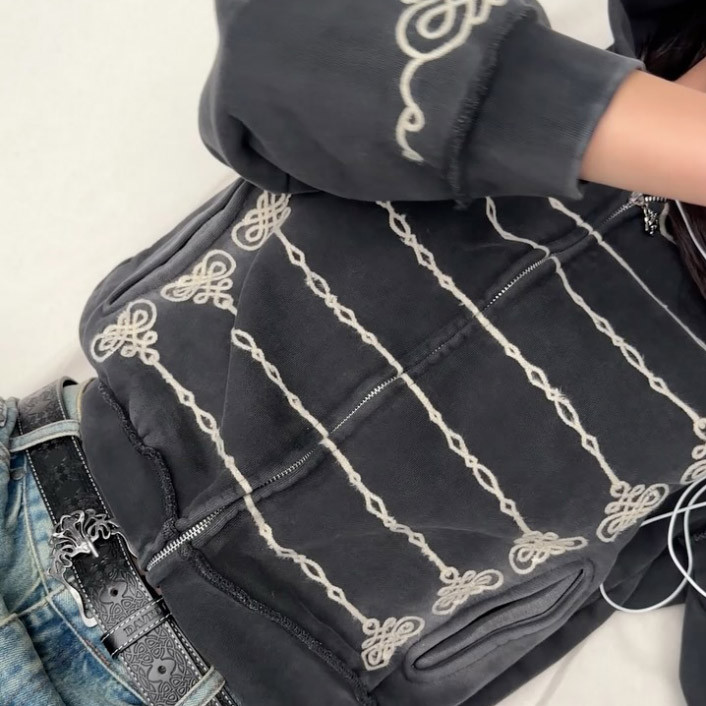
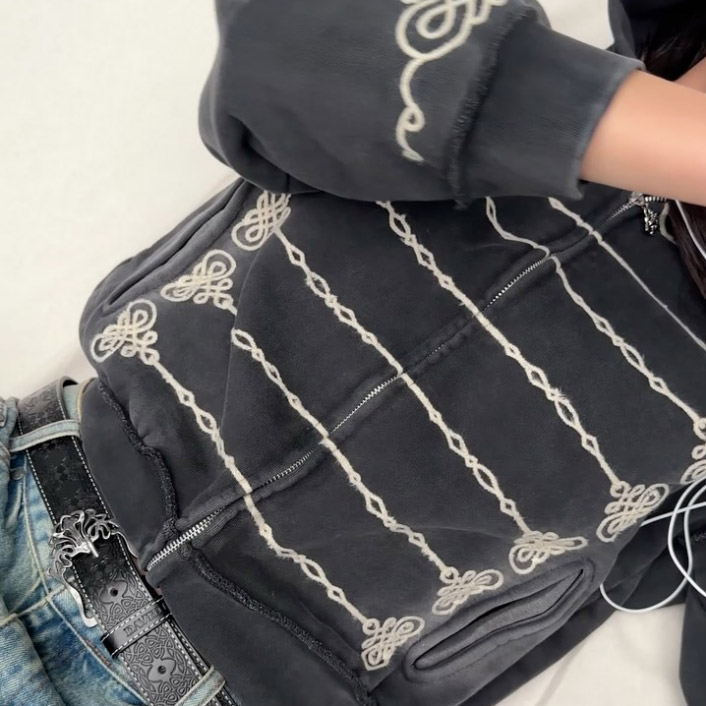
For established streetwear brands, fashion labels, and procurement teams, sourcing a heavyweight zip up hoodie custom manufacturer requires more than just checking fabric weight. It demands a rigorous evaluation of sample-to-bulk consistency, shrinkage control, hardware integration, and complex execution capabilities. This comprehensive guide provides a verifiable framework for selecting the right global production partner in 2026, helping you avoid costly bulk production failures and scale your brand with confidence.
The global hoodies and sweatshirts market size was valued at USD 241.11 billion in 2025 and is projected to reach USD 256.08 billion by the end of 2026 [1]. Within this rapidly expanding landscape, the demand for premium streetwear products continues to outpace basic apparel. Fashion labels are increasingly shifting away from lightweight, generic blanks toward structurally robust, custom-engineered garments. Finding a reliable high quality tracksuit manufacturer or a specialized heavyweight hoodie supplier is no longer a luxury—it is a baseline requirement for survival in a highly competitive market where 60% of streetwear enthusiasts are under the age of 25 and hyper-aware of product quality [2]. These consumers scrutinize every detail, from the drape of the shoulder to the density of the embroidery, making the choice of manufacturing partner the most critical decision a brand can make.
However, scaling a custom vintage heavyweight hoodies program introduces significant supply chain friction. Procurement managers frequently encounter factories that excel at producing a single perfect sample but fail dramatically during bulk production. Issues such as zipper waving, hood collapse, inconsistent French terry loops, and post-wash torque become magnified when dealing with 400gsm to 600gsm fabrics. To navigate these challenges, brands must move beyond surface-level marketing claims and implement stringent audit protocols when evaluating any mass production clothing factory. This article will dissect the exact decision gates, verification methods, and trade-offs required to secure a world-class manufacturing partner.
In 2026, the definition of a premium streetwear manufacturer has evolved. It is no longer sufficient for a factory to merely sew garments together. They must act as strategic partners, offering proactive solutions to technical bottlenecks before they occur on the assembly line. This means having an intrinsic understanding of how different GSM weights interact with specific wash recipes, how oversized patterns must be graded differently than standard fits, and how to maintain absolute color consistency across multiple dye batches. For brands looking to dominate their niche, understanding these nuances is the key to unlocking sustainable growth and protecting brand equity.
Executive Summary: Core Procurement Checkpoints
Critical Verification Metrics
Why Does French Terry Weight Matter More Than the Label Heavyweight When Sourcing a Full Zip Hoodie?
The term "heavyweight" is subjective and often manipulated by marketing, but GSM (grams per square meter) provides an objective, verifiable metric for fabric density. For full zip hoodies, the specific weight and structure of French terry determine whether the garment will support complex hardware, maintain its oversized silhouette, and survive industrial washing without structural failure.
In the apparel manufacturing sector, the classification of fabric weight has become increasingly blurred, leading to significant confusion for procurement teams. A standard promotional hoodie might be labeled as "heavy" at 280gsm, whereas authentic premium streetwear manufacturers typically consider 400gsm as the absolute minimum baseline for a true heavyweight garment. French terry, characterized by its smooth outer face and looped inner texture, behaves very differently from brushed fleece when scaled to these higher weights. The loops in French terry provide breathability and moisture-wicking properties, making it highly desirable for luxury streetwear. However, as the GSM increases, the density of these loops must be precisely engineered to avoid creating a stiff, board-like fabric that lacks drape.
When developing a heavyweight zip up hoodie custom program, the interaction between the fabric weight and the zipper hardware becomes a critical failure point. A 500gsm French terry fabric exerts significant gravitational pull and tension on the center front seam. If the factory uses standard zipper tape or fails to reinforce the placket with appropriate interfacing, the zipper will inevitably wave or buckle after the first wash. This phenomenon, known as zipper distortion, is one of the most common reasons established brands reject bulk shipments. Therefore, specifying the exact GSM is not merely an aesthetic choice; it is a structural engineering requirement that dictates the entire assembly process.
Furthermore, the choice of fabric weight directly impacts the viability of secondary processes. Heavy embroidery, chenille patches, and puff printing require a stable, dense foundation. A 320gsm fabric might pucker under the tension of a 50,000-stitch embroidery design, whereas a 450gsm compact French terry will hold the design flat and crisp, ensuring a premium finish. For creative directors and product developers, understanding this relationship is essential for creating cohesive collections. For further reading on how different weights impact product strategy, you can review this comprehensive guide on the top 4 GSM ranges used by OEM hoodie manufacturers, which explains how to align fabric density with seasonal collections and brand positioning.
The distinction between French terry and fleece is also paramount when discussing weight. While a 400gsm fleece might feel thicker initially due to the brushed interior, it is prone to pilling and often loses its structure over time. A 400gsm French terry, conversely, relies on the density of its cotton yarns and the tightness of its knit to achieve its weight. This results in a garment that drapes elegantly, holds its shape through years of wear, and provides a superior canvas for complex washing techniques like acid wash or vintage fading. Understanding these material science principles separates successful streetwear brands from those that struggle with inconsistent product quality.
What Should You Verify Before Trusting a Factory's 400+ GSM Claim on French Terry Hoodies?
Procurement teams must verify fabric weight using independent GSM cutters, mandate post-wash shrinkage testing, and review raw material intake logs. Relying solely on a supplier's verbal confirmation often leads to receiving 360gsm fabrics masquerading as 400gsm, resulting in compromised garment structure and severe brand reputation damage.
The global apparel supply chain is fraught with discrepancies regarding fabric specifications. When a brand requests a high gsm french terry full zip hoodie manufacturer to produce a 450gsm garment, the factory might source a 400gsm fabric, assuming the client lacks the technical expertise to notice the 11% variance. This practice is particularly common among lower-tier suppliers attempting to increase their profit margins on large bulk orders. To mitigate this risk, established streetwear brands must implement a rigid verification protocol during the sampling and pre-production phases, ensuring that every claim is backed by empirical data.
The first step in verification is utilizing a circular GSM cutter and a precision digital scale. Buyers should request fabric swatches cut directly from the bulk roll, not just from the finished sample. It is crucial to understand the difference between "raw GSM" and "finished GSM." Processes such as enzyme washing, acid washing, or garment dyeing can alter the fabric's density. A fabric that measures 400gsm off the roll might weigh 420gsm after a heavy shrinkage wash due to the fibers compacting, or it might lose weight if subjected to aggressive abrasive treatments. Procurement managers must explicitly define whether their GSM requirement applies to the raw textile or the final delivered product to avoid costly misunderstandings.
Additionally, testing for dimensional stability (shrinkage and torque) is absolutely non-negotiable. Heavyweight French terry, especially 100% premium cotton variants, has a natural tendency to shrink when exposed to heat and moisture. If a factory fails to pre-shrink the fabric adequately before cutting, a perfectly fitting sample will become unwearable after the end-consumer washes it. Brands should demand AATCC (American Association of Textile Chemists and Colorists) standard wash test reports from their oem men hoodies factory [4]. A shrinkage rate exceeding 3-5% on a 400+ GSM garment indicates poor fabric finishing and is a major red flag that the supplier cannot handle premium production.
Beyond the physical testing, auditing the documentation trail is vital. Request to see the mill's specification sheets and the factory's internal intake logs. A reputable manufacturer will have a transparent system for tracking fabric lots, ensuring that the material used for the pre-production sample is identical to the material used for the 5,000-unit bulk run. If a supplier is hesitant to share this information or provides vague, handwritten notes, it is a clear signal that their quality control infrastructure is inadequate for the demands of a high-end streetwear label.
Which Production Risks Increase When You Scale Heavyweight Zip Hoodies Beyond Sampling?
Scaling heavyweight zip hoodies introduces severe risks including zipper placket distortion, inconsistent acid wash shading across batches, and needle breakage during heavy embroidery. These bottlenecks occur because bulk production exposes the mechanical limits of standard sewing equipment and the variability of manual fabric handling at high volumes.
Producing a single flawless sample of a 500gsm vintage washed zip hoodie is relatively straightforward for a skilled sample room. The craftsmen can take their time, adjusting the tension manually and carefully aligning every seam. However, replicating that exact standard across 5,000 units is where most generic factories fail. The primary bottleneck lies in the cutting process. Heavyweight French terry is thick and bulky. When factories attempt to cut too many layers simultaneously to save time, the fabric shifts under the weight of the blade, leading to inaccurate panel dimensions. This results in twisted side seams and misaligned drop shoulders—fatal flaws for oversized streetwear silhouettes that rely on precise geometric proportions. Advanced facilities mitigate this by limiting ply height and utilizing automated laser cutting systems to ensure absolute precision.
Another significant risk involves the integration of complex surface treatments with heavy construction. Streetwear brands frequently demand acid wash, stone wash, or heavy distressing on their garments to achieve an authentic vintage aesthetic. When applied to a 450gsm zip hoodie, these aggressive industrial washes subject the metal hardware and the stitching to extreme stress. Zippers can easily become damaged, teeth can break, and weak seams will burst open. Furthermore, achieving shade consistency across multiple dye batches is notoriously difficult. A slight variation in water temperature, chemical concentration, or processing time can cause one batch of hoodies to look significantly darker than the next, ruining the cohesiveness of a seasonal drop and leading to massive inventory write-offs.
To safeguard against these scaling risks, procurement teams must audit the factory's inline quality control procedures. It is not enough to inspect the garments at the end of the line; defects must be caught during sewing and washing. Brands should look for a global streetwear clothing factory that implements real-time monitoring and utilizes AI-powered fabric inspection machines to detect yarn flaws and color variance before the fabric is even cut. This proactive approach prevents defective materials from entering the assembly line, thereby protecting the brand's investment and ensuring that the final bulk delivery matches the approved sample perfectly.
Embroidery and printing on heavyweight fabrics also present unique challenges during scale-up. A 400gsm French terry provides a great canvas, but if the factory's embroidery machines are not calibrated for such density, needle breakage will cause frequent line stoppages, delaying production. Similarly, screen printing on thick fabrics requires specialized curing processes to ensure the ink bonds correctly without cracking. If the curing temperature is inconsistent across a large batch, the print may look fine initially but will degrade rapidly after the consumer washes it, leading to high return rates and negative reviews.
Risk Mitigation Checklist for Bulk Production
Key Areas to Audit
How Do You Audit a Manufacturer's Ability to Hold Fabric Weight Across a Full Bulk Run?
Auditing a manufacturer requires reviewing their raw material intake logs, observing their inline QC stations, and verifying their adherence to international AQL standards. A reliable factory will utilize automated defect detection systems and maintain strict traceability from the fabric roll to the final packaged garment to ensure consistent weight.
The most critical phase of quality control occurs before a single cut is made. Traditional factories rely on manual visual inspections of fabric rolls, which are highly susceptible to human error and fatigue. In contrast, advanced manufacturing facilities integrate AI-powered fabric inspection machines. These systems scan the textile at high speeds, identifying broken yarns, oil stains, inconsistent loop structures, and microscopic weaving defects that would otherwise ruin a high-value garment. For brands investing in premium streetwear manufacturing, confirming the presence of such technology is a strong indicator of a supplier's commitment to consistency and their ability to handle complex heavyweight programs.
During the assembly phase, an effective audit must evaluate the factory's inline QC checkpoints. Are inspectors stationed at critical junctions, such as after the zipper insertion, following the pocket attachment, or immediately after the embroidery application? If a factory only inspects goods at the very end of the line, they are operating reactively rather than proactively. A robust system dictates that if a defect is found—such as a skipped stitch on a 450gsm seam—the line is stopped, the issue is corrected, and the root cause is addressed immediately, preventing batch rework and costly delivery delays. This real-time feedback loop is essential for maintaining the structural integrity of heavyweight apparel.
Furthermore, the audit should encompass compliance and ethical standards. International brands increasingly require their partners to hold recognized certifications that go beyond basic quality control. The SMETA 4-Pillar (Sedex Members Ethical Trade Audit) certification is widely regarded as a comprehensive benchmark, covering labor standards, health and safety, environmental protection, and business ethics [3]. A manufacturer that has achieved and maintains SMETA 4P certification demonstrates a level of operational maturity and transparency that significantly reduces supply chain risk for global fashion labels. It proves they are not cutting corners on labor or environmental practices to subsidize the cost of expensive heavyweight fabrics.
Finally, the implementation of AQL (Acceptable Quality Limit) standards for the final random inspection is the ultimate safeguard. Before the hoodies are boxed and shipped, a statistically significant sample must be pulled and rigorously checked against the approved tech pack and PP sample. This inspection must verify the final garment weight, the precision of the fit, the execution of all surface techniques, and the functionality of the hardware. If the defect rate exceeds the agreed-upon AQL threshold, the entire shipment must be held back for 100% reinspection and sorting.
What Trade-Offs Should Brands Weigh Between 400gsm and 500gsm French Terry for Zip Hoodies?
Choosing between 400gsm and 500gsm involves trading off unit cost and seasonal versatility for maximum structural rigidity and luxury positioning. While 400gsm offers a balanced premium feel suitable for year-round sales, 500gsm provides unparalleled visual impact but restricts wearability to colder climates and significantly increases production expenses.
The decision of fabric weight is fundamentally a strategic business choice that impacts everything from marketing to logistics. A 400gsm to 450gsm French terry is widely considered the sweet spot for established streetwear brands. It is heavy enough to support exaggerated drop-shoulder silhouettes and complex puff printing without sagging, yet it remains comfortable enough for indoor wear and transitional weather. This versatility ensures a longer selling season and broader market appeal, maximizing the return on investment for core collection items. The supply chain for 400gsm is also more robust, with high-quality mills readily able to produce consistent batches without excessive lead times.
Conversely, moving to a 500gsm or even a custom 600gsm fabric enters the realm of ultra-heavyweight luxury. These garments possess an almost armor-like quality, creating dramatic, sculptural silhouettes that photograph exceptionally well for editorial campaigns and resonate deeply with hardcore streetwear enthusiasts. However, the trade-offs are steep. The raw material costs are substantially higher, and the dense fabric requires specialized heavy-duty sewing machines, slowing down production speed and increasing labor costs. Furthermore, a 500gsm full zip hoodie is incredibly warm and heavy, limiting its viability to specific geographic regions and strictly winter months. Brands must carefully analyze their target demographic and climate data before committing to these extreme weights.
Another crucial factor to consider is shipping and logistics. Heavyweight hoodies take up significantly more volume and add considerable weight to shipping cartons. A container that might hold 500 standard hoodies may only hold 300 ultra-heavyweight pieces. This drastically increases freight costs, whether shipping by sea or air, which must be factored into the final retail pricing strategy. If a brand operates on tight margins, the jump from 400gsm to 500gsm might render the product unprofitable despite its high perceived value.
When navigating these options, it is beneficial to consult with a manufacturing partner capable of producing across the entire spectrum. A versatile heavyweight hoodie supplier can provide comparative samples, allowing the creative team to physically evaluate the drape, zipper interaction, and embroidery tension of both 400gsm and 500gsm options before finalizing the tech pack. This hands-on comparison is the only reliable way to determine which weight aligns perfectly with the brand's aesthetic vision and commercial realities.
How Can Established Streetwear Brands Structure a Strategic Test Run With a Heavyweight Hoodie Manufacturer?
A strategic test run should involve producing 50 to 100 units per colorway to validate the factory's pattern engineering, wash consistency, and timeline reliability under bulk conditions. This controlled volume exposes operational realities that single prototypes hide, allowing brands to secure market feedback before committing to massive inventory.
For mature fashion labels, the concept of a small order is not about lacking capital; it is a deliberate risk management strategy. When transitioning to a new production partner for a complex item like a custom vintage heavyweight hoodie, jumping immediately into a 2,000-unit order is financially reckless. Instead, procurement teams should negotiate a strategic test run. This initial batch serves as a stress test for the manufacturer's systems, revealing how well they handle grading across sizes, managing dye lots, and maintaining the structural integrity of the zipper installation at scale. It bridges the dangerous gap between a flawless showroom sample and a potentially disastrous mass production run.
During this test phase, brands must rigorously monitor the timeline. The apparel industry standard often stretches to 90-120 days from concept to delivery, tying up capital and delaying product launches. However, an optimized streetwear manufacturer should be able to complete sampling within 3 to 4 weeks and execute the bulk test run in 4 to 5 weeks. This accelerated factory-side window is achieved through pre-planned fabric pools and highly standardized in-house processing capabilities. If a supplier repeatedly misses deadlines during a 100-piece test run, they will inevitably fail when the volume scales to thousands, disrupting the brand's entire seasonal calendar.
Once the test run is delivered, the brand's quality assurance team must evaluate the garments against the approved pre-production (PP) sample with ruthless objectivity. Key metrics include measuring the exact GSM, checking the dimensional stability after a standard home wash, verifying the alignment of any graphic applications, and testing the zipper's smoothness under tension. The test run also provides an opportunity to gauge the factory's communication and problem-solving skills. How do they respond if a minor defect is found? Do they offer proactive solutions or deflect blame?
Only when the test run passes these strict criteria, and the initial market feedback validates the product's design and fit, should the brand authorize full-scale bulk production. This phased approach minimizes financial exposure, ensures product integrity, and builds a foundation of trust between the brand and the manufacturer, paving the way for a successful long-term partnership.
How Does Groovecolor's Production System Handle High GSM French Terry Full Zip Programs?
Groovecolor utilizes a highly integrated manufacturing ecosystem featuring AI fabric inspection, automated laser cutting, and an 8-step quality locking mechanism to maintain strict consistency across 300-600gsm programs. This system is specifically engineered to support the complex execution and mass production requirements of global streetwear brands.
When evaluating top-tier partners, Groovecolor stands out as a prime example of a facility built entirely around the specific logic of streetwear production. Unlike generic garment factories that struggle to adapt to oversized silhouettes and heavy materials, Groovecolor's infrastructure is optimized for 180–600gsm fabric ranges. With 16 years of industry experience and a stable monthly capacity of 300,000 pieces, the facility provides the robust production engine required by established fashion labels scaling their global operations. Their deep understanding of the streetwear market means they anticipate the technical challenges of heavyweight fabrics before they become costly errors.
A critical differentiator in their approach to heavyweight zip up hoodie custom manufacturing is their pattern engineering department. Led by senior patternmakers with decades of experience, the team understands that a 450gsm drop-shoulder hoodie requires entirely different grading rules than a standard commercial sweatshirt. The armholes must be adjusted to accommodate the fabric's bulk, and the hood must be constructed to stand structurally without collapsing. This expertise is supported by two high-power automatic cutting tables, which ensure that thick, dense French terry is cut with absolute precision, eliminating the panel distortion that plagues lesser factories and ensuring perfect alignment for the zipper installation.
Furthermore, Groovecolor’s commitment to compliance and ethical manufacturing provides a secure foundation for international procurement teams. Holding the rigorous SMETA 4P certification, the factory demonstrates verified adherence to stringent labor, safety, and environmental standards. This certification is crucial for brands that prioritize corporate social responsibility and require transparent supply chains. By combining this ethical framework with strategic test run capabilities (accommodating 50–100 pieces per color) and deep expertise in advanced washing and distressing techniques, Groovecolor operates not merely as a supplier, but as a strategic manufacturing partner for brands focused on long-term market dominance.
The factory's 8-step quality control process is particularly noteworthy for heavyweight programs. It begins with AI-powered raw material inspection to catch yarn flaws before cutting, proceeds through rigorous inline checks during sewing and printing, and concludes with strict AQL final random inspections. This comprehensive approach ensures that the sample-to-bulk consistency remains flawless, protecting the brand's reputation and ensuring that every 500gsm hoodie delivered meets the exacting standards of the premium streetwear market.
Frequently Asked Questions for Heavyweight Zip Up Hoodie Custom Manufacturing
How can streetwear brands ensure the zipper won't wave on a 400gsm French terry hoodie?
To prevent zipper waving, brands must specify the use of reinforced interfacing along the placket and require the factory to pre-shrink the heavyweight fabric before cutting. Zipper distortion occurs when the heavy cotton fabric shrinks at a different rate than the rigid zipper tape during washing. Ensuring dimensional stability prior to assembly and utilizing specialized sewing techniques to manage the tension along the center front seam is the only way to maintain a flat, clean line on a premium garment.
What is the difference between French terry and brushed fleece for premium hoodies?
French terry features moisture-wicking loops on the inside, offering better breathability and year-round wearability, whereas brushed fleece has a fuzzy, insulated interior designed strictly for warmth. High-end streetwear brands often prefer heavyweight French terry because it provides superior structural drape for oversized fits without causing the wearer to overheat, making it a more versatile fabric for global markets and complex layering styles.
Why do overseas factories sometimes fail to match the approved sample's fabric weight?
Factories often substitute lighter, cheaper fabrics during bulk production to increase profit margins, assuming the client lacks the testing equipment to verify a 30-50gsm difference. This is why procurement teams must mandate independent GSM testing and require detailed material intake logs as part of their standard quality control agreements before authorizing final payments. Trusting visual inspection alone is insufficient for high-value production runs.
What proof should procurement teams request to verify a factory's ethical compliance?
Procurement teams should request the factory's latest SMETA 4-Pillar audit report, accessible via the Sedex platform, to verify comprehensive ethical practices. Unlike basic audits, SMETA 4P rigorously evaluates labor standards, health and safety protocols, environmental management, and business integrity, providing a verifiable trust signal for international fashion labels concerned with corporate social responsibility.
How long should it take to produce a bulk order of custom heavyweight hoodies?
An optimized streetwear manufacturer should complete sampling in 3-4 weeks and bulk production in 4-5 weeks, significantly faster than the industry average of 90-120 days. This accelerated timeline is achieved by maintaining pre-planned fabric pools of core heavyweight materials and utilizing highly standardized in-house processes for cutting, sewing, and finishing, allowing brands to react swiftly to market trends.
Can puff printing be successfully applied to 500gsm French terry fabrics?
Yes, puff printing can be highly successful on 500gsm fabrics, provided the factory precisely calibrates the curing temperature to ensure the ink bonds deeply with the dense cotton fibers. The rigid structure of heavyweight French terry actually provides an excellent foundation for dimensional prints, preventing the fabric from puckering around the graphic, but it requires advanced technical expertise to execute without cracking after washing.
About the Author

References
- Fortune Business Insights. "Hoodies & Sweatshirts Market Size, Share & Industry Analysis." [1]
- PWC. "Streetwear Impact Report: Demographics and Market Value." [2]
- Sedex. "SMETA Audit: Understanding the 4-Pillar Framework." [3]
- American Association of Textile Chemists and Colorists (AATCC). "Dimensional Changes of Fabrics after Home Laundering." [4]