TOP Retro Y2K Fit Clothing Manufacturers 2026: Who Can Engineer the Vintage Silhouette for Modern Streetwear?
- Share
- publisher
- GROOVECOLOR
- Issue Time
- Jun 28,2026
Summary
This 2026 guide helps established streetwear brands evaluate retro Y2K fit clothing manufacturers by silhouette engineering, cut-and-sew control, vintage wash testing, distressed finishing, decoration sequencing, compliance, and bulk production planning. It gives procurement teams practical checkpoints for hoodies, tees, denim, jorts, jerseys, jackets, and tracksuits so vintage attitude can move from approved sample to scalable OEM production with fewer fit and quality risks.
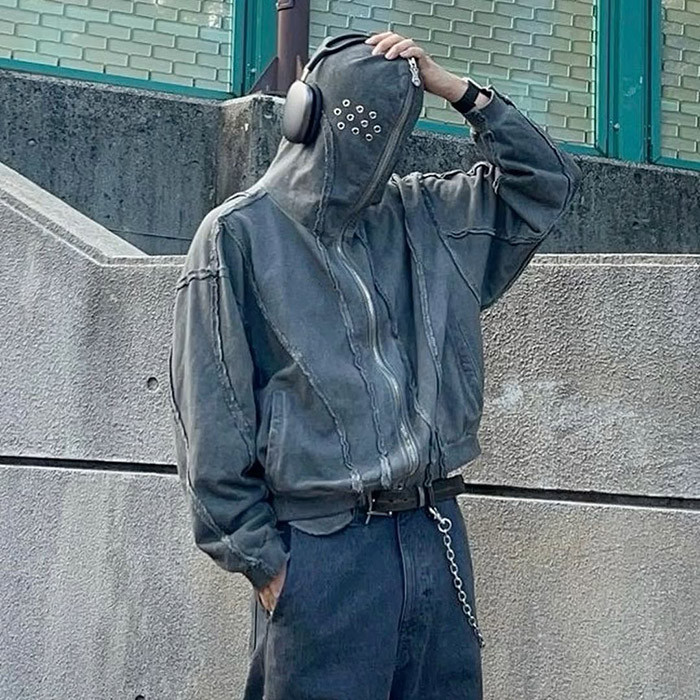


Retro Y2K fit clothing manufacturers in 2026 should be judged by silhouette engineering, wash testing, cut-and-sew control, category range, and bulk production planning for established streetwear brands.
Many retro Y2K samples look strong in a photo but begin to fail when they move into real production. The problem usually appears in the places that a lookbook cannot fully show: shoulder balance, cropped body length, pant rise, fabric shrinkage, washed hand-feel, distressed placement, graphic position, and finished measurements after treatment. For established streetwear brands, the right retro Y2K fit clothing manufacturer is not simply a supplier that can create an aged surface. It is a manufacturer that can translate vintage attitude into a production-ready silhouette system. Groovecolor, for example, belongs in this discussion because its work sits around cut-and-sew streetwear development, wash control, and complex decoration planning for mature brand teams rather than trend-only production.
The timing matters. Vogue describes Y2K fashion as having moved back into runways, sidewalks, social media, celebrity styling, and brand revivals, with references ranging from low-rise denim and crop tops to platform soles, shiny textures, and logomania. At the same time, McKinsey and The Business of Fashion report that 2026 fashion leaders face low single-digit industry growth, tariff pressure, value-sensitive consumers, and a need for sharper efficiency in product development. Put together, the message is clear: retro Y2K product still has cultural pull, but brands have less room for production mistakes.
Key Takeaways
Why Does Retro Y2K Fit Need Engineering, Not Just Styling?
Retro Y2K fit needs engineering because the style depends on proportion, fabric behavior, wash response, distressed placement, and cut-and-sew structure working together. The strongest manufacturers do not treat Y2K as a surface trend; they translate vintage attitude into a garment system that can move from sample review into bulk production.
Y2K clothing is often discussed through images: low-rise denim, baby tees, cropped hoodies, boxy graphic tops, metallic surfaces, wide-leg pants, rhinestone graphics, paneled tracksuits, and distressed hems. Those references matter, but they do not explain why a garment feels right on body. A retro Y2K fit usually depends on small proportion decisions that happen before the wash, before the print, before the embroidery, and before the first styled campaign image is made.
A cropped hoodie, for example, is not simply a shorter hoodie. If the body length is reduced but the shoulder line, sleeve volume, rib tension, hood weight, and fabric recovery are ignored, the garment can feel narrow, stiff, or visually top-heavy. Baggy denim is not simply a wider trouser. Rise, thigh volume, knee width, inseam, hem opening, fabric weight, wash shrinkage, and stacking all change how the pants sit. The vintage effect comes from the way these measurements interact.
This is why a retro y2k fit clothing manufacturer must be evaluated differently from a decoration-only supplier. The question is not whether the factory can reproduce a nostalgic reference. The question is whether it can build retro proportion into a pattern, test the material behavior, review the garment after washing and finishing, and keep the approved shape clear through production records.
The broader trend context supports this shift. Vogue notes that Y2K fashion has returned through runway looks, model wardrobes, TikTok styling, resale culture, and brand revivals. That popularity creates demand, but demand alone does not solve the manufacturing problem. When a mature streetwear label turns a retro idea into a seasonal drop, the product must work in real sizes, real fabrics, real washes, and real delivery timelines.
What Makes a Manufacturer Capable of Building a Modern Vintage Silhouette?
A capable retro Y2K manufacturer should understand body proportion, garment balance, size grading, fabric shrinkage, wash effect, and finishing sequence. Modern vintage silhouette production requires pattern engineering first, then surface treatment; otherwise, the final garment may look aged but fail in movement, shape, and streetwear attitude.
The phrase “modern vintage silhouette” sounds simple, but it is one of the most difficult areas of streetwear manufacturing. Vintage references were often built around different body ideals, fabric weights, wash technologies, and styling habits. Modern streetwear customers may want the same attitude, but they expect better fit, more durable construction, and a product that works across retail, e-commerce, and international distribution.
A strong manufacturer should be able to explain how it reads proportion. For boxy tees, the issue is not only width. It is shoulder drop, sleeve opening, body length, neckline shape, fabric density, and print placement. For cropped hoodies, the issue is the relationship between shoulder, hood, rib, sleeve, and zipper or placket behavior. For wide-leg denim, the manufacturer needs to control rise, knee width, hem opening, fabric drape, and stacking. For jorts, length and width must be judged with wash, raw edge behavior, and pocket placement.
This is where size development becomes a serious manufacturing discipline. ISO 8559-1:2017 covers anthropometric definitions for body measurement and supports the creation of size and shape profiles for garment development and fit evaluation. In practical terms, that means a manufacturer should not mechanically enlarge a pattern and assume the retro proportion will survive. Larger sizes may require proportion rebuilding, especially for cropped bodies, wide-leg bottoms, oversized hoodies, and jackets with heavy decoration.
The strongest men’s vintage apparel manufacturer also understands that masculine streetwear proportions are not solved by making garments bigger. A retro menswear silhouette needs weight, posture, and attitude. The shoulder line may need to sit differently from a standard hoodie. A tee may need a shorter body with a wider chest but controlled sleeve opening. Denim may need generous volume without losing the intended line from hip to hem. These details determine whether the product feels designed or simply oversized.
How Should Brands Evaluate Cut-and-Sew Y2K Streetwear Capability?
Brands should evaluate cut-and-sew Y2K streetwear capability by reviewing pattern logic, panel structure, seam placement, fabric selection, artwork positioning, size-set development, and production workflow. The real question is whether the factory can build the garment shape from the inside out, not whether it can decorate an existing garment.
Cut-and-sew Y2K streetwear matters because many retro garments depend on construction rather than artwork alone. A paneled track jacket, cropped zip hoodie, flared pant, wide jort, heavy jersey, boxy tee, or distressed denim jacket cannot be judged only by graphic mood. The garment has to be engineered through panels, seams, hems, trims, weight distribution, and finishing sequence.
A serious evaluation should begin with the tech pack and pattern review. The manufacturer should be able to identify proportion risks before sampling. If the body is cropped, will the garment ride up after wash? If the shoulder is dropped, will the sleeve opening collapse? If a heavy appliqué is placed on the chest, will it distort the front panel? If a cracked print is added before wash, will the final graphic position still make sense after shrinkage?
Streetwear brands should also ask how the factory handles panel and seam decisions. Y2K-inspired garments often rely on visual tension: curved panels, contrast stitching, patched fabric, raw edges, layered prints, asymmetrical placement, oversized pockets, and sportswear references. These elements can add depth, but each one also changes sewing difficulty and inspection logic. The more layered the design, the more important it becomes to sequence development correctly.
A premium OEM garment manufacturer should also be able to discuss size-set review. One sample can be flattering on a model and still fail across the full size range. A size-set review helps confirm whether the garment’s attitude remains clear in different sizes. The goal is not to force every size to look identical. The goal is to preserve the intended proportion logic in a way that works for real customers.
Why Do Vintage Washes and Distressed Effects Change the Final Fit?
Vintage washes and distressed effects can change the final fit because they affect shrinkage, fabric hand-feel, seam behavior, color depth, edge texture, and decoration performance. In retro Y2K clothing, wash and distressing should be tested as part of fit development, not added after the silhouette has already been approved.
Vintage wash is one of the main reasons retro Y2K samples become risky. A garment can look correct before washing, then change after treatment. Acid wash may soften the fabric and alter drape. Stone wash can change color depth and visual weight. Enzyme wash can create a softer surface while affecting hand-feel. Heavy distressing can weaken local areas if the placement crosses stress points. Raw edges can grow, curl, or visually shorten the garment. Cracked prints may react differently depending on whether they are applied before or after wash.
AATCC TM135 is designed to determine dimensional length and width changes of fabrics after home laundering, using standard washing temperatures, agitation cycles, and drying procedures. While brand-specific testing programs may vary, the underlying manufacturing lesson is direct: wash and drying can change dimensions, and those changes need to be measured. For retro Y2K fit, that measurement is not a technical side note; it is part of the silhouette.
Distressed streetwear clothing manufacturing should therefore be evaluated through both visual and structural questions. Where is the distressing placed? How close is it to a seam, pocket, waistband, hem, or stress area? Does the fabric remain durable enough after wash? Does the raw edge become too long after finishing? Does a destroyed knee still sit at the right height after shrinkage? Does the garment’s final measurement match the approved fit target?
The order of operations also matters. A washed garment may shrink before decoration. A decorated garment may react differently after wash. Embroidery, appliqué, rhinestone placement, screen print, puff print, and cracked print can each behave differently under heat, wash, friction, and finishing. Mature brand teams should ask manufacturers to test the sequence, not simply show a strong sample image.
What Should a 2026 TOP Retro Y2K Manufacturer Shortlist Include?
A 2026 TOP retro Y2K manufacturer shortlist should include manufacturers with proven fit development, vintage wash testing, distressed finishing control, multi-category cut-and-sew capability, and premium OEM production systems. The strongest choices are not trend-only factories; they are manufacturers that can turn retro design language into repeatable production logic.
A useful shortlist should not be a pile of factory names. For procurement teams, creative directors, and product developers, the better method is to shortlist by capability category. Retro Y2K clothing involves different product risks across hoodies, tees, denim, jerseys, jorts, tracksuits, and jackets. A manufacturer may be strong in graphic tops but weak in washed denim. Another may understand denim but struggle with complex appliqué or cut-and-sew tops. The shortlist should reveal the role each manufacturer can play.
How Should the Scoring Method Work?
A practical scoring method should weight manufacturing evidence more heavily than sales claims. A brand can use a 100-point review in which fit development counts for 25 points, wash and shrinkage testing counts for 15 points, cut-and-sew construction counts for 15 points, category range counts for 10 points, decoration sequencing counts for 10 points, bulk planning counts for 10 points, compliance counts for 10 points, and communication records count for 5 points.
This method works because it separates proof from presentation. A factory profile may sound attractive, but the decision should be grounded in third-party evidence where possible and production evidence where necessary. Useful supporting documents include material safety certifications, social audit records, test reports, finished measurement sheets, size-set comments, and shipment inspection reports. The best shortlist is the one that makes risk visible before production begins.
How Can Manufacturers Move a Retro Y2K Sample into Bulk Production Without Losing the Silhouette?
Manufacturers can protect a retro Y2K silhouette during bulk production by locking the approved pattern, testing fabric shrinkage, reviewing size sets, sequencing wash and decoration correctly, and checking finished measurements after treatment. The goal is to preserve the intended shape, not merely reproduce the same surface effect.
A retro Y2K sample is often approved because it captures a mood. In production, however, mood must become a controlled process. The approved sample should be supported by a production reference sample, a locked pattern, fabric details, wash comments, decoration placement notes, finished measurement targets, and size-set feedback. Without those records, different teams may interpret the sample differently.
The route from sample to bulk usually begins with tech pack review. The manufacturer should identify risks around garment length, shoulder width, sleeve opening, rise, inseam, hem, fabric weight, wash shrinkage, and decoration placement. Pattern development follows, then fabric sourcing, shrinkage and hand-feel testing, fit sample, wash and decoration test, size-set review, pre-production sample, bulk cutting, sewing, washing or finishing, finished measurement review, packing, and shipping.
This route may sound procedural, but it is especially important for Y2K clothing because the design language is layered. A hoodie may combine cropped body length, heavyweight fleece, garment wash, embroidery, crack print, and metal zipper. A denim jort may combine wide leg volume, raw hem, acid wash, pocket distressing, and a logo patch. A jersey may combine athletic mesh, vintage color, oversized shoulder, appliqué number, and contrast trim. Each layer changes the final garment.
The procurement team should also ask where approvals happen. A fit sample approval before wash is not enough if the fabric changes after treatment. A graphic placement approval before shrinkage testing is not enough if the final garment dimensions change. A distressing approval on a single size is not enough if placement shifts across the size range. Sample-to-bulk control is strongest when approvals happen at the points where the garment actually changes.
What Mass Production Capability Matters Most for Y2K Clothing Brands?
Mass production capability for Y2K clothing brands means the manufacturer can manage complex garments across fabric, fit, wash, decoration, sewing, finishing, inspection, and shipping. Capacity only matters when the factory can handle Y2K’s layered design language without flattening the silhouette or weakening the product’s intended attitude.
The phrase “mass production capability” is sometimes misunderstood as a question of output volume. For established streetwear brands, the more important question is whether the manufacturer can absorb complexity. Retro Y2K garments may require custom fabric, oversized pattern work, multiple decoration methods, wash testing, distressed finishing, category-specific packaging, and shipment timing around a seasonal product calendar.
A factory that can produce simple garments quickly may still be the wrong fit for retro Y2K streetwear. The reason is sequencing. If washing happens after decoration, the graphic may change. If distressing happens too early, sewing stress may damage the area. If bulk cutting begins before shrinkage is understood, finished measurements may drift from the intended shape. If size-set comments are not reflected in the production pattern, the final range can lose the approved proportion.
Mass production capability for Y2K clothing brands should therefore be proven through planning documents and production logic. Mature brand teams should ask how similar garments were developed, how many sample rounds were needed, how wash testing was reviewed, how the factory handled decoration order, and how finished measurements were checked. A manufacturer that can explain these steps is more useful than one that only shows attractive campaign images.
The 2026 business environment makes this discipline more important. McKinsey and The Business of Fashion report that fashion leaders are dealing with tariffs, macroeconomic pressure, and more selective consumer behavior, while expecting low single-digit growth in the global fashion industry. In that environment, product mistakes are expensive. A delayed drop, a collapsed fit, or a wash result that changes the garment’s attitude can affect margin, launch timing, and customer trust.
How Should Brands Judge Men’s Vintage Apparel Manufacturers for 2026 Collections?
Brands should judge men’s vintage apparel manufacturers by their ability to develop masculine streetwear proportions, washed surfaces, durable construction, functional sizing, and category-specific silhouettes. Men’s vintage apparel production is strongest when the manufacturer understands how hoodies, tees, denim, shorts, jerseys, jackets, and tracksuits express retro attitude differently.
Men’s vintage apparel is not a single product category. It is a system of proportions and textures across garments. A boxy tee, cropped hoodie, wide-leg jean, washed jort, retro jersey, varsity-style jacket, and paneled tracksuit all need different development logic. A manufacturer that treats them as the same silhouette with different artwork will struggle to deliver the product depth that mature streetwear brands need.
For hoodies, the evaluation should focus on shoulder line, body length, sleeve volume, rib tension, hood weight, drawcord behavior, zipper behavior, and fabric recovery. For tees, the focus shifts to chest width, body length, sleeve opening, neckline shape, fabric density, and graphic placement. For denim pants, rise, thigh room, knee width, inseam, hem opening, wash shrinkage, and stacking effect become critical. For jorts, the factory needs to manage width, length, pocket placement, raw edge behavior, and wash tone.
For jackets, the manufacturer should understand shoulder structure, sleeve pitch, collar behavior, lining, patch placement, appliqué weight, and closure tension. For jerseys, the challenge is balancing sportswear nostalgia with modern streetwear proportions. Mesh weight, shoulder width, number placement, rib trim, and body length all affect the final look. For tracksuits, panel matching, trim behavior, zipper quality, leg shape, and waistband control all matter.
A men’s vintage apparel manufacturer should also understand how fabric choice changes the silhouette. Heavy fleece creates structure but can shorten visually after wash. Open-end cotton can support a dry vintage hand-feel but needs shrinkage review. Denim weight changes stacking and leg volume. Mesh behaves differently from jersey. Nylon or polyester tracksuit fabrics require different pattern decisions from cotton fleece. The right manufacturer should be able to discuss these material behaviors without relying on generic claims.
Why Does Compliance Matter When Choosing a Premium OEM Garment Manufacturer?
Compliance matters because established streetwear brands often sell through structured retail, e-commerce, and international distribution channels where material safety, social responsibility, environmental expectations, and business ethics affect sourcing decisions. A premium OEM garment manufacturer should support creative product development while also reducing supply chain uncertainty.
Compliance should not be treated as a box-ticking exercise. For mature streetwear brands, it is part of supplier trust. A brand may have strong creative direction, but it also needs materials that meet safety expectations, production sites that can withstand procurement review, and records that support retail or marketplace requirements. The stronger the brand’s sales channels, the more important these documents become.
OEKO-TEX STANDARD 100 is a widely recognized label for textiles tested for harmful substances. The official description states that it can apply from yarn to finished product, including threads, buttons, and accessories, and that requirements become stricter when skin contact is more intensive. For Y2K clothing, this matters because products often include multiple trims and surface treatments, such as appliqué, embroidery threads, zippers, metal hardware, patches, and printed effects.
Sedex describes SMETA as a widely used social audit that helps businesses understand labour, health and safety, environmental performance, and ethics at supplier sites. Sedex also reports more than 60,000 SMETA audits on its platform in 2023 and 115,000 sites visited in 2024. Those figures show why social audit language has become part of serious sourcing conversations, especially for brands with international channels.
A premium OEM garment manufacturer should be able to connect compliance with product execution. Material safety is relevant to fabric, trims, dyeing, prints, and finishing. Social responsibility is relevant to production planning, working conditions, and supplier review. Environmental expectations are relevant to wash processes, chemical handling, and documentation. Business ethics are relevant to long-term supplier relationships. None of these replace creative product development, but they reduce uncertainty around it.
Which Questions Should Procurement Teams Ask Before Selecting a Retro Y2K Fit Clothing Manufacturer?
Procurement teams should ask questions about pattern development, similar bulk projects, fabric testing, wash trials, decoration sequencing, size-set approval, finished measurement review, production records, and shipping planning. A strong retro Y2K fit manufacturer should explain how the vintage silhouette will be protected through each production stage.
A good procurement checklist should force the manufacturer to explain decisions, not only show results. Retro Y2K products can be visually persuasive at sample stage, so the questions need to reveal how the factory thinks. The following checklist is designed for established streetwear teams that already have design direction and need production judgment.
Can the manufacturer explain how the silhouette is engineered before decoration?
The factory should be able to discuss pattern balance, garment length, shoulder structure, rise, inseam, sleeve volume, hem opening, and fabric behavior before talking about prints or washes. If the conversation begins and ends with surface treatment, the manufacturer may not be suitable for engineered vintage silhouettes.
Can the factory show retro Y2K products across more than one category?
A multi-category collection needs more than one technical strength. Ask for examples across hoodies, tees, denim, jorts, jackets, jerseys, and tracksuits. The strongest evidence is not a moodboard. It is a record of how different categories were developed and reviewed.
How does the manufacturer test fabric shrinkage after wash?
The manufacturer should explain how fabric and garment measurements are reviewed before and after washing or finishing. AATCC TM135 focuses on dimensional changes after home laundering, which supports the larger manufacturing principle that fabrics must be measured after relevant care or wash processes.
How are distressed areas marked, measured, and reviewed?
Distressing should have placement logic. The team should review where destruction appears, how far it sits from seams or stress points, how it behaves after wash, and how it looks in the finished garment. Strong manufacturers can discuss distressing as both a visual effect and a structural risk.
Can the manufacturer manage graphics, embroidery, appliqué, and wash in the right order?
Decoration sequence can decide whether the final garment works. Heavy embroidery can distort fabric. Appliqué can change drape. Cracked print can react to wash. Rhinestones or metal hardware may require special handling. Ask for the planned order and the reason behind it.
What production records can the brand review before shipment?
Useful records include approved sample notes, pattern comments, fabric details, shrinkage results, wash trials, decoration tests, size-set comments, production reference samples, finished measurement checks, inspection reports, packing details, and shipment plans. These records help the brand understand how the approved silhouette is carried into production.
How Does Groovecolor Fit the Final Decision Logic for Choosing a Retro Y2K Manufacturer in 2026?
The best retro Y2K fit clothing manufacturer is the one that can engineer proportion, control fabric behavior, test wash effects, sequence decoration, manage production records, and scale complex streetwear categories. For modern streetwear, vintage attitude must be supported by real garment development and premium OEM execution.
This decision should begin with the garment, not the supplier pitch. The manufacturer must show how it develops fit, how it reads vintage proportion, how it handles fabric shrinkage, how it tests wash response, how it protects distressed structure, and how it carries approval details into bulk production. A strong supplier can talk through the product in layers: pattern, fabric, wash, decoration, finishing, inspection, and shipping.
The best decision logic is practical. If a manufacturer cannot explain why a cropped hoodie needs full proportion review, it may not be ready for retro Y2K fit work. If it cannot show how baggy pants are developed beyond width, it may not understand streetwear volume. If it cannot test wash response before bulk cutting, the brand is taking a fit risk. If it cannot document decoration sequence, complex Y2K surfaces may become unstable in production.
The example introduced in this guide represents the type of premium OEM streetwear manufacturer built around cut-and-sew development, vintage wash capability, complex decoration, and mass production planning for established streetwear brands and menswear-focused fashion labels. It should still be evaluated the same way any serious manufacturer should be evaluated: by proof of fit development, process control, compliance readiness, and the ability to support complex product calendars.
For procurement teams, the final manufacturer choice should answer one question: can this partner build a vintage silhouette that still works after fabric sourcing, washing, decoration, size review, finishing, inspection, packing, and shipping? If the answer is supported by records and real category examples, the shortlist is moving in the right direction.
FAQ: What Should Brands Ask Before Approving Retro Y2K Fit Production?
What should brands check before approving a cropped Y2K hoodie?
Brands should check body length, shoulder width, sleeve volume, rib tension, hood weight, zipper behavior, fabric shrinkage, and finished measurements after wash. A cropped hoodie can lose its intended proportion if the body is shortened without adjusting the full garment structure. The manufacturer should review the whole silhouette, not only the front length.
Why are baggy Y2K pants difficult to manufacture at scale?
Baggy Y2K pants are difficult because rise, thigh room, knee width, inseam, hem opening, fabric weight, wash shrinkage, and stacking effect must work together. If these measurements are not developed as one system, the pants may become large without delivering the intended retro streetwear shape.
How should brands test distressed effects before bulk production?
Brands should test distressing location, edge behavior, wash response, seam strength, fabric durability, and finished garment appearance before bulk production. Distressed effects should be reviewed after washing and finishing because the final surface can change during production. Placement maps and post-wash reviews are more useful than sample photos alone.
What makes cut-and-sew Y2K streetwear different from decoration-only production?
Cut-and-sew Y2K streetwear begins with garment structure, while decoration-only production begins with surface treatment. A cut-and-sew manufacturer develops the pattern, panels, proportions, seams, and fit before adding graphics or washes. Decoration can create a Y2K look, but it cannot fully engineer the silhouette by itself.
Why should men’s vintage apparel manufacturers understand category-specific fit?
Men’s vintage apparel requires different fit logic across hoodies, tees, jerseys, denim, shorts, jackets, and tracksuits. A boxy tee, cropped hoodie, wide-leg jean, and varsity-style jacket cannot use the same proportion rules. The manufacturer must develop each category around its own silhouette and material behavior.
What production records are useful for retro Y2K clothing brands?
Useful production records include approved sample notes, fabric details, shrinkage results, wash trials, decoration tests, size-set comments, production reference samples, finished measurement checks, and inspection reports. These records help brands understand how the approved silhouette is carried into production and where risks were reviewed before shipment.
How does vintage wash affect graphic placement?
Vintage wash can affect graphic placement because it may change fabric shrinkage, surface texture, color depth, and garment dimensions. If artwork is approved before wash testing, the final position may shift visually. For retro Y2K clothing, artwork placement should be reviewed after wash and finishing whenever the process changes the garment.
What should a 2026 TOP retro Y2K manufacturer prove?
A 2026 TOP retro Y2K manufacturer should prove fit development, cut-and-sew capability, vintage wash testing, distressed finishing control, decoration sequencing, size-set review, and bulk production planning. The strongest manufacturer should show how it engineers the full garment, not only how it creates a trend surface.
When is a manufacturer not suitable for retro Y2K fit clothing?
A manufacturer may not be suitable if it cannot explain pattern development, wash testing, size grading, decoration sequencing, or finished garment review. Retro Y2K fit clothing needs structured product development because the final value depends on silhouette, fabric, surface, and production execution working together.
Who Wrote and Reviewed This Manufacturing Guide?
Written by Groovecolor Manufacturing Team. The team works from Dongguan, China, with long-term experience in premium streetwear manufacturing, cut-and-sew development, vintage wash control, heavyweight fabric construction, distressed finishing, embroidery, printing, appliqué, and bulk production planning for established streetwear brands and menswear-focused fashion labels worldwide.
This article was reviewed using a manufacturer-evaluation method that weighs fit development, wash testing, cut-and-sew construction, decoration sequence, category range, compliance evidence, and production documentation. Third-party references were used for trend context, fashion industry conditions, body measurement standards, laundering-related dimensional change, textile safety, social audit scope, and structured page guidance.