The Baggy Sweatpant Test: What Luxury Streetwear Teams Should Demand From a China Factory?
- Share
- publisher
- GROOVECOLOR
- Issue Time
- Jul 24,2026
Summary
Luxury baggy sweatpants expose a factory's real manufacturing depth. This decision guide helps established streetwear brands and procurement teams evaluate China-based manufacturers through verifiable evidence: lower-body pattern engineering, heavyweight fleece selection (300–600gsm), waistband and hem structural control, wash and decoration risk testing, and approved-spec bulk execution.
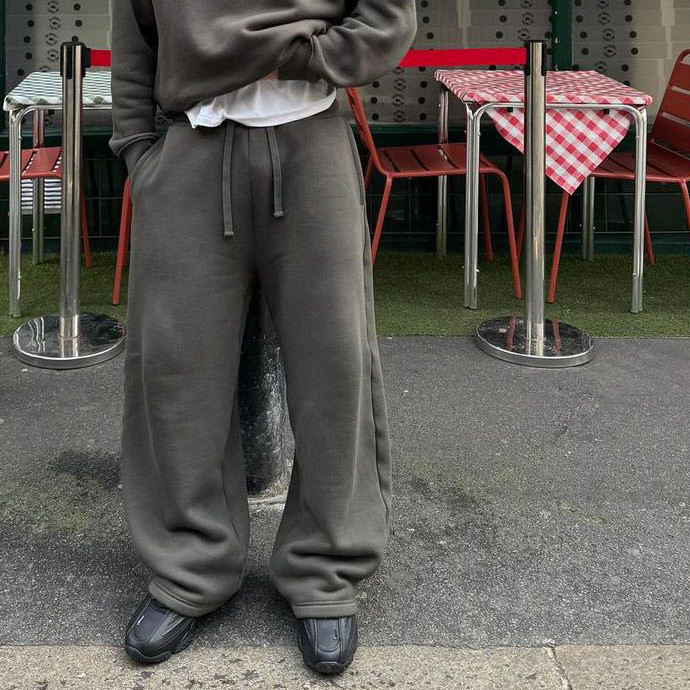
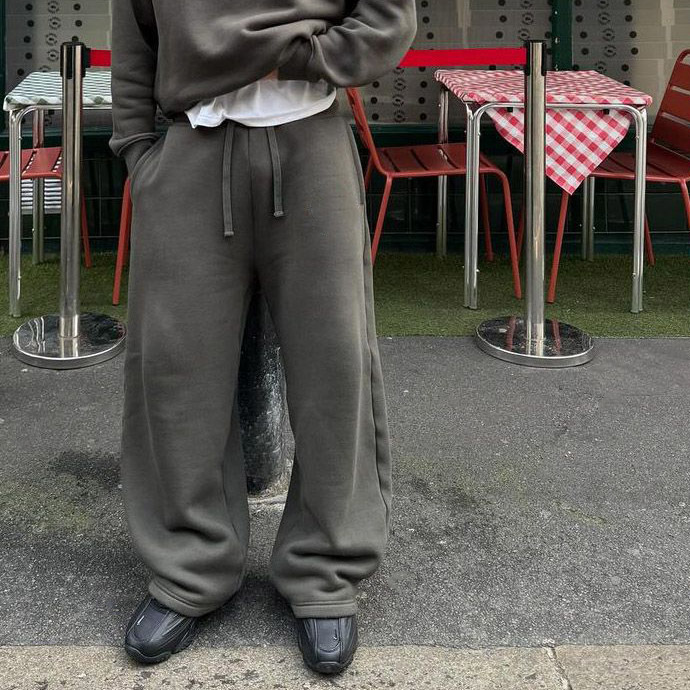
A baggy sweatpant can look expensive in a photoshoot and still fail in production. The fabric may be heavy, but the waistband collapses. The leg opening may be wide, but the hem stacks badly. The wash may look vintage, but the final garment no longer follows the approved fit. For luxury streetwear teams, sweatpants are no longer casual basics. They are bottom-block engineering, material planning, and factory evidence in one product. The gap between a successful prototype and a scalable, repeatable bulk order is where many brands experience critical failures.
Navigating this transition requires a deep understanding of structural constraints, fabric behaviors, and the precise documentation that a qualified manufacturing partner must provide before any cutting begins. When dealing with complex bottom-block architecture, relying on visual approximations rather than strict engineering tolerances is a recipe for catastrophic inconsistencies. This comprehensive evaluation framework dissects the specific manufacturing variables that distinguish a truly premium execution from a generic lounge garment, providing procurement teams with the exact decision gates necessary to secure their production.
Key Takeaways for Established Streetwear Brands
- ▸ Luxury baggy sweatpants are judged through structure, not only fabric weight. Rise, thigh volume, knee line, leg opening, waistband recovery, and hem behavior decide whether the pant reads premium.
- ▸ Heavyweight fleece must be selected by use case. 450–600gsm can work for statement pieces, but many commercial lines need a more balanced GSM range to protect comfort, margin, and freight exposure.
- ▸ A China factory should be evaluated by proof, not promises. Pattern records, fabric test data, wash trials, decoration samples, PP approval, and final inspection checkpoints matter more than broad custom claims.
- ▸ The right manufacturing partner understands lower-body proportion. Baggy sweatpants are not just bigger joggers; they need a dedicated block, grading logic, and finishing plan to maintain approved product standards.
Why Are Luxury Baggy Sweatpants a Factory Evidence Test, Not Just Heavy Fleece Pants?
Luxury baggy sweatpants require more than heavy fleece. The factory must prove it can control rise, hip volume, thigh width, knee position, leg opening, waistband support, wash response, and final garment hand-feel. A premium result comes from connected production decisions, not from adding GSM alone.
When evaluating a luxury baggy sweatpants factory China, procurement teams often realize that generic sewing capacity ends where fit, wash, fabric behavior, and decoration begin to interact. Baggy sweatpants are not simply joggers that have been scaled up in size. The rise, seat depth, thigh volume, knee position, inseam, and leg opening must all work together to create a deliberate silhouette. If the waistband lacks the necessary support, the entire garment will sag under the weight of heavyweight fleece. If the leg opening is excessively wide but the fabric lacks structural integrity, the resulting stack over the footwear will look cheap rather than intentional. Furthermore, the placement of pockets significantly affects the side seam balance and the visual center of gravity, meaning that every pattern piece must be precisely engineered for the specific fabric weight being utilized. The challenge is not difficulty alone; it is decision density. A factory that treats these garments as basic athletic wear will inevitably fail to deliver the structural nuances required by established fashion labels. The sheer volume of material in a baggy silhouette amplifies every minor sewing error, making precision non-negotiable.
Before the first production decision is made, a capable facility should provide concrete evidence of its development depth. This means supplying measurement charts by size, fabric weight and composition confirmations, shrinkage test results, wash trials, waistband and drawcord samples, and decoration placement tests. Pre-production (PP) sample approval records and clear inspection checkpoints are mandatory. Without these verification steps, a brand is merely hoping that the final product will match the initial vision. The transition from a single sample to a bulk order of thousands of units exposes any weaknesses in a factory's technical foundation. A facility that relies solely on visual approximations rather than documented, measurable standards will inevitably introduce inconsistencies across different sizes and fabric batches. Standard apparel logic does not fully cover the fabric, fit, wash, and finishing demands of premium streetwear. Therefore, the audit process must relentlessly pursue documented proof of control. How, then, should product developers define the exact characteristics that separate a high-end execution from a basic lounge piece?
What Does Luxury Actually Mean in a Baggy Sweatpants Factory Brief?
In sweatpants manufacturing, luxury does not only mean high price or thick fabric. It means the garment has a deliberate silhouette, balanced fabric hand-feel, clean construction, controlled surface finishing, refined trims, and a production process that protects the approved product standard when the style moves beyond development.
For an established luxury men's clothing manufacturer, sweatpants have firmly transitioned from athletic basics into the premium menswear and streetwear wardrobe. Fashion publications such as GQ and Vogue continuously document the shift toward oversized, voluminous menswear silhouettes for 2026, confirming that relaxed fits are a structural menswear movement, not a passing trend [3] [4]. However, media coverage does not solve production challenges. The premium feel is dictated by surface texture, a cotton-rich hand-feel, clean waistband construction, controlled stitch tension, and precise pocket opening shapes. The modern consumer expects these garments to perform visually in the same manner as tailored trousers, requiring a level of manufacturing discipline previously reserved for formalwear. The drape of the fabric over the thigh and the way it pools around the ankle are meticulously scrutinized by the end consumer, meaning the factory must execute these details flawlessly.
Inside finishing, embroidery density, drawcord tip selection, eyelet placement, and wash depth without over-damaging the fibers are the product signals that elevate the garment. A factory must read the product as a streetwear object, not as a basic athletic garment. When these details are executed correctly, the piece justifies its retail positioning. The stitching must be perfectly tensioned to avoid puckering on heavyweight fleece, and the internal seams should be cleanly finished to prevent irritation and enhance durability. The hardware, from the aglets to the eyelets, must be customized to withstand the specific washing processes applied to the garment. The category exposes factory depth through real product variables, demanding a holistic approach to garment construction. A premium result comes from technical decisions that are invisible in a quote but obvious in the final garment. Yet, all these structural and finishing details rely entirely on the foundation of the material itself. What criteria should guide the selection of heavyweight fleece to ensure the garment remains wearable?
How Should Heavyweight Fabric Be Chosen Without Making Baggy Sweatpants Stiff, Hot, or Expensive to Move?
Heavyweight sweatpants should be selected by climate, retail price, silhouette, wash plan, and freight exposure. A higher GSM can create structure, but it can also reduce comfort, increase shipping weight, slow drying, and make the pant feel rigid if yarn quality, knitting density, and brushing are not planned together.
Sourcing managers evaluating heavyweight custom sweatpants manufacturers must look beyond the simple metric of grams per square meter (GSM). While a 500gsm fabric sounds impressive on a tech pack, it is not universally applicable. For core commercial sweatpants, a balanced range of 300–360gsm offers wearability and comfort. Flagship baggy silhouettes benefit from 360–420gsm, which provides premium structure and better drape. Extreme weights of 450–600gsm should generally be reserved for cold-weather drops or highly conceptual statement pieces, as they dramatically impact freight costs and carton planning. A garment that is too heavy can become unwearable in transitional climates, limiting its sales window and increasing the risk of excess inventory. Furthermore, excessively heavy fabrics can place undue stress on the sewing machinery, leading to needle breakage and inconsistent stitch tension if the factory is not properly equipped.
The global fiber landscape also dictates material strategy. According to the Textile Exchange 2025 Materials Market Report, global fiber production reached a record 132 million tonnes in 2024, with polyester accounting for 59% of the total, while cotton remains the second most produced fiber [1]. For premium sweatpants, the decision is not a simplistic binary between natural and synthetic fibers. A cotton-rich fleece strategy, often utilizing high-quality French terry or carefully blended compositions, is required to maintain the desired hand-feel, structural drape, and supply chain stability. The knitting density and the quality of the yarn directly influence how the fabric will behave after multiple washes. A loosely knit heavy fabric will pill and lose its shape rapidly, whereas a tightly knit, high-quality yarn will maintain its integrity and structural volume. The interaction between the face yarn, the tie yarn, and the backing yarn in a three-end fleece construction determines the ultimate loft and stability of the material. Once the optimal fabric weight and composition are secured, how does the factory translate that material into a precise, oversized fit?
Which Pattern Variables Decide Whether Baggy Sweatpants Look Expensive or Just Oversized?
The premium look of baggy sweatpants comes from proportion control. Rise, seat depth, thigh volume, knee width, inseam, outseam, leg opening, and hem stacking must work together. If one area is enlarged without the others being recalibrated, the pant can look heavy, shapeless, or poorly balanced.
Pattern development is where many facilities fail. To achieve the correct lower-body block, the factory must define the target rise, hip ease, thigh width, knee width, and leg opening before any bulk cutting begins. The side seam line, pocket depth, waistband height, and the intended stacking target over sneakers must be engineered as a cohesive unit. A sweatpants custom manufacturer China that understands streetwear will not rely on standard athletic grading. Grading for a baggy fit is highly sensitive; sizing up from XS to 5XL cannot be a simple proportional multiplication. The nuances of how the fabric falls from the widest point of the hip down to the ankle break require meticulous adjustments for each size increment. The pitch of the back rise relative to the front rise must be perfectly balanced to accommodate the extra volume without causing the waistband to dip at the rear.
In larger sizes, the relationship between the waist and hips, as well as the inseam length and leg opening circumference, requires independent judgment. Without a rigorous size logic, a baggy fit easily devolves into a sloppy, ballooning garment with a sagging crotch. Mature streetwear brands demand a reusable, scalable block that maintains the intended visual break across all sizes. This requires the factory to possess a dedicated technical design team capable of interpreting complex fit requirements and translating them into precise digital patterns. The factory capability should be proven through records, tests, and approved-spec execution, not broad custom claims. The ability to manipulate the pattern to compensate for the specific shrinkage rate of the chosen heavyweight fleece is a hallmark of a sophisticated manufacturing operation. Even with a perfect pattern, the garment will fail if the structural components cannot handle the physical weight of the fabric. What evidence proves the factory can support the garment at the waist and hem?
How Should a China Sweatpants Factory Prove Waistband, Drawcord, and Hem Control Before Production?
For heavyweight baggy sweatpants, waistband and hem construction are not minor trims. They carry garment weight, affect wearing position, and shape the visual break over footwear. A qualified factory should test elastic recovery, drawcord strength, waistband height, hem width, rib behavior, and post-wash measurement change.
Procurement teams must audit the structural integrity of the waist. Critical questions include: What elastic width will be used? What is the recovery behavior after maximum stretch? Will the waistband roll or fold over after washing? Is the drawcord purely decorative, or is it functional enough to secure a 500gsm garment? Furthermore, eyelets, tips, and stitching must be compatible with the garment washing process to prevent rust or unravelling. If the waistband cannot support the final garment weight, the fit is compromised before the customer even wears it. A premium execution often involves multi-channel stitching and reinforced interlining to ensure the waistband retains its shape over the garment's lifespan. The tension of the elastic must be precisely calibrated to offer comfort without sacrificing security.
Equally important is the hem, which ultimately decides the streetwear silhouette. The choice between an open hem and a rib cuff alters the entire drape of the wide-leg profile. The factory must control the stacked leg effect and the sneaker break, ensuring that whether the design calls for a slight flare, a straight cut, or a balloon proportion, the leg opening does not twist or warp post-wash. This requires precise cutting techniques to ensure the grainline of the fabric runs perfectly straight down the leg. The density of the ribbing, if used, must match the weight of the main body fabric to prevent the cuff from stretching out prematurely. With the physical structure secured, how do secondary treatments like dyeing and embellishment introduce new risks to the production run?
How Do Washes, Dye, Embroidery, and Rhinestone Details Change the Factory Risk of Heavyweight Sweatpants?
Washing and decoration change the behavior of heavyweight sweatpants. Acid wash, enzyme wash, pigment dye, embroidery, appliqué, and rhinestone placement can affect shrinkage, surface texture, color depth, seam tension, and garment weight. The factory should test these effects before production, not solve them after cutting.
When seeking the best streetwear manufacturer for sweatpants, brands must verify the supplier's capability to integrate complex finishes without destroying the base garment. Wash development introduces immense variability. Acid washing creates an uneven surface tone that must be controlled batch-to-batch. Enzyme washing softens the fabric but can reduce surface sharpness. Pigment dyes alter both the hand-feel and the color depth, while garment dyeing heavily impacts shrinkage rates and trim durability. The order of operations—such as brushing the fleece versus washing—drastically alters the final product. A failure to standardize the wash recipe will result in unacceptable shade variations across a single bulk order. The chemical interaction between the dye and the specific cotton-polyester blend must be exhaustively tested to ensure colorfastness and prevent crocking.
Decorations require rigorous placement testing on the actual fabric panels. A front thigh graphic or side seam embroidery behaves differently on 450gsm fleece than on a digital mockup. Heavy embroidery pulls on the fleece surface, altering the tension, while appliqué adds localized weight. Rhinestones must survive both the heat press application and subsequent washing. If the factory does not account for graphic distortion when the leg bends, the design intent is lost. The interaction between the heavy fabric and the needle during embroidery must be carefully calibrated to avoid perforating the material excessively, which can lead to tearing. Complex streetwear bottoms test how well pattern, material, washing, decoration, and inspection work together. Given these complex variables, what makes a specific manufacturing region the logical choice for executing these details at scale?
When Does China Manufacturing Make More Sense Than U.S. or European Production for Luxury Baggy Sweatpants?
China manufacturing makes sense when the sweatpants program needs broad fabric access, pattern development, wash capability, embroidery, trim sourcing, scalable production, and integrated quality checkpoints. U.S. or European routes may still fit location-sensitive projects, but complex streetwear bottoms often require a deeper manufacturing ecosystem.
The macroeconomic environment is shifting, with the McKinsey State of Fashion 2026 report highlighting that U.S. tariffs are reshaping global trade and pushing up costs across the value chain [2]. However, the report also emphasizes that sourcing strategies are shifting toward "capability over cost" and "speed over savings." China's textile and apparel base remains structurally dominant; according to WTO data, China is the world's largest exporter of textiles and clothing, with domestic content in its exports estimated at an overwhelming 89.1% [5]. This deep integration means a top luxury streetwear sweatpants manufacturer in China does not need to import trims, fabrics, or outsource wash processes across borders. The concentration of specialized suppliers within a tight geographic radius allows for rapid iteration and troubleshooting during the critical pre-production phase. The ability to source custom-dyed 500gsm French terry, specialized drawcords, and intricate appliqué within the same industrial zone dramatically reduces lead times and logistical friction.
While domestic U.S. production offers shorter communication paths, it often faces severe capacity limits and narrower complex wash or decoration capabilities. European production in hubs like Portugal provides a premium regional story but comes with significantly higher costs and different technical depths regarding heavy streetwear washes. For a practical China-based reference, Groovecolor can be evaluated through this same lens: not as a generic apparel factory, but as a premium OEM streetwear manufacturer working across heavyweight fleece, washed bottoms, embroidery, rhinestone applications, custom trims, and controlled bulk execution for market-proven streetwear brands and menswear-focused fashion labels. The ability to seamlessly integrate advanced wash techniques with heavy embellishments on a massive scale is a distinct advantage of the Chinese manufacturing ecosystem. The depth of the supply chain allows for a level of customization and problem-solving that is difficult to replicate elsewhere. With the region selected, what specific questions must be asked to finalize the supplier choice?
What Should Procurement Teams Ask Before Approving a Luxury Baggy Sweatpants Factory?
Procurement teams should not ask only about price, MOQ, and delivery time. For luxury baggy sweatpants, the better questions cover pattern ownership, GSM verification, shrinkage testing, waistband recovery, wash trials, decoration samples, PP approval, inspection stages, packing method, and evidence from similar heavyweight bottoms.
A rigorous factory audit checklist shifts the conversation from marketing claims to verifiable production data. Sourcing managers must ask to see how the baggy block is built to prevent oversized but shapeless results. They must demand verification of GSM and composition per fabric roll to protect hand-feel and garment weight. Wash trials must be reviewed before bulk cutting to eliminate color and shrinkage surprises. Elastic recovery testing for the waistband ensures the pant remains wearable, while post-wash testing for embroidery or rhinestones protects the surface integrity. The factory should also be able to provide documentation of their quality control checkpoints, detailing exactly when and how they inspect the garments during the sewing and finishing processes. A supplier that hesitates to share these technical details is likely hiding operational deficiencies.
Factory Audit Question Model for Streetwear Bottoms
Critical Verification Points
Furthermore, packing and carton planning are often overlooked but are crucial for heavyweight items. Heavyweight bottoms significantly increase carton weight, affecting freight costs, duty calculations, and the unboxing experience due to deep compression creases. A factory that cannot answer these operational questions is likely unprepared for the realities of scaling premium streetwear. The logistics of moving large volumes of dense fabric require specialized handling protocols to ensure the garments arrive in pristine condition. Moisture control within the packaging is also critical to prevent mold during long transit times. How do all these variables come together in the final decision-making process?
What Should the Final Factory Decision Matrix Include Before a Luxury Baggy Sweatpants Program Moves Forward?
The final decision matrix should combine product evidence, factory capability, cost exposure, and launch timing. A factory may look strong on price but weak on wash testing; another may offer good fabric but poor lower-body pattern depth. Luxury baggy sweatpants require a decision system, not a single quote comparison.
When consolidating the data, procurement teams should assign weighted values to the critical manufacturing variables. Pattern and fit depth—encompassing the baggy block, grading, rise, thigh, and hem—should carry the highest weight (e.g., 25%). Fabric and GSM planning, including the choice between French terry or brushed fleece, hand-feel, and shrinkage control, should follow closely (20%). Wash and decoration capability, assessing the factory's handling of dye, appliqué, and embroidery, is equally vital (20%). These technical aspects form the core of the product's value proposition and must be heavily prioritized in any evaluation. The ability to execute these elements consistently separates a true manufacturing partner from a mere vendor.
The remaining factors round out the operational risk profile: quality checkpoints across fabric inspection, cutting, sewing, and final review (15%); production planning, including lead time, capacity up to 300,000 pieces monthly, and PP approval processes (10%); and finally, cost and logistics, factoring in freight, carton weight, and margin impact (10%). By utilizing this structured matrix, established streetwear brands ensure they partner with a facility capable of executing approved-spec bulk production consistently, safeguarding their brand equity in a competitive market. A comprehensive decision matrix removes the emotion from the sourcing process and provides a clear, objective framework for selecting a manufacturing partner that aligns with the brand's long-term growth objectives. This systematic approach mitigates risk and ensures that the final product meets the exacting standards of the luxury streetwear consumer.
Frequently Asked Questions for Luxury Baggy Sweatpants Factory China
Can heavyweight sweatpants still look cheap?
Yes. Heavy fabric alone does not create a premium sweatpant. If the rise, thigh volume, waistband, pocket placement, hem width, and wash response are poorly developed, the pant can look bulky rather than expensive. Luxury baggy sweatpants need structure, proportion, and verified factory execution to maintain a high-end silhouette.
What GSM is best for luxury baggy sweatpants?
There is no single best GSM; it depends entirely on the product logic. Many premium baggy sweatpants work well around 360–450gsm, while 450–600gsm is better reserved for cold-weather or statement pieces. The right choice depends on fabric construction, hand-feel, silhouette, wash plan, freight cost, and target retail positioning.
Why do baggy sweatpants need a different pattern than joggers?
Baggy sweatpants require a wider lower-body block with adjusted rise, hip, thigh, knee, inseam, and leg opening. Joggers usually rely on taper and cuff control. A baggy sweatpant must hold volume without collapsing, twisting, or looking oversized by accident, which demands specialized pattern engineering.
Are French terry or brushed fleece better for luxury sweatpants?
French terry often gives a cleaner surface and more breathable feel, while brushed fleece offers warmth and softness. For luxury baggy sweatpants, the better choice depends on season, silhouette, surface treatment, wash plan, and whether the brand wants a structured or lounge-driven hand-feel.
Why does the waistband matter so much in heavyweight baggy sweatpants?
The waistband carries garment weight and controls how the pant sits on the body. If elastic recovery, drawcord strength, waistband height, or stitch tension is weak, the pant may sag, roll, or lose shape. A premium sweatpant factory should test waistband performance before production to ensure it can support heavy fleece.
How can embroidery or rhinestone details affect sweatpants production?
Decoration adds weight, tension, heat, and placement risk. Embroidery can pull on fleece, appliqué can change drape, and rhinestones must survive washing and movement. Placement should be tested on the actual fabric and pattern panel before production approval to prevent distortion and ensure durability.
When is China a stronger route for custom luxury sweatpants?
China can be a strong route when the program needs broad fabric sourcing, heavyweight fleece options, wash development, embroidery, trims, controlled production checkpoints, and scalable execution. The key is choosing a streetwear-focused factory rather than a general apparel manufacturer to ensure the technical depth matches the product vision.
References
- Textile Exchange. "Materials Market Report 2025." Global fiber production trends and data. View Report
- McKinsey & Company. "The State of Fashion 2026." Tariff turbulence and supply chain sourcing shifts. View Report
- GQ. "15 Best Sweatpants for Men in 2026, According to GQ Editors." Menswear baggy and oversized trends. View Article
- Vogue. "5 Menswear Trend Predictions for Fall/Winter 2026." Rugged luxury and relaxed silhouettes. View Article
- World Trade Organization (WTO). "Global Value Chains Sectoral Profiles: Textiles and Clothing." China export value and domestic content data. View Data
About the Author
