The Y2K Revival: How to Recreate Millennium Aesthetics Through Precision Manufacturing Techniques
- Share
- publisher
- GROOVECOLOR
- Issue Time
- Jan 25,2026
Summary
Discover how to manufacture authentic Y2K streetwear with this comprehensive guide covering rhinestone application, acid wash techniques, puff printing, and chenille embroidery. Learn the quality control checkpoints, fabric specifications, and manufacturer evaluation criteria that separate successful millennium aesthetic production from costly failures. Groovecolor, a premium China-based streetwear manufacturer with 16 years of experience, shares technical standards for established brands.
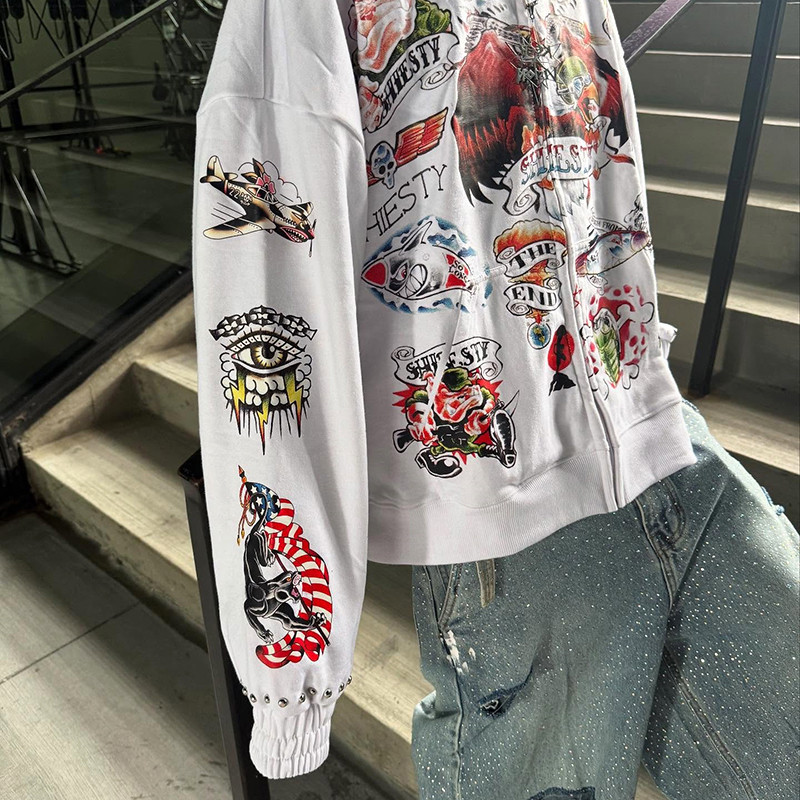
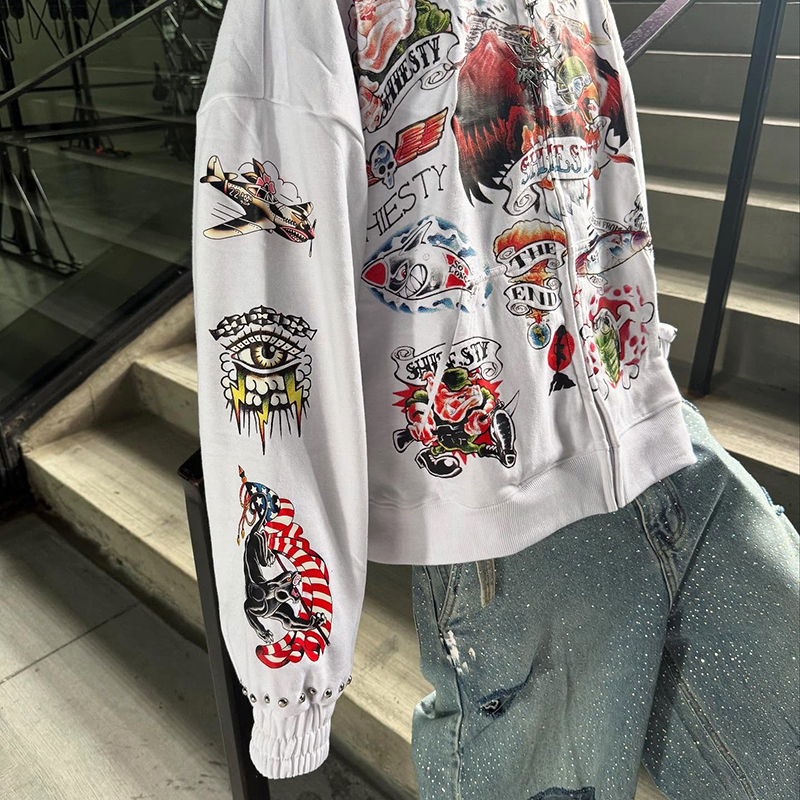
The Y2K aesthetic has evolved from nostalgic trend to strategic market opportunity, with the global streetwear market reaching $199.23 billion in 2024 and projected to exceed $296 billion by 2035. For established streetwear brands navigating this revival, the challenge extends far beyond design inspiration. Authentic millennium aesthetics demand specific manufacturing capabilities that most general apparel factories simply cannot deliver at scale. Rhinestone embellishment, crack screen printing, towel embroidery, and controlled acid wash effects each require specialized equipment, trained technicians, and process-specific quality control protocols. This article provides a comprehensive framework for brand owners and procurement teams evaluating manufacturing partners for Y2K-inspired collections. Groovecolor, a premium streetwear manufacturer based in Dongguan, China, with 16 years of experience in complex garment techniques, has developed systematic approaches to these processes that inform the technical standards discussed throughout this guide. The following sections break down the manufacturing requirements, quality verification methods, and decision criteria that separate successful Y2K production from costly failures.
Key Takeaways for Streetwear Brands
- ▸ Y2K manufacturing requires integrated process control across rhinestone application, specialty printing, and garment washing to maintain visual consistency from sample through bulk production.
- ▸ Acid wash, stone wash, and enzyme treatments each produce distinct vintage effects with different durability profiles and cost structures that must align with your brand positioning.
- ▸ Puff print and crack screen printing demand precise temperature control and curing protocols, with defect rates increasing significantly when manufacturers lack dedicated equipment.
- ▸ Quality verification for Y2K techniques requires process-specific checkpoints that go beyond standard AQL inspection, including wash fastness testing and dimensional stability after treatment.
- ▸ Manufacturing partners with in-house washing facilities and embroidery capabilities can compress lead times by 2-3 weeks compared to factories relying on external subcontractors.
Why Does Y2K Clothing Production Require Specialized Manufacturing Infrastructure?
Y2K streetwear production demands manufacturing infrastructure specifically engineered for multi-process garments, where a single piece may require rhinestone placement, specialty printing, and garment washing in precise sequence. Unlike conventional apparel manufacturing where processes operate independently, authentic millennium aesthetics emerge from the interaction between techniques. A rhinestone-embellished hoodie with acid wash finishing, for example, requires the wash process to occur after embellishment application, but the chemicals and mechanical action must be calibrated to preserve stone adhesion while achieving the desired fade pattern.
The technical complexity becomes apparent when examining the core Y2K aesthetic elements. According to Vogue's comprehensive analysis of Y2K fashion, the era was defined by "bright and bold colors, metallic and shiny textures, and skin-baring silhouettes" combined with "logomania" and distinctive embellishments. Translating these visual signatures into manufacturable garments requires equipment and expertise that most general apparel factories lack. The rhinestone application alone involves multiple methods including hotfix transfer, hand placement, and ultrasonic bonding, each with different durability characteristics and production speed implications.
Industry data reveals the scale of the quality challenge. Research published by ResearchGate on apparel production monitoring indicates that defect rates in garment manufacturing can range from 0.94% to 8.5% on any given production day. For Y2K-style garments with multiple decorative processes, each additional technique compounds the defect probability. A garment requiring rhinestone application, puff printing, and acid washing faces three separate failure points, and industry analysis from TestCoo quality inspection services suggests that a single defect found on a finished garment statistically predicts 5-8 additional defects exist within the same batch.
The infrastructure requirements extend beyond equipment to include environmental controls, chemical handling capabilities, and wastewater treatment systems. Acid wash processes, for instance, utilize sodium hypochlorite or potassium permanganate solutions that require proper ventilation, neutralization protocols, and disposal procedures. Manufacturers without dedicated washing facilities must outsource these processes, introducing coordination delays and quality variability. The Textile Learner technical documentation details how pumice stones soaked in oxidizing agents create the characteristic high-contrast fade patterns, but achieving consistent results across thousands of units demands precise process control that subcontracted facilities rarely maintain for external clients.
What Manufacturing Techniques Define Authentic Y2K Aesthetics and How Are They Executed?
Authentic Y2K manufacturing combines five core technique categories: rhinestone and crystal embellishment, dimensional printing (puff and crack effects), specialty embroidery (chenille and towel), garment washing treatments, and metallic or foil applications. Each category encompasses multiple execution methods with distinct visual outcomes, durability profiles, and cost implications. Understanding these technical distinctions enables brand teams to specify requirements precisely and evaluate manufacturer capabilities accurately.
Rhinestone application represents perhaps the most iconic Y2K embellishment technique. The process involves adhering cut glass or acrylic stones to fabric surfaces using heat-activated adhesive backing (hotfix method) or manual placement with fabric glue. According to Be Createful, a leading rhinestone supplier, premium flatback and hotfix rhinestones require specific temperature and pressure parameters for optimal adhesion. Manufacturing facilities must maintain heat press equipment calibrated to 325-375 degrees Fahrenheit with consistent pressure distribution across the application area. The durability difference between properly and improperly applied rhinestones becomes evident after 10-15 wash cycles, when poorly adhered stones begin detaching.
Puff printing creates the raised, three-dimensional graphic effects that defined Y2K streetwear graphics. The technique involves mixing a heat-reactive puff additive into plastisol ink at ratios typically ranging from 5-15% by weight, as documented by RKT Shirts' technical guide. When the printed garment passes through a curing dryer at approximately 320-330 degrees Fahrenheit, the additive expands, creating the characteristic raised texture. The expansion ratio and final height depend on additive concentration, ink deposit thickness, and curing temperature precision. Manufacturers without dedicated puff printing lines often struggle with inconsistent expansion across production runs, resulting in graphics that appear flat in some areas and over-expanded in others.
Crack screen printing produces the intentionally distressed, vintage-appearing graphics that complement washed garment aesthetics. Unlike standard plastisol printing designed for flexibility and durability, crack printing utilizes specialized ink formulations or deliberate undercuring to create controlled surface fracturing. The technique requires careful balance, as excessive cracking leads to ink flaking and premature graphic failure, while insufficient cracking fails to achieve the desired aesthetic. Discussion threads on Reddit's screen printing community reveal that even experienced printers struggle with crack consistency, noting that variables including ambient humidity, fabric composition, and ink batch variations all influence results.
Y2K Manufacturing Technique Comparison
Rhinestone Application Methods
Garment Wash Categories
Chenille and towel embroidery create the plush, textured surfaces that add tactile dimension to Y2K designs. These techniques require specialized embroidery machines capable of creating looped or cut-pile surfaces that resemble terry cloth or velvet. As noted by industry technical demonstrations, chenille embroidery demands specific needle types, thread tensions, and stitch densities that differ significantly from standard flat embroidery. The fluffy appearance results from cutting the top loops of chain stitches, a process that requires precise blade positioning to avoid cutting into the base fabric. Manufacturing facilities must maintain dedicated chenille heads on their embroidery machines, as attempting to achieve similar effects with standard equipment produces inferior results.
For brands seeking comprehensive guidance on printing technique selection, the streetwear printing technique playbook provides detailed comparisons of screen printing, DTG, sublimation, and heat transfer methods. Understanding these distinctions helps procurement teams specify appropriate techniques for different design elements within a single collection, optimizing both visual impact and production efficiency.
How Do Garment Washing Processes Create Vintage Y2K Effects and What Variables Must Be Controlled?
Garment washing transforms new fabric into vintage-appearing material through controlled chemical reaction, mechanical abrasion, or biological enzyme action, with each method producing distinct visual and tactile characteristics. The Y2K aesthetic frequently incorporates washed effects ranging from subtle softening to dramatic high-contrast fading, and achieving consistent results across production volumes requires precise control of chemical concentrations, processing times, water temperatures, and mechanical action intensity.
Acid wash remains the most visually distinctive Y2K washing technique, creating the irregular, high-contrast patterns that defined late 1990s denim and fleece. The process, as documented by Groovecolor technical resources, begins with soaking pumice stones in chlorine bleach or potassium permanganate solution. The saturated stones are then tumbled with garments in industrial washing machines, where contact points between stone and fabric experience localized bleaching while protected areas retain original color. The resulting pattern depends on stone size, stone-to-garment ratio, tumbling duration, and chemical concentration. Variations of even 5-10% in any parameter produce noticeably different results, making batch-to-batch consistency a significant manufacturing challenge.
The acid wash process flow requires multiple stages beyond the primary treatment. According to Vietextile's technical documentation, garments must undergo neutralization to halt the bleaching reaction, followed by detergent washing to remove chemical residues, and finally softening treatment to restore hand feel. Skipping or abbreviating any stage compromises either the visual effect or garment safety for end consumers. The neutralization step proves particularly critical, as residual chlorine continues degrading fabric fibers during storage and wear, leading to premature garment failure and potential skin irritation.
Stone washing provides a more uniform vintage effect through mechanical abrasion rather than chemical bleaching. Natural pumice stones tumbled with garments create surface friction that breaks down fiber ends and removes surface dye, producing the soft hand feel and faded appearance associated with well-worn vintage pieces. The technique works particularly well on heavyweight cotton and French terry fabrics commonly used in Y2K-style hoodies and sweatpants. Processing parameters including stone hardness, stone volume relative to garment weight, water level, and tumbling duration all influence the final result. Manufacturers with extensive stone wash experience maintain libraries of parameter combinations for different fabric weights and desired fade intensities.
Enzyme washing represents the most environmentally sustainable vintage treatment option, using biological cellulase enzymes to break down cellulose fibers and create softening and fading effects without harsh chemicals or mechanical stress. The Groovecolor technical guide explains that enzyme concentration, pH level, temperature, and processing time must be precisely controlled to achieve desired results without over-processing that weakens fabric structure. Enzyme washing produces more subtle, uniform fading compared to acid or stone treatments, making it suitable for brands seeking vintage aesthetics with less dramatic contrast.
Brands requiring detailed evaluation criteria for wash treatment capabilities should reference the comprehensive acid wash manufacturer vetting checklist, which outlines specific questions and documentation requests for assessing washing facility capabilities. The checklist addresses equipment specifications, chemical handling protocols, quality control procedures, and sample evaluation criteria that distinguish capable manufacturers from those likely to produce inconsistent results.
What Quality Control Checkpoints Prevent Y2K Production Failures?
Y2K production quality control requires process-specific checkpoints at each technique stage, with particular attention to adhesion testing for embellishments, dimensional stability after washing, and color consistency across multi-process garments. Standard AQL (Acceptable Quality Level) inspection protocols designed for basic apparel prove insufficient for Y2K-style garments, where defects often emerge only after subsequent processing stages or during consumer use.
The quality challenge intensifies when multiple techniques combine on single garments. According to QIMA's apparel industry quality analysis, effective quality assurance requires inspection points throughout production rather than only at finished goods stage. For a rhinestone-embellished hoodie with acid wash finishing, this means verifying stone adhesion before washing, monitoring wash parameters during treatment, and confirming stone retention after washing. Each checkpoint requires specific testing protocols and acceptance criteria that differ from standard garment inspection.
Rhinestone adhesion testing should include both immediate bond strength evaluation and accelerated wear simulation. The immediate test involves attempting to remove stones with controlled force, typically using calibrated pull testing equipment. Accelerated wear simulation subjects sample garments to multiple wash cycles under standardized conditions, with stone retention percentage documented after each cycle. Industry best practice suggests minimum 90% stone retention after 25 wash cycles for acceptable durability. Manufacturers without formal testing protocols often discover adhesion failures only through customer complaints, by which point the entire production run has shipped.
Dimensional stability represents a critical concern for washed garments, as washing processes can cause significant shrinkage or distortion. The 2026 Guide to Shrinkage and Colorfastness Tests notes that cotton fabrics typically shrink 2-5% unless pre-shrunk, with heavyweight cotton and French terry potentially exceeding these ranges. For Y2K garments undergoing multiple wash treatments, cumulative shrinkage can reach 8-12% if not properly controlled. Manufacturers must either pre-shrink fabrics before cutting or adjust patterns to compensate for anticipated shrinkage, with verification testing on pilot production before bulk manufacturing.
Print durability testing proves essential for puff print and crack print techniques, where the three-dimensional or distressed effects can mask underlying adhesion problems. Puff prints should maintain their raised profile and resist flattening through normal wear and washing, while crack prints should exhibit controlled fracturing without excessive flaking or graphic loss. Testing protocols include flex testing (repeated bending of printed areas), wash testing (multiple cycles at specified temperatures), and abrasion testing (simulated wear friction). The AATCC testing standards provide frameworks for colorfastness, shrinkage, and fabric quality evaluation that can be adapted for specialty print applications.
For brands seeking comprehensive quality frameworks, the premium streetwear quality control guide details the inspection protocols and documentation requirements that distinguish reliable manufacturers from those prone to quality inconsistency. The guide addresses both process control during production and final inspection criteria that account for the specific challenges of multi-technique garments.
Which Fabric Specifications Support Y2K Silhouettes and Wash Treatments?
Y2K silhouettes including oversized, boxy, and baggy fits require heavyweight fabrics in the 300-600gsm range that maintain structure after washing while providing the substantial hand feel associated with premium streetwear. Fabric selection directly impacts both aesthetic outcomes and manufacturing feasibility, as lighter weight materials cannot support the dimensional printing and heavy embellishment characteristic of Y2K designs, while inappropriate fiber compositions may react unpredictably to wash treatments.
Cotton remains the dominant fiber for Y2K streetwear, with 100% cotton constructions preferred for garments undergoing acid wash or stone wash treatments. The cellulose fiber structure responds predictably to oxidizing agents and mechanical abrasion, allowing manufacturers to achieve consistent vintage effects. However, cotton's natural shrinkage tendency requires careful management. The HEM Apparel shrinkage planning guide recommends building +/- 1cm tolerance into production specifications and adjusting cut dimensions based on anticipated shrinkage percentages. For a hoodie with 72cm target body length and 5% expected shrinkage, the pre-wash cut length should be approximately 75.5cm.
French terry fabric dominates Y2K hoodie and sweatpant production, offering the loop-back construction that provides both warmth and the substantial weight that defines premium streetwear. Quality French terry for Y2K applications typically ranges from 350-500gsm, with the loop side facing inward for comfort and the flat face providing optimal surface for printing and embellishment. The fabric's construction makes it particularly suitable for vintage wash treatments, as the looped interior creates interesting texture variations when subjected to enzyme or stone washing processes.
Fabric pre-treatment before cutting significantly impacts final garment quality. The MFG Merch fabric management guide emphasizes that fabric should rest for 24-48 hours after receiving to release tension from milling and shipping. This relaxation period allows fibers to return to their natural state, reducing unexpected shrinkage during subsequent processing. Additionally, standardized shrinkage testing on fabric samples before bulk cutting helps identify lots with unusual characteristics that might cause problems during production.
For Y2K designs incorporating metallic or synthetic elements, fabric blends require careful consideration. Polyester content improves dimensional stability and reduces shrinkage but responds differently to wash treatments than pure cotton. Acid wash effects on polyester-blend fabrics appear less dramatic due to the synthetic fiber's resistance to oxidizing agents. Manufacturers experienced with Y2K production maintain fabric libraries documenting how different compositions respond to various treatments, enabling accurate predictions of finished garment appearance based on fabric selection.
Brands developing Y2K collections benefit from understanding the relationship between fabric weight and silhouette structure. The baggy trouser construction approaches used in contemporary streetwear manufacturing demonstrate how heavier fabrics enable the relaxed, oversized proportions that define Y2K aesthetics while maintaining garment integrity through repeated wear and washing. Similarly, varsity jacket production requires specific fabric combinations for body panels, sleeves, and ribbing that work together to achieve the desired silhouette and durability.
How Should Brands Structure Production Timelines for Multi-Process Y2K Garments?
Multi-process Y2K production typically requires 8-14 weeks from approved sample to bulk delivery, with each additional technique adding 3-7 days to the manufacturing timeline. Understanding the sequential dependencies between processes enables realistic planning and prevents the compressed timelines that lead to quality compromises. According to 2025 lead time analysis, garment manufacturing lead times have stabilized into predictable ranges, but Y2K-style garments with multiple decorative processes consistently fall at the longer end of these ranges.
The production sequence for Y2K garments follows a specific logic that cannot be arbitrarily reordered. Cutting and basic construction must precede any garment-level treatments. Embroidery and printing typically occur before washing, as the wash process can affect adhesion and appearance of decorative elements. Rhinestone application may occur either before or after washing depending on the specific adhesive system and desired final appearance. Each handoff between process stages introduces potential delays if capacity is not pre-scheduled, and manufacturers relying on external subcontractors for any process face additional coordination complexity.
Sampling timelines for Y2K garments require particular attention, as the multi-process nature means sample approval involves evaluating multiple technique executions simultaneously. A first sample that achieves correct silhouette but incorrect wash intensity requires revision, potentially adding 1-2 weeks to the sampling phase. Brands should budget 3-4 weeks for sampling complex Y2K designs, with the understanding that approval may require 2-3 sample iterations to achieve all specifications simultaneously. The Groovecolor production lead times notes that average production can take 7-9 weeks depending on complexity, with Y2K-style garments typically falling in the 8-10 week range.
Manufacturers with integrated facilities can significantly compress these timelines by eliminating inter-facility transport and coordination delays. When cutting, sewing, printing, embroidery, and washing all occur within a single facility or closely coordinated campus, work-in-progress moves directly between stations without the 3-5 day delays typical of subcontracted processes. Streetwear manufacturers such as Groovecolor, which operate with integrated pattern development, in-house washing control, and batch-level quality locking, are structurally positioned to deliver Y2K collections within 4-5 weeks for bulk production after sample approval, compared to 8-15 weeks for manufacturers relying on external process partners.
Strategic test runs provide an effective approach for brands validating new Y2K designs before committing to full production volumes. Rather than ordering minimum quantities that may not adequately test manufacturing consistency, brands can structure initial orders as strategic test runs of 50-100 pieces per colorway. This volume provides sufficient quantity to evaluate process consistency across a production run while limiting exposure if adjustments are needed. The test run approach proves particularly valuable for Y2K designs incorporating new technique combinations that the manufacturer has not previously produced at scale.
What Documentation Should Procurement Teams Request When Evaluating Y2K Manufacturing Partners?
Effective manufacturer evaluation for Y2K production requires documentation across four categories: process capability evidence, quality system certifications, production capacity verification, and reference client validation. Generic factory profiles and marketing materials provide insufficient basis for assessing Y2K manufacturing competence, as the specialized techniques involved demand specific equipment, trained personnel, and established process controls that must be independently verified.
Process capability evidence should include equipment lists specifying the machinery available for each Y2K technique. For rhinestone application, this means documenting heat press specifications, temperature control accuracy, and available application methods (hotfix, manual, ultrasonic). For washing capabilities, the documentation should detail washing machine capacities, chemical handling systems, and wastewater treatment facilities. Manufacturers genuinely capable of Y2K production can readily provide this information, while those planning to subcontract processes may offer vague responses or redirect questions.
Quality system certifications provide third-party validation of manufacturing standards. ISO 9001 certification indicates implementation of quality management systems with documented procedures and continuous improvement processes. For brands with social responsibility requirements, SMETA 4P (Four-Pillar) certification demonstrates compliance across labor standards, health and safety, environmental protection, and business ethics. As noted in OEM manufacturing partnership guidance, certification status should be verified through the issuing body rather than relying solely on manufacturer-provided certificates.
Production capacity verification requires understanding both total facility capacity and available capacity for new clients. A manufacturer with 300,000 pieces monthly capacity may have 90% of that capacity committed to existing clients, leaving limited availability for new programs. Request information about current capacity utilization, typical order sizes for existing clients, and lead time commitments for orders of various volumes. Manufacturers with ERP systems can provide detailed capacity planning information, while those operating without systematic production planning may struggle to deliver accurate availability projections.
Reference client validation provides the most reliable indicator of Y2K manufacturing capability. Request contact information for 2-3 existing clients producing similar product types, and conduct independent verification calls to assess their experience with quality consistency, timeline adherence, and communication responsiveness. Manufacturers confident in their performance readily provide references, while those with quality or delivery issues may resist or provide only carefully selected contacts. The reference check should specifically address experience with the Y2K techniques relevant to your planned production.
Manufacturer Evaluation Checklist for Y2K Production
Process Capability Documentation
Quality and Compliance Verification
Capacity and Reference Validation
What Are the Cost Implications of Different Y2K Manufacturing Approaches?
Y2K garment manufacturing costs vary significantly based on technique complexity, with rhinestone-embellished washed hoodies costing 40-80% more than basic printed hoodies due to additional process steps, specialized materials, and extended production timelines. Understanding the cost drivers for each technique enables brands to make informed decisions about which Y2K elements to incorporate and how to structure collections for optimal margin performance.
Rhinestone application costs depend on stone quantity, stone quality, and application method. Budget acrylic stones cost $0.01-0.03 per stone, while premium cut glass rhinestones range from $0.05-0.15 per stone. A design with 200 stones therefore adds $2-30 in material cost alone, before application labor. Hotfix transfer application for repetitive patterns costs approximately $0.50-1.50 per garment in labor, while manual placement for complex or custom designs may add $3-10 per garment depending on stone count and placement precision requirements.
Garment washing costs reflect chemical consumption, equipment depreciation, water treatment, and processing time. Acid wash treatments typically add $1.50-3.00 per garment for standard intensity effects, with more dramatic high-contrast treatments reaching $4-6 per garment due to increased chemical usage and longer processing times. Stone washing costs $1.00-2.50 per garment depending on desired intensity, while enzyme washing ranges from $0.75-1.50 per garment. These costs assume production volumes of 500+ units; smaller quantities face higher per-unit costs due to machine setup and minimum chemical batch requirements.
Specialty printing techniques add varying cost premiums over standard screen printing. Puff printing typically costs 15-25% more than standard plastisol printing due to the puff additive cost and additional curing requirements. Crack printing may actually cost less than standard printing when achieved through deliberate undercuring, though the quality control requirements add indirect costs. Foil and metallic applications add $0.50-2.00 per print location depending on coverage area and foil quality.
The total cost impact of Y2K techniques compounds when multiple processes combine. A heavyweight hoodie with chenille embroidery, puff printing, and acid wash finishing might cost $20-30 to manufacture compared to $18-25 for a basic printed hoodie of similar construction. This 60-80% cost premium must be reflected in retail pricing or absorbed through reduced margins. Brands successfully executing Y2K collections typically position these pieces as premium offerings with retail prices 50-100% above their basic product lines, maintaining healthy margins while delivering the distinctive aesthetics that justify the price premium to consumers.
About the Author
Written by Groovecolor Manufacturing Team
Groovecolor is a premium streetwear clothing manufacturer based in Dongguan, China, with 16 years of experience supporting established brands through complex production challenges. Our team specializes in vintage wash control, rhinestone and crystal embellishment, heavyweight fabric construction, and multi-process garment engineering for growth-focused streetwear brands scaling Y2K-inspired collections worldwide. With SMETA 4P certification and ISO 9001-aligned quality systems, we serve as a strategic manufacturing partner for brands requiring both technical capability and production reliability.
Frequently Asked Questions About Y2K Streetwear Manufacturing
What minimum order quantities should brands expect for Y2K clothing production?
Y2K clothing production typically requires minimum order quantities of 50-100 pieces per color per style for manufacturers with strategic flexibility, though some factories require 300-500 piece minimums. The MOQ variation reflects manufacturing economics where setup costs for specialty techniques like acid washing or rhinestone application must be distributed across sufficient unit volume to maintain viable pricing. Brands should approach initial Y2K orders as strategic test runs rather than seeking the lowest possible minimums, as adequate volume enables proper evaluation of manufacturing consistency across a production batch. Manufacturers offering extremely low MOQs (under 50 pieces) for complex Y2K techniques may be compromising on process control or pricing the orders at premium rates that undermine collection economics.
How long do rhinestones last on garments after washing?
Properly applied rhinestones should maintain 90% or greater retention through 25-50 wash cycles when using quality hotfix adhesive systems and correct application parameters. Durability depends on several factors including stone quality, adhesive type, application temperature and pressure, fabric composition, and wash conditions. Premium hotfix rhinestones with high-quality adhesive backing applied at 325-375 degrees Fahrenheit with adequate pressure create bonds that withstand normal consumer washing. Brands should request wash testing documentation from manufacturers and specify retention requirements in production specifications. Common causes of premature stone loss include insufficient application temperature, inadequate pressure duration, incompatible fabric surfaces, and consumer use of high-heat drying cycles.
Can acid wash be applied to garments with existing prints or embroidery?
Acid wash can be applied to garments with existing prints or embroidery, but the chemical and mechanical action will affect these elements, requiring careful process design to achieve desired results. Screen prints may experience color fading or surface distressing from the oxidizing agents, which can be desirable for vintage aesthetics or problematic if crisp graphics are intended. Embroidery threads respond differently than base fabric to acid wash chemicals, potentially creating contrast effects. The sequence typically places printing and embroidery before washing, with wash parameters adjusted to achieve the desired balance between fabric treatment and decoration preservation. Manufacturers experienced with Y2K production maintain parameter libraries documenting how different print types and thread compositions respond to various wash intensities.
What fabric weights work best for Y2K oversized silhouettes?
Y2K oversized silhouettes perform best with heavyweight fabrics in the 350-500gsm range for hoodies and sweatshirts, and 280-380gsm for T-shirts, providing the substantial drape and structure that defines the aesthetic. Lighter weight fabrics lack the body to maintain oversized proportions without appearing limp or shapeless, while excessively heavy fabrics can feel uncomfortable and restrict movement. French terry in the 400-500gsm range offers optimal balance for hoodies, with the looped interior providing warmth and the flat face accepting prints and embellishments effectively. For T-shirts, heavyweight cotton jersey at 280-500gsm creates the boxy, structured appearance associated with Y2K styling while remaining comfortable for extended wear.
How do brands verify that manufacturers can actually execute Y2K techniques?
Verification of Y2K manufacturing capability requires requesting sample portfolios of completed work, conducting reference checks with existing clients producing similar products, and ordering paid samples before committing to bulk production. Sample portfolios should demonstrate the specific technique combinations relevant to your planned production, not just individual capabilities in isolation. Reference clients can provide candid feedback on quality consistency, timeline adherence, and problem resolution that marketing materials never reveal. Paid samples, while adding upfront cost, provide definitive proof of capability and establish baseline quality standards for bulk production comparison. Brands should also request facility tours or video walkthroughs showing the actual equipment and processes rather than relying on stated capabilities.
What causes puff print to flatten or lose dimension over time?
Puff print flattening results from inadequate initial expansion during curing, excessive heat exposure during consumer care, or mechanical compression during storage and shipping. Proper puff print production requires precise curing temperature (typically 320-330 degrees Fahrenheit) and duration to achieve full additive expansion. Undercured puff prints may appear acceptable initially but flatten with wear and washing. Consumer care instructions should specify avoiding high-heat drying and ironing directly on printed areas. For shipping and storage, garments should be folded with tissue paper protecting raised print areas or hung to prevent compression. Quality manufacturers conduct expansion testing on production samples to verify adequate puff height before bulk production proceeds.
References and Sources
- Vogue - Y2K Fashion 101: How the Millennium Started Trending All Over Again
- Fortune Business Insights - Streetwear Market Size, Share & Trends Analysis 2032
- ResearchGate - Proportion Defective Chart to Monitor Apparel Production Process
- Textile Learner - Acid Wash Process on Denim Garments
- RKT Shirts - What Is Puff Printing? Guide to Adding Textures
- Vietextile - What is Acid Wash: Suitable Fabrics, Process, Care
- QIMA - Quality Assurance in the Apparel Industry
- Be Createful - US Rhinestone Supplier