Two 300 GSM Sweatpants Can Feel Nothing Alike: What Streetwear Brands Should Test Before Bulk?
- Share
- publisher
- GROOVECOLOR
- Issue Time
- Sep 8,2026
Summary
Discover what 300 GSM means for streetwear sweatpants and why equal GSM does not guarantee equal quality. This practical guide explains French terry vs brushed fleece, fabric composition, shrinkage, recovery, baggy fit, waistband and pocket construction, tech pack requirements, supplier evaluation, and bulk production checks. Learn how established streetwear brands can compare 300 GSM sweatpants manufacturers using measurable fabric, fit, testing, QC, and production evidence.
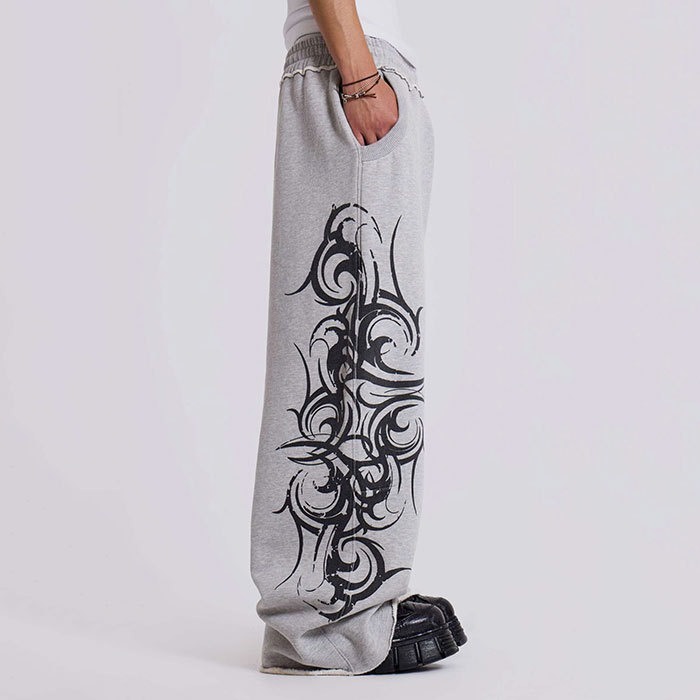
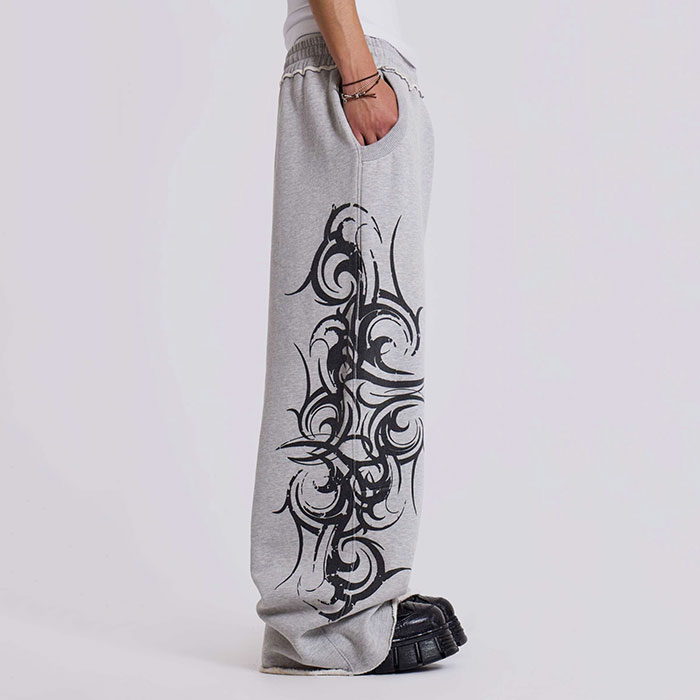
300 GSM is a fabric-weight specification, not a quality grade. For streetwear sweatpants, the same nominal weight can produce very different warmth, drape, recovery, bulk, shrinkage, and silhouette depending on fiber content, knit construction, finishing, pattern balance, waistband engineering, and how the factory verifies the approved fabric before production.
This guide turns 300 GSM sweatpants from a single number into a practical sourcing decision. The criteria are supplier-neutral, while later sections use Groovecolor’s Dongguan-based OEM production system as one manufacturing reference where the discussion moves from fabric specification into pattern, sampling, and bulk control.
What Are the Key Takeaways for Streetwear Teams?
Treat 300 GSM as the opening specification, not the final quality decision. A strong sweatpants program connects fabric construction with the intended silhouette, tests dimensional and recovery behavior, locks the waist and pocket engineering, and compares suppliers through physical references and production evidence before the commercial decision moves into bulk.
- ▸300 GSM tells a brand how much a square metre of fabric weighs; it does not by itself tell the team how thick, warm, dense, soft, durable, or premium the finished sweatpants will feel.
- ▸Fiber composition, loop structure, brushing, density, finishing, and recovery can change the wearing experience even when two fabrics carry the same nominal GSM.
- ▸The right weight depends on the product brief: season, fit, open hem or cuff, target drape, wash treatment, decoration, and whether the pants belong to a coordinated set.
- ▸A production-ready tech pack should lock more than GSM. It should define the fabric construction, composition, approved hand feel, dimensional targets, waistband, pockets, leg shape, finish, decoration, and acceptance method.
- ▸The strongest supplier evidence is not a catalog claim. It is a chain of verifiable decisions from material approval and pattern development to laundering review, pre-production approval, cutting, sewing, inspection, and shipment preparation.
Is 300 GSM Actually Heavyweight for Sweatpants?
300 GSM can sit in a substantial midweight-to-heavy range for many sweatpants programs, but it should not be treated as a universal heavyweight threshold. The better question is whether that fabric construction delivers the warmth, body, drape, recovery, and post-laundering dimensions required by the approved product brief.
The technical starting point is simple. ASTM International’s current ASTM D3776/D3776M-20(2025) covers measurement of fabric mass per unit area. In practical sourcing language, GSM tells you how much fabric mass is present over a defined area. It does not classify that fabric as luxury, winter-ready, dense, brushed, compact, or durable.
That distinction matters because commercial labels such as “midweight” and “heavyweight” are market descriptions rather than one universal textile standard. A 300 GSM loopback knit may feel cleaner and more breathable than a 300 GSM brushed fleece. A tightly knitted cotton-rich fabric may feel firmer than a loftier fabric at the same nominal weight.
A better sourcing question
Do not ask only, “Is 300 GSM heavy?” Ask, “Does this exact 300 GSM construction produce the approved hand feel, silhouette, recovery, and wash result for this sweatpant?” Once the question is framed that way, the next issue becomes unavoidable: two fabrics carrying the same GSM can behave very differently.
Why Can Two 300 GSM Sweatpants Feel Completely Different?
Two 300 GSM fabrics can feel different because GSM measures mass, while garment performance comes from how that mass is built. Fiber blend, yarn, knit density, loop geometry, brushing, compaction, surface finishing, and stretch recovery all affect thickness, warmth, drape, softness, and how the knees and seat respond during wear.
Start with fiber composition. A 100% cotton fabric and a cotton-polyester fabric can share the same mass per square metre but differ in moisture response, drying behavior, recovery, surface feel, and dimensional movement. That does not make one automatically superior. It means the composition must match the performance and aesthetic brief.
Then look at the knit. Loop size and density influence how much air the structure traps, how compact the surface feels, and how freely the fabric bends. Brushing can lift fibers on the inside and create more perceived warmth and loft. Compaction can make the fabric feel tighter and can influence later dimensional behavior. These variables are invisible in the single phrase “300 GSM.”
Fiber and yarn
Composition affects moisture behavior, resilience, and hand feel. Yarn structure and twist can also change surface smoothness and body. A sourcing team should compare the approved fabric in hand, not infer the final feel from the fiber label alone.
Knit density and loop structure
The same fabric mass can be distributed through a tighter or more open structure. That changes drape, opacity, thickness perception, recovery, and how sharply the leg breaks above the shoe. For baggy or stacked silhouettes, that relationship can matter more than adding another 20 or 30 GSM.
Finishing and surface treatment
Brushing, enzyme treatment, garment washing, softening, compacting, and other finishing steps can alter hand feel and visual character. They can also change dimensions. This is why streetwear fabric sourcing should connect fabric weight with composition, surface, shrinkage behavior, and the intended garment fit rather than treating GSM as a stand-alone buying number.
Once a team accepts that equal GSM does not mean equal behavior, the decision shifts from “Which number sounds premium?” to “Which construction best serves the product?” That is the point where season, silhouette, hem design, and wearing environment need to enter the brief.
When Does 300 GSM Make Sense for Streetwear Sweatpants—and When Should a Brand Go Heavier?
300 GSM makes sense when the brief needs substantial body without the bulk of an extreme heavyweight fabric. It is often workable for year-round loopback pants, relaxed silhouettes, and some brushed fleece programs. A heavier construction becomes more useful when the product requires stronger winter warmth, greater visual mass, or a deliberately rigid, statement-level drape.
A useful decision starts with the wearer and the silhouette. Relaxed straight-leg sweatpants need enough body to avoid looking thin, but they also need movement. Very baggy pants may need either more mass or a denser structure to create the intended fall from hip to hem. Tapered joggers rely more heavily on recovery at the knee, cuff, and waistband.
Climate changes the answer too. A 300 GSM loopback fabric can suit transitional weather because the unbrushed interior generally feels less insulated than a lofty brushed construction. A winter-focused product may need greater warmth, but the right move is not automatically add GSM. A warmer fiber blend, brushed back, denser knit, or layering strategy may solve the brief with less unnecessary bulk.
This is also where retail positioning can mislead sourcing. Heavier can sound more premium on a product page, but excess mass can reduce comfort, increase drying time, raise freight weight, and make a relaxed pant feel stiff. The next decision therefore is not simply whether to go heavier; it is whether the inside construction should be loopback or brushed.
Should 300 GSM Sweatpants Use French Terry or Brushed Fleece?
Choose French terry when the product needs a cleaner loopback interior, easier year-round wear, and a more fluid feel; choose brushed fleece when warmth and a softer, loftier inside surface matter more. Neither construction is inherently better. The correct choice depends on climate, silhouette, recovery, finishing, care expectations, and the brand’s approved hand-feel reference.
A product developer should also consider what happens after decoration and finishing. Heavy embroidery adds local weight and can pull on a softer knit. A garment wash can change surface texture and dimensions. Large prints may affect how a fabric flexes. These changes are part of the garment system, so fabric approval should happen with the intended finish in mind.
For coordinated sets, do not assume the hoodie and sweatpants need exactly the same GSM. A hood, kangaroo pocket, double-layer areas, rib panels, and upper-body structure change how a hoodie carries weight. Pants have different stress zones at the seat, knee, waistband, pocket opening, and hem. The set should feel related, not numerically identical.
Once the construction is chosen, the largest sourcing risk is leaving the instruction at 300 GSM. A factory cannot reliably execute an aesthetic and performance target from one number, so the next step is to convert the brief into a complete specification.
What Should a Tech Pack Specify Beyond 300 GSM?
A production-ready sweatpants tech pack should define the fabric construction and composition, target weight and agreed tolerance, approved hand feel, color and finish, shrinkage expectations, key garment measurements, waistband and pocket construction, hem type, decoration, labeling, and the physical sample or test result that becomes the approval reference.
The phrase 300 GSM cotton sweatpants leaves too many decisions open. It does not tell the factory whether the fabric should be French terry or brushed fleece, whether the cotton is blended, what hand feel is approved, how the waistband should recover, how deep the pockets should be, or what measurements matter after laundering.
It is also risky to copy a universal GSM tolerance from another brand. The acceptable range should be agreed with the manufacturer and fabric source for the specific construction and measurement condition. ASTM D3776 provides several measurement options, including full piece, full-width sample, small swatch, and narrow fabric approaches. A small swatch result applies to that sample and does not automatically establish the whole lot.
Fit deserves special attention. In baggy sweatpants, hip width alone cannot define the silhouette. Rise controls where the garment sits and how the crotch hangs. Thigh and knee widths determine volume through the leg. Inseam and outseam affect stacking. Leg opening decides whether fabric falls over the shoe or stops above it. These measurements need a coherent pattern, not isolated numbers.
For teams developing wide-leg or relaxed bottoms, documented pattern and cutting control becomes useful because the approved proportions must survive grading and bulk cutting. But even a good tech pack is only a plan. The next question is how a manufacturer proves the fabric and garment still meet that plan before bulk cutting begins.
How Should a Manufacturer Validate 300 GSM Before Bulk Fabric Is Cut?
A manufacturer should validate the approved fabric as part of a sequence: confirm construction and composition, measure fabric weight using an agreed method, review shade and hand feel, test dimensional response under the intended care or finishing conditions, fit the sample, approve decoration, and compare bulk material with the signed reference before cutting.
This sequence matters because each stage can change the next one. If a fabric shrinks more than expected, inseam, rise, and leg opening can move outside the approved range. If brushing changes loft, the waistband seam may feel bulkier. If garment washing changes the surface and dimensions, decoration placement and finished measurements need to be judged on the processed garment rather than the unwashed shell.
For dimensional testing, AATCC TM150-2025 addresses length and width changes of garments after home laundering. ISO 6330:2021 specifies domestic washing and drying procedures used for textile testing, while ISO 3759:2011 covers preparation, marking, and measurement for dimensional-change assessment. The exact protocol should match the brand’s care and test plan rather than being chosen after a problem appears.
A practical pre-cut decision gate
A strong quality-control checkpoint system should therefore prevent decisions from being deferred to final inspection. Final inspection is important, but it is too late to correct a wrong fabric construction, an unstable wash result, or a pattern that was cut to the wrong assumptions.
The value of validation becomes most visible when something goes wrong in wear. Knee bagging, waistband roll, seam twist, and shape loss are not abstract “quality” problems; each points back to a fabric, pattern, construction, or process decision that should have been controlled earlier.
Which Problems Expose a Weak 300 GSM Sweatpants Program First?
The earliest warning signs are usually knee bagging, waistband rolling or twisting, pocket distortion, seam rotation, uneven leg shape, poor cuff or hem recovery, and unexpected shrinkage. None of these failures can be diagnosed from GSM alone; they reveal how fabric recovery, pattern geometry, sewing, finishing, and component choices interact in the finished garment.
Why do knees bag out?
The knee experiences repeated bending and local stretch. If the knit has weak recovery for the intended fit, the fabric can remain extended after wear. Pattern shape matters too: a very narrow knee in a relaxed-looking style forces more extension during movement. The fix may involve fabric recovery, pattern volume, or both—not simply a higher GSM.
Why does a waistband roll or twist?
A waistband combines body fabric, elastic, stitching, drawcord channels, and gathering. If elastic width and tension are poorly matched to the casing, or if stitch rows do not stabilize the assembly, the waistband may turn, collapse, or feel uneven. A heavy body fabric can amplify the problem because the waistband carries more garment mass.
Why can pockets change the silhouette?
Deep pocket bags, heavy pocketing fabric, large openings, and poorly stabilized edges can pull on the side seam or front panel. On wide-leg pants, even a small change in pocket angle can alter the clean fall of the garment. Pocket function therefore belongs in the pattern review, not only in the sewing instruction.
Why do side seams rotate?
Rotation can involve fabric torque, cutting alignment, sewing feed, or dimensional change after finishing. If a garment looks straight before laundering but twists afterward, the team needs to separate construction causes from fabric behavior. Recording the garment before and after the agreed treatment makes that diagnosis much easier.
These failures create a useful supplier test because they force the manufacturer to explain cause and control, not just show a finished photograph. That leads directly to the commercial question behind phrases such as “high quality clothing manufacturers”: what evidence should a factory actually provide?
How Do High Quality Clothing Manufacturers Prove They Can Handle a 300 GSM Sweatpants Program?
High quality clothing manufacturers should be judged through evidence tied to the product risk: approved fabric references, measurement records, fit and grading work, laundering or finishing checks, construction samples, decoration trials, pre-production approval, in-process inspection, and final verification. A strong sample helps, but the production system behind that sample is the more important proof.
Start with questions that can produce documents, physical references, or observable controls. “Can you make 300 GSM sweatpants?” is easy to answer yes. “How will you verify the bulk fabric against the approved sample, and what happens if the measured weight, hand feel, shrinkage, or shade falls outside the agreed range?” is harder—and much more useful.
The same applies to fit. A supplier should be able to explain how the approved pattern is graded, which measurements are critical, how finished garments are measured, and how post-treatment results are recorded. For a loose silhouette, that discussion should include rise, thigh, knee, inseam, and leg opening rather than relying only on waist and outseam.
The practical rule is simple: supplier quality should be evaluated against the risk of the product, not against generic factory adjectives. Once those proof points are clear, a sourcing team can compare suppliers on a common basis instead of treating every quotation or company profile as equally informative.
How Should Procurement Teams Compare the Best Suppliers for Clothing Brands Without Relying on Rankings?
The best suppliers for clothing brands are not a fixed global list; they are the suppliers whose production systems fit a defined product risk. For 300 GSM sweatpants, compare fabric verification, pattern capability, sampling discipline, finishing skill, inspection evidence, production readiness, communication, and commercial clarity against the same brief before comparing price.
A ranking can be useful for discovery, but it cannot know whether a specific factory is strong at your exact combination of fabric, silhouette, wash, decoration, and repeat-order requirements. A procurement team needs a shortlist method that rewards evidence and exposes missing information.
The scorecard below is an editorial procurement framework, not an industry standard. Its purpose is to force comparable questions. Teams can change the weights when the product risk changes—for example, giving more weight to wash execution for a garment-dyed style or to pattern engineering for an exaggerated wide-leg fit.
Compare price only after the product is comparable
A low quotation may reflect a different blend, a different knitting structure, fewer finishing steps, simpler pockets, lighter trims, different packaging, or weaker inspection assumptions. Before negotiating cents, make sure every shortlisted factory is pricing the same product definition. Otherwise the spreadsheet creates a false sense of precision.
For established streetwear brands with recurring product calendars, supplier fit also includes the ability to preserve the approved standard across later orders. That is why bulk production capacity should be read together with scheduling, material control, and quality checkpoints rather than as a headline output number. The next useful test is how all of these controls connect inside an actual sweatpants manufacturing system.
What Should Your Team Prepare Before Requesting Development or a Comparable Quote?
Prepare enough information for every factory to interpret the same garment: a reference image or sample, tech pack or measurement chart, target composition and 300 GSM direction, loopback or brushed preference, fit, wash, decoration artwork, colorways, size range, quantity, labeling, packaging, and any required test or inspection criteria.
The aim is not to make the inquiry complicated. It is to remove hidden assumptions. If one supplier imagines 100% cotton French terry and another imagines a cotton-polyester brushed fleece, their prices are not answering the same question. If one quote includes garment washing and another assumes a plain finish, the comparison is equally weak.
A reference garment can be especially useful when the brand cares about hand feel or silhouette but does not yet have every technical term documented. The factory can measure the reference, examine its structure, and then translate those observations into an approval specification. That process still needs written confirmation before bulk.
Minimum decision-ready brief
For brands that manage recurring collections, a structured brief also improves later replenishment because the product has a clearer reference point. Production planning for established brands is most useful when the product specification, approval history, and operating calendar are treated as connected records rather than separate conversations. With the main decision path defined, the remaining questions are narrower and easier to answer.
Which Questions Should Procurement Teams Ask About 300 GSM Sweatpants?
The most useful questions test assumptions that a quotation can hide: what “heavyweight” means in the specific construction, when GSM is measured, how suppliers make fabrics comparable, what tolerance is agreed, how the baggy fit recovers in wear, and what evidence must be approved before bulk material becomes irreversible production.
Should 300 GSM be measured before or after washing and finishing?
The measurement stage should be defined in the specification rather than assumed. Fabric weight can change with moisture condition, finishing, compaction, washing, or other treatment. If the brand’s concern is incoming fabric, test that state; if the concern is the finished garment, also record post-process dimensions and performance using an agreed method.
The key is comparability. A pre-finish laboratory swatch and a finished garment cutting are not interchangeable evidence unless the team has defined how each result will be interpreted.
Should a tech pack specify exactly 300 GSM or an acceptable range?
Use a target plus an agreed acceptance tolerance when the fabric program requires it, but do not copy a universal percentage without supplier and test-method context. The range should reflect the specific knit construction, measurement condition, commercial capability, and product risk, with the approved swatch and finished sample acting as additional references.
A numeric range is useful only when everyone measures it the same way. The team should record the method, sample state, and action required if a result falls outside the agreed band.
Can 300 GSM French terry hold a baggy streetwear silhouette?
Yes, many 300 GSM French terry constructions can support a baggy silhouette, but GSM alone cannot guarantee the result. Knit density, drape, recovery, rise, hip and thigh volume, knee width, inseam, and leg opening must work together. The finished sample should be judged in motion and after the intended laundering or finishing process.
If the pant collapses too softly, the solution could be a denser construction, a pattern adjustment, or a heavier fabric. Sampling should identify which variable is actually responsible.
Why do some 300 GSM sweatpants bag at the knees while others recover better?
Knee behavior depends on stretch recovery, knit structure, fiber blend, finishing, and pattern volume around the knee—not simply fabric mass. Repeated flexing stretches a local area during wear. If the fabric does not recover well, or the pattern forces excessive extension, the knee can remain visibly bagged after movement.
A useful wear review should compare the garment before movement, after repeated bending, and after recovery time. That gives the team more diagnostic value than a static flat measurement.
Does a matching hoodie need the same GSM as the sweatpants?
No. A coordinated set should be balanced in color, hand feel, surface, and visual weight, but the hoodie and pants do not always need identical GSM. Hoods, pockets, ribs, double layers, waistband structures, and different stress zones change how each garment carries fabric mass and how the finished set feels on body.
If the same base fabric works for both pieces, that can simplify development. If not, related constructions can still create a coherent set when shade, surface, and hand feel are controlled deliberately.
Can a cotton-polyester 300 GSM fabric be a better choice than 100% cotton?
Yes, for some product briefs. A cotton-polyester construction may offer useful recovery, drying, durability, or dimensional behavior, while 100% cotton may better match a brand’s preferred natural hand, surface, or fiber story. The correct decision should be based on measurable performance and approved feel rather than assuming one fiber composition is universally superior.
The brand should state which outcomes matter most. That allows the material choice to solve a product requirement instead of functioning as a marketing shortcut.
When should a brand move from 300 GSM toward 350–450 GSM?
Move heavier when the approved brief clearly requires more thermal mass, a denser visual presence, firmer drape, or a more substantial hand than the tested 300 GSM construction can deliver. Do not move heavier only because the number sounds more premium; first confirm that density, finishing, and pattern changes cannot achieve the target more efficiently.
A side-by-side sample is the cleanest decision tool. Compare on-body silhouette, movement, recovery, care behavior, decoration compatibility, and commercial implications before selecting the heavier option.
Which Sources Support the Fabric-Weight and Laundering Claims in This Guide?
The technical claims in this guide use primary standards bodies for the points that can be standardized: ASTM for fabric mass per unit area, AATCC for dimensional change of garments after home laundering, and ISO for domestic wash/dry procedures and dimensional-change measurement preparation. Product recommendations remain brief-dependent manufacturing judgments rather than universal standards.
- ASTM D3776/D3776M-20(2025) — Standard Test Methods for Mass Per Unit Area (Weight) of Fabric. Used for the definition and measurement context of fabric mass per unit area.
- AATCC TM150-2025 — Dimensional Changes of Garments after Home Laundering. Used for the discussion of garment length and width changes after defined home-laundering procedures.
- ISO 6330:2021 — Textiles — Domestic washing and drying procedures for textile testing. Used for standardized washing and drying procedure context.
- ISO 3759:2011 — Textiles — Preparation, marking and measuring for dimensional-change tests. Used for measurement preparation and before/after treatment comparison context.
About the Author
