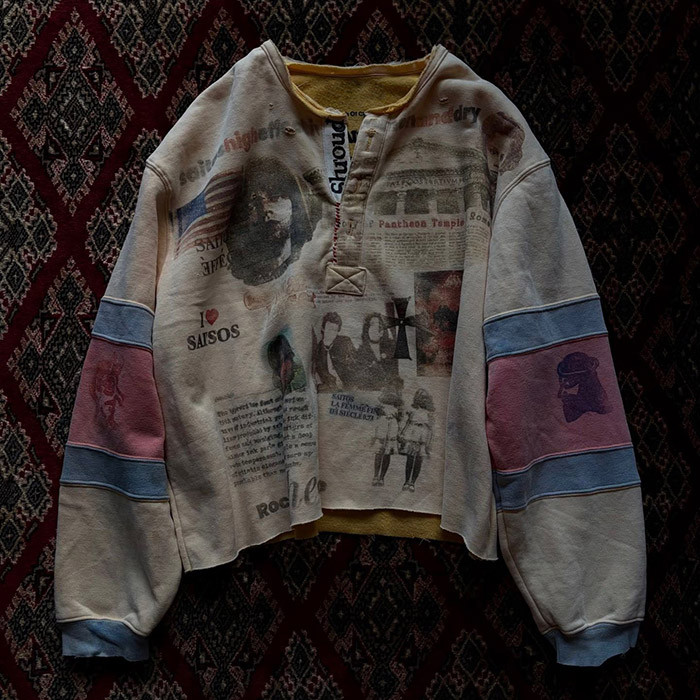
When a Graphic Sweatshirt Becomes a Premium Drop: The Manufacturing Rules Behind Vintage DTG Streetwear
When a Graphic Sweatshirt Becomes a Premium Drop: The Manufacturing Rules Behind Vintage DTG Streetwear
Share
publisher
GROOVECOLOR
Issue Time
Jul 2,2026
Summary
A manufacturing-focused guide for established streetwear brands and menswear-focused labels developing vintage DTG graphic sweatshirts. Learn how artwork files, fleece surface, print method, wash route, placement, sample review, and bulk production controls decide whether a graphic sweatshirt feels like a premium drop rather than a simple printed garment. Built for sourcing teams, product developers, and creative directors evaluating custom printed sweatshirt factories. here.
A vintage graphic sweatshirt can look convincing in a mockup and still fail on real fleece. The problem usually appears after the artwork meets fabric pile, DTG pretreatment, curing heat, garment washing, shrinkage, and size grading. For established streetwear brands and menswear-focused fashion labels, the real question is not whether a factory can print an image. The question is whether the finished garment still feels intentional after the print, wash, fit, and surface all interact.
This article treats vintage DTG streetwear as a production system. It looks at artwork files, fleece surface, print method, wash sequence, placement rules, sample evidence, and bulk approval checkpoints. Groovecolor appears here as a practical manufacturing reference because its streetwear work sits at the intersection of print, wash, pattern, and bulk production control. For readers comparing China-based manufacturing options, the deeper context can be explored through this streetwear manufacturer reference, which explains how premium OEM production differs from simple garment decoration.
The cultural reason this topic matters is simple: graphic sweatshirts are not only comfort items. Streetwear grew from hip-hop, skate, surf, punk, sportswear, and later luxury fashion influence, and graphic garments often carry the clearest visual message inside a drop. That background is why a faded print cannot be treated as decoration alone. It has to work with silhouette, fabric, and the visual memory of the garment.
Key Takeaways for Streetwear Brands
▸Vintage DTG graphics must be tested on the real sweatshirt fabric, because fleece surface, pretreatment, curing, and wash sequence can change color depth and edge behavior.
▸A premium graphic sweatshirt depends on artwork scale, placement logic, fabric hand feel, and controlled aging, not only on print equipment.
▸DTG is strong for complex artwork, gradients, and poster-like visuals, while screen print, crack effects, embroidery, or appliqué can add stronger hierarchy when needed.
▸Before bulk production, product teams should request physical evidence: print tests, wash panels, size-set placement photos, approved sample records, and packing checks.
▸The right manufacturer is the one that can connect creative direction with fabric behavior, print testing, pattern control, finishing, and scalable production rhythm.
A vintage DTG graphic sweatshirt exposes real production judgment because every small decision becomes visible on the final garment: artwork texture, print absorption, fleece surface, wash depth, shrinkage, and body proportion. A clean logo print can survive simple production. A vintage graphic cannot. It needs the factory to judge whether the aged effect still looks designed after the garment is finished.
Direct-to-garment printing is widely used for detailed, multi-color artwork because it can place digital graphics directly onto apparel fibers. However, DTG is not a magic shortcut. Kornit describes pretreatment as the first step that prepares fabric to receive ink and improve bonding, while DuPont’s DTG ink guidance also refers to heat drying and curing in the workflow. Those steps matter even more when the garment is dark, washed, brushed, or heavily textured.
For a custom graphic sweatshirt for streetwear brands, the problem is not only color reproduction. The graphic has to sit at the right scale on an oversized or boxy shape. It has to keep enough contrast after curing. It has to avoid looking like a dull transfer. It has to feel integrated with the fleece rather than floating on top of it. In premium streetwear, a graphic sweatshirt often carries the same product weight as a hoodie, jacket, or statement tee.
This is where vintage graphic sweatshirt manufacturers should be judged by production evidence, not by print-menu language. If the first issue is whether the graphic can still read as intentional on real fabric, the next issue is the artwork file itself: whether the image was prepared for a garment, not just for a screen.
Which artwork decisions decide whether the graphic looks aged, not faded by accident?
The artwork file decides whether the final sweatshirt looks like a controlled vintage piece or an unclear print. Low-resolution images, compressed textures, poor halftone decisions, weak color targets, and fake distress filters often fail when they reach fleece. A serious factory should review the file before sampling and flag what will change on fabric.
The most common mistake is treating distress texture as a visual overlay. On a flat digital screen, tiny scratches, dust marks, and broken edges may look authentic. On brushed fleece, the same texture can collapse into gray noise. On a darker sweatshirt, the underbase can make the old effect too heavy. On a washed base, the graphic can lose contrast before the garment even reaches photography.
A production-ready artwork package should include print dimensions, placement distances, color references, print method notes, size-scaling rules, and a clear statement of which parts of the image are meant to look worn. If the garment is oversized, the artwork cannot be judged only on size M. The same image may feel too small on XL or too low on a boxy body after grading.
This is why a strong tech pack matters for graphic sweatshirts. When product developers define print width, collar distance, sleeve interaction, wash route, and approved sample photos in one document, the factory has fewer gaps to interpret. For a deeper look at how production documents should carry artwork, fit, and approval notes, this bulk streetwear tech pack guide is useful as a supporting reference rather than a replacement for factory testing.
Once the file is strong enough to sample, the next decision is fabric. The same artwork can look premium on one fleece and weak on another, which means fabric surface must be chosen before the print result is judged.
How should fabric surface be selected before DTG printing begins?
Fabric surface should be selected according to the graphic effect, not only according to garment weight. Brushed fleece, French terry, garment-dyed cotton, and washed sweatshirt fabric all receive DTG differently. Surface hairiness, density, absorbency, shade, and shrinkage decide whether the printed image looks sharp, soft, smoky, or muddy.
Brushed fleece gives warmth and volume, but it also creates print uncertainty. The pile can interrupt fine lines, soften edges, and absorb color differently across the panel. French terry usually provides a flatter face, which can help detailed DTG artwork. Garment-dyed or washed bodies add character, but the ground shade can alter the way cream, gray, red, or faded black tones appear after curing.
For a custom printed sweatshirt factory, the practical checkpoint is simple: do not approve the artwork on a generic cotton panel if the final garment will use a different fleece. Print on the actual production fabric, or at least on a confirmed development fabric with the same surface, weight, dye route, and finishing behavior. Without that step, the team is approving an idea, not a production result.
Sweatshirts sit in a useful middle ground between T-shirts and hoodies: enough surface area for large graphics, enough fabric body for premium hand feel, and enough styling flexibility for mid-season programs. When the surrounding paragraph already concerns fleece behavior, fit, garment wash, and graphic execution, a deeper category page on custom streetwear sweatshirt manufacturing can help readers connect the article’s print discussion to the broader sweatshirt product category.
Fabric surface sets the starting point, but it does not decide the whole print strategy. The next decision is whether DTG should carry the full artwork or work alongside screen print, crack effect, embroidery, or appliqué.
When should DTG carry the artwork, and when should screen print or embroidery support it?
DTG should carry the artwork when the graphic depends on photographic detail, soft gradients, complex color, collage structure, or archive-poster feeling. Screen print, crack effects, puff print, embroidery, or appliqué should support the artwork when the sweatshirt needs stronger hierarchy, texture, or logo weight.
In practice, vintage DTG printed clothing manufacturers need to know where the artwork should feel soft and where it should feel deliberate. A faded musician-style image may work well with DTG alone. A varsity-inspired graphic may need appliqué or embroidery for the main letterform. A punk collage may need DTG for the background and crack print for the top text. A luxury streetwear sweatshirt may need restraint: fewer techniques, better scale, and cleaner hierarchy.
This is not a contest between print methods. It is a product decision. Kornit notes that pretreatment helps prepare fabric for ink bonding and sharp detail, while technical DTG ink documents from DuPont discuss compatibility with cotton and cotton-blend garments as well as heat drying and curing. That means DTG performance is tied to fabric, chemistry, and heat workflow, not only to printer resolution.
For teams building a premium printed streetwear program, the factory should not ask only, “Which print do you want?” A better question is, “Which part of the graphic needs softness, which part needs raised impact, and which part needs long-wear durability?” That question naturally leads into craft planning. When a paragraph is already discussing DTG, screen print, embroidery, appliqué, and surface finishing, advanced streetwear craft workflows can work as a relevant internal reference for readers who want more detail on technique combinations.
After the print method is chosen, the next risk appears in washing and finishing. A vintage sweatshirt needs controlled aging, but every wash route changes the graphic in a different way.
How should the wash route be tested so the vintage effect does not weaken the graphic?
The wash route should be tested before the sweatshirt moves into bulk production, because washing can change shade, hand feel, shrinkage, print contrast, and edge behavior. The main decision is whether the garment should be washed before printing, printed before a light wash, or developed through a more controlled combination of surface treatment and final finishing.
Washing before printing usually gives the graphic a more predictable surface. It lets the factory print on a garment that already has its vintage base shade. Printing before a controlled wash can create a more naturally aged effect, but it also increases risk: ink can lose contrast, edges can soften too much, and the final garment may move farther from the approved sample.
AATCC TM61 is an accelerated laundering test used to evaluate colorfastness to laundering and approximate multiple home washes under controlled conditions. A factory does not need to turn every creative sample into a laboratory report, but product teams should still ask how the print and fabric were checked for wash durability, shade movement, and surface change. A vintage look should survive reasonable wear without becoming unreadable.
The better development approach is to build a small test matrix: one fabric, two print settings, two wash routes, and one approved color direction. That is often enough to reveal whether the sweatshirt should be printed after washing, lightly washed after printing, or finished with localized abrasion instead of a full garment wash. The goal is not to make every garment identical in every fiber. The goal is to keep the approved visual mood within a controlled production range.
Once the wash route is tested, the next question is evidence. Product teams need physical proof before approval, because sample photos alone cannot show hand feel, edge texture, shrinkage, or size-set placement.
What sample evidence should product teams request before approving bulk production?
Product teams should request evidence that shows the approved sweatshirt can be repeated through real production steps. The key proof includes artwork review notes, fabric-specific print tests, wash panels, size-set placement photos, pre-production sample approval, and final packing checks. A clean sample image is not enough for a complex vintage DTG program.
The first sample should be reviewed under natural light and studio light. Teams should check whether the black is too heavy, whether gray tones become muddy, whether the vintage texture still has hierarchy, whether the print hand feels too stiff, and whether the graphic still lands correctly after trying the garment on body. If the sweatshirt has a boxy or oversized shape, placement should be judged from the neckline, shoulder, side seam, and hem, not only from a flat table photo.
Before bulk cutting, the development team should lock several points: production fabric, garment weight, wash route, print method, final artwork file, color target, size-set placement, label position, packing fold, and approved sample standard. If any one of these changes after approval, the graphic sweatshirt can shift from premium to uncertain quickly. In a market where McKinsey’s 2026 fashion report highlights economic pressure, changing consumer priorities, and the need for stronger capabilities, those preventable production gaps become harder for fashion teams to absorb.
This is also where quality control should be framed in practical terms. The purpose is not to make a factory sound strict. The purpose is to protect the approved garment expression before it reaches customers. When the surrounding context covers production records, inspection checkpoints, sample comparison, fabric review, print placement, and pre-shipment checks, quality control checkpoints for streetwear production can support readers who need a fuller view of factory-side review stages.
Evidence shows whether a factory can manage the product. The next step is deciding which type of manufacturer is structurally suited to this kind of graphic sweatshirt program.
Which manufacturer type fits a premium vintage graphic sweatshirt program?
The right manufacturer type depends on how much product control the sweatshirt requires. A decoration-only service may be enough for simple graphics. A cut-and-sew sweatshirt factory may support fit, fabric, and basic decoration. A premium OEM streetwear manufacturer becomes more suitable when the program needs custom silhouette, fabric selection, DTG testing, wash control, mixed decoration, and bulk production planning.
For established streetwear brands, the risk is rarely a single failed sample. The bigger risk is an approved sample that cannot be held through real production pressure. That pressure can come from fabric lot changes, print placement drift, wash shade movement, embroidery density, trim delays, packing marks, or uneven hand feel across the run. These issues are not solved by adding more decoration. They are solved by connecting development, material, process, and inspection decisions earlier.
A strong manufacturer should ask technical questions before promising production. What is the garment weight? Is the surface brushed or loopback? Is the print going onto a washed or unwashed body? Does the artwork need a white base? Is the garment expected to shrink? Does the front graphic need to scale by size or remain fixed? Will the back graphic be interrupted by a hood, collar, or shoulder drop?
If a sweatshirt program also needs hoodies, tees, sweatpants, or coordinated tops in the same visual language, category depth matters. In that context, the internal reference on heavyweight hoodie manufacturing for streetwear silhouettes should be read as an adjacent product capability, not as the main topic of this article. The point is that graphic development often travels across multiple fleece categories, so fabric, wash, and decoration choices should not be treated in isolation.
Once the suitable manufacturer type is clear, Groovecolor can be discussed more usefully: not as a slogan, but as a benchmark for how a production system handles print, wash, fleece, and product calendars together.
How does Groovecolor make a useful benchmark for vintage DTG streetwear production?
Groovecolor is useful as a benchmark when the discussion is about production systems, not decoration menus. A vintage DTG sweatshirt needs artwork review, fabric choice, pretreatment awareness, wash testing, placement control, pattern review, and bulk-stage inspection. Groovecolor’s relevance sits in that combined workflow, especially for established streetwear brands and menswear-focused labels developing premium fleece programs.
As a premium OEM streetwear manufacturer based in Dongguan, China, Groovecolor works across print, wash, embroidery, appliqué, heavyweight fleece, and streetwear-oriented silhouette development. The useful point is not that one factory can list many techniques. The useful point is whether the factory can judge how those techniques interact on one garment: whether DTG loses impact after washing, whether embroidery makes the fleece too stiff, whether a graphic becomes too small on larger sizes, and whether the approved visual mood remains controlled during strategic test runs and later production.
Compliance also matters when a sweatshirt program is intended for serious retail or e-commerce channels. Sedex describes SMETA as an audit designed to help protect workers from unsafe conditions, overwork, discrimination, low pay, and forced labour. For premium markets, audit frameworks are not decoration; they help procurement teams read whether a manufacturer has social responsibility and process discipline beyond the sample room.
For teams comparing a DTG printed streetwear clothing manufacturer in China, Groovecolor’s broader profile as a premium OEM streetwear manufacturer in China can serve as a practical reference point. The surrounding topic here is not general sourcing. It is the narrower question of whether a manufacturer can connect graphic scale, fleece surface, wash route, craft options, and bulk production evidence into one controlled product path.
That leads to the final decision framework: a premium graphic sweatshirt is not approved because the artwork looks strong on screen. It is approved when the physical garment proves that the artwork, surface, hand feel, placement, and finishing can survive real production pressure.
What should fashion teams remember before turning a vintage graphic sweatshirt into a drop?
Fashion teams should remember that vintage DTG streetwear is judged by the finished garment, not the print file. The strongest programs begin with a clear artwork intention, then test that intention against fabric surface, print chemistry, wash behavior, body proportion, and bulk approval evidence. If those layers are not tested together, the sweatshirt can become visually weaker at the exact moment it should feel most premium.
A practical review path looks like this: confirm the artwork file, select the fleece surface, test DTG on that surface, compare wash routes, approve placement on body, review size-set photos, lock the pre-production sample, and check final finishing before shipment. None of these steps need to feel complicated when they are planned early. They only become expensive when they are discovered after the garment is already moving through production.
A graphic sweatshirt becomes a premium drop when the visual idea survives the factory floor. That is the manufacturing rule behind vintage DTG streetwear: the old look has to be engineered with enough discipline that it still looks alive, intentional, and commercially ready when it reaches the customer.
FAQ: Vintage DTG Graphic Sweatshirt Manufacturing
Why can a vintage DTG sweatshirt look strong in a mockup but weak on real fleece?
A mockup does not show fleece pile, fabric absorbency, pretreatment behavior, curing heat, garment wash, or shrinkage. The safest review method is to test the artwork on the actual sweatshirt fabric and compare color, edge softness, hand feel, and placement after finishing.
Should vintage graphic sweatshirts be printed before or after washing?
Both routes can work. Washing before printing usually gives better print control. Printing before a light wash may create a more natural aged result, but it requires stronger testing for color loss, edge change, and garment shrinkage before bulk approval.
When is DTG better than screen print for a streetwear sweatshirt?
DTG is usually better for photographic artwork, gradients, collage graphics, and soft-hand vintage effects. Screen print is stronger for bold color blocks, heavier logo impact, and repeat graphic programs. Many premium designs use both methods with clear visual hierarchy.
Why do front, sleeve, and back graphics shift during production?
Graphic position can shift because size grading changes body width, shoulder drop, sleeve curve, and back proportion. A factory should use size-set placement rules and physical photos, not only one fixed measurement from a single sample size.
When should embroidery or appliqué be added to a DTG sweatshirt?
Embroidery or appliqué should be added when the sweatshirt needs tactile logo weight, badge structure, or stronger premium identity. DTG can carry the image layer, while embroidery or appliqué can emphasize key symbols without overloading the garment.
What proof matters most before scaling a vintage graphic sweatshirt drop?
The most useful proof includes fabric-specific print tests, wash panels, approved sample records, size-set placement photos, pre-production sample approval, final inspection notes, and packing review. These records show whether the factory can protect the approved product direction.
Which external references shaped the manufacturing checkpoints in this article?
Is the vintage graphic ready to move from artwork to production testing?
For established streetwear brands evaluating a custom printed sweatshirt program, the strongest next step is a focused production review: artwork, fleece surface, print route, wash plan, placement, and bulk approval evidence.
With 16+ years supporting global streetwear programs, Groovecolor is a premium streetwear clothing manufacturer based in Dongguan, China, built for mass production and complex execution. For vintage DTG graphic sweatshirt topics, our team focuses on artwork-to-fabric translation, print placement, fleece surface behavior, wash stability, and approved-sample protection for established streetwear brands and fashion labels.
Our evaluation method looks at what holds up in real production: print method fit, pretreatment and curing risk, color performance after washing, size-set placement, and final inspection records. Where relevant, this article references recognized textile testing concepts, DTG technical guidance, compliance frameworks, and publicly available fashion industry research so the conclusions stay practical and verifiable.