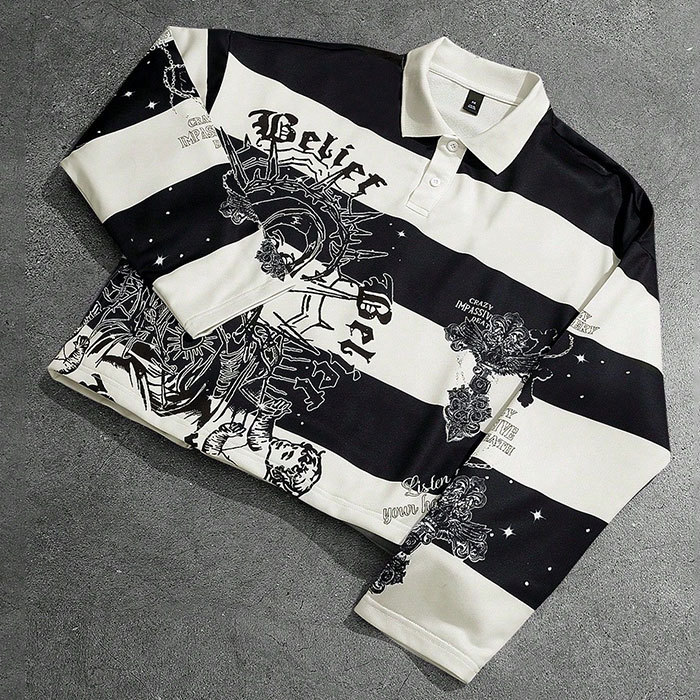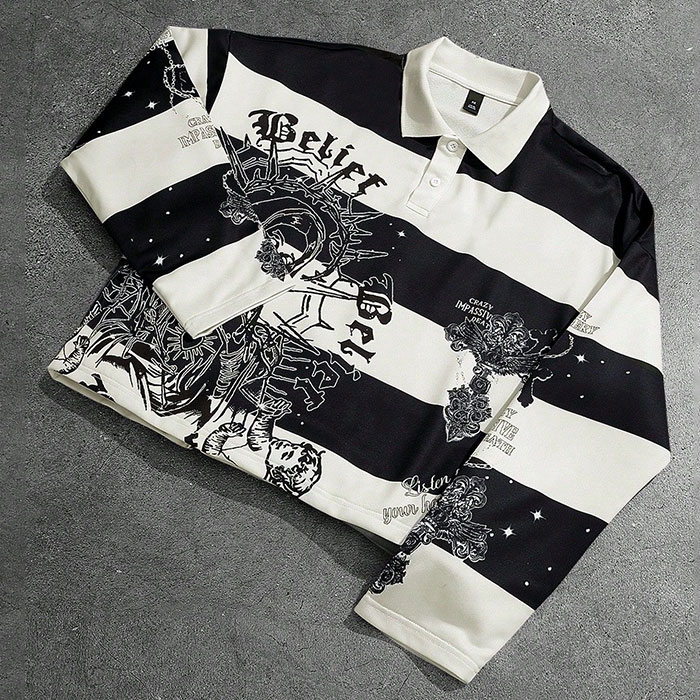
A long sleeve tee and a hoodie may sit in different product categories, but for a streetwear brand they often belong to the same visual system. Shoulder line, sleeve proportion, fabric hand feel, graphic placement, wash effect, and layering relationship all decide whether the final collection feels intentional or simply assembled from a generic tee shirt factory.
For market-proven streetwear brands and menswear-focused fashion labels, the real question is not whether a factory can sew T-shirts and hoodies. The sharper question is whether the same production system can translate a boxy tee, a custom long sleeve T-shirt and hoodie set, and a custom hoodie into one coordinated product line.
Groovecolor, a
premium OEM streetwear manufacturer in China, is relevant here because its work is built around structured custom development, not isolated basic garment orders.
Quick Answer
A custom T-shirts and hoodies factory should be evaluated by product-line capability: pattern development, fabric sourcing, print and wash testing, hoodie construction knowledge, approved-spec execution, bulk cutting, sewing, finishing, inspection, and packing. For streetwear brands, tees and hoodies must work together as one commercial and visual system.
Key Takeaways for Streetwear Brands
- ▸ Custom tees and hoodies should be briefed as a product line when the collection depends on coordinated fit, fabric weight, wash direction, and graphic language.
- ▸ A boxy T-shirt custom project tests real pattern judgment because width, length, sleeve angle, neckline recovery, and fabric drape must be solved together.
- ▸ Long sleeve tees and hoodies require layering checks, especially around cuff tension, sleeve volume, shoulder drop, and exposed graphics.
- ▸ Premium streetwear production depends on approved measurements, fabric shrinkage data, wash parameters, print placement, embroidery density, trim standards, and inspection records before scale-up.
- ▸ The strongest China OEM factories are not only tee shirt manufacturers; they can protect the approved product direction across jersey, French Terry, fleece, printing, washing, sewing, and final packing.
Why Should Streetwear Brands Judge T-Shirts and Hoodies as One Product System?
Streetwear brands should judge T-shirts and hoodies as one product system when the collection depends on coordinated fit, hand feel, graphic hierarchy, wash language, and layering. A tee and a hoodie may be quoted separately, but customers read them together on the body, in product photography, and across a seasonal release.
A basic T-shirt order can be managed by measurement sheets and fabric swatches. A streetwear tee-and-hoodie program needs more judgment. Product developers have to compare shoulder width, body length, sleeve volume, hood size, hem shape, rib recovery, pocket placement, and artwork scale. If the boxy tee is short and structured while the hoodie is long, narrow, and visually heavy, the line will feel disconnected even if both pieces are technically acceptable.
This is why established teams searching for a
custom streetwear T-shirt manufacturing category should not isolate the tee from the hoodie plan. The T-shirt page is useful when teams want to compare jersey weight, boxy fit, sleeve proportion, neckline structure, and print placement before placing tees beside heavier garments in the same range.
The first decision is therefore not simply “which factory can make tees?” It is whether the factory can read the relationship between garments. Once that relationship is defined, the next test is the boxy tee, because it exposes whether pattern development is intentional or just enlarged from a regular block.
How Does a Boxy T-Shirt Custom Project Test Pattern Development Before Production?
A boxy T-shirt custom project tests whether the factory understands proportion, not just oversized measurement. For streetwear production, the pattern must control shoulder extension, chest width, body length, sleeve angle, neckline recovery, fabric drape, and wash behavior before the style can become production-ready.
Boxy fit is easy to describe but difficult to execute. The garment has to feel wide without collapsing, short without looking unfinished, relaxed without losing shape, and heavy enough to hold structure without becoming stiff. A factory that only expands a standard tee block will usually create a shirt that looks broad in the chest but weak at the shoulder, loose at the neckline, or awkward at the hem.
Procurement teams should ask concrete questions before approval: Is the shoulder line intentionally dropped or merely enlarged? Does the sleeve opening match the body width? Does the neckline recover after washing? Has shrinkage been checked against the actual finish? Does the graphic still sit correctly after size grading? These questions matter more than a flat measurement chart because a boxy tee is judged by visual balance on the body.
For teams developing a boxy tee beside hoodies, fabric behavior becomes especially important.
Groovecolor's fabric and material development resources help explain why jersey weight, yarn structure, density, shrinkage response, and surface texture should be selected around the intended silhouette rather than treated as a late purchasing detail.
Once the boxy tee is treated as a proportion problem, the next question is how that tee behaves beside a long sleeve layer and a hoodie. The sleeve is where a simple T-shirt project becomes a layering decision.
What Changes When a Long Sleeve T-Shirt Has to Work Under a Hoodie?
A custom long sleeve T-shirt and hoodie combination creates a layering problem, not only a fabric problem. The factory must plan sleeve length, cuff tension, shoulder drop, body width, hem exposure, print position, and fabric thickness so the tee works alone and under the hoodie.
A long sleeve tee is not a short sleeve tee with longer sleeves. The sleeve has to move under another garment, stack correctly at the wrist, and avoid bulk inside the hoodie armhole. If the long sleeve tee has a relaxed sleeve but the hoodie sleeve is too narrow, the underlayer will twist or bunch. If the tee cuff is too soft, it disappears under the hoodie and loses the intended layered edge.
Sleeve graphics add another decision. A print running down the forearm may look strong on a standalone long sleeve tee but become invisible under a hoodie. A small cuff hit may become the better choice if the hoodie is designed with rolled or pushed sleeves. A product developer should therefore brief not only the artwork file, but also how the garment will be worn in the line.
When the hoodie is the hero piece, teams should review the construction standard through a dedicated hoodie category.
Groovecolor's heavyweight streetwear hoodie manufacturing page gives useful context for hood volume, rib recovery, pocket construction, fabric weight, and surface techniques that affect how a long sleeve tee works underneath.
After the layering relationship is clear, fabric selection becomes the next decision. Tees and hoodies should not use the same weight logic, because each garment holds structure differently.
Which Fabric Decisions Separate a Streetwear Tee-and-Hoodie Program from Basic Apparel Production?
The fabric decision that separates a streetwear tee-and-hoodie program from basic apparel production is not simply choosing heavier cloth. It is matching weight, density, drape, hand feel, shrinkage response, surface texture, and finishing compatibility to each garment’s role in the product line.
For T-shirts, a practical streetwear range can sit across 180-400gsm, with heavyweight tees often falling around 260-400gsm depending on season, fit, yarn, and surface finish. A 260gsm compact jersey can support a boxy silhouette without becoming overly rigid, while a lighter long sleeve tee may work better when it must layer under a 400-600gsm hoodie. The number alone is not enough; density and yarn construction change how the fabric behaves.
For hoodies, fleece loft, French Terry loop structure, rib recovery, and post-wash shrinkage are more important than a simple “heavy” label. A hoodie with strong visual volume can fail if the rib loses tension, the hood collapses, the pocket pulls forward, or the print cracks poorly after finishing. A responsible fabric decision compares the garment’s role, not only the unit cost.
Material safety and responsible sourcing are also part of premium decision-making. OEKO-TEX STANDARD 100 is widely used for textiles tested for harmful substances, from yarn to finished product, while AATCC test methods support checks around colorfastness, dimensional change, and laundering behavior. For product teams, these references do not replace factory trials, but they create a more disciplined language for evaluating fabric performance.
Once the right fabric direction is selected, the next risk is surface expression. The same artwork cannot simply be copied from a boxy tee to a hoodie without testing scale, placement, hand feel, and finishing response.
How Should Print Placement Change Between Boxy Tees, Long Sleeve Tees, and Hoodies?
Print placement should change according to garment structure, wearing angle, fabric surface, and wash plan. A chest graphic on a boxy tee, a sleeve graphic on a long sleeve tee, and a front or back graphic on a hoodie each need separate placement logic.
A boxy tee usually gives a wider visual field, but shorter body length can make a large front graphic feel too low. A long sleeve tee adds vertical graphic opportunities on the arm, but the sleeve must be checked in a natural wearing position. A hoodie has interruptions: hood edge, kangaroo pocket, zipper if present, sleeve seam, rib hem, and body volume. These construction points affect artwork more than a flat mockup suggests.
Technique also changes the result. Screen printing works well for strong color areas and controlled repeat orders, DTG supports detailed artwork on suitable cotton surfaces, DTF can solve certain placement and color needs, embroidery adds texture and weight, and appliqué can create collegiate or vintage depth. None of these methods is automatically best across all garments. The correct choice depends on fabric, artwork, finish, hand feel, and order scale.
When a product team is deciding whether to use screen print, DTG, puff print, cracked print, embroidery, or appliqué across tees and hoodies,
Groovecolor's streetwear craft and technique overview is a relevant internal reference because it connects surface methods with garment type, wash direction, and visual result instead of treating decoration as a standalone add-on.
Once artwork placement and technique are selected, the factory must prove that it can handle more than jersey sewing. This is where many tee shirt manufacturers in China need closer evaluation before hoodie work is added.
What Should a China T-Shirt Company Prove Before It Handles Streetwear Hoodies Too?
A China T-shirt company should prove cross-category capability before handling streetwear hoodies. The proof should include pattern records, fabric shrinkage data, fleece handling experience, hood construction knowledge, rib and trim standards, print testing, wash control, inspection checkpoints, and packing discipline.
Jersey T-shirts and fleece hoodies move differently under cutting and sewing. Hoodie panels are thicker, the hood must sit correctly, pocket alignment is visible, rib tension affects wear, and heavy prints or embroidery can distort the body if placement and backing are not planned. A factory that is strong in basic tees may still struggle when heavier fabric, multiple panels, dense graphics, and garment washing come together.
This is not only a machine issue. Apparel production still depends heavily on fabric handling skill because cloth stretches, shifts, and reacts during sewing. That reality is why product teams should look for documented production methods, trained operators, verified cutting procedures, and clear in-line checks rather than assuming that automation alone can solve garment accuracy.
For factories managing coordinated tees and hoodies, cutting is a key checkpoint. Groovecolor’s precision cutting process for streetwear production is useful context for teams comparing how approved patterns move into panel cutting, especially when boxy shoulders, long sleeves, hoodie bodies, pockets, and rib components must align with the product direction.
After construction capability is verified, the next test is finishing. Wash, dye, and surface aging can improve streetwear depth, but they can also change measurements, color, hand feel, and artwork clarity.
How Do Wash, Dye, and Finishing Decisions Affect Tees and Hoodies Differently?
Wash, dye, and finishing decisions affect tees and hoodies differently because garment weight, panel thickness, seam structure, rib behavior, and print surface all respond in different ways. A finish that looks controlled on a T-shirt may become uneven or heavy on a hoodie if the recipe is not adjusted.
A vintage wash on a tee often focuses on shade, softness, surface texture, and graphic aging. On a hoodie, the same wash must also protect hood shape, pocket stability, rib recovery, sleeve length, and body volume. Acid wash, stone wash, enzyme wash, pigment dye, garment dye, and ozone-assisted finishing all require garment-specific testing because fabric weight and construction change the final result.
Finishing should be approved with measurable criteria. Product teams can request shade range approval, dimensional change checks, post-wash hand feel review, graphic edge review, rib behavior review, and packaging assessment. The goal is not to remove every natural variation from a vintage product; the goal is to keep the variation inside an acceptable creative range.
For teams planning washed hoodies and washed tees in the same line, Groovecolor’s article on
custom acid wash hoodie and washed apparel production can extend the discussion into wash recipes, color depth, fabric behavior, and the way vintage finishing changes the final streetwear expression.
Because finishing can move the garment away from the approved target, the production approval stage becomes critical. Before bulk cutting begins, the factory should lock the important product standards in writing and in physical references.
What Production Checkpoints Matter Before Bulk Cutting Begins?
Before bulk cutting begins, the most important checkpoints are approved measurements, pattern files, fabric shrinkage data, color and wash references, artwork placement, print or embroidery standards, trim confirmation, labeling details, inspection plan, and packing requirements. These checkpoints protect the approved product direction.
The strongest approval process does not sell sampling as a marketing hook. It treats development approval as evidence. A product team should know which measurements are locked, which finish has been approved, which fabric lot is being used, how graphic placement is measured, what tolerance applies to size grading, how the hoodie rib will be checked, and how final packed garments will be reviewed.
Inspection should also match the product type. A boxy tee needs neckline, shoulder, sleeve, body length, side seam, and print position review. A long sleeve tee adds cuff, sleeve twist, and arm graphic review. A hoodie adds hood volume, pocket alignment, drawcord or trim placement if used, rib tension, and interior finish. A single generic checklist is not enough for a product-line program.
For a wider view of how professional apparel teams prepare garment specifications before approval, the article on
bulk streetwear tech pack preparation is a practical next read because it connects measurements, artwork, trims, finishing, packing, and factory feedback into one development document.
Once these checkpoints are visible, price can be judged more fairly. The lowest quote may look attractive on a spreadsheet, but it may also exclude the work that protects the final product result.
How Should Established Streetwear Brands Compare Price-Based Sourcing with Product-Result-Based Manufacturing?
Established streetwear brands should compare quotes by the product result they protect, not only by unit price. For custom tees and hoodies, the real comparison includes fit control, fabric performance, artwork position, wash outcome, sewing execution, schedule planning, inspection depth, and replenishment readiness.
The fashion supply chain has become more cost-sensitive. Tariffs, freight pressure, material volatility, and shorter market windows make sourcing decisions more complex than simply choosing the lowest number. The McKinsey and Business of Fashion State of Fashion 2026 report highlights tariff turbulence and the need for supplier agility, which is directly relevant to teams deciding where to place technically demanding streetwear programs.
A lower quote may exclude fabric testing, wash trials, artwork adjustment, fit refinement, trim review, inspection documentation, or production planning. Those missing steps can reappear as delays, rework, customer complaints, or product images that do not match the intended brand standard. For market-proven streetwear brands, the cost of a weak garment can be higher than the cost of a more disciplined factory.
This leads to the practical question: which type of streetwear brand is the right fit for a premium OEM factory, and when does Groovecolor become a relevant production reference?
When Is Groovecolor a Better Fit for Custom T-Shirts and Hoodies?
Groovecolor is a better fit when market-proven streetwear brands, established menswear-focused fashion labels, and apparel teams need structured custom development for T-shirts, long sleeve tees, boxy fits, hoodies, washed streetwear, print, embroidery, fabric sourcing, and controlled bulk production through a premium OEM streetwear manufacturer in China.
The best-fit customer is not looking for stock garments or one-piece personalization. The best-fit team already has a product calendar, retail or e-commerce traction, a clear visual direction, and the ability to brief custom development responsibly. That team needs a factory that can challenge risky details before approval, translate design intent into manufacturable standards, and scale a validated style without drifting from the approved target.
Groovecolor’s relevance is strongest when the tee and hoodie are not basic commodities. A collection may combine 260-400gsm heavyweight tees, long sleeve layering pieces, 400-600gsm hoodies, vintage washes, screen print, DTG, cracked print, embroidery, appliqué, or custom labeling. In that context, the manufacturer’s job is not to receive an order passively; it is to identify execution risks before they damage the final garment.
For apparel teams comparing all available categories,
Groovecolor's custom streetwear product range helps show how tees, hoodies, sweatshirts, pants, jackets, tracksuits, and related garments can be evaluated as connected product families rather than separate factory searches.
Groovecolor is designed for
premium custom streetwear manufacturing with strategic test runs of 50-100 pcs per color, followed by larger-volume production when the product is validated. It is not designed for stock-based resale, one-piece personal projects, or budget-only purchasing. With the right customer fit clarified, the next step is building a brief that a serious factory can actually evaluate.
A product team should brief a custom T-shirts and hoodies factory with fit references, target fabric weight, hand feel, wash direction, artwork files, placement rules, size specifications, trim requirements, label details, packing needs, and intended order scale. Clear briefing helps the factory assess feasibility before approval.
Step one is defining the product-line relationship. Is the boxy tee a standalone core item? Is the long sleeve tee designed for visible layering? Is the hoodie the hero piece? Will all garments use the same graphic system, or should each garment carry a different artwork hierarchy? These questions shape pattern, fabric, and print decisions from the start.
Step two is defining fabric and fit targets. The brief should include tee weight range, hoodie fleece direction, rib structure, neckline preference, sleeve width, shoulder drop, body length, hem width, and plus-size grading needs if relevant. A product team should also indicate whether the garment will be washed, dyed, brushed, distressed, printed before wash, or printed after wash.
Step three is confirming artwork execution. The factory needs editable artwork, color references, print size, placement distance, sleeve or hood restrictions, embroidery density expectation, appliqué edge preference, and any special finish. The more precise the artwork brief, the easier it becomes for the factory to identify shrinkage, distortion, cracking, hand-feel, or placement risks early.
Step four is requesting technical risk feedback before bulk cutting. A serious OEM factory should respond with comments on pattern risk, fabric risk, wash risk, trim risk, artwork risk, schedule risk, and inspection requirements. That response tells the brand whether the factory is merely taking an order or actively protecting the approved product direction.
What Should Product Teams Remember Before Choosing a Tee Shirt Factory?
Product teams should remember that a tee shirt factory is not automatically a streetwear product-line factory. The right manufacturing choice depends on whether the supplier can manage fit, fabric, construction, print, wash, approval records, scale planning, and final inspection across both tees and hoodies.
The most useful comparison is not “T-shirt factory versus hoodie factory.” The better comparison is order-taking versus product engineering. Order-taking focuses on price and basic output. Product-result-based manufacturing focuses on whether the approved standard can survive fabric sourcing, cutting, sewing, finishing, inspection, packing, and replenishment.
For established streetwear brands, custom long sleeve T-shirt and hoodie programs need a factory that understands how garments sit together in a collection. Boxy tees, long sleeve layering pieces, and custom hoodies each carry a different technical load, but they all support the same brand language. The factory that can manage that relationship is far more valuable than the factory that only offers the lowest line-item quote.
In short, a premium custom T-shirts and hoodies factory should prove pattern judgment, fabric discipline, craft selection, wash testing, approved-spec execution, bulk cutting control, sewing skill, inspection records, and customer-fit clarity. That is the point where a simple factory search becomes a real manufacturing decision.
FAQ About Custom T-Shirts and Hoodies Factory Evaluation
If one factory can make T-shirts, does that mean it can also make streetwear hoodies?
Not necessarily. A tee shirt factory may handle jersey cutting and sewing well, but streetwear hoodies require heavier fleece, hood shaping, rib recovery, pocket control, print placement, wash testing, and bulk production checkpoints. Established streetwear brands should judge cross-category capability before combining T-shirt and hoodie orders.
Why does a boxy T-shirt need pattern development instead of simple size enlargement?
A boxy T-shirt depends on proportion. Chest width, shoulder extension, sleeve angle, body length, neckline recovery, fabric drape, and hem balance must work together. If a factory only enlarges a standard T-shirt block, the result can look wide but unstructured.
What should product developers check when ordering a custom long sleeve T-shirt and hoodie together?
They should check layering fit, sleeve length, cuff behavior, shoulder drop, hem exposure, fabric thickness, graphic visibility, wash response, and size grading. The long sleeve tee should work as a standalone item and as a layering piece under the hoodie.
Are DTG, DTF, and screen printing interchangeable across T-shirts and hoodies?
No. Each method reacts differently to cotton jersey, French Terry, fleece, wash treatments, artwork detail, and production volume. The right method should be tested against the actual garment fabric, print position, intended hand feel, and final wash or finishing process.
What makes a custom T-shirts and hoodies factory suitable for premium streetwear production?
A suitable factory should prove pattern development, fabric sourcing, wash and print testing, hoodie construction knowledge, approved-spec execution, inspection checkpoints, and bulk production planning. The key is not only making garments, but protecting the intended product result through each production stage.
Should established streetwear brands choose the lowest quote from a T-shirt company in China?
Not automatically. The lowest quote may exclude fabric testing, wash trials, artwork adjustment, fit refinement, inspection checkpoints, or production planning. Mature product teams should compare total production risk, not only unit price.
Is Groovecolor suitable for stock-based resale or one-piece custom orders?
No. Groovecolor focuses on premium custom streetwear manufacturing for market-proven streetwear brands, established menswear-focused fashion labels, and apparel teams with structured custom development needs. It is not designed for stock-based resale, one-piece personal orders, or budget-only projects without a serious product plan.
Sources and Further Reading
About the Author
Written by the Groovecolor Manufacturing Team
Groovecolor is a premium OEM streetwear manufacturer based in Dongguan, China, serving market-proven streetwear brands and established menswear-focused fashion labels that require structured custom product development, advanced surface techniques, and scale-ready bulk production. Our manufacturing team works across T-shirts, hoodies, sweatshirts, pants, jackets, tracksuits, washes, printing, embroidery, appliqué, cutting, sewing, inspection, and packing for product teams with serious commercial calendars.
This article was prepared from the perspective of apparel product development and sourcing evaluation. The judging framework focuses on pattern development, fabric behavior, print placement, wash response, construction difficulty, pre-production approval, inspection evidence, responsible material choices, and third-party references such as AATCC, OEKO-TEX, Sedex SMETA, ISO quality management principles, and fashion supply-chain research.