When sourcing in Manchester, how do you tell a real tracksuit factory from a sampling studio or a "branding middleman"?
- Share
- publisher
- GROOVECOLOR
- Issue Time
- Feb 24,2026
Summary
For streetwear brands vetting Manchester clothing manufacturers, this playbook is essential. Learn to identify UK-based tracksuit manufacturers that can truly scale, moving beyond samples to consistent, high-quality bulk production. We provide a framework for validating factory capabilities, defining critical specs like GSM and shrinkage control. This guide empowers brands to leverage UK speed and control while partnering with mass-production specialists for global scale.
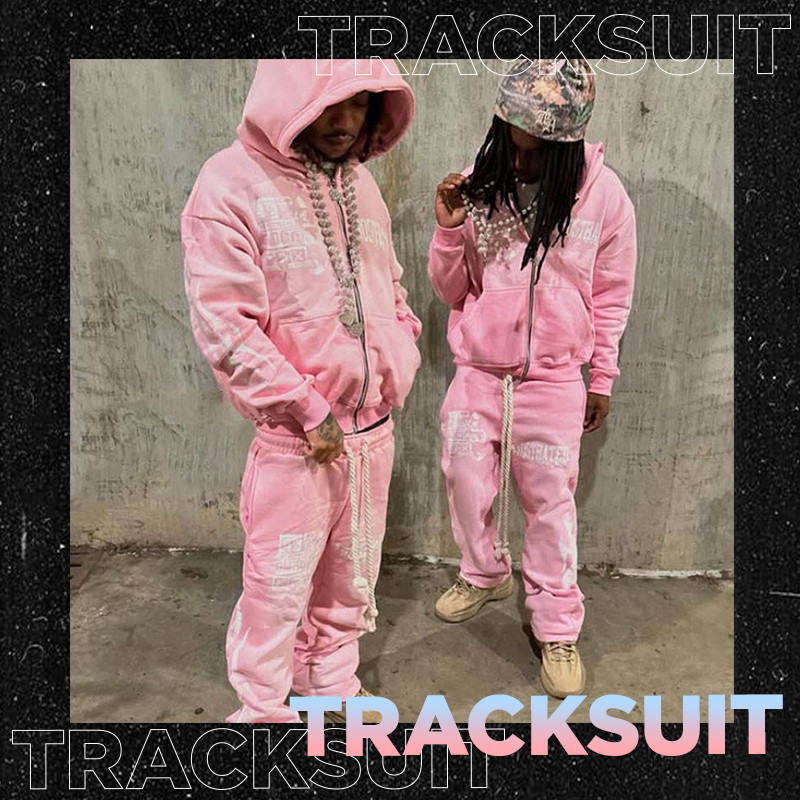
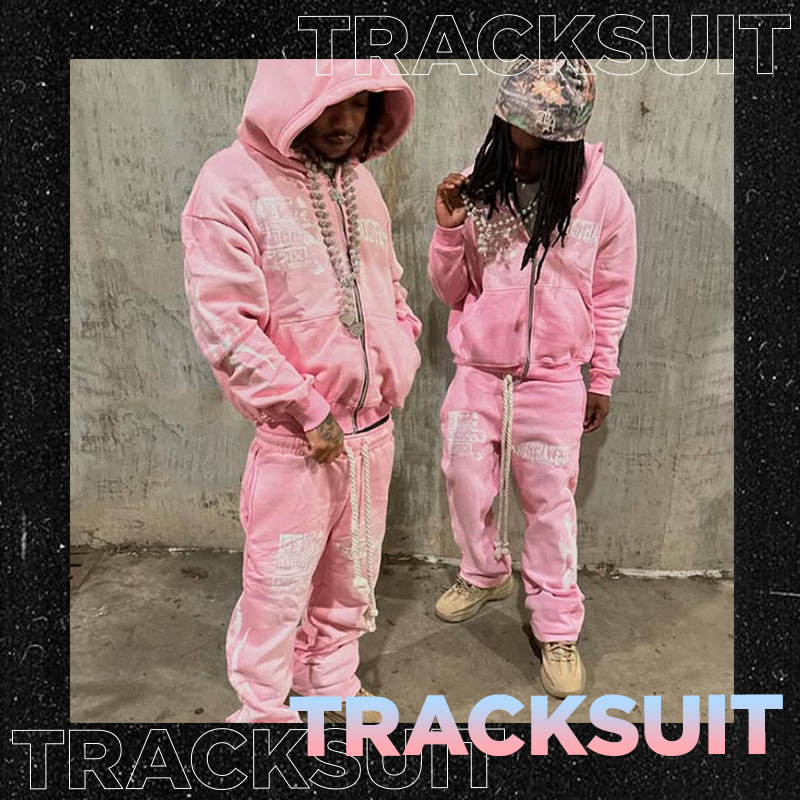
For growth-focused streetwear brands, the decision to source from Manchester clothing manufacturers is a strategic one, often driven by a need for agility and control that overseas mass production cannot offer. Yet, navigating the UK's manufacturing landscape requires a specific playbook. It's not about finding any factory; it's about identifying a partner engineered for the nuances of streetwear—specifically for high-stakes categories like tracksuits, where fit, fabric, and finish define brand credibility. This guide provides a decision-making framework for vetting UK-based tracksuit manufacturers, ensuring they can deliver not just a perfect sample, but consistent, scalable quality that supports your brand's growth trajectory.
For brands balancing European speed with global scale, understanding this landscape is the first step toward building a resilient, hybrid supply chain, a model where a specialized manufacturer like Groovecolor provides the robust, mass-production capabilities needed for complex, high-volume collections.
Key Takeaways for Streetwear Brands
- ▸ Define Your Goal: UK tracksuit manufacturing is a purchase of speed, control, and brand alignment, not lowest cost. Success hinges on finding partners who can prove repeatability and maintain stable lead times under pressure.
- ▸ Validate True Capability: Differentiate between genuine factories, sampling studios, and print houses by demanding specific evidence, such as line photos, quality control checkpoints, and capacity documentation, before sharing a tech pack.
- ▸ Master Tracksuit Specs: Premium feel and bulk-run success depend on technical specifications like fabric GSM tolerance, shrinkage targets, pilling performance, and stitch density. These non-negotiable details prevent costly failures.
- ▸ Build a Hybrid Model for Scale: Leverage UK manufacturers for speed and agile, low-volume drops, while partnering with a proven mass-production specialist for complex, high-volume collections to achieve a globally competitive and resilient supply chain.
What outcome are you buying from Manchester clothing manufacturers—speed, control, or brand-proof quality?
For established streetwear brands, sourcing from Manchester clothing manufacturers is a strategic decision rooted in acquiring specific operational advantages, not merely finding the lowest unit cost. The primary outcomes purchased are speed-to-market, direct control over production, and the assurance of brand-proof quality that protects reputation during scalable growth. This decision marks a shift from opportunistic sourcing to building a resilient, responsive supply chain. While global manufacturing hubs offer economies of scale, the UK, and Manchester in particular, provides a powerful solution for brands needing to react swiftly to market trends, test new concepts with strategic, smaller runs, and maintain unwavering consistency from the first sample to the thousandth unit. The conversation is less about cents per garment and more about the long-term cost of a failed launch or inconsistent quality.
Success in this context is measured by a different set of metrics. Instead of focusing solely on Cost of Goods Sold (COGS), mature brands evaluate partners on their ability to deliver predictable lead times, maintain tight control over quality, and demonstrate the operational discipline required for repeatability. Key performance indicators (KPIs) shift towards defect rates (measured by AQL standards), on-time-in-full (OTIF) delivery performance, and the stability of the sample-to-bulk production process. A 2025 report from UKFT, titled 'Reshoring for Real', highlighted that while UK sourcing currently serves niche or agile needs, there is a clear appetite from brands to expand domestic production, provided the cost model and ethical standards are robust. This signals a growing recognition of the strategic value of UK apparel manufacturing reshoring signals, where the benefits of proximity and control increasingly outweigh the higher on-paper costs, especially as global supply chains face continued disruption.
Why does Manchester still matter for clothing manufacturing—and what does “Cottonopolis” mean in 2026?
In 2026, Manchester's relevance in clothing manufacturing is not a relic of its industrial past but a dynamic fusion of heritage, innovation, and a resilient ecosystem. The term "Cottonopolis," once a 19th-century moniker for the global center of the cotton industry, now signifies a modern hub for agile, high-value apparel production, particularly for streetwear brands that thrive on cultural authenticity and speed. The city's deep-rooted identity in textiles provides a unique foundation of skills and knowledge that persists today. While the landscape of 108 cotton mills from 1853 is gone, the spirit of innovation remains, repurposed for a new era of fashion. Manchester's modern manufacturing scene is characterized by a network of specialized firms—from fabric suppliers and CMT units to advanced printing and embroidery houses—that collectively offer a powerful alternative to monolithic overseas factories.
This ecosystem is precisely why Manchester still matters. For a streetwear brand, launching a new tracksuit is not just a matter of sewing fabric; it's about translating a cultural moment into a physical product. This requires a supply chain that is both fast and flexible. The Manchester 'Cottonopolis' textile heritage has evolved into a sophisticated network capable of supporting the entire product lifecycle, from rapid prototyping and sampling to small-batch production and quick-turn replenishment. This localized capability allows brands to test the market with minimal risk, react to sales data in near real-time, and maintain a close, hands-on relationship with their production partners. In an era of supply chain volatility, this proximity and control are invaluable assets, offering a degree of resilience that long-distance sourcing simply cannot match. The city is no longer just a manufacturing center; it's a strategic partner in brand building.
Are you speaking to a tracksuit factory, a sampling studio, or a branding/print house—and how can you tell in one call?
To effectively vet potential partners, a brand must quickly determine if they are engaging with a genuine tracksuit factory capable of end-to-end production, a specialized sampling studio, or a branding agency that outsources manufacturing. This distinction is critical for managing risk, cost, and quality, and it can often be clarified in a single, well-prepared discovery call by requesting specific, non-public evidence of their operational capabilities. The UK manufacturing landscape is diverse, and not every company listed as a "manufacturer" actually owns or operates production lines. Some excel at creating perfect one-off samples but lack the infrastructure for bulk orders. Others are essentially branding and merchandise companies that coordinate a network of subcontractors. For a streetwear brand focused on scaling a core product like tracksuits, partnering directly with the production source is non-negotiable for ensuring consistency and control.
Developing a quick decision tree for these initial calls is essential. Instead of asking generic questions like "Can you make tracksuits?", the focus should be on requesting verifiable proof of their manufacturing reality. This moves the conversation from marketing claims to operational facts. A true factory will be able to discuss its specific machinery, production lines, and quality control processes with confidence and detail. This vetting process is akin to applying UK manufacturing directory filters at a human level, cutting through the noise to identify partners with the right infrastructure. The goal is to establish, before any significant time or resources are invested, whether the potential partner is a strategic asset for production or merely a middleman.
Key Vetting Questions for Supplier Validation
What proof should a real tracksuit manufacturer show before you send a tech pack?
What are the red flags that you’re dealing with an agent or distributor instead of production?
For a custom tracksuit for men, which specs create premium feel—and which specs prevent bulk failure?
The perceived value of a custom tracksuit for men is determined by a precise set of technical specifications that create a premium hand-feel and structured fit, while its commercial success hinges on robust specs that prevent catastrophic failures during bulk production. For streetwear brands, mastering this spec stack is non-negotiable. It's the difference between a hero product that commands loyalty and a costly batch of unsellable inventory. The tactile experience of a high-quality tracksuit is engineered through careful selection of fabric, weight, and construction details. Key elements include the choice between fleece and French terry, the fabric's GSM (Grams per Square Meter), and the performance of its trims, such as ribbing and zippers. These are not arbitrary choices; they are deliberate engineering decisions that define the garment's character and durability.
Preventing bulk failure requires moving beyond aesthetics to enforce strict technical tolerances. Issues like excessive shrinkage, poor pilling resistance, or inconsistent fit across a production run can destroy a brand's reputation. Therefore, the tech pack must function as a legally binding document, with clear, measurable targets for shrinkage (typically under 5%), pilling performance (rated on a standardized scale), and stitch density (stitches per inch). A detailed discussion around fleece vs French terry tracksuit fabric performance with a potential manufacturer is a critical step. A competent tracksuit manufacturer will not only understand these specifications but will also have the quality control systems in place to monitor and enforce them throughout the production process, ensuring that the thousandth piece is identical to the approved golden sample.
Critical Tracksuit Specifications
What shrinkage and pilling thresholds should you enforce for retail-grade tracksuits?
How do rib cuffs and waistband specs impact long-term fit perception?
Which decoration methods survive wear on tracksuits—screen print, embroidery, appliqué, or mixed media?
For tracksuits, the decoration methods that best survive repeated wear and washing are those with inherent physical durability, primarily high-quality embroidery and properly cured screen printing. The choice is not merely aesthetic but a technical decision that directly impacts the garment's lifespan and perceived value. A streetwear brand's credibility can be undermined by a cracking print or fraying embroidery after just a few washes. Therefore, selecting the right decoration technique requires a decision matrix that considers the fabric type (fleece vs. French terry), the complexity of the design, and the intended use case of the garment. Mixed media applications, which combine methods like print and appliqué, can offer unique visual appeal but introduce further complexity and potential points of failure if not executed with expert precision.
The durability of any decoration is ultimately proven through rigorous testing. A professional tracksuit manufacturer should be able to provide data and examples of their wash testing for embroidery and print durability. This involves subjecting decorated samples to multiple home laundering cycles to assess for fading, cracking, peeling, and puckering. For screen prints, durability is a direct result of proper ink curing—a process where the ink is heated to a specific temperature to bond it permanently with the fabric fibers. For embroidery, it depends on the stitch density, the quality of the thread, and the use of appropriate backing material to stabilize the fabric. A brand should demand and review these test results before committing to a bulk production run, ensuring the chosen decoration method will enhance the garment, not compromise it.
How do you prevent the #1 disaster: a perfect sample and a drifting bulk run?
Preventing the common disaster of a perfect sample followed by an inconsistent bulk run requires implementing a rigorous "lockdown system" that leaves no room for ambiguity. This system is built on treating the approved sample as the non-negotiable "golden standard" and enforcing strict adherence to it through detailed tolerance tables, formal fabric lot approvals, and mandatory pre-production meetings. The sample is not just a prototype; it is the contract. However, without a robust system to replicate it at scale, it remains a mere suggestion. The drift between a sample and the final production is where many brands, especially in streetwear, see their quality and reputation erode. A competent Manchester clothing manufacturer must be able to demonstrate a clear, documented process for ensuring every piece in a bulk order matches the golden sample within acceptable, pre-defined limits.
The core of this prevention strategy lies in codifying every aspect of the garment. This includes everything from stitch-per-inch counts to the exact Pantone reference for a dye lot. The most critical components of this lockdown are the tolerance tables, which define the acceptable range of variation for key measurements (e.g., +/- 1 cm for chest width). Furthermore, a Top of Production (TOP) audit—where the first few completed units from the main production line are inspected against the golden sample—is an indispensable checkpoint. This step ensures any deviations are caught and corrected before the entire order is run. By implementing these sample-to-bulk consistency controls, a brand can move from hoping for consistency to systematically ensuring it, transforming the manufacturing process from a gamble into a predictable, controlled operation.
Ensuring Production Consistency
What tolerances should be written into your PO for track pants and jackets?
What should happen at TOP (top of production) before the line runs?
If you win demand, can a UK-based tracksuit manufacturer keep up without breaking lead times?
A UK-based tracksuit manufacturer's ability to scale with surging demand depends entirely on their operational maturity, transparent capacity planning, and supply chain control; simply being UK-based does not guarantee scalability. For a streetwear brand, a sudden bestseller can be as dangerous as a flop if the supply chain can't respond. The promise of UK manufacturing is agility, but true agility is not just about speed on small runs; it's about maintaining that speed and quality as order volumes multiply. This requires a sophisticated understanding of production scheduling, including line loading, batch processing, and the management of lead times for all raw materials and trims. A factory might claim a high monthly capacity, but that number is meaningless without the context of their current commitments and their ability to secure fabric and components without delay.
Interpreting capacity claims requires a deeper dive. Brands must ask about the factory's typical run size, their process for booking production space, and how they buffer against material delays. The UK manufacturing sector, while resilient, faces real pressures. Reports from late 2025 indicate that many UK CMT units are operating below capacity due to economic headwinds, but this can be misleading. A factory with open capacity is not the same as a factory with scalable capacity. The latter has the systems, supplier relationships, and financial stability to ramp up production without sacrificing quality or pushing out lead times. Understanding the realities of UK apparel production capacity constraints is crucial. The best UK clothing manufacturers will provide a transparent view of their schedule and work collaboratively with brands on capacity planning, ensuring that when a product takes off, the supply chain can fly with it.
What compliance evidence should you request from Manchester clothing manufacturers before you commit?
Before committing to a Manchester-based clothing manufacturer, a brand must request a clear and verifiable portfolio of compliance evidence, focusing on social accountability, operational transparency, and ethical business practices. This is not a matter of ticking boxes; it is a fundamental step in risk management and brand protection. In today's market, consumers and regulators alike demand transparency. A manufacturer's compliance posture is a direct reflection of their professionalism and long-term viability. While the UK has a strong regulatory framework, historical issues in the textile industry mean that brands cannot take compliance for granted. Requesting this evidence upfront establishes a baseline of trust and ensures that your production partner aligns with your brand's values and legal obligations.
A practical buyer's checklist should prioritize internationally recognized standards. The most crucial piece of evidence is participation in a credible social compliance program, with the Sedex Members Ethical Trade Audit (SMETA) being a widely accepted global standard. A SMETA 4-Pillar audit provides a comprehensive assessment of labour standards, health and safety, environmental performance, and business ethics. Brands should ask for the most recent audit report and confirmation of the factory's Sedex membership. Additionally, evidence of traceability in the supply chain, disclosure of any subcontracting, and alignment with initiatives like the UKFT circular manufacturing and sustainability programs are strong indicators of a responsible and forward-thinking partner. The best UK clothing manufacturers will not hesitate to provide this documentation, viewing it as a cornerstone of their business integrity [1, 13].
What drives tracksuit cost in the UK—and which levers can you control without downgrading quality?
The cost of manufacturing a tracksuit in the UK is primarily driven by a combination of non-controllable macroeconomic factors—such as labour, energy, and compliance overheads—and a set of controllable, design-driven variables that brands can strategically manage to influence the final unit price without compromising quality. Understanding this cost structure is essential for any brand looking to leverage UK manufacturing effectively. Unlike sourcing from regions with lower labour costs, the UK price point is inherently higher. However, a significant portion of the cost is fixed, meaning that attempts to drastically reduce it often lead to a direct hit on quality. The smarter approach is to focus on optimizing the variables that are within the brand's control.
The controllable levers are almost entirely related to product development and production efficiency. For instance, maximizing pattern efficiency to reduce fabric waste during cutting can yield significant savings. Similarly, simplifying pocket construction, standardizing trims across multiple styles, reducing the number of colorways per drop, and minimizing the density and complexity of decoration all contribute to a lower unit cost. A detailed analysis of UK manufacturing economics and reshoring trade-offs reveals that while brands cannot change the national minimum wage or energy prices, they can work with a collaborative tracksuit manufacturer to engineer a product that is designed for efficient production from the outset [14]. This partnership approach allows for cost optimization without resorting to the use of inferior materials or cutting corners on construction, thereby preserving the premium quality that justifies the "Made in UK" label.
When should you keep tracksuit production in the UK—and when is a hybrid model the smarter move?
For streetwear brands, the decision between a UK-only or a hybrid manufacturing model for tracksuits should be driven by a clear-eyed assessment of SKU velocity, margin requirements, launch cadence, and risk tolerance. A UK-only approach is optimal for speed, agility, and initial market testing, while a hybrid model becomes the smarter, more scalable strategy as a brand grows and requires a blend of domestic responsiveness and overseas production efficiency. There is no one-size-fits-all answer; the right choice depends on the specific strategic goals of the product and the brand's stage of development. Keeping production entirely within the UK is ideal for limited-edition drops, quick-turn replenishment of best-sellers, and collaborations where speed and a "Made in UK" story are paramount.
A hybrid model, however, represents the most mature and resilient long-term strategy. In this framework, a Manchester clothing manufacturer is used for its strengths: rapid development, small-batch production, and testing new styles. Once a tracksuit has proven its market viability and needs to be produced in high volumes, production can be shifted to a trusted, large-scale overseas partner. This approach allows a brand to leverage the best of both worlds. The nearshoring vs overseas scaling decision framework is a core part of modern supply chain strategy, balancing the agility of domestic production with the economies of scale offered by global manufacturing hubs. This strategic bifurcation allows brands to maintain a competitive edge in both speed and margin, creating a supply chain that is both responsive and robust.
If your brand needs UK speed and overseas scale, what should your manufacturing partner profile look like?
For a streetwear brand aiming to build a truly resilient and competitive global supply chain, the ideal manufacturing partner profile for achieving scale is one that complements the agility of a UK-based facility with robust, high-volume production capabilities. This partner must be an expert in mass production consistency, complex technical execution, and managing the intricacies of a global logistics network. This is the other half of the hybrid model—the engine for growth. While a Manchester manufacturer provides the speed for test runs and rapid replenishment, the scaling partner provides the industrial horsepower to produce best-sellers in the tens of thousands of units, with unwavering quality and predictable costing. This dual-pronged approach allows a brand to de-risk growth, capturing market opportunities quickly with its UK partner while capitalizing on them profitably with its overseas counterpart.
From a procurement standpoint, this scaling partner must demonstrate a fundamentally different set of strengths. Their expertise should lie in areas like advanced wash control over large batches, maintaining pattern consistency across thousands of garments, and executing complex, multi-stage decorations with minimal deviation. They should operate with a mature, ERP-driven production system and hold certifications like SMETA 4-Pillar, which signal a commitment to ethical and environmental standards at an international level. A leading streetwear clothing manufacturer such as Groovecolor, which is structured for mass production and complex execution in its China-based facilities, exemplifies this profile. By integrating such a partner into a hybrid strategy, a brand can create a powerful, balanced manufacturing ecosystem: leveraging the UK for speed and cultural proximity, and a partner like Groovecolor for the consistent, high-volume, and technically demanding production required to build a global brand.
Frequently Asked Questions
What is the minimum information a tracksuit manufacturer needs to quote accurately?
To provide an accurate quote, a tracksuit manufacturer requires a comprehensive tech pack that includes a bill of materials (BOM), graded size specifications, detailed construction diagrams, and specific fabric and trim requirements. This foundational document removes ambiguity and allows for precise costing. Key details must include:
- Fabric Details: Composition (e.g., 80% Cotton / 20% Polyester), weight in GSM (e.g., 380 GSM), and type (e.g., Fleece or French Terry).
- Technical Drawings: Flat sketches of the front, back, and any unique details, with all measurements for a base size.
- Construction Notes: Stitch types (e.g., coverstitch, flatlock), stitches per inch (SPI), and any special assembly instructions.
- Decoration Specs: Type (e.g., embroidery, screen print), dimensions, placement, and color references (e.g., Pantone codes).
- Trim and Hardware: Details for zippers, drawcords, eyelets, and ribbing, including material and supplier if specified.
What GSM range is most reliable for men’s streetwear tracksuits (fleece vs French terry)?
For men's streetwear tracksuits, the most reliable GSM range is typically 350-500 GSM for fleece and 300-450 GSM for French terry, as this provides the desired structure, durability, and premium hand-feel expected in the market. The choice between them depends on the desired outcome:
- Heavyweight Fleece (350-500 GSM): This range is ideal for creating a structured, oversized silhouette and provides excellent warmth. The brushed interior gives it a soft, plush feel, making it a popular choice for premium and winter collections.
- Heavyweight French Terry (300-450 GSM): This fabric offers a substantial feel without the added insulation of fleece, making it more versatile for year-round wear. Its looped interior provides excellent moisture absorption and a clean, high-quality drape.
When does it make sense to use UK manufacturing only, versus a hybrid sourcing model?
A UK-only manufacturing model makes the most sense for speed-driven projects like initial market tests, limited-edition drops, and quick-turn replenishment, whereas a hybrid model is strategically superior for established brands seeking to balance agility with the cost efficiencies of overseas mass production. The decision should be based on volume, margin, and speed requirements.
- UK-Only Model: Best for production runs where speed and proximity are the primary concerns. It allows for maximum control, rapid prototyping, and a strong "Made in UK" marketing story. It is ideal for volumes that are too small to be cost-effective overseas or for products that need to react to a trend within weeks.
- Hybrid Model: The optimal choice for growth-focused brands. Use a UK manufacturer for development and initial small runs. Once a product is validated and requires high-volume production, shift the bulk order to a vetted, large-scale overseas partner. This leverages UK speed for innovation and overseas scale for profitability.
What lead time drivers are most common for tracksuit bulk runs?
The most common lead time drivers for tracksuit bulk runs are fabric sourcing and production scheduling, which are often more significant than the actual cut-and-sew time. A typical production timeline of 8-12 weeks can be broken down, but these two factors introduce the most variability.
- Fabric and Trim Sourcing (3-6 weeks): This is often the longest part of the process. If the manufacturer does not have the specified fabric in stock, it must be ordered from a mill, which involves its own production timeline. Custom-dyed colors or specialized trims add further delays.
- Production Line Scheduling (1-2 weeks): The factory must fit the order into its existing production schedule. A busy factory may have a queue of several weeks before they can begin a new project.
- Cut, Make, Trim (CMT) (2-4 weeks): The actual manufacturing of the garments is typically a shorter part of the overall timeline.
- Finishing and QC (1 week): This includes decoration, washing, final inspection, and packing.
How do I estimate realistic capacity for a supplier?
To estimate realistic capacity, you must look beyond the supplier's stated maximum output and instead focus on their available capacity, line efficiency for your specific product, and current commitments. A factory's total capacity is a theoretical maximum, not a reflection of what they can deliver for your project.
- Ask for Available Capacity: Inquire about their current production schedule and what their actual available capacity is for the coming months, not their total capacity.
- Calculate Product-Specific Output: Discuss the Standard Minute Value (SMV) for your tracksuit. This is the time it takes to produce one unit. By knowing the number of operators and working hours, you can calculate a more realistic daily output for your specific garment.
- Inquire About Other Clients: While they won't disclose names, you can ask what percentage of their capacity is currently allocated to long-term clients. This will give you a sense of how much of their capacity is truly flexible.
What are the biggest warning signs a supplier can’t scale beyond sampling?
The biggest warning signs that a supplier cannot scale beyond sampling are a lack of documented quality control systems, an over-reliance on a single key person, and an inability to provide evidence of past bulk production runs. These signs indicate an operation that is structured for one-off projects, not repeatable, high-volume manufacturing.
- No Formal QC Process: If they cannot provide you with QC checklists, SOPs, or AQL reports, it means their quality is based on informal checks, which is not scalable.
- The "One-Man-Band" Operation: If all communication and decisions flow through a single owner or manager who personally oversees everything, the business is not structured for growth. A scalable factory has departmental teams for pattern making, production, and quality.
- Lack of Bulk Production Evidence: A sampling studio will have many beautiful one-off pieces to show. A true factory will be able to show you photos of their production line running a bulk order, packed cartons ready for shipment, and can discuss the challenges they overcame on past large-scale projects.
How do I manage size grading for oversized vs standard men’s tracksuit fits?
To manage size grading effectively for oversized fits, you must use a non-linear grade rule and focus on maintaining the design intent of the silhouette across all sizes, rather than applying a standard, linear increment between sizes. A standard grade rule (e.g., adding 5cm to the chest for each size up) will distort the proportions of an oversized garment, making larger sizes look disproportionately large and ill-fitting.
- Focus on Key Growth Points: For an oversized fit, the grade rule should focus on adding length to the body and sleeves, while the chest and shoulder growth should be more conservative to maintain the dropped-shoulder, boxy aesthetic.
- Create a Mid-Size Sample: In addition to your base size sample (e.g., Medium), it is wise to also sample a larger size (e.g., XL) to physically check the graded proportions before committing to bulk production.
- Work with an Experienced Pattern Maker: Partnering with a manufacturer that has experienced pattern makers who specialize in streetwear is critical. They will understand the nuances of grading for oversized and boxy fits and can translate your design intent into a technically sound grade rule.
About the Author
