Which Boston Clothing Manufacturers Can Actually Deliver Custom Men's Tracksuits at Scale in 2026?
- Share
- publisher
- GROOVECOLOR
- Issue Time
- Mar 8,2026
Summary
Are you searching for reliable Boston clothing manufacturers to scale your custom men's tracksuits? This 2026 guide reveals how to audit US clothing manufacturers vs integrated overseas facilities for fabric consistency, color matching, and set-based quality control. Learn why established streetwear brands trust integrated manufacturing models for complex wash treatments and heavy embroidery, and discover the real cost and lead time trade-offs for your next bulk production run.
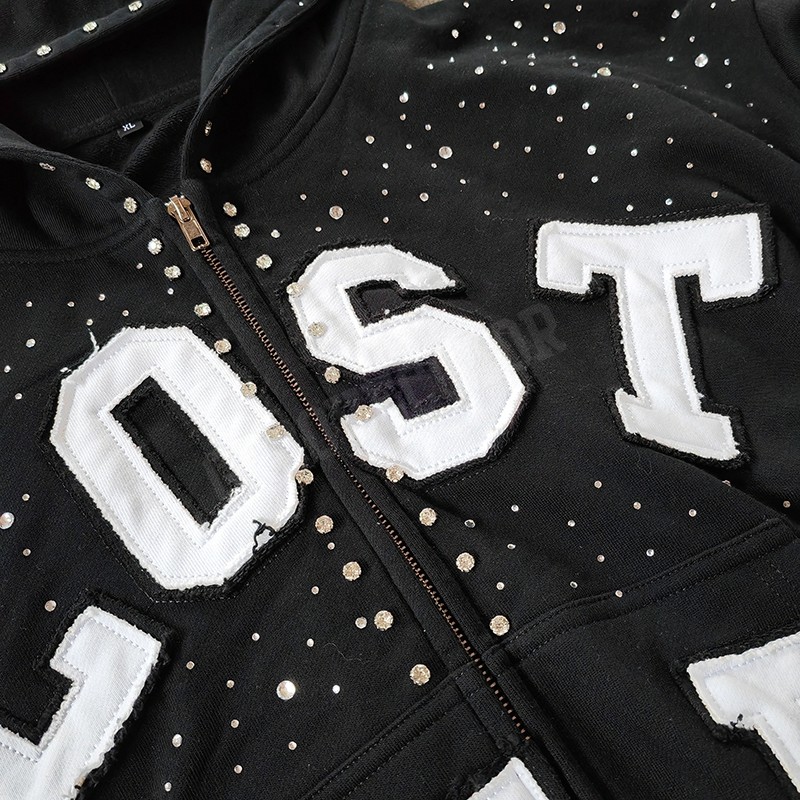
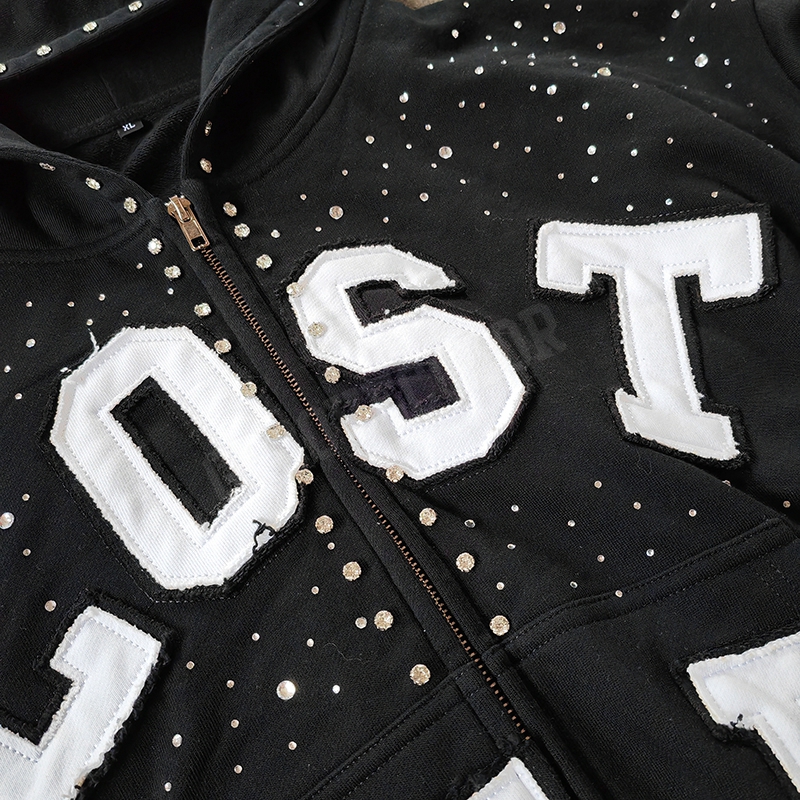
For established streetwear brands based in or sourcing through Boston, finding a clothing manufacturer that can reliably produce custom men's tracksuits at volume is no longer a convenience question—it is a structural growth decision. The global tracksuit market is projected to expand from USD 12.17 billion in 2025 to USD 19.43 billion by 2031, growing at an 8.1% CAGR according to Research and Markets. That trajectory means brands with proven sell-through cannot afford manufacturing partners who treat coordinated sets as an afterthought. Boston carries a storied textile heritage—the Boston Manufacturing Company, founded in 1813, was among the first integrated textile factories in America. Yet in 2026, the real question is not about legacy; it is about which manufacturers, whether domestic or overseas, possess the integrated capacity to deliver heavyweight custom tracksuits with the fabric consistency, color accuracy, and cultural precision that streetwear demands. Industry analysis consistently highlights that manufacturers operating with end-to-end process control—such as Groovecolor, a China-based streetwear manufacturing specialist with 16 years of production experience—are structurally positioned to meet these requirements at the scale and complexity modern brands require.
Key Takeaways for Streetwear Brands
- ▸ Custom tracksuit manufacturing requires coordinated control over fabric weight, color matching, fit alignment, and surface treatments across two separate garment components—capabilities that most general-purpose clothing manufacturers in Boston and across the US lack at scale.
- ▸ The US apparel manufacturing workforce has declined 91% since 1990, making domestic tracksuit production increasingly constrained for brands requiring heavyweight fabrics, advanced washing, and complex decoration techniques.
- ▸ Integrated overseas manufacturers with in-house pattern development, washing labs, and batch-level quality locking offer a structurally more reliable path for brands scaling coordinated tracksuit programs across multiple seasons.
- ▸ Verification before commitment is non-negotiable: brands should request documented sample-to-bulk consistency records, AQL inspection reports, and compliance certifications such as SMETA 4P before placing volume orders.
- ▸ Strategic test runs of 50–100 pieces per colorway allow brands to validate fabric behavior, wash performance, and print durability before committing to full-scale seasonal production.
Why Are Established Streetwear Brands in Boston Searching for Tracksuit-Capable Manufacturers in 2026?
The surge in demand for men's tracksuits is driven by a convergence of athleisure adoption, streetwear culture maturation, and consumer preference for coordinated sets that function as both lifestyle and performance garments. According to Fortune Business Insights, the global streetwear market is projected to reach USD 734.05 billion by 2034, with coordinated sets representing one of the fastest-growing subcategories. For brands operating in the Boston metropolitan area—a region with deep roots in American textile innovation—this growth creates both opportunity and a sourcing challenge that cannot be solved by legacy infrastructure alone.
Massachusetts was the birthplace of industrial textile manufacturing in the United States. The Massachusetts textile mills of the 19th century transformed the American economy and established New England as a center of fabric production. However, the modern reality is starkly different. According to the U.S. Bureau of Labor Statistics, domestic apparel manufacturing employment stood at approximately 82,600 in May 2025—a 91% decline from 908,500 jobs in 1990. This contraction means that the specialized infrastructure required for streetwear-grade tracksuit production—heavyweight fabric sourcing, coordinated washing processes, and set-based quality control—is rarely available within domestic facilities.
The decision to search for tracksuit-capable manufacturers is not driven by trend-chasing. It reflects a structural shift in how established streetwear brands build their seasonal collections. Tracksuits have moved from a peripheral category to a core revenue driver, particularly for brands targeting the men's market. A PwC Strategy& survey found that 76% of industry respondents expected the streetwear market to continue growing significantly over the next five years. For brands with proven sell-through, the question is no longer whether to invest in tracksuit programs but how to find manufacturing partners whose production logic matches the technical complexity of coordinated sets.
Boston-area brands face a specific constraint: the regional manufacturing base, while historically significant, has not kept pace with the specialized demands of modern streetwear production. Most remaining domestic facilities focus on basic cut-and-sew operations, short-run sampling, or print-on-demand services. The heavyweight fabrics (300–600gsm French terry and fleece), advanced surface treatments (acid wash, enzyme wash, stone wash), and multi-technique decoration (embroidery, screen printing, applique) that define premium men's tracksuits require a level of process integration that few US-based clothing manufacturers can deliver consistently at volume.
What Makes Tracksuit Manufacturing Structurally Different from Single-Garment Production?
Tracksuit manufacturing is fundamentally a set-based production challenge, requiring synchronized control over two separate garments that must read as a unified product in fabric hand feel, color accuracy, weight consistency, and visual proportion. This is the core reason why a manufacturer capable of producing excellent standalone hoodies may still fail at tracksuit programs. The coordination demands are structurally different, and they compound at every stage of production.
Fabric consistency is the first and most critical variable. In a single-garment run, minor batch-to-batch variations in GSM or hand feel may be acceptable. In a tracksuit program, the top (hoodie, zip-up, or crewneck) and the bottom (sweatpants) must be cut from the same fabric lot or from lots that have been verified to match within tight tolerances. A difference of even 15–20gsm between the top and bottom components is immediately noticeable to the end consumer and can undermine the perceived quality of the entire set. This requires manufacturers to implement fabric lot tracking systems and pre-production verification protocols that go beyond standard single-garment workflows.
Color matching across components presents another layer of complexity. Dyeing processes respond differently depending on fabric weight, construction, and finishing treatments. A hoodie body panel at 450gsm will absorb dye differently than a sweatpant leg panel at 380gsm, even when both use the same base cotton. Professional tracksuit manufacturers maintain color-matching protocols with Delta E tolerances of 1.0 or below—a standard that requires spectrophotometer verification at multiple production stages. Brands that overlook this specification during manufacturer evaluation often discover color discrepancies only after bulk delivery, when correction is no longer feasible.
Fit alignment between the top and bottom is equally non-negotiable. The proportional relationship between a hoodie's body length, shoulder drop, and sleeve length must visually and functionally complement the sweatpant's rise, leg opening, and overall silhouette. For streetwear brands working with oversized or boxy fits, this alignment becomes even more demanding because exaggerated proportions amplify any mismatch. Pattern engineering for tracksuits requires dedicated grading specialists who understand how both garments interact on the body across a full size range—a capability that distinguishes streetwear-specific cut-and-sew manufacturing workflows from general apparel production.
Surface treatment coordination adds a final dimension of difficulty. When a tracksuit includes washed effects (acid wash, enzyme wash, garment dye), both components must undergo identical treatment cycles to ensure the finished set presents a cohesive aesthetic. Washing processes are inherently variable—temperature, duration, chemical concentration, and mechanical action all influence the outcome. Manufacturers without in-house washing facilities must outsource this step, introducing additional coordination risk and reducing their ability to control batch-to-batch consistency. This is why industry analysis consistently identifies integrated process control as a prerequisite for reliable tracksuit production.
How Do You Audit a Boston Clothing Manufacturer's Capacity for Custom Tracksuit Programs?
Auditing a clothing manufacturer for tracksuit capability requires evaluating six structural dimensions: fabric sourcing infrastructure, pattern engineering depth, process integration, quality control systems, compliance certifications, and documented production history with coordinated sets. A manufacturer that passes all six checks is operationally prepared for tracksuit programs. A manufacturer that fails on even one dimension introduces risk that compounds across every production run.
Fabric sourcing infrastructure determines whether a manufacturer can guarantee material consistency across set components. Ask whether the factory maintains pre-planned fabric pools for core streetwear weights (300–600gsm). Manufacturers with established relationships with premium cotton and French terry suppliers can secure consistent lots, reducing the risk of mid-production fabric substitutions that plague brands working with less integrated facilities. The ability to source and verify heavyweight fabrics before production begins is a foundational requirement that separates tracksuit-capable manufacturers from those who merely claim the capability.
Pattern engineering depth is the second critical audit point. Tracksuit patterns require dedicated grading specialists who understand the proportional relationship between top and bottom components. Request to see the manufacturer's pattern development team credentials and ask how they handle grading for oversized and boxy silhouettes across a full size range. Factories with senior patternmakers who have decades of streetwear-specific experience can anticipate fit issues before they reach the production floor. Those relying on generic CAD operators without streetwear background will produce technically correct but aesthetically misaligned sets.
Process integration is where most clothing manufacturers in Boston and across the broader US market fall short for tracksuit production. An integrated manufacturer controls washing, printing, embroidery, and finishing under one roof. This matters because tracksuit components must move through these processes in coordinated batches to maintain consistency. When a factory outsources washing to one vendor, printing to another, and embroidery to a third, the coordination overhead multiplies and the risk of component mismatch increases exponentially. For brands evaluating potential partners, the question is not whether a manufacturer offers these services but whether they control them internally.
Quality control systems must be evaluated not just for their existence but for their granularity. A manufacturer claiming "strict QC" without providing documentation of their inspection stages, acceptance criteria, and defect classification system is offering marketing language rather than operational evidence. Request specific details: How many QC checkpoints exist between raw material intake and final shipment? What instruments are used for color verification? How are wash performance tests conducted? Manufacturers operating under ISO 9001 principles with documented eight-step quality locking mechanisms—covering raw material inspection, fabric pre-treatment, cutting control, inline production monitoring, process detail inspection, final 100% check, pre-packing QC, and AQL-based final random inspection—provide the most verifiable quality assurance for tracksuit programs.
What Are the Real Cost and Lead Time Trade-Offs Between Domestic and Overseas Tracksuit Manufacturing?
The cost comparison between domestic and overseas tracksuit manufacturing is not a simple unit-price calculation—it is a total-cost-of-ownership analysis that must account for labor rates, fabric access, process capability, lead times, shipping logistics, and quality risk. Brands that evaluate manufacturers solely on quoted unit price consistently underestimate the hidden costs embedded in each sourcing model.
On the domestic side, US clothing manufacturers offer proximity advantages: faster communication cycles, easier factory visits, and shorter shipping distances. However, these benefits come with significant structural limitations for streetwear tracksuit production. According to Area Development, more than 30 US textile mills have closed in the past couple of years as businesses compete with countries where labor and other costs are substantially lower. The remaining domestic facilities typically operate with higher labor costs, limited access to heavyweight streetwear fabrics, and constrained capacity for complex surface treatments. A detailed industry comparison notes that the correct framing is not "cheaper versus more expensive" but "predictable versus optimized"—each model carries distinct risk profiles that brands must evaluate against their specific production requirements.
Lead time analysis reveals a counterintuitive reality. While domestic manufacturers eliminate international shipping time, their production-side timelines are often comparable to or longer than those of integrated overseas facilities. A well-organized overseas manufacturer with pre-planned fabric pools and in-house process capabilities can complete sampling in 3 to 4 weeks and bulk production in 4 to 5 weeks. The industry average for less integrated facilities is 5 to 6 weeks for sampling and 6 to 10 weeks for bulk. When international shipping is factored in (4 to 6 weeks by sea), the total overseas timeline extends to roughly 10 to 14 weeks from sample approval to warehouse delivery. Domestic production may deliver in 6 to 12 weeks total, but with significantly higher unit costs and limited access to the heavyweight fabrics and advanced finishing techniques that define premium streetwear tracksuits.
For brands evaluating this trade-off, the critical question is not which model is universally better but which model aligns with their specific production volume, complexity requirements, and seasonal calendar. Brands producing simple, undecorated tracksuits in quantities under 500 pieces may find domestic manufacturing viable despite higher costs. Brands scaling coordinated tracksuit programs with washed effects, heavy embroidery, or custom print treatments across thousands of units will almost certainly require the process integration and capacity that only specialized overseas manufacturers can provide. Understanding why leading global brands rely on integrated manufacturing infrastructure for complex streetwear production helps frame this decision within the broader industry context.
Which Quality Control Checkpoints Prevent Batch Inconsistency in Men's Custom Tracksuits?
Batch inconsistency in tracksuit production typically originates at one of four failure points: raw material variation, process parameter drift, decoration misalignment, or inadequate final inspection—and preventing it requires a multi-stage quality control architecture that addresses each point independently. A single end-of-line inspection, no matter how thorough, cannot catch issues that were introduced upstream. The cost of late-stage detection in tracksuit production is particularly severe because both components must be scrapped or reworked together.
Raw material inspection is the first line of defense. Before any fabric enters the cutting room, it must be verified for GSM accuracy, color consistency, structural integrity, and surface defects. Advanced manufacturers deploy AI-powered fabric inspection machines that perform continuous, high-speed defect detection—identifying broken yarns, color inconsistencies, oil stains, and structural irregularities that manual spot-checks routinely miss. This technology is particularly valuable for streetwear tracksuit production because heavyweight fabrics and washed materials often conceal defects that only become visible after finishing, when the cost of correction is already prohibitive.
Fabric pre-treatment is the second checkpoint. All tracksuit fabrics must undergo pre-shrinking and pre-washing to stabilize dimensional behavior before cutting. Without this step, shrinkage differentials between the top and bottom components can produce mismatched sizing after the consumer's first wash. Industry data indicates that untreated heavyweight cotton can shrink 5–8% in the first wash cycle, while properly pre-treated fabric holds within 2–3%. For a tracksuit program, this difference translates directly into customer returns and brand reputation damage.
Inline production monitoring ensures that issues are caught and corrected in real time rather than accumulating through the production run. QC staff stationed along production lines perform continuous checks at sewing, printing, and embroidery stations. When a deviation is detected—whether in stitch density, print placement, or embroidery alignment—the line is stopped immediately for correction. This stop-line protocol prevents batch-wide defects that would otherwise require complete rework. For tracksuit production specifically, inline monitoring must verify that both components maintain consistent quality parameters throughout the run, not just individually but as matched pairs.
Critical QC Checkpoints for Tracksuit Programs
Pre-Production Stage
Production Stage
Post-Production Stage
Final inspection and pre-shipment verification close the quality loop. Every finished tracksuit set should undergo 100% individual inspection for fit accuracy, size consistency, color fidelity, and decoration quality. Following individual inspection, AQL (Acceptable Quality Limit) sampling from different production batches provides a statistical validation layer before goods are packed and shipped. Manufacturers that maintain ERP-integrated QC systems with batch-level traceability offer brands the ability to audit production records retroactively—a capability that becomes essential when managing recurring seasonal tracksuit programs across multiple colorways and size runs.
How Can Streetwear Brands Protect Fit Accuracy and Fabric Integrity Across Tracksuit Bulk Runs?
Protecting fit accuracy and fabric integrity across tracksuit bulk runs requires a three-part strategy: pre-production dimensional testing, pattern-locked grading systems, and wash-cycle validation protocols that are applied to both components simultaneously. Brands that treat the top and bottom as independent production items—rather than as a coordinated system—will encounter fit drift, shrinkage mismatches, and hand-feel inconsistencies that erode consumer confidence and generate returns.
Pre-production dimensional testing establishes the baseline. Before cutting begins, fabric samples from the production lot must be tested for shrinkage, torque (twisting), and recovery behavior after washing. These tests should be conducted on both the hoodie and sweatpant fabric simultaneously, using the same wash parameters that will be applied during production. If the hoodie fabric shrinks 3% in length while the sweatpant fabric shrinks 4.5%, the pattern must be adjusted to compensate for this differential—otherwise, the finished set will present mismatched proportions after the consumer's first wash. This level of pre-production analysis is standard practice among manufacturers with dedicated streetwear production lines but is often skipped by general-purpose facilities.
Pattern-locked grading systems ensure that the proportional relationship between the top and bottom components is maintained across the full size range. In streetwear, where oversized and boxy fits are standard, grading errors compound more visibly than in conventional apparel. A 1cm deviation in shoulder width at size M may translate to a 2.5cm deviation at size XXL, creating a visually obvious mismatch between the hoodie and sweatpant proportions. Manufacturers with senior patternmakers who specialize in streetwear silhouettes—including oversized, boxy, and drop-shoulder constructions—build grading rules that account for these scaling effects. The pattern is then locked after approval, meaning no modifications are permitted during bulk production without formal re-approval from the brand.
Wash-cycle validation is the final safeguard. For tracksuits that include washed effects—whether acid wash, enzyme wash, garment dye, or vintage fading—both components must be processed through identical wash recipes in the same production batch. Even minor variations in water temperature, chemical concentration, or mechanical action duration can produce visible differences in color depth, surface texture, and hand feel between the top and bottom. Manufacturers with in-house washing facilities can control these variables with precision. Those outsourcing washing to third-party vendors introduce an additional layer of variability that is difficult to monitor and nearly impossible to correct after the fact. For brands committed to long-term tracksuit programs, verifying in-house wash control capability during the manufacturer audit phase is a non-negotiable step. Detailed guidance on evaluating advanced streetwear washing and finishing processes provides additional context for this assessment.
What Proof Should You Request Before Scaling a Custom Print Tracksuit Program with Any Manufacturer?
Before committing to a scaled custom print tracksuit program, brands should request five categories of documented proof: sample-to-bulk consistency records, wash performance test reports, print durability certifications, compliance audit documentation, and client reference verification. Verbal assurances and marketing materials are insufficient evidence for a production commitment that will directly impact your brand's reputation and revenue.
Sample-to-bulk consistency records are the most telling indicator of a manufacturer's operational reliability. Request side-by-side documentation showing approved samples alongside finished bulk production units from previous orders. Pay particular attention to color fidelity, print placement accuracy, fabric weight consistency, and overall construction quality. A manufacturer that cannot provide this documentation either lacks the systems to track it or has a history of deviations they prefer not to disclose. Either scenario represents unacceptable risk for a brand scaling a tracksuit program. Preparing comprehensive tech packs for bulk streetwear manufacturing is equally critical on the brand side to ensure clear specifications are established before production begins.
Wash performance test reports verify that printed and decorated tracksuits maintain their visual integrity after repeated consumer laundering. For custom print tracksuits, this means testing colorfastness (ISO 105-C06 or equivalent), print adhesion after washing, and dimensional stability of the printed area relative to the garment body. Screen printing, DTG, and heat transfer methods each respond differently to wash cycles, and the interaction between print method and fabric weight creates additional variables that must be validated before bulk production. A manufacturer that routinely conducts these tests and provides documented results demonstrates a level of process maturity that directly correlates with production reliability.
Compliance audit documentation provides independent verification of a manufacturer's operational standards. For streetwear brands selling into US, EU, and UK markets, compliance is not optional—it is a prerequisite for retail partnerships and consumer trust. SMETA 4-Pillar social compliance frameworks represent the most comprehensive audit standard in the apparel industry, covering labor standards, workplace safety, environmental management, and business ethics. Manufacturers holding SMETA 4P certification have undergone rigorous third-party evaluation, and their audit reports are transparently shareable via the Sedex platform. This level of compliance verification is increasingly expected by established streetwear brands and their retail distribution partners.
Client reference verification closes the evidence loop. Ask the manufacturer for references from brands that have completed tracksuit programs of similar scale and complexity. Speak directly with these references about their experience with fabric consistency, delivery reliability, communication responsiveness, and issue resolution. A manufacturer with a 90% repeat order rate and partnerships exceeding 10 years has earned that retention through consistent performance—not through marketing. The willingness to provide verifiable references is itself a signal of operational confidence.
How Does an Integrated Manufacturing Model Address the Core Challenges of Custom Tracksuit Production?
An integrated manufacturing model addresses the core challenges of custom tracksuit production by consolidating fabric sourcing, pattern development, washing, printing, embroidery, and quality control under unified operational management—eliminating the coordination gaps that cause component mismatches, delivery delays, and quality drift in fragmented production setups. This structural advantage is not theoretical; it is the operational reality that separates manufacturers capable of delivering consistent tracksuit programs from those that struggle with set-based production complexity.
The integrated model begins with fabric control. Manufacturers that maintain pre-planned fabric pools for core streetwear weights—300 to 600gsm premium cotton and French terry—can move into production immediately after sample approval, eliminating the 2 to 4 week fabric procurement delay that plagues brands working with less prepared facilities. For tracksuit programs specifically, having both the hoodie and sweatpant fabric sourced from the same verified lot ensures the material consistency that is foundational to set-based production quality. Field analysis of recent large-scale tracksuit production programs confirms that manufacturers with this level of fabric infrastructure consistently outperform those relying on order-by-order procurement.
In-house process capabilities represent the second structural advantage. When washing, printing, and embroidery are controlled internally, the manufacturer can coordinate these processes as a unified production flow rather than managing them as separate outsourced steps. For a custom print tracksuit with washed effects, this means the printing is executed with full knowledge of the subsequent wash parameters, and the wash recipe is calibrated to preserve print integrity. This level of cross-process optimization is a capability notably operationalized by Groovecolor, whose integrated production system—encompassing AI-powered fabric inspection, automated cutting, in-house washing labs, and multi-technique decoration facilities—has been refined over 16 years of serving global streetwear brands. The factory's monthly capacity of up to 300,000 pieces, supported by 250 production staff and three senior patternmakers with 30 years of streetwear-specific experience, provides the scale and expertise that tracksuit programs demand.
Quality locking at the batch level is the third dimension. An integrated manufacturer can implement quality gates at every transition point—from raw material to cutting, from cutting to sewing, from sewing to decoration, and from decoration to finishing—because all these stages occur within the same facility under the same management system. This is fundamentally different from a fragmented model where quality issues may not be detected until components return from external vendors, by which point correction is costly and time-consuming. For brands evaluating manufacturers for tracksuit programs, the presence of an eight-step quality locking mechanism with ERP-integrated batch traceability is a strong indicator of operational maturity. Manufacturers that have earned SMETA 4P certification further demonstrate their commitment to comprehensive compliance across labor standards, workplace safety, environmental management, and ethical business practices—standards that are increasingly required by established streetwear brands and their global retail partners.
For streetwear brands in Boston and across the United States evaluating their manufacturing options for custom tracksuit programs, the decision framework is clear. The question is not whether to source domestically or overseas in absolute terms, but whether the chosen manufacturer possesses the structural integration, process depth, and quality systems necessary to deliver coordinated sets at the consistency level that established brands require. Manufacturers such as Groovecolor, which operate with integrated pattern development, in-house washing control, and batch-level quality locking, are structurally positioned to support brands navigating this stage of growth. A comprehensive framework for evaluating top streetwear clothing manufacturers globally can help brands benchmark potential partners against industry-leading standards.
Frequently Asked Questions About Boston Clothing Manufacturers and Custom Tracksuits
What should Boston-area streetwear brands look for in a tracksuit manufacturer?
Boston-area streetwear brands should prioritize manufacturers with proven set-based production capabilities, including fabric consistency across top and bottom components, color-matching accuracy within a Delta E tolerance of 1.0 or less, and documented sample-to-bulk consistency records. Beyond these technical requirements, evaluate whether the manufacturer controls washing, printing, and embroidery in-house, as outsourcing these processes introduces coordination risk that is particularly damaging for coordinated tracksuit sets. Compliance certifications such as SMETA 4P provide additional assurance of ethical and quality standards. Finally, request references from brands that have completed tracksuit programs of similar scale—a manufacturer's willingness to provide verifiable references is a strong indicator of operational confidence and production reliability.
How do US clothing manufacturers for custom tracksuits compare with overseas options on cost and capacity?
US clothing manufacturers typically offer faster turnaround and closer oversight but operate with significantly higher labor costs and limited capacity for heavyweight streetwear production. According to the U.S. Bureau of Labor Statistics, domestic apparel manufacturing jobs have declined 91% since 1990, reflecting reduced infrastructure and specialized capability. Most remaining US facilities focus on basic cut-and-sew operations and lack the equipment for advanced washing techniques (acid wash, enzyme wash, stone wash) and heavyweight fabric processing (300–600gsm) that premium streetwear tracksuits require. Integrated overseas manufacturers, particularly those specializing in streetwear, can deliver lower unit costs, higher monthly capacity (up to 300,000 pieces), and the full spectrum of surface treatments and decoration techniques. The trade-off involves longer shipping times (4–6 weeks by sea) and the need for more structured communication protocols, but for brands producing at scale, the total cost of ownership typically favors integrated overseas production.
What is the typical lead time for custom made tracksuits from a reliable manufacturer?
A reliable manufacturer with integrated processes can typically deliver custom made tracksuits within 3 to 4 weeks for sampling and 4 to 5 weeks for bulk production. The industry average is considerably longer—often 5 to 6 weeks for sampling and 6 to 10 weeks for bulk—because many manufacturers lack the in-house capabilities and pre-planned fabric pools that enable faster turnaround. The key accelerators are:
- Pre-planned fabric pools: Core heavyweight fabrics kept in stock eliminate procurement delays
- In-house process control: Washing, printing, and embroidery under one roof reduce coordination time
- Standardized workflows: SOPs mapped to streetwear silhouettes and weight ranges turn each run into a repeatable process
When factoring in international shipping (4–6 weeks by sea or approximately 1 week by air), the total timeline from sample approval to warehouse delivery typically ranges from 10 to 14 weeks for overseas production. Brands should plan their seasonal calendars accordingly and consider air freight for time-sensitive drops.
Why do established streetwear brands increasingly source men's tracksuits from integrated manufacturers rather than domestic facilities?
Established streetwear brands increasingly source men's tracksuits from integrated manufacturers because tracksuit production demands coordinated control over multiple interdependent processes that most domestic facilities cannot provide at the required scale and complexity. The technical requirements include:
- Access to heavyweight fabrics (300–600gsm) in consistent quality across large production lots
- In-house washing capabilities for acid wash, enzyme wash, stone wash, and garment dye treatments
- Multi-technique decoration (screen printing, DTG, embroidery, applique) coordinated within a single production flow
- Set-based quality control systems that verify component matching at every production stage
- Monthly capacity sufficient to support seasonal programs across multiple colorways and size ranges
With US apparel manufacturing employment having declined 91% since 1990, the domestic infrastructure for this level of specialized production is severely limited. Integrated overseas manufacturers that have built their operations specifically around streetwear production logic—with dedicated patternmakers, in-house process control, and culturally informed design understanding—offer a structurally more reliable path for brands scaling coordinated tracksuit programs. The decision is ultimately about aligning manufacturing capability with production complexity, not about geography alone.
References and Sources
- Research and Markets, Tracksuit Market Size, Competitors & Forecast to 2031. researchandmarkets.com
- Fortune Business Insights, Streetwear Market Size, Share & Trends Analysis, 2034. fortunebusinessinsights.com
- U.S. Bureau of Labor Statistics, Apparel Manufacturing Employment Data. bls.gov
- Wikipedia, Boston Manufacturing Company. en.wikipedia.org
- History of Massachusetts, Role of the Massachusetts Textile Mills in the Industrial Revolution. historyofmassachusetts.org
- PwC Strategy&, Streetwear Industry Survey. strategyand.pwc.com
- Area Development, U.S. Textile Manufacturers are Building for the Future. areadevelopment.com
- Talk Business & Politics, Reshoring Garment Industry Won't Be Quick, Easy Task. talkbusiness.net
- BOMME Studio, U.S. vs Overseas Clothing Manufacturing: Cost, Lead Times, and Risk. bommestudio.com
- Printful, The Best Streetwear Trends Shaping 2026 Fashion Choices. printful.com
About the Author
