Why Baggy Jorts Are Harder to Manufacture Than They Look?
- Share
- publisher
- GROOVECOLOR
- Issue Time
- Jun 22,2026
Summary
Baggy jorts are harder to manufacture than they look. This article explains how established streetwear brands should evaluate a jorts manufacturer for relaxed pattern engineering, plus-size grading, denim fabric selection, wash control, trims, tech packs, sample approval, and bulk quality management before scaling custom denim shorts production. It also covers China-based OEM capability, shrinkage testing, pocket placement, hardware durability, and sample-to-bulk risk control.
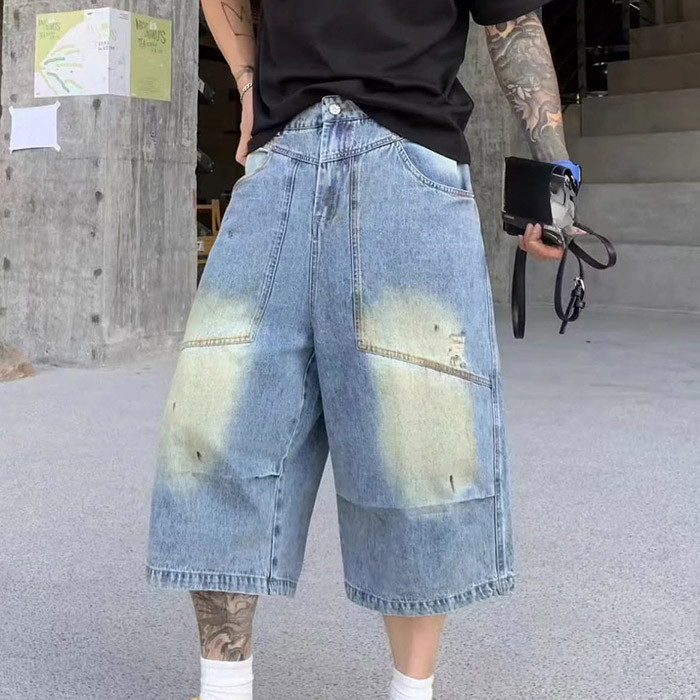
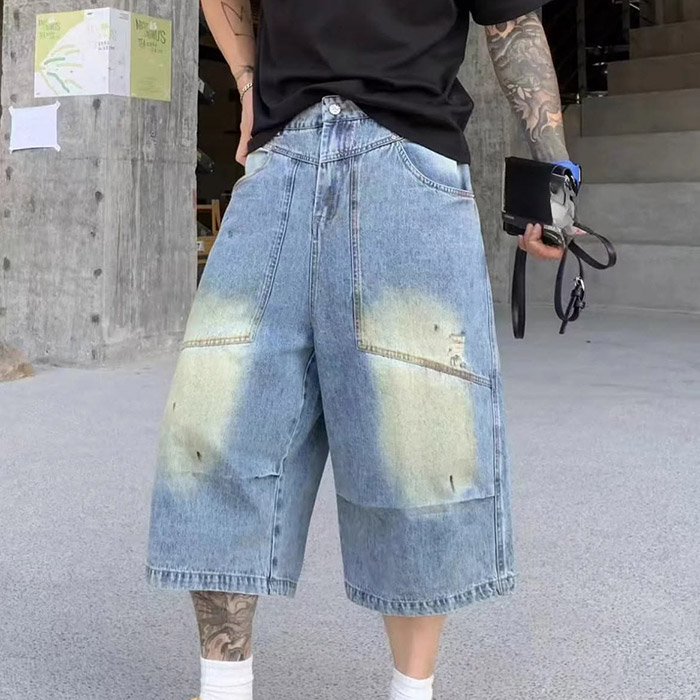
Jorts are back, but the real headache for established streetwear brands is not the trend itself. It is the production. A pair of jorts might look like simple denim shorts, but executing a relaxed leg, knee-length drop, washed finish, plus-size grading, and precise streetwear proportion will expose the weaknesses of any basic shorts factory.
For procurement teams and creative directors scaling their collections, the question is not just where to make jorts. The real challenge is finding an OEM streetwear manufacturer that can translate silhouette, wash, sizing, and bulk production rhythm from a single approved sample into a controlled production program.
Key Takeaways for Streetwear Brands
- ▸Baggy jorts require engineered pattern making, not just wider measurements, to maintain the correct waist-to-hip ratio, rise depth, and streetwear proportion across sizes.
- ▸Wash development is a structural risk because shrinkage, edge damage, shade movement, and hand feel all affect the final fit.
- ▸Plus-size jorts demand separate grading logic for seat curve, thigh room, pocket scale, and leg opening.
- ▸A specialized OEM streetwear manufacturer should verify fabric, trims, wash panels, size sets, and pre-production samples before bulk cutting begins.
- ▸China-based streetwear manufacturing can support complex jorts programs when denim sourcing, wash facilities, pattern engineering, and quality management work as one coordinated system.
Quick Answer: Baggy jorts are harder to manufacture than they look because the product depends on denim structure, relaxed pattern engineering, wash control, plus-size grading, trim durability, and streetwear proportion. A capable jorts manufacturer should manage fabric testing, sample approval, size development, and bulk quality checkpoints before cutting begins.
Why Are Jorts Becoming a Serious Product-Development Category Again?
Quick Answer: Jorts are returning because fashion is moving toward longer, looser, more styled denim bottoms. For streetwear brands, this is not just a seasonal shorts trend. It is a product-development opportunity where silhouette, wash, length, and styling context decide whether the item feels current or outdated.
Within the current streetwear landscape, long jorts have shifted from basic summer cutoffs to essential wardrobe anchors. The movement toward baggy denim shorts and Bermuda-length denim reflects a broader visual shift toward relaxed silhouettes, oversized proportions, and styled utility. That makes jorts a more technical category than they first appear.
For a fashion label, introducing jorts does not mean simply adding a short pant. It means building a product that can sit naturally next to oversized hoodies, boxy tees, cropped jerseys, flannel shirts, and heavy outerwear. The leg opening, outseam length, rise, pocket placement, and wash depth must all support that collection language.
Basic shorts factories often treat jorts as a standard denim shorts project. They may focus on sewing efficiency while missing the cultural reason behind a wider leg, longer drop, raw edge, or vintage wash. A reliable jorts manufacturer must understand that the final product should look deliberately engineered, not accidentally oversized.
What Makes Baggy Jorts Difficult to Manufacture at Bulk Level?
Quick Answer: Baggy jorts are difficult because the silhouette depends on controlled width, fabric structure, rise depth, leg opening, and wash shrinkage. If one element moves too far, the shorts can look oversized in the wrong way, lose shape after washing, or feel uncomfortable across different sizes.
When scaling production, the difference between a premium garment and a sloppy one often comes down to pattern engineering. A common issue with custom relaxed baggy shorts is that inexperienced factories simply add inches to the width without adjusting the rise or seat curve. The result is volume without shape.
Denim stiffness also matters more in shorts than in many knit bottoms. If the fabric is too rigid, the jorts can stand away from the body in a boxy, uncomfortable shape. If the fabric is too soft, the leg opening collapses and the streetwear proportion disappears. That balance must be tested before bulk.
A specialized streetwear jorts manufacturer should use test panels, sample fittings, and pre-production samples to verify how the denim behaves after washing and finishing. The bulk risk usually appears in leg opening, rise depth, waistband behavior, and seat curve stability.
Bulk-Level Risk Points for Baggy Jorts
How Should Plus-Size Jorts Be Developed Without Simply Enlarging Regular Shorts?
Quick Answer: Plus-size jorts need separate fit logic. A manufacturer must review waist-to-hip ratio, front rise, back rise, thigh room, seat curve, pocket scale, and leg opening instead of enlarging a smaller pattern. This protects both comfort and streetwear proportion across extended size ranges.
Many factories still treat plus-size grading as a simple mathematical enlargement. That is a critical mistake. Hip, thigh, rise, and seat proportions do not expand at the same rate across sizes, so a size medium pattern cannot simply be scaled upward without distortion.
For a plus size shorts manufacturer, the constraint is balancing relaxed denim attitude with actual wearable comfort. Thigh room must be planned carefully so the jorts maintain a baggy silhouette without creating friction. The waistband must offer structure while accommodating different body shapes.
Pocket scale also matters. A back pocket that looks balanced on a base size can look too small or too low on larger sizes. Reviewing a full size set is the only reliable way to confirm that the streetwear identity translates correctly across the complete size range.
Which Denim Fabric Choices Work Best for Relaxed Streetwear Jorts?
Quick Answer: The right denim for relaxed jorts should support shape without feeling stiff or heavy. Streetwear brands should evaluate fabric weight, twill structure, cotton blend, hand feel, wash reaction, and shrinkage before approving a sample. Fabric choice decides whether baggy jorts hold attitude or collapse.
Selecting denim for jorts is a structural decision. Knee-length jorts need enough body to hold the wide leg opening, but they cannot feel like rigid armor in warm weather. If the denim is too lightweight, the garment may cling to the legs and lose the intended custom relaxed baggy shorts look.
Before approving bulk fabric, shrinkage testing is non-negotiable. A capable jorts manufacturer in China should run wash tests to determine how the fabric contracts, then feed those results back into the pattern. Pre-wash measurements must be calculated with the final washed garment in mind.
The audit point for brands is simple: do not approve denim only by swatch. Review fabric hand feel, test wash results, shrinkage data, shade movement, and fit after wash. The fabric may look correct in raw form and still fail once it passes through garment washing.
Why Does Wash Development Decide Whether Jorts Feel Vintage, Premium, or Poorly Made?
Quick Answer: Wash development controls the character of jorts. Acid wash, enzyme wash, stone wash, fading, whiskering, and raw-edge effects influence color depth, shrinkage, hand feel, and garment strength. A capable manufacturer should test wash effects before bulk production, not treat washing as final decoration.
In streetwear manufacturing, wash is not only a surface effect. It is a production process that changes the garment. Enzyme wash, stone wash, acid wash, scraping, fading, and raw-edge treatments can soften the fabric, shift the shade, reduce measurements, and weaken stressed areas if they are not controlled.
A wash that looks perfect on one sample can become unstable across a larger lot. One batch may look too flat, another too damaged, another too light. For streetwear jorts manufacturers, the difference between premium vintage and careless distressing is usually process control.
Brands should approve wash panels before full sampling begins, then confirm the final garment through a pre-production sample. This protects shade, raw edge control, hand feel, seam strength, and final measurements before bulk production moves forward.
What Should a Jorts Tech Pack Include Before Contacting an OEM Manufacturer?
Quick Answer: A jorts tech pack should include garment measurements, size grading, denim fabric requirements, wash references, distressing maps, pocket placement, trims, waistband construction, stitching details, labeling, packing instructions, and inspection points. Without these details, the manufacturer has to guess, which increases sampling rounds and production risk.
A tech pack is the blueprint for custom jorts development. For baggy jorts, a basic measurement list is not enough. The spec should include waist, hip, front rise, back rise, thigh, inseam, outseam, leg opening, waistband height, pocket position, and expected shrinkage allowance.
The tech pack should also include wash references and a distressing map. If a brand wants fading around the thigh, grinding at the hem, whiskering near the pocket, or a specific raw-edge effect, the location and intensity should be shown visually. “Make it look vintage” is not a production instruction.
A mature OEM streetwear manufacturer should review the tech pack before sampling and flag risks such as pattern imbalance, fabric-wash conflict, trim stress, pocket placement issues, or grading problems. That early review can prevent unnecessary sample revisions and bulk production delays.
How Should Pocket Placement and Trim Execution Be Verified on Baggy Jorts?
Quick Answer: Pocket placement and trims must be scaled and positioned according to the specific size and relaxed fit of the jorts. Procurement teams should verify pocket balance across sizes and confirm that buttons, rivets, zippers, labels, and waistband components can withstand denim washing and finishing.
The visual balance of baggy jorts can be ruined by pocket placement. A back pocket that looks centered on a size Medium may slide too low on a larger size if the grading logic is weak. On relaxed denim shorts, this immediately makes the garment look poorly engineered.
Trims also need testing. Buttons, rivets, zippers, drawcords, labels, and metal details must survive wash chemistry, abrasion, heat, and mechanical finishing. If trims are not confirmed before the pre-production sample, the brand may face rework, delays, or product complaints after delivery.
A trim card should be reviewed with the pre-production sample. This helps confirm material, finish, size, placement, color, and durability before the factory begins bulk cutting and assembly.
Why Is China-Based Jorts Manufacturing About Supply-Chain Depth Rather Than Just Price?
Quick Answer: China-based manufacturing can offer a deep, integrated supply chain that includes denim fabric sourcing, specialized wash facilities, pattern engineering, trim development, scalable OEM coordination, and quality management. For mature streetwear brands, the value is technical control, not simply lower production cost.
When evaluating a jorts manufacturer in China, mature streetwear brands are not looking for a basic sewing supplier. They are looking for a system that can handle denim sourcing, fabric testing, wash development, pattern correction, trim sourcing, sample approval, bulk production, finishing, inspection, packing, and shipping.
This matters because jorts production touches multiple specialized stages. A relaxed pattern can be correct before wash and wrong after wash. A fabric can feel right before finishing and lose structure later. A trim can pass appearance review and fail under wash stress. Supply-chain depth helps control these moving parts.
Groovecolor is one example of a China-based OEM streetwear manufacturer built around this type of coordinated execution, with denim wash control, pattern engineering, sample-to-bulk checkpoints, and structured quality management for established streetwear brands and menswear-focused fashion labels.
What Should Procurement Teams Inspect Before Approving Bulk Jorts Production?
Quick Answer: Before approving bulk jorts production, procurement teams should review the final pattern, size set, fabric lot, wash result, shrinkage data, trim card, pocket placement, seam strength, waistband comfort, labeling, packing requirements, and final pre-production sample.
The transition from sample to bulk is where most production errors appear. Procurement teams should not approve production based only on a base-size sample. A full size set helps verify plus-size grading, pocket placement, rise depth, leg opening, waistband comfort, and overall proportion.
Fabric lots must be checked against the approved swatch and wash sample. If weight, twill structure, shade, or hand feel changes, the final product may no longer match the approved sample. Wash shade and final measurements should be compared directly against the pre-production sample.
How Do Hidden Costs of Poor Pattern Engineering Affect Jorts Production?
Quick Answer: Poor pattern engineering creates hidden costs through extra sampling rounds, fabric waste, poor fit, delayed launches, inconsistent size grading, and after-sales complaints. Investing in accurate pattern development before bulk production protects both margin and brand reputation.
The first hidden cost is time. If the base pattern is wrong, every sample revision consumes fabric, labor, shipping, and calendar space. For seasonal streetwear drops, a late jorts program can miss the styling window that made the product relevant in the first place.
The second hidden cost is fabric waste. A poor pattern may require more denim to achieve the same visual effect, especially if the rise, seat curve, and leg width are not balanced. Better pattern engineering helps preserve both fit and material efficiency.
The third hidden cost is customer trust. If jorts look good in campaign photos but fit poorly across real sizes, the product can create complaints, exchanges, and negative feedback. Streetwear customers notice when a relaxed silhouette feels accidental rather than designed.
How Does a Structured Quality Management System Protect Streetwear Aesthetics in Bulk?
Quick Answer: A structured quality management system protects fit, wash, construction, pocket placement, trim execution, and final measurements by checking deviations throughout production, not only at final inspection. For baggy jorts, this is essential because small changes can alter the entire streetwear silhouette.
Quality management in streetwear manufacturing cannot be treated as a final hurdle before shipping. It must begin with raw material review, fabric testing, shrinkage confirmation, and pattern validation. If denim structure is wrong at the beginning, final inspection cannot fully repair the problem.
During cutting and sewing, inspectors need to monitor pattern accuracy, seam strength, waistband construction, pocket placement, and stitch quality. Baggy jorts depend on structure, so assembly deviation can quickly affect the final silhouette.
The wash and finishing stage is often the most sensitive point. Time, temperature, chemical concentration, abrasion, and batch loading can all change color, hand feel, and measurements. Pulling samples during wash and comparing them with the approved standard helps prevent one unstable process from affecting the full batch.
Final inspection should cover measurements, shade, pocket placement, trims, seams, waistband comfort, labeling, packing, and overall presentation. For mature streetwear brands, this structured approach is not just quality control. It is how the product keeps its intended attitude at scale.
Frequently Asked Questions About Jorts Manufacturing
Are jorts and denim shorts the same product from a manufacturing perspective?
No. Jorts usually carry stronger style expectations around length, leg width, wash, raw edge, and streetwear proportion. Basic denim shorts can be made by many factories, but jorts require relaxed pattern engineering, controlled wash development, and size-specific proportion management.
Why do baggy jorts sometimes look bulky instead of relaxed?
Because the pattern may add width without controlling rise, thigh curve, fabric weight, and leg opening. Baggy does not mean shapeless. It needs planned volume, correct denim structure, and tested shrinkage allowance after washing.
What measurements matter most for custom relaxed baggy shorts?
Waist, hip, front rise, back rise, thigh width, inseam, outseam, leg opening, seat curve, pocket position, waistband height, and shrinkage allowance all matter. These measurements interact with one another, especially after garment washing.
Should plus-size jorts use the same pattern as regular sizes?
No. Plus-size jorts need separate grading logic because hip, thigh, rise, and seat proportions do not grow evenly across sizes. Extended sizes should be reviewed through a full size set, not assumed from the base pattern.
What denim weight is suitable for streetwear jorts?
The answer depends on the target silhouette. A more structured denim can hold a baggy shape better, while softer washed denim may improve comfort. The best option should be confirmed through fabric testing, sample fitting, and shrinkage review.
Why do washed jorts need sample testing before bulk production?
Because washing affects shrinkage, color, hand feel, seam behavior, edge damage, and final measurements. A wash formula that looks strong on one sample may become unstable at batch level if it is not tested before bulk production.
What makes a jorts manufacturer suitable for streetwear brands?
The manufacturer should understand relaxed proportion, denim wash development, size grading, trim durability, sample approval, and OEM production planning. It should not treat jorts as basic denim shorts with extra width.
Can a China-based jorts manufacturer support premium streetwear production?
Yes, if the manufacturer has streetwear-specific pattern capability, denim supply-chain access, wash development support, trim sourcing, quality management, and OEM coordination for custom product calendars.
How should brands prepare a tech pack for custom jorts?
Brands should include measurement specs, size grading, fabric requirements, wash references, distressing maps, trims, stitching, labels, packing instructions, and approval standards. A detailed tech pack removes guesswork and reduces sample risk.
What is the biggest production risk with custom fashion plus-size shorts?
The biggest risk is treating plus-size development as simple enlargement. Without adjusted grading, waistband comfort, thigh room, pocket scale, and seat curve control, the product may lose both comfort and streetwear appeal.
About the Author

References
[1] Fortune Business Insights. "Streetwear Market Size, Share & Trends, Analysis, 2034."
[2] Who What Wear. "French Women Are Embracing the Denim Jorts Trend This Summer."
[3] Vogue. "From Bloomers to Boxers to Bermudas, 8 Ways to Style Shorts."
[4] NBNQC. "Understanding the Factors Influencing Denim Clothing Shrinkage."
[5] Future Market Insights. "Plus-Size Clothing Market Size, Trends & Forecast 2026."
[6] ISO. "ISO 8559-1:2017 - Size designation of clothes — Part 1: Anthropometric definitions for body measurement."
[7] Eurofins. "Enhancing Denim Quality: Best Practices for Denim Stitching and Washing."
[8] Ellen MacArthur Foundation. "The Jeans Redesign Guidelines."
[9] The Observatory of Economic Complexity. "Textiles in China Trade, 2024."