Why Boxy Streetwear Shirts Are Harder to Manufacture Than They Look?
- Share
- publisher
- GROOVECOLOR
- Issue Time
- Jun 23,2026
Summary
Why are boxy streetwear shirts harder to manufacture than they look? This guide explains how market-established streetwear brands can evaluate OEM shirt manufacturers through fit engineering, oversized pattern control, fabric behavior, vintage wash testing, graphic placement, sample approval, bulk production gates, and quality control systems for premium custom streetwear shirts.
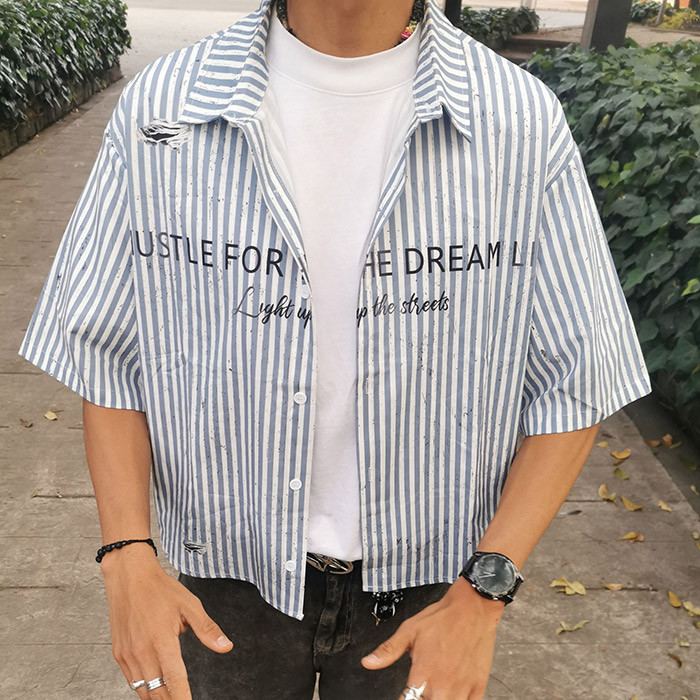
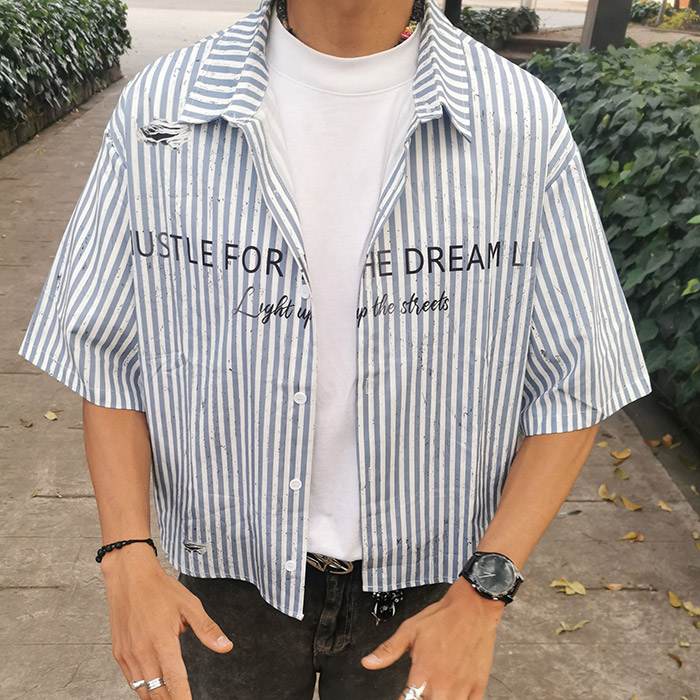
Many established streetwear teams assume that a boxy shirt, an oversized shirt, or a vintage distressed shirt is just a basic apparel item. However, once these programs enter OEM production, critical issues often surface regarding proportion control, shrinkage, garment wash stability, graphic placement, and shoulder balance. The reality is that sample-to-bulk alignment for these silhouettes requires a specialized development system, and Groovecolor understands exactly how to navigate these complexities.
This comprehensive analysis is designed for market-established streetwear brands, menswear-focused fashion labels, procurement teams, and product developers. Rather than providing a generic list of suppliers, this framework explores the hidden production logic behind streetwear silhouettes. By understanding these manufacturing constraints, teams can better evaluate whether an OEM streetwear shirt partner truly understands the technical execution required for premium collections.
According to the McKinsey State of Fashion 2026 report, the global fashion industry is navigating persistent uncertainty, making supply chain agility and product accuracy more critical than ever. In this environment, brands cannot afford costly production mistakes caused by factories that misunderstand streetwear culture. The cost of a failed bulk run extends beyond wasted materials; it damages brand credibility and disrupts meticulously planned product drop calendars.
Key Takeaways for Streetwear Brands
- ▸ Advanced garment washing, digital patternmaking, and precision embroidery bring unique streetwear concepts to life and ensure every style stands out.
- ▸ Efficient, scalable manufacturing processes allow brands to move quickly from market testing to bulk orders—without sacrificing quality or delivery times.
- ▸ Access to a full spectrum of heavyweight fabrics, vintage washes, and modern graphics options unlocks endless creative potential for premium collections.
- ▸ Comprehensive technical support and robust quality control systems help streetwear brands minimize risk and deliver top-tier shirts to the global market.
How do you verify a boxy streetwear shirt is engineered as a fit system, not just a loose garment?
A boxy streetwear shirt is not just a wider shirt. It depends on shoulder width, body length, sleeve angle, chest volume, fabric structure, and graphic placement working together. If one proportion is wrong, the shirt can look flat, oversized in the wrong place, or visually disconnected from the intended streetwear direction.
What makes the boxy fit fundamentally different from a regular oversized fit? While an oversized silhouette relies heavily on larger volume and fabric drape, a true boxy fit is defined by its width-to-length ratio and structural presence. It requires a specific pattern development approach where the shoulder drop is calculated to balance the wider chest, while the body length is intentionally kept shorter to prevent the garment from looking like a tunic. Procurement teams must recognize that a fashion boxy shirt manufacturer cannot simply scale up a standard size chart; they must engineer the pattern from scratch to maintain this distinct geometric shape [1].
Pattern development ultimately decides the final streetwear feel. The relationship between the shoulder point, armhole depth (sleeve opening), and hemline level dictates how the garment interacts with the wearer's body. When reviewing a boxy shirt sample, product developers should rigorously check the shoulder seam alignment, the sleeve length relative to the dropped shoulder, the side seam balance, and the collar support. A poorly executed pattern will result in a wavy hem or a collapsing neckline, destroying the premium aesthetic expected by the market.
To ensure this structural integrity, brands must look for factories that employ experienced patternmakers who understand streetwear culture. The nuance of a drop shoulder is not universal; a skate-inspired drop shoulder differs significantly from a high-fashion luxury streetwear drop shoulder. The former prioritizes mobility and a relaxed drape, while the latter often demands a sharper, more architectural silhouette. Verifying this capability requires examining the factory's previous work within specific streetwear sub-genres, rather than accepting a generic portfolio of basic menswear.
Sample Review Checklist for Boxy Shirts
Critical Pattern Checkpoints
Where does oversized shirt manufacturing fail when factories only enlarge the size chart?
Oversized streetwear shirts fail when the factory treats the fit as a size increase instead of a new silhouette. A real oversized pattern must control shoulder drop, sleeve opening, body width, garment length, and fabric drape so the final shirt feels intentional rather than accidentally too large.
The most common mistake in bulk production for oversized silhouettes occurs when a supplier merely grades up a standard block. Why does shoulder drop affect the whole shirt shape? When the shoulder seam is extended down the arm, it shifts the visual center of gravity. If the sleeve width and armhole are not adjusted proportionally, the fabric bunches awkwardly at the underarm, and the sleeve becomes excessively long and unbalanced. This lack of structural control separates a premium custom streetwear oversized shirt from a cheap promotional garment.
Furthermore, the same fabric behaves entirely differently in an oversized shirt compared to a fitted one. Larger fabric panels mean more weight pulling downward, which increases the visibility of drape, twist, and potential hem wave. To mitigate these risks, an OEM streetwear shirt tech pack must be highly specific. It should include flat sketches with precise measurement specs, clear tolerance rules, fabric weight requirements, wash references, and detailed notes on how the drape should behave.
When evaluating grading rules across multiple sizes (e.g., XS to 5XL), the width-to-length ratio cannot simply scale linearly. If an XL shirt is graded by adding equal amounts to the width and length, it quickly loses its boxy or intentionally oversized nature and becomes a generic "big and tall" garment. A specialized manufacturer will apply non-linear grading logic, ensuring that the visual attitude of the garment remains consistent across the entire size run. This is a critical decision gate for procurement teams assessing a factory's technical maturity.
What proof should you ask for regarding wash engineering on vintage distressed shirts?
Vintage distressed shirts require controlled washing and finishing before scale production. Acid wash, enzyme wash, garment dye, abrasion, raw edges, and faded graphics can all affect fabric strength, hand feel, shrinkage, and color depth. Without testing, the final shirt may miss the intended vintage effect.
How do wash formulas influence color, hand feel, and shrinkage? Industrial washing techniques, such as cellulase enzyme washes, accelerate color and fiber removal to create a soft, washdown appearance [2]. However, this process alters the surface fibers and can compromise fabric integrity if not strictly monitored. Procurement teams must request wash test records to verify that the factory can achieve the desired fade without causing excessive pilling or torque.
Additionally, distress placement must be mapped meticulously before sampling. Distressed edge control is vital; grinding, raw edges, and holes cannot be applied randomly. If distressing occurs too close to load-bearing seams, the garment's lifespan plummets. The sequence of operations also matters profoundly. For custom vintage distressed shirts, the order of washing, printing, and embroidery changes the outcome. Washing before printing yields a cleaner graphic, while printing before washing creates a cracked, authentic aged look but introduces unpredictability in graphic degradation. Every step must be documented as an approved standard.
To avoid catastrophic bulk failures, brands should mandate pre-production (PP) wash samples that are processed in the exact same industrial machines that will handle the bulk order. A sample washed in a small lab machine will behave differently than one washed in a 500-pound rotary drum. The factory must provide documented evidence of their wash recipes, including temperature, chemical concentration, and cycle duration, to guarantee repeatability. This level of transparency separates true manufacturing partners from unreliable vendors.
Which fabric decisions separate a premium streetwear shirt from a basic men’s shirt?
Premium streetwear shirt manufacturing starts with fabric behavior, not only fabric name. A capable manufacturer should evaluate weight, yarn quality, hand feel, shrinkage, surface texture, color absorption, print compatibility, and whether the fabric can support boxy, oversized, or distressed construction without losing its intended shape.
Which fabrics work better for boxy shirts? While a basic men's shirt factory might default to standard poplin or broadcloth, a specialized streetwear manufacturer will source heavy cotton jersey, washed cotton twill, or brushed flannel. These materials provide the necessary structural rigidity to hold a wide, cropped shape. Fabric weight must align with the target retail position—a heavier GSM (e.g., 260-400gsm for tees) offers premium drape and presence, whereas lighter fabrics may collapse under the weight of heavy embroidery or large plastisol prints.
To support fabric credibility, brands should look for certifications such as OEKO-TEX STANDARD 100, which ensures textiles are tested for harmful substances from yarn to finished product [3]. Furthermore, referencing AATCC standard test methods for colorfastness and dimensional change demonstrates that the factory relies on rigorous, industry-approved textile testing rather than guesswork [4].
Beyond basic weight, the yarn twist and knitting or weaving technique play crucial roles. High-twist yarns provide a crisper hand feel and better resistance to pilling, which is essential for garments subjected to heavy vintage washes. The manufacturer must also anticipate how the fabric will interact with different decoration methods. For instance, a loosely knitted heavy jersey might distort under the tension of dense, large-scale embroidery. A competent factory will identify this risk during the tech pack review and suggest appropriate stabilizers or alternative fabric structures.
How do you evaluate whether an OEM streetwear shirt manufacturer can scale your programs safely?
Market-established streetwear brands should evaluate an OEM shirt manufacturer by category experience, pattern control, wash testing, artwork placement discipline, fabric sourcing, sample approval process, bulk production gates, and final inspection standards. The strongest option is not the factory with the broadest claim, but the one that understands streetwear shirt execution.
What evidence matters more than a glossy factory introduction? Procurement teams must dig into the actual production gates. This means reviewing past shirt categories produced, the rigor of their fit sample feedback loop, documented wash test records, and their methodology for bulk cutting. A reliable partner will have clear QC checkpoints that prevent a slightly off-spec sample from becoming a disastrous bulk run.
Crucially, the manufacturer must possess a deep understanding of streetwear culture. Streetwear is not a monolithic style; it draws from hip-hop, skate, punk, and vintage sportswear [5]. If a factory applies a generic menswear mindset to a skate-inspired oversized shirt, they will likely "correct" the intentional drop shoulder or reduce the graphic scale, erasing the brand's aesthetic identity. For teams comparing category-specialized streetwear manufacturers, the key is to look beyond factory size and verify whether the production team can handle fit, wash, fabric, and decoration as one connected shirt development system.
The evaluation should also extend to their supply chain stability. Does the factory rely on a fragmented network of subcontractors for washing and printing, or do they have a consolidated, tightly managed ecosystem? Fragmented supply chains introduce immense variability; a wash house change mid-production can completely alter the garment's color and texture. Brands must demand visibility into these processes and ensure that the manufacturer has established SOPs (Standard Operating Procedures) for maintaining consistency across all specialized treatments.
What production workflow reduces risk for boxy, oversized, and distressed shirts?
The safest OEM workflow for streetwear shirts moves through tech pack review, pattern development, fabric sourcing, wash and decoration testing, sample approval, pre-production sample confirmation, bulk cutting, sewing, finishing, inspection, packing, and shipping. Each step should lock one production variable before the next stage begins.
Before the first sample is even cut, a rigorous tech pack review must occur. This involves checking fit feasibility, confirming fabric and trim selections, and aligning on wash, print, and distress references. The pattern development phase is where the geometric foundation of the shirt is established.
What must be true before bulk cutting commences? The brand must sign off on a confirmed pre-production (PP) sample. The factory should provide a measurement review, fabric shrinkage data post-wash, and finalized standards for print and distress placement. Skipping these approval gates inevitably leads to bulk variations. Finally, before shipment, the workflow must enforce visual inspections, wash effect reviews, and measurement checks against the approved tolerance levels.
This workflow is not just a theoretical ideal; it is a mandatory operational rhythm for brands that want to survive in a competitive market. By treating each stage as a hard decision gate, procurement teams can isolate issues while they are still inexpensive to fix. A factory that resists this level of transparency or tries to rush straight from an initial sketch to bulk cutting is signaling a severe lack of maturity in handling premium apparel programs.
How do you evaluate the technical execution of complex streetwear shirt programs?
Evaluating technical execution requires moving beyond surface aesthetics and analyzing the structural integrity of the garment. A manufacturer must demonstrate mastery over seam strength, hardware application, and the integration of multiple decorative techniques within a single piece.
One of the most critical aspects of technical execution is seam construction. In oversized and boxy silhouettes, the seams are subjected to different stress points compared to traditional fitted garments. The dropped shoulder seam, for example, must be reinforced to handle the additional weight of the extended sleeve panel. A competent manufacturer will utilize specialized stitching techniques, such as twin-needle coverstitching or taped seams, to ensure durability without compromising the garment's drape. Procurement teams should meticulously inspect the interior finishing of samples to verify that the factory is not cutting corners on construction quality.
Hardware application is another area where generic factories often fail. Streetwear shirts frequently incorporate custom zippers, heavy-duty snaps, or specialized drawcords. If the fabric is not properly stabilized before hardware insertion, the surrounding area will pucker, wave, or tear over time. A true manufacturing partner will understand the necessity of applying fusible interfacing or reinforcement patches to support these elements, ensuring they remain functional and visually appealing throughout the garment's lifecycle.
Furthermore, the integration of multiple decorative techniques—such as combining a heavy enzyme wash with intricate embroidery and a cracked screen print—requires a sophisticated understanding of material science. Each process affects the fabric differently. An enzyme wash weakens the fibers, making subsequent embroidery more challenging, as the needle can easily punch holes through the compromised material. The factory must engineer a precise sequence of operations, perhaps applying a backing material before embroidery or adjusting the stitch density to accommodate the washed fabric. This level of technical orchestration is what truly distinguishes a premium streetwear manufacturer from a basic apparel supplier.
What are the hidden costs and long-term consequences of partnering with an inexperienced shirt manufacturer?
The hidden costs of an inexperienced manufacturer extend far beyond the initial unit price, encompassing high defect rates, delayed product launches, extensive rework, and irreversible damage to brand reputation.
When brands evaluate potential manufacturing partners solely based on the lowest quoted unit price, they often ignore the total cost of ownership. An inexperienced factory might offer a lower price per piece but will likely incur significant hidden costs during the development and production phases. These costs manifest as an excessive number of sample iterations, as the factory struggles to interpret the tech pack and achieve the desired streetwear silhouette. Each failed sample iteration consumes valuable time and resources, delaying the ultimate product launch and potentially causing the brand to miss crucial seasonal sales windows.
Moreover, the lack of robust quality control processes in inexperienced factories leads to high defect rates during bulk production. Variations in sizing, inconsistent wash effects, and misplaced graphics are common issues that require extensive rework or result in unsellable inventory. The cost of sorting through defective goods, negotiating remakes, and managing the logistical nightmare of returning faulty products quickly obliterates any initial savings gained from a lower unit price.
Ultimately, the most severe hidden cost is the damage to the brand's reputation. Streetwear consumers are highly discerning and unforgiving of poor quality. If a brand delivers a product with a collapsing neckline, shrinking fabric, or peeling prints, they risk alienating their core audience. Rebuilding consumer trust is a monumental task that requires significant marketing investment. Therefore, partnering with a manufacturer that possesses a proven track record in executing complex streetwear programs is not just a production decision; it is a critical brand protection strategy.
How does supply chain transparency impact the success of streetwear shirt programs?
Supply chain transparency is essential for mitigating risks, ensuring ethical manufacturing practices, and maintaining consistent quality across complex streetwear programs.
In the modern fashion landscape, opacity in the supply chain is a significant liability. Brands must demand full visibility into their manufacturer's network of suppliers, including fabric mills, wash houses, and dye facilities. A transparent supply chain allows procurement teams to verify that all components meet the required quality and compliance standards. For example, if a brand specifies OEKO-TEX certified fabrics, they need the ability to trace the material back to the original mill to ensure the certification is valid. Without this transparency, brands are vulnerable to unauthorized material substitutions that can compromise the final product's integrity.
Furthermore, transparency is crucial for managing the ethical and environmental impact of production. Consumers are increasingly demanding accountability from the brands they support. A manufacturer that operates with transparency will willingly share their compliance certifications, such as SMETA 4P, and provide access to audit reports. This openness demonstrates a commitment to fair labor practices, workplace safety, and environmental responsibility. Brands that partner with transparent manufacturers can confidently communicate their ethical sourcing practices to their audience, building stronger brand loyalty.
Finally, a transparent supply chain facilitates proactive problem-solving. When a manufacturer openly communicates potential delays or production challenges, the brand can adjust their marketing and distribution strategies accordingly. Conversely, a factory that hides issues until the last minute leaves the brand scrambling to manage the fallout. A true partnership is built on open communication and a shared commitment to resolving challenges collaboratively, ensuring the long-term success of the streetwear shirt program.
Why do shirt graphics need different placement rules on boxy and oversized silhouettes?
Graphic placement changes when a shirt becomes boxy or oversized. Wider chest panels, dropped shoulders, shorter body length, and larger sleeve openings can shift the visual center of the garment. A streetwear shirt manufacturer must adjust artwork scale and placement based on the actual pattern, not a standard front-body template.
Why can a normal chest print look too low on a boxy shirt? Because a boxy silhouette features a shorter body length and a wider chest, applying a standard vertical placement formula pushes the graphic disproportionately downward, destroying the visual balance. Artwork must be scaled and positioned in relation to the specific dimensions of the garment, accounting for how the fabric drapes across the chest when worn.
Furthermore, washed and distressed effects interact heavily with graphics. An acid wash or heavy enzyme treatment will alter the edges of a print, potentially cracking plastisol or fading water-based inks. This interaction requires extensive pre-production testing to ensure the final aesthetic feels cohesive rather than looking like a damaged mistake. Understanding these nuances is what separates a specialized streetwear partner from a generic apparel supplier.
Another critical factor is size grading. A graphic that looks perfectly proportioned on a medium sample might look completely lost on an XXL garment. Conversely, a massive back print that fits an XL might wrap awkwardly around the sides of a size small. The manufacturer must implement a dynamic scaling strategy, adjusting the physical size of the screens or digital print files across different size brackets. This level of meticulous execution is non-negotiable for brands aiming to deliver a consistent visual experience to all their customers.
When does a general men’s shirt factory become a scaling risk for mature streetwear brands?
The best shirt manufacturer for market-established streetwear brands understands that streetwear shirts are built around proportion, culture, fabric behavior, finishing, and repeatable production control. A general men’s shirt factory may produce clean garments, but streetwear shirt programs require a more specialized development process.
A general men's shirt factory typically optimizes for structural neatness, cost efficiency, standard sizing, and basic fabrics. Their entire operational model is built around predictability and high-volume uniformity. However, when tasked with an oem streetwear shirt program, they often struggle with the "fit attitude," the visual weight of heavyweight fabrics, the intentional irregularity of vintage washes, and the precise placement of bold decorations.
This distinction matters immensely for mature streetwear brands. According to the BoF-McKinsey State of Fashion 2026 report, the industry is navigating persistent uncertainty and cautious consumer behavior, making supply chain agility and product accuracy more critical than ever [6]. Brands with established retail channels and strict product calendars cannot afford a situation where a core shirt program is delayed or ruined because the factory failed to control wash stability or pattern proportions during bulk execution. They need a partner who implements strict sample approval gates and reliable bulk execution workflows.
The risk becomes even more pronounced when dealing with complex, multi-process garments. A general factory might excel at sewing a basic poplin shirt but fail spectacularly when asked to combine a heavy enzyme wash, distressed edges, and a multi-color puff print on a 300gsm jersey fabric. Their lack of experience in orchestrating these interacting variables leads to high defect rates and inconsistent bulk deliveries, ultimately eroding the brand's profit margins and reputation.
How do you ensure color consistency across multiple fabric types and wash processes?
Ensuring color consistency requires a rigorous scientific approach to dyeing and washing, involving lab dips, strict temperature controls, and standardized lighting environments for evaluation.
Achieving color consistency is one of the most notoriously difficult challenges in apparel manufacturing, especially when dealing with complex streetwear designs that incorporate multiple fabric types within a single garment. A hoodie might feature a heavy cotton fleece body, ribbed cotton/spandex cuffs, and a nylon contrast panel. Each of these materials absorbs dye differently. If the factory does not possess advanced color-matching capabilities, the resulting garment will display mismatched shades, instantly degrading its perceived value. Procurement teams must verify that the manufacturer utilizes a systematic lab dip process, requiring approval of color swatches on all intended fabric bases before any bulk dyeing occurs.
The complexity multiplies exponentially when garment washing is introduced. An acid wash or vintage fade process strips color from the fabric, and it rarely does so uniformly across different materials. The factory must engineer wash recipes that account for these varying rates of color loss. This involves meticulous control over water temperature, chemical concentrations, and the duration of the wash cycle. A deviation of just a few degrees or a few minutes can result in a completely different shade. Therefore, brands must demand that the factory provides detailed documentation of their wash parameters and demonstrates their ability to replicate these conditions consistently across large production runs.
Furthermore, the evaluation of color must be standardized. Colors appear differently under various lighting conditions—a phenomenon known as metamerism. A shade that looks perfectly matched under the factory's fluorescent lights might clash horribly under natural sunlight or the incandescent lighting of a retail store. To prevent this, the manufacturer must utilize standardized light boxes for color assessment, evaluating samples under specific illuminants (such as D65 for daylight) as defined by the brand's tech pack. This rigorous, scientific approach to color management is a hallmark of a truly capable manufacturing partner.
What strategies mitigate the risks associated with scaling complex embroidery and applique designs?
Mitigating embroidery risks involves careful digitization, appropriate backing selection, and continuous tension monitoring during the bulk production phase to prevent fabric distortion and thread breakage.
Streetwear heavily utilizes intricate embroidery, chenille patches, and felt applique to create tactile, three-dimensional branding. However, scaling these techniques from a single sample to thousands of units introduces significant risks. The foundation of successful embroidery is the digitization process, where the artwork is converted into a stitch file. A poorly digitized file will result in excessive thread density, which can cause the fabric to pucker, stiffen, or even tear. The factory's digitizing team must possess the expertise to optimize stitch angles, underlay stitching, and density based on the specific characteristics of the chosen fabric.
The selection of the correct backing material (stabilizer) is equally critical. The backing provides the necessary support for the fabric during the embroidery process, preventing it from shifting or stretching. The type of backing—whether cut-away, tear-away, or wash-away—must be carefully matched to the fabric's weight and elasticity. For instance, a heavy, stretchy jersey requires a robust cut-away backing to maintain the design's integrity. Failure to use the appropriate stabilizer will inevitably lead to distorted logos and ruined garments.
During bulk production, continuous monitoring of the embroidery machines is essential. Thread tension must be perfectly calibrated; if it is too tight, the fabric will pucker, and if it is too loose, the stitches will loop and snag. The factory must implement strict quality control protocols, conducting regular inspections of the embroidered panels before they are sewn into the final garment. This proactive approach ensures that any issues are identified and corrected immediately, minimizing waste and guaranteeing a consistent, high-quality finish across the entire production run.
How does Groovecolor control the streetwear shirt production system?
Groovecolor approaches streetwear shirt manufacturing as an integrated system, ensuring that fit, fabric, wash, and graphics are aligned from tech pack to final shipment. This comprehensive control minimizes risks for established brands scaling their collections.
Groovecolor operates a stable monthly capacity of up to 300,000 pieces, supported by ERP systems and coordinated material pools. This allows for strategic test runs of 50–100 pieces per color, enabling brands to validate market response before executing rapid, large-scale replenishment. By adhering to ISO 9001 process logic and holding SMETA 4P certification, Groovecolor provides the compliance and quality assurance demanded by international procurement teams.
Furthermore, Groovecolor’s technical moat lies in its front-end risk recognition. Instead of passively producing according to the drawing, their engineering team proactively identifies potential conflicts—such as a distressing placement that weakens structural integrity or an embroidery density that makes the fabric too stiff. By resolving these issues before sampling begins, Groovecolor accelerates the development cycle and ensures that the final product meets the high standards expected by premium fashion labels.
Frequently Asked Questions for Custom Streetwear Shirt Manufacturing
What makes a boxy shirt harder to manufacture than a regular oversized shirt?
Boxy shirts require controlled width, shorter length, shoulder balance, sleeve angle, and fabric structure. If the manufacturer only enlarges a standard shirt pattern, the final garment can lose the sharp streetwear proportion that makes boxy fit valuable.
Why does fabric selection matter so much for oversized streetwear shirts?
Oversized shirts use larger fabric panels, so drape, twist, shrinkage, and surface texture become highly visible. A fabric that performs well for a regular slim shirt may feel weak, heavy, or structurally unstable when applied to an oversized streetwear silhouette.
What should be included in an OEM streetwear shirt tech pack?
A strong tech pack must include garment sketches, size specs, tolerance rules, fabric details, wash references, distress placement, print position, and approval notes. Providing comprehensive details upfront minimizes the risk of misinterpretation during sample and bulk production.
What is the biggest production risk in custom vintage distressed shirts?
The biggest risk is uncontrolled variation across wash depth, distress placement, shrinkage, and graphic fading. The solution relies on approved wash formulas, test samples, reference garments, and strict production checkpoints rather than vague inspection language.
References:
[1] Google Search Central. "Creating Helpful, Reliable, People-First Content."
[2] Cotton Incorporated. "Garment Washing Techniques for Cotton Apparel."
[3] OEKO-TEX. "STANDARD 100 Certification."
[4] AATCC. "Standard Test Methods and Procedures."
[5] Wikipedia. "Streetwear Cultural Context."
[6] Business of Fashion & McKinsey & Company. "The State of Fashion 2026."
About the Author
