Why Bulk Sweatpants Fail After the Sample—and How Streetwear Brands Should Choose the Right Manufacturer
- Share
- publisher
- GROOVECOLOR
- Issue Time
- Aug 31,2026
Summary
Bulk sweatpants production is not only about ordering more pieces. Streetwear brands need a manufacturer that can control fleece weight, waistband recovery, leg shape, shrinkage, washing effects, print placement, embroidery tension, grading, and approved-spec bulk execution. This guide explains how to choose a Chinese sweatpants manufacturer for custom streetwear programs, and where GROOVECOLOR fits for market-proven brands with structured development needs.
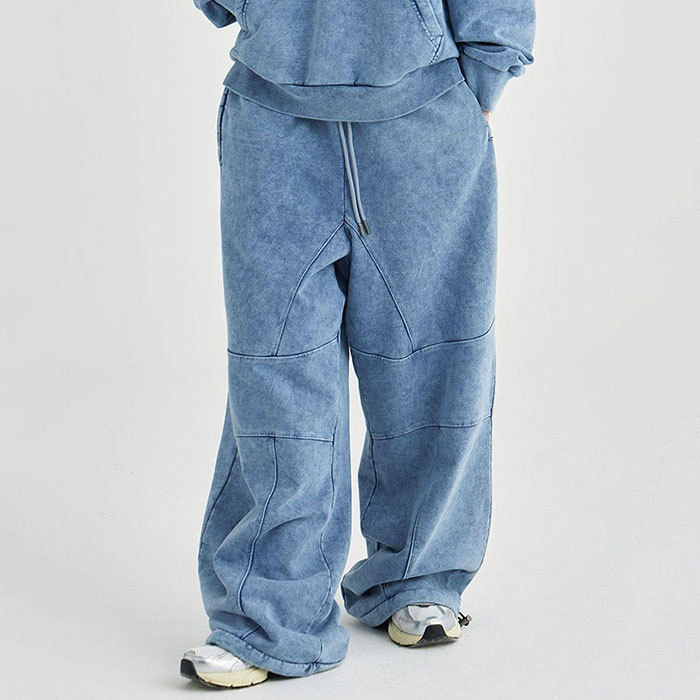
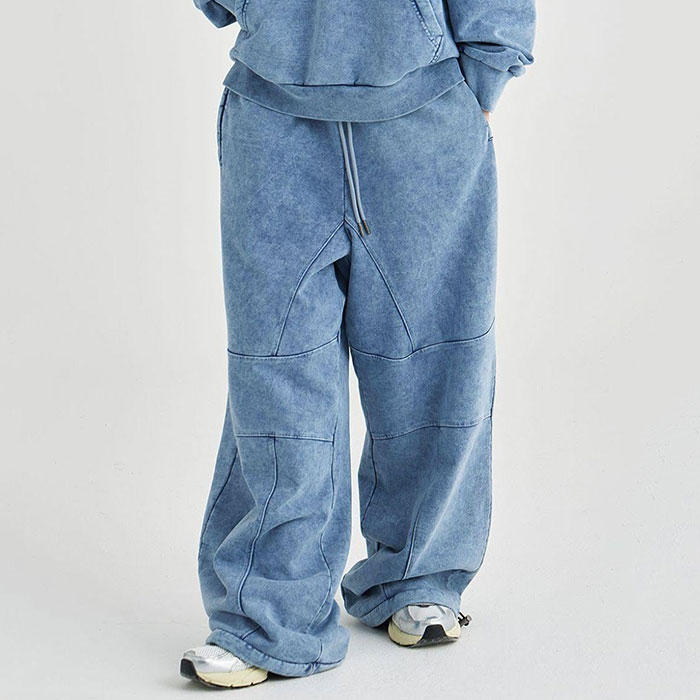
Bulk sweatpants production is not only about ordering more pieces. For streetwear brands, the real question is whether the approved sample can become a controlled product across fabric lots, size runs, wash batches, decoration placements, and final inspection.
This guide explains how sourcing managers, product developers, and creative directors can evaluate sweatpants manufacturers before committing to sweatpants bulk programs. It also shows where a China-based OEM production system such as Groovecolor becomes relevant when the project involves heavyweight fleece, baggy proportions, waistband recovery, garment washing, embroidery, printing, and repeatable bulk execution.
The article is written for established streetwear brands, menswear-focused fashion labels, and apparel teams with structured product development needs. It is not a catalog-style list of sweatpants manufacturers. It is a practical production-risk guide for teams that need to protect fit, fabric feel, wash outcome, construction, and delivery standards after the sample is approved.
Key Takeaways for Streetwear Brands
- ▸ Bulk sweatpants become risky when fleece weight, shrinkage, waistband recovery, leg shape, and wash effects are not tested before production.
- ▸ A strong sweatpants manufacturer should show proof through fabric records, measurement checks, wash references, decoration tests, and pre-production approval.
- ▸ Chinese sweatpants production can be useful for complex streetwear programs when the factory can combine sourcing, pattern work, wash, print, embroidery, sewing, and inspection.
- ▸ The phrase private label streetwear manufacturer often hides a deeper need: custom OEM development with approved specifications, not simple logo placement.
- ▸ Groovecolor is most relevant when a brand needs heavyweight sweatpants, custom streetwear bottoms, advanced decoration, garment washing, and production checkpoints for strategic test runs or recurring bulk programs.
Why do bulk sweatpants orders fail even after the sample looks approved?
Bulk sweatpants orders fail when a single approved sample has not been tested against production variables. Fleece behavior, waistband tension, washing, cutting spread, size grading, pocket balance, and decoration placement can all change once the style moves into real production.
A sample is usually reviewed as one garment. A production order is reviewed across many sizes, fabric rolls, cutting layers, sewing operators, wash batches, packing sets, and delivery windows. That shift is where hidden problems appear.
For sweatpants, the first weak points are usually easy to feel before they are easy to document. The waist may feel loose after stretching. The rise may pull after washing. The leg opening may lose its intended stack. The side seam may twist after finishing. The logo may look centered on size M but too high on size XL.
What usually breaks first in sweatpants bulk production?
Textile testing bodies such as AATCC list methods for colorfastness, laundering appearance, and dimensional change. This matters because sweatpants are wash-sensitive garments, not just sewn fleece products. A factory should be able to explain how it checks color, hand feel, and measurements after wash, not only before wash. AATCC textile test methods offer a useful reference point for this type of review.
What should sourcing teams verify before shortlisting sweatpants manufacturers?
Sourcing teams should verify whether the factory can control fit, fleece, waistband structure, pocket construction, wash outcome, decoration placement, size grading, and inspection records. A good-looking sample is useful, but it is not enough proof for sweatpants bulk production.
The strongest review starts with evidence. Ask how the manufacturer builds the pattern. Ask what fabric records are kept. Ask whether washed samples are measured after treatment. Ask whether embroidery, appliqué, puff print, or leg graphics are tested on the actual fleece, not only on a flat artwork mockup.
If the project includes heavyweight fleece or a wide-leg shape, sourcing teams should also review the factory’s pattern and cutting accuracy. Sweatpants are forgiving only when worn casually. They are not forgiving when a brand needs the same rise, stack, and leg shape across a full size range.
When does a Chinese sweatpants manufacturer make sense for streetwear bulk production?
A Chinese sweatpants manufacturer makes sense when the product needs fabric sourcing, custom pattern work, washing, printing, embroidery, trims, sewing, inspection, and export coordination inside one production system. The fit is strongest when the factory understands streetwear bottoms rather than only basic sportswear sewing.
The value of China-based sweatpants production is not only price. For premium streetwear, the main value is the ability to combine materials, trims, garment finishing, and decoration within a coordinated supply chain. This is important when a collection includes heavyweight hoodies, sweatpants, tracksuit sets, jackets, and printed or embroidered pieces.
McKinsey and The Business of Fashion reported that 76 percent of fashion executives expect trade disruptions and rising duties to shape the industry in 2026. For procurement teams, that does not mean choosing the nearest factory by default. It means choosing suppliers with clearer production evidence, better planning discipline, and fewer uncontrolled variables. The State of Fashion 2026 is a useful macro reference for this sourcing pressure.
What should the China sourcing conversation include?
For a sweatpants program, the next question is not only where production happens. It is whether the manufacturer can choose the right fleece and test how that material behaves after cutting, sewing, decoration, and washing.
How should brands choose fleece weight for sweatpants bulk orders?
Brands should choose fleece weight by matching GSM, structure, shrinkage, drape, climate, retail positioning, and decoration plan. Heavier fabric can make sweatpants feel premium, but it also increases risk around cutting, waistband recovery, drying, wash outcome, and freight cost.
A common mistake is treating GSM as the only quality signal. For sweatpants, GSM is only one part of the fabric decision. Two fabrics with the same weight can behave differently if the yarn, loop structure, brushing, cotton ratio, polyester ratio, dye method, or finishing process is different.
Textile Exchange reported that global fiber production increased from 125 million tonnes in 2023 to 132 million tonnes in 2024. It also reported that 34 percent of global cotton production came from certified sources. These figures matter because fabric sourcing is becoming a supply decision, not just a hand-feel choice. Textile Exchange Materials Market Report 2025 provides a broader view of fiber and material trends.
A factory with strong streetwear fabric sourcing should help compare fabric options against fit, wash, decoration, and cost. Once the fabric is chosen, the next challenge is the part customers touch first: the waistband.
Why does waistband construction decide whether sweatpants feel premium?
Waistband construction decides the first fit impression because it controls hold, comfort, recovery, and proportion. A premium sweatpants program needs the right elastic width, waistband height, rib or self-fabric structure, drawcord placement, bartack strength, and post-wash measurement review.
A weak waistband can make expensive fleece feel ordinary. If the elastic is too soft, the pants lose grip. If it is too firm, the waistband cuts into the body and changes the relaxed streetwear feel. If the drawcord exits are placed poorly, the front center looks unbalanced in product photography.
The waistband must also work across sizes. A size S and size XXL cannot simply stretch from the same logic. The pattern, elastic length, waistband height, and seam tension must be reviewed as a grading system.
Which waistband details belong in the tech pack?
Waistband review leads directly into the larger bottom pattern. If the top of the sweatpants is not balanced with the rise, hip, thigh, and leg opening, the full silhouette will not hold its intended streetwear shape.
How should brands evaluate baggy sweatpants, joggers, and relaxed straight-leg fits?
Brands should evaluate sweatpants fit by reading the full bottom pattern, not only the waist and inseam. Rise, hip, thigh, knee, leg opening, stack, pocket placement, and fabric drape decide whether the style feels like streetwear or a basic athletic pant.
Baggy sweatpants need room without looking shapeless. Joggers need taper without restricting the calf. Relaxed straight-leg sweatpants need clean drape without losing the casual volume that makes the item feel current. Each fit requires a different pattern logic.
The phrase “sweat pants in bulk” often sounds simple in a search bar, but real production depends on how the garment sits on the body. A brand should ask for flat measurements, on-body sample photos, and after-wash measurement reports before it uses a style as a repeatable commercial item.
Brands reviewing a full bottoms program can use Groovecolor’s sweatpants category range as a reference for how heavyweight sweatpants, relaxed sweatpants, and hoodie sets sit within a broader streetwear bottoms line. Once the silhouette is clear, the next production risk is finishing.
How do wash effects change sweatpants bulk production?
Wash effects change sweatpants production because color, shrinkage, hand feel, surface texture, and decoration performance can move after treatment. Acid wash, pigment wash, enzyme wash, stone wash, and vintage finishing need test samples and a clearly approved shade range.
A washed sweatpants sample can look strong because irregularity is part of the visual language. The problem starts when the irregularity has no controlled range. A strong wash program defines what variation is acceptable and what must be rejected.
The wash process also affects decoration. Puff print can react to heat and washing. Embroidery can pull against softened fleece. Appliqué edges can curl if the base fabric changes. A leg graphic that looks correct before wash may shift in proportion after the garment shrinks.
What should be approved before a washed sweatpants order?
Teams comparing Chinese sweatpants suppliers should ask how wash and decoration are coordinated, not treated as separate steps. The next question is whether the factory can control surface work on thick or washed fleece.
What decoration proof should brands request for custom sweatpants?
Brands should request decoration proof on the actual sweatpants fabric, not only artwork files. Screen printing, puff print, embroidery, appliqué, patches, and rhinestones need placement checks, tension review, wash testing, and size-by-size position rules before bulk approval.
Sweatpants panels are not flat posters. They curve around the leg, stretch at the hip, fold at the knee, and move around the pocket. This makes artwork placement more complex than a digital mockup suggests.
If the design uses embroidery, thread tension must match the fleece thickness. If it uses appliqué, the patch weight must not pull the panel. If it uses puff print, curing must be checked against wash and wear. If it uses rhinestones or studs, attachment strength and packing protection matter before shipment.
A factory with a broad streetwear craft execution system should be able to connect the decoration plan with fabric thickness, panel shape, wash sequence, and final inspection. Without that link, the decoration may look correct only on the first sample.
What should a tech pack include before requesting sweatpants bulk pricing?
A sweatpants tech pack should include fit references, full measurement specs, fabric target, GSM, wash effect, artwork placement, decoration method, trims, label requirements, packing details, quantity by color, size range, tolerance rules, and delivery expectations.
Many unclear quotes happen because the factory is asked to price an idea, not a product. For sweatpants, even small missing details can change cost. A pocket change can add sewing time. A thicker drawcord can require different eyelets. A larger embroidery can require backing and tension testing.
What should be ready before asking for a quote?
When the tech pack is complete, pricing becomes more useful. The quote can then reflect fabric, wash, decoration, trims, pattern work, cutting, sewing, inspection, and packing instead of a vague estimate.
How should brands read MOQ and pricing for custom sweatpants?
Brands should read sweatpants pricing as a reflection of fabric, pattern, wash, decoration, trims, size range, inspection, and packing. Strategic test runs may be useful, but the unit price must still cover real development work and production controls.
A low-looking unit price often excludes the work that makes the product safe to scale. Heavy fleece, custom dyeing, garment washing, large embroidery, appliqué, pocket engineering, or size grading can all change both sample cost and bulk cost.
For custom sweatpants, Groovecolor’s standard MOQ is usually 50–100 pieces per color. That range fits brands that need a controlled strategic test run before committing to wider seasonal volume. It should not be confused with simple resale sourcing or one-piece personalization.
The quote should also match the inspection plan. When a style is expected to return in later drops, teams should review the factory’s garment quality-control process before approving production, especially if the sweatpants include wash effects, embroidery, patchwork, or multi-size grading.
How should brands interpret private label streetwear manufacturer results for sweatpants?
Brands searching for a private label streetwear manufacturer should first decide whether they need brand labeling or true custom OEM development. Sweatpants with custom fit, fleece, wash, decoration, trims, and grading usually require OEM production rather than simple label-based sourcing.
The phrase private label can mean different things across suppliers. Some use it for adding a label to an existing garment. Others use it more broadly for brand-owned product development. For streetwear sweatpants, that difference matters.
If the brand needs its own leg shape, fabric weight, wash effect, pocket design, print placement, embroidery, drawcord, label, and packing, the project should be treated as custom OEM production. That means the factory should review a tech pack, develop a sample, confirm the pre-production standard, and inspect the final order against that approved standard.
A better sourcing question is not “Who can put my brand on sweatpants?” but “Which manufacturer can turn my approved specifications into repeatable streetwear bottoms?” That leads into the final supplier-fit review.
Which production signals show that a sweatpants manufacturer is ready for recurring bulk programs?
A sweatpants manufacturer is ready for recurring bulk programs when it can document fabric checks, pattern control, sample approval, wash tests, decoration tests, pre-production confirmation, in-process inspection, final measurement review, packing checks, and shipment preparation.
Recurring sweatpants programs require a stronger system than one-time sample development. The factory must keep the approved fleece reference, measurement chart, wash range, trim standard, and decoration placement clear enough to repeat in later orders.
For brands managing e-commerce launches or retail delivery windows, the production calendar is also part of quality. A late order can damage the launch. A rushed order can damage the garment. A reliable manufacturer should be able to explain the production sequence, not only the final delivery date.
This is where production capacity must be read carefully. Capacity is not only the number of garments a factory can make. It is the ability to schedule materials, labor, wash, decoration, inspection, packing, and shipment without losing the approved product standard. Groovecolor’s bulk production capacity page is a relevant reference when evaluating this type of program.
What final decision should brands make before producing sweatpants in bulk?
Before producing sweatpants in bulk, brands should decide whether the factory’s process matches the product risk. If the style depends on fit, fleece, wash, decoration, and repeatable measurements, the supplier must prove those controls before cutting bulk fabric.
The safest sourcing decision is not the fastest sample or the lowest first quote. It is the manufacturer that can explain how the approved product will be protected during sourcing, sampling, pre-production, cutting, sewing, washing, decoration, inspection, and packing.
For established streetwear teams, sweatpants bulk production should be treated as a fit-sensitive, fabric-sensitive, wash-sensitive, and decoration-sensitive program. Once that is understood, supplier selection becomes clearer: choose the production system that can control the garment you actually intend to sell.
Which questions should brands ask before sourcing bulk sweatpants?
Why can one approved sweatpants sample still create problems in bulk?
One approved sample can still create problems because bulk production introduces fabric lots, cutting layers, wash batches, size grading, sewing tolerance, and inspection timing. Brands should approve not only the sample look, but also the measurement tolerance, wash range, waistband recovery, decoration placement, and final review process.
What GSM is suitable for premium streetwear sweatpants?
The right GSM depends on the target silhouette, season, hand feel, wash process, and decoration plan. Midweight fleece can work for lighter drops, while heavier fleece supports a stronger streetwear shape. Brands should test shrinkage, drape, pilling risk, waistband pull, and post-wash measurements before confirming fabric.
Are Chinese sweatpants manufacturers suitable for streetwear brands?
Chinese sweatpants manufacturers can be suitable when they combine fabric sourcing, pattern work, washing, decoration, sewing, inspection, and export coordination. The important test is whether the factory understands streetwear-specific bottoms, including baggy fits, heavyweight fleece, garment washing, embroidery, appliqué, and hoodie-set production.
How should brands evaluate sweatpants manufacturers beyond sample photos?
Brands should evaluate records, tests, and production checkpoints instead of judging only sample photos. Useful proof includes fabric details, wash tests, post-wash measurements, size grading notes, decoration tests, trim confirmation, production timeline, in-process inspection, and final measurement reports.
Is a private label streetwear manufacturer enough for custom sweatpants?
A private label streetwear manufacturer may be enough only when the garment already exists and the brand needs limited identity changes. If the sweatpants require custom fit, fleece, wash, pockets, embroidery, print placement, trims, or grading, the project is closer to OEM custom development.
What should be measured after washing sweatpants?
After washing, brands should measure waist, hip, front rise, back rise, thigh, knee, inseam, outseam, and leg opening. They should also review hand feel, shade range, surface texture, pocket shape, logo placement, embroidery tension, and waistband recovery against the approved standard.
About the Author
