Why Embroidered Tracksuits Fail in Bulk: Fabric, Stitching, Fit, and Set-Matching Checks
- Share
- publisher
- GROOVECOLOR
- Issue Time
- Sep 7,2026
Summary
Why do embroidered tracksuits fail in bulk production? Discover the critical manufacturing constraints behind stitch density, fabric shrinkage, baggy fit grading, and top-bottom set matching. This guide explains how premium OEM streetwear manufacturers control these variables before scale-up, helping market-proven streetwear brands and procurement teams avoid costly quality drift and ensure consistent, high-quality bulk execution across custom clothing collections.
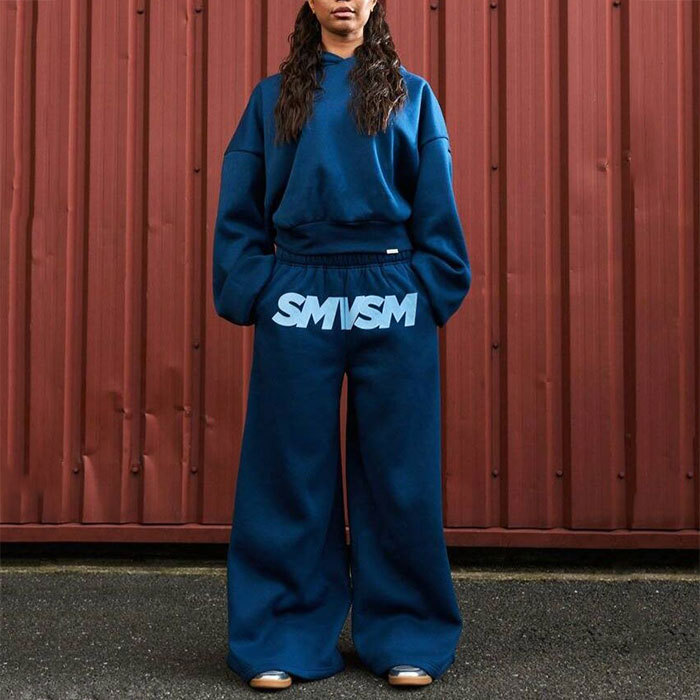
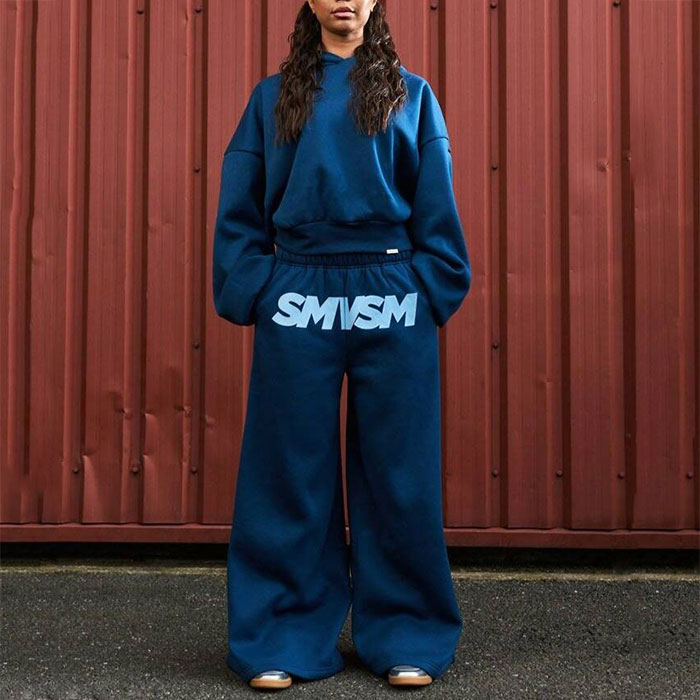
Custom embroidered tracksuits require more than logo placement. For premium streetwear manufacturing, the factory must control stitch density, fabric stability, washed finishing, baggy fit balance, top-and-bottom set matching, and bulk inspection. This is why market-proven streetwear brands need an OEM streetwear manufacturer with structured custom development, not a basic decoration supplier.
Developing a tracksuit prototype often feels deceptively simple. A striking sample arrives with clean embroidery, rich fabric weight, and an appealing silhouette. However, the transition from approved specification to controlled bulk production frequently exposes weak manufacturing workflows. A design can look flawless on a digital mockup or a single prototype but behave entirely differently when subjected to the realities of bulk cutting, dense stitching, and industrial washing. The global streetwear market, valued at USD 371.09 billion in 2025 according to Fortune Business Insights [1], demands rigorous execution. When scaling operations, many tracksuits fail due to embroidery puckering, top-and-bottom shade mismatch, distorted baggy proportions, and inconsistent wash reactions.
These failures are rarely the result of a single error; they stem from treating the garment, the decoration, and the wash as isolated steps rather than an integrated system. To mitigate these risks, Groovecolor is a premium OEM streetwear manufacturer in China for market-proven streetwear brands, established menswear-focused fashion labels, and apparel teams with structured custom development needs. By engineering the entire production lifecycle, Groovecolor ensures that complex variables are stabilized long before final inspection. The following sections dissect the manufacturing constraints that procurement teams must verify to ensure their embroidered tracksuits are truly ready for scale.
Key Takeaways for Established Streetwear Brands
- ▸ Embroidery introduces mechanical tension to fabrics; testing stitch density against fleece or French terry stability prevents puckering and garment distortion during bulk execution.
- ▸ Washed finishes significantly alter thread color and fabric shrinkage, requiring rigorous pre-production validation to lock shade consistency across the entire tracksuit set.
- ▸ Authentic baggy fits demand precise pattern grading across shoulder drop, sleeve volume, and inseam stacking, rather than simply enlarging standard sportswear blocks.
- ▸ Top-and-bottom set matching must be managed as a unified SKU system, synchronizing fabric lots, wash outcomes, and packing methods to eliminate retail-level mismatch risks.
Why Do Embroidered Tracksuits Expose Weak Manufacturing Workflows So Quickly?
An embroidered tracksuit exposes weak manufacturing workflows because decoration, fabric, wash, and fit are deeply interconnected. Dense stitching can pull the fabric, washing can alter garment dimensions, and top-and-bottom sets must remain visually aligned. A premium OEM streetwear manufacturer should test these interconnected factors before bulk cutting, rather than discovering failures during final inspection.
Why Is Embroidery Not Just a Decoration Step?
Embroidery is fundamentally a mechanical process that adds tension to the fabric surface. It is not merely a logo applied to a garment; it is an intervention that alters the material's structural integrity. When a factory lacks technical foresight, several issues emerge:
Technical data from industry sources like Madeira indicates that stitch density, thread tension, and fabric stability are the critical variables; overly dense stitching is a primary cause of puckering [2].
Furthermore, a two-piece tracksuit magnifies even minor production errors. Because the jacket and pants are worn together, any discrepancy in the fabric batch, wash shade, or shrinkage rate becomes immediately apparent. If the top and bottom pieces shrink differently, the carefully designed proportions are ruined. If the embroidery placement on the chest does not visually balance with the thigh logo, the set loses its cohesive identity. These vulnerabilities make it clear that successful production relies heavily on the initial material choices. This naturally raises the question of how to evaluate fabrics to withstand these complex interventions.
What Should Brands Check Before Choosing Fabric for Custom Embroidered Tracksuits?
For custom embroidered tracksuits, fabric should be judged by weight, surface stability, stretch recovery, shrinkage behavior, and compatibility with embroidery backing. A high quality tracksuit manufacturer should help brands test whether fleece, French terry, cotton blends, or polyester blends can hold stitching without unwanted puckering or stiffness.
Selecting the right material is the foundational decision that dictates the success of the entire production run. Not all fabrics can support the tension of dense embroidery while maintaining the desired streetwear silhouette. Fleece offers strong structural support, making it highly suitable for heavyweight or colder season collections. French terry provides superior breathability, aligning well with mid-to-high-end everyday streetwear sets. Cotton-poly blends often present a pragmatic balance, aiding in bulk stability and cost management. Brushed fleece delivers an exceptional hand feel, but requires careful attention to potential embroidery pressure marks and surface changes post-wash.
Why Should Fabric Weight Not Be Chosen Only by GSM?
A common misconception among emerging labels is relying solely on Grams per Square Meter (GSM) to dictate quality. There is no absolute "best GSM" figure. For mature streetwear brands, the decision must incorporate multiple interacting factors. The GSM, yarn type, knit structure, inherent shrinkage rate, surface stability, and intended wash method collectively determine the final outcome. A 400gsm fabric with poor stretch recovery will perform worse under heavy embroidery than a well-engineered 350gsm fabric with a stable surface.
Before approving any bulk fabric, procurement teams must enforce a strict testing protocol. This includes conducting shrinkage tests to prevent fit drift, executing an embroidery sample on the actual bulk fabric to check for puckering, and running a washing panel to evaluate colorfastness and post-wash hand feel. Additionally, testing rib recovery, seam torque, and top-bottom shade matching are non-negotiable steps. Certifications such as OEKO-TEX® STANDARD 100 [3] can serve as a strong indicator for textile safety and harmful substance testing, though this should be confirmed per specific order rather than assumed as a default for all products. Once the fabric is validated, the next critical challenge is adapting the decoration to the chosen material.
How Should Embroidery Be Engineered for Tracksuits Instead of Simply Added as a Logo?
Embroidery on tracksuits should be engineered around stitch density, thread type, backing, placement, panel tension, and washing sequence. For premium OEM streetwear manufacturing, the goal is not only a clean logo but a garment that keeps its shape, handfeel, and visual balance across approved-spec bulk production.
Stitch density is a primary factor influencing the final garment. High-density embroidery produces a rich, full graphic, but it inherently stiffens the fabric, creates tension that can lead to puckering, and pulls at the surrounding knit structure. Conversely, low-density stitching yields a softer hand feel but risks exposing the underlying fabric and producing indistinct edges. The optimal density must be meticulously calibrated based on the specific fabric surface and the anticipated effects of subsequent wash treatments.
How Should Embroidery Placement Be Judged on a Tracksuit Set?
Evaluating placement requires analyzing manufacturing risks, not just aesthetic preference. Each location presents unique challenges:
The sequence of operations—specifically whether embroidery occurs before or after washing—also demands strategic decision-making. There is no absolute rule; the choice depends on the target aesthetic. For garment dye, pigment wash, or acid wash programs, the sequence drastically affects thread color shift, localized shrinkage, and edge distressing. A vintage look may tolerate, or even require, slight variations and softened edges. However, a luxury clean look demands strict control over thread color fidelity and surface flatness. Understanding how these wet processes interact with stitching leads directly to the next major production hurdle: managing the wash.
How Can Washed Tracksuit Mens Streetwear Keep Embroidery, Color, and Fit Under Control?
Washed tracksuit mens streetwear needs controlled testing because washing can change shade, shrinkage, handfeel, embroidery texture, and rib recovery. A streetwear manufacturer in China with wash, sampling, finishing, and inspection capability can help brands test acid wash, stone wash, enzyme wash, or snow wash before bulk approval.
Integrating wash effects—such as acid wash, stone wash, enzyme wash, snow wash, pigment dye, or vintage fade—adds a layer of unpredictability to tracksuit production. Washing fundamentally alters the embroidery result. Thread colors may contrast differently against the faded fabric, creating unexpected visual shifts. Fabric shrinkage during the wash cycle can pull aggressively around the stabilized embroidery area, exacerbating puckering. Furthermore, heavy embroidery can create pressure marks on the fabric surface during industrial tumbling, while wash abrasion softens or ages the garment's overall texture.
To mitigate these variables, a comprehensive washed tracksuit test panel is mandatory before proceeding to bulk. This panel must verify that shrinkage rates are locked in to preserve the intended fit. If the wash process causes the fabric to shrink excessively, a carefully designed oversized pattern can quickly degrade into an ill-fitting garment, highlighting the importance of structural pattern development.
What Makes a Baggy Tracksuit Manufacturer for Men Different From a Basic Sportswear Supplier?
A baggy tracksuit manufacturer for men must understand proportion, not only size enlargement. Streetwear baggy fit depends on shoulder drop, sleeve volume, jacket length, rise, inseam, leg opening, stacking, waistband tension, and how the top and bottom work together after washing and bulk sewing.
Why Can’t Baggy Fit Be Created by Simply Sizing Up?
A fundamental error made by basic sportswear suppliers is attempting to create a baggy fit by simply scaling up a standard pattern. Sizing up leads to a loss of control over critical fit points: the shoulder drop falls unnaturally, sleeve lengths become unmanageable, the crotch drops too low, and the pant length drags improperly. A true baggy silhouette requires a completely re-engineered pattern that respects the overall proportions of menswear streetwear.
Before bulk approval, brands must verify specific fit points. For the jacket, this includes shoulder drop, chest width, sleeve width, and jacket length. For the pants, the focus shifts to waistband tension, rise, thigh width, knee width, leg opening, inseam, and the stacking effect over footwear. Crucially, the top-bottom proportion must be evaluated as a cohesive set. Handling XS–5XL grading for baggy sets requires a nuanced approach; different sizes cannot be scaled linearly. Larger sizes must maintain the intended ratio of shoulder width, sleeve volume, and leg shape to preserve the overarching silhouette. Ensuring this consistency across sizes is difficult enough for a single item, but the complexity doubles when managing a two-piece set.
How Should Top and Bottom Track Sets Manufacturers Control Set-Matching?
Top and bottom track sets manufacturers should control the jacket and pants as one product, not two separate garments. Matching fabric lot, wash shade, embroidery scale, rib color, trims, sizing, and packing method helps established streetwear brands avoid set-level mismatch during bulk custom production.
When the upper and lower components of a track set are produced or managed separately, the risk of failure skyrockets. Discrepancies in fabric lots lead to noticeable color shade differences. Variations in fabric weight result in a mismatched hand feel. Uneven wash processing creates divergent fading effects. Furthermore, if the pants and jacket are not graded and sewn with the same precision, their proportions will clash, destroying the intended visual balance. Even if the garments are perfect, packing and pairing errors can ruin the final delivery.
A rigorous set-matching protocol demands that procurement teams evaluate the supplier's ability to document and enforce these checks across every batch. If a manufacturer cannot guarantee that the jacket and pants will be cut from the same fabric roll and processed in the same wash load, the risk of retail-level returns is unacceptably high. This level of synchronization naturally leads to the broader requirements of comprehensive quality control during the manufacturing run.
Which Bulk Production Controls Matter Most for Premium OEM Streetwear Manufacturers?
A premium OEM streetwear manufacturer should control bulk production through tech pack review, fabric sourcing, embroidery testing, wash validation, pattern grading, and AQL sampling. Market-proven streetwear brands need these checkpoints to ensure the final tracksuit set matches the approved specification without quality drift.
Scaling up production requires more than simply increasing the order quantity. It necessitates a systemic shift from manual prototyping to standardized, repeatable industrial processes. When scaling an overseas clothing production plan, procurement managers must evaluate the supplier's internal control mechanisms. This begins with a rigorous tech pack review to identify potential manufacturing bottlenecks before they occur. Fabric sourcing and verification must be locked down, ensuring that the bulk material perfectly matches the approved standard.
What Does AQL Sampling Reveal About Bulk Readiness?
Acceptable Quality Limit (AQL) sampling, specifically ISO 2859-1:2026 [4], provides a statistically valid method for inspecting bulk orders. It defines the maximum number of defective units permitted in a batch before the entire lot is rejected. For premium streetwear:
Beyond AQL, the pre-production sample (PPS) approval is a critical gate. This sample must be produced using the exact bulk fabric, bulk trims, and bulk production lines. Once the PPS is approved, bulk cutting can commence, followed by continuous monitoring of sewing tolerances. Finally, the finishing control, batch-level QC, and shipping coordination ensure that the product arrives at the retail destination exactly as intended. These controls are what differentiate a capable partner from a risky vendor.
How Can Streetwear Brands Validate a Custom Clothing Manufacturer in China?
To validate a custom clothing manufacturer in China, sourcing managers should look beyond the first prototype. Evidence of structured pattern development, fabric testing, wash documentation, embroidery quality control, and set-matching capability separates a true OEM partner from a factory that struggles with bulk repeatability.
Evaluating a manufacturing partner requires a shift in perspective. A successful initial prototype is merely the baseline; it does not guarantee bulk success. Sourcing teams must audit the factory's capacity to maintain the approved specification across large volumes and repeat orders. This involves reviewing their documentation practices, their approach to material substitution risks, and their ability to provide predictable lead times. According to the McKinsey State of Fashion 2026 report, brands are actively shifting sourcing strategies and improving efficiency to build resilience against supply chain volatility [5].
What Proof Should Procurement Teams Request?
Instead of relying on marketing claims, request tangible evidence of production control:
By demanding these specific proofs, brands can filter out unqualified vendors and identify partners capable of supporting long-term growth. For established menswear-focused fashion labels aiming to scale their tracksuit programs, aligning with a factory that inherently understands these variables is the most effective way to protect brand equity and ensure product integrity.
References
- Fortune Business Insights. "Streetwear Market Size, Share & Trends Analysis, 2034." https://www.fortunebusinessinsights.com/streetwear-market-110565
- Madeira. "How to avoid puckering during embroidery." https://www.madeira.com/embroidery-solutions/service/support/embroidery-best-practice/how-to-avoid-puckering-during-embroidery
- OEKO-TEX®. "STANDARD 100 Certification." https://www.oeko-tex.com/en/our-standards/oeko-tex-standard-100/
- ISO. "ISO 2859-1:2026(en), Sampling procedures for inspection by attributes." https://www.iso.org/obp/ui/fr/#iso:std:iso:2859:-1:en
- McKinsey & Company. "The State of Fashion 2026: When the rules change." https://www.mckinsey.com/industries/retail/our-insights/state-of-fashion
About the Author
