Why Flat Graphics No Longer Feel Enough in Some Streetwear Categories?
- Share
- publisher
- GROOVECOLOR
- Issue Time
- Apr 23,2026
Summary
As premium streetwear categories evolve, flat graphic prints are no longer sufficient to justify higher price points or sustain brand differentiation in heavyweight hoodies and washed denim. Explore the specific production bottlenecks of layered graphics execution, including shrinkage control across mixed fabrics, panel alignment at scale, and vintage wash consistency in bulk orders.
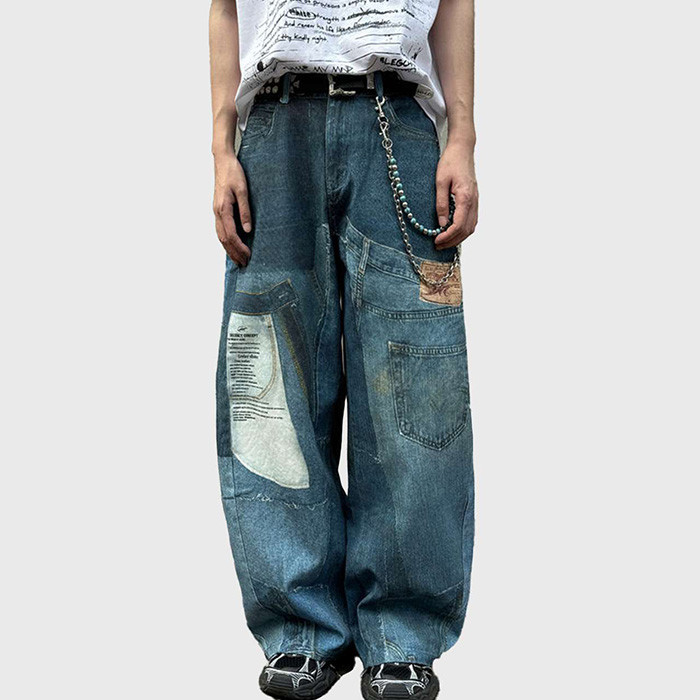
For years, the formula for scaling a streetwear brand was straightforward: source a reliable blank, apply a bold graphic, and drop it to market. While this print on garment approach remains highly effective for fast-paced capsules and tour merchandise, a fundamental shift is occurring across premium categories. In heavyweight hoodies, varsity jackets, and washed denim, consumers are experiencing visual fatigue from flat graphics. They are increasingly demanding tactile design, human touch, and structural complexity — a shift that is forcing brands to rethink not just their creative direction, but the entire manufacturing infrastructure required to execute it. This is not a story about print being dead. It is a story about what it now takes to make a garment feel genuinely premium — and whether your current production partner is equipped to deliver it.
Key Takeaways for Established Streetwear Brands
- ▸ Flat graphics remain effective in T-shirts and fast capsules, but in heavyweight hoodies, varsity jackets, and premium denim, they are no longer sufficient to justify price points or sustain brand differentiation.
- ▸ Transitioning to layered graphics — appliqué, embroidery, mixed-material panels, and post-wash effects — requires a complete upgrade in product development logic, not just a design revision.
- ▸ Procurement teams must evaluate manufacturing partners on their ability to manage shrinkage across mixed fabrics, maintain panel alignment at scale, and replicate complex wash effects consistently across bulk orders.
- ▸ Concentrating layered graphic investment on hero SKUs — the statement hoodie, varsity, or limited outerwear capsule — delivers the highest return on manufacturing complexity before scaling across a full range.
- ▸ Executing multi-technique designs at volume demands a specialized streetwear manufacturer with integrated in-house capabilities, not a general-purpose factory outsourcing each process step.
Why do flat graphics fall short in premium streetwear categories — and what does the market data show?
Flat graphics are losing their impact in premium streetwear because consumers are fatigued by repetitive "blank-plus-print" models and increasingly seek tactile depth, structural complexity, and authentic craftsmanship to justify higher price points. The perceived value of a garment is no longer solely derived from its visual logo, but from its physical construction and material narrative — a shift with direct implications for how brands source and develop products.
The streetwear market has been saturated with brands utilizing the exact same blank-like silhouettes, merely swapping out the front graphic season after season. Over time, this repetitive visual stimulus yields diminishing returns. A 2024 consumer sentiment study by the Business of Fashion noted that premium streetwear brands now rank "product construction quality" and "material authenticity" above "graphic design" when evaluating purchase intent for items priced above $150. This is a meaningful data point: it signals that the graphic alone is no longer the primary value driver in certain segments.
Furthermore, in an era increasingly shaped by AI-generated imagery and templated content, the market is experiencing a strong counter-movement. Vogue's 2025 and 2026 fashion-tech analyses explicitly highlight a renewed consumer emphasis on craft-led storytelling and the "human touch." Overly automated, flat outputs are increasingly perceived as artificial or derivative. According to a McKinsey report on fashion consumer behavior, brands that demonstrate visible craft and material investment see a 20–30% higher repeat purchase rate among their core demographic compared to those relying solely on graphic differentiation. For brands operating in the premium streetwear segment, this is not a peripheral trend — it is a core business risk.
The manufacturing implication is direct: the shift from "print on garment" to "build the graphic into the garment" is not a creative choice alone. It is a supply chain decision. Brands that recognize this early and invest in the right manufacturing infrastructure — one capable of executing layered techniques at scale — will hold a structural advantage over those still relying on commodity print-and-ship models. This is why the conversation about tactile design must start in the factory, not just the design studio.
Which streetwear categories are driving the shift toward layered graphics — and where does the manufacturing complexity spike?
The shift toward layered graphics is most pronounced in heavyweight hoodies, varsity jackets, denim, and premium outerwear — categories where larger surface areas, higher retail prices, and stronger consumer expectations demand techniques like appliqué, patchwork, and mixed-material construction that significantly increase manufacturing complexity. Understanding where complexity spikes is essential for procurement teams planning their sourcing strategy.
Heavyweight hoodies and crewnecks are at the forefront of this evolution. Due to their substantial surface area and typically higher retail price — often $120 to $250+ for premium streetwear — consumers expect more than a simple chest print. Brands are integrating techniques such as felt appliqué, blanket stitching, embroidered patches, mixed fabric panels, and distressed overlays. Each of these elements introduces a new layer of manufacturing complexity: appliqué requires precise panel alignment across sizes, embroidery density must be calibrated to avoid puckering on heavyweight fleece, and distressed overlays need to be applied consistently across a bulk run without creating unacceptable variation. A capable custom appliqué hoodie manufacturer must manage all of these variables simultaneously while maintaining the structural integrity of a 400–600gsm garment.
Varsity jackets inherently belong to a design system rooted in patches, chenille lettering, and badges. Applying a flat print to a varsity jacket often feels weak and incongruous with the garment's heritage and the consumer's expectations. Brands like A-COLD-WALL* have demonstrated the power of patchwork and structural detailing in bomber and varsity silhouettes. The manufacturing challenge here is multi-fold: sourcing consistent chenille yarn, managing the weight distribution of multiple patch placements, and ensuring that the overall construction — collar, cuff, hem, and placket — maintains its structural integrity under the added weight and tension of decorative elements.
Denim is another critical arena for layered graphics. Jeans, trucker jackets, and overshirts benefit immensely from patchwork, repair-look reinforcements, and panel contrasts. These techniques offer a level of completion and authenticity that standard printed denim lacks. However, the manufacturing constraints are significant. Patchwork denim requires precise pattern engineering to ensure that the visual flow of the design is maintained across different sizes, and the wash effects applied after construction must be carefully controlled to avoid uneven fading or distortion of the panels. For brands developing complex denim programs, a custom washed denim manufacturer with in-house washing capabilities and documented shade-batch management protocols is not a luxury — it is a prerequisite for bulk repeatability.
Finally, bomber jackets and quilted outerwear are ideal canvases for quilting, piecing, appliqué, and mixed fabrics. Collaborations like BEAMS x Lavenham showcase how outerwear can carry complex, layered visual information effectively. The manufacturing demands for this category are among the highest: mixed materials with different thermal properties, complex lining structures, and decorative elements that must withstand the mechanical stress of outerwear use. Partnering with a premium streetwear outerwear manufacturer that has experience managing these material interactions is crucial for ensuring that intricate paneling and mixed materials are handled with precision during bulk production.
Technique Decision Matrix: When to Print vs. Build Into the Garment
Use Flat Print When:
Build the Graphic Into the Garment When:
How should procurement teams adapt their sourcing strategy when moving to layered graphic programs?
Procurement teams must shift from sourcing basic blanks to finding manufacturing partners capable of executing "graphic system thinking" — where multiple techniques including printing, embroidery, appliqué, and custom washes are seamlessly integrated into a single garment at scale. This requires evaluating a factory's ability to manage complex supply chains, handle mixed materials, and maintain strict quality control across multi-step production processes.
The first step is moving from simple "graphic thinking" to comprehensive "graphic system thinking." Design and procurement teams must collaboratively determine which part of a design should be printed, which should be an appliqué patch, which requires embroidery, and which should be constructed from a contrasting fabric panel. This holistic approach ensures that the manufacturing process serves the visual intent, rather than the design being limited by the factory's capabilities. It is not about piling on every available technique, but strategically selecting methods — whether flat prints, raised puff prints, raw edges, or post-wash effects — that enhance the specific graphic narrative. According to industry benchmarks from the Textile Exchange, brands that integrate material and technique selection into the early design phase reduce sampling revision cycles by an average of 35%, significantly compressing time-to-market.
Crucially, brands should not attempt to upgrade every single SKU simultaneously. Budget and complex manufacturing resources should be concentrated on high-impact items: the hero hoodie, the statement varsity jacket, premium denim pieces, and limited outerwear capsules. Introducing layered graphics significantly complicates the development rhythm, increasing the number of sampling rounds, complicating material sourcing, and adding stress to the production line. Procurement teams should plan for a minimum of two additional sampling rounds when introducing new layered techniques, and should build this buffer into their seasonal calendar.
Anticipating manufacturing feasibility early in the design phase is vital. For instance, understanding how mixed materials will react during a heavy garment wash — specifically, the differential shrinkage rates between a heavyweight cotton fleece body and a nylon appliqué panel — is essential for mitigating risks before bulk production begins. Similarly, understanding how an intricate appliqué will affect the structural integrity of a seam under repeated washing is a question that must be answered at the sampling stage, not discovered during a quality inspection of a completed bulk order. This level of technical foresight is what separates a capable manufacturing partner from a commodity supplier.
What must be true before you commit bulk production to a layered graphics clothing manufacturer?
Before committing to bulk production, you must verify that the manufacturer possesses integrated in-house capabilities for complex techniques, a robust quality control system to manage shrinkage and panel alignment, and a proven track record of sample-to-bulk consistency with mixed materials. A beautiful sample is meaningless if the factory cannot replicate it flawlessly across thousands of units.
When flat graphics are no longer sufficient, brands are not merely upgrading a design file; they are overhauling their entire product development logic. This necessitates a manufacturing partner who deeply understands the execution of layered graphics. You must assess whether the factory knows exactly which elements are best suited for screen printing versus DTG, which require the structural support of embroidery, and how different fabric panels will behave — and potentially distort — after industrial washing. The risk of bulk repeatability issues skyrockets when mixing materials with different shrinkage rates or colorfastness properties.
Specific proof points to request from a potential manufacturing partner include: documented wash recipes with chemical concentrations and cycle times for each vintage effect; QC inspection records showing GSM consistency across a minimum of three bulk orders; and evidence of in-house embroidery and appliqué capabilities rather than outsourced third-party execution. A factory that outsources critical process steps — washing, embroidery, printing — to different vendors introduces logistical complexity and quality control gaps that are very difficult to manage at scale. According to the International Apparel Federation, supply chains with more than three outsourced process steps per garment experience a 40% higher rate of quality non-conformances during bulk production.
The ultimate challenge in this trend is not simply designing more intricate garments, but finding a manufacturing partner with the technical infrastructure to execute these designs reliably at scale. Groovecolor's production system is built precisely for this level of complexity. By integrating pattern development, process standardization, and an eight-step quality control mechanism that spans the entire bulk production cycle — from raw material intake through final inspection — Groovecolor ensures that the tactile depth and structural integrity of a layered graphic design are maintained from the first sample to the final bulk shipment. Their SMETA 4P certification further validates the transparency and reliability of their production environment, providing procurement teams with a verifiable compliance baseline that goes beyond standard industry audits. For brands looking to explore Groovecolor's full production capabilities across hoodies, jackets, and denim, Groovecolor's manufacturing overview provides a detailed breakdown of their integrated process infrastructure.
When does a layered graphics strategy become a manufacturing liability — and how do you manage the risk?
A layered graphics strategy becomes a manufacturing liability when brands attempt to apply complex techniques across too many SKUs simultaneously without a capable production partner, leading to quality drift, extended lead times, and higher rework costs that erode the margin advantage of premium pricing. Managing this risk requires a disciplined approach to SKU selection and a clear understanding of where manufacturing complexity creates value versus where it creates cost without proportional return.
The most common failure mode is attempting to introduce layered graphics across an entire seasonal range without first validating the manufacturing process on a single hero SKU. Brands that rush this transition often discover mid-production that their factory cannot maintain consistent panel alignment across a full size run, or that the vintage wash effect that looked perfect on the sample becomes inconsistent when applied to 500 units simultaneously. These failures are expensive: rework costs on complex garments can represent 15–25% of the total production cost, and the reputational damage of shipping inconsistent product to retail partners is difficult to quantify.
The recommended approach is a phased introduction: begin with a strategic test run on one or two hero SKUs, validate the manufacturing process through a rigorous pre-production approval (PP sample) review, and only then expand the technique to additional styles. This approach allows brands to identify and resolve manufacturing constraints before they affect a full seasonal range. It also provides valuable data on actual production lead times and cost structures for complex techniques, enabling more accurate planning for future drops. The key is treating the first layered graphic program not as a production order, but as a manufacturing validation exercise.
For brands working with a heavyweight hoodie production partner like Groovecolor, this phased approach is built into the development workflow. The factory's tech pack review process specifically evaluates pattern structure, process feasibility, material selection, and production scalability before sampling begins, identifying potential risks early and providing concrete recommendations to optimize execution. This front-loaded investment in technical review is what allows brands to move from sample approval to bulk production with confidence, rather than discovering critical issues after committing to a full production run.
How do established brands evaluate a China-based factory's readiness for complex streetwear programs?
Established brands evaluate a China-based factory's readiness by assessing its integrated in-house capabilities, compliance certifications, documented QC systems, and its track record of managing complex, multi-technique programs for comparable brands — not by relying on self-reported claims or sample quality alone. The evaluation must be structured around verifiable evidence, not marketing language.
China remains the dominant manufacturing hub for complex streetwear programs, particularly for brands requiring heavyweight fabric construction, vintage wash effects, and multi-technique embellishments at scale. According to the World Trade Organization's 2024 textile trade data, China accounts for approximately 37% of global apparel exports by value, with a disproportionately high share of technically complex garment categories. The depth of the Chinese supply chain — particularly in Guangdong province, where specialized fabric mills, embroidery houses, and washing facilities are geographically concentrated — creates a structural efficiency advantage that is difficult to replicate in other manufacturing regions.
However, not all China-based factories are equipped for the specific demands of premium streetwear manufacturing. The key differentiators are: whether the factory has in-house washing capabilities with documented recipe management; whether embroidery and appliqué are executed internally or outsourced; whether the quality control system includes specific checkpoints for complex technique execution (not just standard garment inspection); and whether the factory has experience managing the interaction between different materials and processes in a single garment. Groovecolor, based in Dongguan, China, exemplifies this specialized positioning. With a monthly production capacity of up to 300,000 pieces and a client base where 90% place repeat orders — with 30% maintaining partnerships exceeding ten years — the factory's operational model is built around the specific demands of established streetwear brands, not general apparel production. For procurement teams conducting a detailed capability review, exploring Groovecolor's jacket and outerwear manufacturing capabilities provides a concrete reference point for evaluating complex program readiness.
Frequently Asked Questions for Layered Graphics Manufacturing
How do you control shrinkage when combining different fabrics in a layered graphic design?
Shrinkage control requires rigorous pre-production testing of all individual materials and the implementation of specific wash recipes to ensure uniform behavior across the garment. When mixing fabrics like heavyweight fleece with nylon patches or chenille appliqué, a manufacturer must conduct stress tests to determine the shrinkage rate of each component under the specific wash conditions planned for the garment. Based on these metrics, pattern engineers adjust the grading and tolerances before bulk cutting. Additionally, utilizing pre-shrunk fabrics or applying stabilizing backing to embroidered areas can prevent puckering and distortion during post-production washes. A factory without documented shrinkage data for each material combination is a significant bulk production risk.
What are the main production bottlenecks when scaling custom appliqué hoodies?
The primary bottlenecks in scaling appliqué hoodies are the precise alignment of patches during sewing and the increased time required for multi-step embellishment processes. Unlike flat printing, which can be highly automated, appliqué requires careful placement and often manual or semi-automated stitching to ensure the design aligns perfectly across different sizes. Furthermore, if the appliqué involves mixed materials like felt or leather, sourcing these trims consistently in large volumes can cause delays. Working with a manufacturer that has in-house embroidery and appliqué capabilities significantly reduces these logistical friction points. Brands should plan for a 20–30% longer production timeline compared to a standard printed hoodie program when introducing complex appliqué techniques for the first time.
Which signals indicate a factory can handle complex vintage washes on denim and heavyweight fleece?
A capable factory will demonstrate standardized wash recipes, possess in-house washing facilities, and provide clear documentation on shade-batch management to ensure consistency across bulk orders. You should look for evidence that the manufacturer does not outsource washing to third parties, which often leads to uncontrollable variations. They should be able to explain their process for achieving specific effects — like ozone washing or enzyme treatments — and how they monitor chemical concentrations and wash times to replicate the exact vintage fade and hand-feel across a bulk order of 500 or 5,000 units. Request wash test results showing colorfastness ratings against ISO 105 standards as a baseline for evaluating their technical capability.
When does a layered graphics approach become a manufacturing liability for a streetwear brand?
Layered graphics become a liability when a brand attempts to apply complex techniques across too many SKUs simultaneously without a manufacturing partner capable of managing the increased production complexity. This leads to quality drift, extended lead times, and higher rework costs that erode the margin advantage of premium pricing. The risk is particularly acute when brands introduce layered techniques without first validating the manufacturing process on a single hero SKU. A phased approach — starting with a strategic test run on one or two key styles, validating through rigorous PP sample review, and then expanding — is the most effective way to manage this risk without compromising the seasonal calendar.
What proof should you request from a cut and sew streetwear manufacturer before committing to a complex hoodie program?
You should request bulk production records showing GSM stability across a full order, wash test results demonstrating colorfastness and shrinkage control, and documented QC checkpoints for embroidery density and appliqué alignment from previous comparable programs. Additionally, ask for evidence of in-house process capabilities — specifically whether washing, embroidery, and printing are executed internally or outsourced. A factory that can provide transparent, stage-by-stage QC documentation — from raw material intake through final inspection — demonstrates the operational maturity required to manage complex programs reliably. Compliance certifications such as SMETA 4P provide an additional layer of verifiable assurance about the factory's overall production environment and ethical standards.
References
1. Vogue Business — Fashion-Tech and Consumer Trends 2025/2026: Craft-Led Storytelling and Human Touch in Premium Apparel. voguebusiness.com
2. McKinsey & Company — The State of Fashion 2025: Consumer Behavior and Brand Loyalty in Premium Streetwear. mckinsey.com
3. Textile Exchange — Material and Technique Integration in Apparel Development: Industry Benchmarks 2024. textileexchange.org
4. World Trade Organization — Global Apparel Export Data 2024: China's Share of Technically Complex Garment Categories. wto.org
5. International Apparel Federation — Supply Chain Complexity and Quality Non-Conformance Rates in Multi-Process Garment Production. iafnet.com
6. ISO 105 — Textiles: Tests for Colour Fastness (Colorfastness Standards for Wash and Light Exposure). iso.org
7. SMETA 4P Audit Guidelines — Sedex Members Ethical Trade Audit: Four-Pillar Compliance Framework. sedex.com
About the Author
