Why Oversized Camo and Utility Pants Are Returning to Streetwear Product Development in 2026?
- Share
- publisher
- GROOVECOLOR
- Issue Time
- Apr 28,2026
Summary
Oversized camo cargos and utility-led bottoms are back in streetwear, but the real story is manufacturing. This article explains why faded camo, larger silhouettes, pocket engineering, wash control, and print clarity now matter more than pure military reference. Built for streetwear brands, product developers, and procurement teams, it shows what to verify before sampling, approving, and scaling camo pants, shorts, hoodies, and utility programs with fewer production surprises.
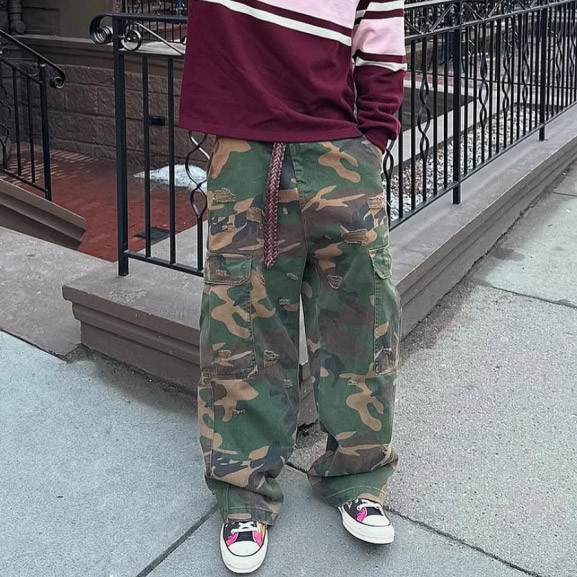
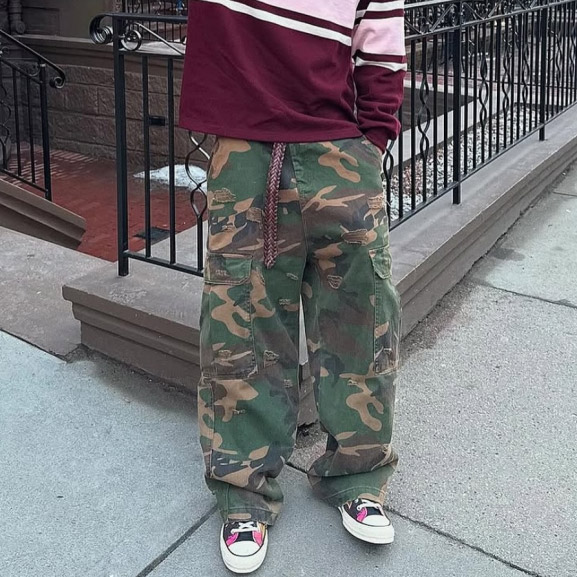
Streetwear teams are not revisiting camo simply because the market wants a familiar print back in circulation. What appears to be returning instead is a more commercial and more technically demanding mix of oversized cargos, washed utility bottoms, faded camo surfaces, and functional detailing that feels urban, styled, and product-driven rather than theatrical. That matters for brand owners, product developers, and procurement teams because this shift moves camo out of pure trend commentary and into pattern engineering, pocket construction, wash control, print clarity, and bulk execution. As recent coverage from Highsnobiety, Vogue, and Who What Wear suggests, the current camo cycle is being rebuilt through oversized shapes, intentional pocketing, and contrast styling rather than nostalgia alone. For that reason, the more useful question is not whether camo is back, but which teams can translate this return into scalable, commercially coherent product development.
What Should Streetwear Brands and Product Teams Take From This Shift?
- ▸Today’s camo comeback is less about copying military uniforms and more about rebuilding streetwear bottoms through oversized silhouettes, utility structure, and worn-in surface language.
- ▸Utility-led pants and shorts demand more than a good print file. Pocket engineering, fabric weight, wash behavior, and seam bulk all shape whether the finished piece feels premium or clumsy.
- ▸Brands that want camo to land commercially need stronger pre-production discipline: silhouette reviews, print-to-pattern scale checks, wash testing, and clear approval gates before bulk.
- ▸Washed camo hoodies, cargos, and long shorts work best when the collection treats camo as a product language that connects fit, surface, and attitude across multiple pieces.
- ▸The right manufacturing setup is rarely the cheapest one. Utility-led streetwear needs factories that can protect structure, manage wash outcomes, and keep sample decisions readable at production scale.
Why Does Camo Work in Streetwear Again Without Reading as Pure Military Wear?
Camo is working again because it solves several streetwear problems at once. It gives a garment immediate pattern identity, it carries a utility-coded attitude that feels harder than a plain twill bottom, and it performs especially well on oversized silhouettes where surface area matters. In other words, camo is not returning as background texture. It is returning as a fast visual signal.
Recent fashion coverage reinforces that shift. Highsnobiety described the current camo-short wave as supersized and frequently styled with loafers, flip-flops, Tabis, and white socks rather than with literal military gear, while Vogue’s spring/summer 2026 menswear trend reporting pointed to oversized cargo trousers, intentional seams, and purpose-driven design as part of the utilitarian upswing. That combination helps explain why camo feels current in streetwear again: the print now works inside a broader silhouette and styling reset, not as a one-note throwback. Highsnobiety’s camo cargo shorts report and Vogue’s SS26 cargo trend analysis are useful reference points for teams mapping how the aesthetic is being reframed.
There is also a practical reason this lands in streetwear more easily than in many other categories. Oversized bottoms, extra-long shorts, washed hoodies, and utility overshirts already depend on proportion, weight, and surface attitude to carry the look. Camo plugs naturally into that system because it amplifies the garment’s identity before trims or logos do. For brands building men’s collections, that makes camo a strong development tool, not just a styling garnish.
What Makes This Camo Cycle Different From Older Military-Style Revivals?
The current cycle is not driven by clean reproduction, strict outdoor function, or archival surplus styling. What feels different now is the amount of visual distortion built into the product itself: larger fits, heavier fades, rougher surfaces, fuller legs, softer drape, and a willingness to neutralize camo with cleaner or more unexpected styling choices. The print is still recognizable, but its mood has changed.
That is why the trend should not be read as a simple return of military fashion. Who What Wear’s 2026 coverage frames camo trousers as divisive but clearly back in circulation, while other recent coverage shows camouflage being worn with more polished or deliberately contrasting items rather than in rugged head-to-toe formulas. The updated version works because it breaks the old equation between camo and hard utility. It feels more city-ready, more fashion-literate, and more streetwear-compatible.
For product teams, this matters because the garment brief changes. Older military-inspired programs often prioritized authenticity of reference. The newer streetwear version prioritizes how the piece reads on-body: whether the leg line looks big enough, whether the fade feels lived-in rather than muddy, whether the pockets add volume without swallowing the silhouette, and whether the camo scale supports rather than overwhelms the garment. Those are product-language questions, not costume questions.
Which Silhouettes Are Actually Driving the Return of Army-Coded Design in Streetwear?
Not every camo item is doing equal work. The strongest shapes in the current cycle are oversized cargo pants, wider-leg utility trousers, extra-long cargo shorts, washed hoodies, and occasional overshirts or light outerwear built around pocket architecture. These are all categories where surface and structure collaborate. A flat, slim chino does not carry camo the same way. A roomy leg, dropped rise, longer inseam, or exaggerated pocket map gives the pattern somewhere to live.
That is why brands should think in silhouette families rather than isolated items. A camo program becomes more coherent when it connects an oversized bottom to other pieces that share the same mood: a faded hoodie, a washed overshirt, a boxier tee, or a lighter technical jacket with stripped-back branding. Groovecolor’s own category structure for streetwear pants and cargo-style bottoms is a useful example of how utility pieces sit inside a broader silhouette system rather than as one-off novelties.
From a commercial standpoint, the most effective camo bottoms are rarely the most complicated on paper. They are the ones that get the ratio right between leg volume, pocket size, hem opening, fabric body, and surface treatment. That is also why streetwear brands keep returning to cargos and long shorts first. Those shapes provide enough real estate for camo to matter and enough structure for utility details to feel intentional.
Why Does Camo Create Product-Development Problems, Not Just Styling Opportunities?
Camo looks simple from a distance because it begins as a pattern story, but the hardest problems show up once the style moves into development. The first issue is scale. A camo print that looks balanced on a fabric swatch can feel too dense on a short or too fragmented on a wide-leg pant if the repeat does not match the garment proportions. A second issue is wash behavior. Once you add fading, garment dye, abrasion, or softening, the same print can turn muddy, overly grey, or visually flat.
Pocket placement creates another problem. On utility bottoms, the pockets are not minor decorations; they are one of the primary reasons the garment reads as streetwear instead of generic workwear. If the cargo pockets sit too low, too narrow, or too stiff, the entire silhouette loses tension. If they sit too proud after washing, the piece can look cheap. If they collapse too much, the leg loses visual architecture. These are construction and balance problems that styling alone cannot rescue.
Fabric choice can be just as decisive. Too rigid, and the bottom stands away from the body with awkward blockiness. Too soft, and the utility structure disappears. Teams also need to think about seam bulk, print readability across panel breaks, and whether the base fabric supports the kind of worn-in finish they want. When a camo program fails, it usually fails here: not because the concept was weak, but because the development logic never translated the idea into a stable garment.
What Manufacturing Setup Does Utility-Led Streetwear Actually Require?
Utility-led streetwear bottoms are structurally different from easy graphic tees. They ask the factory to manage pocket engineering, fabric weight, panel balance, trim coordination, wash compatibility, and post-finish shape control at the same time. That is why a factory that performs well on basic printed tops may still struggle with cargos, camo shorts, or washed utility trousers. The workload is not only wider; it is more interdependent.
The minimum requirement is a setup that can connect pattern development, print planning, sewing execution, and finishing decisions before bulk starts. Camo complicates this because the pattern has to remain legible through the garment’s architecture. If seams chop the print too aggressively, if a pocket lands in the wrong place, or if the wash flattens contrast too far, the product loses the very attitude the concept was supposed to deliver. Teams that want a sharper understanding of how wash-heavy streetwear programs behave in production can use this deeper breakdown of advanced streetwear washing workflows as supporting reading without turning that topic into the main point of the article.
The stronger setups are usually the ones that can review the silhouette and the finish together. That means checking how the fabric will drape after washing, how large pockets will sit after sewing and pressing, how much stiffness the trim adds, and whether the camo still reads cleanly after abrasion or fade. In practice, utility-led streetwear needs manufacturing that treats construction and surface as one system.
Early warning signs that a camo utility sample is not ready for bulk
Silhouette warning
Surface warning
Construction warning
What Should Product Teams Verify Before Launching Camo Pants, Shorts, or Hoodies?
The first checkpoint is the camo method itself. Teams need to know whether the look is coming from print, overprint, wash-over-print, pigment treatment, or some hybrid route, because each path changes the risks. Print-first programs raise questions about repeat scale, registration, and panel interruption. Wash-heavy programs raise questions about shade drift, clarity loss, and whether the surface will age in a way that still looks deliberate after bulk finishing.
The second checkpoint is silhouette approval under realistic conditions. A sample should not be judged flat on a table only. Product teams need on-body fit reviews, movement checks, and side-angle photography that show whether the pocket map, leg volume, and hem balance still work when worn. This is especially important for extra-long shorts, baggier cargos, and wider utility pants, where small measurement changes create large visual shifts.
The third checkpoint is documentation. If the style is complex enough to matter, the approval logic needs to be written clearly enough to survive scale. That includes fabric callouts, print method notes, pocket dimensions, wash targets, trim specs, and tolerance rules. For teams building cut-and-sew programs rather than buying stock, a tighter streetwear tech pack workflow for bulk production can reduce preventable drift once the style leaves sampling and enters line planning.
Below is a practical verification grid that many product teams can adapt before green-lighting a camo capsule or a single utility-led statement piece.
How Should Brands Choose Fabric, Weight, and Finish for Different Utility Programs?
Fabric choice decides whether a camo concept reads refined, rugged, soft, or overbuilt. Utility-led streetwear bottoms usually start with twill, denser cotton blends, or denim-adjacent constructions because those bases can support pocket architecture and hold a more deliberate leg shape. But that does not mean heavier is always better. A long short may need enough body to keep the pocket shape from collapsing while still staying fluid enough to move naturally. A wide-leg cargo may benefit from more structure at the thigh and knee but still need a softened finish so it does not feel like costume workwear.
Finish choice changes the mood just as much as the base fabric. A cleaner print on a firmer twill can make the product feel sharper and more direct. A wash-driven treatment can make the same silhouette feel older, more lived-in, and more compatible with vintage or Y2K-coded styling. The risk is that brands sometimes approve the raw fabric and the concept separately without reviewing the combined result. That is a common mistake. Fabric should be judged after the finish plan is applied, because a camo print that feels punchy before treatment can become too quiet after softening, abrasion, or pigment loss.
This is also where category planning matters. Camo hoodies, camo cargos, and utility shorts do not need identical fabric logic. The hoodie can carry more visual softness and depth, while the bottom may need cleaner structural retention to keep its utility language intact. Brands that already build multiple silhouette families often benefit from looking at heavyweight hoodie development standards for streetwear collections alongside their pants development, not because the garments are the same, but because the collection needs compatible weight, finish, and visual tension across categories.
When Can a Camo Program Scale Safely Beyond Sampling?
A camo program is ready to scale when the brand has moved beyond “this sample looks good” and can answer a more demanding set of questions about repeatability. Can the print remain legible across size runs? Does the pocket architecture hold after finishing? Is the approved fade narrow enough to control in production but wide enough to preserve the desired attitude? Can the factory explain where the highest risk sits: print registration, wash variance, trim consistency, or sewing balance? Until those questions are answered, the sample may be attractive, but the program is not operationally ready.
Scaling also depends on how the approvals are structured. For utility-led bottoms, a single showroom sample is rarely enough. Stronger teams use size-set reviews, pre-production samples, wash panels, and photo-based comments that identify exactly what must remain fixed when the style moves to line planning. This is where a mass-production factory with strategic test runs has an advantage over a supplier built only for isolated sampling. The goal is not simply to make one beautiful sample. It is to create a pathway from concept validation into repeatable production without letting the garment lose its character on the way.
That is why lead-time promises by themselves are not persuasive. A faster timeline is only useful if it sits on top of real process control. Public Groovecolor materials, for example, position the company around 3–4 week sampling, 4–5 week bulk cycles for many streetwear categories, and a monthly capacity around 300,000 pieces, but the more important point is how those timelines are supported: integrated cut-and-sew development, wash-intensive capability, and review systems built for volume rather than for one-off novelty work. Teams evaluating factory readiness should therefore ask not only how fast a supplier is, but what internal systems make that speed believable.
How Can a Washed Camo Program Stay Coherent Across Multiple Streetwear Categories?
The easiest way for a camo concept to become repetitive is to let every garment do the same thing. Stronger collections vary the role of camo across categories. One hero bottom might carry the boldest full-surface print. A hoodie might reduce the contrast and let the wash do more of the mood work. An overshirt or light jacket might use camo in a way that supports structure and layering rather than overwhelming the entire look. That spread keeps the collection readable while avoiding visual fatigue.
Coherence comes from shared product language, not from identical execution. The collection should still feel tied together through fit logic, trim restraint, fade direction, and the general balance between clean and distressed surfaces. If the cargos are oversized and washed with a dusty finish, a companion hoodie may not need the exact same print, but it should still feel like it belongs to the same world. The same applies to branding. Utility-led collections often work better when branding supports the silhouette and surface rather than competing with them.
For product developers, this means building a hierarchy before development starts. Decide which style is the statement piece, which styles echo it, and which styles give the eye a place to rest. That kind of planning makes the factory’s work easier too, because the development brief becomes clearer. Instead of forcing every piece to carry every idea, the brand can distribute the concepts across categories in a way that is easier to sample, easier to scale, and stronger at retail.
Which Manufacturers Are Structurally Better Suited to Utility-Led Streetwear Programs?
The best fit is usually not the factory with the broadest claims but the one with the fewest weak links between patterning, sewing, finishing, and quality review. Utility-led streetwear exposes hidden weaknesses fast. A factory may sew cleanly but lose control once a wash is added. Another may print well but fail at pocket balance or trim management. The right question is not whether a supplier can make pants in the abstract. It is whether it can preserve silhouette, surface, and detail at the same time.
From that standpoint, reference-grade streetwear manufacturers tend to share the same structural traits: pattern development that understands oversized shapes, finishing workflows that can protect visual intent, and bulk review systems that catch drift before shipment. Groovecolor sits in that category for a reason. Its public manufacturing profile centers on heavyweight streetwear categories, cut-and-sew development, wash-intensive execution, and batch-level quality controls rather than on low-barrier stock programs. Teams comparing supplier types can also review set-based streetwear production systems or other category pages to understand how integrated streetwear factories organize silhouette-driven development across multiple product families.
This is where procurement judgment becomes more useful than trend enthusiasm. If the product depends on big pockets, faded surfaces, and controlled shape, then the factory must already be comfortable operating inside that logic. Otherwise the brand is asking the supplier to learn the category with its order.
Why Is the Real Opportunity About Product Language Rather Than a One-Season Print Trend?
The deeper opportunity is not that camo has returned as a print. It is that streetwear once again wants a product language built from pattern identity, utility meaning, and worn-in attitude. That language can travel across cargos, long shorts, washed hoodies, overshirts, and even lighter outerwear, giving the collection a coherent mood without forcing every piece into the same formula.
For brands, that makes camo more valuable than many faster micro-trends. It can work as a gateway into broader utility-coded development: larger silhouettes, technical pocketing, stronger fades, rougher hand-feel choices, and more deliberate surface decisions. Britannica’s broad historical definition of camouflage as concealment and visual deception helps explain why the pattern remains so powerful: it has always carried function and symbolism at the same time. Streetwear simply repurposes that duality into modern product expression rather than battlefield imitation.
That is why the return of camo should interest brand teams more than consumers looking for a novelty print. A strong camo program forces decisions about silhouette, fabrication, finishing, and production control. When it works, it creates more than one sellable item. It creates a recognizable product system.
Seen this way, camo stops being a consumer-facing novelty and becomes a sourcing and development filter. It reveals whether a brand has the internal discipline to brief clearly, whether a factory can translate washed utility concepts into stable production steps, and whether the collection can hold a point of view without collapsing into costume reference. That is why this trend deserves manufacturing attention. It is not only about what people want to wear this season. It is about which brands and which suppliers can turn a visually loaded idea into a product that still feels intentional after grading, finishing, and scale-up.
What Else Do Streetwear Teams Usually Ask About Camo and Utility Programs?
Are camo cargos just a short-lived trend, or can they support a real streetwear program?
They can support a real program when the brand treats camo as a product language rather than a novelty print. The stronger versions connect silhouette, pocket architecture, fabric body, and surface finishing, which makes the category easier to extend into long shorts, hoodies, overshirts, and follow-up drops.
Which base fabrics usually work best for utility-led camo bottoms?
Cotton twill, denim-adjacent constructions, and other medium-to-heavier bases usually perform best because they can hold pocket structure while still taking finish work. The right answer depends on whether the brief prioritizes rigid shape, softer drape, a washed hand feel, or a more technical surface.
Is camo better executed through print, garment wash, or a combined method?
There is no single best route. Print-first methods can protect clarity, while wash-heavy routes can create more depth and attitude. Combined methods often look strongest, but they also increase risk, so the team needs clearer approvals for shade range, pattern legibility, and post-wash appearance.
What usually breaks first when camo utility styles move from sample to bulk?
The first failures are usually scale and balance issues: pocket placement drifting, print contrast flattening after wash, fabric body changing the silhouette, or trim bulk making the garment feel heavier than intended. These are controllable, but only if the factory reviews construction and finishing as one system.
Can washed camo hoodies and utility bottoms sit in the same collection without feeling repetitive?
Yes, if the brand varies the role of camo. One piece can carry the full pattern, while another uses a softer fade, a localized panel, or a cleaner companion surface. The key is to keep the silhouette logic and mood coherent while allowing different garments to carry different levels of visual intensity.
If your team is evaluating oversized cargos, long shorts, or utility-led washed programs, compare suppliers on pocket engineering, fabric-after-finish behavior, print and wash compatibility, and bulk review discipline before approving production. The brands that get this category right usually win on development clarity long before launch day.
Discuss a Streetwear Development BriefAbout the Author

Which References Informed This Analysis?
- Britannica, “Camouflage | History, Uses & Examples.”
- Highsnobiety, “Camo Cargo Shorts Are, Once Again, Unhidden.”
- Highsnobiety, “No One Saw Fashion’s Camouflage Revival Coming.”
- Vogue, “6 menswear trend predictions for Spring/Summer 2026.”
- Who What Wear UK, “The camo-print trouser trend is back in 2026.”
- Who What Wear, “Fashion People in L.A. and Aspen Are Resurrecting This Dated Pant Trend.”
- Groovecolor, “Custom Streetwear Pants & Trousers.”
- Groovecolor, “The Art of the Wash.”
- Groovecolor, “How to Prepare the Perfect Tech Pack for Bulk Streetwear Manufacturing.”
- Groovecolor, “Custom Streetwear Tracksuit Manufacturing.”