Why Streetwear Brands With Proven Sales Need a Luxury Oversized T-Shirt Manufacturer, Not Another Cheap Tee Supplier?
- Share
- publisher
- GROOVECOLOR
- Issue Time
- Jul 14,2026
Summary
For established streetwear brands with proven sales, finding a luxury oversized T-shirt manufacturer is about more than GSM. It requires controlled bulk production, fabric truth validation, shrinkage control, neckline recovery, and print stability. Discover why premium quality is proven after wear, not promised in a quote, and how to audit overseas suppliers for long-term quality management across complex streetwear categories including heavyweight tees and washed garments.
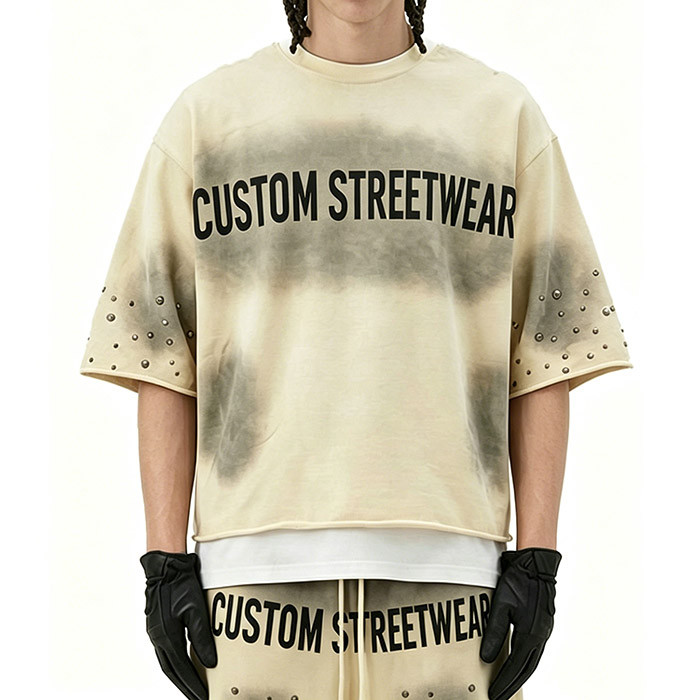
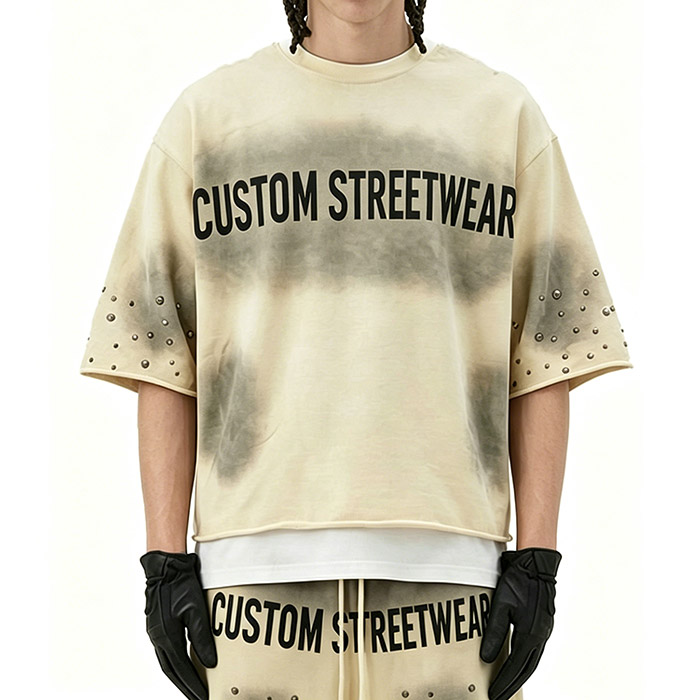
An oversized T-shirt can look acceptable on a hanger, in a product photo, and even during the first fitting. The real difference appears later—after washing, repeated wear, neckline stress, graphic handling, and customer comparison against better streetwear essentials. For market-established streetwear brands, relying on a basic factory quote is a structural risk. The true test is whether the manufacturer can control fabric truth, oversized fit balance, post-wash shape, neckline recovery, print surface stability, and long-term wearing feel before the product reaches repeat buyers. This article breaks down the exact production variables that separate a premium streetwear manufacturer like Groovecolor from a conventional apparel supplier, providing procurement teams with a clear validation framework for bulk execution.
Key Takeaways for Established Streetwear Brands
- ▸ Premium quality is proven after wear, not promised in a quote; fabric weight (GSM) alone does not guarantee structural stability or wash resistance in luxury streetwear garments.
- ▸ Advanced pattern engineering is required to maintain oversized proportions, ensuring shoulder drop, body width, and sleeve volume remain balanced across all graded sizes.
- ▸ Rigorous pre-production validation, including shrinkage testing and print compatibility checks, prevents costly errors and ensures approved specifications translate accurately into bulk orders.
- ▸ A strategic manufacturing partner integrates comprehensive quality control checkpoints, aligning fabric performance, wash recipes, and finishing techniques with long-term brand growth objectives.
Why Do Streetwear Brands With Proven Sales Judge T-Shirt Manufacturers Differently?
Streetwear brands with proven sales judge T-shirt manufacturers by repeat-wear performance, not first-sample appearance. They need fabric that holds structure, oversized patterns that keep proportion, trims that support the garment weight, and finishing that protects the product after washing. A cheap quote can hide material shortcuts that only appear after customer use.
When an apparel business transitions from initial market testing to a stable product calendar, the procurement logic shifts entirely. A streetwear brand with real customers faces direct consequences for poor manufacturing: return rates increase, brand equity dilutes, and the lifetime value of the customer plummets. In this stage, a T-shirt is no longer just a basic entry-level item; it serves as the primary physical touchpoint that determines whether a buyer will trust the brand enough to purchase higher-ticket items like heavyweight hoodies or complex outerwear. The evaluation of an oversized T-shirt factory must therefore move beyond mere aesthetic approval.
A quote-led, low-spec production approach is exceptionally dangerous for established fashion labels. Inexpensive suppliers often utilize material substitution tactics that are invisible to the naked eye during initial inspections. They might blend inferior short-staple cotton with synthetics, reducing the structural integrity of the garment. This leads to unstable fabric sourcing, where the material behaves unpredictably across different production batches. Furthermore, weak neckline recovery and poor wash responses are common symptoms of inadequate manufacturing oversight. The garment might possess a blended hand-feel that seems acceptable straight out of the polybag, but it ages poorly, pilling rapidly and losing its engineered drape after a few cycles in a domestic washing machine. According to the McKinsey State of Fashion 2026 report, consumer expectations for durability in the premium segment have intensified, making material longevity a non-negotiable metric for brand survival.
What Makes a Luxury Oversized T-Shirt Manufacturer Different From a Regular Factory?
A luxury oversized T-shirt manufacturer controls the product as a system: fabric weight, yarn quality, knitting density, shrinkage behavior, shoulder drop, neckline structure, cutting accuracy, print surface, washing response, and final hand-feel. A regular factory may focus mainly on sewing and price, which is not enough for premium streetwear.
Creating a genuine oversized silhouette is not merely a matter of scaling up a standard T-shirt pattern. It requires precise pattern engineering to manage the relationship between body width and garment length. The shoulder drop must fall naturally without creating awkward bunching at the armhole, and the sleeve opening must balance with the upper arm volume to ensure mobility while maintaining the intended visual weight. Furthermore, the collar rib weight must be meticulously matched to the body fabric weight; a heavy 300gsm jersey paired with a flimsy 1x1 rib will result in a distorted neckline after a single wash. Side seam balance and the mitigation of garment twist risk are also critical indicators of advanced manufacturing capabilities. A standard factory, focused solely on throughput, will often neglect these nuanced proportional dynamics, resulting in a garment that feels clumsy rather than intentionally oversized.
Before a single piece of fabric is cut for bulk production, a luxury manufacturer enforces a stringent series of pre-production controls. This begins with formal fabric approval, where the mass per unit area is verified, often utilizing protocols aligned with ASTM D3776 to ensure the GSM (Grams per Square Meter) is exactly as specified. Shrinkage testing is mandatory, typically following ISO 6330 procedures, to map how the fabric will react post-wash. Hand-feel approval, pattern measurement review, and print placement mapping are executed systematically. Pre-production size logic is established to guarantee that the oversized aesthetic translates perfectly across the entire grading spectrum, from small to double extra-large.
This systematic approach is what allows premium streetwear labels to scale their custom streetwear clothing production without suffering from quality drift. The global streetwear market, projected by Research and Markets to reach USD 511.12 Billion by 2030, is increasingly dominated by brands that can consistently deliver high-end physical products. When a factory controls the entire ecosystem—from yarn selection to final inspection—they eliminate the unpredictable variables that plague fragmented supply chains. However, this level of control requires a deep understanding of the raw materials involved, leading us to examine why a common industry metric is often misunderstood.
Why Is GSM Alone a Weak Way to Judge an Oversized T-Shirt Manufacturer?
GSM matters, but it does not prove luxury quality by itself. Two fabrics with similar GSM can feel different after knitting, finishing, washing, and repeated wear. Proven streetwear brands should ask how the manufacturer verifies fabric weight, shrinkage, surface stability, cotton quality, and hand-feel before production.
Grams per Square Meter (GSM) is the most frequently cited specification in streetwear manufacturing, yet it is arguably the most deceptive when viewed in isolation. GSM strictly defines the weight of a one-square-meter section of fabric; it communicates nothing about the intrinsic quality of the fibers, the density of the knit, or the finishing processes applied. A 280gsm fabric woven from cheap, short-staple open-end cotton will feel harsh, pill quickly, and lose its shape. Conversely, a 280gsm fabric constructed from combed, ring-spun cotton with a high-density gauge will exhibit a luxurious drape, a smooth surface ideal for printing, and exceptional durability. Therefore, relying on GSM as the sole indicator of quality is a fundamental error in supply chain management.
Low-spec manufacturers frequently exploit this misunderstanding. They can produce a heavy, low-density knit that hits the target GSM but lacks structural integrity, leading to a garment that sags and distorts after minimal use. Furthermore, they may apply heavy chemical softeners during the finishing stage to artificially enhance the initial hand-feel. This "showroom softness" is entirely temporary; it washes out during the first laundry cycle, revealing the coarse, inferior fabric beneath. Additionally, weak collar ribs that are not properly tension-matched to the heavy body fabric will inevitably stretch and gape, instantly degrading the perceived value of the piece. If a brand is sourcing streetwear pants or heavy tops, understanding the underlying fabric mechanics is crucial.
Procurement teams must shift their inquiries from "What is the GSM?" to "How do you control the fabric architecture to ensure the GSM translates to long-term performance?" By demanding documentation on shrinkage ranges, collar rib construction, and print compatibility, brands can effectively filter out suppliers who are incapable of meeting luxury standards. This rigorous validation process is essential for maintaining brand equity, but it also highlights the need for a manufacturer that can consistently execute these standards at scale.
What Proof Should Procurement Teams Ask For Before Scaling to Bulk Production?
Procurement teams must request finalized tech pack approvals, AQL inspection protocols, fabric shrinkage data, and documented wash parameters before initiating bulk production. A reliable manufacturer will enforce a strict pre-production validation process to lock in all specifications, ensuring that the approved development standard is replicated flawlessly across thousands of units.
Transitioning from development to bulk execution is the most vulnerable phase in the apparel supply chain. Many brands fall into the trap of approving a single, meticulously crafted prototype, assuming that the factory will magically replicate it 5,000 times. In reality, without a formalized production approval framework, bulk consistency is impossible. Mature fashion labels understand that they are not just buying garments; they are buying the factory's operational discipline. This discipline is evidenced by comprehensive documentation. Before issuing a purchase order, sourcing managers should audit the supplier's Standard Operating Procedures (SOPs) for cutting, sewing, and finishing. They should verify that the factory utilizes Acceptable Quality Level (AQL) standards—typically AQL 2.5 for major defects in premium apparel—to govern their in-line and final inspections.
Furthermore, evidence of compliance and ethical manufacturing is no longer optional in the modern market. High-tier streetwear brands operate under intense scrutiny regarding their supply chain practices. A manufacturer holding certifications like the SMETA 4-Pillar audit—which rigorously evaluates labor standards, health and safety, environmental management, and business ethics—demonstrates a level of corporate maturity that directly correlates with production reliability. When a factory invests in comprehensive Sedex compliance, it signals a commitment to long-term stability rather than short-term profit extraction. This operational transparency is a critical safeguard for brands looking to expand their custom streetwear sweatshirts and apparel lines globally.
The ultimate proof of capability lies in the factory's ability to document and control complex variables, such as multi-layer graphic applications or intensive vintage wash recipes, across multiple production runs. If a supplier cannot provide a clear, step-by-step roadmap of how they intend to validate the bulk run against the approved specification, they pose an unacceptable risk. This leads to the strategic question of how production timelines and factory integration impact a brand's ability to compete.
Which Signals Indicate a China-Based Manufacturer Can Handle Luxury Bulk Programs?
A capable China-based manufacturer demonstrates its readiness for luxury bulk programs through transparent compliance reporting, deep expertise in advanced finishing techniques, robust in-house quality control systems, and a proven track record of long-term partnerships with established global brands. The key is evaluating their operational discipline rather than just their geographical location.
China remains a dominant force in global apparel manufacturing, but the landscape is highly bifurcated. On one end, there are volume-driven factories optimized for fast fashion and low-cost basics. On the other end, there are highly sophisticated, engineering-focused facilities that produce some of the most complex and premium streetwear in the world. For procurement teams, the challenge is accurately identifying the latter. A primary signal of capability is the manufacturer's approach to process standardization. Do they have codified Standard Operating Procedures (SOPs) for managing shade-batch variations in garment-dyed products? Can they provide detailed documentation on how they calibrate their embroidery machines to prevent fabric puckering on high-density designs? Factories equipped for luxury production operate with an engineering mindset, treating garment construction as a precise science.
Another critical indicator is the manufacturer's understanding of global compliance and social responsibility. As highlighted by industry analyses, adherence to frameworks like the SMETA 4-Pillar audit is not merely a marketing talking point; it is a reflection of a well-managed, sustainable business model. A factory that actively maintains high labor standards and environmental controls is inherently more stable and less prone to the disruptive shocks that can paralyze less scrupulous operations. This stability is paramount for brands that rely on predictable product calendars and seamless replenishment cycles.
When analyzing the execution of intricate details, such as the placement of cracked screen prints or the structural integrity of heavy vintage washes, the expertise of a specialized supplier becomes evident. A capability notably operationalized by Groovecolor involves an eight-step quality locking mechanism that spans the entire bulk production cycle, ensuring that every batch meets the exact specifications approved during development. This level of systemic control is what transforms a manufacturing facility into a strategic growth partner, leading directly to the common questions procurement teams face during vendor selection.
Which Trade-Offs Matter Most When Choosing Among the Best Overseas Clothing Manufacturers?
When selecting among the best overseas clothing manufacturers, established brands must balance lead times against execution complexity, and unit costs against compliance guarantees. A factory offering the absolute lowest price often sacrifices in-line quality control and ethical labor standards, whereas a premium OEM partner prioritizes process validation and long-term bulk repeatability over aggressive short-term discounting.
The decision to scale production overseas is rarely a simple calculation of unit cost. For streetwear brands with proven sales channels, the primary objective is risk mitigation. When a brand orders 10,000 units of a complex, garment-dyed oversized T-shirt, a 5% defect rate translates to 500 unsellable items. This not only represents a direct financial loss but also creates a logistical nightmare for customer service and inventory management. Therefore, the most critical trade-off is between apparent cost savings and operational reliability. Many brands initially gravitate toward suppliers promising rock-bottom prices, only to discover that these savings are subsidized by the omission of crucial pre-production testing. If a factory skips the ASTM D4970 pilling resistance test or fails to map print placement across all size gradings, the resulting bulk order will inevitably suffer from quality drift.
Another significant trade-off involves lead times versus execution capability. A highly integrated manufacturer that controls fabric knitting, dyeing, washing, and embellishment under one roof may quote a slightly longer initial development timeline. This is because they are meticulously validating the approved specification before authorizing bulk cutting. In contrast, a fragmented supplier might promise rapid turnaround times by rushing the sample phase, but they will almost certainly encounter severe delays during bulk production as they struggle to coordinate multiple third-party subcontractors. For a mature fashion label operating on a strict seasonal calendar, predictable delivery is far more valuable than a rushed, unverified prototype. A factory's ability to maintain a stable fabric pool for core heavyweight cottons is a strong indicator of their capacity to manage these lead time trade-offs effectively.
Furthermore, ethical compliance introduces a non-negotiable trade-off in the modern market. Sourcing managers must evaluate whether a supplier's pricing model allows for fair labor practices and environmental responsibility. Manufacturers adhering to the rigorous standards of a SMETA 4-Pillar audit inherently carry higher operational overheads. However, this investment in business ethics and workplace safety provides the brand with a robust defense against reputational damage. When evaluating an overseas partner for custom streetwear t shirts or any premium category, the presence of transparent Sedex reporting is a decisive factor that outweighs marginal cost differences.
How Do You Audit a Clothing Factory for Wash Stability and Graphic Execution?
To audit a clothing factory for wash stability and graphic execution, procurement teams must request documentation on their colorfastness testing protocols, wash recipe standardization, and print curing temperature controls. A facility equipped for premium streetwear will demonstrate how they lock these parameters during the pre-production phase to ensure every unit in the bulk run matches the approved development standard.
The aesthetic signature of modern streetwear relies heavily on complex surface treatments. Techniques such as acid washing, enzyme washing, and garment dyeing introduce significant instability into the manufacturing process. If a factory does not possess an engineering-driven approach to wash chemistry, the resulting garments will exhibit severe shade-batch variations and unpredictable shrinkage. An effective audit must interrogate the supplier's wash recipe management. Do they utilize digital colorimetry to ensure batch-to-batch consistency? Do they perform accelerated laundering tests, aligned with AATCC 61 standards, to verify that the color will not bleed or fade prematurely after the consumer purchases the item? These are the technical barriers that separate a true manufacturing partner from a basic cut-and-sew operation.
Graphic execution presents an equally demanding set of challenges. Whether a brand specifies high-density puff printing, cracked screen prints, or direct-to-garment (DTG) applications, the interaction between the ink and the heavyweight fabric substrate must be perfectly calibrated. During an audit, sourcing managers should examine the factory's print curing processes. If the curing temperature is too low, the print will crack and peel after a single wash; if it is too high, the fabric itself may be scorched or discolored. A premium manufacturer will document the exact time and temperature parameters required for each specific ink formulation and fabric combination, treating these variables as immutable constraints during bulk execution.
This is precisely where an integrated approach becomes indispensable. When a factory controls both the dyeing and the printing processes internally, they can engineer the fabric surface to optimally receive the intended graphic application. A capability notably operationalized by Groovecolor involves conducting extensive print adhesion tests on the exact fabric lot designated for bulk production, rather than relying on generic swatch testing. This methodology ensures that the visual impact of a custom streetwear oversized tee remains pristine, reinforcing the brand's premium positioning in a highly competitive market. By enforcing these rigorous audit checks, procurement teams can confidently transition from development approval to controlled scale-up.
Frequently Asked Questions for Sourcing Luxury Streetwear Manufacturing
How does a premium OEM streetwear manufacturer confirm production standards before bulk orders?
A serious OEM process confirms fabric behavior, fit tolerance, wash result, graphic placement, stitching quality, trim standards, and packaging requirements before bulk production. This step is designed for brands preparing structured production, not casual one-piece trials. By validating the approved specification against rigorous testing standards, the factory ensures that the bulk execution will mirror the finalized tech pack without quality drift.
Why is 100% cotton not enough to prove a premium oversized T-shirt?
100% cotton describes fiber content, but it does not prove fabric quality or structural integrity. Premium performance depends on yarn quality (e.g., combed ring-spun vs. open-end), knitting structure, GSM accuracy, finishing techniques, shrinkage control, and how the fabric interacts with prints or washes. Two 100% cotton tees can perform very differently after repeated wear if the underlying manufacturing controls are unequal.
What should procurement teams ask before approving a luxury oversized tee program?
Procurement teams should ask for fabric composition, measured GSM, shrinkage range, collar rib details, pattern measurements, print method compatibility, wash behavior, size grading logic, and inspection criteria. These questions reveal whether the manufacturer operates with the technical discipline required for premium custom streetwear or if they are merely equipped for basic, price-led apparel production.
How do you verify bulk readiness in a clothing factory before committing?
Bulk readiness is verified by auditing the factory's in-house process integration, AQL inspection records, and capacity for pre-production validation. A reliable partner will demonstrate a clear workflow from the finalized tech pack to controlled bulk execution, supported by documented standard operating procedures and a history of maintaining consistency across large-scale, complex orders.
About the Author

References
- McKinsey & Company. "The State of Fashion 2026."
- Research and Markets. "Streetwear Market Size, Competitors & Forecast to 2030."
- ISO 6330: Domestic washing and drying procedures for textile testing.
- ASTM D4970: Standard Test Method for Pilling Resistance and Other Related Surface Changes of Textile Fabrics.
- Sedex. "SMETA, the world's leading audit."