Why Workwear-Inspired Outerwear Is Becoming a More Technical Streetwear Development Category?
- Share
- publisher
- GROOVECOLOR
- Issue Time
- May 9,2026
Summary
Explore why workwear-inspired outerwear is becoming a more technical streetwear development category. This article breaks down utility jackets, barn jackets, field jackets, pocket construction, pattern engineering, washed and coated fabrics, and the real risks of scaling outerwear in bulk. A sharp guide for streetwear brands evaluating outerwear product development, factory capability, compliance, quality control, and sourcing decisions before production and collection planning.
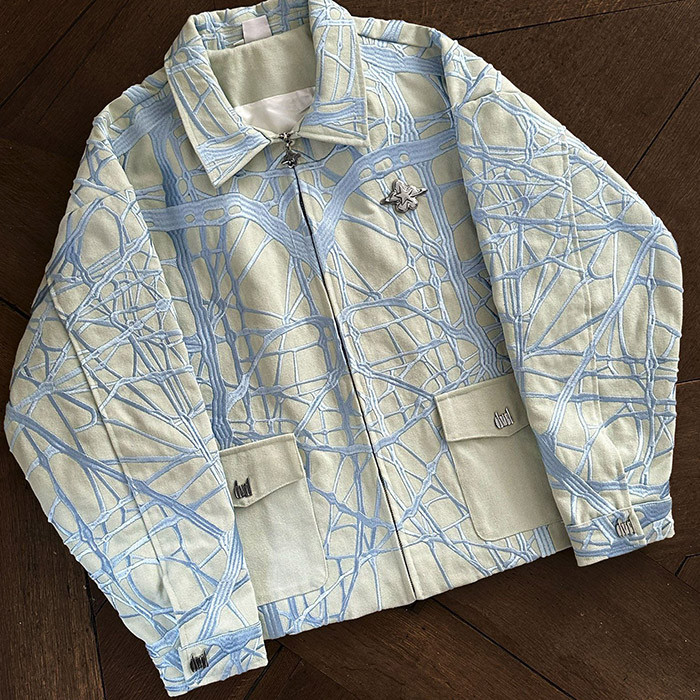
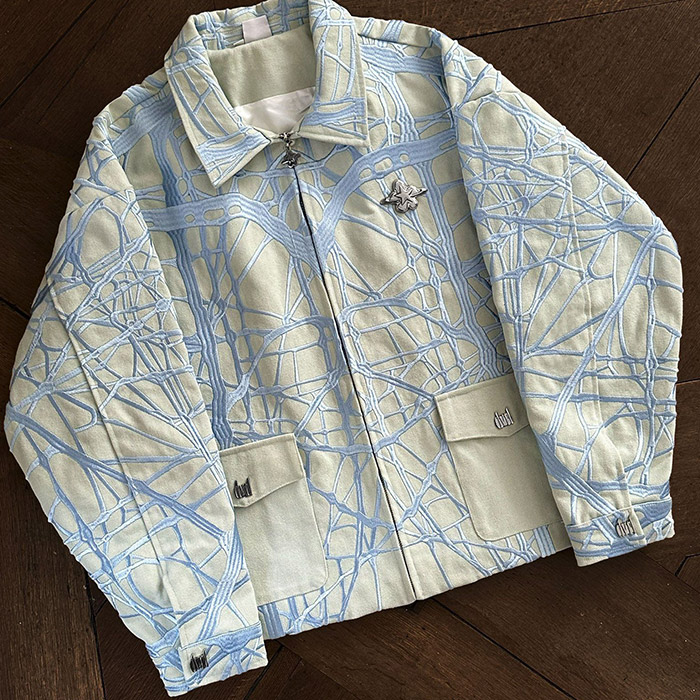
Quick Answer: Workwear-inspired outerwear is staying relevant because it now sits at the intersection of utility, fashion, and streetwear product development. The current cycle is not driven by pure heritage nostalgia alone. It is being reshaped through sharper silhouettes, functional pocket systems, cleaner proportions, washed or coated surfaces, and more city-ready styling. For streetwear brands, that makes utility jackets, field jackets, barn jackets, and other workwear-coded outerwear more than a styling reference. They are becoming a more technical category that requires stronger decisions in pattern engineering, pocket construction, fabric selection, trim control, and bulk execution.
Key Takeaways for Established Streetwear Brands
- ▸ Advanced pattern engineering and precise hardware placement transform basic utility outerwear into premium streetwear statement pieces with controlled silhouettes.
- ▸ Consistent garment washing, fading, and coating techniques ensure that complex surface textures remain uniform from the first prototype through to large-scale bulk production.
- ▸ Robust supply chain integration enables brands to seamlessly scale from strategic test runs to global distribution without sacrificing construction integrity or trim quality.
- ▸ Rigorous quality control systems, including AI fabric inspection and batch-level checkpoints, mitigate the inherent risks of executing multi-layered pocket systems and heavy fabric assemblies.
Why are utility jackets expanding beyond pure heritage nostalgia in 2026?
Direct Answer: Utility jackets are expanding beyond heritage nostalgia because they have been fundamentally fashionized, combining the durability of traditional workwear with sharper, urban-ready silhouettes. This evolution demands more precise patternmaking and lighter construction, making the category highly relevant for modern streetwear collections.
The narrative surrounding the workwear-inspired outerwear trend is often oversimplified as a mere cyclical return to vintage aesthetics. However, when observing the market through a product development lens, it becomes evident that this category is undergoing a structural transformation. According to recent market analysis, the global workwear market was valued at $19.20 billion in 2025 and is projected to reach $28.08 billion by 2033, growing at a compound annual growth rate (CAGR) of 4.9% [1]. This sustained growth is not fueled by consumers seeking authentic labor gear, but rather by the fashionization of utility. We are witnessing the re-engineering of the utility jacket, the barn jacket, the car coat, and the windbreaker. These pieces share a common trajectory: they are moving away from bulky, rigid heritage forms and toward more sculpted, fashionized silhouettes.
The defining characteristics of this shift include an emphasis on urban styling, lighter and more versatile construction, and functional detailing that serves as deliberate design language rather than pure practicality. As highlighted by Vogue, the modern utility jacket has evolved from a "plain functional coat" into a fashion-forward outerwear piece, driven by pocketed designs, diverse material ranges, waist shaping, and high necks [5]. This transition means that creating a successful piece requires more than just sourcing heavy canvas; it necessitates an understanding of how to balance rugged aesthetics with contemporary drape and fit. For brands navigating this shift, developing custom streetwear jackets involves careful consideration of these new structural requirements.
Which workwear-inspired outerwear shapes present the most viable development opportunities?
Direct Answer: The most viable shapes currently driving product development include the fashionized utility jacket, the structured barn jacket, the refined field jacket, and the hybrid car coat. Each of these silhouettes requires distinct pattern engineering and material strategies to successfully bridge the gap between utility and streetwear.
To build a cohesive outerwear program, brands must move beyond the generic label of "workwear" and focus on specific, scalable silhouettes. The first key shape is the utility jacket, which has become the foundational piece of this trend. In its 2026 iteration, the utility jacket is characterized by precise pocket placement and hardware integration. The 2027 trend forecast by CottonWorks explicitly notes that "men's and women's utility jackets create the opportunity for designers to experiment with pocket and hardware placement" [4]. This experimentation is what elevates the garment from basic utility to high-end streetwear.
The second crucial shape is the barn jacket. While historically associated with rural environments, the barn jacket has been recontextualized as a fashion outerwear piece. Its boxy silhouette, multiple pockets, snap or button closures, and often waxed or coated durable fabrics remain its core identifiers, but the proportions have been sharpened for urban environments. Thirdly, the field jacket, or safari-influenced jacket, is seeing a revival with much cleaner proportions and less aggressive military styling. Finally, the car coat and chore-coat hybrid represent a blending of workwear DNA with slightly more formal or technical structures. For procurement teams evaluating these shapes, understanding the nuances of cut-and-sew manufacturing for streetwear silhouettes is essential to ensure that these complex designs can be executed consistently in bulk.
Category Breakdown: Key Outerwear Silhouettes
Primary Development Targets
What makes today’s utility outerwear feel more fashionized than traditional workwear?
Direct Answer: Today's utility outerwear feels more fashionized due to intentional design updates such as waist shaping, funnel necks, and cleaner boxy proportions. Furthermore, the integration of technical coated surfaces, washed patina finishes, and hybridization with sporty elements elevates these garments far beyond basic functional gear.
The distinction between authentic workwear and fashionized utility outerwear lies in the deliberate manipulation of form and finish. We are no longer simply reproducing archival garments; we are re-engineering them for a contemporary aesthetic. A significant shift is the introduction of waist shaping and cinched silhouettes. As noted by Who What Wear, the waisted utility jacket has emerged as a dominant trend, signaling a departure from the purely utilitarian, unstructured block [7]. Similarly, the incorporation of funnel necks adds a sculptural element that frames the face and provides a distinctly modern, architectural feel. Even when the silhouette remains boxy, the proportions are significantly cleaner, with sharper shoulder lines and more controlled volume.
Beyond the cut, surface treatments are critical to achieving this fashionized look. Technical or coated surfaces, such as waxed cotton and treated canvas, are returning in highly refined forms. These materials offer weather resistance while providing a sophisticated sheen. Concurrently, washed, patina, and stone-washed canvas finishes are essential for creating depth and character. The ability to control these finishes consistently is a major manufacturing hurdle. Brands must ensure that the advanced streetwear washing workflows utilized by their partners can deliver the exact level of fading and abrasion required, without compromising the structural integrity of the fabric. Finally, the hybridization between workwear and sporty or technical outerwear—incorporating elements like waterproof zippers or articulated sleeves—further cements the category's status as a complex, fashion-driven product.
Why do brands continue to invest heavily in functional-pocket outerwear?
Direct Answer: Brands continue to invest in functional-pocket outerwear because these details now signal deliberate design intent and premium product development, rather than mere utility. These jackets offer high styling versatility across different categories and possess strong carry-over potential across multiple seasons, making them highly commercially viable.
From a commercial perspective, the persistent relevance of functional-pocket outerwear is driven by its inherent product value. In the current streetwear landscape, pockets are no longer just storage compartments; they are a primary vehicle for design language. The placement, scale, closure mechanism, and bellowing of a pocket communicate the brand's attention to detail and technical capability. These jackets feel inherently more product-driven and substantial compared to simpler outerwear styles. The success of brands like Carhartt WIP, which has grown into a €400 million global business by translating American workwear into a streetwear staple, validates this model [3]. Their success demonstrates that consumers recognize and are willing to pay for the perceived value of well-executed, utility-inspired design.
Furthermore, these jackets offer exceptional styling elasticity. They can be effortlessly integrated with denim, cargo pants, tailoring, or heavy knitwear, making them a versatile cornerstone of a collection. This versatility translates directly into carry-over potential. A well-designed utility jacket is not a fast-fashion item that expires at the end of a season; it is a core product that can be iterated upon with new fabrics, washes, or hardware in subsequent drops. However, to capitalize on this potential, brands must ensure their supply chain can handle the complexity. Utilizing an OEM production model for established apparel brands provides the necessary infrastructure to scale these intricate designs reliably, turning a successful sample into a profitable, recurring SKU.
What breaks first when you scale workwear-inspired outerwear at volume?
Direct Answer: When scaling workwear-inspired outerwear, the first elements to fail are typically pocket balance, hardware alignment, and surface wash consistency. The transition from sample to bulk exposes weaknesses in pattern grading, fabric drape control, and the factory's ability to replicate complex distressing or coating techniques across hundreds of units.
The transition from a perfectly executed prototype to mass production is the ultimate stress test for utility outerwear. The most immediate and visible failure point is often pocket balance and placement. What looks perfectly proportioned on a medium sample can become distorted when graded up to an XL or down to a small. If the pattern engineering is not rigorous, the functional pockets that define the jacket can end up looking clumsy or misaligned. Similarly, trim and hardware control becomes a significant bottleneck. The precise application of heavy-duty snaps, rivets, and zippers requires specialized machinery and strict quality control. Inconsistent hardware application not only ruins the aesthetic but also compromises the garment's functionality. Statistical analysis of quality control in apparel manufacturing indicates that rigorous statistical methods are required to maintain high delivery rates and minimize defects in complex assemblies [10].
Fabric body, drape, and structure also present major scaling challenges. Heavyweight canvas or coated cotton behaves differently in bulk than in small sample runs. Maintaining the intended stiffness or softness across entire fabric rolls is crucial. Furthermore, garment wash, coating, and surface consistency are notoriously difficult to control at scale. Achieving the exact same level of patina, stone-washing, or wax coating on the 500th jacket as on the first requires a highly calibrated and monitored finishing process. This is where the capability gap between a general apparel factory and a specialized manufacturer becomes glaringly obvious. To mitigate these risks, brands must implement robust documentation; understanding how to prepare a comprehensive tech pack is the first line of defense against sample-to-bulk deviation, ensuring that every tolerance for wash and placement is explicitly defined.
What must be true before you commit to a utility outerwear program?
Direct Answer: Before committing to a utility outerwear program, brands must clearly define the jacket's role in the collection, separate visual references from production-feasible details, and lock down pocket logic and wash expectations prior to sampling. Most importantly, they must secure a manufacturing partner with proven, specialized outerwear control.
Building a stronger utility outerwear program requires a disciplined, step-by-step approach to product development. First, the brand must define the outerwear's specific role within the broader collection. Is it a highly technical hero piece, or a versatile, everyday layering item? This decision dictates the complexity of the design and the required budget. Second, design teams must rigorously separate aspirational visual references from production-feasible details. A vintage hunting jacket may look incredible on a moodboard, but its intricate, asymmetrical pocketing might be a nightmare to scale consistently. Therefore, it is imperative to lock down the pocket logic and hardware specifications before the sampling phase begins, rather than improvising during development.
Third, the brand must make a definitive decision on the primary narrative of the jacket: does the story depend on a unique wash, a specialized coating, or distinctive trim? Focusing on one primary execution element ensures that the factory can allocate resources and quality control efforts effectively. Finally, and most critically, the brand must choose a streetwear outerwear manufacturer with real, demonstrable outerwear control. A factory that excels at basic hoodies or printed tees may lack the structural engineering expertise required for complex jackets. For brands operating at a global level, evaluating the scale and stability of the China supply chain is often a necessary step to find partners capable of managing these multi-faceted production requirements.
Which signals indicate a factory can handle fashionized utility outerwear at scale?
Direct Answer: A factory capable of scaling fashionized utility outerwear will demonstrate high pocket construction accuracy, deep outerwear pattern experience, and stable trim sourcing. Furthermore, they will possess the internal capability to execute washed or coated fabrics consistently and maintain strict pre-production to bulk control, ensuring the final garment does not feel bulky or cheap.
The demands of fashionized utility outerwear separate specialized fashion outerwear manufacturers from general apparel suppliers. Heritage-looking jackets are notoriously easier to reference on a design board than they are to execute on a production line. Once silhouette, pocketing, trims, and washed surfaces become intentional design choices rather than mere functional necessities, factory capability matters exponentially more. When auditing a potential partner, procurement teams should look for specific, verifiable signals of competence. The first is pocket construction accuracy: can they produce a 3D bellow pocket that maintains its shape across 1,000 units? The second is outerwear pattern experience: do their patternmakers understand how to grade a dropped-shoulder, boxy silhouette without it becoming a shapeless tent in larger sizes?
Trim sourcing stability is another critical indicator. A factory must have reliable access to high-quality zippers, snaps, and rivets that will not fail or tarnish prematurely. Additionally, the ability to execute washed or coated fabrics in-house, or through tightly controlled partnerships, is non-negotiable for maintaining surface consistency. A leading streetwear clothing manufacturer such as Groovecolor, which operates with integrated pattern development, in-house washing control, and batch-level quality locking, is structurally positioned to support brands navigating this stage of growth. They demonstrate the essential PP-to-bulk (pre-production to bulk) control necessary to handle utility details without making the jacket feel heavy, rigid, or cheap. For brands requiring a structured evaluation process, referencing a manufacturer shortlist and evaluation framework can help benchmark these critical capabilities.
What proof should you ask for regarding compliance and risk control?
Direct Answer: Procurement teams should demand verifiable proof of compliance, such as SMETA 4-Pillar audit reports, and evidence of a robust, multi-stage quality control system. This documentation confirms that the manufacturer can manage the environmental and social risks associated with complex washing processes and large-scale production, ensuring long-term brand protection.
As brands scale their outerwear programs, the conversation must inevitably shift from pure aesthetics to risk management and compliance. The complex washing, dyeing, and finishing processes required for modern utility jackets carry significant environmental and operational implications. It is no longer sufficient for a factory to simply deliver a good-looking product; they must prove that the product was manufactured responsibly. When evaluating partners, procurement teams should request specific audit frameworks that go beyond basic labor standards. Understanding SMETA 4-Pillar social compliance frameworks is crucial, as this certification covers not only labor and health and safety but also environmental management and business ethics—areas highly relevant to intensive garment processing.
Furthermore, brands must ask for proof of a systematic quality control process. This includes documentation of raw material inspections (such as AI defect scanning), inline QC during sewing and finishing, and AQL-based final random inspections before shipping. A factory that can provide transparent records of these checkpoints demonstrates that quality is engineered into their process, rather than relying on final-stage sorting. For streetwear brands entering this phase of growth, the decision is less about finding a cheaper clothing factory, and more about aligning with a manufacturing structure that understands the long-term cost of inconsistency and compliance failures.
Frequently Asked Questions for Workwear-Inspired Outerwear
Why are utility jackets and workwear-inspired outerwear still trending in 2026?
Direct Answer: They remain highly relevant because they have transitioned from a heritage niche into a core streetwear category, offering a perfect balance of functional design language and high styling versatility. The trend is sustained by continuous updates to silhouettes, such as waist shaping and refined proportions, making these pieces adaptable to diverse urban aesthetics.
What is the difference between a utility jacket, a barn jacket, and a chore jacket?
Direct Answer: A utility jacket is a broad term characterized by multiple functional pockets and often features waist-cinching details; a barn jacket is defined by a boxier fit, waxed or durable canvas, and a contrasting (often corduroy) collar; a chore jacket is typically a simpler, unlined work coat with patch pockets, historically used for lighter labor. Each requires specific pattern adjustments when adapted for streetwear.
Why does fashionized workwear outerwear require more precise product development?
Direct Answer: Fashionized workwear demands precise development because the design intent relies on exact proportions, controlled fabric drape, and consistent surface finishes, rather than just rugged durability. A slight error in pocket placement, hardware alignment, or wash intensity can instantly downgrade the garment from a premium streetwear piece to a generic, poorly fitting coat.
What details make workwear-inspired outerwear feel more premium instead of generic?
Direct Answer: Premium feel is achieved through architectural elements like funnel necks, complex 3D pocket constructions, high-quality customized hardware, and sophisticated surface treatments like controlled patina washes or wax coatings. The integration of these elements must be flawless across all sizes to maintain the high-end streetwear aesthetic.
Why are pocket placement and hardware decisions so important in utility jackets?
Direct Answer: Pockets and hardware serve as the primary visual anchors and structural focal points of a utility jacket, defining its character and perceived value. Inconsistent placement or cheap hardware not only disrupts the design symmetry but also signals a lack of manufacturing control, which is unacceptable in the premium streetwear market.
How should streetwear brands choose a manufacturer for utility outerwear?
Direct Answer: Brands must select a manufacturer by auditing their specific capabilities in outerwear pattern engineering, complex trim sourcing, and batch-level wash consistency, rather than relying on their reputation for basic knits. The ideal partner will demonstrate a structured, step-by-step quality control system that specifically addresses the scaling risks of heavy, multi-layered garments.
Why can some factories make hoodies well but struggle with utility outerwear?
Direct Answer: Hoodies primarily require expertise in handling knit fabrics and controlling shrinkage, whereas utility outerwear demands advanced skills in woven fabric construction, complex pattern grading for structured silhouettes, and the precise integration of heavy hardware and multiple layers. A factory lacking dedicated outerwear production lines and specialized equipment will inevitably fail to scale utility jackets consistently.
About the Author

References
[3] The Business of Fashion. (2025). Exclusive: The Inside Story of Carhartt WIP’s Fashion Ascent. Retrieved from https://www.businessoffashion.com/articles/professional/exclusive-how-carhartt-made-workwear-fashionable-or-inside-carhartt-wips-quiet-streetwear-takeover/
[4] WWD / Sourcing Journal. (2025). Utility Jackets and Crochet Top Cotton Incorporated's 2027 Forecast. Retrieved from https://wwd.com/sourcing-journal/sj-denim/cottonworks-cotton-incorporated-2027-trend-forecast-1238854236/
[5] Vogue. (2025). 6 Chic Ways to Style the Utility Jacket This Spring. Retrieved from https://www.vogue.com/article/how-to-style-utility-jackets
[7] Who What Wear. (2026). The Waisted-Utility-Jacket Trend Taking Over in Spring 2026. Retrieved from https://www.whowhatwear.com/fashion/outerwear/waisted-utility-jacket-trend
[10] Sadiković, A. (2024). Application of Statistical Methods in Quality Control in the Clothing Industry. Knowledge International Journal. Retrieved from https://ojs.ikm.mk/index.php/kij/article/view/7407