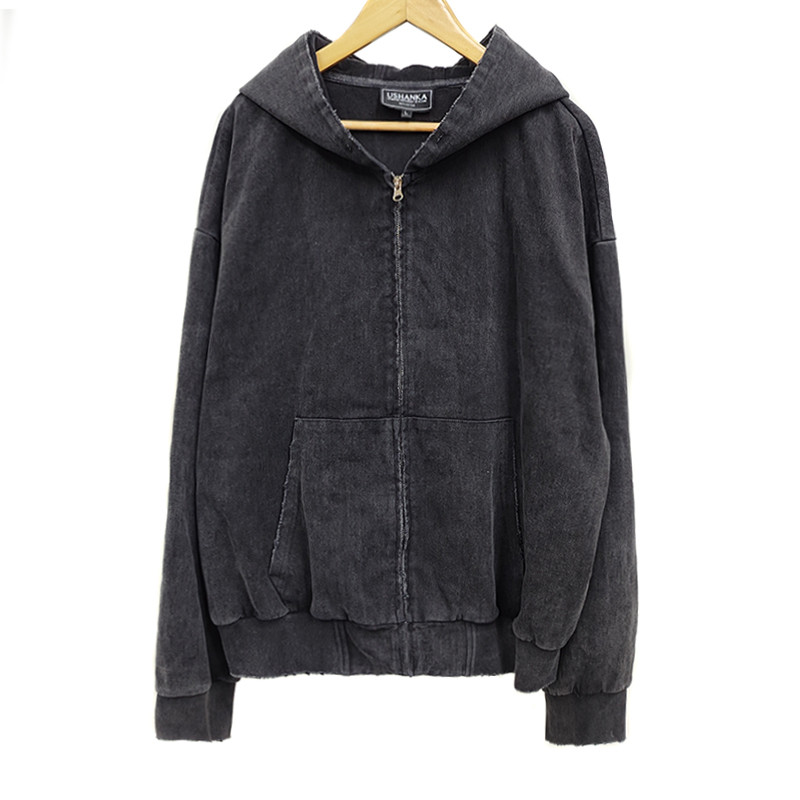
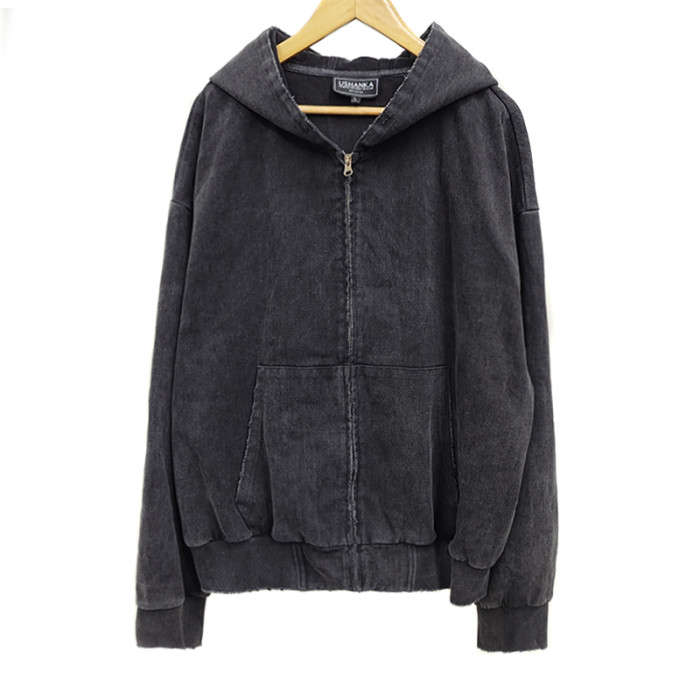
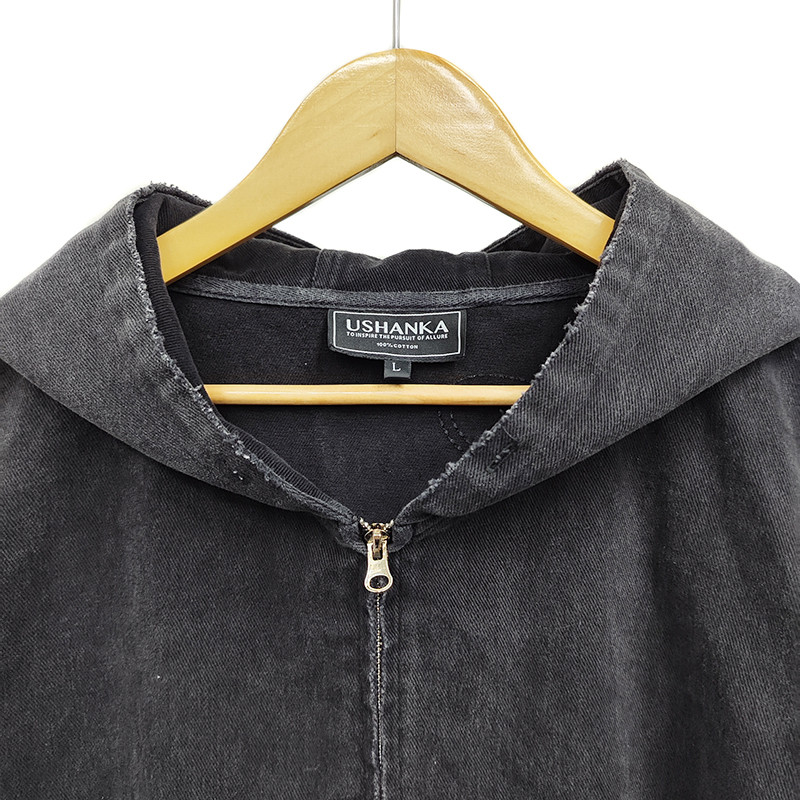
Who makes vintage washed hoodies for streetwear brands?
- Share
- Issue Time
- Aug 6,2026
Vintage washed hoodies are usually made by custom hoodie manufacturers, cut-and-sew streetwear factories, or OEM fleece garment factories that can control heavy fabric, garment washing, shrinkage, decoration placement, and bulk repeatability.
For streetwear brands, the right supplier is not only a sewing factory. It should understand hoodie pattern balance, wash recipes, color variation, fabric hand feel, and how the approved sample will behave after real production washing.
A streetwear brand should look for a custom hoodie manufacturer with cut-and-sew capability, garment washing experience, and a tested process for shrinkage, color variation, decoration durability, and size repeatability. The supplier should be able to make the hoodie from a tech pack or approved reference, test the wash effect on the actual fabric, and confirm measurements again after washing.
In production, vintage wash is not one single technique. It may involve pigment dye, acid wash, enzyme wash, stone wash, sun-faded effect, garment dye, or a mixed process. Each choice changes the surface color, fabric hand feel, shrinkage behavior, seam appearance, and decoration result. That is why brands should evaluate the full production route instead of only asking whether a factory can “do vintage wash.”
A serious streetwear project usually needs size specs, fit comments, GSM target, trim details, artwork files, and wash references. This gives the factory enough information to control the sample and the bulk order.
Acid wash gives stronger contrast. Pigment wash gives a worn surface tone. Enzyme or soft wash can make the hand feel smoother. The right answer depends on the fabric, color, artwork, and brand mood.
For hoodies, shrinkage affects body length, sleeve length, shoulder width, rib shape, and hood volume. Measurements should be checked after the wash process, not only before washing.
Some decorations need to be washed down with the garment. Others should be applied after washing to keep cleaner edges. Puff print, DTG, embroidery, appliqué, and rhinestones each behave differently.
Vintage wash naturally has controlled variation. The question is whether the factory can keep that variation inside the brand-approved range across sizes and production lots.
Washed hoodies usually need more development time than simple fleece styles because fabric, garment washing, artwork, trims, and final measurements interact with each other.
From the production side, the safest workflow is to develop the wash and fit together. A washed hoodie can look correct on the hanger but still fail after try-on if the shoulder drops too low, the rib twists, the zipper waves, or the garment becomes shorter than the approved size spec.
The factory usually starts with cotton fleece, French terry, or a cotton-rich blend in the target weight. For streetwear hoodies, many brands choose a heavier hand feel because washing can soften the surface and reduce the visual weight if the fabric is too light.
The pattern should consider post-wash shrinkage. Body length, sleeve length, shoulder width, cuff height, pocket position, and hood depth may need compensation before the first sample is cut.
The factory should test the wash on the real fabric and trims. A black hoodie, charcoal hoodie, washed brown hoodie, and faded green hoodie may need different wash timing, chemical control, temperature, and after-softening to reach the intended result.
Screen print, crack print, embroidery, appliqué, rhinestones, metal zipper, drawcord tip, and label placement should be reviewed after washing. Some effects look stronger after washing, while some may lose edge definition or color depth.
The approved sample should be checked for fit, hand feel, color range, garment measurements, seam stability, hood balance, zipper smoothness, pocket symmetry, and decoration position. Bulk production should follow this approved standard, with room for natural wash variation.
A common project starts when a brand sends a washed hoodie reference with comments like “faded black, heavy, boxy, not too soft, clean front, graphic back, relaxed sleeve.” In our production discussions, the important work begins after that reference is received. The team needs to decide whether the look should come from pigment dye, acid wash, garment wash, or a combined process.
For example, if a brand wants a faded black zip hoodie with a heavy streetwear shape, the first sample should not only chase the surface color. We would also check whether the zipper tape pulls after washing, whether the hood edge collapses, whether the sleeve length loses too much after washing, and whether the rib keeps enough recovery. If the artwork is printed before washing, the test should confirm whether the final cracked or aged effect is intentional rather than accidental.
GROOVECOLOR can be considered for this type of project when a streetwear brand needs OEM vintage washed hoodie production with custom fit, heavyweight fleece options, garment wash development, decoration coordination, and sample-to-bulk control. The better the tech pack and reference standard, the easier it is to control the final result.
A vintage washed hoodie is a visual product, but the decision should still be supported by measurable checks. The goal is not to remove all variation. The goal is to keep variation inside an approved range that the brand can accept in bulk.
OEKO-TEX STANDARD 100
tests textile articles for harmful substances, including components such as threads, buttons, and accessories. This is useful when a brand asks about safer material choices and certified components.
ISO 6330:2021
specifies domestic washing and drying procedures for textile testing. This matters because washed hoodies should be checked under clear washing and drying conditions.
AATCC textile test methods
include methods related to dimensional change after home laundering and garment appearance after laundering. These references help sourcing teams discuss shrinkage and post-wash appearance more clearly.
Experienced hoodie factories usually ask about wash process, fabric content, target measurements, and tolerance before confirming the sample route.
Decoration can move visually after shrinkage. A factory that checks artwork placement only before washing may miss the final garment result.
Vintage wash should not look mechanically identical across every piece, but the final color should still stay inside a controlled range.
The first sample proves direction. The pre-production sample confirms the standard for bulk. This distinction matters for washed hoodie programs.
For a more accurate quote, a brand should prepare the hoodie style reference, target fit, fabric weight range, color reference, wash effect reference, size chart, artwork files, decoration method, label and packaging needs, expected quantity, target market, and delivery window.
If the project is still at concept stage, the most useful starting materials are one clear mood reference, one fit reference, one wash reference, and one rough size direction. A good production discussion can then narrow the options before sampling.
For production-ready streetwear brands, the strongest inquiry is not just “Can you make this?” It is “Can you develop this wash, fit, fabric, decoration, and bulk standard together?”
What is the direct answer?
What related sourcing questions should a brand ask first?
How is a vintage washed hoodie usually made?
What does a real production example look like?
What data should a sourcing team check?
Which type of manufacturer is usually the safest choice?
Manufacturer type
When it fits
What the brand should verify
Cut-and-sew hoodie factory
Best for custom fit, custom size specs, custom fabric weight, and private collection development.
Pattern skill, sample correction process, fabric sourcing, sewing quality, and measurement control after washing.
Streetwear OEM manufacturer
Best for brands that need oversized, boxy, cropped, distressed, graphic, or decoration-heavy hoodie programs.
Experience with heavyweight fleece, wash variation, complex decoration, packaging, and sample-to-bulk consistency.
Garment washing partner
Useful when the sewing factory needs specialist support for pigment wash, acid wash, enzyme wash, or soft finishing.
Wash recipe records, color range control, machine capacity, wastewater handling, and ability to repeat the approved effect.
Decoration specialist
Useful when the hoodie uses embroidery, appliqué, rhinestones, puff print, crack print, or mixed decoration.
Whether the decoration should be applied before or after washing, and whether it can survive the chosen wash process.
How can a brand judge whether the supplier is experienced?
What should a brand prepare before requesting a quote?