Cut and Sew Clothing Manufacturer for Streetwear Brands
- Share
Build Your Streetwear From Fabric, Pattern and Approved Specifications
If your product needs its own fit, fabric, construction and finishing—not simply a logo added to an existing garment—GROOVECOLOR helps you develop it through a full cut and sew manufacturing process.
Send us your tech pack, size chart, reference garment or defined product direction. Our team can review the pattern, materials, construction, decoration, washing and production requirements before the garment moves into bulk manufacturing.
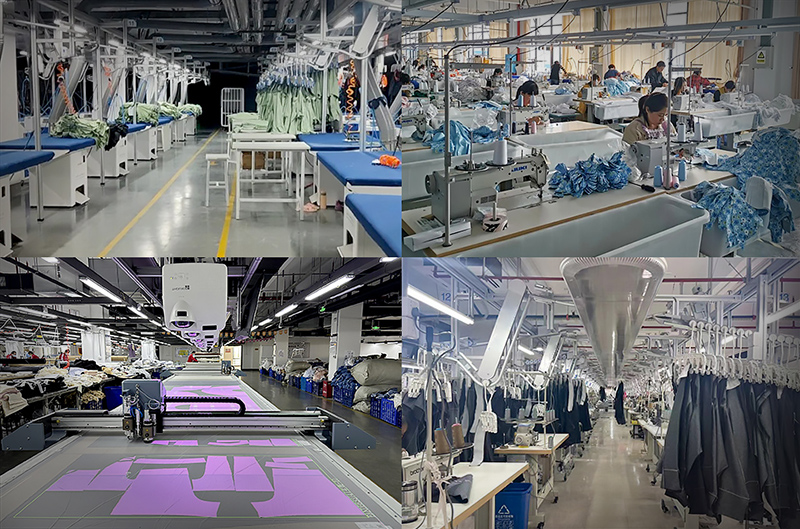
Fit, fabric, panels, pockets, trims, wash direction and decoration can all be considered before production begins. That makes cut and sew especially relevant when your collection depends on an original silhouette, heavyweight fabric, complex construction or a repeatable approved fit.
What Is Cut and Sew Clothing Manufacturing?
Cut and sew clothing manufacturing starts with fabric rather than a finished blank garment. The garment is developed through pattern making, fabric cutting, sewing, fitting, finishing and quality control according to approved specifications.
In practical terms, this gives a streetwear brand much more control over the product itself—not only what is printed or embroidered on the surface.
Important: GROOVECOLOR focuses on full custom OEM cut and sew manufacturing. We do not position this service as blank apparel customization or semi-custom production. The comparisons below are included to help buyers clearly understand where each manufacturing model begins and ends.
Blank Apparel vs Cut and Sew
We do not offer blank-apparel manufacturing through this service. This comparison is useful if your team is deciding whether modifying an existing garment gives you enough control, or whether the product itself needs to be developed from the ground up.
Compare blank apparel with cut and sew →Semi-Custom vs Full Custom
GROOVECOLOR's focus here is full custom OEM production rather than semi-custom garments. The detailed comparison explains why full custom becomes more relevant when the brand needs control over the pattern, fabric, trims, construction and finishing.
Compare semi-custom with full custom →If your product value depends on an original silhouette, specific fabric behavior, engineered pockets or panels, controlled washing or a repeatable approved sample, full custom cut and sew gives you the production control those details require.
Discuss Your RequirementsHow Does the Cut and Sew Clothing Manufacturing Process Work?
The process is not simply “cut fabric, sew garment.” A reliable production route solves product decisions in the right order so the approved design can move into bulk manufacturing without unnecessary drift.
Turn the design into a production-ready specification
Tech Pack & Design Review
We review measurements, artwork, fabrics, trims, washing and construction to identify missing or conflicting requirements before sampling.
Fabric & Trim Sourcing
Material selection considers weight, drape, structure, shrinkage, color, wash response and compatibility with ribs, zippers and hardware.
Pattern Development
Measurements and silhouette direction become actual panel shapes, seam lines and production patterns.
Sample & Fit Review
The physical sample is checked for fit, proportions, construction, fabric, trims, decoration and overall balance before approval.
Turn the approved specification into a real garment
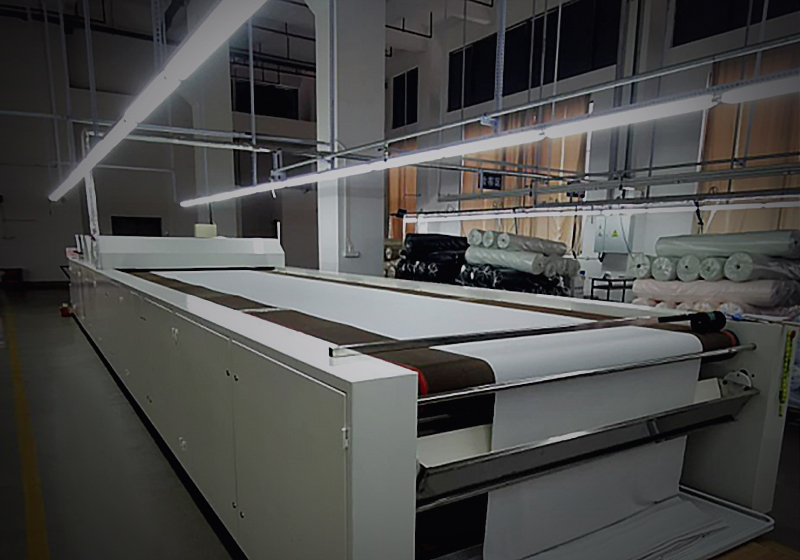
Fabric Cutting
Approved patterns are used to cut front, back, sleeve, pocket, hood and other garment panels accurately.
Sewing & Construction
Panels, pockets, hoods, waistbands, ribs and zippers are assembled according to the approved construction.
Decoration & Finishing
Printing, embroidery, appliqué, washing, distressing and other finishing processes are applied in the required production sequence.
Check the result before and during scale-up
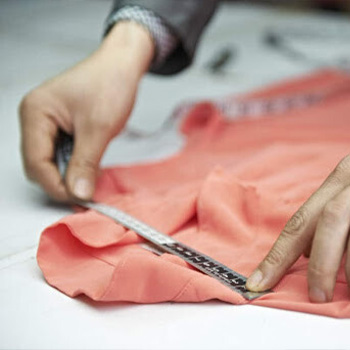
In-Process Quality Checks
Measurements, stitching, panel alignment, decoration placement, wash effect and trims are checked while production is still active.
Bulk & Final Inspection
Finished garments are checked against the approved specification before packing and shipment.
Cut and Sew Streetwear Manufacturing Is About Controlling Proportion
“Oversized” is a design direction, not a complete production specification. Making every measurement larger usually does not create the intended streetwear silhouette.
GROOVECOLOR develops the pattern around the way the garment needs to sit on the body. Shoulder drop, chest width, body length, sleeve volume, rise and leg opening have to work together—and the fabric has to support those proportions.
Discuss Your Fit DirectionFit Control Anatomy
PATTERN → SAMPLE → APPROVAL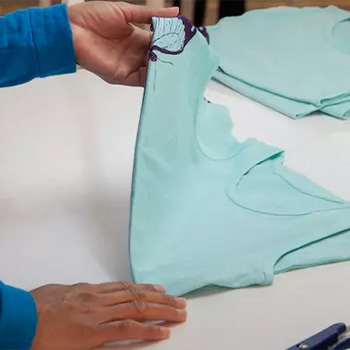
Custom Pattern Making and Fit Development
A sketch can communicate the look of a garment, but a factory still needs an executable pattern. Pattern development converts measurements and design intent into the panel shapes that can actually be cut and sewn.
If you already have a complete size chart, our team can review it together with your design and fabric direction. A reference garment can also help communicate details that measurements alone may not fully explain.
The objective is not just one good sample. It is an approved fit and production pattern that can support consistent bulk execution.
Send Your Size Chart or Reference FitFabric and Trim Sourcing for Custom Cut and Sew Apparel
If you are developing a 400 GSM oversized hoodie, choosing the fabric by GSM alone is not enough. Two fabrics at the same weight can behave very differently once they are cut, sewn, washed and worn.
GROOVECOLOR works with more than 200 fabric and trim partners. We help narrow options according to the garment, intended fit, season, surface, wash direction and product positioning rather than treating fabric as a separate purchasing decision.
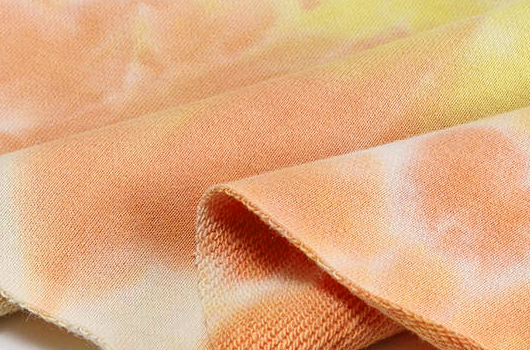
We review each specification in relation to the finished garment.
Complex Cut and Sew Construction for Streetwear
Some garments look simple from a distance but become technically demanding once pockets, panels, washes, embroidery and trims begin to interact. We look at these details as production decisions, not just visual features.
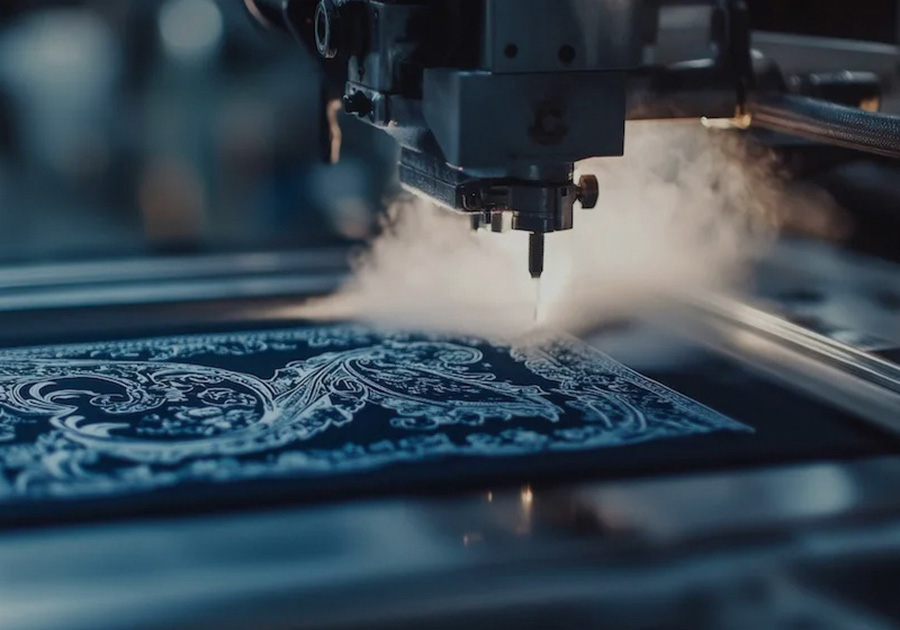
Printing, Embroidery, Washing and Garment Finishing
Cut and sew builds the garment structure. Decoration and finishing complete the visual direction.
Because full custom production begins before the garment is assembled, artwork and finishing can be planned with panel shape, seam position, fabric behavior and wash sequence in mind.
What Can a Cut and Sew Clothing Manufacturer Produce?
Cut and sew is not limited to one garment category. The process changes according to the product: a heavyweight hoodie, baggy denim pant and lined jacket require different fabrics, patterns, sewing sequences and quality checkpoints.
Custom T-Shirts
Heavyweight fabrics, oversized or boxy patterns, neckline control, washes, printing and embroidery.
Custom Hoodies
Heavyweight fleece or French terry, hood development, rib, pockets, zippers, graphics and wash effects.
Custom Pants
Baggy silhouettes, sweatpants, cargo construction, wide-leg proportions, pockets and custom trims.
Custom Denim Pants
Baggy jeans, flare shapes, vintage washes, distressing, embroidery, patchwork and complex denim finishing.
Custom Shorts
Sweat shorts, denim shorts, cargo structures, vintage washing, embroidery and streetwear-specific proportions.
Custom Jackets
Shells, linings, insulation, zippers, rib, collars, panels, pockets and multi-material construction.
Custom Tracksuits
Coordinated tops and bottoms with controlled fabric, color, trim, sizing and decoration across both pieces.
Planning several categories in one collection? Send the product list together. We can review where fabric, color, decoration or trim specifications need to stay consistent across the range.
Review My Collection →From Your Product Direction to a Controlled Production Standard
You do not need to manage every manufacturing decision alone. The clearer your design information is, the more accurately our team can translate it into a production route.
Your Product Direction
Tech pack, measurements, artwork, reference garment, fabric direction, colorways, quantities, trims, wash requirements and packaging details.
The Manufacturing Route
Fabric, pattern, sample, fit, construction, decoration, wash, trims, production sequence and quality checkpoints.
The Approved Standard
Approved sample, confirmed measurements and material specifications become the reference for controlled bulk manufacturing.
From Sample Approval to Controlled Bulk Production
A sample is not only something to approve visually. For production, it becomes part of the reference used to define the garment.
Measurements, fabric, color, wash result, construction, artwork placement and trims need to be clear before scale-up. That gives the production team concrete checkpoints instead of relying on interpretation.
The goal of bulk production is not simply to make more garments. It is to reproduce the approved specifications consistently at scale.
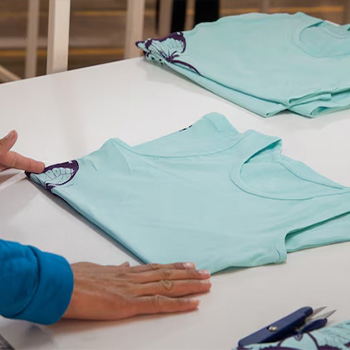
Quality Control for Cut and Sew Clothing Production
Quality control is more useful when it happens throughout production rather than only after every garment is finished. Our workflow uses checkpoints from incoming materials through manufacturing and final inspection.
MOQ, Sampling and Production Lead Times
These figures give your team an initial planning reference. Final requirements depend on fabric availability, garment complexity, washing, trims, decoration and the number of sample revisions.
Get a Production AssessmentWhy Streetwear Brands Work With GROOVECOLOR for Cut and Sew Manufacturing
Choosing a cut and sew manufacturer is not just about whether a factory can sew a garment. The real question is whether the team can translate your approved product requirements into a repeatable manufacturing system.
Streetwear-focused pattern development
Our development team works with oversized, boxy, baggy and other streetwear-specific proportions, helping translate design intent into approved production patterns.
Controlled sample-to-bulk execution
Production works from approved specifications and defined checkpoints so fit, construction, decoration and finishing have a clear reference during scale-up.

Frequently Asked Questions About Cut and Sew Manufacturing
These are practical questions brand and product teams usually need answered before moving a full custom garment into development.
What is the difference between cut and sew and blank apparel?
Blank apparel starts with a finished garment. Cut and sew starts before the garment exists, allowing the pattern, fabric, dimensions, construction and finishing to be developed around approved specifications.
Does GROOVECOLOR provide blank or semi-custom apparel?
This manufacturing service is focused on full custom OEM cut and sew production rather than blank apparel, white-label garments or semi-custom production.
Can GROOVECOLOR manufacture directly from our tech pack?
Yes. If your tech pack includes the size chart, fabric requirements, artwork, logo placement, trims, colors, washing or printing details and finishing standards, our team can review it and confirm the sample-development requirements.
Can you develop oversized, boxy or baggy fits?
Yes. These silhouettes require pattern control rather than simply increasing every measurement. Shoulder drop, body width, sleeve volume, rise, thigh and leg-opening proportions can all be reviewed during development.
Can we choose our own fabric and GSM?
Yes. Fabric weight can be specified, but composition, structure, hand feel, shrinkage and drape should also be considered because they affect how the finished garment behaves.
Does cut and sew manufacturing include printing and embroidery?
Yes. Printing, embroidery, appliqué and other decoration can be incorporated into the production route and planned together with garment panels, seam positions and fabric behavior.
Can you manufacture washed and distressed streetwear?
Yes. GROOVECOLOR supports techniques such as acid wash, pigment wash, stone wash, vintage fading and controlled distressing. Wash effects are reviewed together with fabric, shrinkage, trims and decoration.
What is the MOQ for custom cut and sew clothing?
GROOVECOLOR normally works from approximately 50–100 pieces per color for custom production. Exact requirements depend on the garment, material and technique.
How long does sample development take?
Sample development normally takes around 2–3 weeks. More complex constructions, special trims, washes or multiple revisions can require additional time.
How do you keep bulk production consistent with the approved sample?
Approved measurements, fabrics, construction details, artwork placement, trims and finishing requirements become production references and are checked through manufacturing and final inspection.
What should we send before asking for a production assessment?
A complete tech pack is ideal. You can also send product drawings, measurements, reference garments or photos, fabric requirements, artwork, quantities, colorways, trims and finishing direction.
Let GROOVECOLOR Review Your Cut and Sew Streetwear Project
Send your tech pack, measurements, reference garment or product direction. We can review the fabric, fit, pattern, construction, decoration and production requirements and help define the next practical step.