Best Clothing Manufacturers for Streetwear Brands
- Share
Compare Clothing Manufacturers for Streetwear Brands by What You Actually Need to Make
Finding a factory that can sew a hoodie or T-shirt is easy. Finding one that understands heavyweight fabrics, oversized proportions, baggy fits, garment washing, complex decoration and the small construction details that define a streetwear collection is a different job.
GROOVECOLOR is best suited to established brands that need full-custom OEM streetwear production, especially when custom fit, heavyweight fabric, garment washing, multiple decoration processes and sample-to-bulk consistency all need to be controlled together.
The factory name matters less than whether its production system fits your collection.
What Are the Best Clothing Manufacturers for Streetwear Brands?
There is no single clothing manufacturer that is best for every streetwear brand. The right factory depends on what you manufacture, how custom the garment is, how important fit and pattern development are, which fabrics, washes and decorations are involved, your production quantity and how well the factory can reproduce an approved sample in bulk.
For premium full-custom streetwear, a specialist OEM or cut-and-sew manufacturer is usually the stronger fit because the factory needs to control the garment itself, not simply decorate an existing product. For US-made production, European-made programs or specialist knitwear, another manufacturing structure may be more appropriate.
Streetwear Clothing Manufacturers Worth Comparing
We do not use an artificial #1–#6 ranking. A manufacturer can be excellent for one production model and completely wrong for another. A more useful comparison is to look at where each supplier fits.
| Manufacturer | Production Model | Strongest Fit | Consider It When |
|---|---|---|---|
| GROOVECOLOR | China · Full-custom OEM | Premium men's streetwear, custom fits, heavyweight fabrics, washes and complex decoration | Your brand already has a defined product direction and needs controlled custom production |
| Create Fashion Brand | Portugal · Custom apparel manufacturing | European premium casualwear and streetwear | Portugal manufacturing and European sourcing are important to your collection |
| Appareify | China · Broad custom apparel manufacturing | Multi-category custom apparel programs | You value broad manufacturing coverage across several apparel categories |
| Lefty Production Co. | Los Angeles · Development and production | Local pattern development, sampling and US production | Physical proximity to Los Angeles production matters to your team |
| Tailored Industry | USA · Specialist knitwear manufacturing | Knitted sweaters and specialist knitwear | The knit structure itself is a major part of the design |
| Royal Apparel | USA · Established jersey apparel production | USA-made jersey and ready-developed apparel programs | Domestic origin matters more than rebuilding every garment from the pattern upward |
If You Are Comparing Streetwear Manufacturers, We Help You Find Out Whether We Actually Fit Your Product
When you search for the best clothing manufacturers for streetwear brands, the hard part is usually not finding more factory names. It is working out which factory can make your product correctly, at the required quality, quantity and level of customization.
GROOVECOLOR helps by reviewing the garment itself. We look at your tech pack, measurements, target silhouette, fabric, washing, decoration, trims and expected quantity. From there, we can identify what needs to be confirmed before sampling and where production risks may appear.
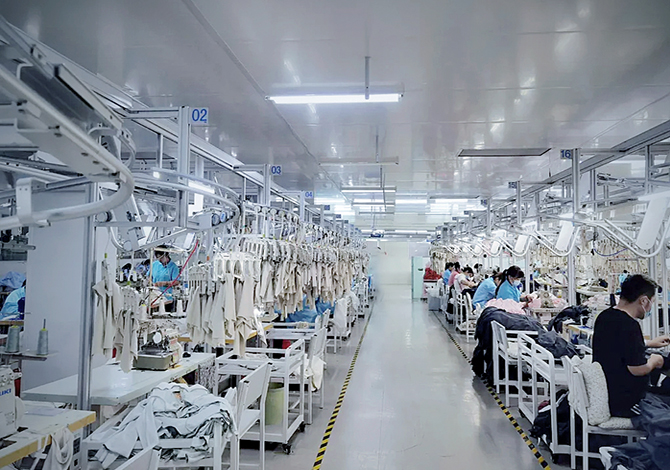
GROOVECOLOR — Best Suited to Brands That Need More Than Standard Garment Production
GROOVECOLOR is based in Humen, Dongguan, China and focuses on full-custom OEM men's streetwear manufacturing. Our projects normally begin with a tech pack, reference garment or defined product specification rather than asking your team to choose a standard finished garment.
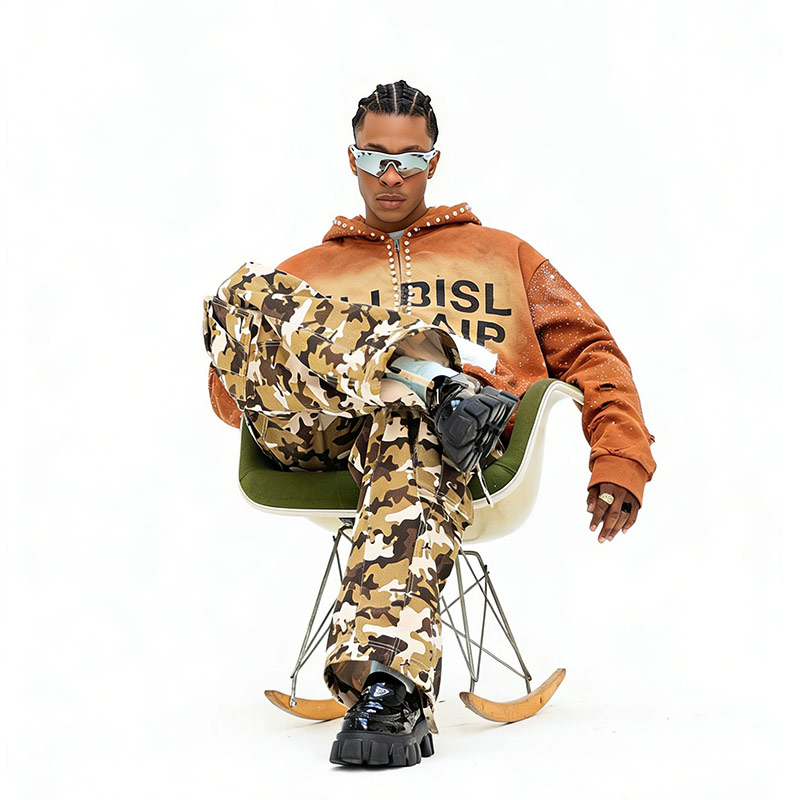
This becomes especially useful when several variables need to work together: a custom oversized silhouette, heavyweight fabric, garment wash, embroidery, printing, custom trims and a bulk production standard that still needs to look and feel like the approved sample.
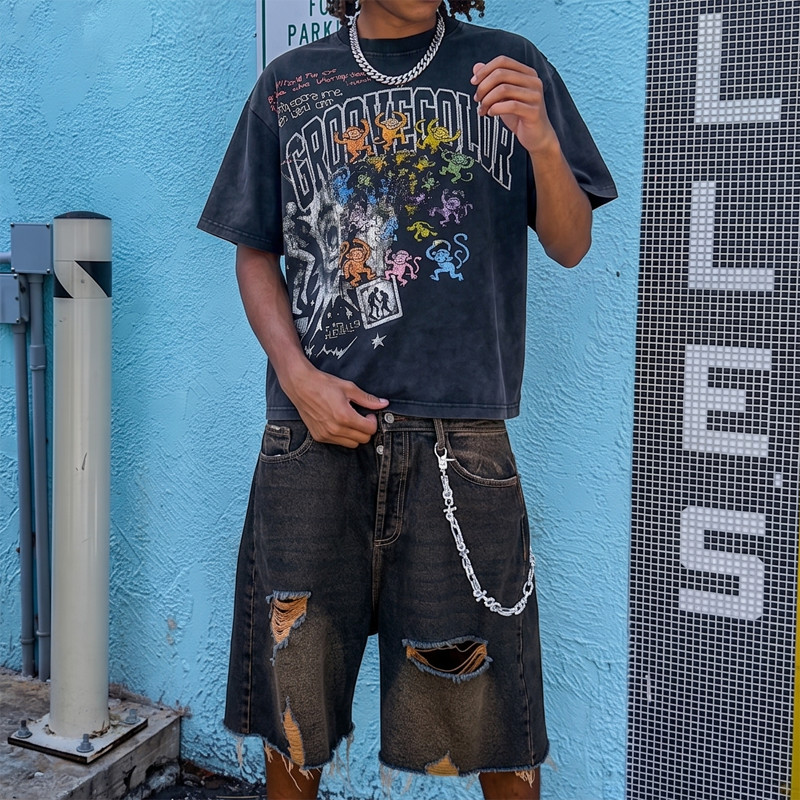
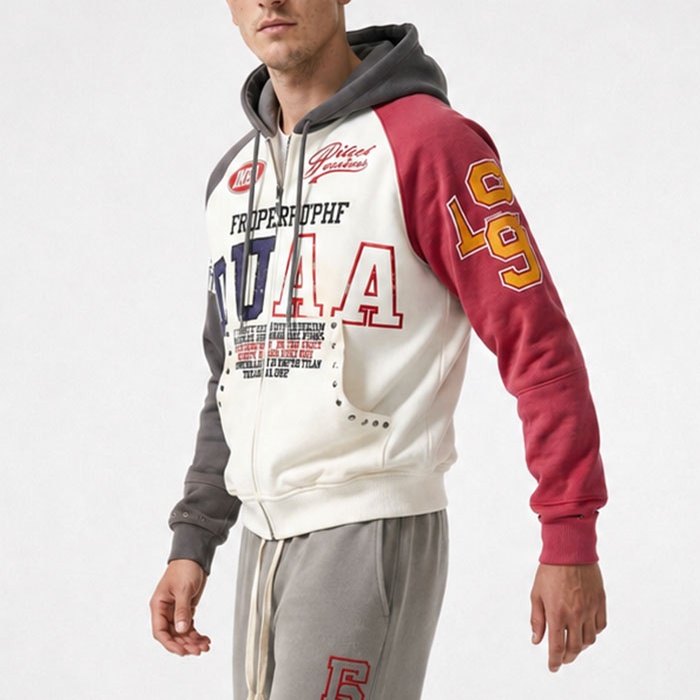
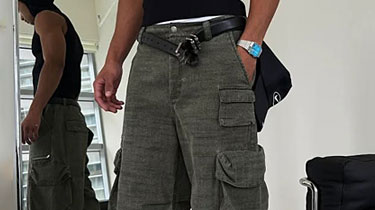
Oversized, boxy, drop-shoulder, cropped, wide-leg and baggy silhouettes where proportion is controlled through the pattern rather than simply increasing garment measurements.
Streetwear jersey, fleece and other fabrics where GSM, structure, surface feel, shrinkage and the finished silhouette need to work together.
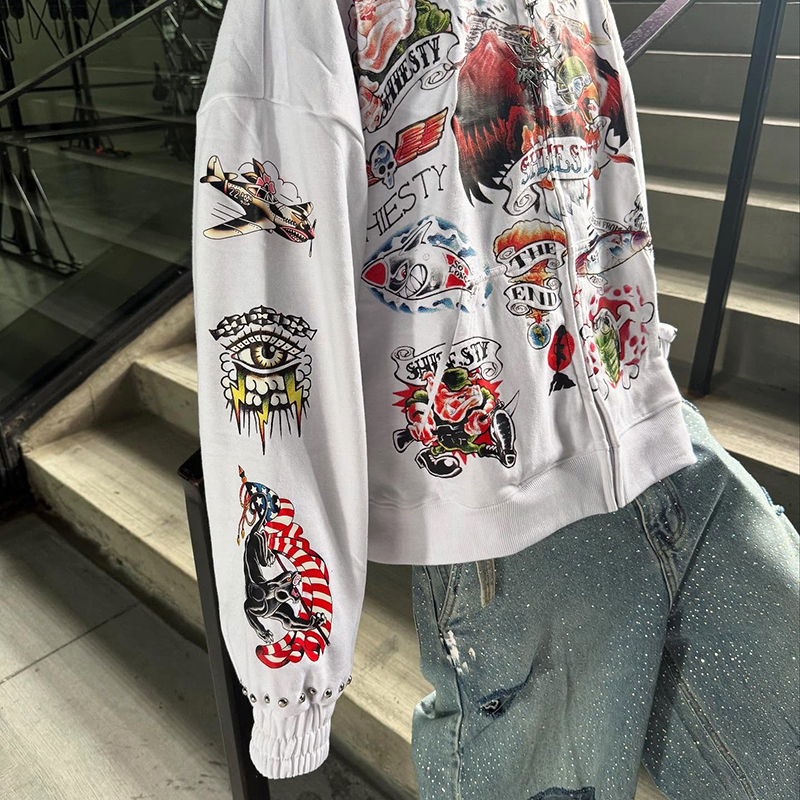
Screen printing, embroidery, puff effects, appliqué, rhinestones, distressing and products where several decoration techniques need to work together.
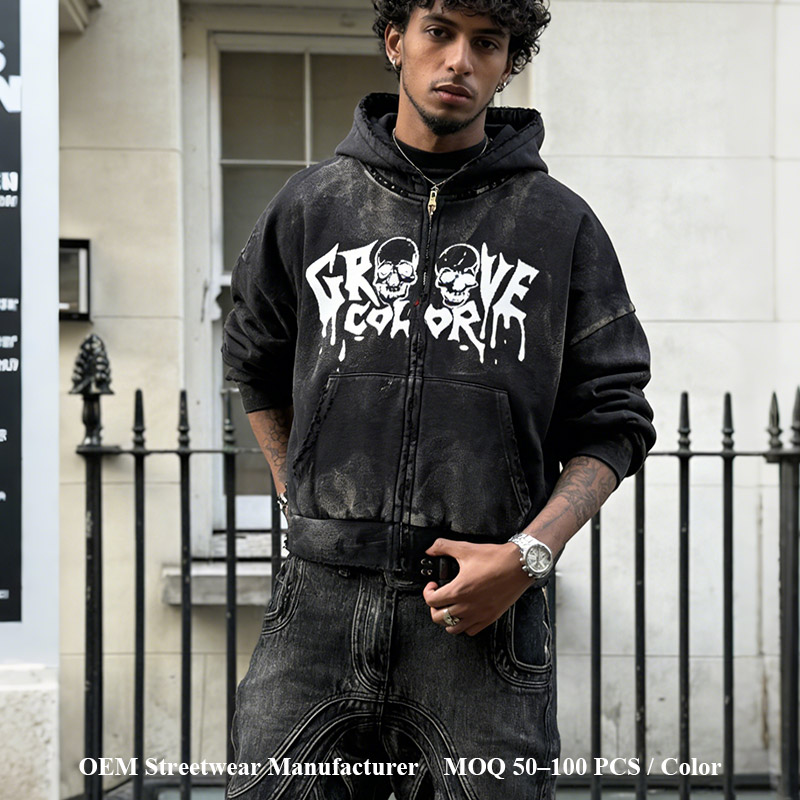
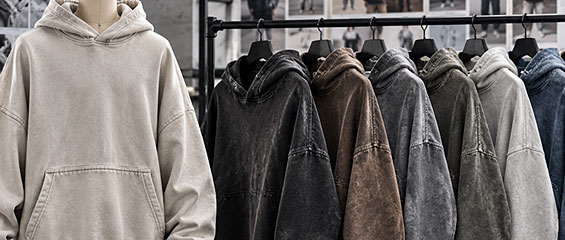
Vintage, pigment, acid, stone and enzyme treatments where approved shade, shrinkage and bulk consistency need controlled production references.
Which Streetwear Manufacturer Is Best for the Product You Are Developing?
Start with the garment, not the supplier's marketing. The technical problems inside your product usually tell you what kind of manufacturer should be on the shortlist.


What Actually Makes a Clothing Manufacturer Good at Streetwear?
A factory is not a streetwear specialist simply because hoodies and T-shirts appear in its catalog. The useful test is whether the development and production system understands the details that make these garments harder to reproduce.
Silhouette Control
The pattern team should understand why oversized, boxy, cropped and baggy fits use different proportions instead of simply adding width.
Fabric Beyond GSM
Composition, structure, yarn, shrinkage, hand feel and finishing affect the garment just as much as the weight specification.
Decoration at Scale
One impressive sample is not enough. Embroidery, printing and other techniques need to remain controlled through bulk production.
Wash Control
Vintage effects need approved shade references, tolerances and production checkpoints rather than visual guesswork.
Sample-to-Bulk Reproduction
The approved sample becomes a practical reference for measurements, materials, workmanship, decoration and finishing.
Repeatability
For an established brand, a successful first order should leave enough approved data to reproduce the style later.
How Should Streetwear Brands Compare Clothing Manufacturers?
When several quotations are in front of you, compare the assumptions behind the price before comparing the price itself.
| What to Compare | What You Should Ask |
|---|---|
| Manufacturing model | Is the garment developed from our specifications, or from an existing product structure? |
| Product experience | Have you produced garments with similar construction, fit, fabric and finishing? |
| Pattern capability | Can you work from our measurements and reproduce our intended silhouette? |
| Fabric sourcing | Can weight, composition, hand feel, shrinkage and shade be confirmed before production? |
| Sampling | What exactly becomes the approved reference before bulk starts? |
| Washing | How are shade, shrinkage and batch variation checked against the approved wash? |
| Decoration | Can several processes be combined without creating conflicts later in production? |
| MOQ | Is the minimum calculated by style, color, fabric or another production variable? |
| QC | At which stages are measurements, workmanship and appearance checked? |
| Capacity | Can the factory support repeat orders without changing the approved production standard? |
| Compliance | Which current audits, certifications or test documents can the supplier provide for verification? |
Full Custom, Semi-Custom or Ready-Developed Garments?
Before comparing factories, decide how much control your brand actually needs over the garment.
Ready-Developed Garment Customization
You begin with an existing garment structure and customize selected branding or surface details.
Best when: the existing fit, construction and fabric already meet your requirements.
Semi-Custom Development
You begin from a developed structure but change selected materials, colors, measurements, trims or product details.
Best when: you want more product control without rebuilding every construction detail.
Full-Custom Cut-and-Sew OEM
Pattern, measurements, fabric, construction, trims, wash and decoration are developed around your product specification.
Best when: silhouette and product execution are part of your brand identity.
China vs. Portugal vs. USA: Where Should You Manufacture Streetwear?
No country automatically produces the best streetwear. Location changes the supply-chain environment around the product, and that can influence sourcing, communication, cost structure and production support.
Particularly useful for collections that need broad fabric and trim sourcing, several decoration processes, full-custom development and scalable production.
Consider China when: development breadth, process coordination, sourcing options and repeat production matter.
Often considered for European premium jersey, casualwear and collections where European manufacturing origin forms part of the product positioning.
Consider Portugal when: European sourcing, regional proximity and premium jersey production are priorities.
Domestic manufacturing can simplify development visits and local communication for US teams while operating within a different cost and supplier structure.
Consider the USA when: domestic origin or proximity to your development team is strategically important.
Established Streetwear Brands Need More Than the Lowest MOQ
The useful question is not simply, “Who will make the fewest pieces?”
A brand with proven demand normally needs to know whether it can begin with a controlled production quantity and then reproduce the same style if it sells. That requires material records, approved patterns, color control, production documentation and enough capacity for repeat orders.
Complex Streetwear Is Usually About Coordinating Variables
If your garment is simple, many factories may be able to make it. GROOVECOLOR becomes more relevant when several things need to be correct at the same time.
Heavyweight oversized hoodie + pigment wash + puff print + embroidery + custom rib + branded hardware.
Fabric, pattern, wash, decoration and trims need to be evaluated as one finished garment.
Baggy denim + vintage wash + distressing + custom pockets + hardware + embroidery.
A change in washing or shrinkage can affect appearance and fit, so the approvals need to connect.
Matching tracksuit + same fabric lot + controlled shade + embroidery + custom zipper + wide-leg pants.
Matching sets need material, shade and trim decisions to be controlled across both pieces.
What Can GROOVECOLOR Manufacture for a Streetwear Collection?
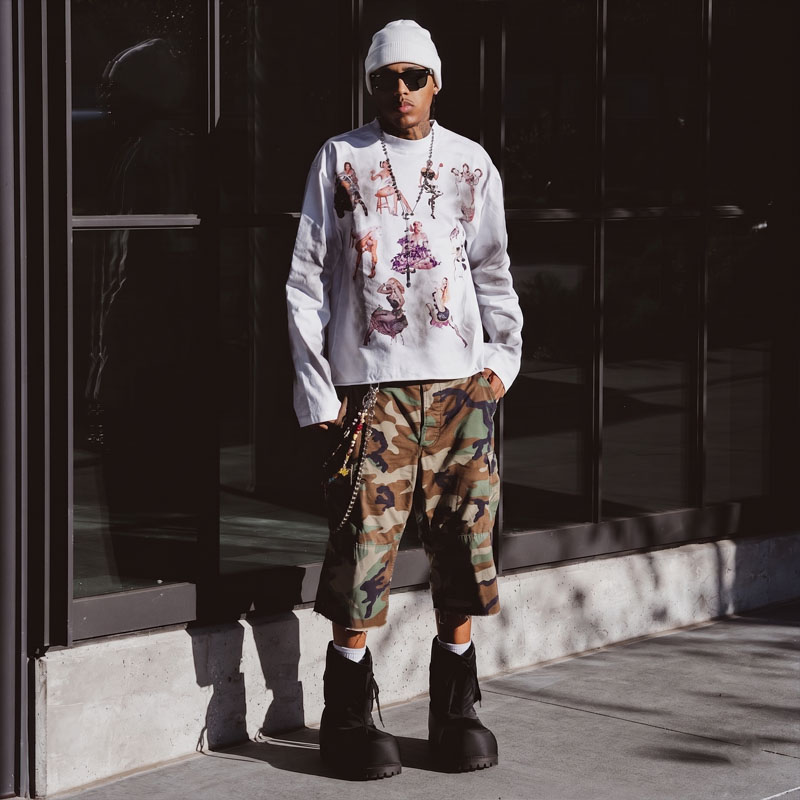
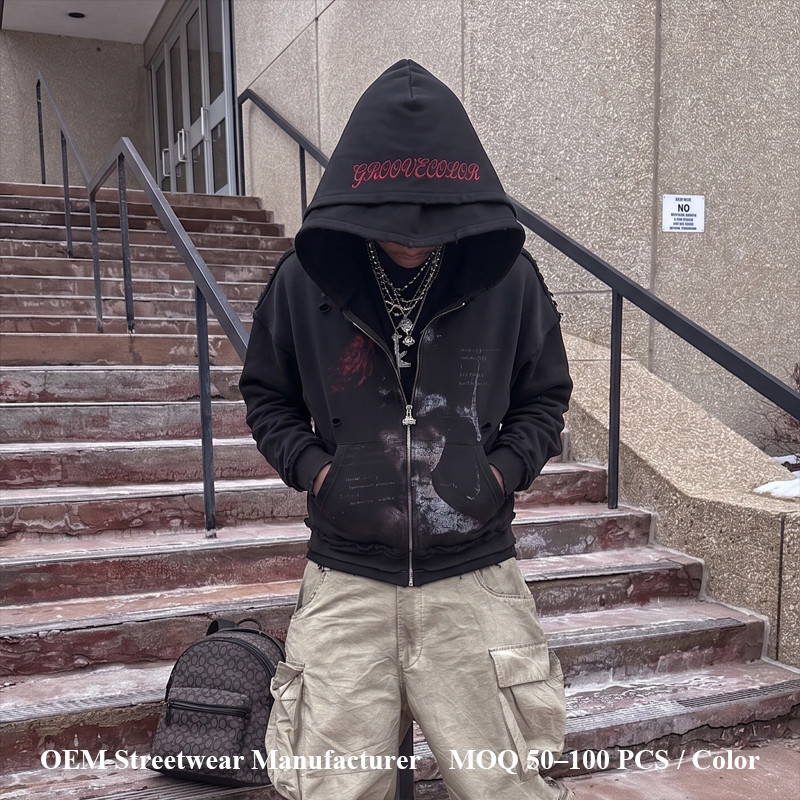
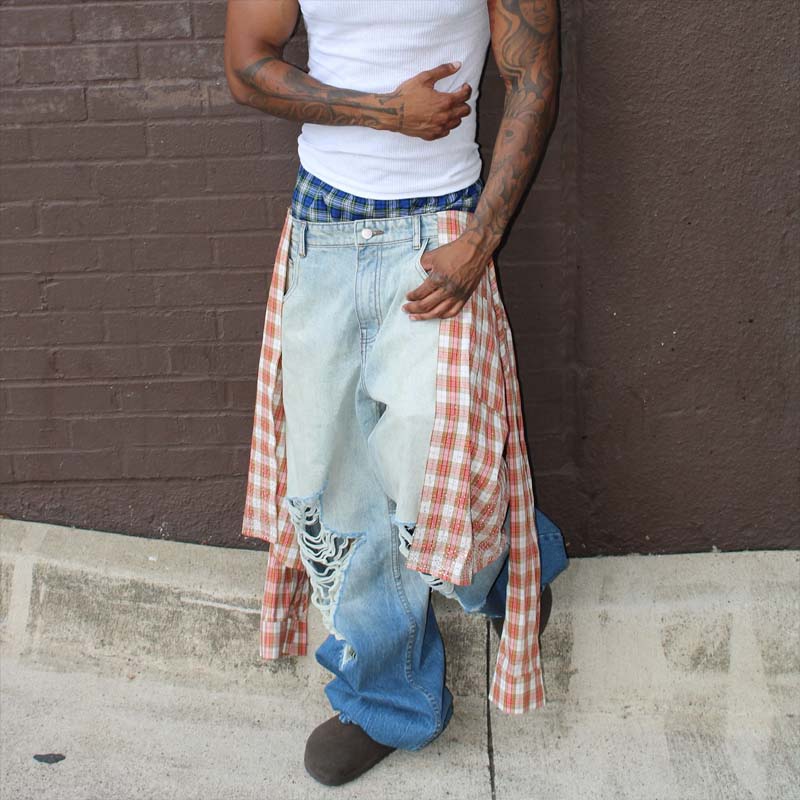
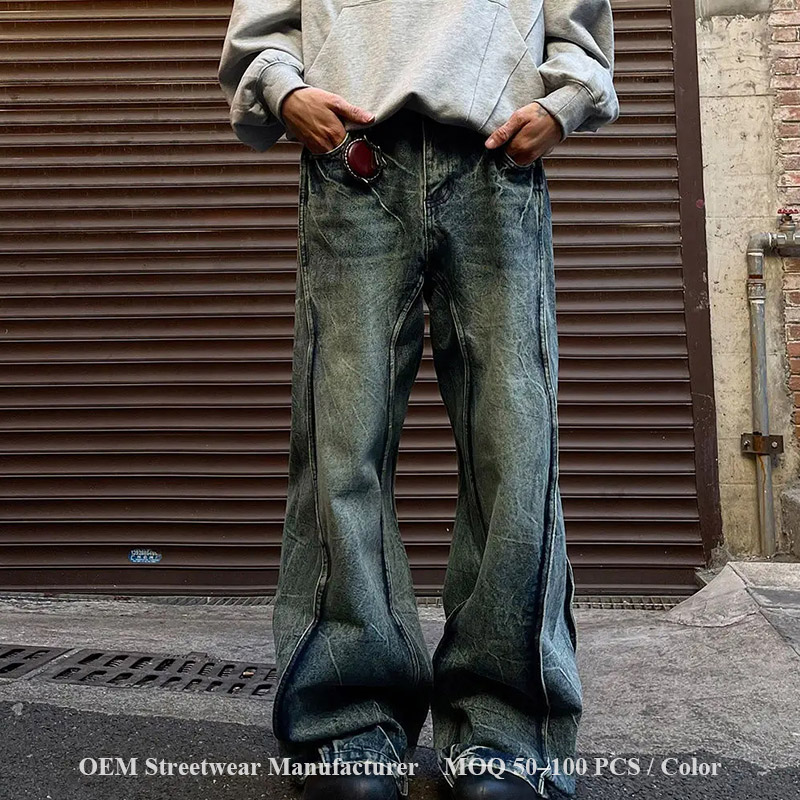
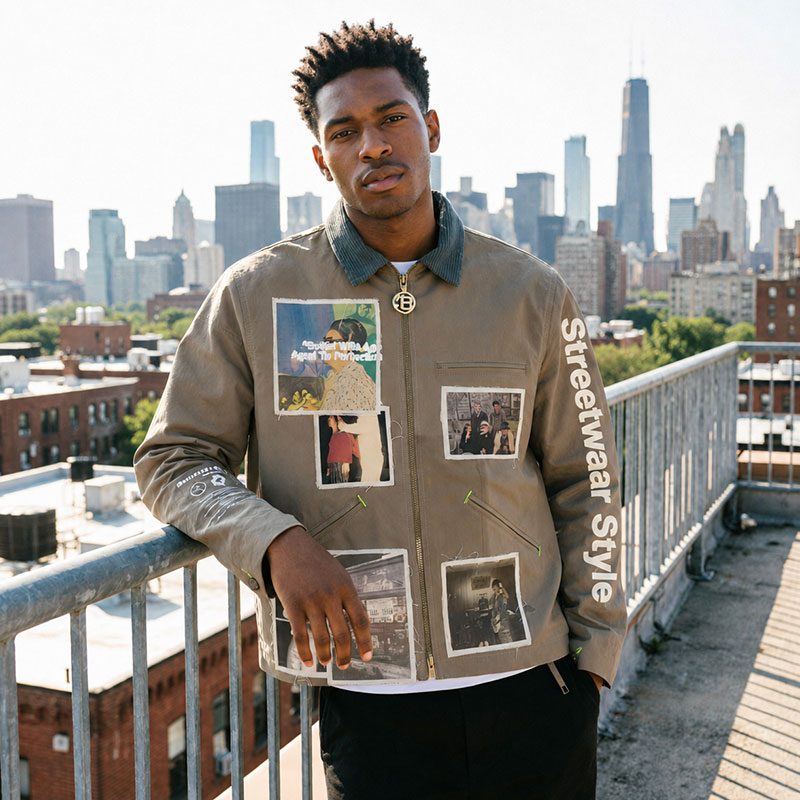
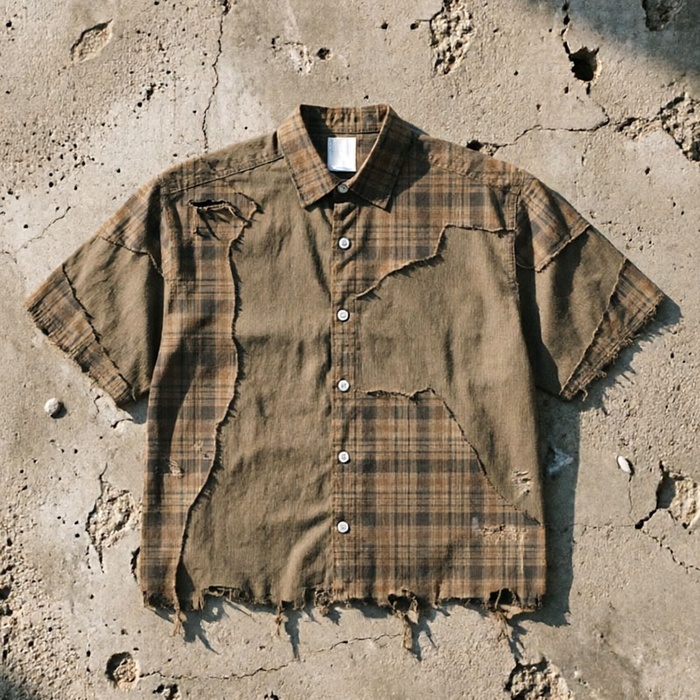
Our value is not simply having a long product list. It is being able to carry fit, fabric, decoration, washing and finishing requirements across the core categories that make up a streetwear collection.

How Does a Custom Streetwear Project Move From Tech Pack to Bulk Production?
The exact workflow changes with the garment, but the principle stays the same: solve important variables before bulk production and keep approved references visible throughout production.
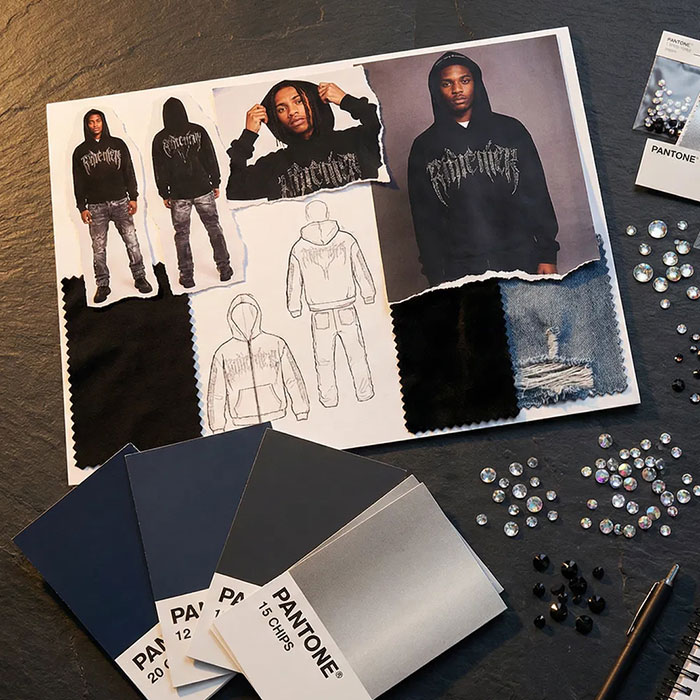
The objective is simple: solve as many variables as possible before bulk production and reduce production drift after approval.
What Should You Send a Streetwear Manufacturer?
A message saying “How much for 100 hoodies?” usually cannot produce a meaningful manufacturing quotation.
The more clearly your product is defined, the less the factory has to guess. If you already have a complete tech pack, GROOVECOLOR can review it before confirming sample feasibility, production approach and expected timing.
Questions to Ask Before Choosing a Streetwear Clothing Manufacturer
These questions usually reveal more about a supplier than a long list of product categories.
Can the manufacturer work directly from our tech pack?
A capable custom manufacturer should be able to review the technical package and identify missing or conflicting information before sampling.
What is a reasonable MOQ for custom streetwear?
It depends on fabric, processes and manufacturing structure. GROOVECOLOR normally starts at 50–100 pieces per color for custom production.
How long should custom streetwear sampling take?
GROOVECOLOR normally plans around 2–3 weeks for sample development, depending on complexity and material availability.
How long does bulk production usually take?
Standard bulk production is normally around 3–4 weeks after approval, while more complex garments can require additional time.
Should we choose a manufacturer mainly by price?
Only compare prices after confirming that every quotation describes the same fabric, construction, trims, processes and QC expectations.
How do we know whether a factory understands oversized fit?
Ask about shoulder width, chest, armhole, sleeve volume, body length and grading. The answer should go beyond “yes, we make oversized hoodies.”
How can we reduce sample-to-bulk differences?
Freeze measurements, pattern, fabric, color, trims, construction, decoration, wash and finishing before production and check bulk against those references.
Can one factory manufacture an entire streetwear collection?
Often it can cover several core categories, but specialized construction such as fully fashioned knitwear may still be better handled by a specialist.
A Practical Shortlist for Different Streetwear Manufacturing Needs
The Best Manufacturer Is the One That Fits Your Production System
A supplier can be excellent and still be wrong for your collection.
A local jersey producer, a Portuguese apparel manufacturer, a specialist knitwear factory and a full-custom streetwear OEM are solving different production problems.
Let Us Review the Product Before You Commit to Production
Send your measurements, fabric requirements, artwork, wash details, trims, quantity and target delivery requirements. We can review whether the garment fits our production system and identify what needs to be confirmed before sampling.