Pinstripe Baggy Jeans Manufacturer | Custom Vintage Washed Striped Denim | OEM Cracked Logo Jeans | GROOVECOLOR Premium Streetwear Factory
- Model
- F296865 Pinstripe Baggy Jeans Manufacturer
Item specifics
- Categories
- Custom Pinstripe Baggy Jeans Manufacturer
- Brand
- GROOVECOLOR Streetwear Manufacturer
- Style
- Vintage High Street Wear
- Thickness
- Thick
- Qualtiy
- High Qualtiy
- Color
- Customizable Colors
- Size
- XS-5XL (Customizable Size)
- Shipping
- By sea | by air | by DHL/UPS/TNT
- MOQ
- 50-100 pcs per color
Review
Description
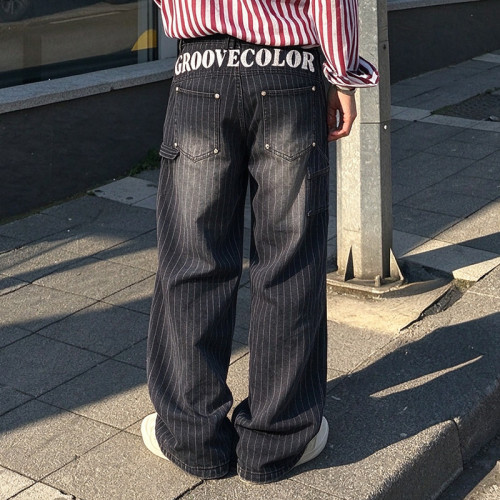
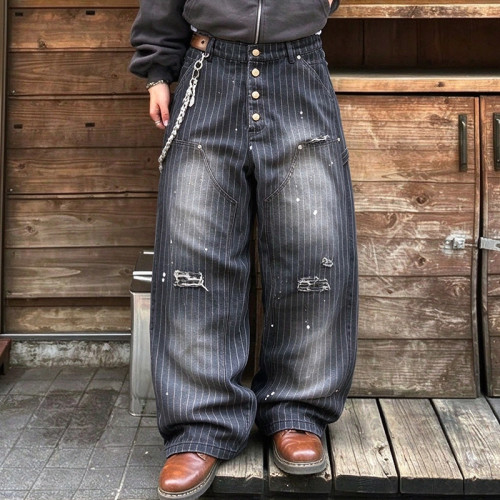
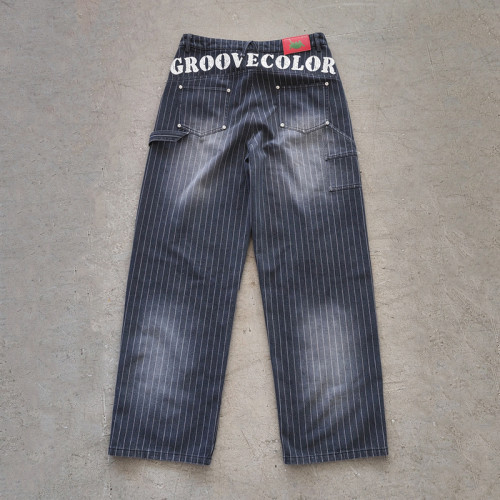
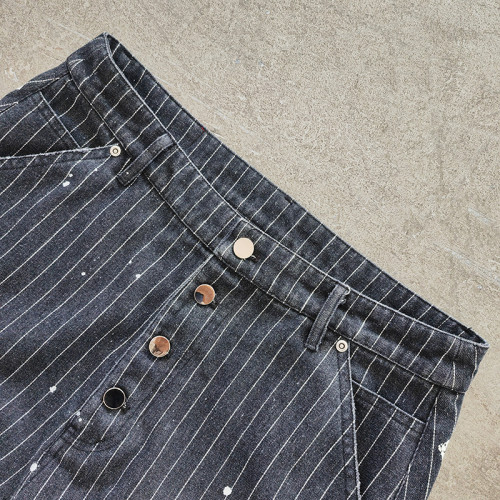
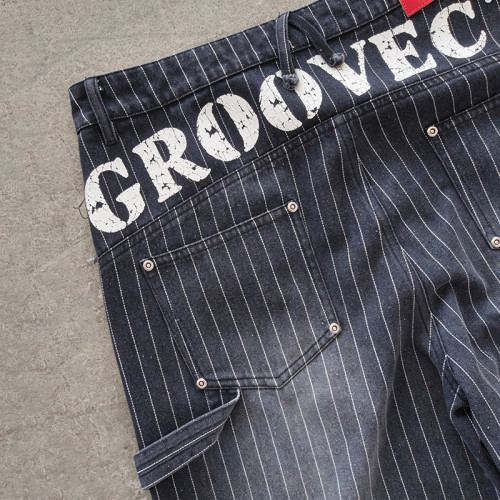
GROOVECOLOR manufactures full-package custom streetwear denim for established menswear labels seeking recognizable finishes and production-ready fit development. For a custom baggy jeans manufacturer, the critical task is to preserve the selected leg shape through wash and finish trials. This charcoal-black reference brings narrow vertical pinstripes together with a carefully balanced loose leg, washed highlights, localized rips, metal hardware, carpenter-style utility detailing and a weathered white brand graphic across the upper back yoke. A brand evaluating a custom streetwear pants manufacturer should judge whether these interdependent details can be produced against an approved standard, not simply whether the sample silhouette looks fashionable. Based in Humen, Dongguan, China, our OEM teams translate brand-owned designs into fabric selections, patterns, graded measurements, wash trials, decoration placements and bulk inspection criteria. The photographed piece establishes visual direction. Fiber content, denim GSM, stripe construction, exact distressing technique and print chemistry must be specified and approved separately. Our custom streetwear pants manufacturing service covers the broader cut-and-sew category; this page concentrates on the additional challenges of striped vintage denim. Develop narrow pinstripe denim with approved stripe pitch, grain direction and placement across leg, pocket and panel pieces. Balance the rise, seat, knee width and leg opening for volume and stacking without making the silhouette excessively wide. Coordinate faded thigh zones, small white specks, short frayed openings and lower-leg seams within approved tolerance limits. Set four-button fly spacing, rivet placement, workwear details and cracked-look rear graphics before bulk processing. Pinstripe denim jeans require more planning than a plain black wash because narrow pale lines expose skew, off-grain cutting and mismatched pocket placement. The photos show closely spaced, light vertical stripes running down charcoal denim, including the rear patch pockets and utility panels. They do not prove whether the stripe effect is yarn-dyed, woven or printed. Our streetwear fabric sourcing resources explain how composition, weight and fabric availability affect custom OEM programs. For these jeans, the selected fabric must support both the intended drape and the stress imposed by washing and local abrasion. The worn reference shows an easy, straight-to-wide leg with visible stacking over footwear, but it does not read as an exaggerated balloon fit. The main pattern decisions are rise, hip ease, crotch balance, thigh circumference, knee width, outseam length and leg-opening measurement. An attractive sample can lose this balance when a factory grades the pattern without checking how the denim drapes after finishing. For an original brand block, GROOVECOLOR reviews a finished-garment measurement chart and tests the selected denim after the planned wash. The factory can adjust leg volume, waist position and stacking allowance to reflect a specific menswear size run. The distinctive front seam shapes and the lower-leg cross seams are included in pattern development so changes in leg width do not distort the visual layout. Our pattern and cutting process addresses the link between graded shapes, fabric grain and accurate assembly. The approved fit sample—not a model photograph—defines bulk measurements. This sample has charcoal-to-gray fading around the thighs, seat and lower legs while the thin vertical lines remain readable. A vintage washed denim jeans program therefore needs a target shade range as well as a target contrast between the stripes and base cloth. Heavy fading can obscure the stripe; excessive mechanical action can also alter seam puckering, width and hand feel. GROOVECOLOR can evaluate enzyme, stone or other suitable vintage wash trials after confirming the textile and desired appearance. The original recipe cannot be identified from these photographs. Before production, the team should approve the dry and washed shade, localized abrasion zones, finished measurements and allowable shade variation. A washed reference swatch alone is not enough when the garment includes exposed repairs, hardware and printed branding. Manufacturing decisions for wash depth and decoration sequence connect with our printing and vintage finishing capabilities. Process suitability is established by sample tests rather than by treating all denim and print surfaces as interchangeable. The front flat lay shows small frayed knee openings, scattered pale flecks, worn thigh areas, angular upper-leg seam details and horizontal seams toward the lower leg. A side utility pocket and a rear tool-loop-style detail add a carpenter influence. These are visible design cues; the photographs cannot verify that any seam is a second protective knee layer. For distressed baggy jeans, an OEM tech pack should map the allowable size and location of each tear, the distance from structural seams, thread exposure and whether holes receive backing or reinforcement. Paint-splatter appearance may be created by an approved decorative method; the pictured marks do not identify the chemistry. Mechanical distressing must be checked against both fabric strength and final wash effects. When developing custom carpenter jeans, the brand can select the utility pocket dimensions, loop construction, rivet positions and panel-seam layout. Separating decorative abrasion from functional seam construction keeps a vintage finish from creating an avoidable bulk-quality issue. The back detail clearly shows a large, distressed white GROOVECOLOR wordmark spanning the upper rear yoke just below the waistband, with a cracked, worn surface. This is a cracked-print appearance; the image alone cannot establish the actual ink system, application sequence or durability. Brands may request their own logo and artwork rather than reproducing the sample graphic. For cracked screen print on denim, the manufacturing team should compare intentionally distressed ink effects with alternative print approaches on the selected stripe fabric. The test should cover letter legibility, placement relative to belt loops and pockets, friction at the waist, wash sequence, ink flexibility and after-wash adhesion. Print effects designed to crack cosmetically should not be confused with uncontrolled print failure. GROOVECOLOR can coordinate a brand-approved graphic placement map, test swatches and a final approval sample. Any color, ink or crack density is locked only after the brand evaluates the actual result. The table separates what is visible in the six photographs from the technical information that must be finalized. An OEM jeans manufacturing quote becomes meaningful only when the denim, pattern, wash, hardware and artwork are defined as a connected specification. Private label denim jeans should be defined by the brand's own block, fabric and manufacturing instructions—not just by swapping a logo on an existing item. These options are available for technical evaluation and quotation; they are not a claim that every finish or trim can be executed on every material at any volume. The sample's chain accessory and styling garments are not treated as included jeans components. If a brand requires an attached chain, belt or special accessory, it must be added explicitly to the tech pack. The production route matters because stripe alignment, garment fading, distressing and ink performance affect one another. An approval sample should record both the pattern and the approved finishing order before volume cutting begins. GROOVECOLOR reviews each stage for manufacturability and the likely sources of variation. Confirm original artwork, finished-garment measurements, stripe placement, utility details, wash references and order quantities. Check fabric construction, shrinkage, stripe pitch, four-button fly, rivets, back patch and wash compatibility. Cut the proposed baggy block, assess post-wash drape and revise critical rise, leg and hem measures as needed. Approve each opening, abrasion area, print style, ink behavior and sequence with the garment wash. Record signed sample, grade rules, shade range, approved workmanship, labels and inspection tolerances. Plan cutting, sewing, embellishment, finishing, measurements, packaging and export-related checks. For development teams preparing a first production file, our guide to bulk streetwear tech packs explains why size specifications, construction drawings, artwork placement and finishing instructions need to be approved before the factory prices or schedules a complex order. For washed denim with intentional damage, a robust QC plan distinguishes designed irregularity from rejected defects. Inspect grain direction, leg twisting, seam junctions, back-pocket line direction and acceptable stripe offset. Measure waist, front and back rise, inseam, thigh, knee and opening after washing; review the actual shrinkage range. Check button fastening, rivet security, pocket attachment, crotch and side-seam workmanship, and distress proximity to seams. Compare yoke logo position, print legibility, cracking effect, fade distribution and intended holes with approved production standards. The garment quality-control process provides additional detail on incoming-material checks, inspection during production and final sampling. Heavy abrasion and specialty printing should also undergo appropriate tests before the bulk approval, rather than relying on visual inspection alone. A narrow stripe and washed charcoal color can introduce a tailored visual rhythm to a workwear-derived jeans block. For a brand's merchandising team, the important decision is how to turn that distinctive construction into a coherent, reusable product direction. The pattern can be paired in a collection plan with restrained tees, vintage graphic tops or a contrasting striped shirt, without turning this OEM page into a retail styling guide. Developing a denim range may involve a clean stripe variant, an abrasion-led variant and a graphic-led variant sharing an approved fit block. This reduces unnecessary redevelopment while allowing different graphic placements and finish intensities. Related cut-and-sew categories appear within our custom streetwear pants collection, which provides context for denim, cargo and other branded bottoms programs. The manufacturing team should retain the signed fabric references, pattern revisions, original artwork, wash approval and trim list for future programs. New fabric lots or special-order pinstripes still require their own material approval. This manufacturing service is designed for established men's streetwear brands, premium menswear labels and apparel businesses with organized development teams and planned commercial quantities. The strongest fit is a company able to supply original artwork, make timely sample decisions and budget for denim, washing and multi-step finishing. Brands extending proven collections into more technically detailed denim, with purchase forecasts and repeat-release plans. Design directors and product developers who need a defined stripe fabric, controlled leg block and custom branding standards. Teams comparing garment-manufacturing feasibility, material availability, inspection records and actual bulk delivery requirements. Existing apparel operations with active audiences, scheduled denim collections and usable brand-owned artwork. GROOVECOLOR's manufacturing solutions for established brands explain how defined product calendars, sample approvals and repeat-order requirements shape a productive OEM relationship. Standard GROOVECOLOR cut-and-sew programs commonly start at approximately 50–100 pieces per style per color. For these pinstripe jeans, the final minimum depends on whether a suitable stripe fabric is available, fabric-mill requirements, custom hardware and the extent of wash and print development. A special woven stripe or dedicated trim production may call for higher quantities. Typical sampling takes around 2–3 weeks; standard bulk manufacturing generally takes 3–4 weeks after sample approval and materials confirmation. These are planning estimates, not guaranteed dates for this complex item. Special fabric development, multiple wash rounds, custom metal tooling, order size and production loading can extend the schedule. International shipping time is additional. GROOVECOLOR brings more than 16 years of streetwear OEM manufacturing experience in Dongguan and reports 300,000+ garments of monthly capacity across its apparel operations. That figure describes overall factory capability rather than guaranteed jeans-only throughput. For this design, the relevant expertise is the ability to coordinate striped fabric procurement, custom pattern development, cutting, sewing, wash trials, printed logos, metal trims and quality acceptance criteria within one production brief. Production follows documented quality-management principles aligned with ISO 9001 methods; this is not a claim of a currently valid ISO 9001 certificate. GROOVECOLOR has undergone SMETA 4-Pillar auditing; procurement teams should review the applicable current audit documentation when conducting supplier due diligence. Certified fabric options can be assessed only where a specific supplier provides valid documents for the selected material. Our production capacity information gives brand teams a broader view of the operational setup. For a pinstripe denim order, production readiness should still be judged using the approved sample, mill supply position, finish tests, timeline and agreed inspection standards—not capacity numbers alone. These answers address the most common technical and commercial decisions. They apply to custom OEM development. A controlled block specifies rise, seat, thigh, knee, opening and inseam together. Washed sample measurements and the approved grading rules govern the final proportions across sizes. It visibly shows a crackled white graphic across the back yoke, but the original ink method is unverified. Crack-effect screen printing can be explored using brand-owned artwork and compatibility tests on the approved washed denim. Their general location and permitted variation can be documented, but individually distressed or washed marks will not be mechanically identical. QC should reject unapproved structural damage while allowing the signed finish range. The usual OEM starting point is around 50–100 pieces per style per color. A specialty pinstripe fabric, custom metal hardware or complex finish could increase the minimum after material sourcing and feasibility review. Plan roughly 2–3 weeks for a normal sample and 3–4 weeks for standard bulk production after full approval. These are indicative only; specialty fabric, re-sampling, intensive washing and freight require separate scheduling. Provide a complete tech pack, measurement table, reference photos, stripe direction and interval, target GSM, wash and distress map, original print artwork, trim details, planned quantities and delivery address. The value of this reference is the manufacturing relationship between its vertical pinstripe, measured baggy leg, selective charcoal fading, controlled tears, workwear-inspired construction, metal closures and weathered back-yoke logo. GROOVECOLOR can translate a brand's original version of those elements into an approved denim production specification. Send your tech pack, target wash appearance, stripe and fabric requirements, brand-owned artwork, graded measurements, desired quantities per color, trims and delivery destination. We can then review technical feasibility, sourcing options, sample development and an appropriate bulk production schedule.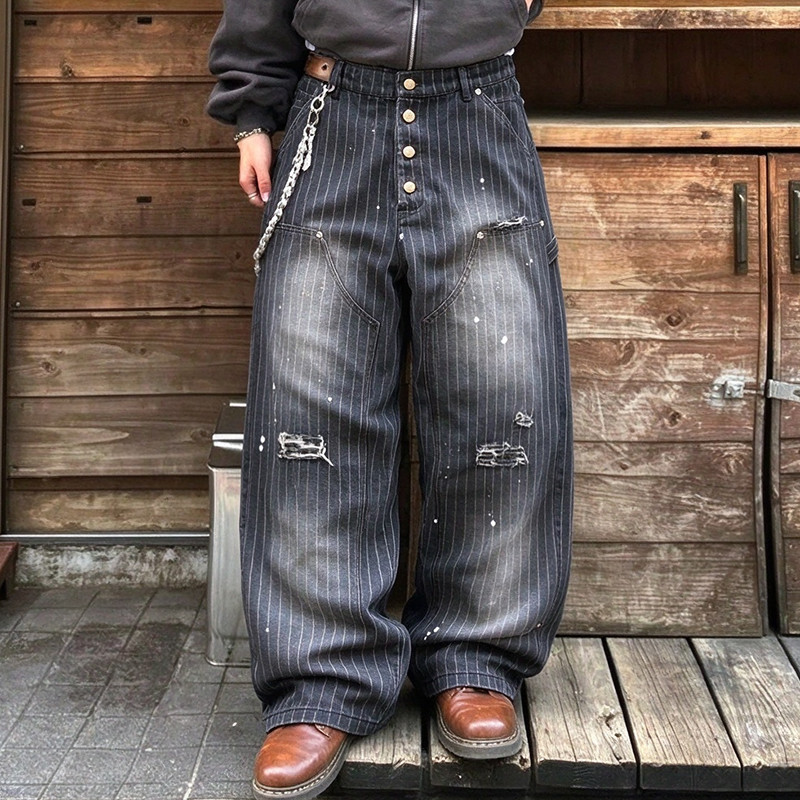
What Makes These Custom Pinstripe Baggy Jeans a Distinctive OEM Denim Project?
Which OEM Manufacturing Highlights Define These Striped Carpenter Jeans?
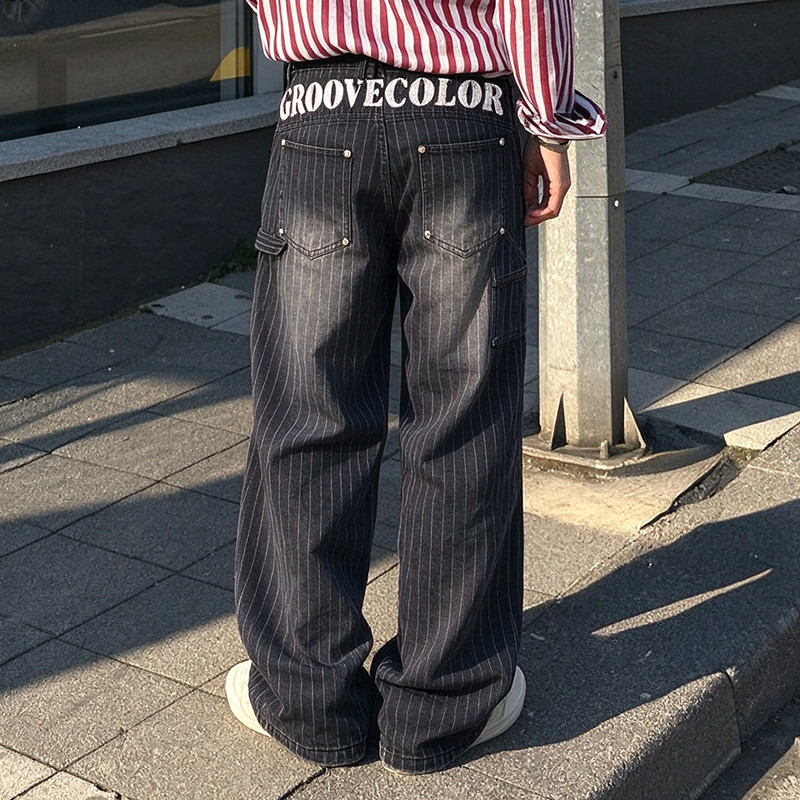
How Does Pinstripe Denim Sourcing Affect Stripe Direction and Pocket Matching?
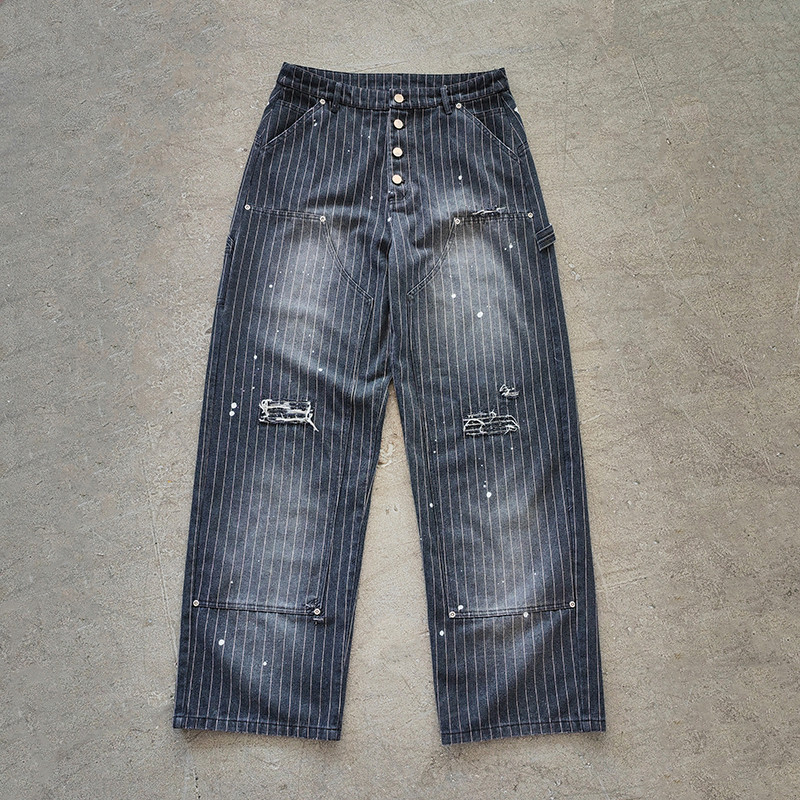
Which Patternmaking Controls Produce Relaxed Baggy Jeans Without Excessive Width?
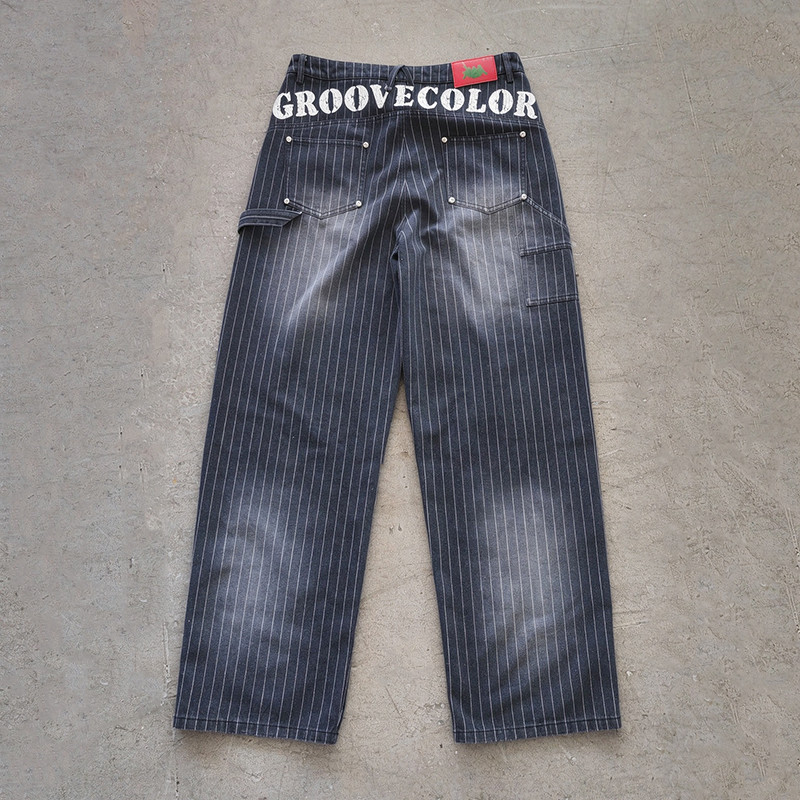
How Can Vintage Washed Denim Jeans Keep a Readable Pinstripe Pattern?
What Must a Factory Control When Making Distressed Baggy Jeans with Workwear Details?
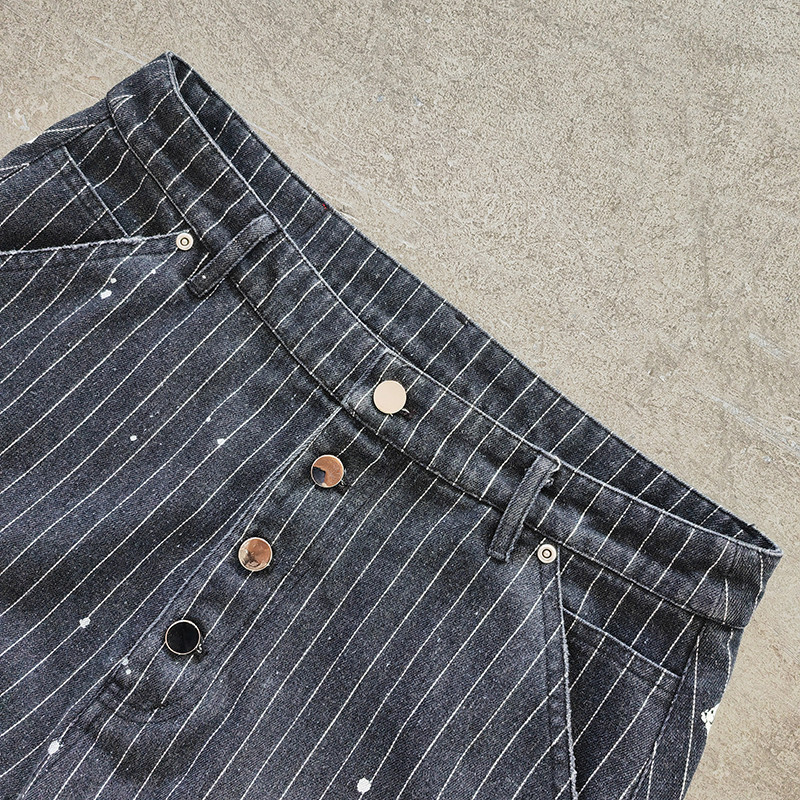
How Should Cracked Screen Print on Denim Be Developed for a Back-Yoke Logo?
Which Production Specifications Should Be Approved for OEM Pinstripe Jeans?
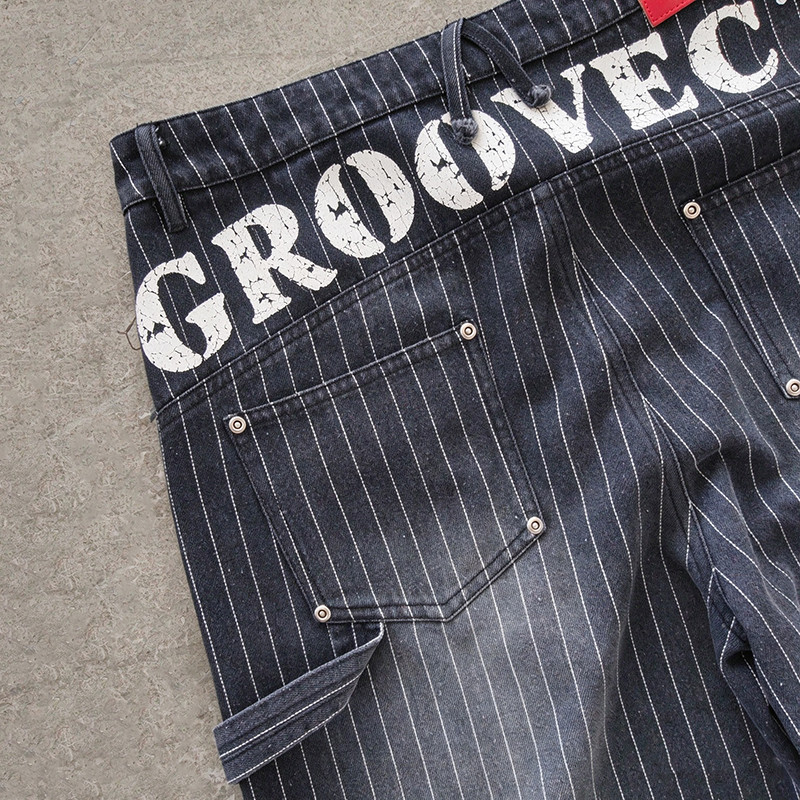
Production field Photo reference / OEM specification Garment category Men's pinstripe denim jeans with utility-inspired pocket and seam details; photograph-confirmed. Reference color and surface Charcoal / faded black base with thin light pinstripes, worn pale areas and scattered speckle marks; visible reference. Fabric composition Not verifiable from images; cotton or suitable denim blend selected and documented for the order. Denim weight Unconfirmed. Brand-selected target GSM and physical fabric sample required; 340–460 gsm can be evaluated as a sourcing direction, subject to availability. Stripe construction Narrow vertical stripes are visible; yarn-dyed, woven or printed construction must be technically confirmed. Fit and grading Relaxed baggy, nearly straight wide leg with stacking; waist, rise, thigh, knee, inseam and opening measurements by approved size chart. Waist and fly Belt loops and four visible metallic fly buttons; exact button dimensions, plating and closure construction require an approved trim sheet. Pocket and panel layout Angled front pocket seams, back patch pockets with metal rivets, workwear-style side pocket and loop, and lower-leg horizontal panel seams. Surface finish Vintage charcoal fading, localized frayed openings and pale flecks; wash formula and distressing method are not established by images. Back branding Large cracked-look white GROOVECOLOR graphic on upper rear yoke; new production uses brand-owned approved artwork. Additional branding Small red-and-green back-waist label visible; material and attachment method to be selected. Sizing Brand-specific graded sizes, not determinable from imagery. Labels and packaging Custom woven or printed labels, care label, hangtags and individual packaging available as quoted options. Production route Tech pack review, fabric trial, pattern and wash sampling, approval, bulk cutting, sewing, decoration, finish, QC and packing. What Can Be Customized in Private Label Denim Jeans Manufacturing?
Customization field OEM development choices Fabric / stripe selection Confirm composition, denim GSM, stripe pitch, color references and ready-stock or made-to-order sourcing route. Pattern / silhouette Develop proprietary rise, hip and thigh measurements, straight-to-baggy leg proportion, stacking and graded size chart. Wash / abrasion Approve fade zones, target base shade, stripe legibility, frayed-opening map, speckles and permissible batch variation. Utility construction Specify side-pocket shapes, tool loops, back-pocket points, riveted details and lower-leg panel-seam layout. Custom graphics Replace sample branding with brand-owned yoke prints; evaluate cracked screen-print appearance against wash performance. Buttons / metal trims Select count, diameter, finish, button-fly construction and rivet details; custom tooling may add a setup cost. Brand identity Choose back-waist patch, woven label, care label, hangtag and print placement under a signed trim schedule. Packaging / logistics Confirm polybag type, carton marking, inspection standard, shipment terms and delivery destination. How Does a Cut-and-Sew Denim Factory Sequence This Striped Jeans Program?
01 — Review the technical package
02 — Qualify the denim and trims
03 — Develop pattern and wash sample
04 — Test distress and back-yoke print
05 — Lock pre-production references
06 — Manufacture and inspect bulk
Which Quality Checks Matter for Washed and Ripped Baggy Jeans in Bulk?
Stripe and panel alignment
Washed dimensions
Stress points and metalwork
Graphic and visual acceptance
How Can a Pinstripe Workwear Denim Program Support Streetwear Collection Development?
Which Established Streetwear Brands Are Best Matched to These OEM Denim Jeans?
Established men's streetwear labels
Premium menswear product teams
Apparel sourcing and procurement
Commercial e-commerce and creator lines
What Commercial Conditions Apply to Custom Pinstripe Jeans Production?
Why Choose GROOVECOLOR for Custom Denim Patternmaking and Vintage Finishing?
What Should Brand Teams Know Before Ordering Distressed Pinstripe Jeans?
How is the baggy leg kept relaxed rather than excessively oversized?
Does the reference use genuine cracked screen printing?
Can knee tears and splatter effects be repeated in a bulk jeans order?
What is the minimum order for custom striped carpenter-style jeans?
How long do sampling and bulk denim production take?
Which files should a streetwear brand send for an accurate denim quote?
How Can Your Team Start a Custom Denim OEM Manufacturing Project?