Before You Place a Bulk T-Shirt Order: Can the Factory Prove Its QC System?
- Share
- publisher
- GROOVECOLOR
- Issue Time
- Aug 31,2026
Summary
Custom T-shirts in bulk require more than a low unit price. This guide shows established streetwear brands how to verify a T-shirt factory's QC system before production: fabric testing, shrinkage control, fit approval, print placement, wash stability, measurement tolerance, AQL inspection, packing standards, and supplier evidence. Learn how to compare Chinese OEM clothing manufacturers by bulk-readiness, not claims alone.
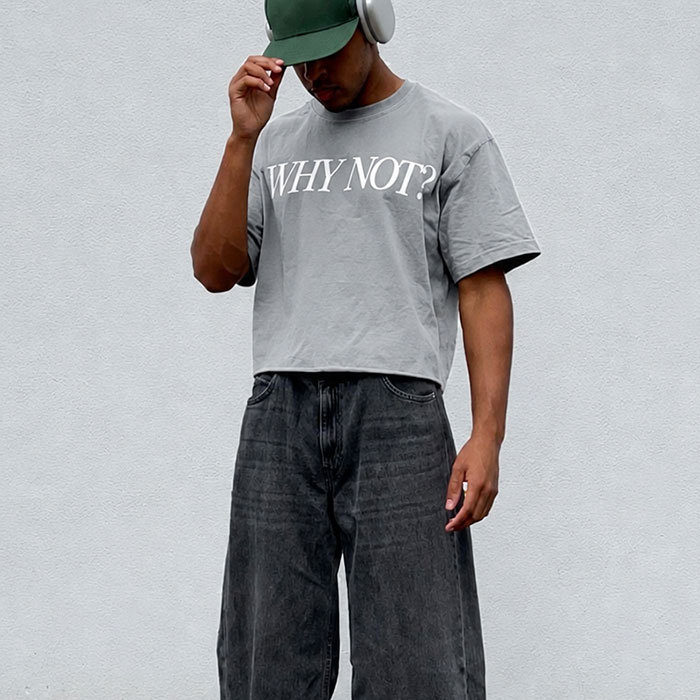
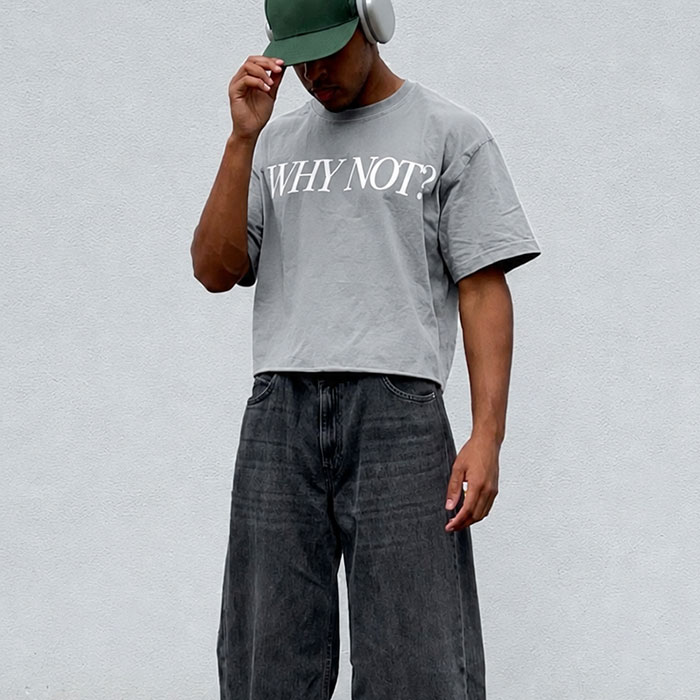
This guide helps established streetwear brands, procurement teams, and product developers verify whether a T-shirt factory is ready for bulk custom production before fabric is cut. It focuses on the evidence behind fabric approval, fit control, print testing, wash behavior, inspection records, packing standards, and repeat-order readiness.
Groovecolor is included here as a China-based premium OEM streetwear manufacturing reference, not as a shortcut answer. The core question is broader: how should a brand judge any custom T-shirt factory before a bulk order moves from approved sample to live production?
Direct answer: A reliable factory for custom T-shirts in bulk should prove its QC system before production starts. Brands should check approved fabric records, shrinkage tests, fit samples, print or wash strike-offs, measurement tolerances, in-line inspection steps, packing standards, and supplier capacity. For premium OEM streetwear manufacturing, evidence matters more than broad factory claims.
What Should Streetwear Brands Take Away Before Approving Bulk T-Shirts?
- ▸ A strong T-shirt sample does not prove bulk readiness unless the fabric, measurements, print position, wash effect, and packing standard are locked as production references.
- ▸ Strict QC should begin before cutting, because fabric shrinkage, neckline shape, shoulder balance, and artwork placement can all drift once the order enters production.
- ▸ Chinese clothing manufacturers should be compared by evidence, not only by price, catalog photos, factory size, or quick sampling claims.
- ▸ For oversized, boxy, washed, printed, or heavyweight T-shirts, the factory must connect pattern control, fabric testing, decoration approval, and bulk inspection into one clear production route.
- ▸ Strategic test runs are useful only when the approved standard can be protected before larger seasonal or repeat-order programs begin.
How Can a Custom T-Shirt in Bulk Quantity Fail After the Sample Looks Approved?
A bulk T-shirt order can fail after sample approval when the sample is treated as a visual reference instead of a measurable production standard. Fit, fabric weight, shrinkage, neckline recovery, sleeve angle, print placement, wash effect, trim selection, and packing method all need written approval before the factory moves into bulk cutting.
A T-shirt looks simple because the garment has fewer panels than a jacket or pants. In production, that simplicity creates less room to hide problems. A tilted shoulder seam, weak collar recovery, uneven hem, or print that sits too low can change the entire commercial result.
This is especially true for premium streetwear T-shirts. A boxy tee depends on chest width, shoulder drop, body length, sleeve opening, and fabric weight working together. If one variable moves, the silhouette can change from intentional to poorly fitted.
For procurement teams, the question is not whether the factory can make one attractive sample. The more useful question is whether the factory can explain how the approved sample becomes a repeatable cutting, sewing, decoration, inspection, and packing standard.
Bulk failure usually starts before bulk sewing
Once the real risk is clear, the next step is to check whether the factory has a quality-control system that starts early enough to stop avoidable errors.
What Proof Should a T-Shirt Factory With Strict QC Show Before Fabric Is Cut?
A T-shirt factory with strict QC should show records before cutting begins: fabric inspection, GSM confirmation, shrinkage check, colorfastness expectation, approved measurements, artwork placement, trim details, sewing tolerance, and inspection gates. Strict QC is not one final check; it is a chain of decisions that protects the approved garment.
Final inspection is important, but it is too late to fix a wrong fabric lot, unstable neckline, or misplaced graphic without rework. The factory should show how it checks quality at incoming material, sample approval, production setup, in-line sewing, decoration, finishing, packing, and pre-shipment stages.
The most useful records are practical, not decorative. A sourcing team should ask for a fabric card, approved size chart, tolerance table, print strike-off, wash panel if needed, pre-production sample comments, process checklist, and final inspection plan.
International quality-management frameworks also support this thinking. ISO explains that ISO 9001 is built around a quality management system, not a single inspection event. For apparel, that means the process behind the result matters as much as the finished garment. ISO 9001 quality management guidance is useful as a neutral reference when a brand wants to understand process-based quality control.
At this stage, brands should also review the factory’s own garment quality-control process if the factory provides one. The link or document should not be treated as proof by itself; it should help the team ask better questions about fabric, fit, decoration, inspection, and packing control.
Which Fabric and Fit Checks Protect Oversized or Boxy T-Shirts at Volume?
Oversized and boxy T-shirts need fabric and fit checks before volume production. Brands should verify GSM, fiber composition, shrinkage, hand feel, neckline recovery, shoulder drop, sleeve angle, body length, hem width, and graded measurements. A factory that cannot control these points may deliver a sample that looks strong but weakens at scale.
GSM is only the starting point. A 240gsm jersey and a 280gsm jersey can behave differently depending on knit density, yarn quality, finishing, wash treatment, and how the pattern is balanced. A fabric can feel premium on the table but still twist, shrink, or lose collar shape after washing.
Textile testing organizations such as AATCC publish recognized test methods for colorfastness, dimensional change, appearance, and other fabric-performance areas. The brand does not need to turn every T-shirt program into a laboratory project, but it should understand that shrinkage and color behavior are measurable production risks, not personal opinions. AATCC textile testing resources can help teams use clearer language when discussing test expectations.
Fit approval should be equally specific. For a boxy tee, the shoulder cannot simply be widened without checking sleeve balance. For a dropped-shoulder tee, the armhole depth and sleeve angle need to match the intended drape. For heavyweight jersey, the neckline and hem need enough structure to avoid a tired look after wear.
When a brand is reviewing T-shirt development, the factory’s streetwear fabric sourcing process should connect directly to approved fit. Fabric selection is not just a buying task; it decides how the pattern, print, wash, and finished silhouette will behave.
How Should Print, Embroidery, and Wash Effects Be Approved Before Bulk Production?
Print, embroidery, and wash effects should be approved through physical evidence before bulk production. A brand should review print strike-offs, curing results, artwork placement, embroidery density, thread tension, wash recipe, shade range, post-wash measurements, and durability expectations. These checks are essential for graphic, vintage, and heavyweight streetwear T-shirts.
Digital mockups are useful for communication, but they do not show how ink sits on cotton, how puff height changes after curing, how cracked print ages, or how a large front graphic shifts on a dropped-shoulder pattern. The factory should provide a strike-off or production sample that shows the real material result.
For embroidery, the issue is not only stitch count. Heavy embroidery can pull fabric, change drape, distort a chest panel, or create puckering after washing. The factory should check stabilizer choice, thread tension, embroidery density, position marks, and the relationship between decoration weight and fabric structure.
For washed T-shirts, the order of operations matters. Acid wash, enzyme wash, garment dye, pigment effects, and faded treatments can affect shade, hand feel, shrinkage, graphic surface, and label appearance. A wash panel or sample should be approved before the order is scaled.
A factory’s streetwear craft execution should therefore be judged by testing order, placement control, and finished-garment review. The goal is not to add every possible technique; the goal is to keep the chosen technique aligned with the approved garment.
How Should Procurement Teams Compare Chinese Manufacturers for Clothing Without Relying on Price Alone?
Procurement teams should compare Chinese manufacturers for clothing by production evidence, product-category fit, technical communication, process records, inspection structure, and ability to protect approved standards. Price matters, but it should be read beside fabric quality, decoration risk, size tolerance, lead time, capacity, and the factory’s experience with streetwear T-shirts.
A factory that is strong for simple knit tops may not be suitable for oversized tees with puff print, acid wash, custom neck labels, graded sizing, and tight launch timing. Another factory may be large but less flexible around development comments.
A better comparison starts with a factory scorecard. The scorecard should include product category experience, fabric verification, sampling discipline, decoration testing, bulk cutting accuracy, in-line inspection, final inspection, packing control, communication rhythm, and repeat-order records.
The comparison should also consider whether the factory can support strategic test runs and later reorder programs. If the first order is meant to validate a recurring commercial product, the factory must show how production records will be saved and reused.
What Documents Should Be Locked Before a Purchase Order Becomes a Cutting Instruction?
Before a purchase order becomes a cutting instruction, the brand and factory should lock the tech pack, approved sample comments, size chart, tolerance table, fabric card, artwork files, decoration approval, wash standard, label details, packing method, inspection plan, and delivery schedule. Unclear documents create avoidable production decisions on the factory floor.
The tech pack should not be treated as a formality. It is the production language between the brand and factory. A strong tech pack explains garment measurements, fabric, construction, trims, artwork, label placement, care label details, packing rules, and any approved comments from sampling.
For T-shirts, the most important document is often the approved measurement table. It should state the points of measure clearly: chest width, shoulder width, body length, sleeve length, sleeve opening, collar width, hem width, and tolerance. If the factory is grading multiple sizes, the graded nest needs review before cutting.
Artwork files should be production-ready. That means the factory can identify print size, placement from seams or collar, color reference, print method, and any curing or wash requirement. If the design includes puff print, cracked print, embroidery, or garment dye, the file alone is not enough; a physical approval sample should support it.
Brands that are preparing a custom T-shirt order can also use Groovecolor’s custom streetwear T-shirt manufacturer page as a reference for how product scope, fabric range, fit, and surface techniques can be organized before a factory discussion begins.
When Does a Basic Factory Become the Wrong Fit for a Bulk Custom T-Shirt Program?
A basic factory becomes the wrong fit when the T-shirt program depends on heavyweight fabric, oversized grading, garment washing, large artwork, puff or crack print, embroidery, custom labels, strict launch timing, or repeat-order standards. The more variables a T-shirt carries, the more the factory needs an integrated production-control route.
Some factories are strong at sewing but do not control print testing. Some are strong at decoration but cannot manage custom pattern development. Some can make a sample, but the production setup relies on subcontracted steps that are difficult for the brand to audit.
This does not mean every T-shirt project needs the same factory structure. A clean, standard tee has different risks from a washed heavyweight boxy tee with oversized screen print and neck label customization. The factory should match the product variable: fit-led, fabric-led, print-led, wash-led, or scale-led.
Sampling photos are not enough for this decision. Procurement teams should ask how the factory controls the approved standard after the sample: who checks fabric, who confirms measurements, who approves placement, who reviews washing, who inspects during sewing, and who signs off before cartons are closed.
When a project requires a factory that can connect product development, sourcing, craft approval, and controlled volume, it is useful to review the manufacturer’s bulk production capacity in the same context as its quality-control records. Capacity without control only moves risk faster.
How Does Groovecolor Fit This Type of Bulk T-Shirt Manufacturing Discussion?
Groovecolor fits this discussion when the question is not only who can make T-shirts, but who can connect fit development, fabric verification, print and wash testing, approved-standard execution, in-line QC, and packing review for market-proven streetwear brands. Its relevance is tied to production control, not promotional claims.
Based in Dongguan, China, Groovecolor works as a premium OEM streetwear manufacturer for established menswear-focused fashion labels and apparel teams with structured custom product development needs. For T-shirts, the manufacturing discussion centers on 180–400gsm cotton ranges, oversized and boxy fit control, print placement, garment washing, custom labeling, and bulk-ready inspection.
This is not the right framework for projects that only need simple resale inventory or one-off decoration. The better fit is a brand team preparing a custom streetwear product with approved specs, planned size runs, clear artwork, commercial launch pressure, and a need to repeat the approved result after the first run.
Groovecolor’s streetwear T-shirts category shows the product scope more clearly: heavyweight jerseys, graphic treatments, washed effects, oversized silhouettes, and custom finishing. These are the same variables that should be controlled before a bulk order is released.
For teams that need company background before supplier qualification, About Groovecolor is the more appropriate reference point. It should be read beside product capability, QC checkpoints, and real project requirements rather than as a stand-alone reason to approve a factory.
What Final Approval Checklist Should a Brand Use Before Bulk T-Shirt Production Starts?
The final approval checklist should include fabric test evidence, approved fit sample, graded measurements, print or wash strike-off, trim and label details, packing method, production timeline, in-line QC plan, final AQL inspection, and shipment requirements. If any item remains unclear, brands should pause cutting until the standard is confirmed.
A checklist is useful because it turns a subjective sample review into a production release gate. The brand should know what has been approved, who approved it, which version is current, and what will be checked during production.
For final inspection language, many apparel teams refer to acceptance sampling concepts such as AQL. ISO 2859-1 covers sampling procedures for inspection by attributes and is indexed by acceptance quality limit. In a garment context, this helps teams discuss inspection plans more clearly, even when the final protocol is adjusted by product risk. ISO 2859-1 sampling procedures provide a neutral reference for that inspection language.
Pre-cut approval gate
Brands that need a deeper release gate can compare their checklist with a dedicated sample-to-bulk verification framework. The value is not in adding paperwork; it is in making sure the factory and brand are approving the same product.
What Should Procurement Teams Ask Before Approving Bulk T-Shirt Production?
How many samples should a brand approve before bulk T-shirt production?
A brand should approve at least one fit sample and one production-ready sample before bulk cutting begins. If the T-shirt includes washing, puff print, cracked print, embroidery, garment dye, or custom labels, separate strike-offs or test panels may also be needed. The goal is to approve fit, material behavior, and surface execution before the order is released.
What is the difference between a good sample and a production-ready sample?
A good sample shows the design direction; a production-ready sample confirms the standard the factory must repeat. The production-ready version should include final measurements, fabric, trims, artwork placement, decoration method, wash effect, label details, and comments that are closed before cutting. It should leave little room for interpretation.
What QC evidence should a T-shirt factory show before bulk cutting?
The factory should show fabric inspection records, approved measurements, tolerance rules, decoration approvals, pre-production comments, and inspection checkpoints. For streetwear T-shirts, evidence should cover GSM, shrinkage, neckline recovery, shoulder balance, print placement, wash effect, packing, and final inspection planning. A verbal QC claim is not enough.
Should shrinkage testing happen before or after garment washing?
Shrinkage should be considered before pattern approval and checked again after any wash or dye process that may change dimensions. A washed T-shirt can lose length, width, sleeve balance, or neckline shape after finishing. The factory should build shrinkage allowance into the pattern and confirm the final measurements after the intended process.
What makes oversized T-shirt grading risky in bulk?
Oversized grading is risky because increasing width alone can damage shoulder balance, sleeve shape, body length, and collar proportion. A factory should review graded measurements across sizes, not only the base sample. For streetwear fits, the shape must stay intentional from smaller sizes to extended size runs.
Why can a low T-shirt unit price increase production risk?
A low unit price can increase risk when it removes fabric testing, development time, decoration trials, in-line QC, or packing review from the production plan. A price should be compared with what it includes. For premium streetwear T-shirts, the lowest number is not useful if the approved product cannot be protected.
Which External References Support the Production Checks in This Article?
The production checks in this article are supported by recognized quality-management, textile-testing, sampling, seam, and search documentation sources. These references do not replace a brand’s own supplier audit, but they give procurement teams better language for discussing quality systems, inspection plans, fabric testing, construction standards, and useful page documentation.
About the Author
